Prince Philip ABSOLUTELY Despised His Mother In Law, Here’s Why
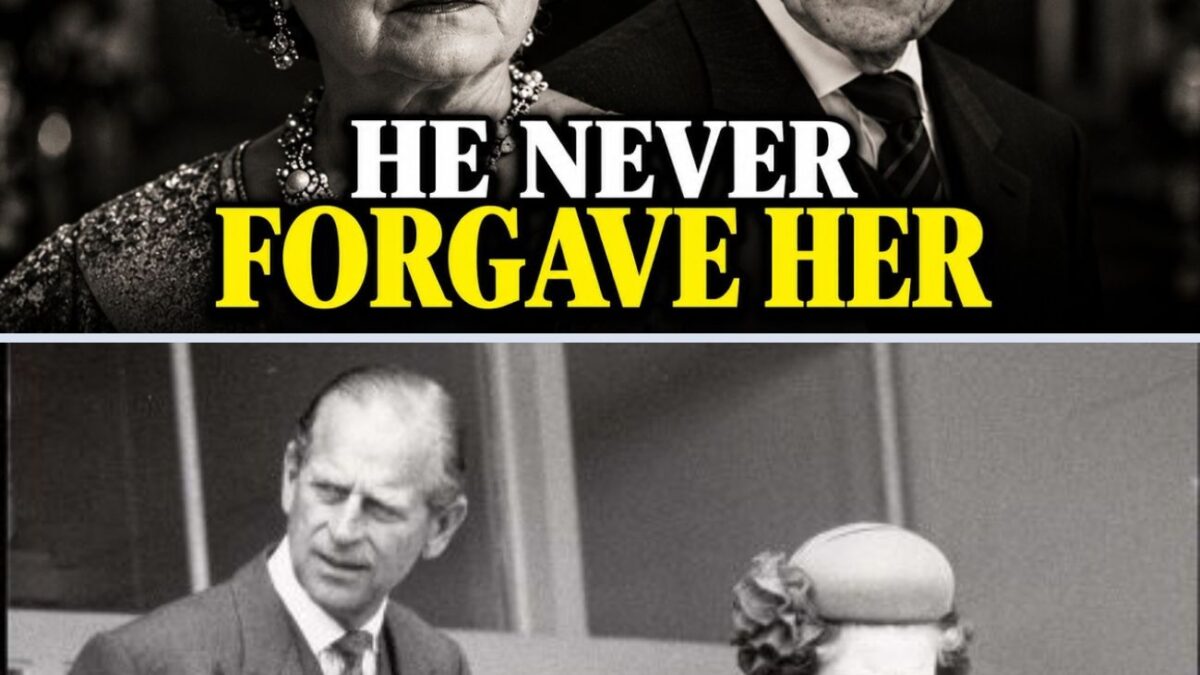
Prince Philip despised his mother in law, not in the polished English way, the tight smile at dinner, the deliberate early departure. The animosity between Philip and the Queen Mother was structural, philosophical, and fought across five decades inside the most scrutinized family on Earth. One winter in the early 1950s, Philip ordered the servants to turn off the heating in the Queen Mother’s rooms at Buckingham Palace. Within a week, she was gone. That is the kind of man Philip was. That is the kind of war they had.
And the question worth asking is not whether he despised her, he did, but why? What built the man who would do something like that? What built the woman who made him want to? And what it cost the Queen standing between them for 50 years?
Philip was born on June 10th, 1921 in a modest villa on the Greek island of Corfu. He was 18 months old when a British Royal Navy cruiser evacuated his family from a collapsing country. His father, Prince Andrew, had been court-martialed and exiled following Greece’s defeat in the Greco-Turkish War. Philip, according to royal biographer Philip Eade, was carried to the ship in a cot fashioned from a fruit crate. He arrived in the world as a prince. His first sea voyage was in a box.
The family settled in borrowed accommodation outside Paris. The forms of royal life continued. Servants, social engagements, the performance of dignity, but the substance was gone. Prince Andrew, destroyed by humiliation, eventually drifted to the French Riviera and into a relationship with another woman. The household did not fall apart, it simply dispersed, quietly and completely, leaving Philip at the center of an absence.
He was 8 years old when the last support went. His mother, Princess Alice, suffered a complete mental breakdown in 1930 and was committed to a sanatorium in Switzerland. His four older sisters had married German princes and departed into their own lives. His father was gone. Philip was placed into the care of his mother’s British relatives, principally his great uncle Lord Louis Mountbatten, and deposited into the English boarding school system. He later described this entire period in five words: “You just had to get on.”
That sentence is the most revealing thing Philip ever said, not for what it contains, but for what it refuses to. What the years between eight and 18 built in Philip was not resilience in the soft modern sense of the word. It was something harder and less comfortable, a complete severance from the expectation of care. His mother had been taken. His father had left voluntarily. His closest sister, Cecile, died in a plane crash over Belgium in November 1937, killed along with her husband, her two young sons, and her newborn infant. Philip was 16. He attended the funeral and went back to school. He did not speak publicly about Cecile’s death then or at any subsequent point in his long life.
He absorbed from Mountbatten’s mentorship a particular philosophy. A man’s worth is measured in what he can do, not what he was given. He thrived at Gordonstoun, the rigorous Scottish school built around physical endurance and self-reliance, becoming head boy, excelling, finding in its demanding framework the first stable structure his life had ever offered. Gordonstoun did not heal what had happened to him. It gave him a doctrine to replace it. Resilience is not inherited. It is built through difficulty, on purpose. This conviction would become the lens through which Philip saw his marriage, his monarchy, and eventually his son. It would also become the precise instrument of his worst failures.
When Philip met Princess Elizabeth in July 1939. She was 13, he was 18. He was already the finished product of this apparatus. Handsome to the point of distraction, capable, certain, and beneath all of it, trained by circumstance to need no one. This is the man who walked into the Queen Mother’s world. She saw him coming from a mile away.
Elizabeth Bowes-Lyon was born on August 4th, 1900, the ninth of 10 children at Glamis Castle, into a family that was warm, stable, and entirely certain of its own value. Her upbringing was the photographic negative of Philip’s. Where his childhood was defined by rupture and loss, hers was defined by continuity and the unquestioned certainty of being adored. Her mother taught her that the quality of attention you brought to a room, to a conversation, to another person, was a form of ethical commitment. Elizabeth absorbed this so completely that by the time she entered royal life, warmth had ceased to be merely a personality trait, and had become a political instrument of devastating precision.
She could walk into a room of bomb-damaged East Enders who had every reason to distrust her, and leave them feeling, genuinely, that she had come specifically for them. She could write a letter that arrived feeling like a warm hand placed on a cold arm. She declined Albert’s marriage proposals twice before accepting. Not from indecision, but from the calculated assurance of a woman who understood exactly what she was worth, and was prepared to wait.
When she finally married in 1923 and joined the House of Windsor, she brought into its brittle, formal corridors something it had been critically lacking. Warmth at the center of things. When Albert’s brother abdicated in 1936 and thrust the crown onto a man who had never wanted it, Elizabeth became queen of a monarchy that might otherwise have visibly buckled under its own weight. She was the operating system that kept it running. She projected the ease and authority that her stammering, reluctant husband could not, so that what the country saw from the throne was confidence, rather than the fear behind it. She refused to leave London during the Blitz. She stood in bombed streets in pearls. She made the monarchy legible to a country that was being asked to die for it.
By the time King George VI died in February 1952, she had been the emotional and institutional engine of the British monarchy for 29 years. And when her daughter became queen, the Queen Mother assumed, without stating it, because people of her formation did not state such things, that the center of gravity had shifted, not moved. Philip assumed the opposite. That gap was not a misunderstanding. It was a declaration of war.
Here is what made the Queen Mother specifically maddening to a man like Philip, not merely formidable, but maddening. Her warmth operated as a form of frictionless authority. She never argued. She never raised her voice. She never confronted. She simply occupied a room, a relationship, an institution, with such complete and gracious certainty that any attempt to challenge her position felt not like a legitimate disagreement, but like a personal failure of manners.
Philip, who was built for direct confrontation, found himself perpetually fighting a woman who refused to be fought. You cannot land a blow on someone who smiles and steps aside, and is still somehow standing exactly where she was.
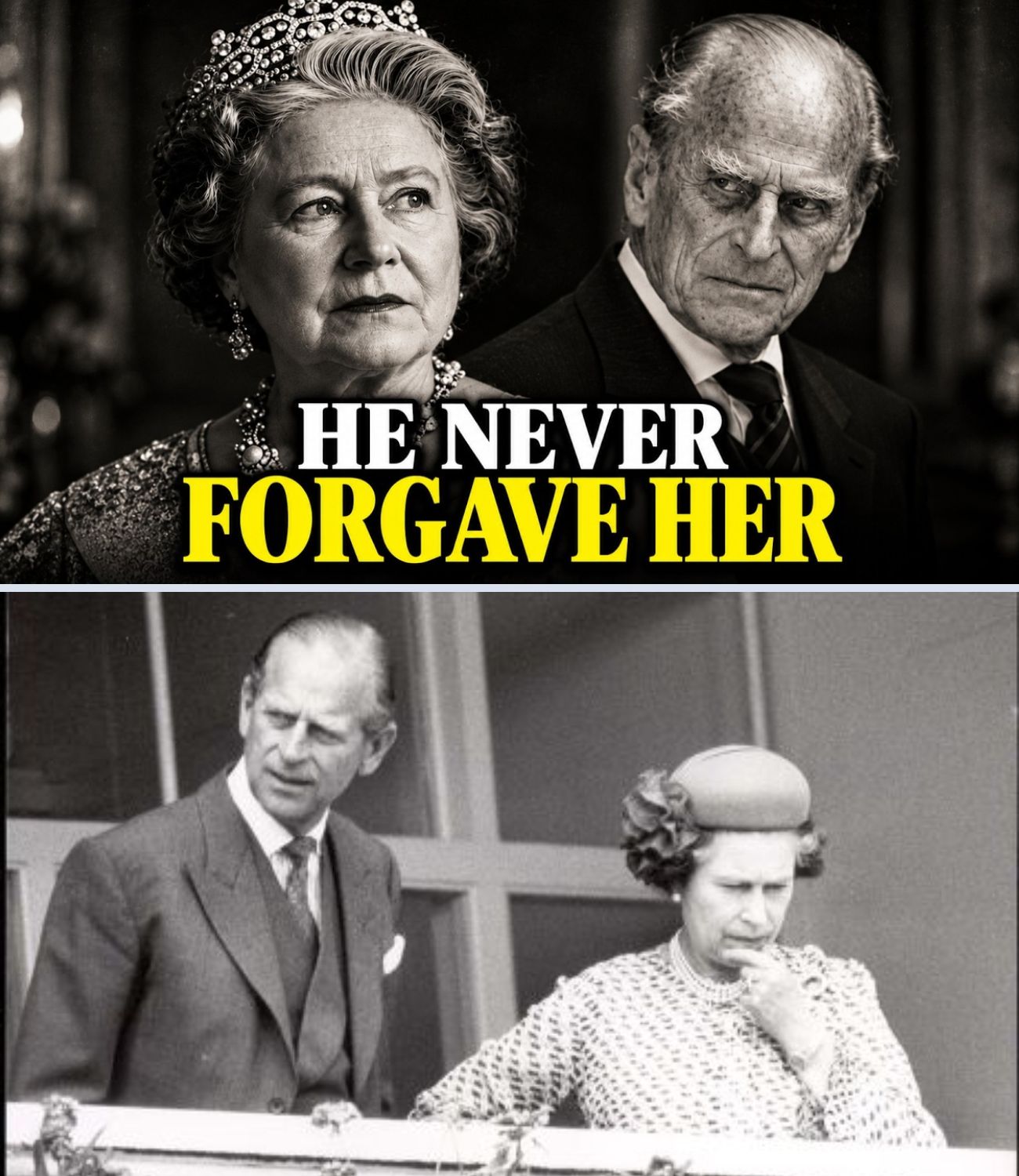
The coronation, 1953. The conflict broke into the open, quietly, institutionally. At the coronation of June 1953, Philip had a clear position. The ceremony should be televised, broadcast live to millions of people, not confined to invited dignitaries in Westminster Abbey. This was not sentimentality. It was a strategic conviction about the relationship between a modern monarchy and a modern public.
The Queen Mother was fiercely opposed. So was Princess Mary, the Princess Royal, who reportedly referred to Philip in this period as the Hun, the casual, devastating bigotry of an English aristocracy that had not yet accepted that its world was ending. The coronation’s authority, in their view, derived from its mystery, its exclusivity, its absolute resistance to the mundane.
The Queen split the difference. She sided with her mother on the ceremonial arrangements and with Philip on the one decision that actually mattered. The coronation was televised. 27 million viewers watched. Philip had won.
The name. The same year, the naming dispute drew the battle lines permanently. Philip had taken the surname Mountbatten when he naturalized as a British subject in 1947, an Anglicization of his mother’s family name. He understood this to be the name his children would carry, the single thread of paternal continuity available to a man who had surrendered every other form of identity he had ever possessed.
When Elizabeth’s succession was confirmed, Prime Minister Winston Churchill, the Dowager Queen Mary, and the Queen Mother formed a united front. The House of Windsor would remain the House of Windsor. Philip’s name would not attach itself to the succession. His fury became one of the defining facts of his early married life. He told friends: “I am the only man in the country not allowed to give his name to his own children.”
He called himself, in a phrase of such precise, bitter accuracy that it becomes almost beautiful: “Nothing but a bloody amoeba.”
The Queen Mother had pressed hardest for this outcome. She had her institutional reasons. The Windsor name was hard won, purpose-built by George V in 1917 to replace the German dynastic taint of Saxe-Coburg and Gotha. Surrendering it to a Mountbatten, to this stateless, German-educated, Greek-born naval officer who had arrived in their family uninvited was not an option she was prepared to accept.
Philip spent eight years fighting to recover some version of his name. In 1960, he partially won. Descendants of the Queen who did not hold royal titles would carry the surname Mountbatten-Windsor, a partial concession extracted by will against the Queen Mother’s resistance. He did not forget who had stood in his way.
The thermostat. When the couple moved into Buckingham Palace following the accession, Philip found an institution operating in most of its daily functions more or less as it had operated in the 1890s. Messages between members of the royal family were physically carried by footmen, human beings in immaculate livery walking through gilded corridors with handwritten notes on silver trays, not as ceremony, as the actual mechanism by which information moved.
Philip installed telephones. The Queen Mother was appalled, and her appalling was genuine. The footmen were not, to her, a communication system. They were the texture of a world she had grown up inside and which she understood at the level of the body rather than the intellect, as something that could not be replaced without something essential being lost. Philip’s phone was efficiency. But efficiency, in her philosophy, was not the highest value a palace could embody. She was right within her own framework. Philip did not care.
The deeper conflict was territorial. The Queen Mother had maintained, as Queen and then as dowager, the absolute expectation of unrestricted access to her daughter. She could walk in at any time. She could advise on any matter. She was, functionally, a parallel advisory structure to the Queen’s own husband. And this, in Philip’s assessment, was incompatible with his marriage and incompatible with his wife’s ability to function. He wanted her out of the building.
The method he chose was perfectly consistent with a man who had spent his entire life solving problems through the most direct available means. It was winter. He ordered the servants to turn off the central heating in the Queen Mother’s rooms. Within a week, she relocated to Royal Lodge in Windsor Great Park, her residence for the remainder of her life.
Royal biographer Christopher Warwick confirmed what this represented. The Queen Mother minded very much being Queen Mother. She was jealous, in his telling, of her daughter having become Queen. She had been the center. She was now the frame. Philip was the person repositioning it, and she never forgave him for understanding this as precisely as she did.
A human paused, stepped back from the battles for a moment. The Queen Mother wrote to a friend, at some point in her long life, a sentence that should stop you completely: “What a lot of our life is spent in acting.”
She knew. She had always known. Isaiah Berlin, seated next to her at dinner in 1959, left surprised. She was a very strong personality. Much stronger than I thought. The steel was real, but it was always under the chiffon, visible only when required, and therefore all the more effective for its concealment.
That is what a lifetime of being watched does to a person. The small habits that once functioned as preferences become requirements. The attachment to tradition stops being nostalgic and turns existential. Because if the tradition changes, what remains to prove that the decades spent honoring it meant anything?
The Queen Mother’s insistence on the footman, on unfettered access to her daughter, on the absolute preservation of a certain court culture, were not the habits of a woman who hadn’t noticed the century passing. They were the survival architecture of someone who had understood that the only way to remain essential inside a modernizing institution was to make yourself irreplaceable by embodying magnificently exactly what it was trying to modernize away.
And Philip, the man who had never had the luxury of a stable world to defend, carried different damage. He had been trained, at 8 years old, to treat attachment as a liability. Every fixture of his early life had eventually been removed. The only durable response he had found was to stop building fixtures entirely. To be capable, to be direct, to look at any institution, however ancient and however loved, and ask the question institutions most fear, is this actually necessary?
Neither of them was simply wrong. Each was the product of what had shaped them. What made the conflict so durable, 50 years without resolution, was that each of them saw in the other the precise negation of everything they had paid the highest possible personal price to become. That is not a small thing to carry to every Christmas dinner.
The boy between them, the sharpest battle was not about a name or a thermostat. It was about a child who could not defend himself. Prince Charles was born November 14th, 1948. Sensitive, reflective, given to introspection in ways that were alien to his father’s hard-edged temperament. Philip had difficulty understanding a son who wept.
Charles craved warmth that his frequently absent parents could not consistently provide. Into that space stepped the Queen Mother. She became, as biographer Gareth Russell described, effectively a mother figure to Charles because the Queen became Queen when Charles was so young.
When the Commonwealth tours of the early 1950s took his parents away for months at a time, Charles stayed with his grandmother. She encouraged his love of poetry, music, art. She sat with him and talked to him as if his interior life were not merely tolerable, but actively worth knowing.
Philip watched this and felt something between jealousy and alarm. He told those around him that the Queen Mother’s approach to Charles was, in his own word, overdone, too soft, too accommodating of a sensitivity that needed shaping into resilience, not protected as a permanent condition.
What Philip could not accept, and the Queen Mother understood precisely, was that Charles’s sensitivity was not a weakness to be engineered out of him. It was structural. You could not send it to Gordonstoun and expect it to return as something harder. You could only drive it underground at the cost of whatever confidence the boy already possessed.
Philip understood something, too, and he was not entirely wrong. The world awaiting the heir to the British throne was not forgiving of visible vulnerability. Philip had spent his life discovering that the only reliable protection against that world was the kind of inner self-sufficiency that had to be built young and built hard. He was trying to give his son armor. He simply could not see that Charles had no foundation on which to attach it.
In May 1961, the Queen Mother wrote to her daughter, addressed, as always in private correspondence, as my darling Lilibet, and made the case for Eton with the full weight of her tactical intelligence. She described it as ideal for one of his character and temperament. If Charles went to Gordonstoun, she wrote: “He might as well be at school abroad. He would be terribly cut off and lonely.”
Philip held his position. The Queen sided with her husband. In May 1962, Philip flew Charles personally to a Royal Air Force base in the north of Scotland to begin at Gordonstoun. Charles was 13.
It was a disaster. One contemporary recorded the bullying as malicious, cruel, and without respite. Charles described the school as Colditz in kilts. He wrote letters to his mother begging to come home. He was not permitted to.
The Queen Mother’s prediction had been exact. And through every year of Charles’s Gordonstoun misery, she received him at Birkhall, her Scottish retreat, and provided what the school refused to, the recognition that who he was, not merely what he could endure, was the relevant category.
Philip never acknowledged the failure. He sent Andrew and Edward to Gordonstoun as well. Edward left early.
The Queen Mother never declared victory. She didn’t need to. She simply held Charles closer year after year, and the implicit rebuke of her warmth, the living demonstration, maintained with devastating patience, that she had understood his grandson and his father had not, was more eloquent than any argument she could have made.
Philip knew exactly what she was doing. He did not forgive her for it. And that specific unforgivingness, rooted not in wounded pride, but in the experience of watching another person prove, at his own son’s expense, that he had been wrong, is the deepest layer of what was between them.
By the 1970s, the battles were structurally over. Both of them were old enough and practiced enough to have calcified into something worse than active conflict, permanent mutual certainty. Each had built a separate life inside the same institution.
The Queen Mother retreated to Royal Lodge and to the Castle of Mey, the cold windswept property on the northern tip of Scotland that she had purchased in 1952 in a grief-driven impulse after the King’s death and spent 50 years transforming into her most personal kingdom. She raised cattle, fished for salmon, held court for poets and painters and jockeys and politicians with the same imperious warmth she had deployed everywhere for 80 years without once visibly tiring.
Philip had his own domain. The Duke of Edinburgh’s Award, founded in 1956, eventually reaching millions of young people across dozens of countries, was Gordonstoun’s philosophy applied at civilizational scale. He pursued conservation, marine science, the informal operational management of a palace that ran more efficiently for his presence, though he received no formal credit for any of it.
They appeared together at Christmas, at Easter, at every ceremonial scaffold of the royal year, perfectly cordial, perfectly cold. 50 years of performing the family at the same table while privately remaining absolutely certain that the other person had spent the previous 50 years making everything worse.
When Diana died in August 1997, the week that followed exposed, with an uncomfortable clarity, whose institutional reflexes had aged better. The Queen Mother’s framework, dignified endurance, managed formality, the refusal to perform grief in public. Philip’s framework, direct, pragmatic, treat the crisis as a problem requiring a solution.
Within the family, multiple accounts place Philip among those pressing hardest for the Queen to return to London, to speak, to meet the public where it actually was rather than where protocol expected it to be. He was right that week. He did not point this out. He was not that kind of man.
The Queen Mother died at Royal Lodge on March 30th, 2002, with the Queen at her side. She was 101 years old. She had defended the footman when Philip installed the telephones. She had kept the Windsor name when Philip wanted Mountbatten. She had held Charles when his father couldn’t reach him. She had spent 50 years as the most immovable object in Philip’s path and died without ever once in public admitting the conflict had existed.
Philip attended the funeral, 80 years old. He walked in procession behind the coffin as he had walked behind this institution for half a century, always a step behind and a degree apart from everything that was, officially, his wife’s. His face in the photographs from that day is the face of a man honoring the terms of a peace treaty he had never signed.
The conflict between Philip and the Queen Mother was never really about personality. It was about two incompatible responses to the same impossible situation. Having your identity consumed by an institution you did not choose and cannot leave.
The Queen Mother survived by becoming the institution. She wore its requirements so completely, for so long, that they became her skin. Every defense of tradition, every deployment of warmth as political currency, every gracious resistance to the century moving around her, these were the survival architecture of someone who had understood that the only safety available inside absolute public visibility was to make yourself undeniable.
Philip survived by refusing to become it. The telephones, the thermostat, the Gordonstoun insistence, the eight-year fight for the Mountbatten name, every one of these was a declaration: “I am still here. I am still a person. I have not been entirely absorbed.”
His despising of her was never really about her. It was about what she embodied. The argument, visible in every gesture, every pearl, every gracious footman, that this was the correct arrangement. That the institution superseded the individual. That the man behind the crown was a supporting figure who ought to conduct himself accordingly.
She was the living refutation of everything he had spent his life trying to prove. He never accepted it. She never relented. And between them, for 50 years, was the woman they both loved, who understood exactly what was happening and required both of them to hold in her presence the performance of a family.
Two people who could not stand each other. Who showed up, correctly dressed, at every Christmas table, every state funeral, every public ceremony, because the alternative was to damage something neither of them would damage. That is sacrifice dressed in ermine. And it may be the most honest thing the British monarchy ever produced.
You Might Also Enjoy

“We Thought They Would Negotiate”—What Argentine Soldiers Said When The British Attacked Goose Green

“You’ll Never Finish My Ruck March, Limey” — US Sergeant Who Challenged the SAS, Then Fell Out First






