Prince Philip ABSOLUTELY Despised Sarah Ferguson, Here’s Why
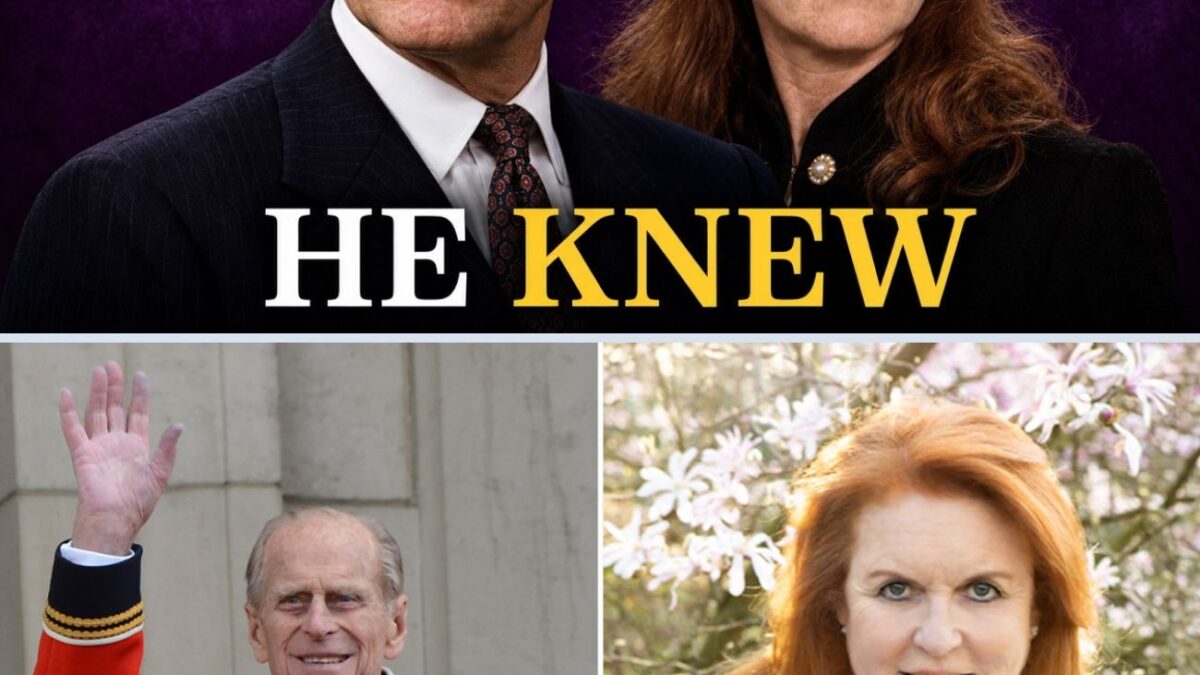
On the 29th of March, 2022, Sarah Ferguson walked into Westminster Abbey and sat down at a memorial service for Prince Philip. For 30 years, the story was that he despised her. That version leaves something out. He had once approved of her, taught her his own sport, driven carriages beside her. Then, in August 1992, newspapers reached the Balmoral breakfast table and she was gone within days. By her own repeated account, he never willingly entered a room with her again. The Queen, his wife, kept paying anyway. So, what exactly did Sarah Ferguson do that Diana never did?
Start with the seating. The service of Thanksgiving for the Duke of Edinburgh was a state-scale event. Nearly 2,000 people, foreign royals, charity representatives, regiments, the whole architecture of a 99-year life. The Queen was there, frail, leaning on Prince Andrew’s arm as she came up the nave, which was its own scandal that week. Because Andrew had settled a civil case in New York 5 weeks earlier. And several rows back, inside the Abbey, sat his ex-wife. Sarah had not been at the funeral 11 months before. That one is easy to explain. COVID rules capped St. George’s Chapel at 30 mourners, and 30 is not many when you have four children, eight grandchildren, and the entire House of Windsor in competition for a seat. She had posted a tribute instead. She wrote that she was grateful to him. Make of that what you want.
The harder data point is 2011. When William married Catherine Middleton, the guest list ran to roughly 1,900 people and it included the Crown Prince of Bahrain, the man who handed Victoria Beckham her bouquet, and a long tail of minor aristocrats, nobody could identify. It did not include the mother of two of the bridegroom’s first cousins. Sarah’s daughters were invited. Sarah was not. She watched it on television in Thailand. And she told an interviewer afterward that she had felt like she wanted to curl up and die. So, not invited to the wedding of the century, not present at the funeral, and then seated inside the Abbey at the memorial. That sequence only makes sense if you understand that the obstacle had been one specific man, and that the obstacle was now dead.
She has said as much, repeatedly, publicly, for the better part of 20 years, in that chatty confessional register she uses on American television. Sarah has described the Duke of Edinburgh as the one member of the family who would not be in a room with her. Not cool toward her. Not disapproving. Would not share the air. She has said he changed his schedule to avoid her. She has said she stopped attending family gatherings rather than force the issue. That she would be told which Christmas she could come to Sandringham and which she could not. And that it hinged on where he would be.
Now, a necessary caution, and I’d rather plant it early than smuggle it in later. Philip never said a word about her in public. Not one. He gave almost no interviews on family matters across 70 years. He actively discouraged biographers, and he left no memoir, no diary published, no settling of accounts. Everything we have about his view of Sarah Ferguson comes from three places. Sarah herself, who is an interested party and a natural storyteller, former staff recalling things years later, and royal biographers with varying access and varying rigor. Ingrid Seward, Giles Brandreth, Penny Junor, and others all land in roughly the same place, which is why the claim holds up. But, it holds up as testimony, not as a document. There is no letter in which the Duke of Edinburgh writes the word Fergie. What there is is behavior, absences, schedules that didn’t overlap, an invitation list that excluded one name for two decades while including everyone else’s ex-anything in the royal family. That is how displeasure gets recorded. You don’t get a statement, you get a seating plan.
And here’s the part that breaks the easy version of this story. He liked her first. Go back to the mid-1980s and read what the press was actually printing. Sarah Ferguson arrives in the royal frame in the summer of 1985, and the coverage is not just warm, it’s relieved. She’s 25. She has a job. She laughs at the wrong volume. She goes out in the rain without complaining about her hair. The courtiers’ line, repeated in paper after paper, was that she was a breath of fresh air. The subtext was uglier, and everyone understood it. She was not Diana. She was not frightened of the family, not starving herself, not generating a crisis a fortnight. Philip, by multiple accounts, took to her immediately. She rode. She could handle a gun. She had been raised in Hampshire around horses and had the kind of outdoor stamina that made Balmoral in August bearable rather than punishing. That matters more than it sounds. Balmoral is the test. It’s the family’s own filter, and it is unkind by design. Cold weather, early starts, picnics in the wet, stalking, dogs, barbecues the Duke cooked himself, and a complete absence of anything resembling glamour. Diana was miserable there and made no secret of it. Sarah walked in and thrived.
Then she did something nobody else did. She took up carriage driving. Philip had come to the sport in his 50s after his wrists gave out on polo, and he didn’t dabble in it. He helped write the international rules. He competed for Britain. He drove a team of horses at speed through water hazards and timber obstacles into his 70s and kept going in a lower impact way into his 90s. It was the one thing in his life that was entirely his, unconnected to his wife’s job, and he was serious about it to the point of obsession. Sarah learned to drive a carriage. She took lessons. She went out with him. And in the late 80s, there are photographs of the two of them in the driving seat, the young Duchess of York and the Duke of Edinburgh, reins in hand. She was, by any reasonable reading, the favorite, the one who had bothered.
Hold that image. We’re going to come back to it, and it is not going to mean what it means now, because 7 years later, the newspapers arrived at breakfast. Balmoral runs on a timetable that hasn’t changed much in a century, and part of that timetable is the papers. They come up to the castle. They go out on the table, and the family reads them. On the 20th of August, 1992, the Daily Mirror ran a set of long-lens photographs taken at a villa in the south of France. Sarah was in them, topless, poolside, with a Texan named John Bryan. Her daughters were in the frame. Bryan was 36, bald, not notably charming in print, and this is the detail that did the damage. He was described everywhere as her financial adviser.
Sarah was at Balmoral that morning. Her separation from Andrew had been announced five months earlier on the 19th of March, but separation in that family is not the same as departure, and she had come north with the children for the summer as usual. So, the pictures of the Duchess of York arrived in the Queen’s dining room in the Queen’s house in front of the Queen’s guests while the Duchess of York was sitting there. She left within days. She has described that morning many times, and the accounts vary in temperature. In her 1996 memoir, she wrote about it one way. On American television in 2011, she described the Queen’s reaction and her own flight from the castle in terms that were softer toward the Queen and harder toward herself. What nobody disputes is the sequence. Pictures published, Sarah at Balmoral, Sarah gone. That’s the hinge. Everything before it is approval. Everything after it is a closed door.
Which brings up the question this whole story turns on, and I want you to sit with it because the obvious answer is wrong. Why did that end her when Diana’s far larger, far more destabilizing campaign against the institution did not? Diana cooperated with Andrew Morton. Diana sat down with Martin Bashir in 1995 and went on national television to say there were three people in her marriage. Diana was an active threat to the succession narrative in a way Sarah never attempted to be, and Diana remained inside, difficult, dangerous, but inside until her own divorce. And after it, she was still the mother of the future king and was treated as such.
The answer isn’t volume, it’s category. And to understand the category, you have to understand what Philip had personally paid to be in that room. He arrived with nothing. That’s not a figure of speech. Prince Philip of Greece and Denmark was born on Corfu in 1921 and was out of the country before he was 18 months old. Carried aboard a British warship after his uncle, the king, was deposed and his father was tried by a revolutionary court and banished. The family scattered across Europe on other people’s money. By 1930, his mother, Princess Alice, had been removed to a sanatorium in Switzerland and he did not see her for years. His father drifted to the south of France and died there in 1944, leaving behind, by most accounts, little more than a trunk of possessions. Philip had no country, no fortune, no household, and no parents functioning in any ordinary sense. He was shuttled between relatives and boarding schools and spent holidays in whichever house would have him.
His four older sisters all married German princes in the 1930s. Three of those husbands were, to varying degrees, entangled with the Nazi regime. One sister, Cecil, died in an air crash in 1937 and the photographs of the funeral procession in Darmstadt show a 16-year-old Philip walking in a street full of uniforms and swastikas, a boy who had nothing to do with any of it, walking through the worst possible background. 10 years later, he was marrying the heir to the British throne and his sisters were not invited. That is the price, stated plainly. To be admitted, he gave up his Greek and Danish titles, renounced his claim to a throne, left the Orthodox Church for the Church of England, adopted his uncle’s Anglicized surname, and became a British subject.
Then, he surrendered the career. He was a genuinely talented naval officer, mentioned in dispatches at Cape Matapan, given his own command at 29, on a track that people who knew the service say could have taken him to the top. In 1951, he stepped off that track, and after the King died the following February, he never went back. He didn’t even keep the name. In 1952, the decision came down that the royal house would remain Windsor, and his children would not carry Mountbatten. The line attributed to him afterward, that he was nothing but a bloody amoeba, the only man in the country not allowed to give his name to his own children, has been repeated by enough separate sources to be treated as broadly reliable, if not word perfect.
So, here is a man who liquidated his identity for access, walked three steps behind his wife for 70 years, and ran a lifelong internal ledger about what the institution demands from the people who marry into it. Sarah Ferguson married into it in 1986, and for a while she paid cheerfully. The question is what she started charging.
She met him properly at Ascot in June 1985, at a house party the Queen gave during race week, and Diana put her there. That detail gets glossed over, and it shouldn’t, because it tells you what the family thought it was buying. The Princess of Wales and Sarah Ferguson were distant cousins, and had known each other socially for years through the polo circuit, the same shrinking pool of English families who end up at the same weddings. Diana, by 1985, was 4 years into a marriage that was already in serious trouble, and she wanted an ally her own age inside the enclosure. She pushed Sarah toward Andrew. The seating at that lunch was not an accident. Andrew needed one. He was 25, a serving Royal Navy helicopter pilot who had flown in the Falklands and he had spent the first half of the decade being photographed with actresses and models in a way the palace found tiresome. The press called him Randy Andy, which is the kind of nickname that is funny for about two years and then becomes a problem. The second son is supposed to be useful and quiet. He was neither. A wife would fix the optics and Sarah fit the specification almost comically well.
Her father, Major Ronald Ferguson, had commanded the sovereign’s escort and then managed Prince Charles’s polo for years. He was at Windsor and Smith’s Lawn constantly, a familiar face to the entire family. She had grown up at Dummer Down Farm in Hampshire with horses in the yard. She had also, and this was the unusual part, worked. Secretarial courses, a PR firm, then a job at a small fine art publisher in London with a flat and a salary and an overdraft like anyone else. She was not a debutante waiting in a drawing room. She was a working woman who happened to know how to ride to hounds. For the institution, that combination was gold. Sufficiently of the world to look modern, sufficiently county to survive Scotland.
What did she actually get? This is where people flatten the story into gold digging and the record doesn’t support that, at least not at the start. The letters and accounts from 1985 and 1986 describe something that looks like a genuine fast, mutual infatuation between two loud, physical, unintellectual, fundamentally similar people. They laughed at the same things. They were both second-tier figures in families where the first-tier figure got everything. Andrew’s own emotional history is relevant here. Briefly, he had been handed to nannies and sent to Gordonstoun while his mother was running a Commonwealth. And the pattern that emerges from every serious account of him is a man who attaches hard and does not let go. Remember that. It becomes the single most consequential fact in this story.
He proposed at Floors Castle in Scotland in February 1986. She said yes, then by her account spent the night awake, which is the one moment of visible hesitation anyone recorded. Then the machine took her. The engagement was announced on the 19th of March 1986, and the coverage was something close to euphoric. Here, finally, was a royal bride who didn’t look haunted. She gave a joint interview with Andrew and actually answered questions. She made jokes about her hair. When a photographer shouted something cheeky, she shouted back. In a family that had spent 4 years watching Diana shrink in front of them, Sarah Ferguson looked like evidence that the institution could still absorb a normal person without damaging her. Philip’s approval in that period is well attested, and it was not polite tolerance. Several biographers describe him as actively pleased, and the behavioral evidence backs it. She was brought into his orbit, invited to the things he cared about, and taken seriously as a countrywoman rather than treated as decoration. The Queen reportedly liked her, too. Liked that she could keep up in the field. Liked that she talked.
They married at Westminster Abbey on the 23rd of July, 1986. 500 million people watched. She walked up that aisle in an ivory duchesse satin dress by Lindka Cierach with a 17-ft train embroidered with bumblebees and thistles from the Ferguson arms, and worked into the beading an anchor and the letter A. She was given a 17th century diamond tiara, a gift from the Queen. On the morning of the wedding, Andrew was created Duke of York, the title that belongs by long tradition to the sovereign’s second son, and which has a specific weight in that family because the last Duke of York was George VI, the Queen’s father. Sarah Ferguson became Her Royal Highness the Duchess of York, fourth in the order of precedence among royal women.
Now hold the two halves of that day together because the second half is the one nobody filmed. She had no money, none of her own, not in any amount that signified. The dukedom came with rank and no income. Andrew was a serving officer on a lieutenant’s pay. There was no duchy, no estate, no portfolio of land. The Prince of Wales has Cornwall, the sovereign has Lancaster. The Duke of York had a salary and a parliamentary allowance of around 20,000 pounds a year rising later, routed through the Queen, which is a detail worth pausing on. In 1986, the York’s financial existence ran through his mother. That is not a marriage settlement. That is an allowance.
She had no house either, not at first. The newlyweds lived in a borrowed apartment at Buckingham Palace, then moved into Castlewood House near Windsor, rented while the family built them something. The Queen bought the Sunninghill Park site and over the next four years a house went up on it. Around 50 rooms, a dozen bathrooms, an indoor pool, and a reddish mass of brick that the architectural press treated as a hate crime and the tabloids christened South York because it looked, from the air, like something off the opening credits of Dallas. Here’s the thing to notice. It was a gift. The Queen paid for it, reportedly around 5 million pounds, which means the Duchess of York’s home, the only marital home she ever had, was the property of her mother-in-law’s largesse. She did not own it. She had not earned it. She could not sell it, mortgage it, or take it with her. That is the structure the whole rest of this story runs on. She had rank and no assets. She had a palace address and no deed. Every material thing in her life came downward from the Queen, and the price of it was behavior.
And she had no husband in the house. This is the part that gets treated as a sad footnote, and was actually the engine of the collapse. Andrew did not leave the Navy. He went back to sea. In the first 5 years of the marriage, by the count that circulated at the time, and has never been seriously challenged, they spent something on the order of 40 days a year together. 40. He would be home for a fortnight and gone for 3 months. She was left in a rented house, then a half-built house, with no job, no colleagues, no money of her own, and a public role that required her to be visibly delighted about all of it. She asked about work. The answer was the answer that family gives. Royal Duchesses do not take employment. Charity patronages, yes. Ribbon cutting, yes. A career, no. So, she invented one sideways, and that is where the trouble starts.
The first daughter, Beatrice, was born in August 1988. The second, Eugenie, in March 1990. In between, the press turned, and it turned with a speed that still looks shocking when you lay the clippings side by side. The woman who had been a breath of fresh air in 1986 was, by 1988, being measured. Literally, her weight became a running item. The Duchess of Pork, the Fergie phenomenon curdled into a tally of her holidays. She was away too much. She was skiing. She was in the sun. She had left a baby behind to fly to Australia. She was spending somebody’s money, and that somebody was presumed to be the public. Some of this was straightforward cruelty engendered in a way that needs no decoding. Some of it was earned. She did travel constantly, and she traveled in a style she could not pay for, and she accepted hospitality from wealthy men whose interest in her was transparently an interest in proximity to the crown.
That word, proximity, is the one to keep because in 1989 she published a children’s book, Budgie the Little Helicopter, about a helicopter with a face, written, the cover said, by Sarah Ferguson, Duchess of York. It sold. There were sequels, then a television series, then merchandise. She also co-wrote a serious illustrated history of the royal residence Osborne House, and she put her name to a book on Queen Victoria’s travels. She was, in the straightforward sense, generating income. To almost anyone outside the family, that looks like enterprise. A woman with no salary and an absent husband writing books about a cartoon helicopter is not a scandal. Inside the family it read entirely differently, and you already know why. She was selling a name she had been given, not earned over decades of service, given 19 months after she walked up the aisle. Budgie did not sell because it was good. It sold because the author was fourth lady in the realm, and everyone involved in the transaction understood that.
There were also, within the trade, persistent reports that the books were heavily worked up by others, and at least one accusation of similarity to an earlier series that was argued about in the press at the time and never settled. To the man who had surrendered his name, his church, his country, and his career on the understanding that the institution gives you everything and you give it everything back, this was not entrepreneurship. It was skimming. I want to be careful here because Philip never articulated this, and I am reconstructing a logic from a lifetime of consistent behavior rather than quoting him. But the logic is not obscure. He had spent four decades refusing to monetize the single most commercially valuable position in Britain. He ran the Duke of Edinburgh’s Award, which made him nothing. He did carriage driving, which cost him money. He had watched his own Uncle Dickie Mountbatten play games with the family name, and had seen how that ended. The ledger he kept was simple. Access is not income. And the Duchess of York, by 1990, was quietly turning it into one.
The marriage was already failing by then, and the failure had a specific shape. She kept trying to leave, and he kept declining to let her. The standard version has Sarah as the wrecker, the one who misbehaved her way out of a royal marriage. The documented sequence is closer to a woman going to her husband repeatedly from about 1990 onward saying the arrangement was unsurvivable, and a man who adored her refusing to accept it. Andrew’s position, consistently reported at the time and consistently reflected in everything he has done since, was that there was no problem that couldn’t be fixed by waiting. He was not cruel to her. That’s worth saying because it complicates the shape of the story. By every account from inside the household, he was uncomplicated, affectionate, and genuinely in love with her. And he remained so after she had humiliated him on three continents. The problem wasn’t that he mistreated her. The problem was that he was never there. And when he was there, he could not see what she was telling him. So, she built a life around the gap.
The people who filled it were rich, male, and American. Steve Wyatt was the first to surface. A Texan, stepson of an oil magnate, met at a lunch in 1989 or thereabouts, and he and Sarah traveled together. Morocco in 1990, with Beatrice along, and a string of other appearances. Her defenders have always said he was a friend. Perhaps. What matters to this story is not whether there was an affair. What matters is what happened in January 1992, when a set of photographs from that Moroccan trip turned up in a London flat Wyatt had vacated, and found their way into the Mail on Sunday. Pictures of the Duchess of York abroad with a Texan businessman, holding his hand, her infant daughter in frame. That was the detonation. Within weeks, the briefing war began.
And this is where the story gets genuinely unpleasant, because the palace fought dirty and did not hide it well. Buckingham Palace’s press secretary at the time, Charles Anson, gave journalists a characterization of Sarah so hostile that it became a story in itself. The reported phrasing was that she was unsuitable for royal life, with words to the effect that she was not up to the job. He apologized afterward. The apology is a matter of record, which makes the briefing a matter of record, too. Think about what that means operationally. The institution’s own spokesman went on background to destroy the reputation of a serving member of the family. They did not do that to Diana. Diana, at exactly the same moment, was secretly cooperating with Andrew Morton on a book that would accuse the Prince of Wales of adultery and describe her own self-harm. And the palace machine was not shredding her in off-record calls. It was protecting her because she was the mother of the heir and the second heir and because she was untouchable in a way Sarah never was. That asymmetry is the whole answer to the question I left open. Diana was load-bearing. Sarah was decorative. You can brief against the decoration.
On the 19th of March, 1992, Buckingham Palace confirmed the separation. The statement was pointed in a way palace statements almost never are. It said that the Duke and Duchess of York had decided to live apart, that they would continue to carry out their public duties, and then it added a sentence about the press, that the Duchess’s solicitors had been in touch and that the media attention had made the situation untenable. It read to everyone who passed it like an institution distancing itself from a person rather than mourning a marriage. Three weeks earlier, almost to the day, had been the sixth anniversary of the engagement announcement.
And then came the year the Queen herself named, the annus horribilis of 1992, ran like this. York separate in March. Princess Anne divorces in April. Morton’s Diana book is serialized in June, detonating the Wales marriage in public. Sarah’s photographs in August. The Charles and Diana separation announced in December. And on the 20th of November, Windsor Castle catches fire and burns for 15 hours. The fire is relevant and not for sentimental reasons. The repair bill was estimated at upwards of 36 million pounds, and when the government suggested the taxpayer would cover it, the public reaction was savage enough that the Queen agreed within weeks to pay income tax for the first time, and to take four of her relatives off the civil list. The Crown spent that winter in an argument about money with the country.
Now, put the August photographs back into that context. They weren’t just embarrassing. They landed in the middle of a national conversation about what the royal family cost, and what it was for. And they featured a woman who held a dukedom, lived in a 5 million pound house the Queen had paid for, drew public money, and was photographed on a villa terrace in Saint-Tropez having her foot kissed by a man the papers kept identifying as her financial adviser. John Bryan was, in fact, acting as her business and financial representative. That is not tabloid embroidery. He was openly involved in managing her affairs and her debts, and he remained involved for years afterward, which produced the single most damaging combination in the entire affair. For Diana, the accusation was adultery and emotional chaos. For Sarah, the accusation was adultery plus commerce, a relationship in which the romance and the money management were the same relationship.
I said the ledger was simple. Access is not income. Here was the Duchess of York, topless with her money man. She has described the Balmoral morning in several places, and the versions differ in detail. What is not disputed, the pictures ran in the Daily Mirror on the 20th of August. She was in the castle, the papers went onto the table as they do every morning, and the Duke of Edinburgh was in the house. The accounts agree that the atmosphere at breakfast was arctic, and that nobody said very much. She left Scotland almost immediately and she has said since that she drove away knowing it was finished. Whatever happened in that room, this is the point from which every subsequent account of Philip’s behavior toward her begins. Before August 1992, there is no evidence of hostility. After it, there is 29 years of avoidance. He had taught her to drive a carriage. There is no record of them driving together again.
Here’s where the story should end by the ordinary logic of these things. Disgraced Duchess, exiled, divorced, forgotten. It took four more years to get the divorce and understanding why is the key to everything that follows. Andrew wouldn’t move. He had agreed to separate. He would not agree to end it. Through 1993 and 1994, there were persistent, credible reports of reconciliation talks and they were not fantasy. The couple holidayed together, were photographed together and continued to present as a functioning family unit for the children. She stayed for a period at Sunninghill in a house she did not own with a husband she was legally separated from because there was nowhere obvious to go and because he kept the door open.
The Queen, too, was in no hurry. After the year she had just had, a second York divorce was the last headline she needed and the surviving accounts of her attitude toward Sarah in this period are notably warmer than the Duke’s. She kept seeing her. She kept seeing the granddaughters, which meant seeing their mother. And then there was the money, which was catastrophic. By the mid-90s, Sarah’s debts were reported at somewhere between 3 and 4 million pounds. The figures that circulate have never been fully verified and she has given different accounts at different times, but the scale is not in dispute. She has repeatedly confirmed she was deep in the red and that at the lowest point she could not see a way out. She had no capital. She had a title, two children, a lifestyle built in the 1980s, and an income stream that depended entirely on the family she was about to exit.
The divorce came through on the 30th of May, 1996. Terms reported at the time, a lump sum in the region of 500,000 pounds with substantial additional money placed in trust for Beatrice and Eugenie. Figures varied across outlets and the precise arrangement has never been published. So, treat any single number carefully. What is certain is that it was modest by the standards of a royal settlement and that the bulk of the protection went to the daughters, not to her. She also lost the HRH. By the terms of the settlement, she ceased to be Her Royal Highness and became Sarah, Duchess of York, a formulation that sounds grand and in practice signals a person who used to be somebody. Diana lost hers at the same time in August 1996 and in Diana’s case, it caused a public argument. In Sarah’s, it passed almost without comment, which tells you where she stood.
Here is the thing though and it is the pivot of this entire story. She left the marriage. She did not leave the family. Within two years of the divorce, she was living with her ex-husband again. Not metaphorically, physically, under the same roof. First at Sunninghill Park and later at Royal Lodge in Windsor Great Park, a 30-room Grade II listed house that had been the Queen Mother’s country home until her death in 2002. Andrew took the lease in 2003. Sarah moved in with him. They raised the daughters jointly, took holidays together, appeared at the girls’ events as a unit, and gave interviews describing themselves as the happiest divorced couple in the world. The legal relationship ended in 1996, the household never did.
That arrangement is the single strangest fact in modern royal life and it had consequences that nobody at the time predicted. It meant Sarah retained an address inside the royal estate attached to a serving prince who was then a trade envoy with access to half the world’s governments. It meant that when anyone wanted proximity to the Duke of York, the person physically closest to him, the one who shared his house, his holidays, his children, was a woman with 4 million pounds of debt and no institutional supervision whatsoever. The Duke of Edinburgh had removed her from his rooms. He had not removed her from the family’s property, the family’s calendar, or the family’s exposure. He had vetoed her. His wife had overruled him by doing nothing.
For about a decade, it looked as if she might actually make it work. Start with Weight Watchers because it sounds trivial and wasn’t. In 1997, Sarah signed on as the company’s American spokeswoman and the contract was reportedly worth well over a million dollars a year. She was good at it. She had spent a decade being called fat in print by her own country’s newspapers and she took that public wound to the United States and converted it into a commodity. The ads ran everywhere. She did the talk show circuit. Americans who had never cared about the HRH and did not read the Daily Mirror over breakfast liked her enormously.
Then came the rest of it. A memoir, My Story, published in 1996 and ghost written with Jeff Coplon. A candid, sometimes startlingly self-lacerating book that sold hard. A correspondence slot on American television, Ocean Spray, a furniture line, appearances on Friends playing herself, which is a sentence that would have caused a stroke at Buckingham Palace in 1986. She wrote more books. She founded Children in Crisis in 1993, a charity working in Afghanistan, Kosovo, Sierra Leone, and she worked at seriously for years. By the early 2000s, she had paid off the debts, all of them, by her account and by the broad agreement of the reporting. A woman who had been 4 million pounds underwater had dug herself out in about 5 years without a settlement that could have covered it and without a husband’s income. That is a genuine achievement and it deserves to be stated plainly because the easy version of Sarah Ferguson is a grifting incompetent and the record of that decade does not support it. She was commercially capable. She understood American media better than anyone else in that family, including Diana. She could sell.
The trouble is that what she was selling was always underneath the diet plans and the cranberry juice, the same single asset. She was the Duchess of York. That was the product. Nobody at Weight Watchers was buying a Hampshire girl who had worked at a fine art publisher. They were buying the woman from the Abbey, the 17-ft train, the bumblebees, the 500 million viewers. Every contract she signed in that decade was a transaction in which the institution supplied the value and she supplied the signature. And she had, by then, no institutional supervision at all. That’s the structural absurdity of her position after 1996. A serving royal who takes a commercial contract has to clear it. There are private secretaries. There is the Lord Chamberlain’s office. There are people whose entire job is to say no. Sarah had none of that. She had a title, an address on royal land, a former husband who was a special representative for international trade, and a personal office answerable to nobody.
Meanwhile, the family was being warmed to her in a way that undercut Philip completely. The Queen kept seeing her. Not demonstratively, there were no joint engagements, no official recognition, but Sarah was at Balmoral again in later years, at Sandringham for parts of Christmas, at the children’s birthdays and graduations. She has said the Queen stayed kind to her throughout, and the behavioral evidence supports it. The granddaughters were the mechanism. You cannot have a close relationship with Beatrice and Eugenie without their mother existing in the room sometimes. And the Queen plainly wanted the close relationship. So, you get this picture through the 2000s. The sovereign is quietly generous. The husband is openly devoted and shares her house. The daughters adore her. And one man, the Duke of Edinburgh, is organizing his movements around not being wherever she is. She said it herself, more than once, in that disarming way she has, that he would not be in the same room, that she would check and adjust and stay away. She framed it without bitterness, which is either grace or strategy, and may well be both.
He had been right about her is the uncomfortable part. Not right about her character, the evidence says she was warm, chaotic, generous, badly advised, and a loving mother. Right about the mechanism. Right that if you let someone turn the name into a revenue line, the day will come when the price gets quoted out loud. That day was the 23rd of May, 2010. The News of the World ran it under the headline, “Fergie Sells Andy.” And the video is the reason this story has a second act, rather than fading into a tabloid footnote. Mazher Mahmood, the paper’s undercover reporter, the one they called the fake Sheikh, who had been running stings on public figures for 20 years, had posed as a wealthy international businessman. The meeting happened in a London apartment. It was filmed. On the tape, Sarah, Duchess of York, asks for 500,000 pounds in exchange for access to Prince Andrew in his capacity as the United Kingdom’s trade envoy. She is recorded saying that the money opens doors, that Andrew will do the deal, that this is what you get for 500,000. She accepts 40,000 dollars in cash in a briefcase as a down payment. There is footage of her handling it. That is the whole story in 90 seconds of video. The access, the price, the briefcase.
Now, the qualifications, because they matter, and because fairness here is not optional. It was an entrapment operation by a newspaper that was itself destroyed 15 months later in the phone hacking scandal. And Mahmood was eventually convicted in 2016 of conspiring to pervert the course of justice in a different case and sent to prison. His methods were in multiple instances indefensible. Sarah said afterward that she had been drinking, that her financial situation had deteriorated again. She was reportedly back in debt seriously after the 2008 crash took out her commercial arrangements, and that she had made a terrible error of judgment. She issued an immediate and unreserved public apology. She said Andrew knew nothing about it, and no proof has ever emerged that he did. Buckingham Palace said the same. The money was never paid and the deal never happened. All of that is true and none of it changes what is on the tape because the tape isn’t an allegation. It isn’t a courtier’s recollection or a biographer’s inference or a story that first surfaced 20 years later. It is the thing itself in her own voice quoting a number for proximity to a member of the royal family.
Everything Philip had organized his life around, the renunciations, the amoeba line, the sport that cost him money instead of making him any, was a bet that the name must never be for sale. In 2010, a former daughter-in-law was filmed putting a price on it and the price was 500,000 pounds. The following April, William and Catherine married at Westminster Abbey and Sarah’s name was not on the list. The decision was never explained publicly. It did not need to be. 1,900 guests, including the daughters she had raised and the woman who had been married in that same building 25 years earlier, was excluded. She has said she understood it. She has also said it gutted her. She left the country. She was in Thailand that week and watched it on television. That exclusion is the closest thing to a formal verdict the family ever delivered and it arrived 11 months after the briefcase.
Then she did the only thing available to her and it turned out to be the most consequential decision of her later life. She started talking. In 2011, she made a six-part documentary series for Oprah Winfrey’s network called Finding Sarah, in which she sat with therapists and life coaches on camera and dismantled herself for an American audience. It is, by any normal standard, an excruciating piece of television. She cries. She talks about shame, about her mother leaving the family for an Argentine polo player when she was 12, about never feeling she was enough, about the briefcase. It also worked in a very specific way. She gave the full Oprah interview, too, and in that period and after she began saying on the record and in detail the thing nobody in that family ever says about another member of it, that the Duke of Edinburgh would not be in a room with her. She said it in interviews. She repeated it over years. She made the avoidance a documented, public, Sarah-authored fact.
Look at what that accomplishes. Philip never responded. He never responded to anything. His entire method for 70 years was silence. No memoir, no interviews about family, active discouragement of biographers, a famous contempt for the press that he never bothered to disguise. He had no mechanism for contesting her account and no intention of acquiring one. So, the only version of the Duke of Edinburgh’s opinion of Sarah Ferguson that exists in the world is the version Sarah Ferguson put there. That’s not a small thing. That is the whole architecture of this story reversing. The man had all the institutional power, the veto, the schedule, the ability to make her disappear from a guest list. He had no narrative power because he refused to use any. She had no institutional power whatsoever by 2011. She had nothing but narrative power and she used it relentlessly.
She kept the house, too. That’s the other half of it. Royal Lodge stayed Andrew’s and Sarah stayed in it through the 2010 sting, through the exclusion from the wedding, through the years when she had no official standing of any kind. She continued to live in a 75-year lease mansion on Crown Estate land in Windsor Great Park with the man she had divorced in 1996. The 30 rooms, the gardens the Queen Mother had kept. It was the single most valuable thing either of them possessed, and neither of them owned it outright. She also, in those years, did something quieter that mattered more than any of the television. She held the daughters inside. Beatrice and Eugenie came through the entire sequence, the separation, the photographs, the divorce, the debts, the tape, the exclusion. Publicly loyal to their mother, and that loyalty was reciprocal and visible and never once broke.
Eugenie married at Windsor in 2018, and Sarah was there in the chapel, mother of the bride, photographed with the Queen. Philip, who was 97 and had retired from public duties the year before, did not attend. The family had, by then, arrived at a working solution to the problem of Sarah Ferguson, and the solution was this: She exists, she is present at family occasions, she is not official, and one person avoids those occasions. For 29 years, he avoided them. Then, in April 2021, he ran out of occasions. He died at Windsor Castle on the 9th of April 2021, two months short of a hundred, and the funeral was held eight days later at St. George’s Chapel under coronavirus restrictions that capped attendance at 30.
30 is a brutal number in a family that size. It excluded almost everyone. Sarah was not there. And for once, the exclusion had a reason that had nothing to do with her, which may be the only time in 30 years that was true. She posted a tribute instead. She wrote about his sense of humor, about his kindness to her, about learning from him. People who had read her interviews for a decade found that peculiar. She had spent years telling American television that the man would not share a room with her. And when he died, she published a warm note about his humor. Both things can be true. The two of them had, in 1987, driven carriages together through Windsor Great Park. And whatever she took from that period, she appears to have kept. There’s no contradiction in grieving a man who cut you off. Particularly if you were the one who understood why.
And then, 11 months later, she walked into the Abbey. The service of Thanksgiving on the 29th of March, 2022, was the funeral he was never allowed to have. 1,800 people. The Queen made it, which nobody had been certain she would. And she came up the nave on Andrew’s arm. A choice that produced a week of furious commentary, because Andrew had settled Virginia Giuffre’s civil claim in New York in February, had been stripped of his military affiliations and royal patronages by his mother in January, and had ceased to use his Royal Highness in any public capacity. Sarah sat inside. Not in the front row, but inside. Present, photographed, and listed. That image is the one the whole story has been building toward. And it is tempting to read it as forgiveness. The family softening, the old grudge dissolved by death. It isn’t that. Nobody forgave anything. The reason she was in the Abbey in 2022 and not at the wedding in 2011 is that the person who objected was the subject of the service. The veto had been personal, and personal vetoes expire with the person holding them.
Five months after that, on the 8th of September 2022, the Queen died at Balmoral. The same house. The same breakfast room where the papers had come up on a morning in August 1992. And then came the detail that functions as the final verdict on who actually won this argument. The Queen’s corgis, Muick and Sandy, went to Andrew and Sarah. The dogs had been a gift to the Queen from the Duke of York during the pandemic. So there was a logic to it. But the optics were unmistakable. Sarah told interviewers afterward that the corgis had taught her a lot. That they were a link. That they slept in the house. The woman who had been driven out of Balmoral in 1992 ended up walking the late Queen’s dogs at Royal Lodge.
Philip’s position had been clear for 29 years and nobody else in the family had ever enforced it. Not the Queen who kept the invitations coming. Not Andrew who kept the house open. Not the daughters who never wavered. His was the only vote cast against her. And he cast it alone. Every year by not turning up. So the honest answer to the question in the title is narrower than the title suggests and more damning. He did not despise her for being loud or large or common or insufficiently decorative. The family found her loudness refreshing for years and he liked her better than he liked Diana for a measurable period in the 1980s. He withdrew recognition at a specific moment. Over a specific category of offense. And the offense was that she had turned the institution’s name into a personal revenue stream and then been photographed doing it with the man who handled her accounts.
He had given up a throne, a church, a surname, and a command at sea to be let in. His own sisters were kept away from his wedding in 1947 because the optics were wrong. He had watched his mother come out of an institution with nothing and end her life in a nun’s habit giving away her possessions. His entire theory of the arrangement was that you take the position and you take the restrictions and you never under any circumstances sell the access. And then for 29 years he watched the alternative theory play out in his own family.
Here is where it gets harder to be comfortable about any of it because the record does not hand you a hero. Sarah’s conduct was indefensible in 2010 and she said so herself. But the system that produced her was not a neutral party. They took a 26-year-old with a job and an overdraft, made her fourth lady in the realm, forbade her to work, gave her no income of her own, sent her husband to sea for most of the year, built her a house she could not own, and then briefed against her to Fleet Street when she became inconvenient. The press secretary’s apology is on the record. The 40-days-a-year figure is on the record. The 5 million-pound house belonging to someone else is on the record. She was handed a name worth millions and no money and told the two facts were unrelated. Then she behaved as though they were related which is the only part anyone remembers.
Philip, for his part, had endured exactly that bargain for 70 years without complaint and saw no reason it couldn’t be endured again. That is a defensible position and also a limited one. He was measuring her against his own capacity for self-erasure which was superhuman and which had cost him things he never discussed. The one thing he would not do was argue about it in public. That refusal is what let her win the record. He wrote nothing. He authorized nothing. Giles Brandreth, who knew him and wrote about him with his cooperation in a limited way, has described a man who regarded self-explanation as vulgar. There is no Philip memoir. There is no Philip interview on the subject of his second son’s marriage. There is no letter, no diary entry, no deathbed clarification. The most we have from his side is the behavior, the rearranged schedules, the absences, the 30 years of rooms he did not enter.
Sarah has given hundreds of interviews. She has published memoirs, children’s books, two historical romance novels, a podcast, and a documentary series in which she wept on camera about her own failures for an American audience. She described the avoidance herself, repeatedly, in her own words. And because he never answered, hers are the only words there are. The man who spent a lifetime refusing to explain himself has been explained, permanently, by the one person he refused to be in a room with.
And then the story does something nobody writing it in 2022 could have scripted. In October 2025, Andrew announced he would stop using the title Duke of York and all remaining honors after months of renewed reporting on his correspondence with Jeffrey Epstein, including emails indicating he had remained in contact after claiming he had cut ties, and reporting on an email Sarah herself had sent Epstein in 2011 describing him as a supreme friend, written shortly after she had publicly apologized for taking money from him to clear a personal debt. Her charitable roles collapsed within days. Multiple organizations cut ties. The King moved to end the Royal Lodge lease. The couple were told to leave the house. 33 years after Philip stopped entering rooms with her, the two of them were being removed from the last room they had.
Treat that sequence with care. It is recent. It is still moving, and some of the detail will look different in 5 years. What it is not is ambiguous about the central point. The thing Philip objected to in 1992 was the monetization of proximity, and the thing that finally brought down the house of York in 2025 was the monetization of proximity. His sons, hers, the whole arrangement invoiced over four decades to whoever was buying. He was not being a snob. He was doing actuarial work.
Go back to the carriage. In 1987, there are photographs of the Duke of Edinburgh and the new Duchess of York in the driving seat together. Reins in her hands, four horses in front of them. The one sport in his life that belonged to him alone and cost him money rather than making him any. He had invited her into it. Of all the people who married into that family in the 20th century, she was the only one who bothered to learn it. That picture used to mean she was the favorite. What it means now is that he had already shown her the terms in the clearest way he knew how, and that she had sat beside him holding the reins of the one thing he had never once tried to sell.
Sarah Ferguson is in her mid-60s now, living with her former husband wherever they have been permitted to land, still giving interviews, still telling the story. She is the last person standing who can describe what it was like inside that marriage, and she will describe it to anyone who asks. The Duke of Edinburgh left a will that was sealed by order of the High Court in 2021 for 90 years. No one alive will read it. He kept every room she wanted to be in. She kept the account of why.
You Might Also Enjoy

“We Thought They Would Negotiate”—What Argentine Soldiers Said When The British Attacked Goose Green

“You’ll Never Finish My Ruck March, Limey” — US Sergeant Who Challenged the SAS, Then Fell Out First






