Prince Philip’s Secret Life Was Much Nastier Than You Thought
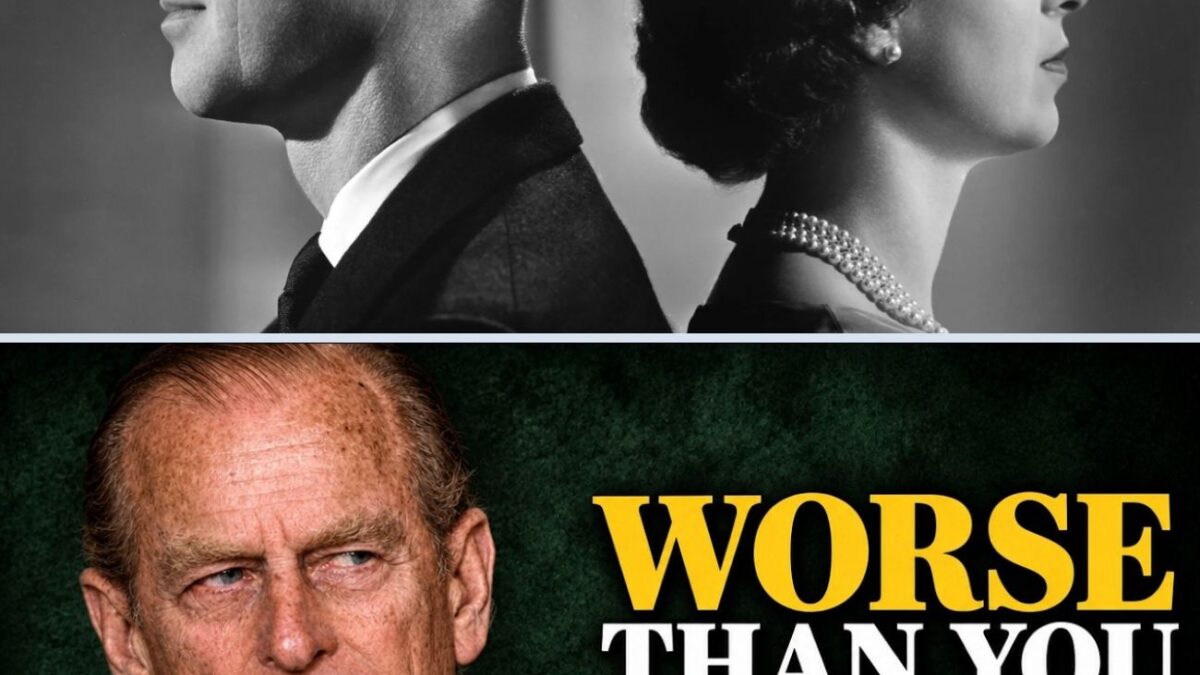
On 17 April, 2021, a Land Rover he had spent 16 years redesigning carried his coffin into Windsor. He picked the green. Inside the chapel, his widow sat alone. 73 years, and the country knew the line by heart, her strength and stay. Here’s what the line covered. For his final years, he had not lived with her. And in 1957, when foreign papers printed rumors of a rift, the palace denied it. Then 11 days later, she made him a prince, a title withheld for 9 years. Why exactly then? And why did she never move to restrain him? Start with the house, because the house is the part nobody puts in the montage.
Wood Farm sits on the Sandringham estate in Norfolk, a low brick building with five bedrooms, the kind of place a land agent would live in. It has no state rooms. It has no staff wing worth the name. Philip retired from public duties on 2 August 2017, standing in the rain outside Buckingham Palace in a bowler hat, while a Royal Marines parade went past him. And then he moved there, and essentially stayed. The Queen remained at Windsor and Buckingham Palace, and came up for Christmas and for stretches in the summer. They spoke on the telephone. She visited. He painted watercolors, read, drove a carriage, entertained a small rotation of people he actually liked.
Among them, regularly, was Penny Mountbatten, Countess Mountbatten of Burma, 40-odd years younger than him, married into the family of the uncle who had built his entire life. She had taken up carriage driving with him after her own daughter died in 1991. She was photographed at Wood Farm. She was at his funeral, one of only 30 people permitted inside under the COVID restrictions, in a chapel where his wife sat by herself. There is no credible evidence that the relationship was sexual, and both the Mountbatten family and the palace have always treated it as friendship. That is the honest position. It is also not the interesting part. The interesting part is that a man in his 90s had built, with his wife’s full knowledge and apparent approval, a separate household with a separate circle 60 miles from her on land she owned. That arrangement was not a scandal. It was a settlement. And settlements have terms.
Now, the funeral itself, because he wrote it. The operation had a name, Forth Bridge, and he had been editing the plan for years. No eulogy, no lying in state, no fuss, which in his vocabulary was close to a moral principle. The coffin carried his naval cap and his sword, the one given to him by the king whose daughter he married. And the hearse was a Land Rover Defender TD5 130, a working farm vehicle, which he had worked on with the manufacturer since roughly 2003, specifying the open top, the rubber grips to stop the coffin sliding, the paint. He asked for it in a military shade he described as dark bronze green. A man plans a funeral like that for one reason. He does not trust anyone else to define what he was.
Which brings us to the word in the title, nasty. There’s a version of Prince Philip that gets recycled every few years, and it’s a highlight reel of cruelty. The 1986 line to British students in China about staying too long and getting slitty-eyed. The question to Aboriginal Australians in 2002 about whether they still threw spears at each other. The remark to a Nigerian president in 2003 that he looked ready for bed. Household staff described a temper that arrived fast and left faster. Journalists who followed him for decades collected the insults like stamps. His eldest son grew up frightened of him and as an adult let an authorized biographer say so in print. All of that is documented and none of it is the secret.
Rudeness in public was the most visible thing about him. You cannot call a thing secret when it was printed in The Times. The part that was actually hidden is colder and it runs the other way. To become the husband of the future queen of England, Philip was systematically stripped of every form of ownership a man of his era measured himself by: country, name, career, religion, the surname of his own children, any independent income. He was given in exchange a wife who loved him and a title that meant nothing and a job with no description. What he did with what was left of him is the story. He built a kingdom inside her house. He set himself in various forms for 50 years.
Talking to his authorized biographer Basil Boothroyd around 1970, he put it flatly, constitutionally he did not exist. Earlier in a spasm of genuine rage that has been reported by multiple biographers and never denied by the palace, he said he was nothing but a bloody amoeba, the only man in the country not allowed to give his name to his own children. Keep that sentence. We’ll come back to what he eventually did about it and to whom.
So how does a man end up with nothing to own? He was born on 10 June 1921 on a dining table at Mon Repos on Corfu, which sounds like color and is actually the first fact that matters because 18 months later the family was gone. His father, Prince Andrew of Greece, was court-martialed after the catastrophe of the Greco-Turkish War. And in December 1922, a British warship, HMS Calypso, took the family off the island. The story that the baby traveled in a cot made from an orange box has been repeated so often it has hardened into fact. It comes from family recollection and it may be tidied, but the substance is not in dispute. He left his country as cargo. He never held a Greek passport as an adult and for years he held no passport at all.
What followed was not poverty. It was something stranger and more corrosive, dependents dressed as royalty. The family lived outside Paris in a house lent by a rich relative. Money came from relatives. School fees came from relatives. He was a prince of a country that had thrown his family out with no throne, no estate, and no allowance of his own.
Then the family stopped being a family. In 1930 his mother, Princess Alice of Battenberg, was removed from the house and placed in the Bellevue Sanatorium at Kreuzlingen in Switzerland. She was diagnosed with schizophrenia. Sigmund Freud was consulted on her case and recommended treatments that are grim to read about now. Philip was eight. He did not see her for years. His father took himself to the south of France and lived in Monte Carlo on other people’s generosity. The two of them met rarely after that. And when Prince Andrew died in 1944, he left his son a signet ring, some clothes, and a shaving brush. Philip wore the ring for the rest of his life.
His four sisters, all older, all married German princes between 1930 and 1931. And three of those husbands ended up with Nazi party connections, one of them an SS officer. That is not an accusation against Philip, who was at school in Britain and then in the Royal Navy fighting the Germans. It is a fact about what happened to his family in the decade he needed one.
Then, the deaths. In November 1937, his sister Cecile, her husband, two of her sons, and her mother-in-law were killed when their aircraft came down in fog at Ostend. She was pregnant. Philip, 16, traveled to Darmstadt for the funeral and walked in the cortege between relatives in Nazi uniform under swastika banners in a photograph that has followed him ever since. Look at that photograph again, though, and notice what it actually shows. A boy in a dark overcoat surrounded by adults, none of whom were responsible for him.
Within a year, the man who was responsible for him, his guardian and uncle George Milford Haven, was dead of cancer at 46. That left Lord Louis Mountbatten. You cannot understand the marriage without understanding that Philip arrived at it as a project. Mountbatten was ambitious in a way that embarrassed even his allies, obsessed with the standing of his family, and in possession of a spectacular nephew, tall, blonde, broke, brave, Royal Navy, and distantly related to everybody.
Mountbatten did not invent Philip’s feelings for Elizabeth. He did arrange the conditions in which they could form, and he pushed, and he kept pushing for years until senior courtiers were complaining openly about it. Here’s the part that explains everything that came later, and it’s small. A boy who is passed between houses learns one skill above all others. He learns how other people’s households work, where the money comes from, who the servants answer to, what the food costs, which relative resents the bill. Philip’s school reports from Gordonstoun praised his leadership and his appetite for organizing things. His contemporaries remembered a boy who took charge of arrangements because arrangements were the only territory available to him. He had no home, so he ran other people’s.
30 years later, that habit would be turned loose inside Buckingham Palace, on an estate in Norfolk he didn’t own, in a castle in Aberdeenshire he didn’t own, over a household staffed by people who were not his employees, and on a son whose upbringing became the one domain nobody could constitutionally take away from him.
The marriage would give him a wife, a family, an income he could not earn, and a role no one could define. It would take, formally and on paper, almost everything else. On 18 March 1947, he was naturalized as a British subject, renounced his Greek and Danish royal titles, abandoned the Orthodox Church for the Church of England, and adopted the surname Mountbatten, which was not even his father’s name. It was his mother’s family’s Anglicized invention from the First World War. The Danish house he actually descended from was called Schleswig-Holstein-Sonderburg-Glücksburg, and nobody in London was going to print that on a marriage certificate.
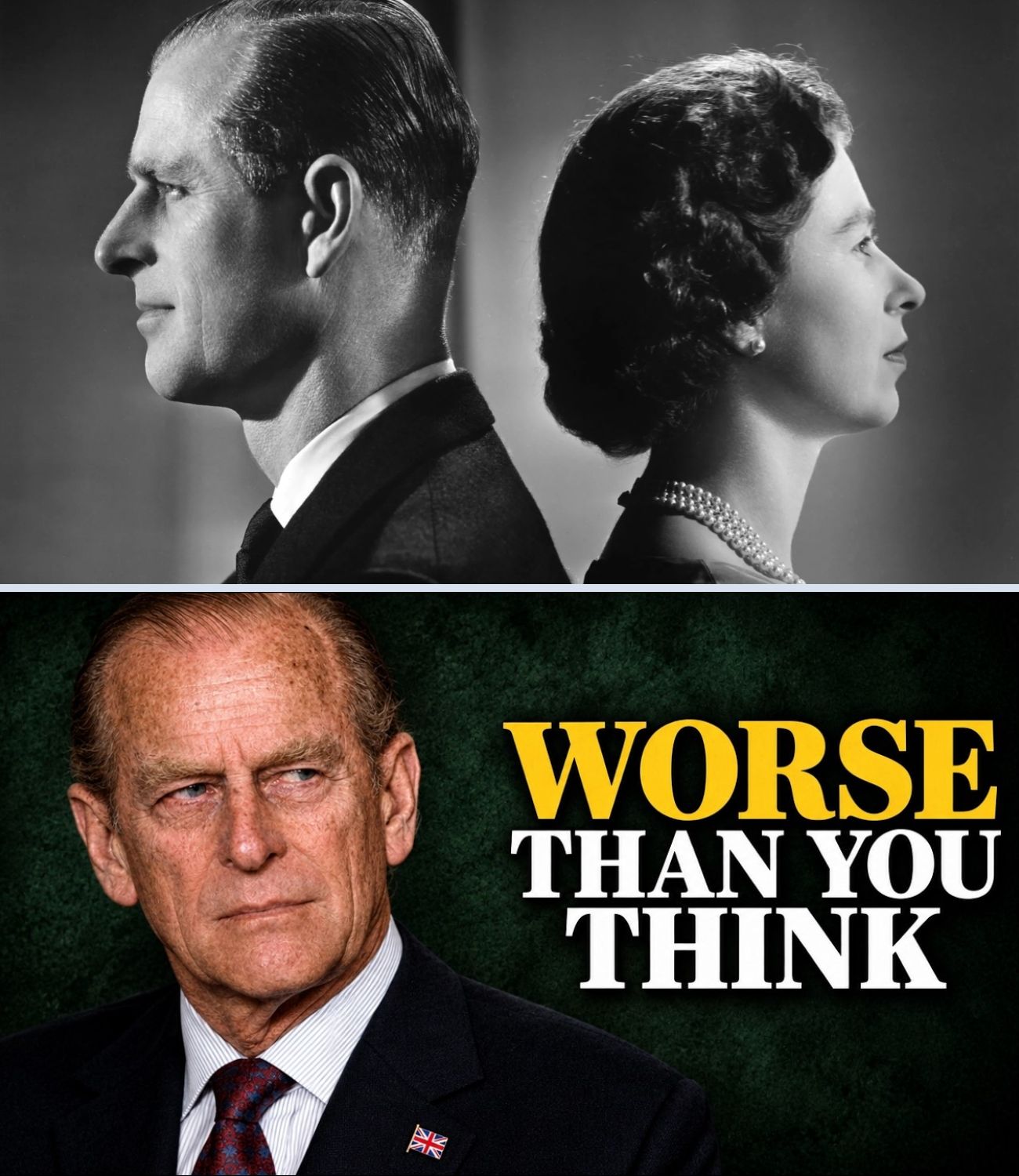
Four months later, on 9 July 1947, the engagement was announced. The standard version of what happened next is a love story, and I want to be clear before we go further because the cynical reading of this marriage is as lazy as the sentimental one. There is real evidence of attachment on both sides, from her side especially, and it starts earlier than most people realize. She was 13, he was 18. It was 22 July 1939, at the Royal Naval College at Dartmouth, and the reason we know what the afternoon looked like at all is a governess who later sold the story and was cut off by the family for the rest of her life.
Her name was Marion Crawford, and the family called her Crawfie, and the memoir she published in 1950 called The Little Princesses is the single most quoted source for that afternoon and also the least reliable. She wrote it after leaving royal service. She wrote it for money. She wrote it to be charming, and the Queen Mother never spoke to her again. So take the details as atmosphere rather than testimony.
What she described was a 13-year-old who could not stop looking. Philip had been assigned to entertain the two princesses. There was mumps in the college and church was canceled, and he played with a train set, got bored, and suggested the tennis courts where he jumped the nets. One, two. Crawford’s verdict on the performance was drier than the romance industry likes to remember. She thought he showed off a good deal. Two, three. The bit about Elizabeth watching him eat plate after plate of shrimp and then a banana split comes from the same book. Four.
Two other people at Dartmouth that weekend recorded impressions and they are more useful. Lord Louis Mountbatten, who was aboard as an aide to the King, noted in his diary that the meeting had been a great success. Five. He was not talking about the tennis, and decades later Philip himself, asked about it by Basil Boothroyd, the biographer the palace approved, gave an answer so flat it is almost rude: They’d met. He’d gone aboard the yacht. It was amusing, and that was that.
Hold those two reactions side by side because they mirror the marriage in miniature at the very start. She fell. He was polite. Mountbatten took notes. That asymmetry matters more than any later rumor about a nightclub dancer because it establishes who wanted the thing more, and wanting more is a form of weakness that Elizabeth carried into a marriage where she otherwise held every card. She wrote to him through the war while he served in the Mediterranean and the Pacific. She kept his photograph on her mantelpiece. First in a beard so people wouldn’t recognize him, later without. Courtiers noticed. Her parents noticed and did not like it. They thought she was too young to have settled on anything, and they were correct. And they also knew she had.
The objections to Philip were not private snobbery. They were a list, and every item on it became a term of the eventual deal. He was foreign, and more specifically, he was Greek royal, which in 1946 meant a dynasty that had been thrown out twice and might be thrown out again. He had no money. The anecdote about his bank balance being around 11 pounds comes from his own later joking and is probably polished, but the substance holds. He owned a couple of uniforms and a car. He had German brothers-in-law. He was rough at dinner tables. The King’s private secretary, Sir Alan Lascelles, thought him rude and unformed. And several courtiers referred to him as Phil the Greek, which was the posher, funnier version of what the Queen Mother’s circle meant when they called him the Hun.
And behind him stood Mountbatten, lobbying with such transparent hunger for the match that the King’s household began treating the whole thing as a Mountbatten land grab rather than a romance. So the family set the price, and Philip paid every installment. In March 1947, he stopped being a Greek and Danish prince. He gave up the titles, took British nationality, left the Orthodox Church of his christening, and was received into the Church of England, and adopted a surname manufactured by his mother’s family during the First World War to stop sounding German, Battenberg into Mountbatten. He was, on paper, no longer anything he had been born as.
And here is the detail that gets skipped in every anniversary montage. His three surviving sisters, Margarita, Theodora, and Sophie, were not invited to the wedding. They were German by marriage. Britain had finished the war two years earlier, and the palace decided their presence would be intolerable to the public. Nobody has ever produced evidence that Philip fought the decision. He appears to have accepted it the way he accepted everything else on the list. But consider the arithmetic of that day from where he was standing. His father was dead. His mother came in the gray habit of the Greek Orthodox nursing order she had founded, and sat almost alone on her son’s side of the Abbey.
The Duke of Windsor, his wife’s uncle, was also not invited, which tells you the guest list was drawn by people counting risk rather than family. On the morning of 20 November 1947, hours before the service, the king created him Duke of Edinburgh, Earl of Merioneth, and Baron Greenwich, and made him a knight of the Garter. Elizabeth had been made a lady of the Garter eight days earlier so that she would outrank him in the order. That was deliberate. Somebody in that household sat down and worked out the precedence so that the bride would not be walking behind her husband anywhere.
The wedding itself was a national event staged in a broke country. Britain was rationing bread. Elizabeth used clothing coupons toward the Norman Hartnell dress and was sent hundreds more by women around the country, which the palace had to return because transferring coupons was illegal. Two and a half thousand presents arrived. Churchill called the day a flash of color. Crowds slept in the street, none of which changes what the document underneath said. A stateless man with no income married a woman who would inherit a kingdom, and he arrived at the altar having surrendered his nationality, his church, his name, and his family, and having been outranked by his bride on purpose. He was given a title and a wife. He was given nothing that was his.
For about four years that didn’t matter because of Malta. Philip was still a serving naval officer, and a good one. He had been mentioned in dispatches at Cape Matapan for working the searchlights. He was one of the youngest first lieutenants in the fleet, and the men who served with him thought he was going to the top. In 1949 he was posted to the Mediterranean Fleet and Elizabeth followed. They lived at the Villa Guardamangia in Pietà, a rented house belonging to Mountbatten. And for roughly two years she lived something close to an ordinary life. She drove herself. She went to the hairdresser. She watched polo. Her husband went to work in the morning and came back, and in September 1950 he got his own command, the frigate HMS Magpie.
Everyone who has written about Elizabeth agrees on this period, and the agreement is unusual. It was the happiest and freest stretch of her adult life. It is also the only stretch in which she was primarily somebody’s wife. It ended because her father was dying. The king had a lung removed in September 1951, and by then it was obvious that Elizabeth would have to take over for public work. Philip’s naval career was suspended in July 1951. He never went back. He was 30 years old. He had spent his entire life building the one thing that belonged to him personally, and it was closed down by a diagnosis in another man’s chest.
The men who knew him then described him as flattened. His private secretary, Mike Parker, an Australian naval officer who had become his closest friend, said later that Philip’s whole life stopped. On 6 February 1952, at Sagana Lodge in Kenya, the news came through that the king had died. Parker’s account, given years afterwards and repeated in most of the serious biographies, is that Philip took his wife out into the garden to tell her, and that when he came back inside, he looked as though half the world had fallen on him. It’s a recollection, not a document, and Parker was devoted to him, but nothing in the surviving record contradicts it, and it fits what happened next, which was a two-year fight over what Philip was now allowed to be.
He lost all of it. He wanted the family to stay at Clarence House, which they had just finished renovating, and which he had partly designed. They moved to Buckingham Palace because Churchill and Queen Mary and the household said the sovereign lived at Buckingham Palace. He was told he could not join his wife for her daily meetings with her private secretaries. He was given no defined role in the coronation planning at first, and no constitutional standing whatsoever. No regency provision, no papers, nothing. He was, in the phrase he used to Boothroyd nearly 20 years later, a man who did not constitutionally exist.
And then they took the name. Mountbatten, at a dinner at Broadlands in 1952, was heard to boast that the House of Mountbatten now reigned. It got back to Queen Mary within days, and Queen Mary went to Churchill, and Churchill went to the cabinet, and the cabinet advised the new queen that the royal house would remain the house of Windsor. She accepted the advice. On 9 April 1952, she declared it publicly.
Philip’s reaction is the most quoted private remark of his life, and it is attested by multiple biographers working from people who heard it. He said he was nothing but a bloody amoeba, the only man in the country not allowed to give his name to his own children. Notice what that sentence is actually about. Not love, not status, ownership. The one thing a man of his generation and background assumed he would hand down, gone by cabinet advice, in the country he had adopted, on behalf of a family that had already declined to invite his sisters to his wedding.
His wife did not fight it. She could have made it a constitutional quarrel, and she chose her prime minister over her husband. There is no evidence she agonized. She was 25, newly on the throne, advised by men who had run the place since before she was born, and she did what she almost always did in the first decade. She followed the machine.
That is the original transaction, fully stated. He gave up country, name, church, family, career, and surname. She gave up nothing, because she couldn’t. The institution wouldn’t let her, and she knew it. Everything she did for him over the next 60 years, every title, every unusual permission, every refusal to rein him in, was paid out against that account.
The first installment came at the coronation. She put him in charge of the coronation commission, which is how a man with no constitutional existence ended up chairing the committee that decided how the monarchy would be presented to the 20th century. Philip wanted it televised. Churchill was against it. The Archbishop of Canterbury was against it. The Queen was initially against it. Philip won. And on 2 June 1953, more than 20 million people in Britain watched a coronation on television. Most of them on sets bought or rented for the occasion.
Then he knelt in front of his wife, put his hands between hers, and swore to become her liege man of life and limb. First of the royal dukes to do homage. The photographs of that moment were reproduced everywhere as an image of devotion. They were also an image of the terms. The man kneels. The woman sits. Everyone in the Abbey understood the arrangement perfectly well. And so did he, which is why what he did over the following decade was so precise. If he couldn’t have standing, he would take administration. If he couldn’t have a name, he would take the house.
He started with the kitchens. Balmoral and Sandringham were hers, private property, inherited, not Crown Estate. And he ran them. He tore out the Victorian kitchens at Balmoral and put in modern ones. He installed a barbecue area and cooked on it himself. Which is the sort of detail that reads as charming and was in fact a statement about who decided how the family ate. At Sandringham, he closed down the loss-making dairy and built a new one. Planted new crops, brought in mushroom sheds and blackcurrants, and began running the farms on something resembling commercial principles. He designed a truck for the Sandringham stud. He reorganized the wine cellars at Buckingham Palace.
Over about 10 years, he took the household apart and rebuilt it. He abolished jobs that had existed since the Georgians. He introduced an intercom system so that footmen weren’t walking corridors with messages. He had a lift put into the palace. He got the staff to eat in a canteen rather than in a hierarchy of separate dining rooms. He cut the ceremonial pantomime around the royal table. Staff numbers came down. The old guard hated it. And the old guard is the reason we know about most of it because they complained to anyone who would listen and several of them eventually wrote it down.
Here’s what I think that decade actually was. A man who had been denied a constitutional role, denied his surname, denied his career, and denied a seat at his wife’s daily briefings, was given the domestic estate as a consolation prize. And he took it apart and rebuilt it in his own image because it was the only territory on Earth that would answer to him. Ask who owned the houses and the answer is Elizabeth. Ask who ran them and the answer for the next 60 years is Philip. She never took that back. It was the one thing she had to give.
The other territory was the children, and we’ll get to what he did there because it’s the part of this story that produced real and lasting damage.
First, 1956, because 1956 is when the outside world got its only serious look at the machinery. In October of that year, Philip left Britain on the royal yacht Britannia for a tour that lasted just under four months. The official purpose was opening the Melbourne Olympic Games and visiting far-flung Commonwealth territories that no member of the family had ever reached. Antarctica, the Falklands, Ascension, The Gambia. He traveled with Mike Parker. He was away for Christmas. He was away for his wife’s birthday season and his children’s holidays. He came home on 12 February 1957.
Four months is a long time. Long enough that people started asking the obvious question, and in January and February 1957, the American and Continental press began printing it. The Duke and the Queen were estranged, and the Duke had a woman. The Baltimore Sun ran a version of it. German and American papers went further. The reporting was built on gossip and on the presence of Parker, who was known in London as Philip’s guide to a nightlife the palace pretended did not exist.
Then Parker’s own marriage detonated in public. His wife Eileen filed for divorce. The story reached the papers while the yacht was at Gibraltar, and Parker resigned immediately. Not because he had done anything to the Queen, but because in 1957, a divorced man could not be seen at the side of the sovereign’s husband. He left the ship and went home to face it. Philip lost the last friend from his old life who had been inside the operation.
What the palace did next was unprecedented, and people forget how strange it was. On 11 February 1957, the press secretary issued a statement saying that it was quite untrue that there was any rift between the Queen and the Duke. Buckingham Palace did not comment on rumors. It had a doctrine of silence going back generations. It broke the doctrine to deny this. Denials of that kind are interesting because of what they concede. Somebody inside had decided the story was doing real damage. Not to a marriage, to an institution five years into a new reign that was still being sold as a moral improvement on the one that had abdicated 20 years earlier.
The reunion was staged as a joke, and the joke is one of the best pieces of evidence in the whole story. Philip and the Britannia‘s officers had grown beards during the voyage. When the Queen flew out to meet him in Lisbon on the 16th February, she and her ladies-in-waiting put on false ginger beards in the aircraft so that the first thing he saw when he came aboard was a cabin full of bearded women. They emerged together laughing for the cameras.
That is not nothing. It is a private couple’s humor, and it required planning, and she did it. A woman managing a purely political arrangement does not think of that. But look at what the gag was for. It was a photograph. It was the answer to the rift story delivered visually to a world press pack standing on the tarmac. The most persuasive evidence of their intimacy in that decade is also a piece of public relations. That’s the marriage. It was both things at once constantly, and you cannot separate them.
Six days after they got back to London, on 22 February 1957, the Queen issued letters patent giving her husband the style and dignity of a prince of the United Kingdom. He had been a royal duke for nine years and three months. He was the husband of the sovereign, the father of the heir, and he had not been a prince since the day in 1947 when he stopped being a prince of Greece and Denmark. Now, 11 days after the palace had publicly denied that his marriage was in trouble, he was one again.
Careful here, because the temptation is to make this a straight bribe, and the evidence doesn’t reach that far. The question of restoring a princedom had been circulating for years. The title had been discussed and shelved before. What the record shows is timing, not motive, and timing is not proof. But the announcement itself makes no attempt to hide the reasoning. It refers to his services to the country and to her personally, and the effect on the newspapers was immediate and intended. The rift story died inside a fortnight.
She could not give him the name of his children. She could not give him a constitutional role. She could give him this, and she chose the worst possible month to do it, which is either extraordinary carelessness or a deliberate public answer to a public insult. Neither reading makes it a coincidence.
Now, the rumors themselves, because I’m not going to skate past them, and I’m also not going to sell you gossip as history. The oldest and loudest involves Pat Kirkwood, a musical star with, by contemporary description, the best legs in London. In October 1948, the society photographer Baron Nahum took Philip to see her show. They went on to a restaurant and a nightclub. They danced, and they ended the night at Baron’s flat having breakfast. Elizabeth was eight months pregnant with Charles. That much is agreed by everyone involved.
Kirkwood spent the remaining 59 years of her life denying anything more, furiously and consistently. She said the rumor cost her the career she should have had. She wrote to Philip in the 1990s asking him to put something in writing that would clear her name. He declined to issue any public statement. He wrote back sympathetically and said that invasions of privacy were something they both had to endure. Her husband called it a decent letter that did nothing.
That’s the thing worth sitting with. A woman’s professional life was damaged by a story about him. She asked him for one sentence, and the answer was sympathy without cost. He had the power to fix it. Denying it would have meant acknowledging it, and the palace rule was that you never acknowledge. So, she carried it, and he didn’t.
The other names recur in the same way. Hélène Cordet, a childhood friend from his French years, a nightclub owner whose two children he stood godfather to, and whose paternity has been the subject of 40 years of insinuation. She denied he was the father. The children have denied it, and there has never been evidence.
Sacha, Duchess of Abercorn, who spoke about their long friendship in the 1990s, and described it as intense, but not, in her words, a full-blown affair. She talked about a meeting of minds, and about giving him space away from the court.
Penny Knatchbull, decades later.
The pattern is consistent, and it is not a pattern of proof. There is no letter, no settlement, no servant’s contemporary account that holds up, no child. In a household where staff sold stories for 60 years, and where a governess published a book about a tennis game, nobody produced a document. So, I’ll say what I think the evidence supports. The likeliest truth is that Philip maintained, throughout the marriage, a series of close friendships with women who were not his wife, in houses that were not his, out of sight of the court, and that this was known, tolerated, and never discussed. Whether any of it was sexual is unproven, and probably unprovable.
What is not in doubt is the arrangement itself. He kept a private social world, and she permitted it. And she permitted it because the alternative did not exist. Look at what the 1950s actually offered her. Her uncle had given up the throne in 1936 to marry a divorced woman, and the wound was still open. The Duke of Windsor hadn’t been invited to her wedding, and wouldn’t be invited to her coronation. In 1955, her own sister Margaret had been maneuvered out of marrying Peter Townsend, a divorced man, by a combination of cabinet pressure, church doctrine, and the plain arithmetic of losing her income and her place.
Elizabeth was supreme governor of the Church of England. In her coronation oath, she had sworn to maintain it. A queen who separated from her husband in 1957 would have been the second monarch in 20 years to put her marriage ahead of the institution. And everyone in that building knew what the first one had cost.
There was no exit. Not a difficult exit. Not an expensive one. None. Which means every subsequent decision she made about him—the title, the silence, the 50 years of never publicly correcting him—was made by a woman with no leverage to withdraw. The most powerful woman in the Commonwealth could remove a prime minister’s commission and could not remove her husband from the room.
His position was the mirror image. He had no income of his own beyond a parliamentary annuity voted by politicians. No property, no profession, and a role that existed entirely at her discretion. If she had ever withdrawn it, he would have been what he was in 1946. A naval officer with a borrowed surname.
Two people locked into each other by the same machine. Each unable to leave. One of them with all the assets and none of the freedom. That’s the system. And systems like that need somewhere to put the pressure.
In this one, the pressure went downward. Onto a small, shy, sensitive boy who had been born in November 1948. Three weeks after his father went dancing with Pat Kirkwood. And who was about to be sent to the coldest school in Scotland.
Charles was not like his father. And the mismatch was obvious to everyone around them from the beginning. He was anxious, affectionate, easily bruised, physically cautious, and he adored his grandmother and his nanny. Philip’s response, consistently documented over 20 years, was to treat that temperament as a fault to be corrected. He teased him at the table. He mocked the boy’s reactions in front of other people, including guests and staff, several of whom described it independently. Mabel Anderson, the nursery nurse who raised both older children, said of Philip that he could be very abrupt and that Charles would flinch.
The teasing is a detail. The schooling was the decision, and it was entirely his. Elizabeth was inclined toward a tutor at home, as she’d had. Her mother wanted Eton, which was four miles from Windsor Castle and full of boys the family knew. Philip insisted on Cheam, his own preparatory school in Hampshire, and then on Gordonstoun on the Moray Firth in Scotland, his own school founded by Kurt Hahn, the German educationalist who had rescued Philip’s own adolescence after his family dissolved.
Hahn’s system was cold showers, cross-country runs before breakfast, unheated dormitories with the windows open, and the theory that character is built by physical hardship and communal responsibility. It had worked on Philip, who arrived there as a boy with no home and needed a place that would make him self-sufficient.
Charles arrived there in 1962 as the heir to the throne from a family that had never once let him be ordinary, into a dormitory of boys who could win status by hitting him and who did. His letters home from that period survive and have been quoted at length by his authorized biographer. He described the bullying. He described the nights. He asked to leave.
The phrase “Colditz in Kilts,” which attached itself to the place, came from someone in his circle rather than from him directly, but nothing in his own account softens the picture. The Queen received those letters. There is no evidence she intervened. That is the single most revealing fact about the internal power of this marriage, and it has nothing to do with sex. On the question of her eldest son’s education and misery, over five years, the sovereign deferred to her husband. She had the wealth, the constitutional authority, the houses, and the final word in law on every matter in that family. She did not use any of it. Philip had been given the household and the children as his department, and he was left to run the department.
Later, when Philip was asked about it, he said Charles had not been miserable at Gordonstoun and had never said he was. That statement is contradicted by his son’s own letters. Take that how you like. It’s possible a man can be told something for years and not hear it.
He got one thing back in that decade, and it mattered to him more than any of it. Andrew was born in 1960, the first child born to a reigning sovereign in over a hundred years, and shortly before the birth, Elizabeth reopened the surname question. On 8 February 1960, she issued a declaration in council. Her descendants, other than those styled royal highness, would carry the name Mountbatten-Windsor. Macmillan’s cabinet was irritated. Macmillan’s private diary recorded the Queen as being anxious about it to the point of distress, and Mountbatten was delighted, which tells you he’d been at it again.
Eight years after being told he could give his children nothing, Philip got his adopted surname hyphenated onto the far end of the royal line for descendants who would not be princes. It is a small, technical, almost invisible victory. He took it. When Princess Anne married in 1973, she signed the register as Mountbatten-Windsor, which put the name into the Abbey books in her own hand. Keep the amoeba line in mind. It took eight years and it was worth a hyphen.
The 1960s were, by most measures, the good years. Two more children, Andrew and then Edward in 1964, at a point when the marriage was 17 years old and could easily have been ceremonial and wasn’t. Philip had found work that suited him: the Duke of Edinburgh’s Award, the World Wildlife Fund, industrial productivity conferences, hundreds of speeches a year, a genuine appetite for engineering and design. He was the first member of the family to give a television interview. He was funny in public in a way none of them had ever been.
He also modernized the monarchy in a direction the Queen could not have pushed herself. After Lord Altrincham’s 1957 attack on her public style—priggish schoolgirl, a voice that was a pain in the neck—the changes that followed were largely Philip’s. The debutante presentations were abolished in 1958, ending the ritual where the daughters of the upper classes were paraded past the sovereign. Informal luncheons at the palace brought in people who had actually done something. Garden parties expanded, and in 1969, he pushed hardest of all for a documentary.
Richard Cawston’s film Royal Family took a BBC crew inside the residences for a year. It showed the Queen buying ice cream, Philip cooking sausages on a barbecue at Balmoral, the family at a table talking about nothing. Something like 30 million people in Britain watched it, and it ran worldwide. It was the most successful piece of royal public relations of the century, and it was Philip’s project, driven by his conviction that if the institution didn’t show itself, it would die of irrelevance.
It was also, several people said afterwards, the moment the fence came down. David Attenborough, then at the BBC, is supposed to have warned that they were killing the mystery of the tribal chief by letting the village into the hut. The film was withdrawn from public view not long after and has been kept in the vaults by the palace ever since, shown in full only once by accident on YouTube in 2021 before the royal collection had it taken down.
So, here’s a man who spent his life being defined by other people, who spent the 1960s making the family visible on purpose, and whose single most revealing production about his own household was locked up by that household and has been unavailable for 50 years. Somebody decided the country had seen enough. It was not him.
Then came his son’s marriage and the thing Philip did in 1980 that has followed him into every retelling since. Charles was 32 and had been seeing Diana Spencer for about six months. The press were camped on her. Philip wrote to him; the letter, as described by Jonathan Dimbleby in the 1994 biography written with Charles’s cooperation and access to his papers, told him that the situation was damaging to the girl’s reputation, that he should make up his mind, and that he should either propose or break it off without further delay.
Charles read it, according to Dimbleby, as an ultimatum. He felt he had no choice. He proposed in February 1981. Philip’s version, which he gave privately and which his defenders have repeated ever since, is that the letter said no such thing, that it set out the options and left the decision to his son, and that Charles misread him as he had been misreading him for 30 years. The letter itself has not been published. We have a son’s interpretation delivered through an authorized biographer at the height of a public war with his own family, and a father’s denial delivered through intermediaries. Both men had reasons to remember it the way they did. What is not in dispute is that Philip wrote it, that Charles received it as pressure, and that the wedding followed.
What happened 11 years later is the reversal that nobody expected. And it’s the reason I won’t let the cartoon version of this man stand. In June 1992, Andrew Morton’s book appeared with Diana’s cooperation and her own recorded testimony behind it. And the Wales marriage became a public bonfire.
That summer, Philip began writing to his daughter-in-law. He wrote several long letters typed with handwritten corrections. She answered them. The correspondence went back and forth for months. Parts of those letters were read into the record at the 2007 inquest into Diana’s death. And others have been described by people who saw them.
He signed himself Pa. He told her he and the Queen had no desire to see the marriage end. He was blunt about his son’s conduct. The line that has survived best is his statement that he could not imagine anyone in their right mind leaving her for Camilla. He also told her, less comfortably for her, that she bore some responsibility, too, and that both of them were behaving badly. And he asked her to consider what the collapse would do to the boys.
Diana’s friends said she cried reading them. Her butler said she kept them in her private box, apart from everything else. She described them to more than one person as the kindest letters she had ever had from that family. And she also, at other moments, described the family as her jailers. Both things were said by the same woman within the same period. That’s what being inside that household appears to have done to people.
The man who had been cruel to his son was the one who wrote to the daughter-in-law and told her his son was in the wrong. He was also, let’s be clear, arguing for exactly what he had always argued for. The marriage should hold because the institution needed it to hold. He had lived inside that logic since 1947. He had given up his country for it. His letters to Diana were generous and personal, and they were also the letter he had written to Charles in 1980 extended over a decade.
Then 31 August 1997 and Balmoral. The family was in Scotland when Diana died in Paris, and what followed was five days of public fury at their absence. Inside the castle, Philip was on the telephone to London repeatedly as the arrangements were argued out. The one decision attributed to him beyond dispute concerns the funeral procession. William and Harry, 15 and 12, did not want to walk behind the coffin through central London. Charles wanted them to. The Spencers were against it. The conference calls went on for days, and Philip said to his grandsons, in words that both the palace and Harry have confirmed in substance, “If you don’t walk, you may regret it later. And then, I’ll walk with you.”
He did. On 6 September 1997, he walked the mile from St. James’s to the Abbey beside two boys who had buried their mother. Harry has since said publicly that he regrets walking, that no child should be asked to do that, and that it was done for the benefit of the spectators. William has never said much about it at all. So, the decision Philip made out of what looks like real kindness—a grandfather saying he wouldn’t let them do it alone—is now described by one of those grandsons as something closer to a public performance imposed on children. Both things can be true. That is more or less the summary of the man.
10 weeks later, on 20 November 1997, the Queen and Philip celebrated their golden wedding. There was a lunch at Banqueting House, and both of them gave speeches. And those two speeches are the closest thing to a joint statement about the marriage that either ever made. She said he had never taken easily to compliments, and that he had quite simply been her strength and stay all these years.
He stood up and said that tolerance is the one essential ingredient in any happy marriage. That it might not be important when things are going well, but it is absolutely vital when they are not. And then he added that they could take it from him. The Queen had the quality of tolerance in abundance. The room laughed because it sounded like a husband being self-deprecating about his temper.
Read it again with 50 years behind it, and it isn’t a joke. It’s the only public account he ever gave of what she had actually done for him, and what it cost her. Said out loud in front of the press, with no elaboration offered then or ever. Nobody asked her what she had been tolerating. Nobody in that room was going to.
The last two decades of his life are where the arrangement stopped being a performance and became simply how they lived. And you can track it through addresses. He kept working into his 90s at a rate that embarrassed people 40 years younger. Hundreds of engagements a year. Patronages in the high hundreds. The Duke of Edinburgh’s Award running in more than a hundred countries. He also kept being the man in the highlight reel. In 2002, he asked an Aboriginal businessman in Queensland whether his people still threw spears at each other. In 2003, he told the Nigerian president, who was wearing traditional dress, that he looked ready for bed.
These weren’t slips of a tired old man. The China remark had come in 1986. The pattern went back to the 50s, and the palace never once apologized for any of it in terms that meant anything.
Here’s the part that belongs in this story, rather than in a compilation of gaffes. In 70 years, the Queen never publicly corrected him. Not once. Not a statement, not a distancing, not a regret expressed on his behalf. When other members of that family embarrassed her, she moved against them eventually. Andrew lost his military affiliations and his HRH in public use within weeks of a car crash interview. Philip never lost anything.
That is what the 1997 speech was describing. He said she had tolerance in abundance, and he meant she let him be exactly what he was in public for seven decades at the institution’s expense. She had decided in about 1952 that the price of keeping him was never restraining him, and she never revisited the decision.
In 2011, the year he turned 90, he gave two interviews that are worth putting side by side. Talking to Alan Titchmarsh for ITV, he described his own position again, and the vocabulary hadn’t changed in half a century. He was a constitutional anomaly, a man with no defined job, expected to find his own way. To Fiona Bruce, asked whether he felt he had been successful in the role he had invented, he said he couldn’t care less, that he had simply done what he thought was his best, and other people could judge if they wanted to.
That’s not modesty. It’s a man refusing at 90 to let anyone else score him. From a person who had spent his life being scored by courtiers who thought he was a rude foreigner and by newspapers that thought he was a joke.
On 2 August 2017, he did his last solo engagement. Buckingham Palace forecourt, a Royal Marines parade, heavy rain, and a 96-year-old man standing in a bowler hat refusing an umbrella taking the salute. 22,419 solo engagements over 65 years, according to the palace’s own count.
Then he went to Norfolk. Wood Farm was not a retirement cottage. It was a functioning separate residence with its own small staff, his books, his easels, his correspondence, and a routine entirely of his own devising. He read, he wrote letters, he had people up for lunch. Penny Knatchbull, the carriage-driving companion of 30 years, lived nearby at Broadlands’ Norfolk outpost and was a constant. Old naval friends came. He was reportedly happier in those years than he had been in decades.
His wife remained at Windsor and Buckingham Palace and ran the country’s ceremonial life without him. She came up for Christmas and for parts of the summer. They spoke by telephone. Nobody in the family described this as an estrangement, and there’s no reason to think it was one. It was a household arrangement between two very old people who had spent their entire adult lives on other people’s schedules, and it is also, unavoidably, a man and a woman in separate houses.
Look at the geometry of that. He had spent 60 years running her houses—the kitchens, the farms, the staff, the cellars—because they were the only estate he would ever govern. At the end he took a small one and lived in it alone. The last territory was the first thing he’d ever had that was entirely his.
The pandemic put them back together. In March 2020, he was flown from Norfolk to Windsor, and for the final year of his life, the two of them lived at the castle with a reduced staff of around 20 in a bubble the press nicknamed HMS Bubble, which he would have appreciated. They had dinner together every night. It was the longest uninterrupted stretch they had spent under one roof since Malta.
He died at Windsor on the morning of 9 April 2021, two months short of a hundred. The funeral was his in the precise sense that he had written it. The plan had carried the code name Forth Bridge for years, and he had revised it repeatedly, and what he had removed is as telling as what he kept. No lying in state, no eulogy, no sermon of any length, no procession through London. He didn’t want a state funeral, and had said so for decades.
What he kept was the navy. His naval cap and his sword on the coffin, the one given to him by George VI at the time of the wedding. Action stations sounded by Royal Marines buglers at the end of the service, the call that sends a ship’s crew to battle.
And the vehicle. He had gone to Land Rover in about 2003 when he was 82 and spent the next 16 years working on the conversion of a Defender TD5 130 into a hearse. He specified the open rear deck, the rubber grips to hold the coffin in place, the metal stops, the layout of the whole thing. He asked for it to be repainted in military dark bronze green. He made his final adjustments in 2019, the year he turned 98.
On 17 April 2021, that vehicle carried him 800 yards down the hill inside Windsor Castle to St. George’s Chapel, driven at walking pace. His children walked behind it. 30 people were allowed inside the Chapel under the COVID rules then in force, and the Queen, in black, wearing the diamond brooch he had given her in 1947, sat by herself in the choir stalls with an empty distance on every side.
That photograph went around the world in about 90 seconds. It has been used ever since as the image of a great love ending in loneliness. It is genuinely one of the most affecting pictures ever taken of her. It is also the most controlled image either of them ever produced. He chose the vehicle, the paint, the route, the music, the guest limit in spirit if not in law, and the absence of a eulogy that might have said something he hadn’t authorized.
She chose to sit alone in accordance with rules her own government had made, and which she was not going to be seen breaking. The most private moment of her life was a piece of constitutional behavior watched by 13 million people in Britain, and he had designed the car it arrived in.
Then the records closed. In September 2021, five months after the funeral, the president of the family division of the High Court, Sir Andrew McFarlane, ruled that the Duke of Edinburgh’s will would be sealed for 90 years and not opened or inspected until 2111, when it will be reviewed privately. The hearing itself was held in private. The press were not told it was happening until afterwards, and the ruling acknowledged that the media had been deliberately excluded from an application concerning the public interest.
There is a precedent going back to 1910 for sealing royal wills, and there are perfectly reasonable arguments about the dignity of the sovereign. But note what it means in practice. A man who complained his whole life that other people defined him, who could not give his children his name, who had his one intimate portrait of his family locked in a vault in 1969 and kept there, ended with a document about his own possessions and his own wishes sealed until every living person who knew him is gone.
The royal archives sit in the round tower at Windsor, a few hundred yards from where he died. Access is controlled by the monarch. His papers went there.
She died on 8 September 2022 at Balmoral, one of the two houses he had rebuilt, 17 months after him. His coffin had been resting in the royal vault beneath St. George’s. When she was buried, it was moved and the two of them were placed together in the King George VI Memorial Chapel beside her parents and her sister’s ashes.
The ledger stone lists four names and now a fifth. His reads, Prince Philip, Duke of Edinburgh. Not Mountbatten, not Mountbatten-Windsor, not Glücksburg, not Battenberg, not Prince Andrew’s son of Greece and Denmark. The title she gave him on the morning of the wedding and the one she gave him in February 1957, cut into a floor in a chapel that belongs to the crown.
So, go back to the beards. February 1957, a plane on the tarmac at Lisbon, a queen and her ladies-in-waiting in false ginger whiskers so that a husband coming off four months at sea would laugh when he opened the cabin door. It has been retold for 65 years as the best proof that these two people genuinely liked each other, and I think it is. That kind of joke is not written by a committee.
It was also the week the palace had just broken a century of silence to deny that their marriage was in trouble, and six days before she made him a prince, and the photographers were positioned on the tarmac before the aircraft landed. The affection was real, and it was doing a job.
That is not a contradiction in this marriage. It is the operating principle. The public story is that she gave him everything—a throne to stand beside, a family, a country, a purpose. The documents say the traffic ran the other way. He handed over his nationality, his church, his career at 30, his surname, his sisters at his own wedding, and the right to be the head of his own family. And he received in exchange a dukedom, an annuity voted by politicians, and the keys to houses he would never own.
He took the only payment available. He ran her estates like a captain. He made the institution modern because nobody else in it could. And he took the rest out on a son who was not built to absorb it.
What’s nastier than the rumors is that none of it was hidden. The cruelty to Charles happened in front of nannies, tutors, detectives, and guests. The gaffes were transcribed by reporters standing three feet away. The separate life, the separate friends, the separate house at the end. All of it was known inside the building and permitted by the one person with the authority to stop it. Because stopping it was never an option she believed she had.
He called himself a bloody amoeba in 1952. The only man in the country not allowed to give his name to his own children. 70 years later, the vehicle that carried him to his grave was the one object in the entire funeral that he had made himself, down to the color of the paint. He could not name a single descendant. He named the green.
You Might Also Enjoy

“We Thought They Would Negotiate”—What Argentine Soldiers Said When The British Attacked Goose Green

“You’ll Never Finish My Ruck March, Limey” — US Sergeant Who Challenged the SAS, Then Fell Out First






