Princess Diana Warned Us About King Charles But Nobody Listened
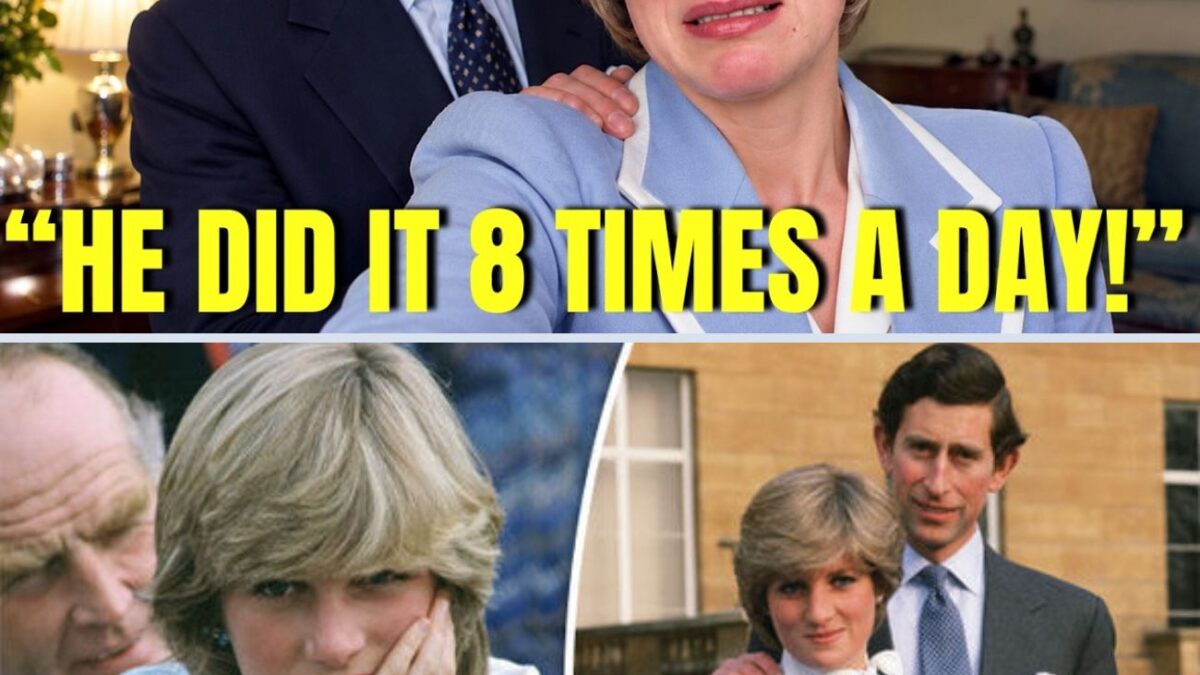
“I suspect most husbands and wives find, uh, they often have arguments.”
“But we don’t.”
“No, no, but occasionally they do.”
Long before the headlines and the family feuds that would shake the monarchy, Princess Diana left behind a trail of unsettling words. A tape recorded in secret. A note handed to a trusted servant. A television interview broadcast in November 1995, watched by nearly 23 million people in Britain alone. It is worth remembering how young she was when it all began. Diana Spencer was 20 when she married Charles in July 1981 in a ceremony at St. Paul’s Cathedral watched by an estimated 750 million people around the world. He was 32. She was dead at 36, which means that every word we are about to examine was spoken by a woman still in her 20s and 30s in the middle of one of the most public and painful marriages of the century. By the end of her life, she was among the most photographed people on Earth. And almost nothing she said in private stayed private for long. While the world saw a future king preparing for the throne, Diana described a different household marked by private struggle, broken trust, and tension behind palace walls. As years passed, events sent many people back to her claims. Had she seen something others refused to acknowledge? The honest answer is more interesting than yes or no. Some of what she feared did happen. Some did not. And a few of her loudest predictions are far less solid than they sound.
Years before Charles became king, Diana carried worries that went beyond her marriage. Where do we hear them from? There are really three main sources. The 1991 tapes she secretly recorded for Andrew Morton, used in his 1992 book Diana: Her True Story, the 1995 Panorama interview with the BBC’s Martin Bashir, and accounts from friends and biographers, valuable but filtered through memory and loyalty. The first of those sources deserves a note. For years, the palace insisted Diana had nothing to do with the Morton book. It was only after her death in 1997 that a revised edition revealed she had cooperated, and the original recordings were broadcast to the public in 2017. So, when we hear her voice describing her marriage, we are hearing words she chose to give to a journalist in the hope of being understood, which is not the same as a neutral record.
In those sources, one theme recurs. Diana believed a modern king needed more than duty and preparation. He needed an instinct for people’s feelings. She drew energy from strangers. She saw Charles as reserved, someone who retreated under pressure. Their personalities were shaped by unusual childhoods, and Jonathan Dimbleby’s 1994 authorized biography portrayed a boy sent to the harsh Scottish school Gordonstoun, raised by formal parents. Then, there was Camilla Parker Bowles. Charles and Camilla had first met in 1970, years before he met Diana, and Camilla married the army officer Andrew Parker Bowles in 1973. Diana saw the continuing relationship as a threat to the royal family’s stability, and she knew how powerful the press could be.
Her own phone call leaked in the 1992 Squidgygate tape, and a private call between Charles and Camilla leaked in 1993. That period had already been named by the Queen herself an annus horribilis, with a fire at Windsor Castle and the announcement of the separation of Charles and Diana in December 1992. In 1994, Charles admitted on television that he had committed adultery, though only after the marriage had irretrievably broken down. In Panorama, Diana said that “there were three of them in the marriage, so it was a bit crowded.” The couple divorced in August 1996. Fairness requires one more fact. In that same interview, Diana acknowledged her own affair with the cavalry officer James Hewitt. Neither side in this story was blameless, and that is part of why the warnings need to be read with care.
When Charles and Camilla married in 2005, the fallout was real. But, it complicates the prophecy. By 2022, Queen Elizabeth publicly wished for Camilla to be known as Queen Consort, and polls showed attitudes softening. The scandal hurt the monarchy. It did not destroy it. According to people who knew her, Diana also worried about what she saw as Charles’s unpredictable temper, and about his desire to control how he was seen. She feared that chasing public approval could drive decisions by perception instead of sincerity. I want to be careful here. This is a living person and a one-sided account from a woman in a painful separation relayed by friends who were often on her side. Biographers such as Penny Junor and Sally Bedell Smith paint a more sympathetic portrait of a man frustrated by his role and a failing marriage.
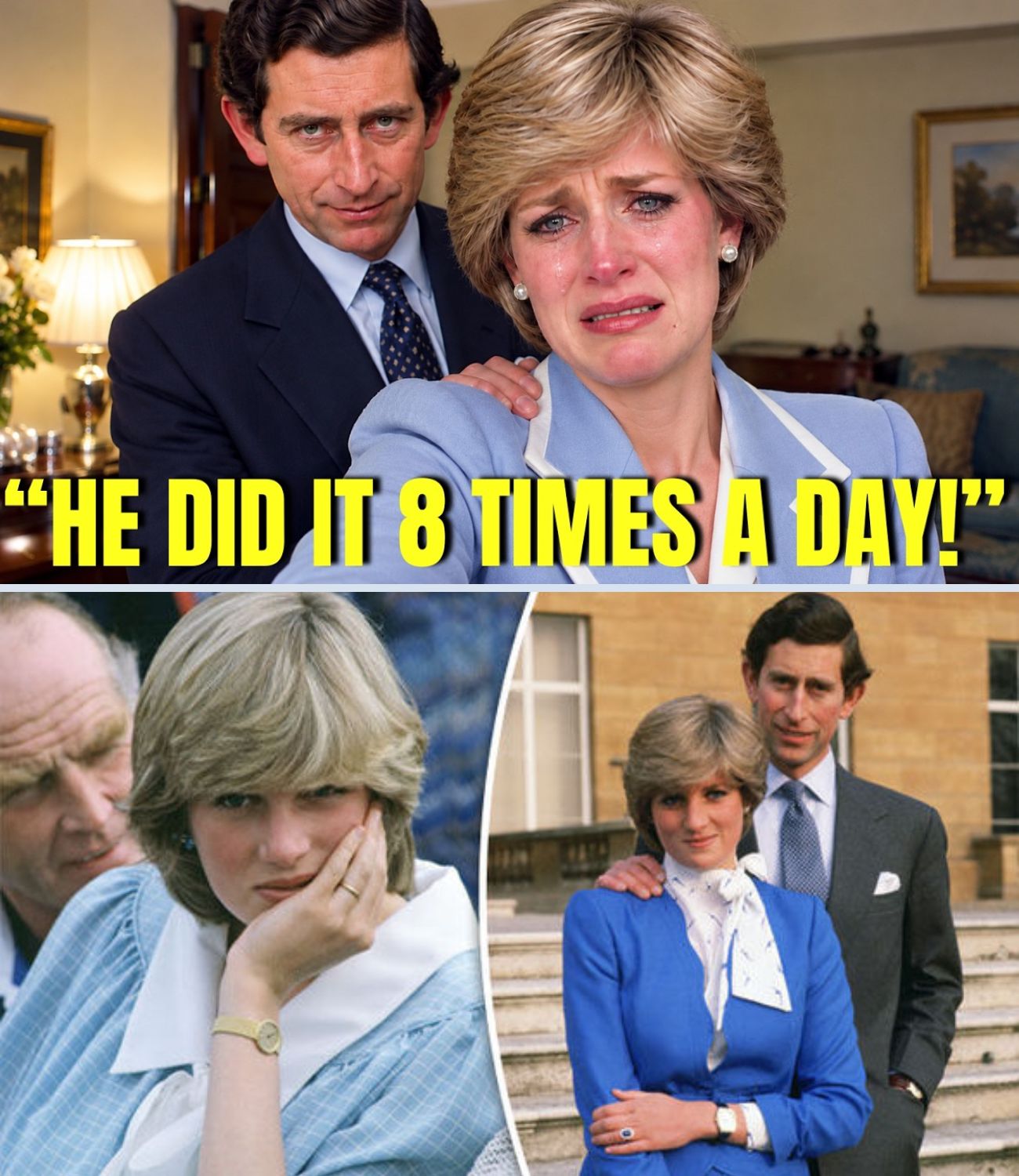
Diana’s own instinct was the opposite of image management. In 1987, she held the hand of a patient with AIDS at a time when many feared even touching them. In 1997, she walked through an Angolan minefield to highlight landmines. In Panorama, she spoke of wanting to be a “queen of people’s hearts.” She also said that the biggest disease of the age was people feeling unloved, a line that reveals as much about her as about the world. Is there evidence for the temper claim? Mostly anecdote. Some stories have appeared in the press, but none has been established the way a documented event would be. What we can say for certain is that Diana believed it and said so. The more dramatic the claim, the thinner the paper trail.
The concern that stood out was what she saw as Charles’s emotional distance from those closest to him. Diana believed affection and warmth were the foundation of a strong family. Through conversations and letters, she reportedly feared a reserved, formal manner could build an invisible wall between Charles and his sons, especially Harry, whose sensitive nature she thought left him more vulnerable to isolation and misunderstanding. She also asked how the public would respond to a future king who struggled to show emotion. The answer came a week after her death in September 1997. Crowds left millions of bouquets outside Kensington Palace, and many were angry that the royal family seemed silent and remote at Balmoral. Queen Elizabeth was persuaded to return to London and address the nation live. It showed exactly the gap in emotional language Diana had described.
But the picture is not all one-sided. When Diana died, it was Charles who flew to Paris with her two sisters to bring her body home. And at her funeral on September 6th, William and Harry, then 15 and 12, walked behind her coffin alongside their father, their grandfather, and her brother in front of an audience estimated in the hundreds of millions. Harry has said in later years that walking in that procession was something he would never do again. Grief, in other words, was being shown and held back at the same time. And it is easy to read either as proof of Diana’s point.
One of her greatest concerns was never about titles. It was about her boys. Charles believed in tradition and composure. Diana wanted William and Harry to feel warmth and security because love, to her, should be shown, not assumed. She took them to fast-food restaurants and amusement parks and to homeless shelters and hospitals so they would see the world beyond privilege. It was a conscious break from royal tradition. In a 2017 documentary marking 20 years since her death, William and Harry spoke warmly of her hugs and her sense of fun. A reminder of how central that emotional openness was to the way they remember her.
Decades on, those worries seem striking. Harry’s decision to step back from royal duties in 2020, his 2021 television interview, and his 2023 memoir, Spare, laid out a painful rift. And he has repeatedly invoked his mother. News reports since have described attempts at reconciliation, though repair has been slow. Charles, for his part, has since spoken more openly about the pain of his own childhood. But be careful. Psychologists call it hindsight bias, our habit of seeing events as more predictable after they happen. A mother’s worry about emotional distance is not a prediction of a specific future. What makes it meaningful is that she understood her sons well enough to see the pressure points.
Diana reportedly believed the qualities needed to wear a crown and those needed to serve people were not always the same. She feared that preserving power could become more important than serving the nation. Yet this sits uneasily beside another point. In Panorama, she said she did not think Charles would want the top job and suggested it would bring enormous limitations. A skipped generation was widely discussed in the 1990s. It never happened. She also worried about his willingness to speak out. In 1984, he called a proposed National Gallery extension a monstrous carbuncle. He pressed his architectural ideas in a 1988 television film and a book, A Vision of Britain, and in 1993 began building the model village of Poundbury in Dorset to his own principles.
He founded the Prince’s Trust in 1976 using part of his Royal Navy severance pay, and the charity has since helped well over a million young people. He farmed organically at Highgrove and launched Duchy Originals in 1990. In 2015, after a long legal battle, his letters to ministers, the Black Spider memos, were published. The issue here is a constitutional one. Britain’s monarch is expected to stay above party politics, and Queen Elizabeth held to that principle through 70 years on the throne, almost never voicing an opinion on a contested issue. Diana did not oppose the causes. She feared a sovereign too closely tied to particular views, because the monarchy’s primary strength was standing above politics. And here, the record gives something real. In his first address as king in September 2022, Charles said it would no longer be possible to give so much time to the charities and issues he cares about. Supporters call it maturity. Critics say how quiet a king can stay is still open, and they note that he has still appeared at international climate summits at the invitation of the government, which shows how blurry the line can be.
Diana knew how royal life could wear a person down. She reportedly worried that Charles was under more strain than the public realized, and that visible struggle at the top could invite damaging questions about the institution. She also wondered whether his habit of weighing decisions and consulting widely, which some saw as thoughtful, might slow decisive action when it mattered. So, what does the record show? Charles became king at 73, the oldest person ever to take the British throne, and was crowned in May 2023 before millions. In early 2024, Buckingham Palace announced he had been diagnosed with cancer, and he paused public engagements before returning. And in 2025, he moved to strip his brother Andrew of his royal titles, a decision many took as a sign of decisiveness, not hesitation.
The monarchy has weathered illness, family tension, and reputational questions. Diana did not predict any of these specifically. She described a general vulnerability. Her warnings were not dramatic predictions of collapse. They were reflections from someone who understood the strengths and weaknesses of the institution. And viral versions often turn a nuanced worry into a prophecy. She also understood power as a world of influence, loyalty, and private advice. She reportedly felt not everyone near Charles served the crown, and that the wrong voices could shape major decisions. The rivalries were real. In the early 1990s, the households of Charles and Diana were openly at war, each briefing journalists against the other. And Diana was surrounded by people who did not always act in her interest. In 2021, a report by the former judge Lord Dyson found that Martin Bashir used deceitful methods, including fake documents, to win her trust and secure the 1995 interview, and the BBC formally apologized. She also reflected on modernizing the monarchy. She accepted change was inevitable, but feared moving too fast could create new problems. That tension has never gone away. Charles’s slimmed-down approach has been called modernizing, and also criticized as thinning out the faces the public knows. Neither view is settled.
The most dramatic piece of evidence is a handwritten note. In October 1993, Diana gave her butler, Paul Burrell, a letter in which she wrote that someone close to her was planning an accident in her car. Burrell kept it after her death. In 2002, he was tried for theft from her estate, and the case collapsed when the Queen recalled a conversation in which he had told her he was keeping some of Diana’s papers for safekeeping. He then published a memoir, and the note appeared in a newspaper in 2003. It became the center of conspiracy theories. A British police inquiry, Operation Paget, examined it along with her death in a Paris crash on August 31st, 1997. Its 2006 report found no evidence of a conspiracy. The driver, Henri Paul, had been drinking and was driving at high speed, and French investigators reached a similar conclusion. Then, in 2008, a London inquest heard months of evidence, including claims by Mohamed Al-Fayed, the father of Dodi Fayed, who died with her, that the crash had been engineered. The jury rejected them. It returned a verdict of unlawful killing through the grossly negligent driving of Paul and of the following vehicles, and it found no plot.
The note shows what Diana feared, not what happened. So, what came true? Her fears about Camilla partly did, though opinion softened. Her fears about distance between Charles and his sons resonated as the rift with Harry became public. Her concern about the monarchy’s emotional language was confirmed in the week after her death. Her anxiety about a king entangled in causes was met in part by Charles’ own promise to step back. But her sense Charles would not be king, her fears of a plot, and any claim that she predicted specific scandals are not supported by the evidence. When Charles became king in September 2022, the monarchy did not collapse. It adapted.
So, what do you think? If Diana saw warning signs early, which clues were hidden in plain sight, and which have we read into the story since? Tell me what you think.
You Might Also Enjoy

“We Thought They Would Negotiate”—What Argentine Soldiers Said When The British Attacked Goose Green

“You’ll Never Finish My Ruck March, Limey” — US Sergeant Who Challenged the SAS, Then Fell Out First






