Princess Diana’s Love Affair With Dodi Fayed Was Much Nastier Than You Thought
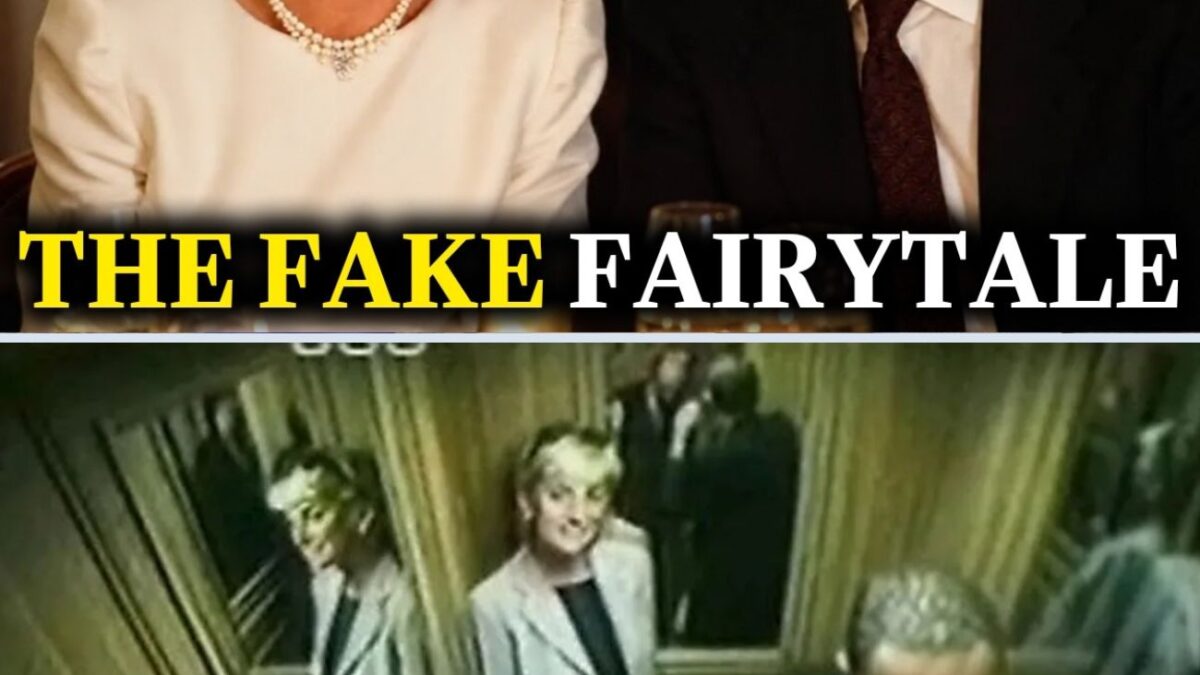
Six weeks. That’s the entire romance the world calls one of the great love stories of the century. When Dodi Fayed met Diana that July, another woman was already wearing his engagement ring, waiting in a villa a short drive down the coast. Two weeks before he died, she sued him. The man who arranged the yacht, the holiday, and the photographs spent 26 years insisting the couple were murdered and died in 2023 accused by dozens of women. And the driver that night in Paris wasn’t a chauffeur at all. He worked for the family.
Then there’s the ring. Start on a boat. July 1997, the harbor at Saint-Tropez. On one side of the water, the most photographed woman alive is on a jet ski with her two sons and roughly a hundred photographers are fighting for position on the rocks. On the other side, more than a short drive away, there is a motor yacht called the Kujo and on board is a 31-year-old American model named Kelly Fisher. She had been told to wait there. She had been told not to come ashore. And she was, by her own account, engaged to the man everyone was about to start calling Diana’s boyfriend.
Kelly Fisher was not a nobody and not a fantasist. She was a working model with an apartment in Paris and she had been with Dodi Fayed since the summer of 1996. She said he proposed in the spring of 1997. She wore a ring. She said he bought her a house in Malibu, told her to give up her career, and asked her to choose the furniture. Friends supported parts of her account. Photographs supported others. Whatever else was true, she had not invented the relationship and she had not invented the fact that she was in Saint-Tropez that week.
Her version of the week goes like this. She flew in on Dodi’s invitation. She was kept on the Kujo while he went ashore to his father’s clifftop villa where the Princess of Wales was staying with William and Harry. He came back at night. He told her nothing. She found out what the rest of the world found out when the rest of the world found out it from newspapers and television. That is her claim made under her own name in public with a lawyer beside her.
Dodi’s side never got the chance to answer it in court. On the 14th of August, 1997, Kelly Fisher sat in a Los Angeles law office next to Gloria Allred, one of the most famous attorneys in America, and filed suit against Dodi Fayed for breach of promise. She held up the ring. She said a check he had written her for $200,000 had bounced. Then she broke down in front of the cameras and the footage went round the world in a day.
It is strange watching it now. A woman crying on American television about a man whose name, two weeks later, would be attached to one of the biggest news stories of the century. 17 days after that press conference, Dodi Fayed was dead in a Paris tunnel. Fisher dropped the case. There was nobody left to sue and suing a dead man’s estate in the middle of global mourning would have ended her. What happened to her after that is one of the stranger small disappearances in this whole story and it will come later.
For now, hold on to the image. A woman with a ring on her finger watching the man who gave it to her fall in love on the front page of every newspaper she could buy. Because here is the part that gets lost in nearly 30 years of retelling. Diana did not meet Dodi Fayed by accident at a party through friends. She met him because his father put them in the same place and kept them there. And Mohamed Al-Fayed was not a man who did anything by accident.
They had crossed paths before, briefly, at Polo in the 1980s, the way everyone in that world crosses paths. Nothing came of it. What changed was an invitation in the summer of 1997 from the owner of Harrods offering Diana his villa above Saint-Tropez, a private beach, and security she would not have to pay for. He had a route to her. Diana’s stepmother, Raine, the widow of her father, Earl Spencer, had joined the board of Harrods International. The Fayeds were not strangers to the Spencers. They were business.
And the offer arrived at a very particular moment in Mohamed Al-Fayed’s life. He had bought Harrods in 1985. A government inquiry into that takeover concluded in 1990 that he had lied about his origins and his wealth. He had twice applied for British citizenship and twice been refused. In 1994, he detonated the cash-for-questions scandal by revealing he had paid Conservative MPs to ask questions in Parliament on his behalf, which helped bring a government down and did nothing at all for his passport. He owned the most famous shop in Britain, and the country would not have him.
Did he arrange the summer to put his son next to the mother of a future king? He always denied steering it. He said he simply offered a friend a safe holiday. His critics, including people who worked for him, suspected otherwise. There is no document that proves intent, so treat it as what it is, a disputed question with a very suggestive shape. What is not disputed is the sequence. Diana accepted. She arrived on the 11th of July with William, who was 15, and Harry, who was 12. Dodi was not originally part of the plan. Then, he flew down.
To understand why that landed the way it did, you need one piece of context about where Diana actually was that July, emotionally. For almost 2 years, she had been seeing a man almost nobody in the public knew about, Hasnat Khan, a heart surgeon at the Royal Brompton Hospital. Friends have described it as the relationship she wanted to keep. He did not want the life that came with her. That relationship ended, by most accounts, in the weeks just before Saint-Tropez. She was not drifting into Mohamed Al-Fayed’s villa from a position of strength. She was raw, and she was being hunted.
The hunting was literal. Photographers took boats out to the bay and sat offshore with long lenses pointed at two schoolboys. At one point, Diana swam out towards them and spoke to the press directly, telling reporters they would be surprised by what she did next. Nobody has ever agreed on what she meant. Some took it as a hint about leaving Britain. Some took it as a hint about her campaigning work. Within a month, she was dead, and the line was being read as a prophecy, which it almost certainly was not.
Think about what that holiday was for William and Harry. Their parents’ divorce had been finalized the previous summer. This was supposed to be the ordinary thing, a beach, a jet ski, their mother in a swimsuit laughing at them. Instead, there were a hundred cameras, a security detail belonging to a man with his own reasons for being generous, and a stranger in his 40s flown in to join the family table. Neither boy has ever said much about those weeks. Harry has written about the night in Paris. The summer that led to it, he has left mostly alone.
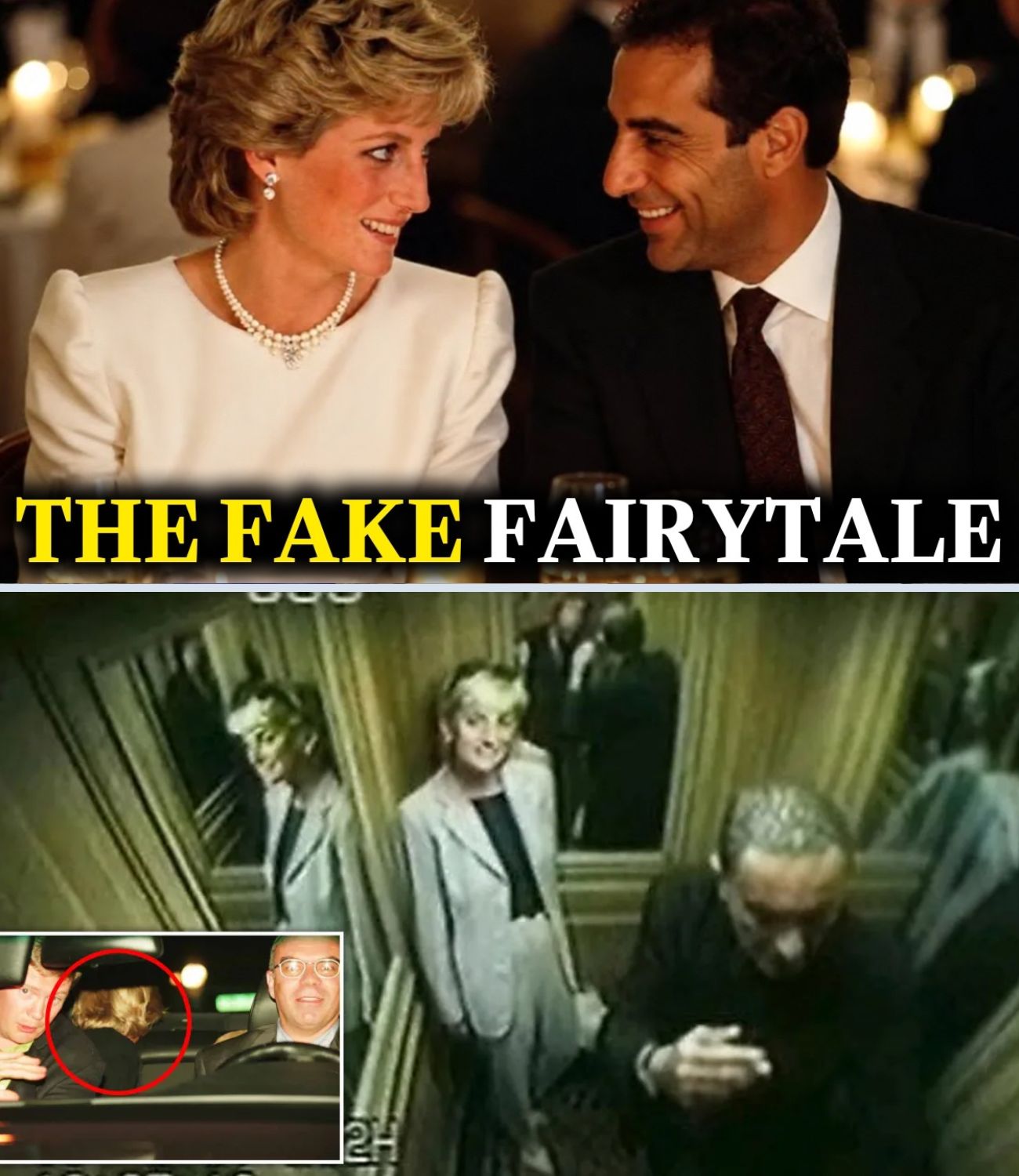
He was 41 years old, a film producer with one genuinely famous credit, and he was not supposed to be there. By his fiance’s account, he had left her sitting on a boat to do it. Whatever happened between him and Diana over those few days in July, it was enough that she went back. On the 31st of July, 3 weeks later, she flew out again to join him alone, no children, on a yacht his father had bought that summer, the Jonikal, 200 ft of white steel moored off Corsica and Sardinia.
And this is where it stops being a private romance at all. Somewhere in that stretch of sea, an Italian photographer called Mario Brenna got into position with a long lens and took the picture. You know the picture. Two figures on the deck of a boat, close together. The shot the entire world would call the kiss. How he knew where to look has never been fully explained. He was in the right water at the right hour, pointed at the right boat in an ocean.
The Sunday Mirror ran the photographs on the 10th of August, 1997. Within days, they were everywhere. And the figures being reported for Brenna’s set were extraordinary. A million pounds and climbing, possibly several times that once the global rights were counted. A single afternoon’s work. The most valuable paparazzi pictures ever taken. And the woman in them had spent 15 years saying publicly that this was the thing destroying her life.
Her closest friends did not react the way the public did. Rosa Monckton, who went on holiday with Diana later that same August, said afterwards that she did not believe Diana was heading for marriage. Lady Annabel Goldsmith recalled Diana telling her she needed another marriage about as much as she needed a rash on her face. Those are the people who actually knew her. And they were saying, quietly and then loudly, that the story the world was building was not the story they recognized.
Mohamed Al-Fayed told a different story, and he told it for the rest of his life. That they were in love, that they were engaged, that a wedding was coming. Both things cannot be true. One of them is being told by a woman’s oldest friends. The other is being told by the father of the man in the photograph who had a great deal riding on the answer.
Now put the calendar together because the timing is what makes this ugly rather than merely sad. The kiss photographs are published on the 10th of August. Four days later in Los Angeles, Kelly Fisher holds up her ring in front of a bank of microphones and sues. The same newspapers carrying the most romantic pictures of the decade are carrying on another page a crying American model saying the man in them had promised to marry her in weeks.
Dodi’s representatives dismissed it. Mohamed Al-Fayed later described Fisher as a passing relationship and nothing more. Fisher’s lawyers had documents, dates, and a check. Nobody will ever get a ruling on it because the defendant died before the case could be heard and the claimant withdrew it out of what she described as respect. Whether Diana knew any of this is the question that sits underneath the whole romance. There is no evidence she did. There is also no evidence anyone around her was in a hurry to tell her.
So that is the summer. A princess running from photographers into the arms of a family whose business was being photographed. A father offering a villa and a yacht to a woman the British establishment had just finished pushing out. A fiance on a boat in the next bay and a set of pictures worth more than any pictures of a human being had ever been worth before.
But the man at the center of it has barely been described and that is not an accident. For 30 years, Dodi Fayed has been a silhouette in someone else’s story. The boyfriend, the passenger, the name on the second coffin. Look at the man himself and the whole summer changes shape because the heir to Harrods was 41 years old, had never run a business, and was living on money his father could switch off whenever he chose. And then there is the ring collected in Paris on the last afternoon of his life.
Dodi Fayed was born in Alexandria in 1955, and the marriage that produced him lasted a matter of months. His mother was Samira Khashoggi, a Saudi writer and novelist from one of the wealthiest families in the Arab world. His father was an ambitious Egyptian businessman who had married up. When they separated, the baby stayed with the father. Dodi grew up with nannies in hotels between Alexandria and Europe, and by every account of his childhood, he was a gentle, slightly lost boy who was given everything except a settled address.
His mother remarried, and the two of them were largely kept apart. She died of a heart attack in 1986 when Dodi was 31. Her brother was Adnan Khashoggi, the arms dealer who for a while was described as the richest man in the world with a yacht that later ended up belonging to Donald Trump. That was the family Dodi came from on his mother’s side. Enormous money, enormous noise, and a surname that opened doors in three continents.
On his father’s side, there was Harrods and expectation and a very short leash. He was sent to boarding school in Switzerland, then to Sandhurst, the British Army Officer Academy, as part of a United Arab Emirates contingent. He did not become a soldier. He was briefly attached to the UAE Embassy in London as an officer, and then he found the thing he actually wanted, which was film. In 1981, a British picture about two runners at the 1924 Olympics won Best Picture at the Academy Awards, Chariots of Fire. The money behind it came through a company called Allied Stars, and Allied Stars was Dodi Fayed. He was 26, and his name was on one of the most celebrated British films ever made.
Here is the complication that follows him everywhere. The money for Allied Stars came from his father. He was an executive producer, which in that industry can mean a person who shaped the picture or a person who wrote the check. Accounts differ, and people who worked on the film have given both versions. What is certain is that the Oscar was real, the credit was real, and he never repeated it at anything like that level.
There were other films, F/X in 1986, Steven Spielberg’s Hook in 1991, where he was one of several producers on a vast studio machine. The Scarlet Letter in 1995, which was savaged. By the mid-1990s, he was a familiar figure in Los Angeles and London without being a power in either place. Generous, soft-spoken, famously bad at saying no, surrounded by people who liked being around him and liked the restaurants even more. Nobody who knew him describes him as cruel. Almost nobody describes him as independent, either.
In 1986, he married an American model, Suzanne Gregard. The marriage lasted about 8 months. After that, came a decade of relationships with recognizable women, reported and re-reported, some confirmed, many not. The pattern that contemporary journalists kept describing was the same one Kelly Fisher described. Fast, extravagant, generous to the point of absurdity, and then a sudden quiet. Jewelry arrived, cars arrived, houses were discussed, and underneath it all was the fact that his income was an allowance paid by a father who watched every line of it.
Reporting after his death, including in the broadsheets, described unpaid bills, chased debts, and an apartment in Park Lane that belonged to the Fayed Empire rather than to him. The heir to the most famous shop in Britain had no stake in it and no job inside it. Imagine being 41, flying by private jet, and having to ask someone for money. That is the man who arrived in Saint-Tropez in July 1997 and sat down opposite the most famous woman in the world at a table his father had set.
Which brings us to the ring because there is a second ring in this story and it has been argued about for nearly 30 years. On the afternoon of Saturday the 30th of August 1997, the day before he died, Dodi Fayed walked into Repossi, a jeweler on the Place Vendôme in Paris, a few steps from the Ritz. He had seen a ring in Monte Carlo a week earlier. It came from a Repossi collection called “Dis-moi oui.” In English, “Tell me yes.”
That detail has carried enormous weight. A collection with that name, a ring collected the day before, a couple photographed together for 6 weeks. Mohamed Al-Fayed said flatly that his son was about to propose, that an engagement was hours away, that a wedding was being planned. The British police investigation that examined all of this, Operation Paget, published its findings in 2006 after interviewing staff, examining the purchase, and tracing the ring’s history. It could not establish that it was an engagement ring. The jeweler’s own account did not settle it.
So, here is what is actually known. A ring was bought. It was collected on the 30th. It was found afterwards in the apartment near the Champs-Élysées where Dodi had been staying and it was returned to his family. Diana never wore it. Nobody has produced a witness who heard either of them use the word engagement. Her friends said she was not marrying anyone. His father said the opposite until the day he died. Both men in the car that night are gone and the only other survivor remembers nothing at all.
While all of this was being photographed, two boys were in Scotland. William and Harry had left their mother in late July and gone to stay with their father and grandparents, which is what the royal calendar does every August. So, picture it from their side. Your mother is on a boat somewhere in the Mediterranean. You are in a castle in Aberdeenshire, and the newspapers that arrive in the house every morning are printing photographs of her with a man you met once on a holiday that already felt like a siege.
Diana spoke to them by telephone from Paris on the evening of the 30th of August. Harry has written that the call was short, that he was impatient to get back to playing with his cousins, and that he has carried the brevity of it ever since. He was 12. William was 15. Neither of them had any idea it was the last conversation. A few hours after that call, their mother got into a car at the back of a hotel with a man they barely knew.
There is one more person who belongs in this part of the story, and he was not in France at all. Diana’s younger brother, Charles, the 9th Earl Spencer, was living in South Africa in 1997. Some months earlier, Diana had asked him for something small and very telling. A house on the family estate at Althorp. She wanted a place in England that was hers, away from Kensington Palace. She had picked out the Garden House. Her brother said no. His reason, as he later explained it, was the press. Her security people would bring photographers onto the estate, and his own young family lived there. The refusal reportedly left a chill between them.
Keep that in your head for a moment, because 6 days after she died, the same man stood in Westminster Abbey in front of 2,000 mourners and a television audience of more than 2 billion, and did something no member of that family had done in public before. He attacked everyone. He called her the most hunted person of the modern age. He said she needed no royal title to generate her particular brand of magic. And then he promised, in front of the Queen and the Prince of Wales, that her blood family would make sure her sons’ souls were not immersed by duty and tradition alone.
Outside the Abbey, the crowd applauded. The sound traveled in through the doors, and the congregation inside began to applaud too. In Westminster Abbey, at a funeral, nobody had ever heard that before. So, the brother who would not give her a house gave her an island instead. Diana was buried at Althorp on a small piece of land in the middle of an ornamental lake where no photographer could ever reach her. It is, when you think about it, the most literal possible answer to the problem that killed her. And the people who had photographed her for 15 years were, within days, being blamed by a nation for her death.
Which is where the last day has to be told properly, because the simple version is wrong. They flew into Paris from Sardinia on the afternoon of the 30th. They were photographed at the airport. They went to the apartment, then to the Ritz, which the Fayed family owned, then out to a restaurant, then back to the Ritz, because the crowd outside the restaurant made dinner impossible. They ate in a suite.
By midnight, there were photographers waiting at the front entrance on the Place Vendôme, the way they always were. Then, somebody made a decision. Instead of leaving by the front with their two official cars and their official driver, they would send those cars out as decoys and slip away from the service entrance at the back on the Rue Cambon in a third vehicle, a hired Mercedes. No backup car. No police escort. One bodyguard instead of two. And a driver who was not a driver.
Henri Paul was 41 years old, and he was the acting head of security at the Ritz. His job was buildings and people, not passengers. He had finished his shift that evening and gone home. He was called back to the hotel around 10:00 and for the next 2 hours he was in and out of the bar area, visible on the hotel’s own security cameras. At one point crouching down in front of the waiting photographers and apparently enjoying himself.
The blood samples taken afterwards showed an alcohol level around three times the French legal limit for driving along with traces of prescription medication. His family disputed the samples for years. Operation Paget re-examined them including the question of whether they had been mixed up with another body and concluded they were his. However, you frame it, a man who had been drinking was handed the keys to a car carrying the mother of a future king by people employed by the family who owned the hotel.
The bodyguard who got into the front passenger seat was Trevor Rees-Jones, a former paratrooper. He put his seatbelt on. Nobody else in the car did. They left the Rue Cambon at around 20 past midnight. 3 minutes later the Mercedes entered the Pont de l’Alma underpass at roughly double the speed limit, clipped a small white car, hit the 13th pillar and spun.
Dodi Fayed and Henri Paul were killed instantly. Diana was alive. She was pulled out of the wreck and died in hospital that morning. Dodi was buried within 24 hours in accordance with Muslim practice at a cemetery in Woking and later moved to his father’s estate in Surrey. There was no state funeral, no 2 billion viewers, no applause carrying in from the street. The second coffin was in the ground before most of the country had finished absorbing the news about the first one and that is where the question starts that nobody has ever answered cleanly. Who decided to use Henri Paul?
The plan to leave by the back door came from inside the Fayed operation and witnesses later said Dodi himself pushed for it. Mohamed Al-Fayed’s account of that night shifted over the years that followed. First, the photographers were to blame. Then, the car. Then, the driver was innocent. Then, it was never an accident at all. For 26 years, he kept changing the story, and he never once blamed himself or his staff.
The first version was the simple one, and for a week, the whole country believed it. The photographers did it. They chased her into the tunnel. They swarmed the wreck. They took pictures instead of helping. Seven of them were arrested at the scene. French newspapers printed their names. For a few days in September 1997, it looked as though an entire industry was about to be put on trial, and the owner of Harrods was the loudest voice demanding exactly that.
Then, the French investigation did its work, and the case against the photographers collapsed. They were cleared of manslaughter in 1999. A separate privacy prosecution ended in acquittals, and by 2002, the courts were finished with them. The official French conclusion was that the car had been driven far too fast by a man who had been drinking. That verdict should have ended it. Instead, it was the moment Mohamed Al-Fayed changed direction entirely.
Because a drunk driver on his payroll, dispatched from his hotel, was not a story he could live inside. So, he built another one. From 1998 onwards, he said publicly that the crash was murder, ordered by the British establishment, carried out by the Secret Intelligence Service. He named Prince Philip as the man behind it. He said Diana had been pregnant, and that she and Dodi were engaged, and that the Duke of Edinburgh could not tolerate a Muslim stepfather to the future king.
He repeated it in interviews, in filings, in documentaries, in a parliamentary committee room. He did not soften it once in 26 years. It is worth sitting with how enormous that accusation was. A shopkeeper denied a British passport publicly accusing the husband of the Queen of arranging an assassination. He produced witnesses. He produced theories about a white Fiat Uno, about a bright flash in the tunnel, about the embalming of Diana’s body in Paris, which he said was done to hide a pregnancy. Each claim got headlines. Each claim had to be answered.
And answering them took the British police 3 years. Operation Paget was led by the Metropolitan Police Commissioner Lord Stevens, and it was not a quick dismissal. Investigators traveled to multiple countries, interviewed hundreds of people, examined the embalming records, traced the Fiat Uno, retested the blood samples, and looked at the ring. The report ran to more than 800 pages when it was published in December 2006. It found no evidence Diana was pregnant. It found no evidence of a conspiracy. It could not establish that the ring was an engagement ring.
Then came the inquest, which ran from October 2007 to April 2008 at the Royal Courts of Justice, heard about 250 witnesses, and cost the public around 10 million pounds. Princes William and Harry did not give evidence. Mohamed Al-Fayed did for a full day, and repeated the murder allegation under oath, adding more names to the list of conspirators. The coroner eventually told the jury there was no evidence to support it, and removed that option from them.
On the 7th of April 2008, the jury returned its verdict. Unlawful killing by the grossly negligent driving of Henri Paul and of the following vehicles. They also noted that the deaths were contributed to by the fact that the occupants were not wearing seat belts, and by the speed and manner of the pursuit. In other words, the photographers were partly responsible, and so was the man the Fayed organization had put behind the wheel. Al-Fayed said afterwards that he accepted the verdict and would stop. He never really did.
And there was one person who could have settled almost all of it, except that he could not remember. Trevor Rees-Jones was 30 years old, a former paratrooper from Shropshire, and he was the only human being who came out of that car alive. His injuries were catastrophic. Surgeons rebuilt his face over a series of operations using metal plates and family photographs as a reference, because there was not enough left to work from. He woke up with no memory of the crash and almost nothing of the evening before it.
His employer stood by him at first. Al-Fayed paid for treatment, visited, spoke warmly about him in public. That lasted exactly as long as Rees-Jones stayed useful. When fragments of memory returned, they did not support the conspiracy. He recalled an argument about the plan to leave by the back door. He did not recall anything suggesting an ambush. In 2000, he published a memoir, The Bodyguard’s Story, describing the chaos of that night and his doubts about his employer’s version.
The response was immediate. Al-Fayed turned on him in public, questioned his honesty, suggested he was hiding what he knew. The man who had been carried out of the wreck with a shattered face was now, in his former boss’s telling, part of the problem. Rees-Jones gave his evidence at the inquest, dropped the hyphen from his name, went back to security work, including contracts in Iraq, married, and built a deliberately ordinary life in the English Midlands. He has given almost no interviews since. He is still alive. He still cannot remember.
Meanwhile, inside Harrods, something unusual was happening on the ground floor. Al-Fayed built a shrine. First, a display case with photographs of Diana and Dodi, a wine glass said to be from their last dinner, and a ring. Then, in 2005, a bronze statue of the two of them dancing beneath an albatross, titled Innocent Victims. Shoppers queued past it. Tourists photographed it. For years, the most famous department store in the world had a memorial to a dead princess and the owner’s son standing next to the escalators.
In 2010, he sold Harrods to Qatar Holding for a reported 1.5 billion pounds. He had owned it for 25 years and fought the British state for most of them. In 2013, he sold Fulham Football Club, the other great project of his later life, the one where he had erected a statue of Michael Jackson outside the ground and told critics they could go and support Chelsea. By his late 80s, he had cashed out of almost everything except the grievance.
The statue did not survive the sale. In 2018, the new owners of Harrods removed Innocent Victims from the shop floor and handed it back to the Al-Fayed family, who installed it on the Surrey estate at Oxted, where Dodi is buried. The memorial that two decades of shoppers had walked past became a private object in a private garden, visible to almost nobody. The last public trace of the six weeks was quietly crated up and driven out of London.
He died on the 30th of August 2023, aged 94. The date is almost unbelievable, one day short of the 26th anniversary of the crash. The announcement came, oddly, from Fulham Football Club rather than the family. The obituaries were long and careful. They covered Harrods, cash-for-questions, the passport refusals, the conspiracy campaign, the grief of a father who lost his eldest son. For about a year, that was the settled picture of Mohamed Al-Fayed.
Then, in September 2024, the BBC published the findings of a long investigation. More than 20 former Harrods employees, most of them women who had been very young when they worked there, accused him of sexual assault, and five of them accused him of rape. They described a system, recruitment, medical examinations, surveillance, non-disclosure agreements, security staff who looked the other way.
After the documentary aired, the number of people coming forward rose into the hundreds, and claims extended to Fulham and to his Scottish estate. Harrods issued a public apology and set up a compensation scheme, saying the company had failed the women and had been a very different place under his ownership. The Metropolitan Police confirmed that allegations had been referred to prosecutors on several occasions during his lifetime, and that no charges had ever been brought. He died without facing a court.
The women who spoke will never get a verdict, in the same way that Kelly Fisher never got one, and for the same structural reason. The man at the center of it was out of reach. You do not have to construct an argument about what that reframing does. Just hold the two facts next to each other. For 26 years, the loudest voice in Britain demanding justice, accountability, and an end to a cover-up belonged to a man about whom it is now alleged by hundreds of people there was a cover-up operating inside his own building the entire time.
Both things sit in the record. The grief appears to have been real. So, according to the accounts of those women, was everything else. And Kelly Fisher? She withdrew the lawsuit in September 1997 and then did the one thing nobody else in this story managed. She stopped. She gave a handful of interviews in the immediate aftermath and then returned to private life in the United States. She did not write a book. She did not sell her story again in anniversary years. She did not appear in the documentaries. She declined repeatedly to become a character in the mythology that was being built on top of the summer that humiliated her.
Dodi’s four half-siblings did much the same. Omar, Camilla, Karim, and Jasmine, the children of Mohamed Al-Fayed’s second marriage to the Finnish model Heini Wathén, grew up a generation behind Dodi and stayed almost entirely outside the public story. They appeared at the funeral in 2023. They have not campaigned, theorized, or given evidence. Whatever they think about the inquest, the statue, or the allegations, they have kept it to themselves. Two decades of microphones and nobody in that house used them except the father.
The two boys who were in Scotland grew up to disagree about almost everything except that. William and Harry built a statue to their mother in the Kensington Palace Garden in 2017 and stood beside it together in 2021 with barely a word between them. Harry wrote in Spare about asking to see the Paris police file, about being driven through the Pont de l’Alma tunnel at the speed the Mercedes had been traveling, and about discovering that it took only a few seconds. He has spent years suing newspapers. His brother has not.
Which brings it back to the boat. In July 1997, Kelly Fisher was sitting on a yacht in a neighboring bay, told to stay put, reading about her own engagement collapsing in somebody else’s headlines. Of everyone in this story, she is the only one who wanted nothing from those 6 weeks afterwards. No inquest, no memorial, no theory. She had the most reason to be angry and made the least noise.
The last object is the one nobody can visit. Not the statue in the Surrey garden, not the case on the Harrods floor, not the ring from the Place Vendôme sitting with a family that never got to use it. It is a small island in an ornamental lake at Althorp, surrounded by water, chosen by the brother who once refused her a house on the same estate because he was afraid of the cameras. He was right about the cameras. He just made the arrangements 13 weeks too late.
You Might Also Enjoy

“We Thought They Would Negotiate”—What Argentine Soldiers Said When The British Attacked Goose Green

“You’ll Never Finish My Ruck March, Limey” — US Sergeant Who Challenged the SAS, Then Fell Out First






