Princess Diana’s Love Affair With Hasnat Khan Was Much Nastier Than You Thought
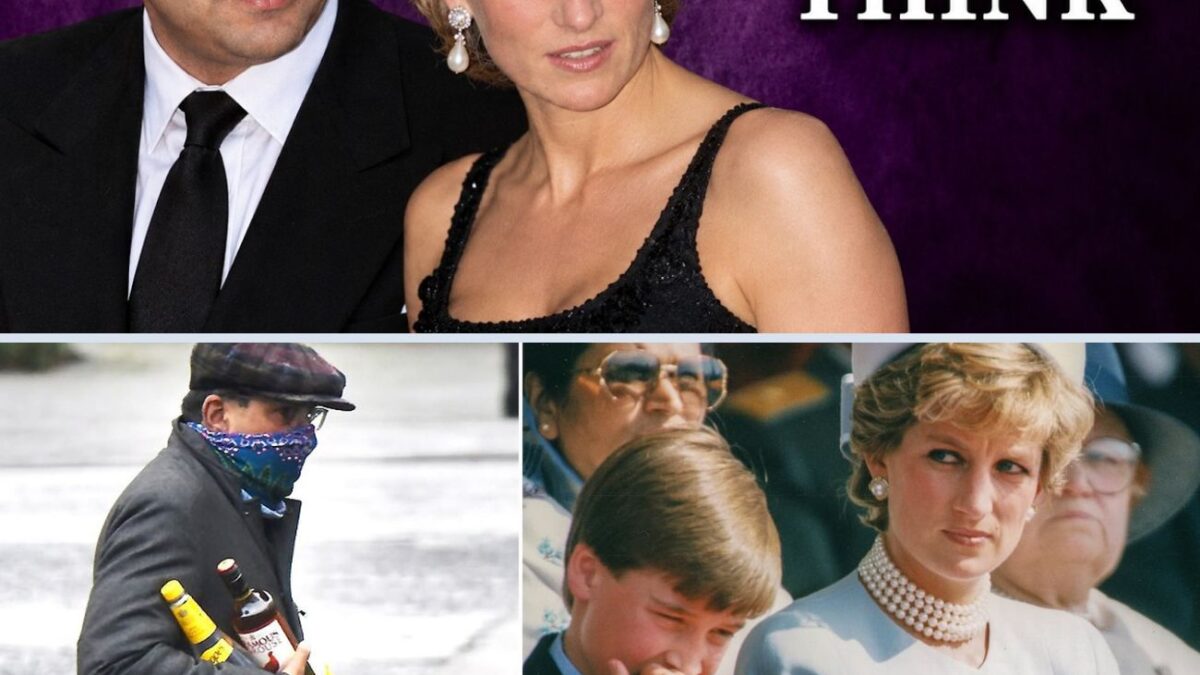
She hid in the boot of a car. The most photographed woman on Earth folded into the back of a vehicle so she could reach a man working a night shift. 11 years on, under oath, he said he believed her romance with Dodi Fayed was designed to make him jealous. A BBC journalist had already faked bank documents feeding her belief that the people closest to her were selling her out. In 2006, he married someone else. It lasted about 2 years. And the letters she wrote him, he has never said exactly what happened to them, even now.
It is September 1995. Diana, Princess of Wales, is 34 and halfway through the ugliest public divorce in modern British history. She is at the Royal Brompton Hospital in West London visiting Joseph Tofolo, the husband of her acupuncturist Oona. Tofolo has just had triple bypass surgery. Diana has come as a friend, not as a royal patron, and there are no cameras. Walking the ward is a Pakistani surgeon called Hasnat Khan. He is in his late 30s. He works under Sir Magdi Yacoub, one of the most celebrated heart surgeons alive. By several accounts, Khan did not immediately register who the blonde woman in the corner was. He was tired. He was working. He talked to her for a few minutes before it landed.
Think about how rare that is. By 1995, Diana’s face was on the cover of something somewhere almost every week of the year. People recognized her from the back of the head, and here was a man who had to be told. She stayed for hours. Then she came back the next day, then the day after that. Over the following weeks, she turned up at the Brompton so often that the nursing staff stopped treating her as an event. She brought pizza. She sat with strangers’ families in waiting rooms at 2:00 in the morning. Some of that was genuine. She had been doing hospital visits without press since the late ’80s. But the pattern around Khan was different and the people who worked there noticed.
Now, here is where the story gets strange because of what Hasnat Khan actually was. Not a prince, not an aristocrat, not a polo player or a cavalry officer or an older Jordanian banker. He came from Jhelum, a town in the Punjab in Pakistan, from a family that ran a glass factory. He had arrived in Britain in 1991 to train. He smoked heavily. He drove a car that kept breaking down. He lived in a modest flat. By most descriptions, he was shambolic, funny, blunt, and almost aggressively uninterested in being impressive.
“She called him Mr. Wonderful.”
That detail comes from Paul Burrell, her butler. And Burrell is a source you have to handle with gloves. He has made money from her memory for 25 years and parts of his accounts have been disputed by her family and by others who were there. But the nickname has been repeated widely enough by enough people that it has stuck. What interested her was not the romance of it. It was the work. Khan opened chests for a living. He held hearts. Diana, who had spent 15 years being told to stand still and look lovely, started watching operations. She put on surgical greens and stood in theater at Harefield and at the Brompton while teams worked for hours on people who might not survive the night.
In April 1996, the public got a glimpse of this and completely misread it. Diana was photographed at Harefield Hospital observing Sir Magdi Yacoub perform a 7-hour heart operation on a 7-year-old boy from Cameroon named Arno Wambo. The newspapers argued about whether it was appropriate. Was she exploiting a sick child for publicity? Was it tasteless? The columns ran for days. Almost nobody asked the simpler question of why a princess had suddenly developed such a specific enthusiasm for cardiac surgery. That is the shape of this entire story. The country watched the surface and got it wrong over and over.
Getting them into the same room was an operation in itself. She could not be seen with him. Not because he was unsuitable in any way that mattered to her, but because the moment a photographer got a single frame, his career, his family, and his privacy would be gone inside 24 hours. So, she handled the logistics herself, and she was good at it. She wore wigs, she borrowed cars. According to Burrell, she was driven to the hospital lying down in the back, and on at least one occasion, she traveled hidden in the boot.
Sit with that image for a second. The Princess of Wales, two divorce lawyers, a staff of dozens, a palace apartment, a royal protection history, and the only way she could think of to spend an evening with the man she wanted was to climb into a car boot like contraband.
He came to Kensington Palace, too, brought in quietly after dark. They watched television, they ate takeaway. By several accounts, he was completely unbothered by the surroundings, which seems to have been a large part of the appeal. Everyone else in her life either wanted something from her or was frightened of her. He, apparently, wanted neither.
So, let’s deal with the word that brought most people here. Nasty. If you came expecting a story about two people being cruel to each other, that is not what the evidence shows, and I am not going to invent it. Khan has described her with consistent warmth every single time he has spoken, which has been rarely. There are no credible allegations of abuse, no documented violence, no pattern of humiliation between them. Whatever went wrong between those two, it was not that.
The nastiness is real. It just came from everywhere else. It came from a television journalist who forged bank statements to get an interview, and from the suspicion those forgeries planted in her head about the people closest to her. It came from photographers who followed her car. It came from a press culture that treated a brown Muslim surgeon as a punchline the second his name leaked. It came from two families who, for very different reasons, could not see how this was supposed to work. And it came afterwards from the books, the films, and the interviews that carved up a dead woman’s private life and sold it in slices. Two people tried to have an ordinary relationship. The machinery around them made that impossible. And then it came for him after she died. That is the story.
Now go back to the autumn of 1995 because something happened that November that Khan did not see coming, and he has spent the last few years telling anyone who asks that it was the beginning of the end. By then, they had been seeing each other for roughly two months. It was new. It was also, from her side, already serious. She was asking him about his work rota. She was asking about his family. She had started reading about Islam, including the Quran, books on Sufism, and conversations with people who could explain it to her. None of that proves she intended to convert, and accounts of how far she took it genuinely differ. What is clear is that she was doing homework on a life she could not have.
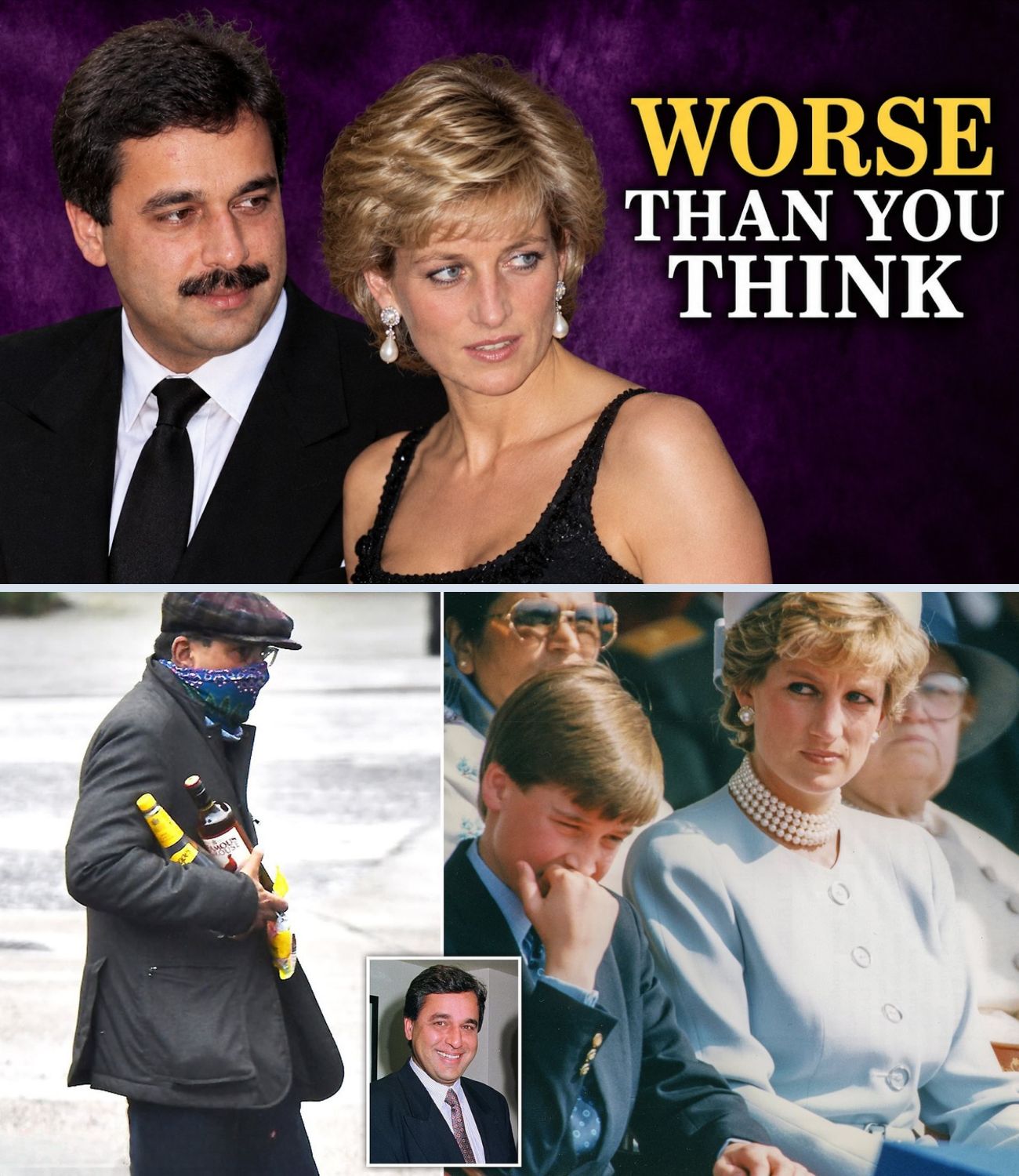
Meanwhile, she was being worked on by someone else entirely. In September 1995, the same month she met Khan, a little-known BBC reporter named Martin Bashir was being introduced to her younger brother, Charles Spencer. Bashir wanted an interview. To get near her, he showed Spencer fake bank statements mocked up by a BBC graphic designer suggesting that people in her circle were being paid to spy on her. That is not a theory. The BBC itself accepted it after an independent inquiry led by Lord Dyson reported in May 2021. The corporation apologized. Her sons issued statements. Prince William said the BBC’s failures had contributed significantly to his mother’s fear, paranoia, and isolation in her final years.
Hold that thought because the full consequences belong later. For now, what matters is the night itself. On the 5th of November, 1995, Bashir and a tiny crew were let into Kensington Palace. Diana sent her staff away. The interview was filmed in her sitting room with almost nobody inside the palace knowing it was happening. The Queen did not know. Her private secretary resigned soon afterwards. And Hasnat Khan, the man she was seeing, had no idea either.
It went out on the 20th of November. 23 million people in Britain watched it. She talked about bulimia. She talked about self-harm. She said there were three of them in the marriage, so it was a bit crowded. She questioned whether her husband would ever be king. It is probably the most famous television interview ever given by a member of the royal family.
Khan watched it like everybody else. No warning, no heads-up. 2 months into a relationship with a woman he had met in a hospital corridor, he sat and watched her dismantle her marriage on national television in front of 23 million strangers. The country called it brave. Commentators called it a masterstroke. Opinion polls showed overwhelming public sympathy. She had, by the standard reading, won.
Khan did not think she had won anything. When he finally spoke publicly about it decades on, he said the interview was the worst thing she ever did and that it did not help her, it damaged her. He described a woman who became more suspicious afterwards, not less. More watched, more alone. He has said that in his view, the Panorama program set off a chain of events that led directly to Paris. That is a big claim and it belongs to him, not to the record. Plenty of historians would argue the divorce was coming anyway. But he was there, in the room, in the flat, in the hospital car park at midnight and almost nobody else was.
Here is the practical consequence and it landed on the relationship within weeks. In December, the Queen wrote to both of them telling them to divorce. The process that followed stripped away the last of Diana’s official structure. By the end of August 1996, she was divorced, she had lost the style of her royal highness and she had given up her royal protection officers. People still assume she was guarded until the night she died. She was not. She let them go. Which meant that the woman now free to marry whoever she liked was also for the first time in 15 years standing in the open with nothing between her and the lenses.
And the man she wanted to marry had a problem of his own. Not with her, with everything attached to her. Khan had come to Britain to become a heart surgeon, which takes years of unglamorous, exhausting, badly paid work, and he was in the middle of it. He had a family in Pakistan who did not know. He had colleagues who were beginning to guess. He had a training post that depended on being taken seriously.
She decided to solve that. Not by hiding more carefully, but by doing something nobody around her expected. Something that took her 4,000 miles from London into a family sitting room in Lahore with a woman watching her who had already done exactly what Diana was contemplating. The woman was 22 years old, English, the daughter of one of the richest financiers in Britain, and she had married a Pakistani and moved to Lahore while the tabloids screamed. Diana wanted to know how she had survived it. What Diana found there would give her hope, a plan, and within a year the clearest reason to understand that it was never going to happen.
Jemima Goldsmith at that point had no idea what was coming. Jemima Goldsmith was the daughter of Sir James Goldsmith, the Anglo-French billionaire, and in May 1995 she had married Imran Khan, the former captain of Pakistan’s cricket team, in a Muslim ceremony in Paris. She was 21. She converted to Islam. She moved to Lahore into a household that shared a compound with her husband’s extended family, and the British press lost its mind. There were headlines about her giving up her freedom. There were cartoons. There were columns written by people who had never been to Pakistan explaining what her life would now be like. No relation to Hasnat Khan, by the way. Khan is one of the most common surnames in South Asia. The coincidence has confused people for 30 years.
Diana had met Jemima through the London circuit before any of this. But after 1995, the friendship took on a specific function. Here was a young Englishwoman who had crossed exactly the line Diana was thinking about crossing. Here was someone who could answer the practical questions. What do his relatives actually expect? How much of yourself do you have to give up? Does the press ever stop?
In February 1996, Diana flew to Pakistan. The official purpose was Imran Khan’s cancer hospital in Lahore, the Shaukat Khanum Memorial, named after his mother who had died of cancer in 1985. He had spent years raising money for it against enormous skepticism. Diana’s presence was worth a fortune in attention, and the cause was genuine. She had been doing cancer work for years. But she also stayed in a private house with the Khans, away from cameras. Jemima later wrote that Diana came to Pakistan partly to see whether a life like hers was possible.
Then came the part Diana had not advertised. According to Jemima’s own account, published after Diana’s death, Diana traveled to meet Hasnat Khan’s family. Not his parents in London, his relatives in Pakistan. She went to Jhelum, the town where his family had the glass business, and to Lahore. And she sat in rooms with aunts and uncles and cousins who had no particular reason to be impressed by a British princess. This was not a holiday. This was a woman conducting an inspection of her possible future.
What she found there is the first place the story turns genuinely cold, and it has nothing to do with cruelty on either side. It is simply that Hasnat Khan’s family had their own plans, and a 35-year-old divorced Christian Englishwoman with two sons who were second and third in line to the British throne was not any part of them.
The family were Pashtun in origin. Reporting since, including interviews given by relatives in the years after her death, describes a clear expectation that Hasnat would marry a Pashtun Muslim woman chosen in the traditional way from a family they knew. His grandmother, Nanny Appa, was the figure whose approval mattered most in that household. Accounts of her response to Diana vary. Some describe outright refusal, others something closer to a polite impossibility, but nobody has ever claimed she said yes.
Think about what that means for a second. Diana could get a British Prime Minister on the phone. She could redirect global news coverage by walking across a minefield in Angola, and the obstacle that defeated her was an elderly woman in Pakistan with a firm view about who her grandson should marry. There is something almost comic in it if it were not so bleak. The royal family’s resistance to the relationship has been endlessly discussed. It gets dramatized in films as snobbery and racism in palace corridors. The documented resistance that actually mattered was on the other side.
And Hasnat’s position was not simple, either. He was close to his parents, Rashid and Naheed, who divided their time between Pakistan and Britain. He had come from a conservative, respectable family, and he was in the middle of the most demanding stage of a surgical career. Marrying Diana would not have meant marrying a woman. It would have meant marrying a permanent global press event. He understood that better than she did because he had already seen a preview.
In 1996, while they were still hiding successfully, the pressure around her was rising in a way that had nothing to do with him. This is where the Bashir business comes back and where you have to be careful about what is proven and what is inference. Proven. Bashir commissioned forged bank statements. Proven. Those documents suggested that people around Diana were taking payments to inform on her, including in one version, a member of her own household staff. Proven. The BBC’s 1996 internal inquiry cleared Bashir and the BBC later accepted that the inquiry was woefully ineffective and that the corporation had covered up what it knew. Proven. Lord Dyson’s report in 2021 found that Bashir had acted deceitfully and that the BBC had fallen short of high standards of integrity and transparency.
Not proven and openly disputed by historians, exactly how much those forgeries changed her behavior. Some of her biographers argue she was already suspicious, already convinced she was being watched long before Bashir arrived. What is not in dispute is what her life looked like by 1996. She believed her telephone calls were intercepted. She believed her apartment was bugged. She talked about it to friends and to journalists. She wrote notes about her fears, including the one Burrell later published in which she named what she thought might happen to her in a car.
Now put a secret relationship inside that environment. Every visit had to be arranged. Every phone call carried risk. She would ring the hospital switchboard and use a false name. By several accounts, she posed as a nurse and more than once as a staff member called Dr. Armani, which tells you something about her sense of humor even at the worst of it. He later said that she would sometimes be waiting in a car park and he would have to tell her he could not come out because he was operating. For a while, that strange arrangement worked. They had 2 years of it. 2 years is not a fling.
And then there is the question that has produced more nonsense than almost anything else in this story. Whether she was planning to convert to Islam. Here is what can actually be said. She was reading about it. She discussed it with people who knew the faith. Her relationship with Khan made the question live because marriage would have raised it. Separately, it has been reported, including in biographies and in later press interviews with a Catholic priest, Father Tony Parsons, that she had conversations about Catholicism as well and that she had been interested in it for years, partly through her own stepmother’s family connections. Different sources push different versions. Some people close to her flatly deny she intended to change religion at all. Treat all of it as reported and contested. What it shows is not a decision. It shows a woman trying to work out what she would have to become in order to be allowed an ordinary private life and testing several versions of the answer.
The practical plans were just as improvised. There was talk of moving abroad. Pakistan was discussed. South Africa came up, partly because Khan could potentially work there and partly because her brother, Charles Spencer, had moved to Cape Town. Australia was mentioned. In every version, the logic is the same. Leave Britain, leave the press, let him operate on hearts in a country where nobody would photograph him buying milk.
None of it survived contact with reality. She had two sons at Eton and Ludgrove. William was 14, Harry was 11. She was not going to live 4,000 miles from them, and everyone involved knew it. So, here were two people who wanted exactly the same thing. A quiet life, a house, work, dinner, no cameras, and each of them was the precise reason the other could not have it. He could not marry into her world without losing his. She could not escape into his world without losing her children. That is the trap. No villain required.
By the spring of 1997, the strain was visible to people around them. Accounts of what happened next differ in detail and in sequence, which is normal for a private breakup that nobody expected to be examined by a coroner’s court 11 years later. Khan’s version, given under oath at the inquest into her death in 2008, is that he ended the relationship. He said it had become impossible. He said that the press interest and the pressure were insurmountable. The timing he gave was late June or early July 1997.
Other accounts, including some from her friends, suggest the end was messier, a series of breaks and returns rather than one clean conversation. One widely reported account has them meeting in Battersea Park late at night for what turned out to be the last significant conversation of the relationship. What is agreed is the timing, and the timing is the reason this story has never been allowed to rest. Within days of that separation, Diana accepted an invitation from Mohamed Al-Fayed, the owner of Harrods, to holiday with her sons in the south of France. The Al-Fayed family had known her for years through her stepmother’s father. On that holiday in July 1997, she was introduced to Mohamed’s eldest son, Dodi. Six weeks later, she was dead.
Think about the sequence as a human being rather than as a headline. She spends two years in love with a man in secret, arranging her life around hospital rotas and car boots and false names. It collapses in the early summer. Within a fortnight, she is on a boat in the Mediterranean with a different man, photographed from every angle by photographers who have been tipped off, and those photographs go around the world. In the first week of August, the Sunday Mirror published the picture that became known as the kiss, Diana and Dodi embracing on a yacht off Sardinia. It was reportedly sold for an enormous sum. It was, in commercial terms, the most valuable photograph of its era. She had spent two years making sure that no photograph of her with Hasnat Khan existed anywhere.
And that is where the unresolved question sits, the one Khan himself would raise in a courtroom more than a decade afterwards. What were those last six weeks actually for? Was it a new relationship? Was it a holiday that got out of hand in front of cameras? Was it, as he came to believe, aimed squarely at him?
He had an answer. He gave it on oath, in public, in London, in 2008, to a jury with the world’s press in the room. And by then, the machinery that had chased the two of them for two years had turned around and come after the only one who was left.
On the morning of August 31st, 1997, Hasnat Khan learned what had happened in a tunnel in Paris the same way the rest of the country did. Not from a phone call, not from a palace, from the news. He had been with her 2 months earlier. There was no official channel through which anyone would think to tell him because officially he had never existed.
6 days later, he went to the funeral. He was reportedly one of around 2,000 mourners inside Westminster Abbey, seated among names the cameras did not bother to identify, watching a service broadcast to an estimated 2 and 1/2 billion people. Nobody mentioned him. Nobody in that building stood up and said that the woman in the coffin had spent 2 years trying to find a country where she could marry him.
He went home and said nothing. He said nothing for 11 years. Then, in 2008, the law made him speak. The inquest into the deaths of Diana and Dodi Fayed opened at the Royal Courts of Justice in London and ran for 6 months. Mohammad Al-Fayed was alleging a conspiracy. The jury would return a verdict of unlawful killing caused by the grossly negligent driving of Henri Paul and of the following vehicles.
Khan was called as a witness, a consultant surgeon in a suit in a courtroom, asked under oath about the private life of a dead princess with the press benches full. What he said that day is the single most quoted thing he has ever said, and it is also the most misunderstood. He told the court he believed that Diana’s relationship with Dodi Fayed had been in part a way of making him jealous, not a grand passion, not an engagement, a message aimed at one man delivered through the world’s media. That is his belief given on oath. It is not a finding of fact.
Diana’s friends have split on it ever since. Some have said she had moved on completely. Others, including people who spoke to her that August, have described a woman still talking about Khan while she was on a boat in the Mediterranean with somebody else. Accounts differ, and they always will because the person who could settle it died in the Alma tunnel.
He said other things in that courtroom that got far less coverage because they were less sellable. He described how they had discussed marriage seriously. He described her visits to his family. He described, in plain language, two people trying to work out a practical problem that had no solution. And he made it clear that he did not believe she had been planning to marry Dodi Fayed at all. That directly contradicted Mohamed Al-Fayed, who had spent a decade insisting his son and Diana were engaged and that she was carrying his child. The postmortem evidence did not support the pregnancy claim. The jury did not accept the conspiracy.
And then there are the letters she wrote to him, constantly by most accounts. Notes, cards, long letters, the same compulsive correspondence she kept up with everyone she cared about. Her letters to other friends have been auctioned. Some have sold for tens of thousands of pounds. There is a functioning global market in Diana’s handwriting. Not one letter from Diana to Hasnat Khan has ever appeared at auction. Not one has been published. He has said at different times that he destroyed material to protect her privacy, and he has never given a full account of what, if anything, survives.
30 years on, that is still the position. He has never named a price because he has never offered anything for sale. Almost nobody else in this story can say that. Paul Burrell could not. The butler who had worked for her for a decade and called himself her rock published his first book in 2003, and the Khan relationship was one of its selling points. He went on television. He gave interviews. Her sons issued a public statement describing a cold and overt betrayal and asking him to stop. He did not stop.
Then, in 2013, somebody made a film about it. Diana starred Naomi Watts as the princess and Naveen Andrews as Hasnat Khan. It took the relationship, including the car journeys, the hospital visits, and the breakup, and put it on cinema screens worldwide. Nobody involved had Khan’s cooperation. He had refused. When he finally commented, he said the film was based on gossip and hypothesis, that it was not a true story, and that it had been made without any regard for what was actually real. The reviews were brutal for entirely different reasons. The film flopped.
But think about what had happened to him. He had spent two years hiding in car parks to protect his career from a single photograph. 16 years later, an actor was playing him in a feature film he had asked not to be made.
Between the inquest and the film, he did something that reads, on paper, like the exact opposite of everything he had refused. In May 2006, in Pakistan, Hasnat Khan married Hadia Sher Ali. The marriage was arranged in the traditional way, with the families involved. She came from a background connected to the Afghan royal line. It was, in almost every respect, the marriage his family had wanted him to make.
It lasted about 2 years. By most reports, they separated in 2008, and the marriage ended soon afterwards. There were no children. He has not remarried. He has not, as far as any reliable reporting shows, had another public relationship of any kind. Two of the most consequential relationships of his life, then. One he could not have because of his family. One he had because of his family. Neither survived.
The career, though, held. He kept operating. He worked abroad for periods, including in Malaysia and in Pakistan, where he was involved in cardiac work far from the London hospitals where all of this started. Then he came back to the NHS. By 2021, he was a consultant surgeon at Basildon and Thurrock University Hospitals in Essex, which is about as far from Kensington Palace, socially speaking, as a British career can take you. Patients came in with failing hearts and were operated on by a man whose name they might vaguely have recognized from a newspaper years ago, and probably did not.
And then, in the winter of 2020, the phone rang. The Daily Mail had just published the first of its reports on how Martin Bashir obtained the Panorama interview. The forged bank statements, the deception of Charles Spencer, the BBC’s failure to deal with it in 1996. Bashir, by then the BBC’s religion editor, was in serious trouble, and a mutual acquaintance contacted Khan.
According to Khan’s own account, the request was effectively this: Would he say publicly that Diana had wanted to do the interview? It would have taken one sentence. It would have helped a man under siege.
He refused. He said he could not do that. Instead, he broke 12 years of near silence and gave an interview of his own saying that Bashir had tricked her, that the Panorama program was the worst thing she ever did, and that it had damaged rather than freed her. He also described something that had never been public. At one point during the relationship, Bashir had met him and Diana at a country pub and began asking direct personal questions about the two of them. Khan was offended. By his account, he did not trust the man from that moment, which means the journalist whose forgeries helped convince Diana that her own staff were informing on her had also been sitting in a pub with the one secret she was guarding most carefully.
In May 2021, Lord Dyson’s report confirmed the forgery and the deceit and found that the BBC had fallen short of high standards of integrity and transparency. Prince William said the interview had contributed to his mother’s fear, paranoia, and isolation. The corporation apologized and handed back awards.
Dyson also found something that cuts the other way and honesty requires including it. He concluded the deception had no bearing on Diana’s personal decision to take part. She had her own reasons. She wanted to speak. Two truths sitting beside each other. She was manipulated. She also chose.
Put the two of them side by side now, which is the only way any of this makes sense. Diana wanted privacy and could not stop performing. She summoned cameras and then ran from them. She gave the most watched interview in royal history while hiding a relationship from everyone including her own household. She fired her protection officers to be free and spent her last summer being chased by motorcycles.
Hasnat Khan wanted privacy and actually got it. That is the strange bleak symmetry at the end of this. He achieved exactly what she wanted. He has no public life. He sells nothing. He appears in print roughly once a decade and usually only because somebody else has forced the issue. And the cost of that privacy is that he has been written about by everybody except himself. The books, the films, the butler, the documentaries, the anniversary specials, all of them have told his story for him. And he has declined again and again to correct the record for money.
So, was it nastier than you thought? Yes. Just not where people look. Nothing in the documented record suggests these two were cruel to each other. What was nasty was the environment. A reporter who forged documents to get at her through her own brother. An institution that knew and buried it for 25 years. A press pack that put a price on a single photograph. A family in Jhelum who had already decided. Two sons at school in England who made leaving impossible. And afterwards, an industry that took the most private two years of a woman’s life and sold them by the chapter.
Which brings it back to the car boot. When you first hear that detail, it sounds like a joke. A princess in a car boot, romantic farce, something from a comedy. Now run it again with everything attached. A 35-year-old woman, divorced, legally entitled to see whoever she liked, with no job description, no protection she was willing to accept, and no private space that had not been photographed. Climbing into the back of a car because that was genuinely the only method available to her for having dinner with a man she loved.
It is not funny at all. It is the clearest picture anyone has of what her life had actually become by 1996. And the only person who could confirm it properly has never agreed to. He is still working. In his 60s, still a heart surgeon, still in the NHS, still on the kind of rota that means being called in at 2:00 in the morning for somebody whose heart has stopped behaving, which is precisely what he was doing on the night they met.
Picture the corridor. Not the palace, not the Abbey, not the tunnel. An ordinary British hospital corridor with scuffed floors and a vending machine and a waiting area where the magazines are 6 months out of date. Somewhere in that pile, on one of those covers, there will be her face because there is always her face. Every August, every anniversary, every documentary for the rest of time.
A man in scrubs walks past it on his way to theater. He does not stop. He does not look. He has an operation to do and he has never, in 30 years, told anyone what was in the letters. That silence is the last thing he has that belongs to the two of them. And he has refused every offer to give it up. It is the only privacy she ever managed to keep.
You Might Also Enjoy

“We Thought They Would Negotiate”—What Argentine Soldiers Said When The British Attacked Goose Green

“You’ll Never Finish My Ruck March, Limey” — US Sergeant Who Challenged the SAS, Then Fell Out First






