Princess Diana’s WEDDING DRESS Was Much Nastier Than You Thought
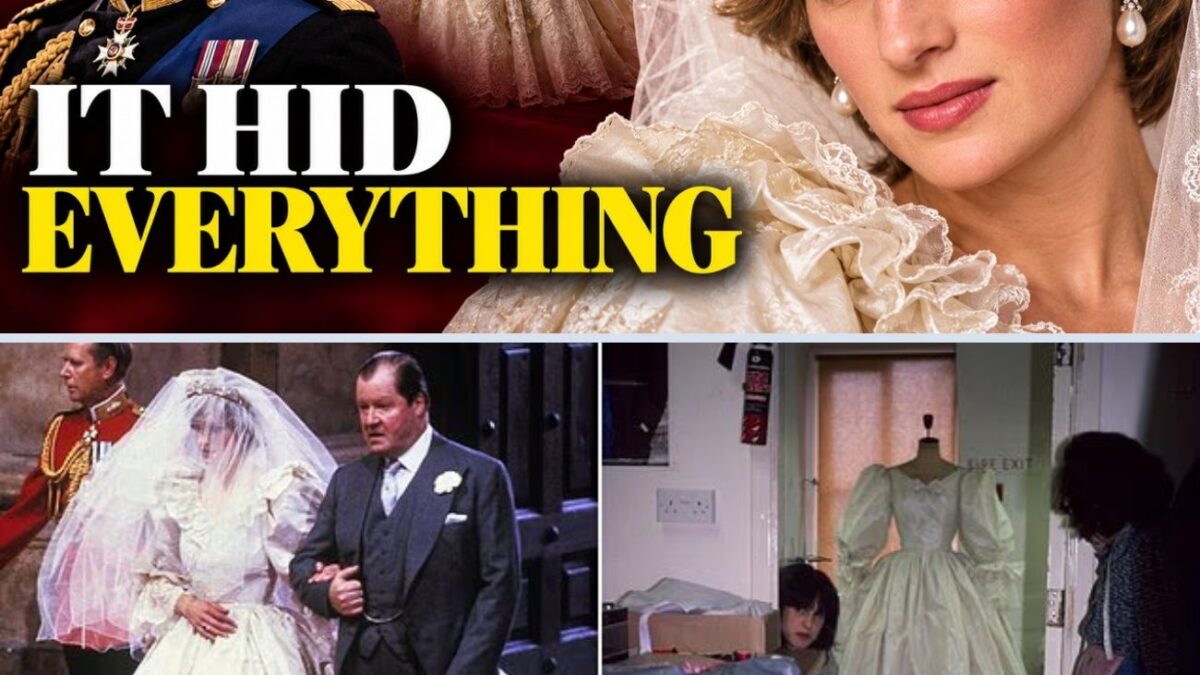
A glass coach stops at the steps of St. Paul’s Cathedral. It is the 29th of July, 1981. The door opens. A 20-year-old woman steps out. Behind her, the dress keeps coming. Hundreds of millions watched on television. They saw a fairy tale. Look closer at the fabric. 25 ft of train, creased from the ride. A waist that shrank so fast the bodice was remade. A second dress the bride never knew existed. A bracelet for another woman opened 2 weeks earlier. Most of it comes from the designers and from the bride’s own recorded words.
It begins on Brook Street in Mayfair in the spring of 1981. Before we go there, fix one image in your mind, the creases. The moment the most famous dress of the century came out of a carriage looking like it had been slept in. Nobody planned that moment and it turned out to be the most honest thing about the day. Ask about Diana’s wedding dress and you usually hear one of two things. One is the fairy tale. The shy kindergarten teacher, the prince, the gown that every bride of the ’80s wanted to copy. The second is the fashion verdict, which came later. Too big, too fussy, too much. One bridal magazine in 2004 called it too much dress, too little princess. Look at the two verdicts again. Both are about how the dress looked. Neither asks what it was hiding or what it cost the people who made it. That is where the real story sits. So, this is not really a story about fashion. It is a story about a garment that was asked to do a job. The job was to make a rushed match between a 20-year-old and a man 12 years older look like a fairy tale live in front of the world. Ask what that job demanded and from whom.
First, the bride because she was barely more than a girl. Lady Diana Spencer was 19 when her engagement to Charles, the Prince of Wales, was announced on the 24th of February, 1981. He was 32. By one count reported later in People magazine, they had met only 13 times before the wedding. On the day of the engagement, the couple gave a television interview. The interviewer asked whether they were in love.
“Of course,” Diana said.
Charles answered, “Whatever in love means.”
Sit with that. Four words on the day of the engagement, on camera, in front of the country. It was meant as a shrug. It played back for the rest of her days. Even the engagement ring told a story. By most accounts, Diana chose it from a selection presented by the Crown Jewelers, Garrard, a large oval sapphire surrounded by diamonds. Some critics later sniffed that it was a design anyone with enough money could order. It became one of the most famous rings in the world anyway. She had been working as an assistant at a kindergarten in London. Overnight, her face was on front pages across Britain, and she needed a dress. She did not go to a royal couturier. She went to a young couple she barely knew. David and Elizabeth Emanuel were husband and wife. She was 27. He was 28. They had met in 1974 at Harrow School of Art, married in 1976, and become the first married couple accepted onto the fashion masters course at the Royal College of Art. Their salon opened in 1977 in a small second-floor room at 26A Brook Street in Mayfair. They called themselves two designers working as one. In the spring of 1981, their business was barely 4 years old. Here is the thing about how she found them. Diana had liked a chiffon blouse they made for her engagement photographs with Lord Snowdon. So, by David’s account, she simply called the studio herself.
“I picked up a call,” he said later, “and she said, ‘It’s me.'”
Then she asked whether they would do the honor of designing her wedding gown. Even that phone call has two versions. In David’s telling, he picked up. In Elizabeth’s, told on a panel in New York in 2024, she was with a client when the phone kept ringing, excused herself, and heard Diana on the line.
“You can’t tell anybody about this,” Diana told her. “You’ve got to keep it very secret.”
Elizabeth said she went back to the client and made up an excuse that her brother had just had a baby, so she could run and tell the team. Which one picked up the phone? Possibly both at different moments. Memories of a famous phone call tend to multiply. The detail that does not change is the first instruction the bride gave them, secrecy.
“My life was going to change,” Elizabeth said.
She was right in ways she could not have guessed. Here is the thing that shows how unusual the choice was. The Emanuels had already made one dress for her that spring for her first official evening engagement. It was black and strapless. By David’s account, the public was quite shocked. A future princess in black with bare shoulders. Now, the same young couple were making the most watched wedding dress in history. In March 1981, Buckingham Palace announced their names. From that moment, the studio on Brook Street was under siege. A reporter from the Christian Science Monitor visited in May 1981 and found the window shades pulled down. They had been down for weeks, and they would stay down until the wedding.
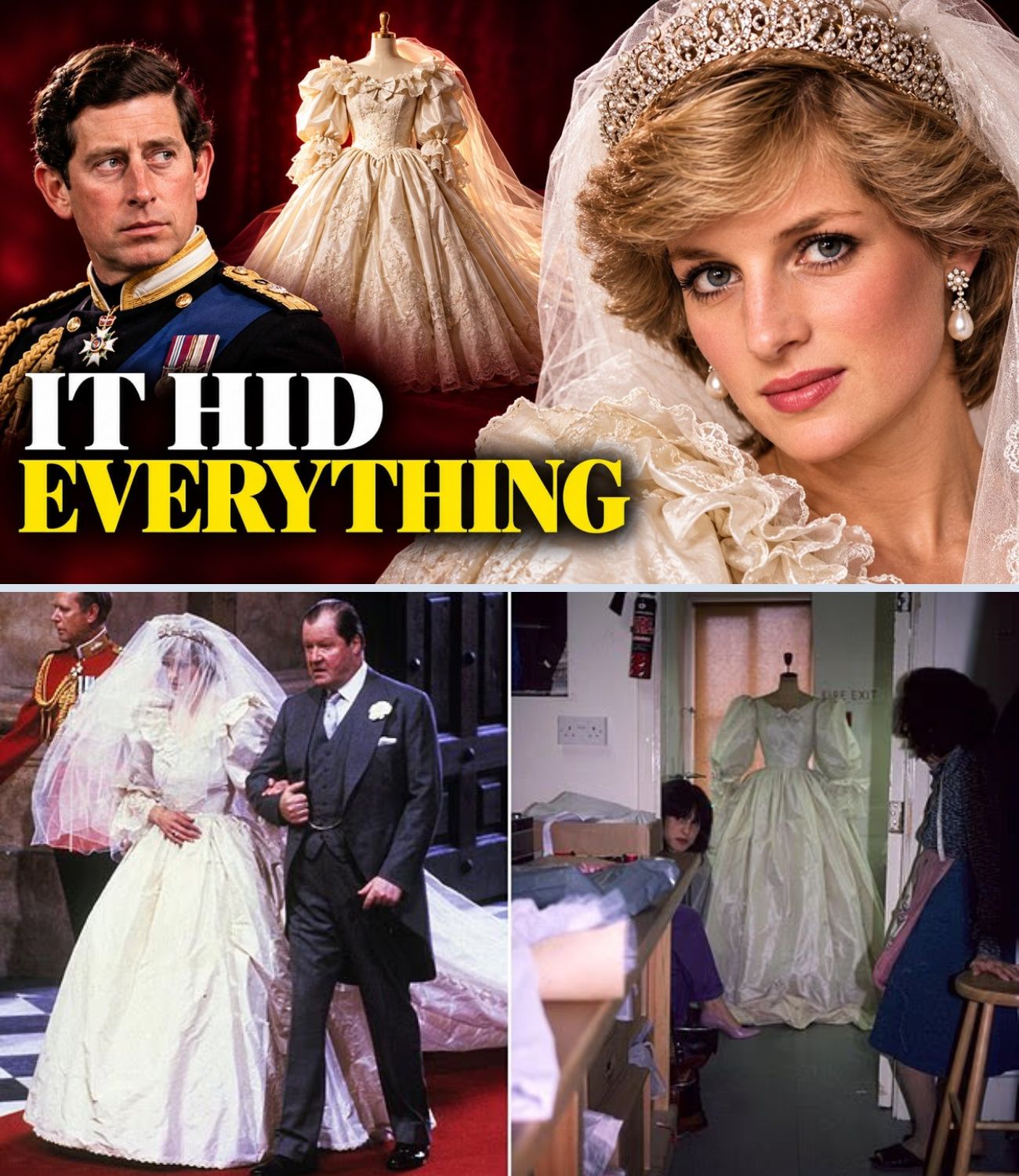
“Long lens photographers,” the couple said, “had got into designers’ workrooms before.”
“There were hundreds of people peering up,” David told the paper, “waiting, hoping she’d come.”
They had stopped taking new orders.
“They were inundated,” he said, “with requests to do everything from dolls to dishes.”
And when the reporter asked whether the palace had told them to keep quiet, David gave an answer that sums up the whole arrangement.
“One knows how to behave.”
Look at the siege from the inside. Photographers surrounded the shop. The Emanuels put up blinds and shutters. They hired security guards who stayed from March until July. When Diana came for a fitting, Elizabeth said there would be hundreds of people outside waiting to spot her. The Emanuels suspected journalists were going through their bins, so they started throwing away scraps of fabric in the wrong colors to throw the journalists off the scent, in Elizabeth’s words. According to Hello magazine, the gown was locked every night in a metal cabinet with guards on duty and someone in the building around the clock. Even the reveal was choreographed down to the minute. The details of the dress were sealed in envelopes, timed to be opened only as Diana stepped into the glass coach. Look at what that secrecy created. A gown that was not really a dress anymore. It was a state secret, a news story, and a product launch all at once. And the brief was almost nothing.
“We had no guidelines or instructions,” Elizabeth told British Vogue.
Tiny waist, big skirts, puffy sleeves. So, in her words, they came up with this amazing, completely over-the-top gown. Now, the gown itself, because every piece of it was chosen to be seen from a very long way away. The fabric was ivory silk taffeta. The silk came from the Lullingstone silk farm in Dorset, and it was woven by the Suffolk firm Stephen Walters. It was British top to bottom on purpose. The embroidery was done by the London house then called S. Lock, and the Emanuels quietly consulted Maureen Baker, the designer who had made Princess Anne’s first wedding dress. The bodice and sleeves were trimmed with antique lace. One piece of it was Carrickmacross lace that had belonged to Queen Mary, the bride’s future great-grandmother-in-law. That was the something old. There were around 10,000 pearls and mother-of-pearl sequins stitched by hand. There were puffed sleeves, a ruffled neckline, and a skirt over layers of tulle. And there was the train, 25 ft of it. It was made, deliberately, to be the longest train in royal wedding history. Behind it trailed a tulle veil of around 153 yd. The tiara was not royal. It belonged to her own family, the Spencers. Then there were the shoes, made by Clive Shilton. They had around 500 sequins and more than 100 pearls, and they had a very low heel. Diana was about 5 ft 10.
Her main concern, Shilton said, was that she wouldn’t appear taller than Prince Charles.
Read that again. The bride’s shoes were designed so that she would not look taller than her husband. Painted on the arches, where nobody would see, were the letters C and D with a heart between them. Hold on to those shoes. They tell you who the whole outfit was really arranged around. The tradition says a bride wears something old, something new, something borrowed, and something blue. Look at where each one came from. The old was a queen’s lace from the family she was marrying into. The new was British silk from British industry. The borrowed was a tiara from her own family. Only the blue was hidden. Hidden inside, there were two small things nobody would ever see. A tiny blue bow sewn into the waistband for something blue, and an 18-karat gold horseshoe set with diamonds stitched into the petticoats for luck. Keep that horseshoe in mind, it comes back. The dress was valued at around 9,000 lb at the time. One later estimate put it at roughly 450,000 of today’s dollars. And the Emanuels prepared for every disaster they could imagine. A matching lace parasol in case it rained, a spare overskirt in case something spilled on the front. But there was one disaster they could not prepare for. It was happening inside the dress. At every fitting, the bride was smaller. According to Elizabeth Emanuel, speaking in a television document three decades later, Diana’s waist shrank by several inches in the four months before the wedding. The dress had to be altered again and again.
“We even had to start again a couple of times,” she said, “even after cutting into the fabric.”
“She stood still for hours,” Elizabeth told British Vogue, “and never complained about the pins.”
Read that pair of memories together. A girl who never complained and a dress that kept having to be taken in. Years later, Diana explained part of it herself. In her 1995 interview with the BBC’s Panorama program, she said she had suffered from bulimia for a number of years. She called it a secret disease. She tied it to the pressure she was under and to the state of her marriage. The fittings at Brook Street were happening in the middle of that. The designers saw a shrinking waistline. They did not see or could not say what it meant. Ask yourself who, in those four months, sat the bride down and asked her if she was all right. No account I found says. The designers took in the seams. The palace planned the procession. The souvenir factories printed her face. Now, the other thing happening in those weeks. In the book Diana, Her True Story, written by Andrew Morton from conversations she secretly recorded with him, she described finding a package about two weeks before the wedding. Inside was a bracelet that Charles had had made for Camilla Parker Bowles. It carried initials from their private nicknames, Fred and Gladys.
“I opened it,” Diana said, “and there was the bracelet, and I said, ‘I know where this is going.’ I was devastated.”
That is her account. Charles’s side presented it differently. His defenders and royal writers sympathetic to him described the bracelet as a farewell present, a goodbye to an old relationship before the marriage. Charles himself said in a 1994 television interview that he was faithful to his wife until the marriage had irretrievably broken down. What nobody disputes is this: The bracelet existed. Diana took it as a sign of where the marriage was going, and she was still being pinned into the dress. According to the same book, she told her sisters over lunch that she could not go through with it. Their reply, as she remembered it, was this:
“Bad luck, duck. Your face is on the tea towels, so you’re too late to chicken out.”
There was a fourth party to this wedding, and it had no face. It made plates, mugs, and programs. It had already been paid, and it could not be refunded. It was the souvenir trade. Understand what that sentence means. The wedding was no longer a private decision. It was merchandise, plates, mugs, tea towels, souvenir programs. A business had been built on her face. In her sisters’ view, calling it off was no longer something a 20-year-old was allowed to do. That is not a wedding. That is a production that had already sold its tickets. People still ask why she did not call it off. Call it off how? A 20-year-old against the palace, the television networks, and a souvenir industry 2 weeks before the date? That question assumes she had a real way out, and the record shows one only on paper. Meanwhile, at the studio, Elizabeth Emanuel was having a different kind of nightmare.
“I was a bit neurotic,” she said years later, “and I thought, what happens if somebody breaks in and steals the dress?”
So, the Emanuels quietly made a second wedding dress. As Elizabeth later put it, it was made just in case the secret of the real dress ever got out. They never told Diana.
“We didn’t try it on Diana,” David said. “We never even discussed it.”
“Neither of us wanted to worry her,” Elizabeth said. “It was a complete secret.”
But notice the descriptions. They do not quite match. In one interview, it was bright white silk, more subdued, with closer sleeves and frilly cuffs. In another, it was pale ivory taffeta with scalloped embroidery and tiny pearls. Both agree it was never finished.
“About 3/4 done,” Elizabeth said.
There was no time for the embroidery. And then it vanished.
“It just disappeared,” Elizabeth said. “I don’t know where it went. It probably got reused, torn up, thrown out. Who knows?”
Think about that. A wedding dress made for the future Princess of Wales, kept as a secret insurance policy, and lost on a sample rail somewhere in London. Nobody kept a record of where it went. That is the strange balance of this story. The real dress was guarded like the crown jewels. The spare one was allowed to disappear. Put the pieces side by side before the coach leaves. A four-word answer about love. A studio under siege. A waist that kept shrinking. A bracelet with two nicknames on it. A sentence about tea towels. A secret second dress. All of it was folded, quite literally, into one gown. The dress was delivered to Clarence House the day before the wedding. On the morning of the 29th of July, the bride got dressed. According to Elizabeth, Diana was singing advertising jingles that morning. Here is the detail every retelling includes, the perfume story. As she was getting ready, the story goes, Diana spilled her perfume, Quelque Fleurs, on the front of the dress and hid the stain by holding the fabric in her hand during the ceremony. It may be true, but did the woman who made the dress see it happen? No. Notice who does not confirm it, Elizabeth Emanuel, the woman who made the dress and was there that morning said,
“They say that, but I don’t know how true that is because I didn’t see it.”
That is how a legend grows around a famous object. A detail gets repeated so often that it becomes part of the dress whether or not anyone saw it happen. When her father saw her dressed, he said,
“Diana, you look beautiful.”
That is how David Emanuel remembered it. Then she got into the glass coach with her father, Earl Spencer. He had survived a serious stroke three years earlier. 25 ft of silk taffeta went in with them. And here is the part the designers never forgot. They had designed the train for a cathedral. They had not designed it for the coach and according to later accounts, the creasing had already shown up in rehearsals where the heat and the father’s presence in the carriage crushed the silk. The carriage was small, the day was hot, the silk was folded and pressed under two people for the whole ride through London. When the door opened at St. Paul’s, the train came out crushed. The creases were visible on every television screen in the world. That is not a fashion accident. That is the only unscripted moment of the whole day. In a documentary in 2018, Elizabeth Emanuel said she was horrified by how much it had creased. The bridesmaids and the designers smoothed it out on the steps as well as anyone could in front of the cameras. Then the bride turned and began the long walk up the aisle on her father’s arm. By most accounts, it took around 3 and 1/2 minutes. Waiting at the altar, Charles wore the full dress uniform of a Royal Navy Commander. Now, hold on to the image from the beginning, the creases. They come back once more at the very end. Inside the cathedral, there were more than 3,500 guests. Outside, the streets were lined with crowds. Around the world, estimates of the television audience run from 750 million to a billion people. In May, the Emmanuels’ own interviewer had expected an audience of around 500 million. The real number was larger than anyone had planned for. On the way up that aisle, Diana later said she noticed one face. So, walking down the aisle, she told Morton,
“I spotted Camilla. Pale gray veiled pillbox hat. Saw it all.”
To this day, she said,
“Vivid memory.”
Compare that with what the cameras were showing at the same moment. A smiling bride, a perfect veil, a train smoothed flat behind her. The picture and the memory were taken in the same seconds. Only one of them was broadcast. At the altar, she made a small mistake. She mixed up her husband’s names, calling him Philip Charles Arthur George instead of Charles Philip. Charles made one, too, promising his goods rather than his worldly goods. And she left out a word. She did not promise to obey. At the time, it was considered a small rebellion. Then came the balcony at Buckingham Palace and the kiss. It was the first time a royal couple had kissed on that balcony for the crowd. It became a tradition. 30 years later, their son and his bride would repeat it. And within hours, copies of the dress were on sale. Puffed sleeves, full skirts, and long trains became the look of a decade of weddings. And this is where the dress and the marriage part ways. The gown went on to become the most copied wedding dress of its time. The marriage went the other way. Charles and Diana separated in 1992. That same year, Andrew Morton’s book came out and with it her account of the bracelet and the eating disorder. But there is one more dress in this story and it explains the first one. On the 29th of June 1994, Charles gave a long television interview to Jonathan Dimbleby in which he acknowledged being unfaithful. That same evening, Diana went to a fundraising dinner for the Serpentine Gallery in London. She wore a short, black, off-the-shoulder dress by a Greek-born designer, Christina Stambolian. She had bought it in 1991 and never worn it. The newspapers called it the revenge dress. Compare that dress with the wedding gown. The wedding dress was designed for a palace, for an audience of hundreds of millions, with shoes kept low so she would not tower over the groom. The black dress was one she chose herself, kept for 3 years, and wore on the night her husband’s confession aired. One dress was made to tell the world a story about her. The other was her answer. In 1995, she sat down with Panorama and said the sentence that most people remember.
“There were three of us in this marriage,” she said, “so it was a bit crowded.”
They divorced in August 1996. In June 1997, she sold 79 of her dresses at Christie’s in New York for charity. The catalog credited Prince William with the idea. The sale raised more than 3.25 million dollars. The revenge dress was in it and sold for about 39,000 pounds. The wedding dress was not. Two months later, on the 31st of August 1997, she died in a car crash in Paris. She was 36. Now, the question of ownership. Who did the dress belong to? In her will, Diana left her possessions to her sons, William and Harry, to be held until both of them turned 30. Until then, her brother Charles, the Earl Spencer, looked after them. Look at the years that followed. For a long time, the wedding dress was the centerpiece of an exhibition at Althorp, the Spencer family home, called Diana: A Celebration. It traveled the world. Its last stop on that tour was Cincinnati in the United States. The exhibitions raised more than a million pounds for her memorial fund. That put the dress in an odd place. The gown made for a royal wedding spent years in the house of the family she was born into, not the family she married into. Her brother, not her husband’s family, decided where it went. The royal butler, Paul Burrell, later wrote that Diana had wanted the dress to go to the Victoria and Albert Museum. That is his account. It did not happen. In 2014, as Harry approached 30, the dress was handed to her sons, according to Royal Central. The handover took place on the 31st of August, the anniversary of her death. Then, in 2021, it came back into public view. From June that year, it went on display at Kensington Palace in an exhibition called Royal Style in the Making, organized by Historic Royal Palaces, the charity that runs the building. It was the first time in about 25 years that the dress had been shown there. It came at a moment when the two brothers were barely speaking in public. One British newspaper headline put it simply,
“At last, something William and Harry actually agree on.”
The dress their mother wore to marry their father. Now, watch the two people who made it. David and Elizabeth Emanuel’s own marriage did not last. They separated, and from 1990, Elizabeth traded under her own name. In 1996, she put her business into a company called Elizabeth Emanuel. In 1997, the company, its goodwill, and the trademark carrying her name were sold on. She was employed by the new owners for about a month. Then she tried to get her name back. She challenged the trademark. She argued that customers were being misled into thinking she still designed the clothes sold under her name. The British officials who heard the case accepted that the public had been confused, but they said that was the natural result of selling a business. Look at the ruling itself. The case went all the way to the European Court of Justice. In 2006, the court ruled against her. A name that had been sold with a business could not be canceled just because the public might assume the designer was still behind it. A legal blog summed it up in one line. Diana dress designer loses control of name. That same year, 2006, David and Elizabeth published a book together about the gown. It was called A Dress for Diana. The dress still carried their story. Her name no longer carried her. The BBC filmed her during the dispute for documentaries with titles like Blood on the Carpet, and the bad luck did not stop. In 2010, trying to launch a new label, she paid 20,000 pounds in fees to a finance firm for a 1 million pound loan that never arrived. The man behind the firm, Edward Davenport, was jailed for fraud the following year. That is not a legal technicality. That is the maker of the century’s most famous wedding dress losing control of her own name. Sit with the shape of it. The dress is in a palace. The name is on a register owned by someone else. And there was one more strange chapter. In 2005, a second, near identical dress was sold at auction. Elizabeth said it had been made for Madame Tussauds, the wax museum. Then in 2011, she revealed that there had been an entirely different design, one that Diana never even tried on. 30 years later, the next Princess of Wales did everything differently. In 2011, Catherine Middleton’s designer, Sarah Burton of Alexander McQueen, was not confirmed until the bride stepped out of the car. Her lace was machine-made, cut out and applied by hand onto net. Diana’s had been antique, handmade, and partly a queen’s. And Catherine wore Diana’s sapphire engagement ring, which had passed to William. So there were copies in shops within hours, a wax museum double, a design nobody wore, and a secret spare that disappeared. One bride, one marriage, and more wedding dresses than anyone has ever been able to account for. Here is the fair side of the ledger. The dress itself was a remarkable piece of work. Elizabeth Emanuel has spoken about Diana with warmth for decades.
“She was never in any way grand,” she said.
When Diana stepped out in it, Elizabeth said, she looked like a butterfly emerging from her chrysalis. And Diana chose this dress. Whatever she later said about the marriage, nothing in the record suggests she disliked the gown itself. Now hold the two accounts against each other. What the public got was a shy girl, a prince, a gown with 10,000 pearls, and a kiss on a balcony. What the record holds is 13 meetings, a four-word answer about love, a shrinking waist, a bracelet, a sentence about tea towels, shoes kept low so the bride would not look taller than the groom, and a woman in a pale gray hat. Both are true. Only one was broadcast. The nastiness was never in the silk. It was in everything the silk was asked to cover. Now go back to the steps of St. Paul’s. A 20-year-old bride climbs out of a glass coach. Behind her, 25 ft of crease taffeta. Inside the waistband, a blue bow. Somewhere in the petticoats, a gold horseshoe for luck. And in her memory, a bracelet with two nicknames on it. The horseshoe was supposed to bring luck. It is still sewn in there, in a dress that has outlived the marriage, the bride, and the designers partnership. Strip away the fairy tale, and strip away the curse, and what is left? A cover story stitched in silk. It was made to show the world one thing, at a moment when everything underneath was going another way. The cameras caught the veil, the sleeves, and the train. The only true detail they caught was the creases. She walked up the aisle as a 20-year-old the country had barely known a year. She walked out as the most watched woman on Earth, already looking for the woman in the pale gray hat. The dress survives, kept by her sons. The story underneath survived only because she recorded it herself.
You Might Also Enjoy

“We Thought They Would Negotiate”—What Argentine Soldiers Said When The British Attacked Goose Green

“You’ll Never Finish My Ruck March, Limey” — US Sergeant Who Challenged the SAS, Then Fell Out First






