Princess Diana’s WEDDING Was Much MORE DISTURBING Than You Think
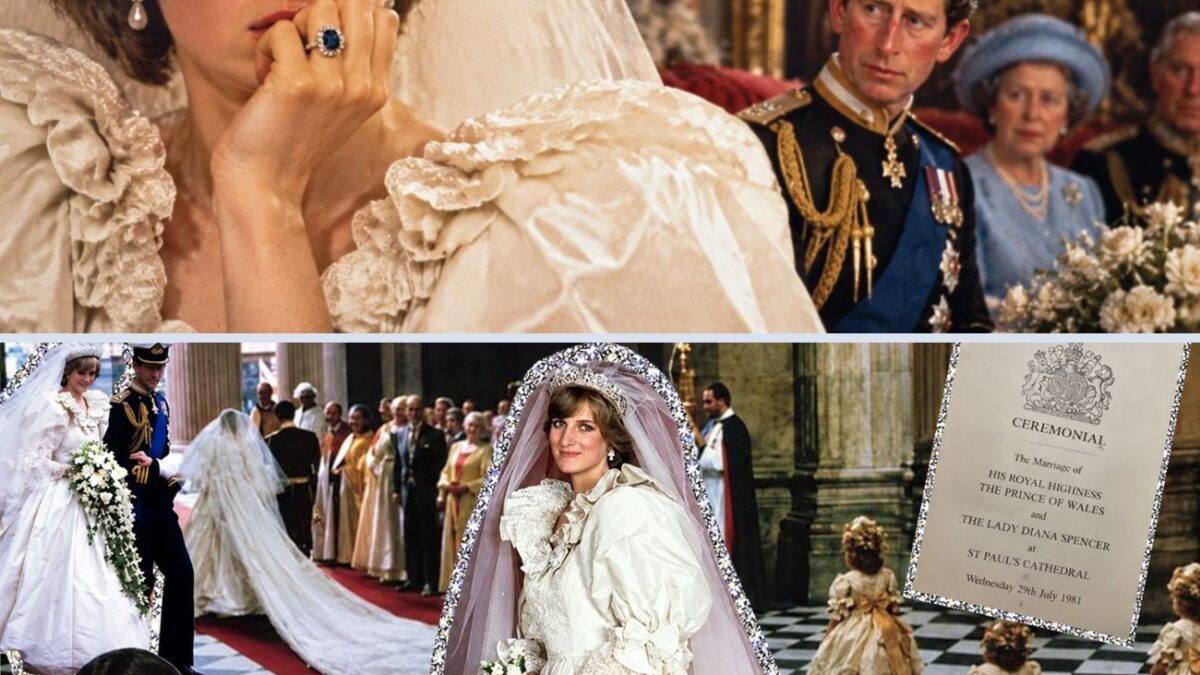
Inside a glass display case at Kensington Palace sits the most famous wedding dress in modern history, ivory silk taffeta, a 25 ft train, 10,000 mother-of-pearl sequins, 153 yds of tulle veil with 10,000 micro pearls. Sewn into the label, invisible to every visitor who presses close to the glass, is an 18-karat gold horseshoe charm studded with white diamonds placed there for good luck. But at the first fitting, the bride’s waist measured somewhere between 26 and 29 in. By her wedding day, it measured 23.
The woman inside it was disappearing. The luck never arrived. The designers did not understand what was happening. David and Elizabeth Emanuel were a young married couple running a small London design studio when they received the commission that would define their careers and ultimately end their anonymity. They had been chosen by a 19-year-old nursery school assistant named Diana Spencer to create the most anticipated bridal gown on earth. Diana had first worn one of their designs, a daring low-cut black taffeta evening gown to a charity event at Goldsmith’s Hall in March 1981, her first formal public appearance alongside Charles. The dress had caused a minor scandal. The press was stunned that the shy future princess had appeared in something so revealing. But Diana liked the Emanuels enough to trust them with the biggest dress in the world.
They worked under extraordinary secrecy. Armed guards were posted at their small London studio around the clock. Fabric scraps were deliberately placed in garbage bins to deceive any reporters who might rummage through the waste, looking for clues about the design. They even produced a second complete wedding dress, a full backup gown in case the original design was leaked to the press before the ceremony. The location of that second dress remains unknown to this day. But the real crisis facing the Emanuels was never espionage or press intrusion. The real crisis was the body the dress was supposed to fit. At each successive fitting, Diana was measurably smaller. The bodice had to be taken in again, then again, then again. The seamstress grew worried. The designers later said they assumed it was ordinary bridal weight loss, the kind most brides experience in the months before their wedding. It was not ordinary. It was not nerves. And the reason it began can be traced to a single sentence spoken on what should have been one of the happiest days of Diana Spencer’s life.
On the 24th of February 1981, Diana and Charles posed for the press outside Buckingham Palace to announce their engagement to the world. Charles placed his hand on Diana’s waistline. According to Diana’s own recorded testimony, tapes she secretly made for biographer Andrew Morton, later published in his explosive 1992 book, Diana: Her True Story—In Her Own Words, he said something like: “Oh, a bit chubby here, aren’t we?”
Diana described the effect on those tapes with devastating precision, noting that it triggered something inside her. “The bulimia,” she said, “started the week after the engagement was announced.” It would take nearly a decade to overcome.
Over the 5 months between the engagement and the wedding, she lost approximately 14 lb. Her dress size dropped from a British 14 to a British 10. The wedding dress documented every pound of that loss. Every fitting was a measurement of damage being done. But before the dress, before the fittings, before the public fairy tale even had its shape, there was a proposal in a nursery.
On the 3rd of February 1981, Prince Charles proposed to Lady Diana Spencer in the nursery at Windsor Castle. He was 32 years old. She was 19. The age gap alone was 13 years. Diana later claimed that the couple had met only 13 times in total before the engagement was officially announced to the public. 13 meetings. The man she was agreeing to spend her life with, the eldest son and heir of Queen Elizabeth II, the future king of the United Kingdom, was someone she barely knew at all. Charles had apparently hoped she would use a planned holiday to think over her answer carefully. She accepted almost immediately.
3 weeks later, on the 24th of February, their engagement became public, and a journalist asked the couple on live television whether they were in love. Diana smiled, looked at Charles, and said: “Of course.”
Charles paused. Then he offered a response that would be replayed for decades: “Whatever in love means.”
Diana later called that moment ghastly, saying it threw her completely. The comment was broadcast live across the country. Millions of people saw it. Almost nobody understood what it actually revealed. But Diana understood. Something fundamental was wrong. And what followed was not a fairy tale unfolding. It was a controlled extraction from normal life.
2 days after the engagement announcement, Diana packed her bags and left her flat at Coleherne Court in the Earls Court area of London, a three-bedroom apartment she had purchased with £50,000 inherited from her great-grandmother, the American Frances Ellen Work. She shared that flat with three girlfriends. They cooked together, watched television, lived an anonymous life in an Edwardian red-brick mansion block. Diana later described those flat-share years as the happiest time of her life. The building received an English Heritage blue plaque in 2021. But on the night she left it for the last time, her police bodyguard told her something she never forgot: “This is the last night of freedom ever in the rest of your life.” He meant it as a gentle warning. He was absolutely right.
Diana moved first to Clarence House, the London residence of the Queen Mother, and then to Buckingham Palace itself, where she was given a suite of rooms on the nursery floor. Not a grand state apartment, not a formal set of reception rooms befitting the future Queen of England. The nursery floor, the section of the palace where royal children were traditionally housed. She was 19 years old, engaged to the Prince of Wales, and she had been placed in rooms designed for children. She had no lady-in-waiting assigned to her, no structured daily schedule, no defined role within the household, no friends inside the building. Her fiancé was frequently away on royal duties. The Queen’s staff treated her with polite but impenetrable distance. The corridors of Buckingham Palace stretched endlessly in every direction. Diana had gone from a flat where she shared meals with three friends and watched television on the sofa to an institution with 775 rooms where she knew almost nobody by name. The silence was enormous. The isolation was total.
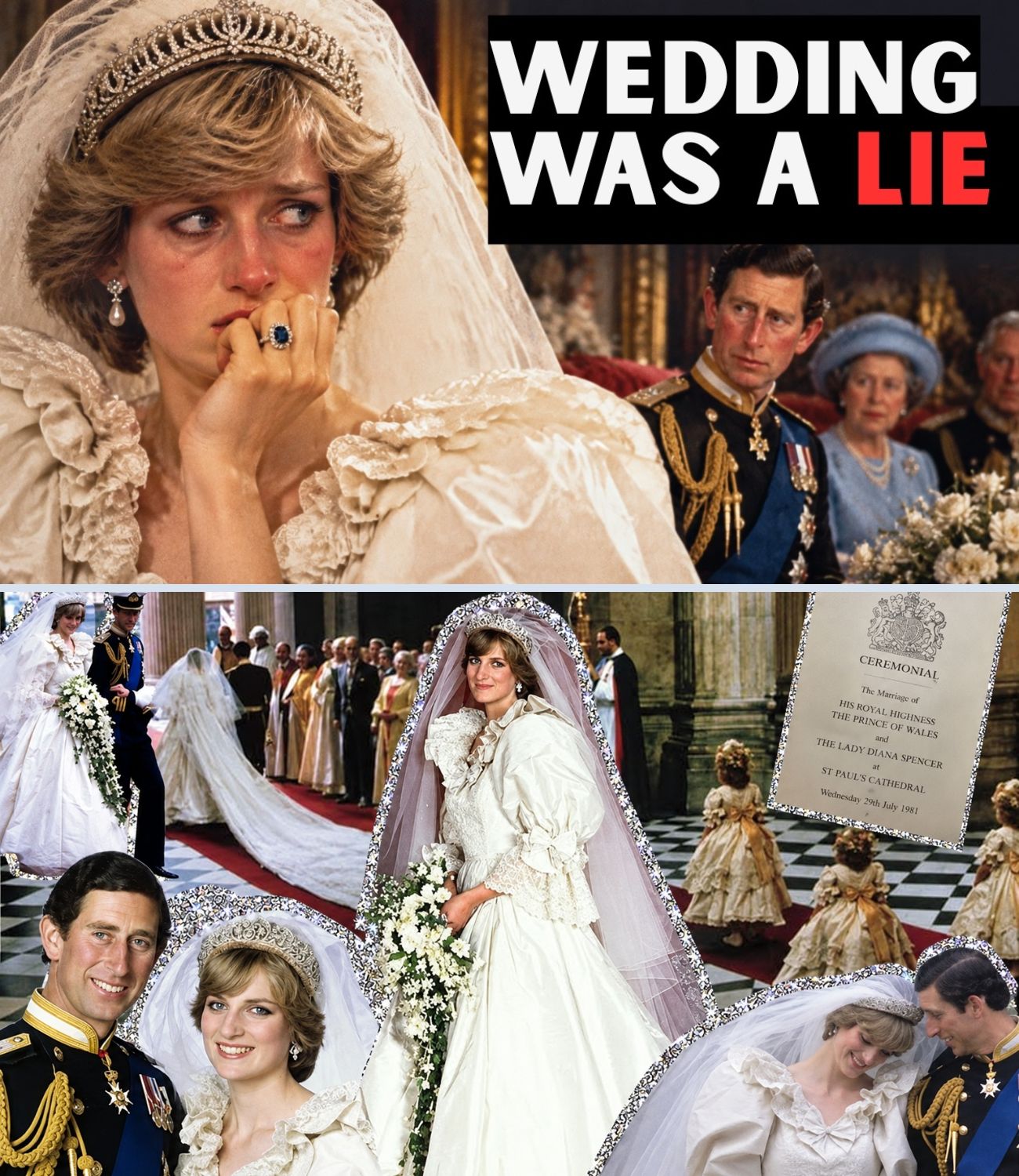
The only real companion Diana found during those 5 months inside the palace was a man named Michael Colborne. He was Charles’s private secretary, a former Royal Navy officer who had first served alongside the prince on the destroyer Norfolk and later at HMS Heron, the Royal Naval Air Station in Somerset. It had been Lord Mountbatton who recognized that Colborne would make an ideal assistant for Charles, partly because Colborne was one of the few people around the prince who told him the truth without hesitation. A bad speech would be greeted with the words: “That was a bloody disaster, sir.” Colborne was direct, practical, and unexpectedly kind. When Diana began wandering the palace with nothing to do and no one to talk to, Colborne put a chair in his office so she could come and sit with him. She visited constantly. She peppered him with questions about Charles’s past, about his relationships, about his habits, and about one name in particular that kept surfacing in conversations and phone calls: Camilla Parker Bowles. Colborne tried to reassure Diana, but reassurance was difficult when the evidence kept contradicting it. Camilla telephoned Charles constantly, and he always took her calls behind closed doors. Camilla and her husband Andrew Parker Bowles were regularly included as weekend house guests at Sandringham, the royal family’s country estate in Norfolk. The connection that was supposed to be finished, the relationship Charles had reportedly ended before pursuing Diana, kept quietly reasserting itself inside the life Diana was being folded into.
Charles and Camilla had first met in 1970 at a polo match at Windsor Great Park, introduced by a mutual friend named Lucia Santa Cruz. Camilla was 23. Charles was 22, just one year after his investiture as Prince of Wales. According to biographer Penny Junor, the attraction was immediate. Charles loved that she was natural, funny, and completely unintimidated by his title. Their romance had blossomed quickly, but Charles joined the Royal Navy in 1971, and by the time he returned from service, Camilla had resumed an earlier relationship and married Andrew Parker Bowles in 1973. Lord Mountbatton had reportedly advised Charles against marrying Camilla, citing concerns about her past. But advising Charles not to marry Camilla was not the same as Charles ceasing to love her. That distinction would define everything that followed.
The ring Diana wore during those anxious months told its own quiet story of disruption. A 12-karat oval Ceylon sapphire mined in what is now Sri Lanka surrounded by 14 round brilliant-cut diamonds all set in 18-karat white gold. It came from the Garrard catalogue. Garrard was the Crown Jeweller, the firm that had made the Imperial Crown of India for King George V and the Imperial State Crown for King George VI. But Diana’s engagement ring was not a bespoke royal commission. It was a catalogue piece. Anyone in Britain with approximately £28,000 to £47,000—with the exact price varying across sources and currency conversions—could have walked into Garrard and purchased the identical ring. That had never happened before with a royal engagement ring. Prince Philip had used diamonds from his mother, Princess Alice of Battenberg’s tiara to design Queen Elizabeth’s ring in 1947. Every royal engagement ring before Diana’s had been a private, one-of-a-kind creation.
The Queen was reportedly unhappy with Diana’s choice. But Diana had picked it herself, drawn to the boldness of the sapphire, and in that single act of personal taste, she had already broken protocol before the marriage even began. The most iconic engagement ring of the 20th century was by royal standards off the shelf. It is now worn by Catherine, Princess of Wales, after Prince William proposed with it in 2010. Meanwhile, the machinery of the national spectacle was accelerating beyond anyone’s ability to slow it down.
The United Kingdom declared the 29th of July 1981 a national holiday. 3,500 guests were invited to St. Paul’s Cathedral, chosen over Westminster Abbey specifically because it could hold a larger congregation. 74 countries arranged live television broadcasts. An estimated 750 million viewers were expected worldwide. More than 600,000 people planned to line the streets of London to catch a glimpse of the couple’s carriage procession. Commemorative plates, mugs, coins, and tea towels were being produced by the tens of thousands, each one bearing the faces of Charles and Diana side by side. The wedding had become bigger than any two people could contain. It was an economic event, a diplomatic event, a cultural event, a merchandising event. It belonged to the nation now. And inside Buckingham Palace, the bride could not find a single person who would tell her she was allowed to stop.
Then, roughly two weeks before the ceremony, Diana found something she was never meant to see. Among the wedding presents stacked in the office she shared with Colborne at the palace, there was a small parcel. Colborne told her not to open it. She insisted. Over his fierce objections, she tore it open. Inside was a gold bracelet with a lapis lazuli pendant. Engraved on the pendant were two intertwined initials: G and F (Gladys and Fred, the private pet names Charles and Camilla used for each other). The bracelet was a farewell gift from Charles to Camilla prepared in advance of his wedding to another woman, and it had been sitting among Diana’s own wedding presents inside the office where Diana spent her loneliest hours. Diana was devastated. She confronted Charles. She told him she knew what the bracelet meant and who it was intended for. According to Morton’s biography, based on her own recorded words, she said: “I opened it and there was the bracelet and I said, ‘I know where this is going.'”
“I was devastated. This was about 2 weeks before we got married.”
She seriously considered calling off the wedding entirely. She went to her older sisters, Sarah and Jane, hoping for support, hoping for someone, anyone, to tell her she had the right to stop this. What her sisters told her instead has become one of the most frequently quoted lines in royal history: “Bad luck, Duchess,” they said, using the family nickname for their youngest sister. “Your face is on the tea towels, so you’re too late to chicken out.”
That was the moment Diana understood that nobody in her life was going to give her permission to walk away. Her own sisters had framed the wedding as a merchandising obligation, not a marriage. The monarchy had invested a national holiday, 3,500 invitations, the attention of 74 countries, and the expectations of 750 million people. Cancellation was not a concept the institution could absorb. Diana was 20 years old. She had no independent advisers, no allies within the palace walls, no lawyer, no counselor, no older friend who pulled her aside and said, “You do not have to do this.”
Diana also recalled another moment from the days before the wedding. She said she once overheard Charles on the telephone in his bath speaking on a handheld phone: “Whatever happens, I will always love you.”
She told him afterward that she had listened at the door. They had what she described as a filthy row. The person on the other end of the line was never officially confirmed, but Diana had no doubt about who it was. Then came the night before the ceremony. According to Penny Thornton, an astrologer Diana later confided in, Charles told Diana the night before their wedding that he did not love her. Thornton said Diana seriously considered not attending the ceremony the following morning. The account is secondhand—Diana telling Thornton, Thornton telling the public years later in an ITV documentary. The exact words remain unverified, but the emotional reality is supported by multiple accounts. Reports suggest that both the bride and the groom cried that night. Royal expert Ian Pelham Turner described two people weeping on opposite sides of the same monarchy, trapped by an event neither felt able to cancel.
Diana reportedly looked exhausted on her wedding day, and the public assumed it was nerves. Nobody outside the palace knew what had happened the night before. Charles too was under private strain. By several accounts, he became frantic before the pre-wedding ball at Buckingham Palace when he misplaced one of a pair of cufflinks—cufflinks engraved with two intertwined Cs, a gift from Camilla. Royal biographer Catherine Mayer described him as being in a lather about the lost cufflink. The fact that a piece of jewelry from Camilla could cause that level of agitation on the eve of his wedding to Diana tells its own story. The cufflinks mattered to him. They would appear again.
On the morning of the 29th of July 1981, Diana sat in her rooms at Clarence House wearing jeans and watching television while a hairdresser worked on her hair. The Spencer tiara was placed on her head, a family heirloom, not a royal piece, featuring diamonds shaped into tulips and stars with continuous running scrolls. It had originally been gifted to Diana’s grandmother, Lady Cynthia Hamilton, on her wedding day in 1919. It was reportedly so heavy that it gave Diana a headache throughout the ceremony. Inside the waistband of the wedding dress, a small blue bow had been sewn as her something blue. The 18-karat horseshoe charm was already stitched into the label. Elizabeth Emanuel had packed smelling salts and glucose tablets in her handbag, prepared for the possibility that the bride might faint during the ceremony. The designers had prepared for almost everything. They had not prepared for what was actually wrong.
Then Diana spilled perfume on the dress—Quelques Fleurs by the Parisian perfume house Houbigant, her favorite fragrance. A visible stain bloomed on the ivory silk taffeta. Barbara Daly, Diana’s makeup artist, made a quick practical decision. She instructed Diana to hold that spot on her skirt as she walked, pressing her hand against the fabric so that it would look to cameras and onlookers as if she was simply holding up the hem of a gown to avoid tripping. The stain would remain hidden from every camera angle. The world would never see it, but it was there. On the most photographed wedding dress in modern history, from the very first step, there was a stain.
The glass coach arrived at Clarence House. Diana and her father, Edward John Spencer, the eighth Earl Spencer, climbed inside. The 25-ft train, the longest in British royal wedding history—a record the Emanuels had deliberately set out to break—had to be folded like a bed sheet to fit inside the carriage. The designers had realized too late that nobody had calculated the relationship between the train’s extraordinary length and the interior dimensions of the glass coach. Despite Diana’s careful efforts to manage the fabric, the train was badly crushed during the ride to St. Paul’s Cathedral. When Diana stepped out at the cathedral steps, the ivory silk taffeta was visibly wrinkled. Elizabeth Emanuel later told interviewers she was horrified. The fabric was heavy silk taffeta. It creased easily. And the heart-stopping moment seeing that creased train revealed to 750 million viewers was for the designer the culmination of weeks of painstaking secrecy undone by a single carriage ride.
Then Diana forgot her bouquet. She left it sitting inside the glass coach. The arrangement of myrtle, Mountbatten roses, orchids, gardenias, and stephanotis—the carefully designed bridal bouquet—remained on the seat of the carriage. Someone noticed, grabbed it, and placed it back into Diana’s hands just before she reached the entrance of the cathedral. If you watch the original footage carefully, you can spot the exact moment: Diana steps from the carriage without flowers and then they suddenly reappear in her grasp. Nobody watching in real time caught it.
Inside St. Paul’s Cathedral, 3,500 guests waited in the pews. Among them sat members of nearly every royal family in Europe, foreign heads of state, senior politicians, military leaders, diplomats, and representatives of the full weight of the British establishment. 74 countries were carrying the ceremony live. 600,000 people stood along the processional route outside cheering and waving flags. And at the far end of the longest royal aisle in Britain, Diana’s father began to walk. Earl Spencer had suffered a severe cerebral hemorrhage in 1978. He had been hospitalized for approximately 8 months. At several points during his treatment, he was not expected to survive. He did survive but remained physically unsteady for the rest of his life. Walking his youngest daughter down the vast aisle of St. Paul’s Cathedral was for a man in his condition a genuine physical ordeal. The walk covered the full length of the cathedral’s nave, one of the longest ceremonial aisles in the country. Diana held his arm tightly. The public saw a touching paternal image, a proud father giving away his daughter on the biggest day of her life. The reality was closer to the opposite: Diana was the one providing support, keeping him upright, guiding him forward. The bride was walking the father down the aisle.
When they reached the altar, Diana spoke her vows before the congregation, before the cameras, before the world, and she got her husband’s name wrong. She called him Philip Charles Arthur George instead of Charles Philip Arthur George, transposing his first and middle names. The BBC in its live commentary described it diplomatically as an easy mistake caused by wedding-day nerves. Charles made his own error, pledging “thy goods” instead of “my worldly goods” during his portion of the vows. These small stumbles might have been charming under different circumstances. Under these circumstances, they were the sound of two people performing a ceremony that neither fully wanted to be in. Diana also broke one piece of long-standing royal tradition with her vows: she refused to promise to obey Charles. Instead, she vowed to love, comfort, honor, and keep him. The decision attracted international attention, with The New York Times running a headline noting Diana’s refusal to use the word. At the time, it was interpreted as a small, charming act of modern independence by a confident young bride. In retrospect, it was one of the only elements of the entire ceremony over which Diana exercised any real control.
The Archbishop of Canterbury, Robert Runcie, stood between them and addressed the congregation and the global audience. He called the wedding the stuff of which fairy tales are made. He said it during the service itself, not afterward in commentary, not in a reflective interview, but during the ceremony as the vows were being exchanged while the bride wore a stained dress with a wrinkled train on a frame that had been shrinking for 5 months beside a father who could barely stand, having been told the night before by the groom that he did not love her. The fairy tale was being narrated in real time by the most senior clergyman in the Church of England, and 750 million people accepted it.
After the ceremony, the couple rode in the 1902 State Landau, an open carriage specifically designed to give spectators a clear view back to Buckingham Palace. They appeared on the famous balcony. They kissed for the cameras. The image was reproduced millions of times across the world. Inside the palace during the reception and official photographs, 5-year-old bridesmaid Clementine Hambro slipped on the polished wooden floor of the picture gallery and banged her head. Diana immediately picked her up and comforted her, asking gently: “Have you bumped your bottom?”
It was a small, instinctive act of warmth. It was also a preview of the quality that would eventually make Diana beloved in a way the institution never anticipated: she was better at genuine human connection than anyone else in the royal family.
Then came the honeymoon—12 days aboard the royal yacht Britannia cruising the Mediterranean. It should have been the beginning of a marriage; instead, it confirmed the end of one. Charles spent long stretches alone on the verandah deck absorbed in books by the South African philosopher and writer Laurens van der Post. Diana roamed the ship separately, chatting with sailors and cooks in the galley, making friends with the crew in a way that came naturally to her and baffled her husband. They were already living parallel lives on the same vessel, separated by more than the physical distance between a verandah deck and a kitchen. When reporters briefly encountered the couple at Balmoral after the cruise and asked Diana about married life, she smiled and said: “I would highly recommend it.”
Nobody could see what was happening behind the performance. Charles wrote to a friend from the yacht in words that survive as one of the most quietly damning documents of the marriage: “Marriage is very jolly and it’s also extremely nice being together in Britannia. Diana dashes about chatting up all the sailors and the cooks in the galley, etc., while I remain hermit-like on the verandah deck, sunk with pure joy into one of Laurens van der Post’s books.”
He described the honeymoon as jolly. Diana would describe it very differently. One day aboard Britannia, the couple sat together comparing their upcoming schedules. As Charles opened his diary, two photographs of Camilla Parker Bowles fell out onto the table between them. Diana saw them. “Camilla gave you those, didn’t she?” Diana recalled asking.
Charles replied with what she described as casual indifference: “Yes. So what’s wrong? They’re a present from a friend.”
Diana told Morton: “And boy did we have a row.”
The groom wore another woman’s jewelry on his honeymoon. The bracelet had been meant as a farewell; the cufflinks were not a farewell, they were a continuation. Diana later confessed that during the 12 nights aboard Britannia, she dreamt of Camilla constantly. “At night, I dreamt of Camilla the whole time,” she told Morton. “I was obsessed by Camilla totally.”
When the Mediterranean cruise ended, the honeymoon did not return to privacy; it continued at Balmoral Castle in Scotland, surrounded by the entire royal family. Royal author Ingrid Seward later observed, “Imagine having to move in with your in-laws on your honeymoon.” Diana, who had grown up reading romantic novels and dreamed of an intimate private life with the man she loved, instead found herself navigating formal Highland dinners with a husband who had packed another woman’s photographs in his diary and wore another woman’s cufflinks at the table.
The marriage lasted 15 years on paper. Charles and Diana separated in 1992, the same year Morton published Diana: Her True Story, exposing the bulimia, the isolation, and the reality of the Camilla connection to the world. In 1995, Diana sat before a BBC Panorama camera and told the nation that her bulimia had been a symptom of “what was going on in my marriage,” famously stating that there had been “three people in this marriage, so it was a bit crowded.” The divorce was finalized in 1996. Diana was killed in a car crash in Paris on the 31st of August 1997. She was 36 years old. She never remarried.
The sapphire ring she had chosen from that Garrard catalogue outlived her. Charles married Camilla in 2005. When he became King Charles III in September 2022, Camilla became Queen Consort, a title later simplified to Queen Camilla. An emerald necklace that the Queen Mother had given to Diana as a wedding gift in 1981 was returned to the royal collection following Diana’s death. 22 years later in 2019, the emerald pendant resurfaced: it had been detached from its chain and refashioned into a brooch. Camilla was wearing it. Jewelry experts estimated the refashioned piece at approximately £137,000. The wedding gift given to one wife had been redesigned and placed on the woman who replaced her. The brooch has since also been worn by Catherine, Princess of Wales.
Michael Colborne, the quiet, decent man who had placed a spare chair in his Buckingham Palace office so a lonely, frightened teenager could have someone to talk to, left Charles’s service in 1984. The breaking point came during a royal tour of Canada in 1983 when Charles reportedly shouted at him, accusing Colborne of spending more time attending to Diana than to the prince himself. Colborne went on to work for the Duke of Westminster. He died in September 2017. The chair is gone. The office is just a room now. Nobody remembers which room it was.
The wedding dress sits today inside its glass case at Kensington Palace, the very same royal complex where Diana lived during her marriage, where she raised William and Harry, where she continued living after the separation, and where a bronze statue of her now stands in the sunken garden. Modern visitors queue to see the dress. They admire the 10,000 sequins, the record-breaking 25-ft train, the antique Carrickmacross lace that once belonged to Queen Mary. They take photographs through the glass. They do not see the small blue bow sewn inside the waistband. They cannot see the spot where the Quelques Fleurs stain was hidden beneath Diana’s palm. They do not know that the waist was taken in 5½ inches over 5 months, or that a second backup dress was made and vanished, or that Elizabeth Emanuel carried smelling salts in her handbag because she genuinely feared the bride might collapse before reaching the altar.
What visitors see is a fairy tale preserved in fabric. What the fabric actually preserves is the cost of the fairy tale to the person who wore it. The 18-karat gold horseshoe charm is still sewn into the label. It was stitched there for good luck on the morning of the 29th of July 1981—the day a 20-year-old woman who had met her husband 13 times, who had been told the night before that he did not love her, who was wearing a stained and wrinkled dress on a body that had been shrinking for 5 months, walked down the longest royal aisle in Britain while the Archbishop of Canterbury called it a fairy tale, and 750 million people believed him. The charm is still there. It has never been removed. The luck it promised never came.
You Might Also Enjoy

“We Thought They Would Negotiate”—What Argentine Soldiers Said When The British Attacked Goose Green

“You’ll Never Finish My Ruck March, Limey” — US Sergeant Who Challenged the SAS, Then Fell Out First






