“PUBLIC FRAUD!” Prince Harry exposed for skydiving SCAM as qualified instructor completes mission
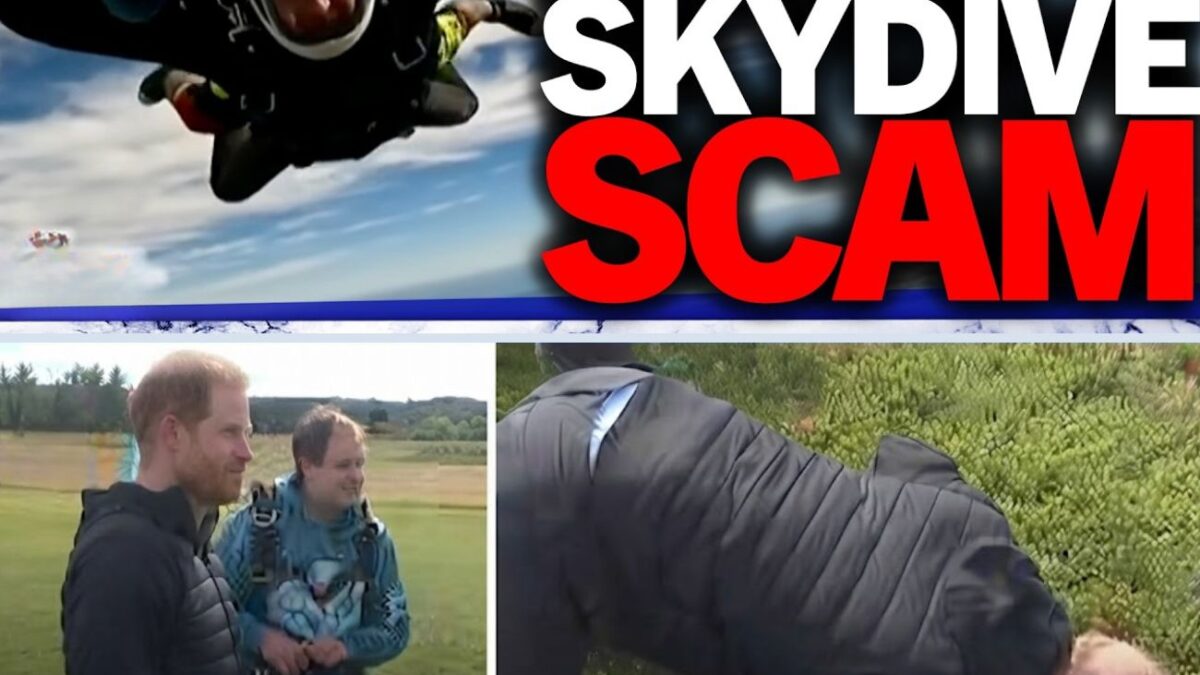
THE GREAT ALTITUDE ABSURDITY: Inside Prince Harry’s Tandem Tarmac Tantrum, The Monteceto Ghost-Town Exodus, and the Palace’s Absolute Cold Shoulder!
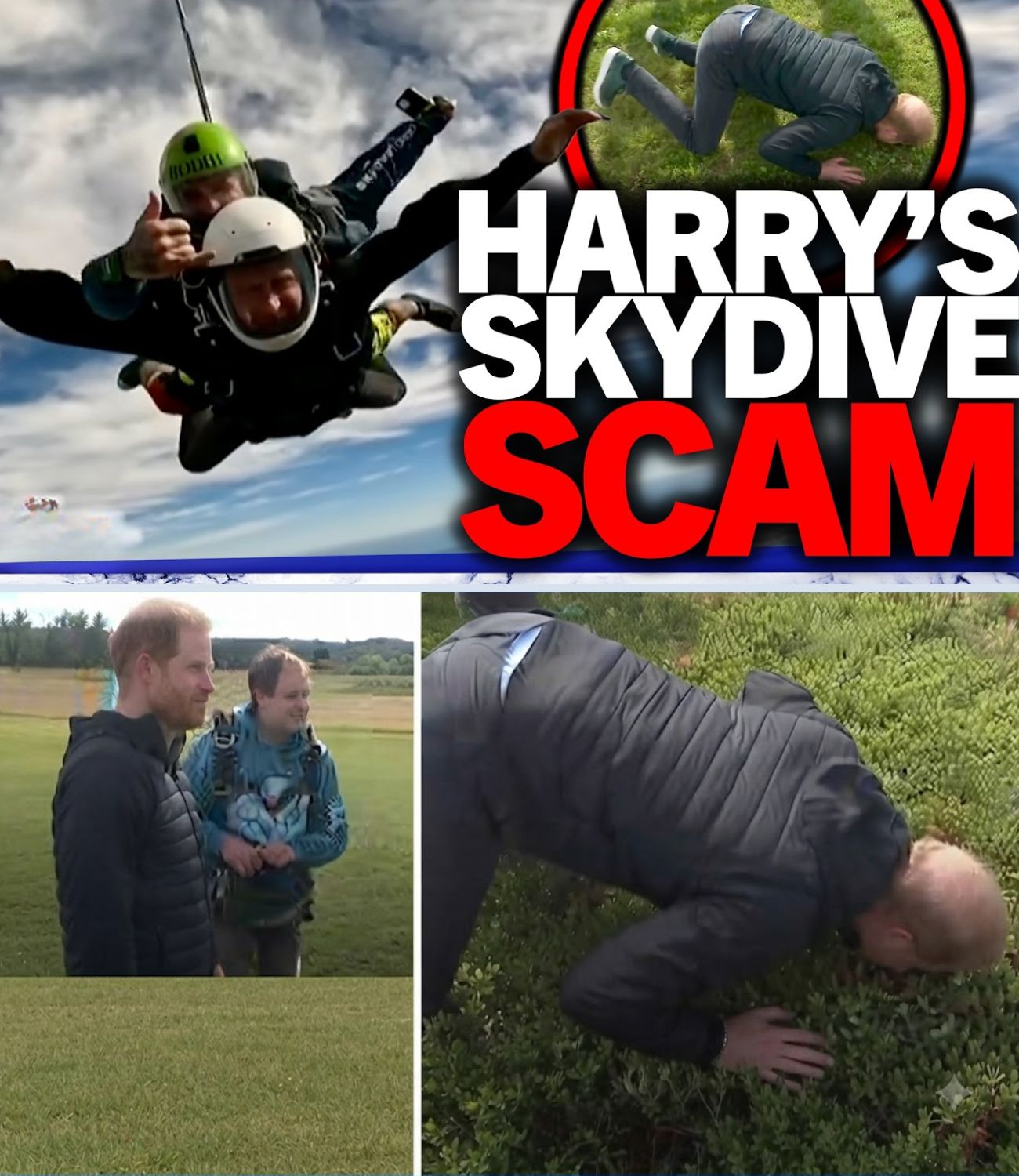
There is a particular brand of theatrical humiliation that only self-styled royal exiles seem capable of engineering. Picture the scene: an airfield buzzing with anticipation, cameras primed, journalists notebook-ready, and a prince eager to project an aura of fearless, high-octane derring-do. What the public was promised was a daring airborne salute to a venerable war veteran; what they actually witnessed was a masterclass in modern pantomime, complete with a tandem safety harness, a qualified instructor doing all the heavy lifting, and an awkward, floor-kissing finale that left royal watchers wincing in secondhand embarrassment.
As the dust settles on Prince Harry’s latest transatlantic publicity stunt, a much darker, more chaotic picture is emerging from both sides of the Atlantic. From hasty, middle-of-the-night departures in Santa Barbara to a stony, unyielding silent treatment emanating from the corridors of Buckingham Palace, the grand Sussex narrative is unravelling at the seams. It is a tale of dwindling commercial empires, desperate social climbing, abandoned school desks, and a royal family that has firmly turned the key in the lock, leaving the Duke and Duchess to holour into an empty digital void.
The Tandem Truth: Unmasking the Airfield Farce
The centerpiece of Harry’s recent media blitz was supposed to be a heart-stopping leap in honor of a remarkable 102-year-old veteran named Ed Marshall. Meeting the centenarian had previously sparked a conversation about skydiving, with the veteran recounting his own jump on his centenary. The plan, breathlessly hyped by friendly media outlets, suggested the Prince would step up to the plate in a display of solidarity and adrenaline-fuelled bravery.
Yet, when the rubber met the tarmac, reality proved profoundly unglamorous. As astute aviation analysts and sharp-eyed commentators quickly pointed out, the Duke of Sussex did not leap from an aircraft with a solo parachute strapped to his own back like a seasoned paratrooper. Instead, video footage captured the unmistakable mechanics of a standard tandem jump—meaning a fully qualified, highly trained professional instructor handled every ounce of the technical danger, stability, and navigation while a red-haired royal hitched a ride firmly strapped to his chest.
For a man who once eagerly burnished his credentials as an army veteran and helicopter pilot, the optics were excruciating. Critics lost no time drawing unflattering comparisons to genuine military royalty, such as twenty-year-old Spanish Crown Princess Leonor, who underwent rigorous, independent parachute training during her mandatory military service, learning to throw herself out of planes solo. Harry, by contrast, at over forty years of age, treated the drop zone like a theme park ride, culminating in a bizarre, melodramatic moment where he dropped to his knees and kissed the ground—an affectation that social media wags swiftly likened to pop star Katy Perry’s theatrical antics after a space-themed escapade.
Even the core premise of the tribute turned into a logistical muddle. Because medical professionals rightly determined that 102-year-old Mr. Marshall was far too frail to make the leap himself, his grandson Bailey stepped into the breach, leaving the veteran to watch from the cockpit. Rather than a poignant, shared generational triumph, the event devolved into another tone-deaf promotional vehicle for a prince desperately searching for relevance in a landscape that has largely learned to look the other way.
Midnight in Monteceto: The Great Californian Ghost Town
While Harry was busy playing to the cameras on North American soil, the domestic reality of the Sussex household in Monteceto was experiencing a catastrophic structural failure. For four long years, the couple had aggressively marketed their sprawling Santa Barbara estate as an enlightened sanctuary of peace, privacy, and progressive harmony. They painted a picture of idyllic Californian domesticity, far removed from the stuffy, archaic constraints of British aristocratic life.
Yet, as investigative reports from The Sun US and local insider testimonies have revealed, their abrupt departure from the neighbourhood bore all the classic hallmarks of a frantic, midnight extraction rather than a civilised seasonal transition. The locals, it turns out, were not mourning their absence; they were throwing metaphorical street parties.
Consider the eye-opening revelations shared by Penny Bianchi, a prominent seventy-nine-year-old interior designer whose multi-million-pound estate shares property lines with Oprah Winfrey. Speaking with blistering candour, Bianchi disclosed that the community’s administrative channels—specifically the exclusive private school attended by young Prince Archie—were kept entirely in the dark until the very last second.
“My grandchildren go to the same school and my son is a graduate, so all my gossip comes from there,” Bianchi remarked. “I know that Archie goes to school, and that they didn’t even know they were going until everyone else found out. But they were told, ‘Don’t keep a place for him, because he won’t be back anytime soon.’ They practically left the next day. They just disappeared overnight.”
The school administration, far from lamenting the loss of high-profile pupils, reportedly breathed a collective sigh of relief. The heavy-handed, aggressive perimeter patrols conducted by private bodyguards—shooing away ordinary parents, blocking narrow residential lanes, and treating peaceful Californian mornings like a high-threat diplomatic zone—had worn thin. Bruce Johnston, an eighty-four-year-old music legend and stalwart Beach Boys member who has resided in the area for decades, didn’t bother sugar-coating his assessment when approached near a local coffee shop, casually dismissing Harry’s local conduct as that of an “entitled jerk.”
In a community populated by self-made tech billionaires, Oscar-winning actors, and legendary directors—people worth astronomical fortunes who stroll down village streets without an entourage—the Sussexes’ insistence on maintaining an impenetrable fortress of armed paranoia looked increasingly absurd. The illusion of security was revealed for what it truly was: an expensive, exhausting stage prop designed to inflate their sense of global importance.
Commercial Wreckage and the Affiliate Link Cringe
The sudden, unceremonious abandonment of their Californian base is inextricably linked to the total evaporation of their commercial fortunes in the United States. The glittering, multi-million-dollar corporate coronation promised by Silicon Valley and Hollywood streaming giants has curdled into a humiliating cautionary tale.
Their blockbuster twenty-million-dollar Spotify podcast partnership was unceremoniously terminated, with senior audio executives publicly and brutally dismissing them as untalented grifters. Netflix quietly allowed their expensive, repetitive documentary ventures to drift into streaming obscurity, refusing to throw good money after bad. Meanwhile, Meghan’s long-delayed lifestyle brand—mired in endless bureaucratic trademark delays and supply-chain bottlenecks—has resorted to the ultimate indignity: sponsored internet advertisements urging everyday consumers to “enjoy the royal touch.”
Faced with an American market that has grown bone-weary of endless, repetitive family grievances, the Sussex camp has initiated a desperate pivot back toward British high society. Whispers in London PR circles suggest that Meghan has been frantically lobbying for invitations to high-profile cultural milestones, such as the fortieth-anniversary gala of The Phantom of the Opera. The transparent strategy is to use influential cultural figures close to the royal orbit—like composer Lord Andrew Lloyd Webber—as social crowbars to force open the doors of polite British society.
Yet, this social climbing has extended downward into deeply tacky territory. Observers were left open-mouthed when Meghan’s inner circle—specifically close confidant Kelly McKee Zaipen—began aggressively promoting “Shop My” affiliate links on social media, hawking everyday clothing items and travel gadgets for commission. The move immediately drew comparisons to Meghan’s own aborted entrepreneurial attempts to launch affiliate pages before closing them down within weeks. When grown adults who once commanded global stages are reduced to whining on Instagram about nobody helping them pack luggage while dropping commercial shopping links, the descent from working royalty to digital influencer is complete.
The Great Palace Ghosting: Left Entirely on Read
Perhaps the most devastating reality facing the Sussexes is not the failure of their Californian enterprise or the mockery of their airfield stunts, but the impenetrable wall of silence greeting them back in the United Kingdom.
According to royal editor Charlotte Griffiths of The Mail on Sunday, the institutional strategy toward Harry and Meghan has shifted from active containment to absolute, chilling indifference. Palace courtiers, senior private secretaries, and working royals have adopted a policy of profound caution, treating incoming communications from Monteceto like radioactive waste.
Insiders reveal that the traffic of messages is overwhelmingly one-sided. Harry and Meghan fire off a relentless stream of emails, formal requests, and strategic missives, most of which are either ignored entirely or met with terse, perfunctory acknowledgements long after the fact. The palace staff have been strictly instructed not to take the bait, recognising that any engagement—no matter how minor—will be weaponised by the Sussex publicity machine to spin fantastical narratives of impending reconciliation and royal rehabilitation.
This institutional ghosting stems from a deep, unshakeable erosion of trust. Senior royals, particularly Prince William and Princess Catherine, have made it abundantly clear that they have no desire to invite toxic turbulence back into their lives. The brief, perfunctory cups of tea shared during fleeting UK visits do not represent olive branches; they are merely polite, bureaucratic gestures designed to maintain optical decorum while keeping the castle gates firmly bolted.
When Harry attempted to gamble on a dramatic return—believing that a brief physical presence on British soil would force the government to reconsider his security status and compel the family to roll out the red carpet—he collided with a brick wall. The British public, as reflected in overwhelming YouGov polling where ninety-eight percent reject funding his protection, has moved on. The royal family has moved on. The administrative machinery of state has surgically excised his name from every official ledger, leaving him to rage against a system that functions with serene, unbroken efficiency without him.
The Unforgiving Mirror
When all the noise is stripped away—the tandem skydiving theatrics, the frantic media briefings, the affiliate marketing links, and the theatrical grievances—the fundamental tragedy of the Sussex saga lies in its inescapable predictability.
A geographic relocation from London to Monteceto, and subsequently from Monteceto back to the rolling hills of the Cotswolds, can never cure an internal spiritual malaise. The toxicity that surrounds Harry and Meghan wherever they drop anchor does not emanate from hostile British tabloids, malicious courtiers, or unaccommodating neighbours; it emanates from the mirror.
They remain trapped in a self-constructed loop of perpetual victimhood, utterly incapable of accepting accountability for the deliberate choices that destroyed their standing. They discarded the immense privilege of lifelong public service for the ephemeral validation of celebrity culture, only to discover that Hollywood has zero patience for uninspired whining and zero tolerance for unverified entitlement.
As the British monarchy marches forward into a new era defined by duty, constitutional integrity, and the unyielding quiet strength of Prince William and Princess Catherine, the exiled prince and his duchess find themselves stranded in a barren no-man’s-land. The vault door of the institution is locked tight, the key turned with permanent administrative finality. They may shout into the digital ether from rented manors and streaming platforms, but the realm no longer listens. The cameras are fading, the audience has dispersed, and history has recorded their grand gamble for what it truly was: a staggering, unmitigated collapse.
You Might Also Enjoy

“We Thought They Would Negotiate”—What Argentine Soldiers Said When The British Attacked Goose Green

“You’ll Never Finish My Ruck March, Limey” — US Sergeant Who Challenged the SAS, Then Fell Out First






