“Put Your Hand Down”: The One Mistake That Set Off the British SAS
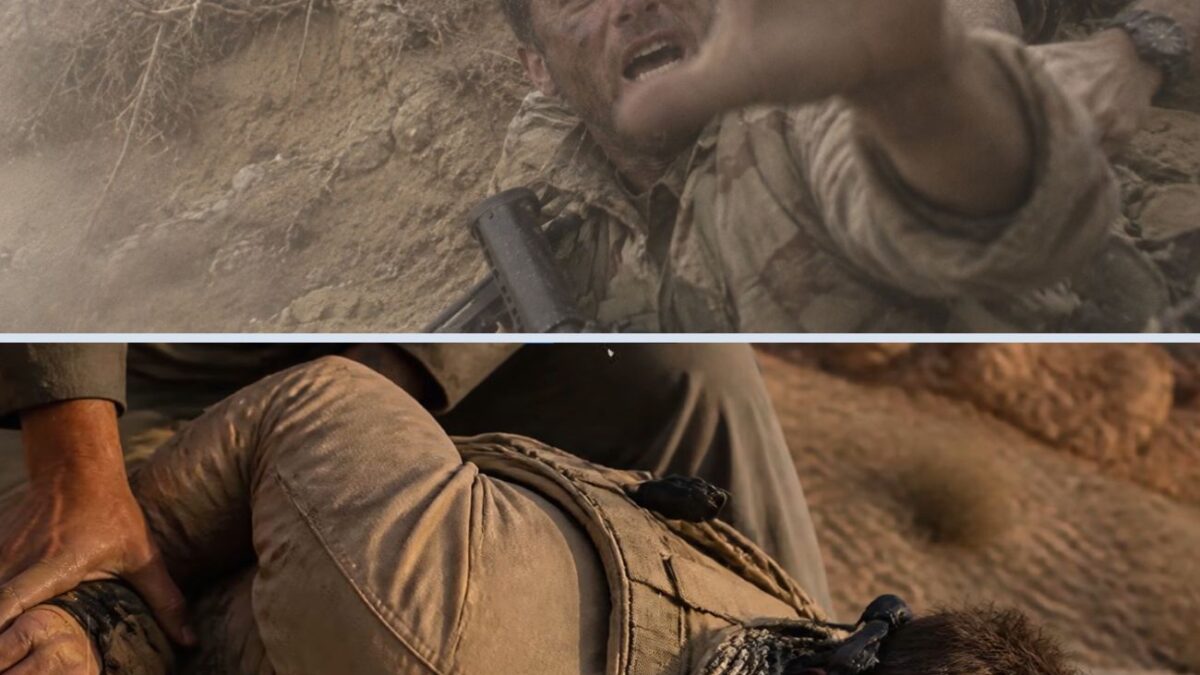
The hand goes up before he thinks about it. It is the signal he has used for a thousand drills on a dozen ranges on two continents and it has always meant the same thing. Halt. I see something. Hold. He is a Delta operator with 11 years in the unit and the hand has never once been the wrong hand to raise.
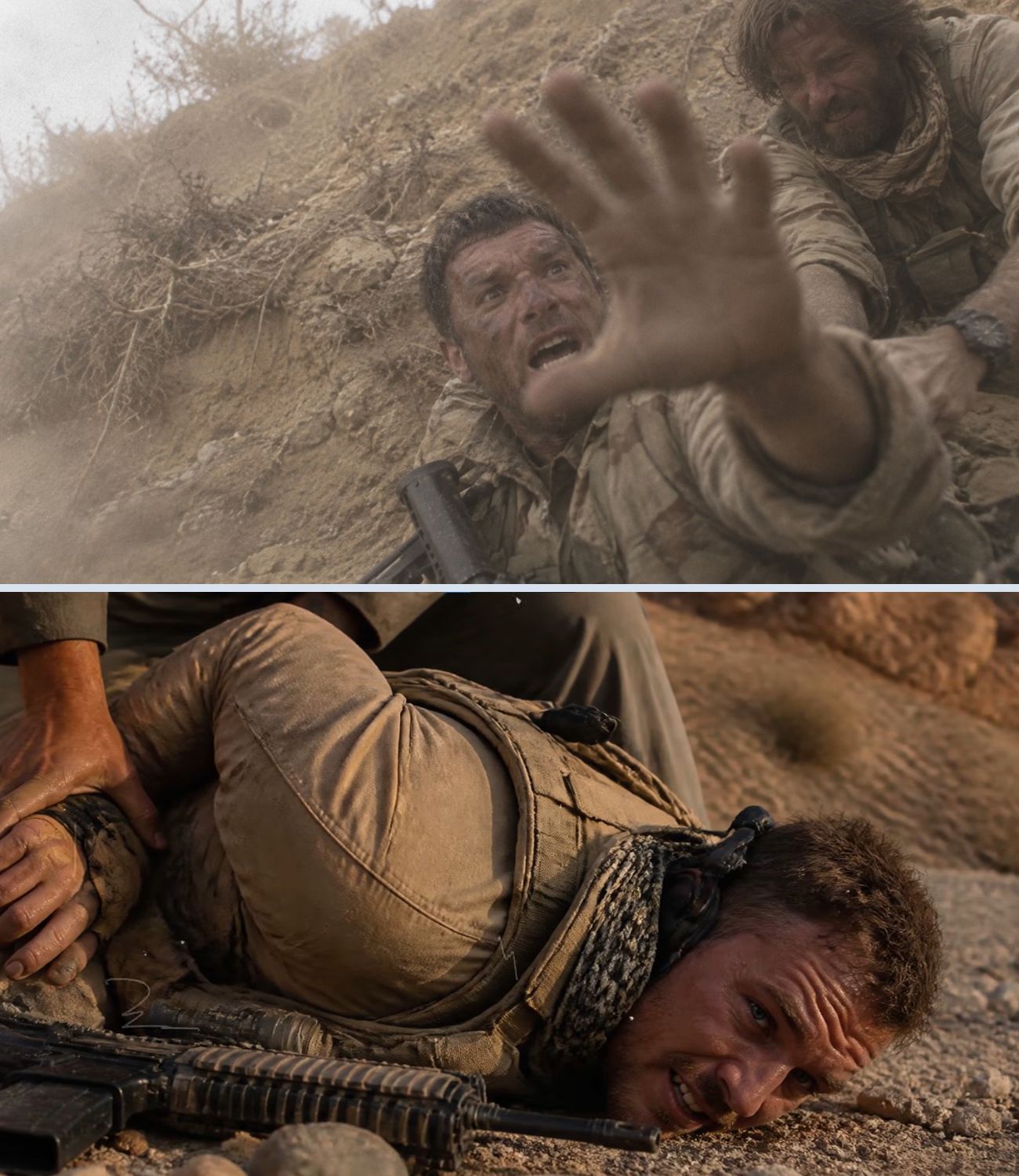
Dust is in his teeth. The wadi smells of baked stone and goat. Somewhere below the lip, 300 m and dropping, a diesel engine is coughing in low gear, and his palm is up and open against a sky the color of old brass. A fist closes around his wrist from behind. Not a tap, not a nudge, a grip hard enough that he feels the small bones under his watch complain, and it drags his arm down and keeps dragging until his elbow is in the dirt and his cheek is in the dirt, and his mouth is full of the taste of the hillside.
The bearded man beside him does not look at him. The bearded man is looking at the skyline where his hand used to be. His lips move once close to Elias’s good ear under a breath you could not have heard a meter away.
“Put your hand down.”
That is all. Three words. The diesel grinds on. Closer and nothing happens.
Which is to say that everything does not happen. No shout from below, no rifle coming up, no second truck swinging round the shoulder of the hill because somebody saw a shape against the sky where no shape should be. The engine passes. The engine fades. The bearded man releases his wrist and goes back to looking at the ground as if nothing has occurred.
Elias Ward lies in the dust and listens to his own pulse in the side of his neck. And he understands with a clarity that will not leave him for the rest of his career. That he has just made the only mistake that mattered, and that a man he met 6 days ago has quietly refused to let it kill them both. He will spend the next 11 years trying to describe what that man knew that he did not.
This is the story of those six days and of the three words at the end of them and of what it costs an elite operator to discover that the standard he has been teaching is not the ceiling of his profession but the floor. Before the hand, before the wadi, before the grip on his wrist, Elias Ward was, and in every meaningful sense remained, one of the most competent close quarter shooters the United States Army had produced in his generation.
He had come to first special forces operational detachment delta, the hard way, the only way the unit allowed: a ranger tab first, then the long deliberately opaque operator training course at Fort Bragg, then selection in the mountains of West Virginia, where men who had been elite for a decade went to find out whether they were also the specific kind of elite the unit wanted, and discovered more often than not that they were not.
Elias passed. He had been in B squadron for the better part of 11 years when this story starts with three rotations into Iraq and two into Afghanistan behind him and a quiet reputation inside the compound as one of the men they put on the cadre when a new intake was coming through. He could shoot. That has to be said plainly because the ark of what follows is not the ark of a bad shooter meeting good shooters.
Elias ran the El Presidente drill. Three targets, two rounds each, reload. Two more rounds each in under five seconds on a cold draw from concealment. And he ran it to the published Delta Standard on demand in daylight, in the dark with white light, and in the dark with night vision. He had been through the shoot house at range 19 so many times that the floor plan lived in his dreams.
He had taught entries to men who went on to kick doors in Mosul. His name was on an afteraction report from a hostage recovery outside Kirkuk that was still classified at the time this story takes place and that would when it was eventually written up in a book 12 years later be described in two careful sentences as the kind of entry the unit was built to make.
He kept a small green notebook in his left thigh pocket and wrote in it every evening without fail. Not feelings, times, round counts, the angle at which a doorway sat relative to a hallway, the exact wording of a correction his master sergeant Jim Brennan had given him in 2009 and which he still four years later repeated under his breath before every assault.
Brennan signed every email with the single word standard. And Elias had come over a decade to believe that the standard, the unit standard, the one he had bled for and taught, was the ceiling of what a human being with a rifle and a radio could reasonably be asked to do. That is the belief.
Hold it in your hand for a moment, because it is the belief the story takes off him. The belief was not arrogance. He had trained alongside the French, the Germans, the Poles, the Australians. He respected all of them. He had been impressed by several of them. He had never in any of those exchanges encountered a unit whose approach to the work made him stop and genuinely wonder whether there was something he had been missing.
Not a different drill, not a different weapon, a different way of thinking about what the drill was for. He was about to. What he would find by the end of the week is that the men he was being sent to meet did not consider the standard a ceiling. They considered it a floor. And the difference between the two words ceiling and floor is the difference the whole story is about.
The attachment was a 7-day cross-pollination posting that his squadron commander had described in the brief as a chance to see how the cousins do it. The British had asked for a Delta operator with close quarter cadre experience and current deployment time. Elias’s name had come up and Jim Brennan had put a tick next to it without discussion.
The program was unglamorous on paper. He would spend two days at the regiment’s lines in Herefordshire, sitting in on their training week, two days on a hill in Wales watching a troop run a navigation phase, two days inside the killing house, and a final two days on a joint reconnaissance exercise with a mountain troop patrol along a stretch of the Welsh-Shropshire border country that stood in for exercise purposes as a hostile frontier.
He flew into Brize Norton on a wet Tuesday and was collected by a corporal in a plain Land Rover who did not try to make conversation. The drive west took longer than he expected. The hedges closed in. The road narrowed. By the time they came through the gate at Credenhill, with its unremarkable signage and its unremarkable guard room, he had revised downward his expectation of what a tier 1 compound was supposed to look like.
There were no banners. There was no theater. The buildings were low and sensible, and the paint on the curbs was fading. Credenhill sits a few miles outside Hereford on the English side of the border, which Elias had not known until the drive. He had assumed vaguely that the regiment lived in Wales, where selection famously took place.
The men lived in England. They were taken to Wales to be heard. He wrote that distinction down in the green notebook that evening and underlined it twice without knowing yet why it mattered. The mess that night was quiet and small. He was introduced to the officer commanding D Squadron, a major called Hugh Talbert, who wore a battered steel wristwatch on the inside of his wrist and shook Elias’s hand once firmly and said,
“Welcome, Sergeant. We’ll try not to waste your week.”
Talbert’s voice did not go above the volume of ordinary conversation at any point in the exchange and did not need to. Elias noted that too. The dismissal came later after a second drink when a British captain whose name Elias did not catch asked him politely what he was hoping to take away from the week.
The captain was being courteous. Elias was tired and jet-lagged and in that specific loose mood that Delta operators got into when they were being polite to allies. And he said with a smile that he intended as self-deprecating,
“Honestly, I’ve trained with everyone, the French, the Germans, GROM, the Aussies. I’m sure your lads are good, but I’ve been running CQB cadre at Bragg for 3 years. How different can a bunch of boys in a Welsh field really be?”
There was a very small silence. The captain smiled pleasantly and said,
“That’s a fair question,”
and the conversation moved on, and Elias thought nothing more of it. He did not know that Hugh Talbert had been standing 6 ft behind him, out of his line of sight, with a glass in his hand, and had heard the whole thing.
He did not know that Talbert had looked at the staff sergeant beside him, a man he had not yet met, a man with a deaf right ear called Reese Pritchard, and had tipped his glass fractionally, which in that particular room between those particular men meant take him on the hill tomorrow and take him on it properly.
Elias went to bed at 10:00 and set his alarm for 5. The hill was already waiting for him. The parade room at 6:00 on Wednesday morning contained 12 men in various states of unceremony, three mugs of tea, one mug of coffee, and the quietest atmosphere Elias had ever experienced inside a working military building. Nobody called the room to attention when the staff sergeant walked in.
The staff sergeant did not seem to expect it. He walked to a map pinned on the wall, tapped a grid reference with the end of a pointer, said,
“That one, two patrols out by seven, back by last light,”
and walked out again. The 12 men stood up without hurry and began to kit up. Nobody raised their voice. Nobody made a joke.
The whole brief had taken 41 seconds, and Elias had counted them. He had been standing at the back. The staff sergeant on the way out had passed him and said without stopping,
“You’re with me today, Sergeant, boots on in 10.”
The staff sergeant was not a tall man. He had a short dark beard going gray at the chin and an old sunfaded shemagh wound loose around his neck and a wristwatch that was clearly old and clearly cared for. His name was Reese Pritchard, and Elias would learn later that morning by watching him turn his head to catch what someone was saying on the wrong side of a hedge, that most of the hearing in Pritchard’s right ear had been removed by an incident in 2004 that he did not discuss.
Pritchard read lips as a matter of course. He was not deaf. He was simply in the course of a career no longer evenly symmetrical and he had absorbed that fact into the way he moved. A second man stood at the window with a tin mug in his hand. He was tall and lean and had a highland quietness about him and he was drinking black coffee out of the mug and watching the yard.
His name was Finlay Bray, and he was from Aviemore, and he refused to drink tea on principle. And when Pritchard went past, Bray did not turn his head, but his eyes tracked Pritchard in the glass, and then came back to Elias in the same reflection, and he said mildly,
“You’ll want the heavier socks, pal. The ground’s wet.”
Elias thanked him, and went to change his socks. He did not know at the time that he had just been given the only piece of advice he would receive all day. Outside in the yard under a sky the color of a wet pavement, the two patrols were assembling. Elias had come out in his own plate carrier, the one he wore at Bragg, the one that had been built around his body over three deployments.
The British soldiers were in belt kit, webbing essentially, a yoke and a belt and a half-dozen pouches with lightweight smocks over the top and no plates at all. He noted it, and he thought briefly that they looked underprotected for the weight of the day, and then Pritchard walked past him, carrying his Bergen one-handed by the top loop, as if it were a shopping bag, and Elias stopped thinking about the kit, and started thinking about the man.
The first drill of the morning was a mapwork check at a stile 2 km from the gate. They walked there. They did not talk. Pritchard set the pace, and the pace was not fast. It was simply unvarying, and Elias found after 15 minutes that he was slightly out of breath, and that Pritchard, who was 10 years older than him, and had a Bergen on, was not.
At the stile, Pritchard stopped and looked at the map once, folded it, put it away, and said,
“Your lead, Sergeant, take us to the trig.”
He pointed with his chin at a hill in the middle distance. He did not give a grid. He did not give a bearing. He did not say what route.
Elias took out his own map and set a bearing, and chose a line, and they went. 20 minutes in, in a wet draw, where the stream was louder than it had any right to be, he realized that Pritchard had been walking slightly behind his right shoulder the entire time, and had corrected him twice.
Once by stepping around a patch of ground that Elias had been about to walk through, and once by pausing for 3 seconds at a hedge without saying anything, and that both corrections had been right. He had been navigating for a man who was navigating him. That was the first crack.
On Thursday they drove west into Wales. The road rose and the sky lowered to meet it. The Brecon Beacons are not high mountains by any serious reckoning. Pen y Fan, the peak that generations of regiment candidates had climbed with weight on their backs, tops out at a shade over 880 m. But they are famously specifically cruel in a way that no amount of altitude on a chart will tell you.
The weather turns on itself. The paths run into bog. The gradient does not relent at the summit. It only changes its mind. Men have died on these hills in weather that would be a pleasant afternoon in Colorado. Elias knew this on paper. He was about to know it in his legs.
The exercise was simple by Pritchard’s description. They were going to go up the fan with weight, come down the other side, go up again, and come back. Pritchard called it a tab. He said the word the way a plumber says tap. Four of them, Pritchard, Bray, a trooper called Davies, and Elias, would walk together, which Pritchard clarified by adding mildly,
“Walk at my pace, Sergeant, and we’ll see where we are at the top.”
Elias had done the Bragg standard with weight. Elias had done forced marches in the Hindu Kush. Elias had two years earlier come second in an informal squadron timed event over 12 miles with a 60 lb ruck beaten only by a man who weighed 30 less than him. He had decided in the Land Rover on the way that the one thing he was not going to lose this week was a march. He did not lose the march. That is important.
The point of this day is not that Elias was slow. He was not slow. He kept up. He arrived at the summit of Pen y Fan on Pritchard’s shoulder, with his lungs working hard but under control, and his legs under him, and his pride still in his pocket. If the day had ended there, he would have gone home to Bragg, and said,
“The Brits can hump. They’re good. But we can hump, too,”
and the week would have taught him nothing. The day did not end there.
At the summit, in a wind that made the hood cords of his smock flog against his face, Pritchard stopped for exactly four minutes, which Elias noted because the stop was decided before they arrived, and did not drift. Finley Bray knelt in the lee of a cairn and lit a hexamine stove the size of a wallet, and in those four minutes he produced black coffee in his tin mug, drank it, did not offer any, put the stove away, and stood up again.
Elias asked him out of courtesy whether he always drank it black. Bray said without smiling,
“I’m from Aviemore. The water’s good enough on its own. I’m not spoiling it with tea.”
It was the only sentence Bray said all day that was not operationally necessary.
The descent is where it broke. Elias had been pacing himself to Pritchard on the way up because Pritchard was setting the pace. On the way down, he decided, in a decision he would later understand was ego, that he would set his own. He had always been faster on descents than ascents. His knees were good, his balance was good. He went down the fan at the speed he knew he could sustain, aggressive on the loose scree, and he opened a gap on Pritchard, and he felt briefly, cleanly, the thing he had come looking for, which was the feeling of being on his own ground.
The gap closed on him at the bottom. He had not seen it close. He had been watching his feet. When he reached the stream at the base of the descent, and turned to look back, he saw Pritchard 30 m above him, moving at the same unvarying pace Pritchard had used on the way up, which was the same pace he had used at 6:00 in the morning in the yard at Credenhill. And Pritchard was going to arrive at the stream in—Elias did the arithmetic—about 90 seconds.
Pritchard arrived in 90 seconds. Pritchard was not out of breath. Pritchard had not accelerated. Pritchard looked at him once and said,
“Second lap,”
and started up the far slope at the same pace.
They did the second lap. Elias finished the second lap. The second lap took him 20 minutes longer than the first, and at the end of it, he was walking, not tabbing, and Pritchard and Bray and Davies were sitting on their Bergens, eating flapjack with their helmets off, and nobody looked at him in any way at all. They did not look away either. They simply treated his arrival as the expected event it was, and Pritchard said,
“Good day, Sergeant,”
and they drove back to the camp in the dark.
In the green notebook that night, Elias wrote in capital letters the single sentence,
“They do not accelerate.”
He underlined it. Then he sat on the edge of his bunk for a long time and thought about what the sentence meant.
What it meant was that at Bragg and in the Rangers, and in every unit he had ever served with, the men he admired went faster when the ground got worse, because going faster was how you proved you were handling it. The regiment did not do that. The regiment had decided somewhere in its past that a sustainable pace was faster in the end than an aggressive one because an aggressive pace required recovery and a sustainable pace did not. Pritchard had done two full laps of Pen y Fan at the same metronomic walk that he had used on the flat.
Elias had done one and a half of them at the aggressive version. On a map over a day, over a week, over an operation, the metronome won. He wrote,
“They do not accelerate”
a second time at the bottom of the page, he went to bed. The assumption he closed that day was that this was going to be a test of fitness. It was not. It was going to be a test of economy, and he had just failed the first exam in it, and nobody in the room had bothered to tell him he had failed.
Friday morning, Elias woke up before his alarm, which was unusual, and sat in the dim barrack room for 10 minutes doing nothing, which was more unusual. He felt the previous day in his quads and in his lower back, and in a specific tendon at the back of his left ankle, and he did the mental accounting that every operator did when he woke up on an exchange, which was,
“Where am I behind? And how do I catch up before anyone notices?”
The close quarter days were next. The close quarter days were his home ground. A Bragg CQB instructor who had taught hundreds did not get outshot by a Welsh field. He told himself this twice in the same way he had told himself 5 years earlier, standing outside the room where he was about to meet his second stage selection board that he was going to be fine. He had been fine. He would be fine now.
The man beside him at breakfast was a mobility troop sergeant called Daniel Okafor, broad-shouldered and quiet with a mug of tea and a plate of bacon in front of him and a battered paperback wedged into the top flap of his Bergen on the chair beside him. Elias could read the spine. It said Marcus Aurelius Meditations. He had not read it. He had been given a copy by a girlfriend in 2008 and had got as far as the first page and put it in a drawer.
Okafor saw him looking and said without changing his expression,
“You’d be surprised how much of this job is just not being an idiot in a hurry,”
and went back to his bacon. Elias thought about that sentence for the rest of the morning.
He thought about it because it sat next to the sentence in his notebook from the night before:
“They do not accelerate”
in a way that he did not yet have words for. He thought about it because it was the kind of sentence that at Bragg would have been a joke and here was not a joke.
He thought about it because Okafor had said it the way a mechanic tells you not to over-torque a bolt. It was a working instruction, not a philosophy. He asked Okafor later in the Land Rover on the way to the killing house whether the book was a joke. Okafor said no. Okafor said,
“The book’s about controlling the one thing you can control, which is yourself, and that’s what this job is.”
Then Okafor said,
“You’ll see today.”
And the Land Rover pulled up at a low concrete building with no windows and a door that was already open.
And Elias Ward, Bragg CQB cadre, 3 years in the house at range 19, got out and told himself one more time that this was going to be the room he was good in. He was not wrong. He was good in it. He was not going to be the best man in it. What he did not know yet, standing in the car park looking at a building that from the outside could have been a storage shed, was that the test inside it was not what he thought it was. It was not a shoot. It was a decision. And the decision had been designed over 30 years by men who had learned the hard way that in a close quarter environment, the shot is the easy part, and the choice is the whole thing.
He was about to be shown the choice. The killing house at Credenhill is not what a civilian imagines. It is low, bare, lit by yellow strip light, and it smells very faintly of burnt propellant, and of the particle board that lines the walls, so that rounds can be absorbed, and the configuration changed. The configuration is changed almost daily.
No two runs through it are the same room. That is the first thing Pritchard tells him, standing in the staging area with the L119A1 carbines racked behind him on a steel bar and Elias nods because he knows this already. The house at range 19 is the same. He is given a carbine, a Glock 17 on his hip, a radio, and three magazines. The ammunition is live. Nobody mentions that it is live because everybody in the room has known since the day they first walked into a shoot house that it is live and discussing it would be an insult to the room.
The first run is straightforward. Four rooms, five targets, two no-shoots. Elias goes in with a four-man British stack—Pritchard, Bray, Davies, himself—and he runs it clean. Five targets down, no-shoots engaged, time well inside the standard he teaches at Bragg. He steps out of the house with his heart rate elevated and the clean satisfaction in his chest that a good run always gives him and he waits for the debrief.
The debrief does not come. Pritchard looks at him, nods once, says,
“Again,”
and the stack resets. They run it four more times. Each time the configuration has been quietly changed by a corporal with a staple gun and some cardboard. Each time Elias runs it well. Each time Pritchard says,
“Again.”
Nobody tells him what he is doing wrong because as far as he can tell, he is not doing anything wrong. His shots are clean. His timing is clean. His sector cuts are clean.
On the fifth run, they add a hostage. The hostage is a cardboard figure of a civilian taped in close to a target in a corner room with a shoot-house figure holding what is clearly a pistol about 8 inches from the hostage’s head. Elias enters the room on the two position, left-hand side of the door. He sees the hostage. He sees the shoot figure. The angle is tight. The shoot figure’s head is maybe 4 inches of exposure past the hostage’s shoulder and his training takes over, which is to say that he processes the angle, decides that the shot is well within his standard, and takes it.
The round goes exactly where he sent it. The shoot figure’s head is holed through the forehead. The hostage is untouched. He stands up out of his crouch and he is pleased because the shot was a good shot, and he turns to Pritchard with the expectation of if not praise at least neutrality. Pritchard says,
“Why?”
Elias says,
“The shot was there.”
Pritchard says,
“Why?”
Elias says,
“The angle was clean. The hostage was not in the cone. I had the shot.”
Pritchard says quietly,
“You had a shot. We don’t take shots because we have them. We take them because we have to. Which one was that?”
The room is very quiet. Pritchard says,
“The figure wasn’t moving. You could have waited two seconds. In two seconds, Bray comes around the corner behind you with a better angle. You take the shot that is not the best shot in the room because you are the one in the door. That is not the standard.”
Elias says because he has to because the Bragg man in him will not sit down,
“That’s the standard everywhere I’ve worked.”
Pritchard says,
“I know. That’s why we’re having this conversation.”
He is not angry. He is not making a point. He is correcting a man who he thinks is worth correcting, which is the most generous thing one professional can do for another. And Elias, standing in a yellow-lit corridor that smells of burnt propellant and particle board, understands this in the half second it takes Pritchard to turn away and reset the stack. He is standing in the doorway of the room and he can see the hostage figure in his peripheral vision and he can see the hole in the forehead of the shoot figure and he can hear his own breath coming back down to resting and the sentence that lands in his head is not the sentence he expected.
It is not they shoot better than me because they do not. His shot was clean. It is not they’re faster than me because they are not. His time was good. The sentence that lands in his head is they are thinking about something I am not thinking about. They are thinking every single time about who in the stack has the better angle and about whether the shot in front of them is the shot that should be taken by them or the shot that should be taken by the next man. And they are making that calculation in the eighth of a second between seeing a target and engaging it, and they are doing it as a stack, as a single organism in a way that at Bragg he had always understood as teamwork and was now in the killing house at Credenhill beginning to understand as something considerably more disciplined than teamwork.
They are not shooting; they are allocating. He runs the room three more times. On the eighth run in a different configuration, he comes into a room, sees a shoot figure, sees that Bray 1 meter behind him has a cleaner angle on it, does not take the shot, calls,
“Your man, right,”
and Bray takes it, and Pritchard at the back of the stack says for the first time all day,
“Good.”
The word is small. The word is almost nothing. Elias will remember the word for the rest of his life. In the Land Rover on the way back, he does not write anything in the green notebook. He sits with it unopened on his knee and watches the hedge and thinks about Okafor’s sentence from the morning—not being an idiot in a hurry—and about Pritchard’s correction—we don’t take shots because we have them—and he understands that these are the same sentence said twice by two different men about the same underlying fact.
The second assumption broke that night. The assumption was that he knew what close quarter battle was. He did. He just did not know all of it. The barrack room they had given him was at the end of a corridor on the first floor, one up from the ground, a staircase he had got wrong twice on the first day, and had stopped getting wrong by the second, and it was small and white and clean, and it had a single bed and a single desk, and a single radiator that clanked at irregular intervals through the night.
He sat on the bed with his boots still on. He had the green notebook open on his thigh. He had been sitting like that for 20 minutes without writing anything. The thing about the notebook was that for 11 years he had written in it every evening without fail. And the writing had always been easy because the writing had always been metrics, times, round counts, corrections. The notebook was the record of a man who was getting better at a job that he already understood. He had never in the four nights of this attachment written an entry that was about a thing he did not understand.
The notebook was not built for that. The notebook was built for refinement, not for revision. He thought for a long time about Jim Brennan. Brennan had taught him almost everything he knew. Brennan was a legend inside the compound. Brennan had kicked more doors than most men in the unit had walked past. Brennan signed every email with the word standard, and Elias had internalized standard as both the ceiling and the floor of his working life.
In the yellow light of the killing house that afternoon, however, with Pritchard saying,
“You take the shot that is not the best shot in the room because you are the one in the door,”
he had heard a different kind of standard, one that did not come from a published document, that did not have a time attached to it, that could not be practiced on a square range by yourself in the morning before coffee. It was a standard about restraint. It was a standard about the man beside you being for the half second you were in the door more important than you.
He wondered—and this was the sentence he could not say aloud, could not even write—whether Brennan would have taken the hostage shot. He thought Brennan probably would have. He thought that at Bragg they would have called the shot good. He thought that at Bragg in the debrief the instructor would have put a tick next to his name. He thought that the standard he had taught, that he had been proud of, that he had bled for and been in the top 3% of men alive at executing, was a standard that would have put the round in that forehead eight times out of 10, and never once asked him whether Bray behind his shoulder had the cleaner angle.
He put the pen down on the desk. He did not pick it up again that night. Through the single window the Herefordshire sky was going from gray to black, and the rain was starting on the glass in the irregular pattern that English rain has, which is not the honest downpour of Georgia or the dust-settling drizzle of a dry country, but a kind of indecisive weather that cannot commit to its own intention.
He listened to the radiator clank. He thought about the hand he had raised that he had not yet raised, the hand that in 48 hours’ time he would raise on a hillside above a wadi and he did not know yet that he was going to raise it. He only knew sitting on the bed in a small white room that something in the architecture of his professional self had been quietly and expertly dismantled by a man with a deaf right ear who had not raised his voice once all day.
The breaking point of a professional is not public. It does not involve shouting. It does not involve a montage. It is a man sitting on a bunk with a notebook open on his thigh who understands for the first time since he was 23 years old that the thing he had believed was the ceiling is in fact the floor and that there is a lot of room above him that he had not known existed.
He turned off the light at 10:11 and did not sleep until 2. On Saturday morning, there was frost in the yard, and the Land Rover’s windscreens were white. Elias came out of the barracks at 5 to 6, with the green notebook in his thigh pocket, and his Bergen already shouldered, and Pritchard was by the second vehicle checking a radio with his head tilted to his good side, and Bray was pouring coffee from a flask into his tin mug, and nobody looked up as he approached, which Elias understood by now was not rudeness, but the particular courtesy of professionals who were busy.
He had not slept well. He had the shallow headache that short sleep gives him, and the specific thickness in his limbs that he associated with having thought too hard the night before. He walked past Pritchard towards the back of the Land Rover, and he stumbled slightly on a patch of frost, and he put a hand down to catch himself on the tailgate, and he banged his wrist on the metal, and it hurt enough that he hissed through his teeth.
Pritchard did not look up from the radio. Pritchard reached across without comment with the hand that was not holding the handset, took hold of Elias’s wrist, turned it over, looked at it for 1 and a half seconds, decided it was fine, let it go, and went back to the radio. That was it. That was the whole gesture.
Elias climbed into the back of the Land Rover with his wrist stinging and sat down on the bench seat and realized as the diesel started that in that one and a half seconds a man he had been thinking of as cold and economical and, somewhere under his pride, as arrogant, had quietly checked on him, found no problem, and returned to work. There had been no performance. There had been no,
“Are you all right, mate?”
There had been a hand and a look and a return.
He thought for the first time that the economy he had mistaken for coldness was not coldness. It was efficiency of care. Pritchard cared enough to check. Pritchard respected him enough not to make a fuss. Those two things in a room full of men who did not shout were how the regiment told each other it was glad they were there.
He heard in the back of his mind his own voice from Wednesday night in the mess:
“Blokes in a Welsh field. How different can it be?”
He felt briefly the heat of embarrassment on the back of his neck. It did not stay long. Embarrassment is for men who are still worried about how they are seen.
By Saturday morning, Elias Ward was past that. He was worried about how he was doing the job. The brief in the back of the Land Rover was short. Pritchard speaking over the engine said that today and tomorrow were a two-vehicle, four-man reconnaissance—himself, Bray, Davies, Elias—with an opposing force patrol working against them, live weapons, blank ammunition on the OPFOR side, endex at 1,800 hours Sunday. They would move in at last light, up through the day, work forward through a wadi system, Sunday morning observe and extract.
He said,
“You’ll be on my hip the whole way, Sergeant,”
and he said it the way a man says,
“I’ll keep you alive if you let me.”
And Elias nodded, and he meant the nod.
The Land Rover turned out of the gate. The sun was coming up gray behind them, and the hills ahead of them were just a line of shadow against a lighter shadow. He did not know yet that he was going to raise his hand. He had, however, decided somewhere between the frost and the engine that when something happened out there, he was going to do what Pritchard told him to do. That decision was going to save his life.
They go in at last light. The ground is the washed-out brown of late autumn on the Welsh-Shropshire border, and the exercise area has been dressed by a quartermaster with a sense of theater to feel like a dry country rather than a wet one. Dust tracked over the vehicle lanes, hessian over the usual green, the odd goat track scuffed into the slopes. It is not the Hindu Kush. It is a convincing stand-in.
Pritchard treats it as if it is the real thing, and because he does, so does everyone else. They lie up under a hedge on a reverse slope through the night. The temperature drops to something close to freezing. Elias has done cold weather. He is not uncomfortable. He is also not warm. He lies on his left side with his carbine along his body and his face towards the ground. And he listens because Pritchard listens and he has learned in six days that Pritchard’s listening is the most useful instrument in the patrol.
At first light they move. Pritchard, Bray, Davies, Elias. A loose single file with 10 m between each man. Pritchard at the front. Elias on Pritchard’s hip, two paces behind and to the right. The wadi is dry. The sides of it are shale and hard-packed dirt, and the kind of wiry scrub that catches on the laces of your boots and does not let go.
The air is still, sound carries. They work along the eastern wall for 40 minutes without speaking. Bray behind taps the back of Elias’s belt once. A signal Elias has learned on day two meaning, check your six, I’ve got your front. And Elias checks. Nothing. They continue.
The wadi opens slightly into a shoulder where a ridge line comes down from the right, and Pritchard eases up to the lip of the ridge to put eyes on what is in the next bay. The diesel engine starts low and far and climbs toward them in the slow, uneven cough of a vehicle in low gear on bad ground. Pritchard goes flat. Bray and Davies go flat. Elias goes flat.
And then because the diesel is close now, close enough that he can hear the suspension knock on a bad shock absorber, close enough that he knows there is a vehicle in the next bay, close enough that his body wants to communicate the fact of it to the man beside him, Elias raises his right hand, palm open, fingers up, the universal American halt signal he has used for a decade.
The hand is up for less than half a second. Pritchard’s fist closes around his wrist. The grip is not gentle. The grip pulls his arm down and keeps pulling until his elbow is in the dust and his cheek is in the dust and his mouth is full of the taste of the hillside.
And Pritchard does not look at him. Pritchard is looking at the skyline where Elias’s hand just was. And Pritchard’s lips move once close to Elias’s good ear under a breath you could not have heard a meter away:
“Put your hand down.”
That is all. Three words.
The diesel grinds past below them. The diesel does not stop. The diesel does not swing round. The diesel passes and the diesel fades. And in the long still minute after it, nothing comes back up the ridge from the bay. Which is to say that no observer in the vehicle has caught the half second of movement against the skyline that would have given them away.
Because that half second was pulled out of the sky by a man with a deaf right ear before an observer in a moving vehicle could register it. Pritchard releases his wrist. Pritchard goes back to the lip of the ridge and puts eyes on the bay and quietly over the radio calls the vehicle into control with grid, bearing, estimated speed, two souls in the cab, antenna configuration consistent with the OPFOR cell.
Then Pritchard signals the stack to withdraw and they withdraw and they get off that ridge and they move 300 m east and go to ground again and the exercise on paper continues. Elias lies in the dust and listens to his own pulse in the side of his neck. He is not thinking about his pulse. He is thinking about the geometry of what just happened.
He has raised his hand against a skyline. The hand is the fastest, highest, most catchable movement a man can make on a ridge. In a real environment against a real observer with glass, the hand would have been seen. The hand would have been remembered. The hand would have been the reason in two days’ time that a mortar team walked a line of impacts up a ridge in the pre-dawn and killed four men whose bootprints they had been reading since the morning before.
The hand is the error that in training a stand-in diesel passes without consequence and that in Helmand or in the Hindu Kush or in the wadis along the Syrian border kills patrols. Pritchard knew that. Pritchard had been in those places. Pritchard had in the half second available to him done the calculation: American halt signal, high arc, skyline now, and had removed Elias’s arm from the equation with the economy of a man taking a cup off a hot stove.
Three words. That was the whole lesson.
“Put your hand down.”
They finished the reconnaissance. They extracted on time. Endex was called at 1800 as advertised. The exercise narrative scored them as a successful observation.
Nobody in the after-action review mentioned the hand because the hand did not in the end get them seen and the regiment did not write up the mistakes that did not have consequences. Pritchard did not mention the hand. Bray did not mention the hand. Davies did not mention the hand. Elias wrote nothing about the hand in the green notebook that night either because he understood finally that the notebook was not where it went. It went somewhere else.
11 years later, in a conference room at a NATO facility outside Mons, Belgium, Elias Ward, by then a sergeant major, by then an instructor sent to speak at a cross-force close quarter seminar, was asked by a Dutch major with a polite face and a notebook what the most important lesson of his career had been. He did not have to think about the answer. He had been thinking about the answer in some form every day since the morning he came off the ridge in the border country west of Hereford.
He put down his coffee. He considered the shape of what he was about to say, and then he said in a quiet voice that the Dutch major would later describe to a colleague as the voice of a man quoting scripture the thing he had come to say:
“Put your hand down. That’s what he said. Three words. I’ve been thinking about those three words for 11 years, and I’ll keep thinking about them until I’m in the ground because those three words are the whole difference.”
He paused there long enough that a younger officer in the back of the room began to think he was finished. And then he kept going:
“I was a Delta Sergeant First Class. I ran CQB cadre at Bragg. I’d done five rotations. I had been shot at. I had shot people. I had kicked more doors than I could remember. I thought I was finished learning. I thought the standard I taught was the ceiling. And then I spent six days with a mountain troop staff sergeant in Herefordshire, who did not raise his voice once, who did not accelerate on a hill, who did not take a shot in a room because he had it, and who on the last morning reached across and pulled my arm out of the sky before an opposing force vehicle could see it, and said three words to me under his breath, and did not mention it afterwards. And in those three words, put your hand down, I understood that I had been thinking about this job for 11 years as a game of what you do. And he was thinking about it as a game of what you don’t do. And that is the whole difference. That is the entire difference between a good unit and the one that trained him.”
“The regiment does not take the shot because the shot is there. The regiment does not accelerate on a hill because the ground is bad. The regiment does not raise its hand against a skyline because the hand is quicker than a word. The regiment economizes. It economizes on sound, on movement, on effort, on force, on reaction, on everything. It treats restraint as a weapon, which is what it is. And when my career is written up, I would like one line of it to say that in the autumn of my 11th year, I spent six days in the Beacons and in a house with no windows and on a ridge in a wadi, and I came back a different operator.”
He stopped. He drank the coffee. The room was very quiet. He added, almost as an afterthought, the way a man adds the last sentence of a letter he has been writing for a long time:
“The deeper reading. The thing I did not understand that week until I was in the back of a Land Rover with a bruise on my wrist is that the economy I had mistaken for coldness was the thing that was keeping us alive. The staff sergeant did not grab my wrist to correct me. He grabbed my wrist to save us both. He corrected me by not saying anything about it afterwards. He corrected me by trusting me to work it out, which is the most generous thing one professional can do for another. And I have tried in the 11 years since to be that generous with the men I train and I have mostly failed and I will keep trying.”
“The lesson is not that they are better than we are. In some things they are not. The lesson is that they have decided as an institution that the quietest version of a thing is almost always the best version of it and that the man who can be quietest under pressure is the man you want on the ridge.”
“By his account, because this is the staff sergeant’s story, really, not mine, the whole of what he knew came down to those three words: Put your hand down. I will say them at my own funeral if I get the chance.”
The Dutch major wrote nothing down. He did not need to. Elias Ward finished the attachment on the Sunday evening, shook hands with Pritchard in the yard at Credenhill without saying anything of consequence, flew back to Bragg on the Monday, and did not speak about the week to Jim Brennan for 3 months.
When he did finally speak about it in a truck on a range, in the specific American silence that follows a long drive, Brennan listened without comment all the way through, and when Elias finished, Brennan looked at him for a long moment and said quietly,
“Good.”
The word was small. The word was almost nothing. It was the only word Brennan said about the regiment for the rest of his career, and Elias understood it to mean,
“You have been given something. Do not waste it.”
He did not waste it. Over the next 11 years, he quietly rewrote the close quarter cadre at Bragg to teach allocation inside the stack, to teach men to call your man right and your angle, to teach them that the shot that was theirs was not the same as the shot that was available to them. He did not tell anyone at the time where the idea had come from.
Years later, he told a colonel over a beer in Virginia that the whole revision had been born of three words spoken under the breath of a man he had met for 6 days on a hillside in Herefordshire, and the colonel had looked at him for a long time and had not said anything, because the colonel had in the course of his own career also been to Hereford.
The two forces as institutions continue to send operators to each other every year. The cross-pollination is unremarkable. It is also in the quiet way these things are measured, one of the most productive exchanges in the alliance. Reese Pritchard retired from the regiment 3 years after that week and went to work in a trade that is nobody’s business.
Finlay Bray is still badged somewhere, drinking black coffee out of a tin mug on a hill. Daniel Okafor keeps a paperback in the top flap of his Bergen and the paperback has a line in it: You have power over your mind, not outside events. Realize this and you will find strength, which Okafor was quoting without quoting on a Friday morning in a mess hall and that Elias Ward has carried unquoted for the rest of his working life.
Hugh Talbert wore his father’s watch to the end of his service and handed it on to his son when his son commissioned, and the son wears it now, and does not raise his voice above conversational, which is the regiment’s inheritance. The ridge in the border country is still there. The dust is washed off it every winter by the honest Welsh rain.
If you walked up it today, you would not know anything had happened on it, which is as it should be. The regiment does not mark the places where it worked. What Elias Ward remembers when he thinks about it is a hand on his wrist and three words and a diesel engine fading down a wadi in a country that was pretending to be another country.
“Put your hand down.”
He has his hand down. He will keep it down. That is the whole of what he learned.
You Might Also Enjoy

“We Thought They Would Negotiate”—What Argentine Soldiers Said When The British Attacked Goose Green

“You’ll Never Finish My Ruck March, Limey” — US Sergeant Who Challenged the SAS, Then Fell Out First






