Queen Alexandra: The Woman Who Said Enough
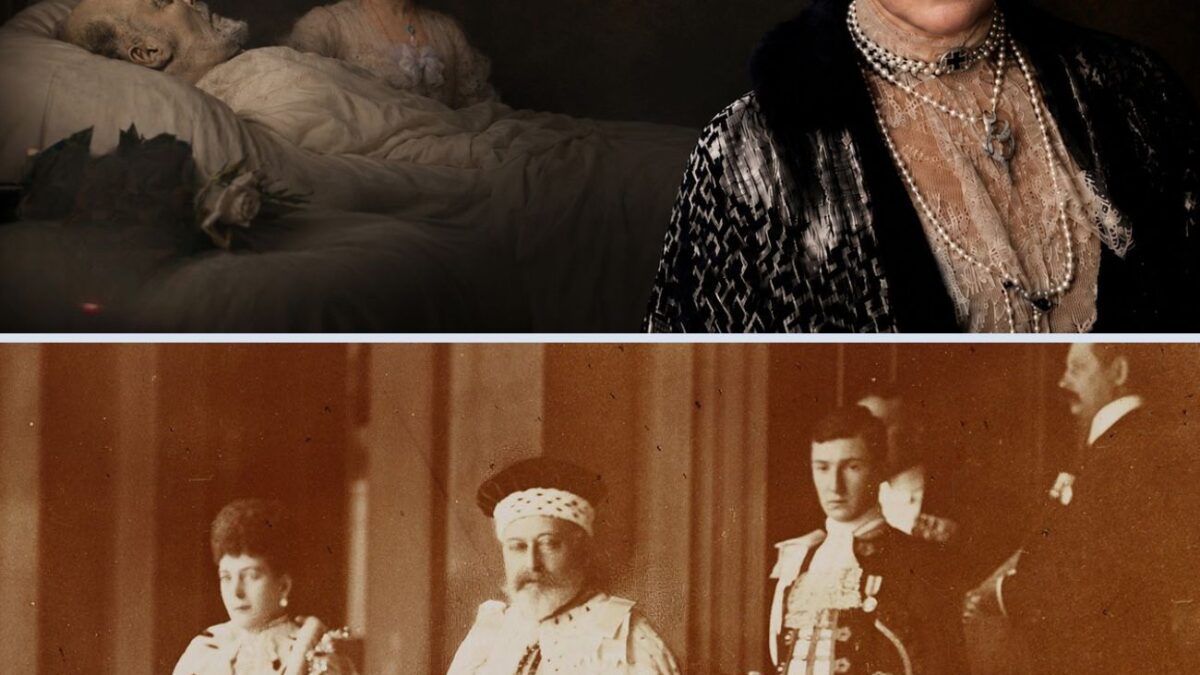
“On 5 February 2022, a 95-year-old woman signed a typed statement giving her son the one thing he had wanted for 30 years. Camilla would be queen consort. The public knew a devoted mother and an unbreakable family. The record shows something colder. In December 1995, Elizabeth II ended her son’s marriage by handwritten letter rather than conversation. In April 2005, she skipped his wedding ceremony entirely, arriving only afterward. And Charles’s own authorised biographer had already published his account of detached parents while she still reigned.”
“She controlled approval. He would control the archive. Why did it take paper?”
“Start with that 2022 statement. Because everything about this relationship is compressed inside it. It was released to mark 70 years on the throne, the platinum jubilee. And most of it reads like the sort of thing palace press officers produce in their sleep. Gratitude to the nation, continuity, service. Then near the end, one sentence that landed like a thrown brick in every newsroom in Britain.”
“It is my sincere wish that when that time comes, Camilla will be known as queen consort.”
“Sincere wish, not I have discussed this with my son, not we agreed, a wish issued in the third person in a public document to be read by the man it concerned at the same moment it was read by everyone else.”
“Charles’s response, put out by Clarence House within hours, thanked her for the recognition. That is the word his office chose, recognition. You recognise a state. You recognise a border. You recognise something that already exists and has been waiting a long time for someone with authority to say so out loud.”
“They had eaten dinner together hundreds of times. They spoke on the telephone constantly by every staff account, often more than once a day in later years. And the most personally significant thing she ever said about his second marriage, she said in print.”
“That is the pattern this whole story runs on. And it is worth naming now so you can watch it repeat. Whenever something mattered between Elizabeth II and her eldest son, it went through paper or through a third party or it went unsaid.”
“Here is where the title has to be dealt with honestly because I am not going to pretend to you that hatred is what the evidence shows. It isn’t. There is no credible source, not one, that records the Queen saying anything hateful about Charles. Quite the opposite. She defended him inside the family. She protected his position in the succession when there was public pressure to skip him. And by the way, that pressure was real.”
“But the idea that she seriously entertained passing the throne to William has never had a single identifiable source behind it. It’s a tabloid perennial. Set it aside.”
“What the record does show is stranger than hatred and in some ways harder to look at. It shows a mother who related to her son first as an institution and second as a child, and who was constitutionally, temperamentally, and by upbringing almost incapable of doing the reverse.”
“Charles spent 50 years trying to convert a constitutional relationship into a maternal one. He got a version of it. He got it late, in writing, and only after he had built enough independent power that she no longer had the option of waiting him out.”
“So the question underneath the clickbait is not whether she hated him. It’s who actually had leverage, the woman who controlled legitimacy, approval, the marriage, the money, and the timing of the throne itself, or the son who by the age of 21 had his own income, his own household, eventually his own press operation, and who in the end would inherit her private papers and the right to decide what the world got to read about her.”
“Before any of that though, there’s a much smaller scene that explains why he wanted the recognition so badly. April 2005, Windsor. Charles, at 56, was finally marrying Camilla Parker Bowles. It could not be a church wedding. She was divorced. He was divorced. And his mother was supreme governor of the Church of England.”
“So, the legal ceremony was a civil one at the Windsor Guildhall, a modest town hall building on the high street, roughly the sort of venue where local couples get married on a Saturday morning. The Queen did not go. Buckingham Palace explained the decision in constitutional terms, and the explanation was not unreasonable. The head of the Church of England attending a civil marriage of two divorced people would have been awkward, and the palace said she wished to keep the day low-key.”
“She came to the service of prayer and dedication at St. George’s Chapel. Afterward, she hosted the reception at the castle. She made a speech, and we’ll come back to that speech at the end of all this because it is one of the most revealing things she ever said in public. But look at the shape of the day. The son gets married. The mother arrives for the part with the constitutional cover and skips the part where he actually says the vows. Rooms she did not enter. Hold that phrase.”
“Now go back much further to the room where all of this starts, which was a nursery on the second floor of Buckingham Palace. Charles was 3 years and 2 months old when his grandfather died 6th February 1952. His mother was in Kenya at Treetops, and she came home Queen. She was 25.”
“Whatever kind of parent she might have become in some other life, and there’s decent evidence she was warm and playful with him as a baby. Crawfie-era accounts and household recollections both suggest that the job arrived and did not negotiate. Then came the coronation in June 1953.”
“And then came the thing that gets mentioned in every account of this relationship and still doesn’t get taken seriously enough. In November 1953, the Queen and Prince Philip left on a Commonwealth tour. Australia, New Zealand, Ceylon, Uganda, Malta, Gibraltar. They did not come back until May 1954. 6 months, Charles was five, Anne was three. The children stayed in Britain with their grandmother and their nanny.”
“Now, the famous image from the end of that separation is Tobruk, Libya, 1 May 1954. The children were brought out to meet the royal yacht Britannia. And the story that has been told for 70 years is that the Queen greeted her son by shaking his hand.”
“That story is almost certainly not right, and the correction matters more than the legend. The handshake account appears in later retellings, hardened by repetition, and eventually dramatised on television, which is where most people absorbed it. The contemporary photographic record shows something else. She bends to him. There’s physical contact. It looks like an ordinary reunion filmed by newsreel cameras. Several biographers who went back to the actual images have said as much.”
“What she reportedly said, according to accounts from the ship, was something close to, ‘No, not you, dear,’ when he moved to greet her in the receiving line before the officials because there was a receiving line and the officials came first.”
“So, the handshake is myth. The ordering is fact and the ordering is the more damaging detail because a cold gesture is a one-off and a sequence is a system. The child waited his turn behind the governor. Why does the false version survive? Because it feels true to anyone who has read what Charles himself later authorised to be published about his childhood. The legend outran the evidence in a direction the evidence was already pointing.”
“Keep that in mind. It’s going to matter enormously by the end of this story when we get to the question of who controls what people believe.”
“The household around him was not designed to produce intimacy. His nanny from 1956 was Mabel Anderson, and by every account, including Charles’s own, she was the steady emotional presence of his early life. He later described her in terms quoted in Jonathan Dimbleby’s authorised biography in language warmer than anything he applied to his parents.”
“The Queen’s contact with her children in those years was scheduled mornings when the diary permitted a period in the evening. Ben Pimlott in his biography of Elizabeth and Sarah Bradford in hers both describe a routine rather than an absence. She was there most days for half an hour, and then the boxes came.”
“The red boxes, that’s the detail that explains the marriage of the crown and the mother. Literally, state papers arrived daily. They had to be read and signed, and they did not pause for a child’s bedtime. She was not neglecting him in favour of leisure. She was neglecting him in favour of the thing she believed she had been placed on earth to do and which her own father had died doing at 56.”
“That is not coldness by nature. It is priority by constitution. It also produced exactly the same result as coldness from the point of view of a small boy in a large building.”
“There’s a comparison worth making here and only one because it is precise. The family operated less like a family than like a firm with a succession plan. That is not my metaphor. George VI called it the firm. Charles grew up inside it as the principal asset and an asset gets developed, not comforted, which brings in the other parent because you cannot understand the distance between Elizabeth and Charles without understanding that she consistently declined to overrule Philip on the subject of their son, and Philip had very firm ideas.”
“Charles was by universal account a sensitive, anxious, easily bruised child. Philip’s diagnosis was that this needed correcting. In 1962, at 13, Charles was sent to Gordonstoun in the north of Scotland, Philip’s own school, chosen over Eton, which was closer, which the Queen Mother favoured, and which would have kept him near enough to visit.”
“The letters home survive in part because Dimbleby was given access to them. ‘I hate this place,’ he wrote. Another describes the misery of the dormitory at night. He called it later and in public a prison sentence, though he also much later credited it with teaching himself discipline. And I think both things were true, and he meant both.”
“What matters for our purposes is not the school. It’s the appeal, he wrote home repeatedly. And the surviving evidence indicates his mother did not intervene.”
“She may have thought Philip was right. She may have thought a mother’s intervention would undermine a father’s authority, which was the orthodoxy of her class and generation. She may simply have found the confrontation unbearable. And there is a great deal of testimony from Philip’s own relatives and from long-serving staff that Elizabeth II avoided emotional confrontation the way other people avoid open flame. Gyles Brandreth who knew Philip and interviewed widely in that circle recorded exactly that trait.”
“Whatever the reason, the answer was silence. And the boy learned what silence meant.”
“So he found someone else. And the man he found would eventually do more to shape Charles’s marriage, his sense of duty, and his romantic life than either of his parents managed, which is precisely why his death in 1979 detonated something in this family that nobody ever properly repaired.”
“Louis Mountbatten was Philip’s uncle, Charles’s great uncle, and by the late 1960s the closest thing to a father confessor the Prince of Wales had. He was also, and this is the part usually smoothed over, an operator of almost comic ambition where family placement was concerned. He had spent decades trying to get his bloodline onto the throne. Charles was the vehicle, none of which meant the affection was fake. It plainly wasn’t. Charles went to Broadlands, Mountbatten’s Hampshire estate, the way other young men go home.”
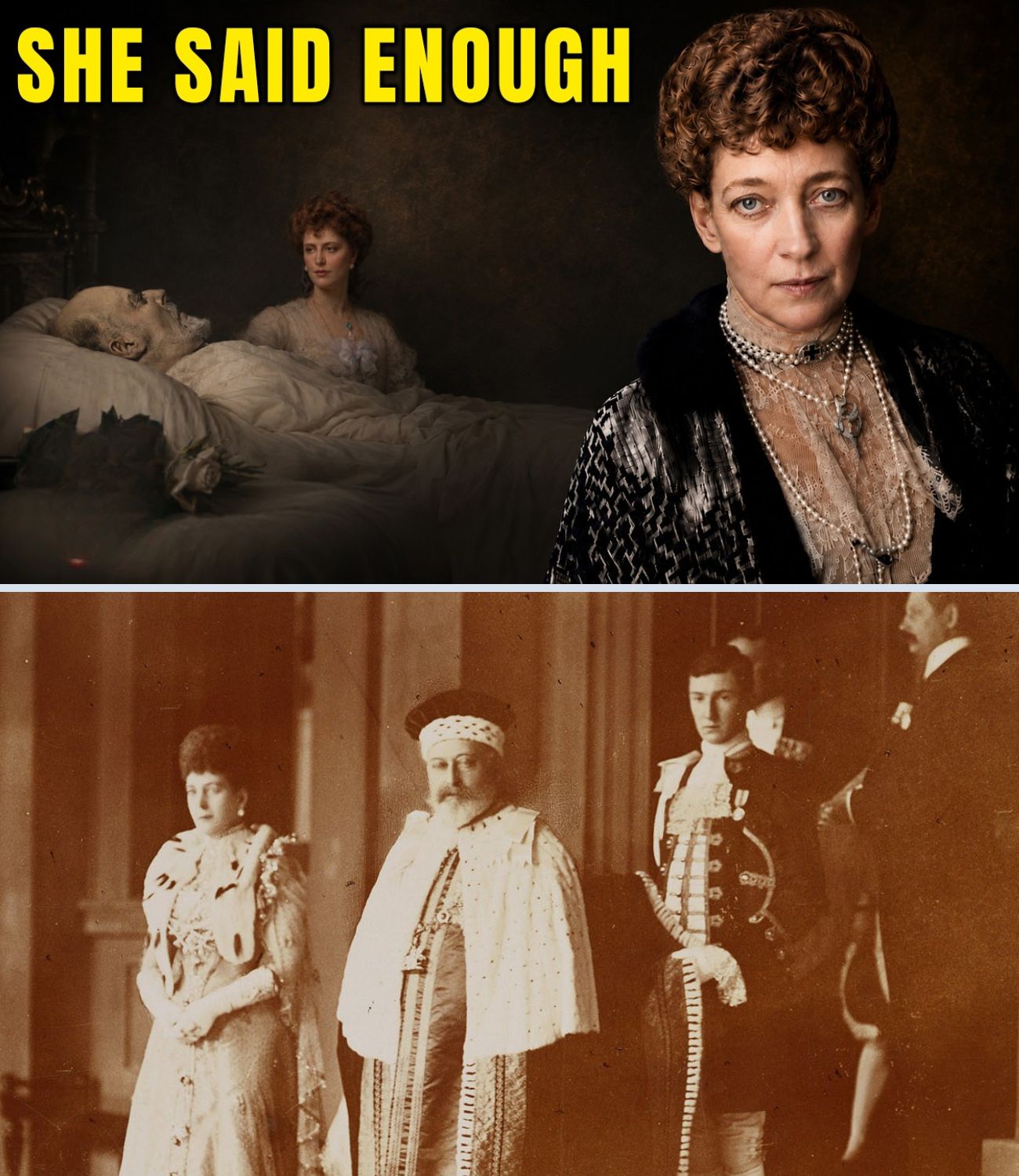
“They wrote constantly. Mountbatten’s letters, quoted at length in the authorised biography and in Philip Ziegler’s work on Mountbatten, read like a manual for being an heir. Be seen. Be useful. Don’t be photographed with the wrong girl. And above all, this was the recurring theme. Sow your wild oats now and marry a suitable, sweet-charactered girl before she meets anyone else.”
“That is the advice of a man with a plan. It is also the advice Charles actually took 17 years later with catastrophic results for four people.”
“Think about what that means in terms of who was doing the parenting. The most consequential guidance Charles ever received about love, sex, and marriage came from his great uncle in writing from another house. His mother’s recorded contribution to the subject over the same period is close to nothing, not hostile, absent from the record. That vacancy, the one Mountbatten filled, was never contested by either parent.”
“And it was about to be filled again because 1969 was the year the institution decided to introduce Charles to the public as a product. The investiture at Caernarfon Castle 1 July 1969, she had created him Prince of Wales back in 1958 by recorded announcement, but the ceremony waited until he was 20 and could carry it.”
“Lord Snowdon, the Queen’s brother-in-law and a professional photographer, designed the staging, a slate dais, a transparent perspex canopy so the television cameras could see through it. A coronet redesigned in a modernist style. 500 million people were said to have watched. It was in the most literal sense a production, and in the middle of it there is a moment worth looking at again.”
“Charles kneels. His mother places the coronet on his head. He puts his hands between hers and swears to become her liege man of life and limb. Then she kisses him.”
“That kiss is the single most physically affectionate image of the two of them in existence. And it occurred during a feudal oath of subjection on television at the climax of an event designed by a professional image maker to shore up support for the monarchy in Wales where a nationalist bombing campaign had made the security planning genuinely fraught.”
“She was warmest with him in public on ceremonial occasions inside a script. Several people who knew them noticed this over the decades and said so in various careful ways. In formal settings, she knew exactly what to do with her son. The formality gave her a role. Remove the role, put them alone in a drawing room, and the evidence for warmth thins out fast.”
“Now, the part that almost nobody notices about 1969, and that changed the balance of power between them permanently. Charles turned 21 that November. On that birthday, under arrangements going back to the 14th century, he became entitled to the full net revenues of the Duchy of Cornwall, around 130,000 acres spread across Cornwall, Devon, Somerset, Dorset, Wiltshire, the Isles of Scilly, and a chunk of Kennington in South London.”
“At the time, it produced something in the region of £220,000 a year before he voluntarily surrendered a portion to the Treasury. By the 2000s, it would be generating over £10 million annually. By the end of his time as Prince of Wales, more than £20 million.”
“Here’s why that matters to a story about a mother and a son. She did not pay for him. She had no allowance to withdraw. There was no financial lever. Compare that with almost any other royal relationship of the period. Margaret, Andrew, Edward. Their money came through the civil list, which meant it came through the sovereign and the government.”
“Charles’s money came from land he held by right of being born first. No sovereign could take it away because taking it away would require unpicking the succession itself. So from the age of 21, the Prince of Wales was the only member of his family with an independent fortune, an independent staff, and eventually an independent policy agenda.”
“He set up the Prince’s Trust in 1976 with his Royal Navy severance pay, and it grew into an organisation touching hundreds of thousands of young people. He had opinions about architecture, farming, medicine, the environment, and he expressed them in public repeatedly in ways that made Buckingham Palace wince. The Queen’s courtiers spent 40 years managing him. They could not command him.”
“This is the thing people get backwards. The relationship is usually told as powerful mother, powerless son. Structurally, it was closer to two separate courts in two separate palaces with two separate press offices, two separate sets of advisers, and one shared surname.”
“By the early 1980s, the geography made it explicit. He bought Highgrove House in Gloucestershire in 1980 through the Duchy, a 9-bedroom Georgian house near Tetbury, a 100 miles from London near his friends, near his hunting, near Camilla Parker Bowles who lived a short drive away at Bolehyde Manor. His mother was at Buckingham Palace, Windsor, Sandringham, Balmoral. Their contact ran through diaries kept by private secretaries.”
“You want a picture of that? Here is one. Multiple people who worked in both households have described the same routine over the years. If the Prince of Wales wanted to see the Queen, an approach was made at private secretary level. Time was found. It went in the book. His mother lived 8 miles away and he booked her.”
“I don’t say that to be cruel about either of them. That is simply how the firm ran and she had been raised inside a version of it, too. Her own parents were affectionate by royal standards, and she still saw them on a schedule. What’s different is that she had a sibling in the same house and a governess who adored her, and she went into the job at 25 with a husband who, whatever else you say about him, was unignorably present.”
“Charles had Mountbatten, and on 27th August 1979, an IRA bomb was detonated on a fishing boat off Mullaghmore in County Sligo, killing Mountbatten, his 14-year-old grandson Nicholas, the Dowager Lady Brabourne, and a 15-year-old local boy Paul Maxwell. Charles was in Iceland fishing.”
“The journal entries he wrote in the following days were later quoted in the authorised biography and they are the most unguarded surviving writing of his adult life. He wrote of a mixture of desperate emotions, of feeling that life will never be the same now. He wrote that he wondered whether he could ever be as useful and whether he had the strength.”
“Then look at what happened in the family. The Queen attended the funeral at Westminster Abbey on 5th September and did what the sovereign does at a state ceremonial funeral, which is preside. The eulogy was delivered by Mountbatten’s grandson. Charles read the lesson and by his own account spent the service trying not to break down. Afterward, he went to Broadlands.”
“There is no documented conversation between mother and son about that grief. None. If it happened, it left no trace in any account from either household, and the accounts we do have suggest strongly that the person Charles leaned on in that period was not his mother and not his father.”
“It was credibly reported by multiple biographers, Camilla Parker Bowles, whom he had met in 1971, had a relationship with before her marriage to Andrew Parker Bowles in 1973 and had remained close to since. That is the moment the shape of the next 25 years gets set. He loses the one older person who spoke to him emotionally. He does not get replaced by his mother. He gets replaced by a married woman in Wiltshire. And within 2 years, under pressure from his father, he would marry someone else.”
“The Diana decision is where the phrase his mother’s silence stops being a psychological observation and becomes a documented consequential fact. The sequence is well established. Charles met Lady Diana Spencer properly in the summer of 1980. She was 19, the daughter of Earl Spencer from a family that had served the crown for generations. Her grandmother Ruth, Lady Fermoy, was a lady in waiting and close friend of the Queen Mother.”
“She was Protestant, aristocratic, had no romantic history that could embarrass anyone, and was, by the standards Mountbatten had laid out in those letters, perfect. The press worked it out by autumn. Photographers camped outside the Pimlico kindergarten where she worked. The coverage was relentless and increasingly ugly, and the pressure landed on Charles to either propose or release her because the convention of the time, and it was a real convention, not an invention, was that a girl publicly linked to the Prince of Wales was being damaged by every week of ambiguity.”
“In February 1981, Philip wrote to his son. The letter has never been published, and the two surviving characterisations of it differ in tone in a way that matters. Dimbleby’s authorised account, based on Charles’s own papers and recollection, presents it as an ultimatum. Decide or end it, and end it now for the girl’s sake. Charles on that reading felt cornered by his father into a marriage he doubted.”
“Philip’s version given to Brandreth and to others was that the letter was reasonable and even kind, that he had set out the situation plainly and told Charles to make up his own mind, and that he was hurt to see it reported as coercion. Brandreth records Philip’s frustration at being cast as the villain of his son’s marriage. Both men are reliable about their own feelings and unreliable about each other’s.”
“I’d put it this way. The letter was probably firmer than Philip remembered and less dictatorial than Charles felt. What is not in dispute is that it existed, that it demanded a decision, and that Charles read it as an instruction.”
“And the Queen? Nothing. There is no record of Elizabeth II expressing a view for or against to her son about the most consequential decision of his life. Not in the authorised biography, not in Pimlott, not in Bradford, not in Sally Bedell Smith’s work on either of them.”
“Her posture was non-intervention, which was her posture on nearly everything domestic. Staff described it repeatedly over the years. She disliked being drawn into other people’s decisions. She believed people should sort themselves out, and she had an extraordinary capacity to let a difficult subject simply pass. Silence was a policy. In February 1981, it cost him and it cost Diana more.”
“He proposed on 6th February, the 29th anniversary of his mother’s accession, which nobody seems to have remarked on at the time. The engagement was announced on the 24th. And in the television interview that afternoon, asked whether they were in love, Diana said, ‘Of course.’ And Charles said, ‘Whatever in love means.'”
“The line has been quoted for 40 years as coldness. Read it as something else. A man who had just done what he was told, saying so out loud on camera while nobody in his family stopped him.”
“The wedding, 29th July 1981, St. Paul’s Cathedral. 750 million people watching, 3 and a half thousand guests, a 25-ft train that had to be crushed into the glass coach and came out creased.”
“It was sold and widely received as a fairy tale, and the palace had every reason to let that stand. The country was in recession. Unemployment was over 2 and a half million. There had been riots in Brixton and Toxteth that same summer. And here was a monarchy giving away something that cost nothing and made everyone feel better.”
“The Queen enjoyed it genuinely. Guests recalled her in high spirits at the ball at Buckingham Palace two nights before, and there’s a well-attested story of her dancing. She liked Diana at first. She had reason to. The girl was shy, biddable, knew the world, and had just solved the succession problem that had been hanging over her son for a decade.”
“Now, put the private timeline next to the public one because this is where they start colliding in a way that never stops. Diana later said in the Andrew Morton tapes, recorded in 1991 and published in 1992, that she had found the bracelet Charles had commissioned for Camilla days before the wedding, that she had wanted to call it off, and that her sisters told her it was too late. The tea towels were printed.”
“That account comes from Diana through an intermediary at a moment when she was actively campaigning. It is not neutral evidence. It is, however, her contemporaneous state of mind as she described it under her own name, and the bracelet itself is not disputed.”
“What is better documented is the honeymoon, Britannia, the Mediterranean, then Balmoral for the rest of the summer. Balmoral is the key to understanding what the family expected of a wife and why Diana failed the test so quickly.”
“50,000 acres in Aberdeenshire. The Queen went every August and September without fail for 70 years, and it was the only place, by consistent testimony from staff and guests, where she genuinely relaxed. The routine was fixed. Stalking, shooting, picnics in the hills regardless of weather, barbecues Philip cooked himself, bagpipes at breakfast, dogs everywhere, and evenings of parlour games.”
“Guests were expected to enjoy it and were judged if they didn’t. Diana, 20 years old, newly married, pregnant by that autumn, bulimic, and homesick for London, did not enjoy it. That is not a character flaw. It is an incompatibility that the family read as a character flaw, and the reading had consequences because Balmoral was where Elizabeth II was most herself and least willing to have the atmosphere disturbed.”
“The pattern that emerged over the following decade has been described by household staff on both sides in remarkably consistent terms. When Diana was distressed, Charles would eventually raise it with his mother. The Queen would listen. She would express concern, and then characteristically, she would decline to act.”
“There is one documented exception, and it’s important because it cuts against the caricature. At some point in the late 1980s, the dating is imprecise across accounts, Diana went to the Queen directly. Diana’s version relayed through Morton and through later interviews with her confidants was that her mother-in-law said something to the effect that she didn’t know what to do, that Charles was hopeless.”
“Whether those were the words is unverifiable. What several independent sources do agree on is that the Queen made genuine efforts to be kind to Diana personally while refusing absolutely to intervene in the marriage itself. She could summon a prime minister. She would not summon her son.”
“And here is the first reclassification. The point where you should stop thinking of this as a distant mother and start thinking of it as something more specific. Elizabeth II did not fail to intervene because she didn’t care. She failed to intervene because intervening meant a conversation, and the entire architecture of her life had been built to make that conversation unnecessary.”
“By 1986, the marriage had effectively ended as a private relationship. Charles had resumed his relationship with Camilla. He later put the date at 1986 after it had irretrievably broken down, and that phrasing was lawyered to within an inch of its life. Diana’s relationship with James Hewitt ran from roughly 1986 to 1991.”
“Separate bedrooms, separate schedules, separate houses. In practice, Charles at Highgrove, Diana at Kensington Palace with the boys. The public saw none of it until the Canada tour of 1991 and even then only in the body language. Look at the family photographs from those years because the palace kept producing them.”
“Christmas at Sandringham. The walk to St. Mary Magdalene Church on Christmas morning which the Queen insisted on and which nobody was excused from. Diana and Charles smiling side by side in front of photographers on mornings when according to multiple staff accounts they had not spoken the previous evening. The church walk was not decoration. It was the mechanism as long as the family appeared together on camera at Christmas. The institution had deniability, and the Queen who understood the value of the image better than almost anyone alive required it.”
“Then came 1992, and the deniability collapsed. June, Andrew Morton’s Diana: Her True Story was serialised in the Sunday Times. It described the bulimia, the suicide attempts, Camilla, the misery. It was presented as the work of Diana’s friends. The palace assumed she had cooperated and could not prove it. The tapes were only confirmed after her death.”
“Charles’s household believed she had gone to war. Diana’s household believed she had been left with no other weapon. Both were right. And the person caught between them was the Queen, who had now lost control of the story about her own family for the first time in 40 years.”
“August, photographs of Sarah Ferguson, the Duchess of York, topless with her financial adviser in the south of France, published while she was staying at Balmoral. Andrew and Sarah had separated in March. Anne had divorced Mark Phillips in April. Three of her four children’s marriages had failed inside 12 months.”
“That January, Charles and Diana had done a joint tour of India. The picture of Diana alone at the Taj Mahal. The monument to a man’s love for his wife is one of the most famous photographs of the 20th century. And it was taken on a tour where the couple were by every account from the accompanying press barely speaking. Charles had gone to give a business speech in Bangalore that day. He didn’t stage that photograph. She did, and she was better at it than he was and better at it than the palace was.”
“And that asymmetry is the thing that finally forced the Queen’s hand. 20 November 1992. A faulty spotlight in the Queen’s private chapel at Windsor Castle started a fire that burned for 15 hours, destroyed or damaged more than 100 rooms, and took 250 firefighters and 1.5 million gallons of water to control. Andrew, who happened to be there, helped carry artworks out.”
“The government’s initial announcement that the taxpayer would fund the restoration, estimated at up to £60 million, provoked a public reaction that genuinely frightened the palace. The Sun ran a front page asking whether the Queen should pay.”
“Within days, the arrangement had been renegotiated. Windsor would be open to paying visitors, and the Queen would volunteer to pay income tax from the following April, a decision that had actually been under discussion since 1991, but which was now announced under maximum pressure.”
“4 days after the fire, on 24 November, she stood up at the Guildhall in the City of London at a lunch marking her 40th year on the throne, and with a heavy cold that made her voice rasp, said, ‘This was not a year on which I shall look back with undiluted pleasure.’ Then in Latin, ‘annus horribilis.'”
“That speech is remembered as her acknowledging a bad year. Read the rest of it and it’s something sharper, a defence of the institution against its critics and a request for gentleness delivered by a woman whose children’s private lives had become a national argument about money.”
“On 9th December, John Major stood up in the House of Commons and announced the separation of the Prince and Princess of Wales. The statement said the decision had been reached amicably, that there were no plans for divorce, and that the succession was unaffected. Diana, it said, could still in principle be crowned queen. That last claim was constitutionally shaky, and everybody knew it. It was there to buy time.”
“Here is the thing to hold on to about that announcement. It was made by the prime minister in parliament on the advice of the palace and it was in substance a family document. The end of the heir’s marriage was handled as a matter of state drafted by officials, read out by a politician. Nobody in that family said it to anybody’s face in public. Why would they? They had never done anything else that way.”
“And now the escape route question, which is the one people most often get wrong. Why didn’t the Queen simply cut her son loose? Why not, as the papers suggested weekly, pass over Charles and go to William? Because she couldn’t, and because she wouldn’t, and the two reasons are different.”
“She couldn’t because the succession is fixed by statute, the Act of Settlement, the Bill of Rights, and the accumulated common law of the realms, and altering it requires legislation in the United Kingdom, and under the Statute of Westminster convention, the assent of every other realm that shares the crown. 15 parliaments to do it on the grounds that the heir’s marriage had failed would have invited the obvious question of who else might be removed and on what grounds and by whom.”
“She wouldn’t because the entire theology of her position rested on the throne descending by right rather than by merit. She had watched her uncle’s abdication tear the family apart when she was 10 and put her own father into a job that she believed killed him at 56. She had been Queen for 9 months when Charles turned four.”
“The idea of the crown as something that could be given or withheld according to conduct was to her the beginning of the end, which produced an extraordinary situation. Her son had become by 1993 a serious problem for the institution she had spent her life protecting. His approval ratings had collapsed. The tapes of an intimate telephone conversation with Camilla recorded in 1989 were published in January 1993 and the humiliation was total and detailed and permanent.”
“He was in institutional terms a liability. He was also in institutional terms irremovable. You cannot fire the heir. You cannot reduce the heir’s income because the Duchy is his by inheritance. You cannot evict the heir because Highgrove is Duchy property. You cannot deny the heir access to the press because he had his own press office.”
“So the sovereign did the only thing left available to a woman of her temperament, facing a crisis she could neither solve nor escape. She waited. And while she waited, her son decided to do something no heir to the British throne had ever done. He gave a television interview with a biographer at his elbow, and he talked about his parents.”
“The film went out on ITV on 29th June 1994. Charles, the private man, the public role, 2 and a half hours. Jonathan Dimbleby had been given 18 months of access, including travel, meetings, and this is the part that mattered, Charles’s private journals and correspondence on the understanding that the book following it would be authorised, but not censored. 14 million people watched, and they watched the Prince of Wales, asked whether he had tried to be faithful, say that he had until it became irretrievably broken down, us both having tried.”
“The admission of adultery is what made the front pages. It is not what made this a rupture between mother and son. The book came out in October, and the book was where the real detonation sat. Dimbleby, working from Charles’s own papers, described a boyhood of emotional isolation. A father he found bullying, a mother he experienced as remote, a household in which nobody hugged anybody.”
“He quoted the Gordonstoun letters. He quoted the journals. He recorded that Charles had felt pushed into the marriage. This was the heir to the throne, aged 45, publishing a complaint about his mother’s parenting while his mother was on the throne in a book he had authorised using documents he had supplied.”
“There is no other example of it in the history of the modern monarchy. The palace’s response was silence, which by now you can read fluently. No statement, no comment, nothing from Buckingham Palace then or later about any of it.”
“The family response came from Princess Anne, and it came repeatedly over the years afterward, always the same, always flat. She has said in interviews that she simply does not recognise the picture, that she thought her mother was a very good parent given the constraints, that the children did not feel neglected. In a 2002 interview, she put it about as directly as she ever has. She did not believe the Queen had been a bad mother, and she thought people had got that wrong.”
“Philip’s reaction, according to those around him, was harder. Brandreth and others record his bafflement and anger at seeing his private letter to his son characterised as coercion.”
“So who’s right? I think the honest answer is that both accounts are accurate to the people giving them and the difference is the point. Anne was the second child, a girl outside the succession pressure, temperamentally armoured, and by every account her mother’s favourite to be around because she was uncomplicated and liked horses.”
“Charles was the asset. Anne got the mother. Charles got the institution. Nobody was lying. They were raised by two different women who happened to be the same person.”
“What the Dimbleby project actually did, and I don’t think Charles fully understood this at the time, was cross a line the Queen had spent 42 years defending. She had never publicly explained herself. Not about the war, not about the abdication, not about Margaret, not about her marriage. Her entire method was that the monarchy survives by not answering.”
“Her son had just answered at length on television and within a year Diana would answer back and force the Queen to do the one thing she had avoided since 1981. Panorama BBC 1 20th November 1995. 9 hours of secret negotiation. A film crew smuggled into Kensington Palace on a Sunday when the staff were off and an interview the BBC’s own governors were not told about in advance.”
“23 million people in Britain watched it.”
“There were three of us in this marriage, so it was a bit crowded.”
“Asked whether Charles would ever be king, she said she did not think he would want to take on the top job. She said she wanted to be a queen of people’s hearts. It aired on the Queen’s 48th wedding anniversary. I am not going to tell you Diana chose that date deliberately because there is no evidence she did and the scheduling was the BBC’s. But the Queen’s anniversary was 20 November.”
“The Windsor fire had been 20 November 3 years earlier, and the woman watching that broadcast had spent her whole life noticing what dates meant. 3 weeks later, in mid-December 1995, the Queen wrote two letters, one to her son, one to her daughter-in-law, each handwritten, each delivered by hand.”
“She told them that an early divorce was in the best interests of the country, the children and themselves, and that she wanted them to proceed.”
“Think about the years leading to that page. 14 years of a failing marriage. Two books, one authorised by each side, a published transcript of her son’s private telephone call. A separation announced in the House of Commons, repeated approaches from a distressed daughter-in-law, repeated approaches from her son, and the single most decisive maternal act of Elizabeth II’s life arrived in an envelope.”
“Charles replied within days agreeing. Diana’s response was slower and messier. She announced on 28th February 1996 that she had agreed to a divorce and added that the decision had been reached with regret which prompted a rare and unusually irritable statement from Buckingham Palace correcting the record and making clear the request had come from the Queen.”
“The decree absolute came through on 28th of August 1996. Diana lost the style her royal highness, a decision the palace attributed to Charles and Charles’s office attributed to the palace and which the Queen ultimately signed off on. She kept Kensington Palace. She got a settlement reported at around £17 million. She remained by title Diana, Princess of Wales, and she remained the most photographed woman on earth.”
“Now that letter, hold it next to the other paper in this story. Mountbatten’s letters telling a young man how to choose a wife. Philip’s letter telling him to decide. The Queen’s letter telling him to divorce. Charles’s journals published. And eventually, 27 years after Caernarfon, a typed statement about who Camilla would be. Every hinge in this relationship is a piece of paper. Not one of them is a conversation.”
“Then on 31 August 1997 in a road tunnel in Paris, the thing happened that nobody in the family had a procedure for. The Queen was at Balmoral. So were William and Harry who were 12 and 15. Charles flew to Paris with Diana’s two sisters and brought the body home to RAF Northolt that afternoon.”
“What followed was 5 days in which the mother and the son took opposite positions on what the monarchy owed a dead woman and the son was right. The Queen’s instinct was to protect the boys. She kept them at Balmoral away from cameras and she and Philip took them to Crathie Kirk on the Sunday morning where the minister did not mention Diana by name in the prayers. That decision was reported and used as evidence of coldness.”
“It was, by consistent testimony from those present, a deliberate choice made to spare the children. But the rest of it was misjudgement on a scale she rarely committed. No flag at half mast over Buckingham Palace, because the only flag flown there was the royal standard, and it flies only when the sovereign is present, and never at half mast, since the sovereign does not die. A perfectly good rule that had become in that week indefensible.”
“No return to London, no public statement. The crowds outside the palace grew into the hundreds of thousands. The flowers piled 5 feet deep. And the press, including papers that had hounded Diana for 15 years, and now discovered their consciences, turned on the Queen with a ferocity she had never experienced.”
“The Express, ‘Show us you care.’ The Mirror, ‘Speak to us, ma’am.’ The Sun, ‘Where is our Queen? Where is her flag?'”
“The pressure to change course came from Charles’s side of the family’s machinery, from Downing Street through Blair and Alastair Campbell, and from her own private secretary, Robert Fellowes, who in a detail that tells you how small this world was, was married to Diana’s sister, Jane.”
“On Thursday the 4th of September, the palace announced she would return the next day and that the Union flag would fly at half mast over Buckingham Palace, breaking centuries of protocol. She came back on Friday, 5 September, walked among the flowers at the gates with Philip, and at 6:00 that evening delivered a live broadcast from the Chinese dining room with the crowds visible through the window behind her.”
“What I say to you now, as your Queen and as a grandmother, I say from my heart.”
“It is still the most human sentence she ever spoke in public. It was also drafted with input from the Foreign Office, Downing Street, and her own staff, and she insisted on the phrase ‘as a grandmother.’ She had been forced at 71 by a dead daughter-in-law and a hostile press to perform maternal feeling on camera for the survival of her house.”
“Charles, meanwhile, had spent that week doing something she had not. He had walked with his sons among the flowers at Kensington Palace on the Friday. He had insisted the body be flown home on a royal aircraft against initial advice that it was a private matter, and he had argued internally for exactly the response the palace eventually adopted. He had read the country better than his mother had, and his own advisers knew it, and they made sure the right journalists knew it, too.”
“That is the pivot, not the grief, the operation, because at some point in that decade, Charles had stopped waiting for institutional approval and started manufacturing it.”
“The man who ran that operation was Mark Bolland, a former director of the Press Complaints Commission, hired to Charles’s household in 1996 and promoted to deputy private secretary in 1997. He was 30. He was not a courtier. He was a media professional who understood that British newspapers can be fed and that a fed newspaper prints what you give it.”
“His brief, as he later described it publicly and as Diana’s allies described it at the time with considerably less affection, was to rehabilitate Charles and to make Camilla Parker Bowles acceptable to the British public. Diana’s circle called him the Blackadder, a nickname Charles reportedly found funny.”
“Look at what he actually did because it was a campaign in every operational sense. Camilla’s public profile was built in graded steps over four years. First confirmed presence at private events. Then an interview given not by her but about her.”
“Then on 28th January 1999, the moment the whole thing had been engineered toward, Charles and Camilla left a 50th birthday party for her sister Annabel at the Ritz Hotel on Piccadilly and walked out the front door together into roughly 200 photographers, whose presence had been arranged in advance through the Press Association. It lasted seconds. The pictures went around the world.”
“It had been negotiated, positioned, and timed. Buckingham Palace had not been consulted in any meaningful way, and the briefing war that followed, Charles’s office leaking against the Queen’s office, the Queen’s office leaking back, both sides using the same handful of royal correspondents, became so open that in 2000, the Queen’s private secretary and Charles’s had to be brought into the same room to agree a truce.”
“Here is the reclassification that most people never make. By the late 1990s, the Prince of Wales was not a dependent son inside his mother’s court. He was a rival power centre with his own revenue, his own staff of more than a hundred, his own charitable empire, his own policy positions, and a press strategy directed against his mother’s household. She had the throne. He had the initiative.”
“And in June 2000, at a 60th birthday party at Highgrove for ex-King Constantine of Greece, the Queen and Camilla Parker Bowles were in the same room for the first time in public knowledge. They spoke briefly. Photographers were not present, but the fact of it was released, and it was released because Charles’s side wanted it released. He had not asked permission. He had constructed a situation in which refusal would have looked like cruelty.”
“That in the end is how the wedding happened, not by reconciliation, by attrition. 9 April 2005. The Windsor Guildhall, a short walk down the hill from the castle, 250 yards from where the Queen was. The date had already moved once. The original plan was 8 April, changed because Pope John Paul II’s funeral was scheduled and Charles was attending.”
“The venue had moved too. The original plan was Windsor Castle itself, abandoned when it emerged that licensing the castle for civil weddings, would have made it available to any member of the public for the next 3 years. So, the heir to the throne got married in a town hall on a Saturday morning, and his parents did not attend.”
“The palace gave its reason and it was a real one. The Queen was supreme governor of the Church of England. This was a civil marriage of two divorced people whose former spouses’ situations were still matters of public feeling, and her attendance would have created a constitutional and religious problem. She would come to the service of prayer and dedication at St. George’s Chapel afterward. She did. So did Philip. So did 800 guests.”
“I can accept that reasoning entirely and still ask you to look at the shape of the day. Charles had waited 34 years from the summer he met her in 1971, and when he finally made his vows, the chairs where his mother and father should have been, were occupied by somebody else’s relatives. Then came the reception in the state apartments at Windsor Castle, and the speech.”
“It was Grand National Day. The race had been run that afternoon at Aintree, and the Queen, who knew horses better than she knew almost anything, opened by saying she had two important announcements to make. First, that Hedgehunter had won the Grand National, and second, this is the part people replay, that she had two things to say about her son.”
“He had come through, she said, using the language of the course. He had come through Becher’s Brook and the Chair and all kinds of other terrible obstacles. And now my son is home and dry with the woman he loves.”
“Guests described her as visibly delighted. Several said afterward it was the warmest they had ever heard her speak about Charles in public. Sit with that for a second. The most affectionate public statement Elizabeth II ever made about her eldest son’s happiness was a horse racing metaphor delivered at a reception she hosted after skipping the ceremony in a room full of people 34 years into the relationship it was about.”
“That is not coldness. That is the only vocabulary she had. And I think it’s the single most revealing thing in this entire story because it tells you the affection was real and the channel was permanently structurally wrong. She could say it through Aintree. She could say it through a coronet at Caernarfon. She could say it through a typed statement on accession day. She could not, so far as any surviving record shows, simply say it to him.”
“Which brings us back to where we started and to what that 2022 statement actually cost her because it cost her something. In 2005, when they married, Clarence House had announced that Camilla would be known as Princess Consort rather than Queen, a formula invented to manage public hostility, which was real, and which polling at the time measured at well over half the country, opposed to her ever being called queen. That promise sat there for 17 years as a limit on what Charles’s marriage could ever be.”
“By 2022, the polling had shifted. Camilla had spent two decades doing the work. Osteoporosis charities, literacy, domestic abuse, and rape crisis support, which she had taken on quietly, and long before it was fashionable for a royal to touch it. She had never given an interview about herself. She had absorbed the abuse and said nothing, which is the one thing that family genuinely respects.”
“The Queen made the decision and told almost no one. Charles’s household received the text shortly before publication. It was in its way the last sovereign act of a reign. The mother using her authority to settle her son’s household before she left it in a form nobody could reverse.”
“She died at Balmoral on 8th September 2022, 7 months later. Charles was there having flown up that morning from Dumfries House with Camilla. He arrived before the announcement. Anne was there. William arrived with his uncles.”
“After the following evening, he gave his first broadcast as King, recorded at Buckingham Palace, and he ended it like this.”
“And to my darling mama, as you begin your last great journey to join my dear late papa, I want simply to say this. Thank you, darling mama.”
“It was the form of address he used in letters. It appears in the correspondence quoted in the authorised biography, in the notes reproduced in various collections, in the handwriting of a man who had been writing to his mother since Gordonstoun. The last words he ever said about her in public were the words he had always used on paper and then he inherited the paper.”
“This is the part that almost never gets discussed and it is the real answer to the power question. The royal archives housed in the Round Tower at Windsor are not a public institution. They are the private property of the sovereign. The Queen’s personal correspondence, letters to family, private diaries, the accumulated paper of 70 years passed to Charles.”
“What is released, what is catalogued, what is shown to which historian, and what is quietly destroyed is now decided by him and by the archivists who serve him. Elizabeth II kept a diary every night of her adult life. Almost none of it has been seen. There is precedent for what happens to such things in that family.”
“Queen Victoria’s journals were transcribed and then burned by her daughter Beatrice, who edited out what she disliked. The letters between Edward VIII and the palace during the abdication were controlled for decades. George V’s doctor’s account of his death was sealed for 50 years.”
“The man who publishes his mother’s papers or doesn’t is the same man who in 1994 handed a biographer his private journals and let him print the sentence that the Prince of Wales had found his parents remote. He set the terms of that argument while she was alive and she never answered it. Now she cannot and he holds the only remaining evidence that might. She controlled legitimacy for as long as she breathed. He controls memory for as long as he does.”
“Which finally lets us settle the Tobruk handshake. It never happened. The photographs from 1 May 1954 show a woman leaning down to a 5-year-old boy on the deck of Britannia after 6 months away. There is no contemporary account of a handshake. The story surfaced later, repeated by journalists, hardened by retelling, and then dramatised for television in a scene millions of people now remember as history.”
“What did happen, according to accounts from the ship, is that Charles moved toward his mother in the receiving line and was told gently to wait because the officials were greeted first. The myth is false. It survived for 70 years because it matched what Charles himself had authorised to be published about his childhood and because the ordering was true, even if the gesture wasn’t.”
“A cold handshake is a story about a woman who didn’t love her son. A receiving line is a story about a woman who loved him and put the governor of Libya first because that was the job. And the job had killed her father at 56, and she had decided at 25 that it would not be permitted to kill her.”
“He forgave her for it. There is no serious evidence he ever stopped wanting her approval and considerable evidence. The telephone calls, the letters, the way he spoke about her in the weeks after her death, that he loved her without much reservation.”
“She never hated him. Not once, not in any surviving line of any document from anyone who knew them. What she did was rank him below the boxes, below the governor, below the tour, below the institution she believed she had been given by God and could not put down.”
“And when she finally wanted to tell him that he had come through and she was glad, she reached for the language of a racecourse because after 73 years she still had no other way of saying it.”
“Then she signed a piece of paper and gave it to the press before she gave it to him. That statement is still on the royal website. You can read it. It is dated 5 February 2022. It runs to a few hundred words. And the sentence about Camilla sits in the middle of a paragraph about the nation’s future, not at the end where a personal blessing would go. It was written as constitutional housekeeping. It functioned as the only maternal endorsement of his adult life that was ever put beyond dispute.”
“He used it within days. The Accession Council on 10th September 2022 in the state apartments at St. James’s Palace was televised for the first time in history and Camilla stood in the room as queen consort while more than 200 privy counsellors watched.”
“By the coronation on 6th May 2023 at Westminster Abbey, the word consort had quietly been dropped from official usage. The Queen’s wish had been a floor. Her son treated it as a foundation.”
“The other inheritances were less visible and more consequential. Balmoral, which he owned privately rather than as sovereign, passed to him outright along with Sandringham, and by the summer of 2024, his estate had opened parts of the Balmoral Castle interior to paying visitors for the first time in its history. £100 each, guided, no photographs.”
“The house, where she had been most herself, and where his first marriage had gone wrong in its opening weeks, became a ticketed attraction inside 2 years of her death.”
“He also began doing something she never did. He talked about it. In the Christmas broadcast of 2022, filmed at St. George’s Chapel, where she was now buried beside her husband and her parents. He spoke about her faith in plain terms. He has referred to her repeatedly in speeches since, warmly, specifically, and always in the same register, gratitude for her example, silence about the childhood.”
“That silence is a choice, and it is the last piece of evidence you need because he could open it all. He holds the diaries, the letters, the 70 years of paper in the Round Tower, and he is the one member of that family with a documented history of handing private material to a biographer and letting him print it.”
“He did it once in 1994, and it cost him more than it gained. He has not done it again. Whatever is in her diaries about her eldest son, and she wrote every night, so something is, remains where she left it under the control of the person with the strongest possible motive to publish and the clearest possible reason not to.”
“Look at the 2022 statement one more time. When it was released, it read like an old woman finally granting permission. It reads differently now. It was a transfer of assets from someone who had run out of time to someone who had spent 50 years accumulating everything except the one thing she could give. She gave it in writing because writing was the only room the two of them ever shared.”
You Might Also Enjoy

“We Thought They Would Negotiate”—What Argentine Soldiers Said When The British Attacked Goose Green

“You’ll Never Finish My Ruck March, Limey” — US Sergeant Who Challenged the SAS, Then Fell Out First






