Queen Elizabeth II Was Much Nastier Than You Thought
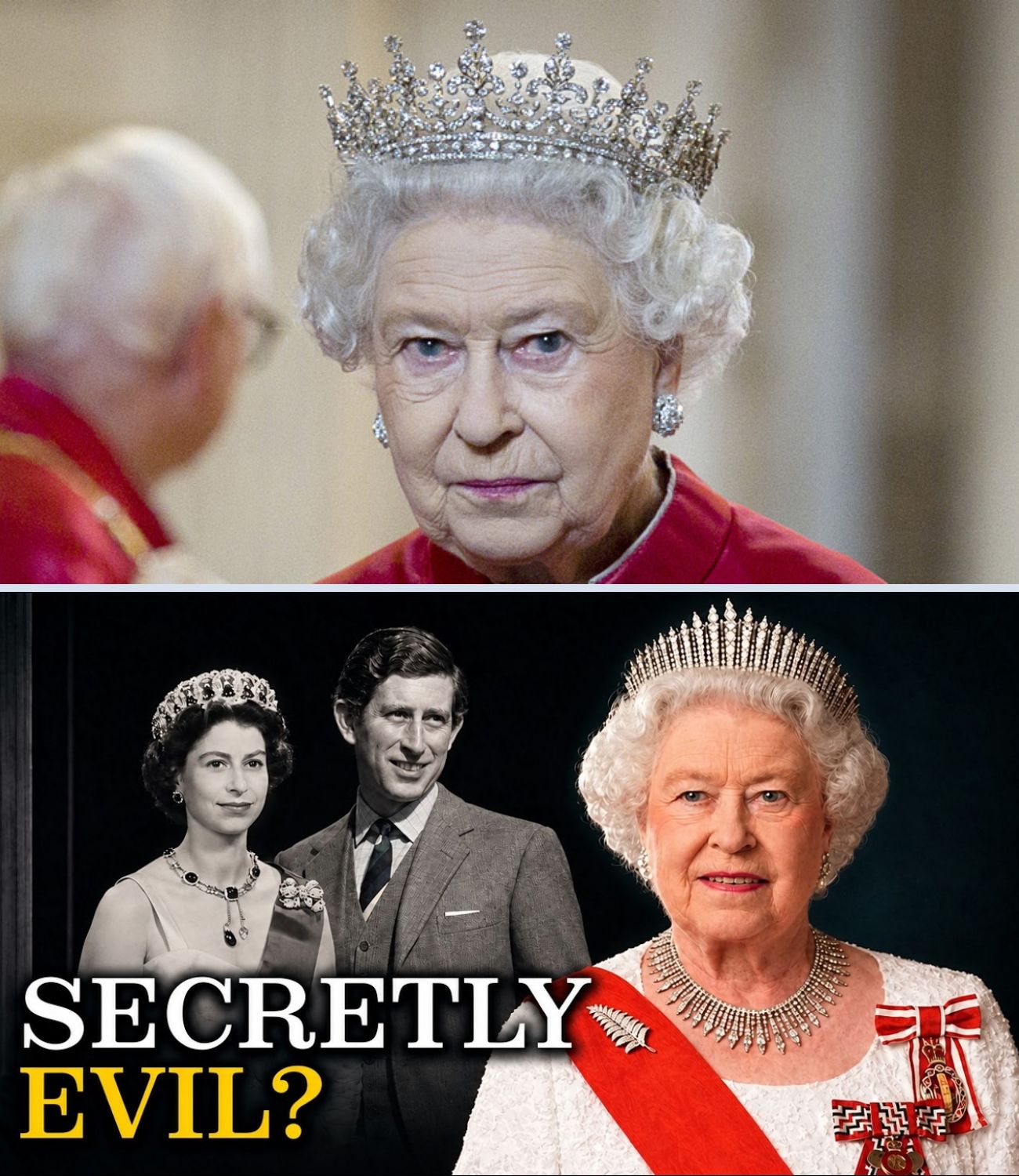
On February 8, 1960, 11 days before the birth of her third child, Elizabeth II signed a declaration allowing some of her descendants to be named Mountbatten-Windsor. The press presented this as a manifestation of his wife’s kindness. In fact, it was a compromise. Eight years earlier, she had denied him this right on the advice of Churchill.
Rumor has it that her husband declared that he was nothing more than a damned amoeba, the only man in England who was forbidden to give his last name to his own children. In 1957, the palace denied the existence of a split. After 11 days, she granted him the title of prince. Every title he had was bestowed upon him by her.
So, let’s start with 1939. Actually, no. Until 1939, let’s dwell for a moment on the 1960 document, because almost no one reads it carefully. The declaration of the Privy Council states that she and her children will continue to be known as the House and Family of Windsor, and her descendants, except those with royal styles and titles, will bear the surname Mountbatten-Windsor.
Read this again. This concession applies to grandchildren and great-grandchildren, who will never play a constitutional role. Those who would actually wear the crown remained Windsors. She gave her husband only the back part of the family tree. This is not a love message. This is the result of negotiations that lasted 8 years and ended in a partial victory for the side that had no leverage.
And the public never saw this fight. All the public has seen during this time is the most stable marriage in modern British public life. 73 years old, four children, an endless series of photos of her glaring at him while he says something that clearly wasn’t agreed upon in advance. In 2002, during her Golden Jubilee, she stood in Westminster Hall and called him her pillar and support throughout the years.
This phrase did most of the work. It is engraved in the folk memory of this marriage, like a master’s mark on silver. So, here is the question on which this story rests. She was a wife in a country where wives were legally and socially subordinate, but she was also a sovereign, which meant her husband swore allegiance to her in public.
Who held power in that house after February 1952? And what did she make him give up so that he would stay? Because the list of what he lost is not that short. And it’s not a question of interpretation. He lost his last name. He lost his career at the age of 30. He lost the house he had just finished renovating. He lost the lead at his own wife’s coronation and walked behind her.
He lost the right to decide where his eldest son would study until she deigned to grant him that right. He did not hold the rank of Prince of the United Kingdom during the first 10 years of their marriage or the first 5 years of her reign. He received it on February 22, 1957. A few weeks earlier, the palace had issued an extraordinary statement categorically denying any differences between the Queen and the Duke.
The courts do not deny what no one has asked. Keep this sequence in mind. We will come back to it when we have the rest of the facts. Now let’s go back, not to the nursery, but to what explains why she was able to do this to the man she had loved since she was 13.
In December 1936, her uncle abdicated the throne to marry an American divorcee, and 10-year-old Elizabeth’s life changed in one day. Her father, a nervous man with a stutter who never aspired to the position, became king. The family moved from a cozy house in Piccadilly to Buckingham Palace. And the lesson that this family learned from the renunciation was crystal clear, and it was constantly repeated to them. A person who puts personal desire above an institution destroys that institution.
Her father’s letter to her after the wedding is the purest surviving expression of the family credo. He wrote about watching her in Westminster Abbey, and in the same letter reminded her that our family, the four of us, the royal family, must stick together. He congratulated his daughter on her marriage and at the same time told her that the real one was the one she was leaving behind.
This isn’t just a random phrase in a wedding letter. It’s an operating system, and she’s already publicly signed off on it. On 21 April 1947, her 21st birthday, during a radio broadcast from Cape Town as part of a South African tour, she said that her whole life, long or short, would be dedicated to the service of the Imperial Family to which they all belonged.
People quote this as sweet girlish idealism. Look at the date. She made this promise months before she was allowed to announce her engagement, and it’s no coincidence in the timing. The tour was partly designed to create distance between her and the man she wanted to marry, to see if their relationship would last 4 months and 6,000 miles.
He endured, but note the order of the vows. She swore allegiance first to the institution and then to Philip. And when these two things came into conflict, this order was maintained every time for 70 years.
So, on July 22, 1939, the royal family visited the Royal Naval College in Dartmouth on the yacht Victoria and Albert. There was an outbreak of mumps and chickenpox at the college, so the two princesses were kept away from the main group of cadets, causing an 18-year-old cadet named Philip Gretsky and Dansky to be assigned to entertain them. Elizabeth was 13 years old.
Our main account of that day comes from governess Marion Crawford, who wrote in her book Little Princesses that he jumped over tennis nets, showing off to her, while Elizabeth kept her eyes on him. Do not take this source as the ultimate truth. Crawford published the book in 1950 for money after decades of working for the family. The family’s reaction to this shows how they appreciated her devotion. We’ll tell you about her fate later, because it’s the best proof of the word “vile” in the title of this story.
However, the overall picture is not in doubt due to the letters. She kept his photo. She wrote to him throughout the war. This feeling belonged primarily to her, it was persistent and survived the institution’s determined attempts to break their connection.
And who was he at that moment? A prince of a dynasty that was expelled from its own country. His family fled Greece when he was 18 months old; according to the family itself, he was carried out in a fruit crate that served as a cradle. His father went to the south of France. His mother, Princess Alice, was placed in a sanatorium in Switzerland in 1930 and was separated from her children for years.
All four of his sisters married German aristocrats within about a year, which in 1939 was less a social event than a security issue. He had no permanent home, no money of his own, no British passport, and no country that wanted him. He spent his school holidays with relatives, moving from house to house and dragging his own luggage with him.
And, as all contemporaries testify, he was an extremely handsome and extremely capable sailor. He graduated from Dartmouth as one of the top students in his class. In 1941, he was commended in reports for his service near Cape Matapan, where he worked with searchlights. He became one of the youngest first lieutenants in the Royal Navy.
This is important later, so remember this fact. He was not a “decorative” prince. He was an officer who worked actively and quickly advanced through the ranks, having a real chance of commanding a ship.
His own account of how he fell in love is contained in a letter to her mother after the wedding, where he wrote that he had fallen in love completely and unconditionally, and that receiving it was perhaps the greatest good fortune of his life. People perceive this as courtly flattery. It’s more like a 26-year-old stateless man telling his new mother-in-law that he understands perfectly well what he just got.
This brings us to the fact that no one at the time was polite enough to say it out loud, and that the environment was constantly discussing it privately. The courtiers did not want him. The materials preserved from inside the palace are straightforward. He was described as rude, ill-mannered, poorly dressed, and not exactly a gentleman.
He would come for the weekend with one suitcase and borrowed clothes. Queen Mary’s entourage was worried about his German sons-in-law. The Queen Mother is said to have called him “the Hun”—a remark that has come down to us through family recollections rather than contemporary documents, so take it as authentic, but second-hand.
The political objections were more serious. His uncle Louis Mountbatten openly directed the courtship, and the court saw Mountbatten behind the throne from afar. They tried to delay. They proposed other candidates, all sons of dukes, entirely English. They sent her to Africa for 4 months. None of this helped.
And here is the first real proof that this woman was not the passive figure she was later portrayed to be. The king gave in. He gave in because his daughter was adamant. She chose him against the court, against advice, against circumstances. This is extremely important because it means that everything that happened next was not done to a girl who had a husband imposed on her. This was done by a woman with a man she personally chose.
So, what did each of them actually get? She got the only man she ever loved, the one she had written to since she was a teenager. And she got it on her own terms, in her own home, on her own territory. He got the country. He got a name, a title, a family, an income, and an end to 20 years of living in other people’s guest bedrooms. Both of these statements can be true at the same time. And the simplified version of this story insists on choosing one thing. The evidence doesn’t allow you to do that.
But such a generous one-way deal always has its conditions. And its terms were drawn up at the same time as the wedding invitations were printed. On 18 February 1947, he became a British citizen and renounced his Greek and Danish royal titles. He had to choose a last name because he didn’t actually have one.
The House of Heraldry and the Home Office settled on Mountbatten—an Anglicized surname of his mother, which was invented in 1917 when the Battenbergs lost their German roots. So the name he would later fight so hard to pass on to his sons wasn’t even hereditary. It was 10 years older than him, put together by a committee and given to him to make him decent enough to marry her.
He also ceased to be a prince. This is the part that people forget. From February 18, 1947, to February 22, 1957, Philip Mountbatten did not hold any princely title in Britain. He was a commoner with a Greek accent and an officer’s rank in the Royal Navy. And the woman he was going to marry was the heir to the throne.
The palace arranged this the day before the wedding. On 19 November 1947, the King granted him the titles of Duke of Edinburgh, Earl of Merioneth and Baron Greenwich, and also made him a Knight of the Garter, eight days before bestowing the same honour on his own daughter, so that her primacy would be undisputed.
Look at the time of the grant of the duchy. 24 hours. The title was not a gift at the beginning of the courtship. It came at the last possible moment before the ceremony as a condition of entry, like a visa placed at the border.
The wedding on November 20, 1947, was presented as a national consolation. Britain was two years after the war and still living by cards. Norman Hartnell designed the dress, and the palace noted that the bride used clothing coupons on it —200 extra ones issued by the government, with women from all over the country sending their own coupons to the palace. They had to be returned. They could not be transferred legally.
The bouquet contained a sprig of myrtle from a bush in Osborne, grown from a sprig from Queen Victoria’s own wedding bouquet. 2,000 guests at Westminster Abbey. The first major royal ceremony to be broadcast on radio throughout the Commonwealth.
Now read the guest list. Because the guest list is the contract. His three surviving sisters were not invited—none of them. They were German princesses married to German nobles, one of them an SS officer, and in 1947 that was unthinkable. So they were simply crossed off the guest list at their only brother’s wedding.
His mother arrived. Princess Alice, who founded a nunnery and hid a Jewish family in Athens during the occupation, came to her son’s wedding in the gray robes of a nun because she had nothing else to wear, and wouldn’t have worn anything else if she had.
So, on one side in the abbey—the king, the queen, Queen Mary, the government, the Commonwealth, and most of the surviving monarchs of Europe. On the other side—a nun and an uncle with ambitions. This was the balance of this marriage at the time it began, and it never fundamentally changed.
They were given Clarence House, which was in terrible condition, and he threw himself into the work. He personally reviewed the plans, argued about costs with the Ministry of Works, chose the fittings, and ordered a window to be made between the kitchen and the dining room.
There’s a reason he was so concerned about the building. This man hasn’t had a home of his own since he lived in a fruit crate as a toddler. He completed the renovation in 1949. They lived there for about two and a half years.
In between, there was only one period in our marriage that resembled other people’s lives, and that was abroad. In October 1949 he was transferred to Malta as a first lieutenant on HMS Chequers and she followed him. They lived at the Villa Guardamangia, a limestone house in Pietà owned by Mountbatten, who himself commanded a squadron of cruisers in the same waters.
She drove the car herself. She went to the hairdresser in Sliema and sat under the blow dryer with the other officers’ wives. She watched him play polo. She went to the dance. There’s a photo of her at a table in a Maltese nightclub that looks like a vacation snap of a young woman, because it is.
In 1950 he was given his own command, HMS Magpie, and, according to accounts from the ship, he was happier than he would ever be.
Remember one detail of those Maltese years, because it is double-edged, and the sentimental version always bypasses it. There were no children there. Charles, born in November 1948, and Anne, born in August 1950, remained in England with nannies and grandparents while their parents were in the Mediterranean. She missed Charles’ second birthday. She was in Malta.
The standard excuse is that it was perfectly normal for her class and generation, and that’s true. It is also true that when faced with a choice between a husband and young children, she repeatedly chose the husband. And the only period in her life when it could be said that she put private relationships first was the very time when the institution momentarily released her from its custody.
The institution returned it in July 1951. The king’s health deteriorated. In September, he had a lung removed. On 16 July 1951, Philip was placed on indefinite leave from the fleet, and HMS Magpie was handed over to another officer. He never served again. He was 30 years old.
No one told him it was forever, because no one knew. The surviving records indicate that he sincerely hoped to return. Several biographers, drawing on the words of those around him, describe the end of his naval career as a loss he never stopped thinking about.
He was on his way to the rank of admiral through his own merits, but he was forced to stand two steps behind his wife at official events, and the position he received in return had no description, no powers, and no title.
So, the morning when everything was decided: a trip to Kenya, February 1952. They were standing in for the King during a tour of the Commonwealth countries and spent the night of February 5 in “Treetops”—a treehouse above a watering hole—watching elephants. The next morning they descended to Sagan Lodge, their wedding gift from the people of Kenya.
The news reached the delegation in the afternoon. It was Mike Parker, Philip’s personal secretary and his old friend from the Navy, who received confirmation and informed Philip. And it was Philip who was to take his wife out into the garden and tell her that her father had died and that she had become queen.
According to Parker’s recollection, expressed many years later—and therefore more of a memory than an accurate record—Philip looked as if the whole world had collapsed on him.
There is another detail from that day that conveys the same thing in four words. Someone asked what name she would rule under, as monarchs often choose it themselves. Her answer: “My own, of course.”
Her own. No throne name chosen. Not a matter for discussion. Elizabeth.
Now watch what happened in the following hours and days, because this is a turning point. She had to leave Africa. The plane could not take off until the documents for accession to the throne were completed. She signed the documents on the plane. She walked down the stairs at Heathrow Airport dressed in black before a line of men who greeted her. Churchill, Attlee, Eden—they all worked for her now.
Philip was coming down the stairs behind her. That’s where he remained for the next 69 years, and photographers captured the very moment when everything changed without the consent of anyone present.
This is the first thing to understand correctly about this marriage, and the reason why the brutality interpretation is more interesting than the caricature version. She didn’t take away his career and status. Her father’s illness did this. On February 6, 1952, they both found themselves trapped in the same event. No one in that garden wanted that.
What matters is what she did next with the power she had just gained. Because for about 8 weeks, everything was open to change.
In April 1952, Mountbatten made a mistake that cost his nephew what he really wanted. During a dinner at Broadlands, in the presence of guests, he reportedly remarked that the House of Mountbatten now ruled.
This remark spread, as is usually the case with phrases of this caliber, and reached Queen Mary, who was 84 years old; she was born during the reign of her predecessor’s grandmother and personally experienced the 1917 decision to invent the name Windsor. She was amazed. She told Churchill’s private secretary about it, and Churchill brought it to the attention of the cabinet.
The cabinet’s opinion was unanimous, and it was not subtle. The Royal House will remain Windsor. The Prime Minister advised the Queen to act accordingly. On April 9, 1952, barely 2 months after beginning her reign, she issued a declaration confirming that she and her children would belong to the House and family of Windsor.
She could fight. Monarchs fought with their cabinets over much smaller pretexts. Her great-grandfather, Edward VII, himself changed the family name. She didn’t fight, and the reason she didn’t is the whole story. She was raised with the belief that once you put a man’s preferences above the stability of an institution, you get 1936.
Philip’s reaction is the most quoted thing he ever said in private, and the least trusted but most remembered. The amoeba phrase that he was the only man in the country not allowed to give his surname to his own children came to us through biographers who referred to Mountbatten’s entourage, and it was repeated so often that it took on the appearance of a shorthand.
This is not a transcript. This is an authentic account of a man’s sense of his own situation. What is documented is the result: the Duke of Edinburgh spent eight years as a father to children who legally bore a surname to which he had no relation.
Then they took the house. Courtiers, led by Lascelles, insisted that the sovereign should live and work at Buckingham Palace. She had just spent three years with a man who had rebuilt Clarence House himself, right down to the kitchen hatch. Philip persistently persuaded him to stay. He lost.
In May 1952, they moved into a building where she herself had never liked living as a child. And Clarence House went to her mother. Calculate what he lost between February and May 1952. Your profession, your home, your last name on your children’s documents, and your place in any room your wife entered. He was 31 years old.
Instead, he received the position of chairman of the coronation commission. And he handled it wonderfully. The dispute that defines it is the fight for television. Churchill’s cabinet and the Archbishop of Canterbury opposed live television cameras in Westminster Abbey. Sacred moments were not for the public, and the Prime Minister believed that the burden on the young queen would be unbearable.
Philip insisted on the opposite. The Queen stood on the side of the cameras, while the anointing itself was hidden from view. On June 2, 1953, 27 million people in Britain watched the coronation. Most of them are on TVs, bought or borrowed for a day. This is the event that made the modern monarchy a broadcasting institution, and it happened because the Prince Consort won the argument.
Now look at what the ceremony required him to do. After the coronation, he was the first of the royal dukes to pay homage. He climbed the stairs, knelt before his wife, placed his hands between hers, and swore to become her vassal, faithful to her in life and death, to serve her faithfully and truthfully, and to be ready to protect her from anyone.
Then he touched the crown, kissed it on the cheek, and stepped back from the throne. The nation watched as a man knelt before his wife and vowed to die for her, and thought it was romantic. It was feudal. He just spent a year defending cameras that filmed him doing it.
The point is that kneeling establishes a rule, and rules are first checked by other people. 18 months after the coronation, the test came, and it came in the person of her sister.
Princess Margaret wanted to marry Peter Townsend. He was a group captain, a Battle of Britain pilot, her father’s equerry, and then the Queen Mother’s Comptroller of the Household, which meant he lived in the family’s homes for years. He was 16 years older. He was divorced.
The detail that everyone remembers is the coronation itself. Margaret brushes the dust off Townsend’s uniform in the courtyard after the ceremony in full view of foreign correspondents, and the American and European press pick up on it, while British newspapers remain silent for another six weeks.
Romance is not important here. The point is what the state machine did next and what Elizabeth did while she was doing it. Under the Royal Marriages Act 1772, Margaret needed the monarch’s consent to marry before she turned 25. After 25 she could give the Privy Council 12 months’ notice and marry without it, provided Parliament did not object.
The Church of England did not marry divorced people while the former spouse was alive. Townsend was the innocent party in his divorce, which the church considered unimportant, and the Queen was the supreme ruler of that church. Her response was to ask Margaret to wait a year. Her government’s response was to transfer Townsend to Brussels as air attaché in July 1953 while Margaret was on a tour of Rhodesia, so that the separation would become a fact before she returned home.
By 1955, Margaret was 25, and the 12-month journey was open. Then she was told the conditions. Eden’s government made it clear that marriage to a divorced man would cost her civil income, royal rights, and would likely require living abroad.
There has been a debate among historians since 2004, when cabinet papers emerged suggesting that Eden was prepared to offer a workaround that would have allowed her to retain the title while giving up her rights to the throne, and that Margaret may never have been fully informed or understood more than she admitted. Historians remain divided on who knew what. What is not in dispute is the statement Margaret issued on October 31, 1955.
She decided not to marry, mindful of the church’s teaching that Christian marriage is indissoluble, and conscious of her duty to the Commonwealth. Look at this sentence from the inside of the marriage we’re actually talking about.
Elizabeth had just witnessed up close, and partly as the person responsible, the true cost of a member of the royal family choosing personal favor over the institution. Her sister lost her husband. The system did not fail. And the monarch who could replace her was herself. This is where the title justifies itself, by the way, and not in the way people expect.
The accusation is not that she was vengeful. And that she had a tremendous ability to let things she could have fixed just remain unfixed. Margaret’s situation sat on her desk for 2 years and then resolved itself through exhaustion.
Now put yourself in Philip’s shoes in 1955, observing the same thing. He had no profession. His name was not on his children’s documents. He lived in his wife’s offices. His uncle was persona non grata to the courtiers who ran the building, and he had just seen in detail what the institution had done to a family member who had tried to go beyond the script.
Divorce was not a theoretical impossibility for him. This was closer to a constitutional event. His wife was the supreme ruler of the Church of England and head of state in dozens of kingdoms. Any rupture would be a repeat of the abdication crisis, only with a gender reversal and this time with four-year-old heirs.
So he did what men in his position always did: leave without actually leaving. On October 15, 1956, Philip boarded the royal yacht Britannia and set sail. The official purpose was to open the Olympic Games in Melbourne and tour remote corners of the Commonwealth, where the monarch could not reach.
Gambia, Ceylon, New Guinea, Antarctica, Falklands, Tristan da Cunha, South Georgia. This was really serious work. He visited scientific bases where no one had ever been. He was the first member of the family to travel this far south. He was absent for 4 months. He spent Christmas 1956 at sea. He spent his ninth wedding anniversary at sea.
His wife spent Christmas at Sandringham with her children and gave a Christmas speech in which she recalled her husband’s journey and told the Commonwealth that she and the children miss him greatly. This appeal is a public chronicle of events.
But here is the private one, which unfolded in parallel. While he was away, Britain invaded Egypt. The Suez Crisis erupted in late October. The government lied to Parliament about collusion with Israel, and by January 1957, Anthony Eden had resigned.
The Queen handled the change of prime minister—Macmillan instead of Butler, chosen through consultation among the Conservative elite rather than through an election—essentially alone, while her husband was somewhere in the South Atlantic, looking at penguins.
And then, in February 1957, as the Britannia was completing its route, Mike Parker’s wife filed for divorce. Parker was not an outside observer. He was Philip’s closest friend, his stablemaster since 1947, his private secretary, the man who informed him of the King’s death at Sagan Lodge, and co-founder with him of the Thursday Club, a dinner party at Wheelers in Soho that included actors, photographers, and much of what was then called “high spirits.”
When Eileen Parker’s lawsuit hit the press, British and American newspapers began counting. Four months apart. Divorce in the immediate environment. A wife alone during a national crisis. The Baltimore Sun started a rumor that the royal marriage was in trouble. The story crossed the Atlantic and returned home, that’s how things worked back then.
On February 11, 1957, Buckingham Palace issued a statement. It is completely untrue that there is any discord between the Queen and the Duke. Understand how unusual this was. The palace did not comment on private matters. For two years, the palace did not comment on the situation with Margaret and Townsend, while the foreign press printed whatever it pleased.
They immediately issued a formal statement about the monarch’s marriage in one categorical denial to destroy a story that had not even appeared in British newspapers. Parker immediately resigned and abandoned the yacht in Gibraltar. He served Philip for 10 years. He left in a matter of days, and the divorce, not the rumors, but the actual divorce, was the reason he couldn’t stay.
This is a real rule of the royal court, laid out in one event. You may be the Duke’s closest friend and the person who told him of the King’s death, but if your marriage falls apart—you abandon ship at the next port.
And now about the reunion, which was carefully staged. The Queen flew to Lisbon and boarded the Britannia on February 16 for a state visit to Portugal. The press was already waiting. Philip grew a beard in the sea. According to the testimony of people on board, when he entered her cabin, the Queen and her ladies-in-waiting were wearing fake red beards.
This story has been repeated so often that it has become a kind of proof of the strength of marriage, and it should be treated with caution. It comes from later memories, not contemporary documents, but something like that clearly happened, because the photographs from Lisbon show two people skillfully playing happiness for the camera—a completely different skill than being happy, and they both had it.
Six days later, on February 22, 1957, she issued letters patent granting him the title and dignity of Prince of the United Kingdom. The London Gazette records this dryly. The press took it as a reward for the tour.
Better look at the calendar. Eleven days after the palace denied the split, five days after the reunion in Lisbon, with Parker’s divorce still in the papers, the Queen granted her husband a title he had not held in 10 years of marriage. She married the prince, made him give up his title so he could marry, and 10 years later gave it back as a personal gift.
A short conclusion, because this act was deliberate. It was the most generous thing she could do, and also a demonstration that she was the only person in the country who could do it. Was that an apology? Was this a bug fix? Was this simply a belated arrangement of affairs, delayed by the Suez Year? The evidence doesn’t provide an answer, and those who tell you that this is the case are just guessing.
Evidence suggests that in 1957, the Queen publicly and officially took a step to bolster her husband’s authority at the very moment when the world was beginning to doubt whether he even had one. And then, two years later, she acted again on what he had actually lost.
The story of 1960 begins with her becoming pregnant for the first time in almost 10 years. Andrew was born on February 19, 1960, becoming the first child born to a reigning British monarch since 1857. She stepped back from public duties for several months, and the palace tried to talk about it as little as possible.
And on the eve of the birth, the question of the last name arose again. Contemporary reports, cited by several biographers, indicate that Philip raised the issue again, and that the Queen pressured the Macmillan government in January and February 1960. Macmillan’s own diaries record how the Cabinet Secretary conveyed the Queen’s wishes to him, and that he was not at all delighted by them.
The phrase, which has survived thanks to Macmillan, is that the Queen was determined and thought about it for a long time. The result of this was the declaration of February 8, 1960, read at a council meeting.
She and her children will remain the Windsor house and family, and her descendants, except for those with the title of Royal Highness and Prince or Princess, will bear the surname Mountbatten-Windsor. After 11 days, the baby was born. Prince Andrew, a prince, a royal highness, and therefore, under the terms of the document his mother just signed, not a Mountbatten-Windsor at all.
This is a concession. For the generation concerned, nothing has changed. It was not until 1973 before the surname was even used publicly, when Princess Anne signed the Westminster Abbey register as Mountbatten-Windsor at her wedding to Mark Phillips. A step that looks like a deliberate check and was perceived at the time as a solution to the issue.
Philip fought for eight years and chose a surname for his grandchildren. That’s what makes this more than just a footnote about heraldry. In 1960, there was some kind of exchange going on, and the surname was only one side of it. The other side were the children, and in particular the eldest. Charles was 11 years old in 1960 and had just gone through something no heir to the throne had ever done: he went to school.
Philip insisted on this. Cheam, a preparatory school in Hampshire, which he himself had attended since 1957. The palace issued a statement asking the press to leave the boy alone, but the press completely ignored it. Within weeks of his arrival, dozens of reports about him appeared, and the school principal was forced to answer calls instead of running the school.
Then a decision was made, which Philip is still being blamed for 60 years later. In the spring of 1962, Charles was sent to Gordonstoun, on the Moray Firth, in the very north of Scotland. Cold showers, morning runs before breakfast, a curriculum created by Kurt Hahn on the belief that privileged boys need hardship to become useful people.
Philip also studied there and felt great. Hahn wrote of him that he was often mischievous but never angry, and that his leadership was based on his own reliability. Charles didn’t settle there. Letters he wrote home from Gordonstoun, quoted in Jonathan Dimbleby’s 1994 authorised biography—a book on which Charles worked extensively and should therefore be seen as his own account, not as a neutral one—describe bullying, isolation as other boys were beaten for being friends with him, and an overwhelming desire to get away. Later, in private conversations, he called it something akin to imprisonment.
The family dispute over this choice is what matters to their marriage. The Queen Mother wanted Eton. Eton is 20 minutes from Windsor Castle. She insisted directly, in writing, that Charles was a sensitive child who would be better off closer to home, among the boys he would date for the rest of his life.
She had the authority to push this, had influence with the Queen, and had won arguments in this family for 40 years. She lost. Philip achieved Gordonstoun.
Now compare these two events. In February 1960, the Queen spent her political capital in talks with the Prime Minister to secure her husband a partial victory over the family name. During the same period, against the wishes of her own mother, she supported his decision regarding where the future king would receive his education.
In 1964, she had her fourth child, Edward, and surviving palace reports describe her as being much more present in the lives of the younger children than she had been with Charles and Anne. Less travel, more time in Windsor. The schedule was adjusted to suit them in a way that had never been the case during their years living in Malta.
Something was revised, not announced publicly, not recorded anywhere except in the 1960 declaration, but it became noticeable in the results. It looked like this: nothing had changed outside the house. He was walking behind her. He bowed before her. He had no constitutional role. He couldn’t see government documents unless she showed them to him.
Inside the house, he inherited the estates, household, education, staff, and children. Since the late 1950s, he has directly managed Sandringham and Balmoral. Commercial farming, forestry, accounting. He reorganized the Buckingham Palace administration, which essentially functioned as it had under George V. He introduced a hierarchy from footman to office manager, installed intercom, renovated kitchens, and abolished salaried positions that had disappeared with the age of horses.
Because of this, he was extremely unpopular among the “old guard.” Lascelles had already left by then. His successors adapted. He also did what a person without work does when he is very skilled at work.
The Duke of Edinburgh’s Award, established in 1956, has since reached millions of young people in over a hundred countries. He has chaired the National Playgrounds Association, the World Wildlife Fund, and the British Association for the Advancement of Science. He was flying. He qualified as a pilot and flew almost 6,000 hours.
At the age of 50, when he had to give up polo due to wrist pain, he took up carriage riding and participated in international competitions until he was 80. A sport whose rules he actually had to help codify, because at the time of its inception they were almost non-existent.
The public figure he became was built entirely on what he did to fill the void of his lack of a career. Throughout his working life, he completed over 22,000 solo assignments and delivered 5,500 speeches. A man who was told he couldn’t give his last name to his own sons built a second institution inside the first and ran it for 60 years.
He also said terrible things with such frequency that it would end any modern public career, and these facts are not denied and should not be glossed over. A remark about narrow eyes in China in 1986, a comment to a Scottish driving instructor in Oman, a remark to British students in Beijing about how long they had been there. He thought it was funny, and there was a separate count going on in the palace.
It’s part of the same personality that made him effective—a man who decided that if he couldn’t have power, he wouldn’t let himself be ruled. Which brings us to what has haunted this marriage for 70 years and what needs to be dealt with properly, not just turned a blind eye.
Rumors of romance. They started in the 50s with the “Thursday Club” and never stopped. Various names were mentioned: an actress, a cabaret singer, a socialite of Russian origin, a cousin by marriage, the wife of a novelist. None of this was ever documented: no letter, no photograph, no reliable witness.
The chain is almost always the same: a socialite, quoted by a later biographer, who is in turn quoted by a newspaper. This is not evidence. This is information laundering. Philip was once asked this directly by Fiammetta Rocco for The Independent in 1992, and his answer was the best counterargument anyone had ever put forward.
He said he hadn’t gone anywhere without a police escort for the past 40 years, so how the hell could he do something like that? This is not exactly a denial, and he was not a man who gave clear refutations. This is an argument about logistics, and anyone who has studied the Prince Consort’s security system knows that it is a weighty one.
So, no conclusions for either side. Only gossip is documented, and this gossip served its purpose, constantly accompanying the public image of the “perfect marriage” and becoming a kind of background noise to which neither of them ever responded. She didn’t react to it for 70 years, not once.
Now about the moral turn, because the records about this person contain something that does not fit into the caricatured image at all. In 1992, when the family publicly broke up, Philip began writing to Diana. The letters were presented during the investigation into her death in 2007 and included in the case materials, which is the most reliable source for such things.
He signed himself “Dad.” He wrote to her that he and the Queen had done everything they could to help her and Charles, that no one in the family had tried to blame her, that he could not imagine leaving her for Camilla, and that he was suffering because of what had happened. She responded by addressing him as “dearest dad” and thanking him for the hours he spent on them.
The press portrayed Philip as a cold man who bullied his daughter-in-law to death. The evidence of the investigation showed a 71-year-old man sitting at a typewriter and trying to be the referee in his son’s marriage, because no one else in the palace was doing so.
And what about the Queen? According to Diana’s own words, recorded on Morton’s tapes and later in an interview with Panorama, she turned to the Queen in despair over the marriage, but was essentially told that they didn’t know what to do. These are Diana’s memories, voiced at a time when she was actively forming her public position, so evaluate them accordingly.
But this fits the general pattern. In the case of Margaret in 1955, Charles and Diana in the 1990s—the documented behavior is the same. She refused to intervene, leaving the situation to resolve itself.
1992 was the year when this momentum reached her. In April, Anne got divorced. In June, Morton’s book, written with Diana’s secret collaboration, was published in The Sunday Times. In August, the Duchess of York was photographed on vacation in a way that no family could stand. In November, a 15-hour fire broke out at Windsor Castle, and the Heritage Secretary announced that taxpayers would pay for the repairs, a move the country, in the midst of a recession, refused.
Four days after the fire, on November 24, she spoke at the Guildhall at a dinner to mark the 40th anniversary of her accession to the throne. She had a bad runny nose, her voice sounded hoarse, and she said that 1992 was not a year she would remember with pure pleasure. It turned out to be an “annus horribilis”—a terrible year.
Then she spoke words that almost no one quotes, even though they are the ones that have the real meaning. She said no institution should expect to be exempt from criticism, but criticism can be no less effective if it is delivered with a touch of kindness, humor, and understanding. She publicly pleaded for mercy.
For the first time in 40 years, within a few days, she agreed to pay income taxes and remove most of her family members from the civil dependency list. On December 9, John Major informed the House of Commons that the Prince and Princess of Wales were divorcing.
Five years later, in 1997, Diana died in Paris, and for five days the Queen stayed at Balmoral with her grandchildren, did not come to London and did not lower the flag over Buckingham Palace, since the standard is raised there only when the monarch is in residence, and the rules did not provide for this.
Newspapers that had made money off the royal family for decades attacked her with headlines, demanding to show that she cared. She arrived in the south on September 5, ordered the national flag to be lowered, stopped her car at the palace gates to look at the flowers, and that same evening gave a live broadcast, standing at a window overlooking the crowd.
Speaking, she said, as a queen and as a grandmother, Philip contributed to the meeting regarding the funeral procession when the question arose whether the boys should follow the coffin. From the recollections of those present, he told William that he would leave if William left too. He left.
Six weeks later, their golden wedding anniversary took place. On 20 November 1997, the Lord Mayor hosted a luncheon at the Banqueting House to mark their 50th anniversary, and they both gave speeches. It was her speech that became quoted. She said that Philip is a person who doesn’t like compliments, but he has simply been her support and encouragement all these years.
This phrase did not appear at the Golden Jubilee five years later. It started here, at lunch, 8 weeks after the worst month of her reign, with her husband sitting next to her. His speech was the first, and perhaps the most candid, that either of them had ever spoken publicly about their marriage.
He thanked the guests. He then said that the main lesson they learned was that tolerance is the single most important ingredient in any happy marriage. He noted that this may not matter during courtship, but becomes absolutely vital afterwards.
And then he added that the Queen possesses this quality, tolerance, to the fullest. Listen to what this really means. He did not praise common virtue. He said that his wife had put up with him for 50 years, and he said this into a microphone in the Banqueting House in front of the Prime Minister.
She didn’t object to him. She said he was her support and encouragement. Both men and women who heard it perceived it as romantic. It feels more like two people outlining with genuine warmth and absolute precision the terms on which their relationship was based.
He gave energy, she gave endurance, and neither of them pretended it was easy. This is the definitive definition, and it does not coincide with the two versions we usually hear. It wasn’t a fairy tale, and it wasn’t a hoax. It was a monarchy ruled by two people, where only one of them could be monarch, and they both knew it from that morning in the garden of Sagan Lodge. And they built 69 years on that fact, instead of trying to deny it.
Now for the part that justifies the title, and it has nothing to do with Philip. Marion Crawford came to the home in 1932 as governess to the two princesses and stayed for 16 years. She was there during the abdication, during the war, during Dartmouth. She postponed her own wedding because her family asked her to.
When she finally retired in 1948, she was given a cottage at Kensington Palace and a pension, which was the standard currency of royal gratitude. Then American publishers appeared. The Queen Mother wrote to her personally in April 1949, saying that people in positions of trust should be as silent as oysters, and that she knew Crawfy would never be tempted.
She was tempted. The book Little Princesses was published in Ladies’ Home Journal in 1950 and appeared as a separate publication the same year. By any standards, it’s harmless. Children’s jokes, pony riding, a governess who was openly in love with both girls. There is not a single scandal in it, not a single bad word.
It was over anyway. The cottage was taken away. The invitations stopped. She moved to Aberdeen and for years lived close enough to Balmoral that the royal cars would drive past her door every summer on their way to the castle. They never stopped, not once in over 30 years.
Elizabeth never spoke to her again, nor did Margaret. And when Crawford tried to take her own life in the 1950s, and then when she died in 1988, there was no wreath, no message, nothing. This is the clearest proof of what this woman was capable of. The woman who raised her from the age of six for 16 years wrote a sentimental book about it and was ostracized.
Because of this, the verb entered the lexicon of the royal court. To be “o-crawfina-noy.” To be completely and personally suspended for talkativeness. Apply this rule to the entire board, and many things will become clear.
Parker disembarked from the yacht in Gibraltar due to a divorce. Margaret’s marriage was allowed to languish in uncertainty for two years. Diana asked for help, but was told that nothing could be done. This pattern of behavior is not cruelty in the strict sense. It is a refusal to spend institutional capital on individuals, consistently observed for 70 years with everyone, including the man she chose against the advice of her entire court in 1947.
And the same rule governs what’s left of the marriage now. She kept a diary every night throughout her adult life. 70 years in a row. No one outside the family has read a single line, and according to the rules of the royal archive, it remains closed at the discretion of the monarch, and now that means—her son.
Queen Victoria’s diaries have survived largely because her daughter Beatrice transcribed them and burned the originals, editing as she went. There is no reason to believe that Elizabeth’s diaries will be treated more generously, and there is every reason to believe that the family is aware of this precedent.
The Royal Archives are located in the Round Tower in Windsor. Access is provided upon request, and researchers who worked there describe how some files are released while others become inaccessible without explanation. Several biographers of this reign, among them Pimlott, noted that they worked largely without access to materials that could really clarify the situation.
Her will was sealed in September 2022, as royal wills have been sealed since 1910, a custom invented to conceal the prince’s debts and private affairs. Philip’s will was sealed in September 2021 for 90 years by the decision of the head of the family department during a closed hearing without the press, where the attorney general represented the public.
The court decision stated that the hearing was closed to preserve the dignity of the monarch. One newspaper challenged this and lost. So the evidence about this marriage ends up consisting of what she said at public dinners and what he told interviewers, and almost nothing else.
He continued to work until he was 96. In August 2017, he performed his last solo event, inspecting the Royal Marines in the courtyard of Buckingham Palace in the rain. And when they thanked him, he was photographed raising his bowler hat. He has single-handedly conducted over 22,000 such events. She did not retire. She couldn’t.
He moved to Wood Farm on the Sandringham Estate—a five-bedroom farmhouse with no palace staff, just a handful of people, his books, and his drawing supplies. She stayed in London and Windsor and came to see him. They spent four years living mostly apart, which the press called touching, and which in reality looked exactly that.
A man who had never owned his own home in his life finally got one at the age of 96 with her consent. Then the pandemic brought them together again. Since March 2020, they have been in Windsor with a reduced staff, a format the newspaper has called a “bubble.”
It was the longest period of uninterrupted time they had spent alone together since Malta, 70 years ago. He died there on April 9, 2021, 2 months shy of his 100th birthday. The funeral took place on April 17 at St George’s Chapel under Covid restrictions, which limited the number of people in attendance to 30.
He had spent decades planning much of it himself, including the Land Rover Defender he converted to transport his own coffin, choosing a dark bronze-green colour. She sat alone, wearing a black mask, in the choir with empty seats on either side, because the rules she asked the country to follow applied to her as well.
The photo of this flew around the world within an hour, and it is probably the most widely shared image of her entire life. Look at that photo again and look at her left shoulder. It was wearing a diamond brooch with a large stone in the middle, known in the family as the Richmond brooch, a piece of jewelry given to Queen Mary for her wedding in 1893 and passed down as an heirloom.
She wore it in photographs taken during their honeymoon in November 1947 at Broadlands—the home of the uncle whose ambitions had cost Philip his family name in the first week of their marriage. There are 73 years and 5 months between these two photos, the same brooch on both.
Nobody announced this. There were no briefings. The Royal Court did not explain its choice, because it never explains anything, and because it has learned in 70 years: an object will say what no statement will express.
There was also a handwritten note on the wreath that lay on his coffin. She chose the composition: lilies, roses, jasmine, sweet peas. The card was placed face down. No photographer was allowed to capture its contents, and no one ever published it.
She controlled the archive, the will, the diary, access to them, and the last sentence she wrote to him. He got Wood Farm, a Land Rover, and the Mountbatten-Windsor surname for his grandchildren, who would never need it.
This brings us to February 8, 1960, and a document that the newspapers called an act of kindness. That’s what he really was. It was a receipt. It records negotiations that lasted eight years: from the Cabinet instruction in April 1952 to Macmillan’s reluctant memorandum on the male surname.
She gave nothing to the children who remained Windsors, and it was not until 1973, on Anne’s wedding registry, that someone first used it publicly. What he wanted in 1952 was the right to say that his sons bore his surname. What he got in 1960 was a hyphen attached to descendants he would no longer have.
And it was still the only share of the crown she ever returned to anyone. Not to the sister who wanted a husband. Not to the governess who wanted a cottage. Not to the daughter-in-law who needed help. He has twice. Princely title in February 1957 and surname in February 1960. Both were transmitted in the same month of the year. Both—a few days after the birth of a child or a scandal. Both—only by her own will.
She was 13 when she decided she needed him, after which she took everything from him, but he never left. And the only honest interpretation of this is that both of these facts were their marriage. The girl at Dartmouth who couldn’t take her eyes off him had become the woman who couldn’t give him her last name, but gave him his version when it no longer mattered.
You Might Also Enjoy

“We Thought They Would Negotiate”—What Argentine Soldiers Said When The British Attacked Goose Green

“You’ll Never Finish My Ruck March, Limey” — US Sergeant Who Challenged the SAS, Then Fell Out First






