Queen Elizabeth II’s Inner Circle: The Friends Who Knew Her Best.
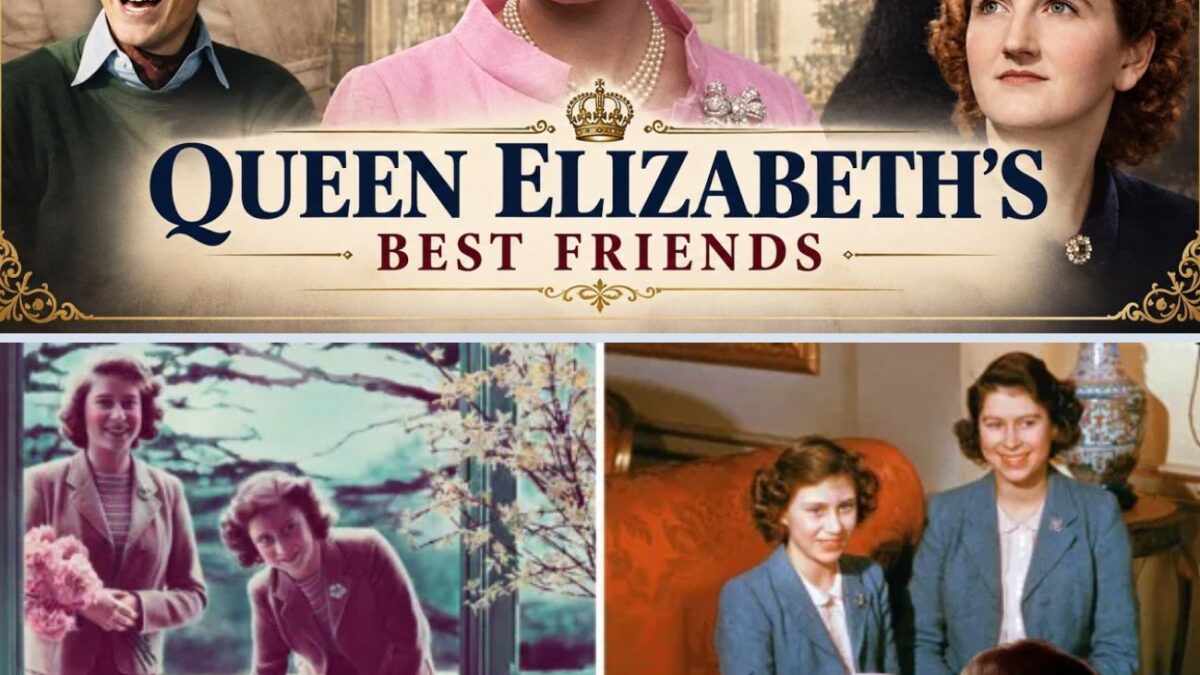
Throughout her long life, Queen Elizabeth II was sustained not only by duty and family, but also by a close circle of personal friends who shared her private moments away from the public eye. In this documentary-style narrative, we explore several of Her Majesty’s dearest friends, from childhood playmates to later life confidants, each a chapter in the story of an extraordinary reign. Each friendship began in its own unique way and grew into a bond of loyalty, trust, and affection that lasted through the decades.
These were not merely courtiers or colleagues, but genuine companions who knew the woman behind the crown. From the same generation as the Queen came Margaret Rhodes, born Margaret Elphinstone in 1925, less than a year apart from her cousin, Princess Elizabeth. More than just kin, Margaret became one of Elizabeth’s closest childhood playmates and, in time, her most trusted confidant. The two girls grew up together amid the gentle hills of Royal Lodge at Windsor and Balmoral’s sprawling estates, forging a natural friendship in their earliest years.
During World War II, Margaret even lived alongside Elizabeth and Princess Margaret at Windsor Castle, all three cousins sheltering together through the Blitz. In those trying years, they shared everything from secret childhood jokes to the genuine fears of war, cementing a lifelong bond. Margaret’s closeness to Elizabeth meant she featured in many milestone moments. So intimate was their bond that Margaret was chosen to serve as a bridesmaid when Princess Elizabeth married Prince Philip in 1947.
Standing at the bride’s side in Westminster Abbey, Margaret Rhodes symbolized the family love and friendship that supported the young princess stepping onto the world stage. During the exuberant VE Day celebrations in May 1945, it was Margaret Rhodes, along with a few other companions, who famously joined Princess Elizabeth in slipping out incognito into the London crowds, a rare adventure portrayed as a jubilant shared memory of youthful freedom. As adults, their friendship never waned. Margaret Rhodes carved out her own remarkable path, working quietly as a secretary for MI6 during the war, and later serving as woman of the bedchamber to the Queen Mother from 1991 to 2002.
Yet, she remained ever at Elizabeth’s side informally. In her memoir, The Final Curtsey, Margaret recounted sitting next to world figures like Emperor Haile Selassie at Windsor Castle, or meeting the Dalai Lama and Nelson Mandela, thanks to her unique position as both family and friend to the monarch. The Queen trusted Margaret with unvarnished conversations and private laughter. Even King George VI playfully tried to pry wartime secrets from Margaret, knowing she worked at MI6.
She would demur with a smile bound by duty.
Such anecdotes reveal the easy familiarity Margaret enjoyed within the royal circle. In recognition of her personal service, Margaret was appointed a Lieutenant of the Royal Victorian Order in 2000, an honor bestowed directly by the Queen for those who serve the monarch closely. But perhaps more telling than any title was the simple fact that in private, Elizabeth II reportedly considered Margaret Rhodes her closest confidant and lifelong best friend. Into their old age, the two women often spent time together at Windsor.
The Queen would visit Margaret at her Grace and Favor Cottage in Windsor Great Park for tea and chat as only old friends can. When Margaret Rhodes died in November 2016 at the age of 91, it marked, as one account noted, the end of an era. The loss of Queen Elizabeth’s closest confidant and lifelong best friend. The Queen, then 90, and Prince Philip attended Margaret’s funeral in Windsor, quietly mourning the dear cousin who had stood by Elizabeth from nursery days to the twilight of their lives.
Through every stage of the Queen’s journey, princess, young sovereign, grandmother, and beyond, Margaret Rhodes had been there, a steadfast friend bound by blood, yes, but even more by love and loyalty. In the dark days of World War II, a bright friendship bloomed between Princess Elizabeth and a young aristocrat named Alathea Fitzalan-Howard. Alathea was not a royal relative, but rather the daughter of Viscount Fitzalan of Derwent. Sent to live with her grandfather in Windsor Great Park for safety during the Blitz. A teenager a few years older than Elizabeth.
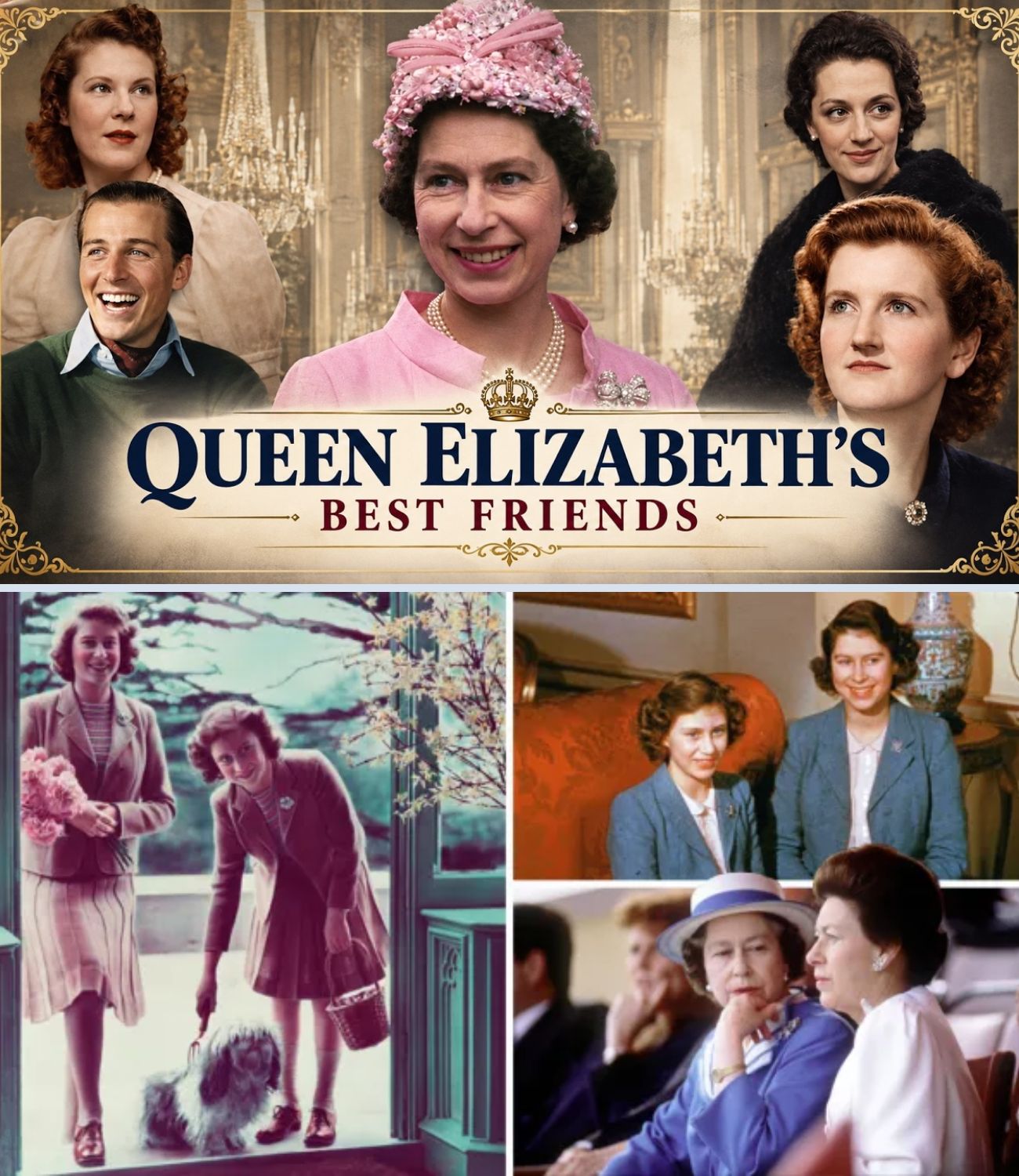
Alathea found her grandfather’s Cumberland Lodge dreary until she discovered companionship with the princesses Elizabeth and Margaret, who were themselves living in the relative safety of Windsor Castle during the war. Day after day, Alathea would pedal her bicycle down the long walk of Windsor Great Park to the castle, eager to spend time with the royal sisters. Despite the distant rumble of bombs and the uncertainties of wartime Britain, inside the castle walls the girls forged a warm, close-knit camaraderie. Alathea later recorded those years in detail in her personal journals, The Windsor Diaries, which give a vivid glimpse into their friendship.
The princesses welcomed Alathea as an intimate friend during this tumultuous period, showing her great kindness during this time of great uncertainty, as one writer notes. For Alathea, lonely and separated from her own immediate family, the royal friendship became a lifeline of happiness. The diaries reveal charming snapshots of their days together. In one entry from April 1941, 14-year-old Princess Elizabeth confided to Alathea a most delicate secret, that Philip, the dashing young naval cadet she had met, and who would later to become her husband, was her boy. And that she even cut his photographs from the newspapers.
Alathea, in turn, shared her own teenage crush.
“We part today the wiser for two secrets,”
Elizabeth quipped, as recorded in Alathea’s diary. It was an exchange that any two school girls might have, remarkable only because one of those girls would become queen. Yet, in that moment, they were simply friends whispering confidences. Alathea’s writings also describe simple pleasures that sustained them. They played games of charades, giggled over silly antics by Princess Margaret, and went on small adventures around the Windsor grounds. One day the trio dragged an old cart to a rubbish heap and back, joined by a royal detective who lent a hand before collapsing into laughter over charades indoors.
“Heavenly day.”
Alathea wrote of that outing. A phrase that encapsulated the joy these friends found despite the war’s hardships. Through Alathea’s keen eyes, we see Elizabeth not as a remote princess, but as a merry teenager.
“Lilibet stopped wearing socks.”
Alathea observes cheekily. Enjoying moments of normalcy with her pals. Their friendship thrived in those war years, though it was largely a chapter of youth. After the war, their lives diverged. Elizabeth’s on a trajectory to queenship, and Alathea’s into private life. And their intense closeness faded with time. Yet, Alathea Fitzalan Howard always cherished that unique period. Decades later, she ensured that her wartime diaries would be published, knowing they held a unique window into the future queen’s girlhood.
In these pages, the queen’s subjects got an intimate portrait of Princess Elizabeth as seen by a dear friend. The lasting images of two teenage girls during World War II, wandering the Windsor grounds, confiding hopes and fears, a future monarch finding solace in friendship amid the turmoil of war. Alathea may not have been by the queen’s side in later years, but in the crucible of adolescence under fire, she was exactly the friend Elizabeth needed. Their wartime bond stands as a poignant reminder that even a princess’s life can be brightened by the simple gift of a friend.
Among Queen Elizabeth’s passions, horses ranked near the very top. And through that passion, she found an enduring friendship with Henry George Porchy Herbert, 7th Earl of Carnarvon, better known by his courtesy title, Lord Porchester. Porchy and Elizabeth first crossed paths as teenagers in the early 1940s, moving in the same aristocratic circles that revolved around equestrian pursuits. They bonded over a mutual love of all things equine, from breeding and racing thoroughbreds to roaming the countryside on horseback. Over time, what began as a youth acquaintance blossomed into one of the richest friendships of the Queen’s life, notable for its easy equality and shared enthusiasm.
Porchy hailed from a storied lineage. His family seat, Highclere Castle, would later become famous as Downton Abbey’s filming location, and was born just 2 years before Elizabeth. He served in the military during World War II, as did the young princess in her own way, and afterward they found common ground in a longing for normal country life. They were from the same generation. They had been through the war. They shared a great love of the countryside and wildlife, as well as horses. Porchy’s son, the current Earl of Carnarvon, once said of the Queen and his father,
“Whether tramping across the Scottish Highlands or strolling the paddocks at Sandringham, Elizabeth and Porchy felt at home in each other’s company, two country souls in tweeds, delighting in outdoor talk, far from court formality.”
In 1969, Her Majesty appointed Lord Porchester as her official racing manager, formalizing a partnership that had long existed informally. For the next 32 years, Porchy advised the Queen on breeding strategies, training regimens, and racing entries for her stable of thoroughbreds. But unlike a mere employee, he remained a close confidant and friend. There was no trace of stiff deference between them. Indeed, their friendship was marked by lively debate and mutual respect in matters of horseflesh. It was a very equal friendship ranging over many interests, noted the Earl.
Elizabeth valued Porchie’s counsel, but both reveled equally in the thrill of a good race or the birth of a promising foal. Crucially, there was never any evidence to support the salacious rumors that the Crown television series later fictionalized about them. Theirs was a platonic but profound bond based in no small part on their shared love of horses. Personal anecdotes abound illustrating their camaraderie. The Queen felt comfortable enough with Porchie to undertake private trips abroad, something she rarely did purely for pleasure. Starting in the 1980s, Porchie arranged several discreet working holidays for the Queen to visit Kentucky’s Bluegrass country, the heart of American Thoroughbred breeding.
These trips in 1984 and again in 1986, 1989, 1991, and even 2007 were almost unprecedented. The Queen on vacation outside of Britain simply to tour stud farms and talk horses with Porchie and fellow enthusiasts. During those visits, Elizabeth could be just another horse owner swapping insights and jokes with her trusted friend as they inspected stallions and mares. It was said those Kentucky sojourns were among the only times the Queen truly stepped away from the pressures of monarchy, a gift Porchie helped give her by sharing in what she loved most.
Not all of Queen Elizabeth’s close friends were from childhood. Some grew from working relationships into true companionship. Lady Susan Hussey is a prime example. A lady-in-waiting who became one of the Queen’s most trusted insiders and a personal friend over more than six decades. Lady Susan came into the Queen’s service in 1960 during a momentous family event. She was hired to assist with the influx of correspondence after the birth of Prince Andrew. At the time, Lady Susan was a twenty-something aristocrat, the daughter of the Earl of Waldegrave, perfectly poised and from an impeccable background.
Yet, she had no idea she would become a fixture of the royal household for life. Quickly proving her dedication and discretion, Susan Hussey earned a nickname within the palace, number one head girl, for her conscientious attention to duty and the Queen’s needs. In those early years, she was often found at the Queen’s side assisting with day-to-day engagements, managing letters, schedules, and the myriad tasks of royal life. Over time, however, the relationship between sovereign and lady-in-waiting deepened from professional to warmly personal. Lady Susan’s unfailing good sense, absolute loyalty, and gentle humor made her indispensable. She became part of the Queen’s inner circle of confidants. One of those in whom Elizabeth II could quietly confide and on whom she could rely for honest counsel.
Their bond is evident in many subtle ways. Lady Susan was honored as a godmother to Prince William, the Queen’s grandson and future king. This signal of trust demonstrated how close she had become, practically part of the extended royal family. For decades, Lady Susan accompanied the Queen on countless trips and ceremonies, always a step behind, yet bound to her by genuine friendship as well as duty. Even as the Queen grew older and slimmed down her household, she kept Lady Susan by her side. In fact, palace insiders described Lady Susan as one of the key figures who helped the monarch in her later years, a steady hand and comforting presence.
A poignant example of their closeness came at a moment of personal grief. When Prince Philip died in April 2021, pandemic restrictions meant the widowed Queen had to sit alone at his funeral service. However, it was Lady Susan Hussey whom Her Majesty chose to accompany her in the state Bentley on the drive to St. George’s Chapel. Dressed in black and sharing a quiet space, Lady Susan was there purely as a supportive friend, so the Queen would not have to face that painful journey entirely by herself. Only 30 mourners were allowed at the funeral, and Lady Susan was among them, a testament to her standing in the Queen’s personal life.
Over more than 60 years of service, Lady Susan saw both triumphs and trials alongside Elizabeth II. She was made a Dame Grand Cross of the Royal Victorian Order, the highest class of chivalry the Queen could personally confer, in recognition of her devotion. Described often as the Queen’s trusted companion, Lady Susan shared many light moments with Her Majesty as well. They were frequently photographed laughing together at Royal Ascot or during relaxed times at Sandringham, the Queen in a bright hat and Lady Susan leaning in with a smile. In late 2022, Lady Susan retired from official duties amid a brief controversy, but significantly, she was later welcomed back into informal royal gatherings, indicating the family’s enduring affection for her.
To Queen Elizabeth, Lady Susan Hussey was far more than an aide. She was a faithful friend who had given her entire adult life in service and friendship. Their relationship exemplified the deep bonds that can form within the royal household, proof that the Queen’s companionship was not limited to childhood friends or relatives, but extended to those who proved their friendship through unwavering loyalty and understanding over a lifetime. Each of these friendships, whether forged in childhood play, wartime hardship, shared passion, or loyal service, illuminates a different facet of Queen Elizabeth II’s life and character.
In Margaret Rhodes, we find a cousinly confidant who knew the Queen’s heart from nursery days onward. Alethia Fitzalan Howard reveals a wartime princess seeking normal teenage joys amid crisis. Lady Pamela Hicks shows us a young Queen supported by a close companion during the threshold moments of duty. Lord Porchester lets us glimpse the countrywoman and horse lover that Elizabeth remained at her core. Lady Susan Hussey embodies steadfast loyalty and the value of friends found in the line of work.
Together, these stories form a tapestry of companionship that spanned the Queen’s entire life. Elizabeth II was often portrayed as a reserved, dutiful figure, but in the company of her friends, she could be simply herself, a woman who treasured a good joke, a long walk, a confidential chat, or a shared cup of tea. These personal friends played roles that no official advisor or statesman ever could. They humanized the monarch, sustained her in difficult times, and celebrated with her in joyous ones. In the grand narrative of Queen Elizabeth II’s 96 years, her reign was unprecedented and historic.
But equally enduring were the friendships that accompanied her from the nursery to the very end. Each chapter of her life had a friend holding her hand, and in that lies a legacy of loyalty and love as significant as any royal milestone.
You Might Also Enjoy

“We Thought They Would Negotiate”—What Argentine Soldiers Said When The British Attacked Goose Green

“You’ll Never Finish My Ruck March, Limey” — US Sergeant Who Challenged the SAS, Then Fell Out First






