Queen Elizabeth II’s Marriage Was a 73 Year Silent Hell
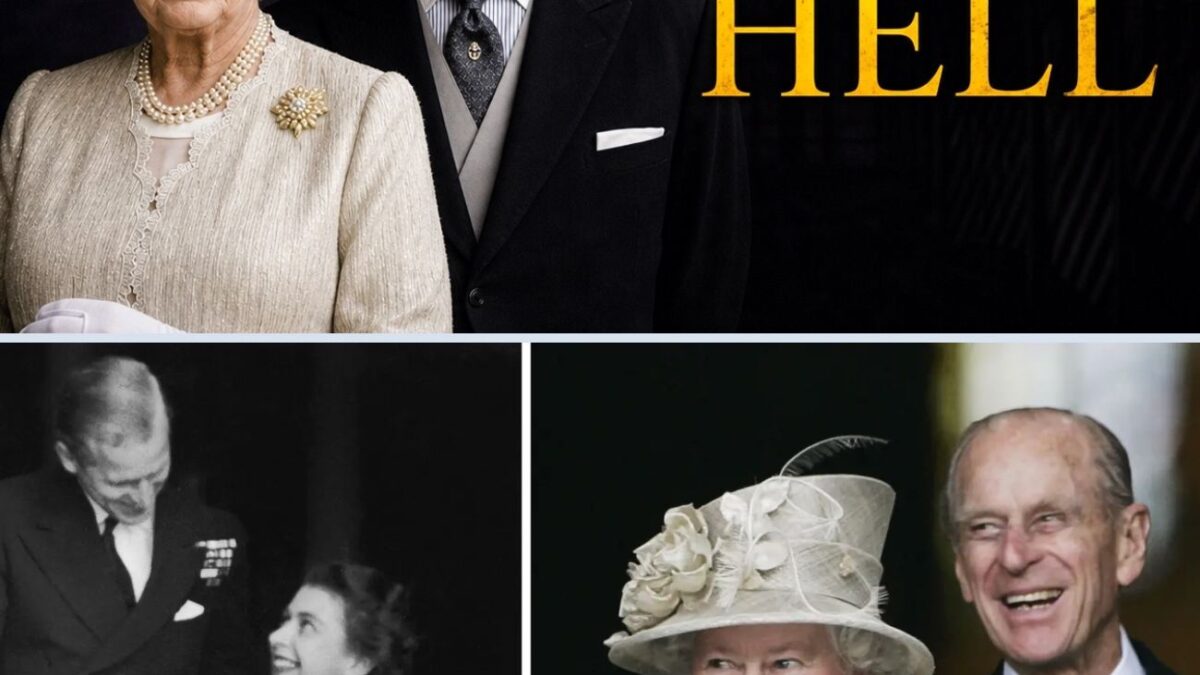
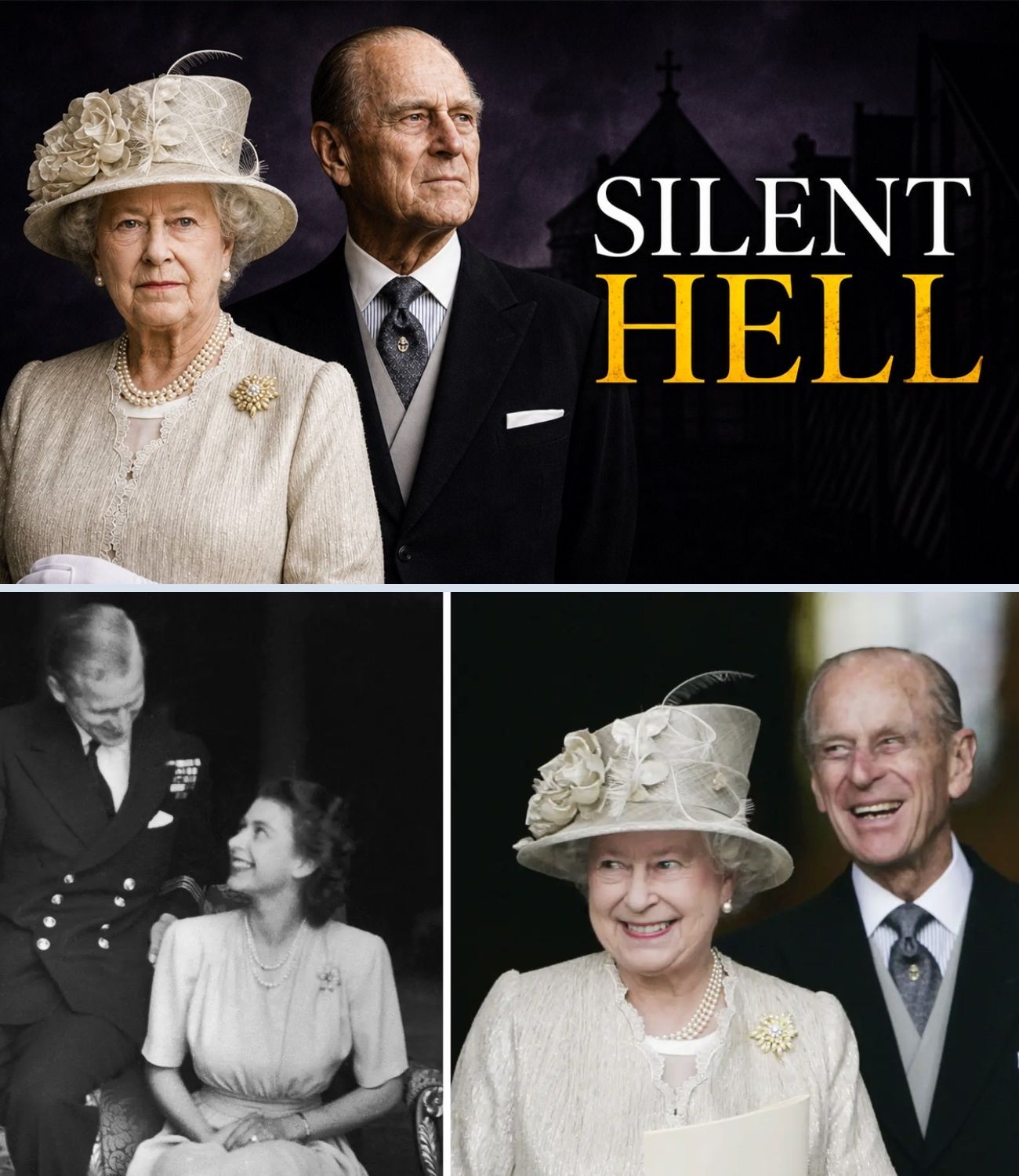
You know this photo. Westminster Abbey, November 1947. A young princess and a naval officer with a borrowed surname. 73 years old and one phrase that everyone quotes: “my support and support.” That’s what this phrase hides. 5 years after the wedding, a royal decree confirmed that a man could not give his children his own surname.
He called himself a damn amoeba. In February 1957, the palace publicly denied the existence of the split. After 11 days, she made him a prince. His will will be kept secret until 2111. It all starts with a baby who was taken out of Greece in an orange box. This is not a metaphor. In December 1922, the British warship HMS Calypso evacuated the family of Prince Andrew of Greece from Corfu after Andrew had been tried and exiled following his defeat in the war with Turkey.
An 18-month-old boy was the youngest passenger. The crib was made from a fruit crate, and this detail was remembered for centuries because it is the most accurate summary of who he was. A royal child without a country, without wealth, and without a home of his own. So the marriage that everyone remembers as a fairy tale began with a measurable asset imbalance.
The throne awaited her. He only had a signet ring. Understand what was destroyed in that decade, because it explains almost everything that happened later. The family dispersed, leaving a rented house near Paris. His four older sisters married German aristocrats between 1930 and 1931. Some of these men later became members of the Nazi Party—a fact the British court never forgot but never mentioned aloud.
In 1930, his mother, Princess Alice, who had been deaf since birth, was sent to a sanatorium in Kreuzlingen, Switzerland. She was diagnosed with schizophrenia. Philip was 8 years old. His father went to the south of France and stayed there. From that moment on, he was actually raised by a team: the English school Chim, then Salem in Germany, and later Gordonstoun in Scotland, where director Kurt Hahn later wrote that the boy’s greatest gift had still not been used.
His relatives paid for his education. He spent his vacations in other people’s homes. In November 1937, his sister Cecilia died in a plane crash in Ostend, along with her husband and two children. Philip was 16. He went to Darmstadt for the funeral, and the photos from that day have survived. A schoolboy in a dark coat walks in a procession, surrounded by uniforms and armbands with a swastika.
It is the most embarrassing picture of his life, and it has never been exhibited at Buckingham Palace. His father died in Monte Carlo in December 1944 while Philippe was at sea. The inheritance consisted of a signet ring, a shaving brush, some clothes, and debts. He wore this ring for the rest of his life. Now compare that to what he got into.
They had met before, as cousins at family weddings, but the meeting that changed everything came on July 22, 1939, when the King and Queen brought their daughters to the Royal Naval College in Dartmouth. Mumps and chickenpox were rampant among the cadets, so the two princesses were kept away from most of the boys, and an 18-year-old cadet named Philip was assigned to entertain them.
Elizabeth was 13 years old. The famous version of that day—jumping over tennis nets, plates of shrimp, the girl who never looked at anyone else—comes almost entirely from governess Marion Crawford in her 1950 book Little Princesses. Remember this source. Crawford wrote it for money, was completely estranged from her family, and died in Aberdeen without ever speaking to them again.
Her description is vivid, but it is also the view of an interested witness, writing ten years later for a publisher. What we can test is much more mundane and useful. They began to exchange letters, and Elizabeth kept a photograph of him in her room throughout the war. She had a single interest and pursued it with a tenacity that frightened her family.
Her father found it awkward. George VI was fond of Philip, but believed that his daughter was only 20 and saw almost no one, which was true, as she spent the war in Windsor with her sister and governess. The court’s objections were harsher. In the private language of Buckingham Palace, the phrase “Greek Philip” conveyed everything accurately: a foreigner, penniless, connected to Germany through four sisters and actively promoted by his uncle.
The last part mattered. Louis Mountbatten sought this marriage, made efforts towards it, and did not even hide it, while the king’s courtiers, in particular Tommy Lascelles, saw it as a dynastic operation with an added nephew. Philip resented this perception. Several biographers have concluded that he was outraged because it was partly true.
So the king set the price, and it was paid in installments. First, the delay. The family left for South Africa in February 1947 for a four-month tour, and the engagement was not to be announced until their return. If the attachment lasts four months and an entire continent, the king will give his consent. She endured. Secondly, bureaucracy.
Philip became a British citizen in early 1947 and took the surname Mountbatten, which was itself a fictitious name, an Anglicized form of Battenberg adopted by his mother’s family in 1917 to sound less German during the previous war. He renounced his Greek and Danish royal titles. That same October, he renounced the Greek Orthodox faith in which he had been baptized, and was received into the Church of England by the Archbishop of Canterbury.
Read this list again as a contract. He gave up his citizenship, his religion, his titles, and his name—what he was given at birth and what he borrowed before he was allowed to stand at the altar. No one asked what he got in return, because the answer was considered obvious. The engagement was announced on July 10, 1947.
On his wedding day, the King created him His Royal Highness, Duke of Edinburgh, Earl of Merioneth and Baron Greenwich. Notice what is not on this list. He was not made a prince of the United Kingdom. He will wait 10 years for it, and by then the monarchy will have to pay for it. There’s one smaller detail from that week that tells more than all those titles.
The king wanted to make both of them knights of the Garter, but he awarded the order to Elizabeth 8 days earlier than to Philip, so that she would rank higher than her husband in the order of precedence. This was not a mistake. This was a conscious decision of the father, which was in effect for 73 years.
The wedding itself was staged as national therapy. Britain in November 1947 was living off cards, was poor, and freezing. A wedding dress by Norman Hartnell required government permission and the allocation of additional clothing coupons. Women across the country sent in their own coupons to help, but they had to be returned because it was illegal to pass them on.
Two thousand people filled Westminster Abbey. The BBC broadcast it to 200 million listeners. They say Churchill called it a flash of color on a difficult road. And regardless of whether this formulation is accurate, it reflects the task that was set before marriage from the very beginning. To entertain people.
Look at the guest list, not the dress. Philip’s three surviving sisters—Margarita, Theodora, and Sophie—were not invited. Their husbands were Germans. Some of them had served the Reich, and the palace decided that the British public, 18 months after the liberation of the camps, would not tolerate their presence. His mother came wearing the gray habit of the religious order she had founded.
The Duke of Windsor, the bride’s uncle and previous king, was also not invited. So, the groom stood in the abbey in front of 2,000 guests, and members of his own family who could physically be present, with one exception, were forbidden to come. He also quit smoking the day before the ceremony, apparently for his wife’s sake.
And, by every surviving testimony, he never smoked again. This is the kind of person he is. Complete devotion, done without discussion, and no record of him ever complaining about it. There is genuine affection in the documents of the period and it should not be erased to make history smoother. After their honeymoon at Broadlands and then at Burkehall in Scotland, Elizabeth wrote to her mother that Philip was an angel.
Philip wrote to his new mother-in-law that he was deeply in love. The phrase, quoted by several biographers, is that he wondered if the word “cherish” was enough to express what was inside him. These letters are preserved in the royal archives and are quoted secondhand, a distinction that will be of immense importance at the end of this story.
For about 4 years, this lifestyle seemed acceptable. Clarence House was not yet habitable. So they lived in Buckingham Palace, which is a rather strange way to start a marriage, with the couple occupying rooms in her parents’ house, surrounded by his staff. Charles was born in November 1948. Then, in the fall of 1949, Philip was transferred to Malta, and Elizabeth went with him.
Those Maltese years are a part of history that no one makes documentaries about, which is strange, because it’s the only period in 73 years when their marriage functioned as a real marriage. They rented Guardamanga’s villa from his uncle. She was driving the car herself. She went to the hairdresser like everyone else, sat in restaurants, paid attention to his career, not the other way around.
Anna was born in August 1950. In September of that year, Philip received his own command. The crew of HMS Magpie and the officers who served under him remembered a demanding, ambitious young captain who fully expected to one day lead the Royal Navy. He was probably right about that. He had a track record, connections, and a passion for the cause.
In July 1951, he took what was officially called an indefinite leave of absence from the navy because the King was ill and his wife needed care. He never came back. The bill for everything he had already refused was about to be presented, and the one who was to hand it over was neither a courtier nor a prime minister.
It was his own wife, and she had no choice either. The news found them in Kenya on February 6, 1952. The couple began a tour of the Commonwealth in place of the King, who had a lung removed in the autumn, and they spent the night at Treetops, a house in a fig tree above a watering hole. They went down to Sagan Lodge, the house the Kenyan government had given them for their wedding, and news of the tragedy reached them through a series of telegrams and phone calls.
Philip’s private secretary, Michael Parker, received confirmation first and informed Philip. Philip told her. Parker later recalled that Philip looked as if the whole world had fallen on him, and then took his wife out into the garden, where they walked back and forth for a long time. That’s all we know.
Everything else you saw in the dramatizations of that morning is fiction. She was 25. She was flying home in mourning attire, which she had to carry onto the plane separately, because you can’t land in Britain as the new queen in a summer dress. The Prime Minister was waiting for her at the foot of the boarding gate at Heathrow Airport.
And from that hour on, all the country’s institutions reported to her, and no one reported to him. Dismantling took about 8 weeks. First—home. They finally moved to Clarence House in 1949, after spending a lot of money and effort on it, and it was the only house they had chosen themselves. Churchill and the courtiers insisted that the monarch live in Buckingham Palace.
She wanted to stay. She lost. Philip fought vociferously for this and lost too. And they moved into a building that he later, in a rare moment of candor, said was run by people who considered him an outsider. Then—the name. Someone heard Louis Mountbatten remark at Broadlands that the House of Mountbatten now ruled. Queen Mary, the new queen’s grandmother, heard about this and was shocked.
She spoke to Churchill. Churchill gave advice to the Queen. On 9 April 1952, an Order in Council declared her will and desire that she and her children be called the House and Family of Windsor. Philip’s reaction is his most frequently quoted phrase, said privately, although no document confirms it. This is known from friends and biographers, although no one who knew him ever said that it was not in his spirit.
He said he was nothing but a damned amoeba. He said he was the only man in the country who was not allowed to give his own last name to his children. Theatricality aside, the complaint is entirely valid. In 1952, a British woman automatically took her husband’s surname. It wasn’t a choice. It was inevitable. This man’s children were given his wife’s surname by an act of state, on the advice of the prime minister, who disliked him, and at the insistence of the elderly queen, who distrusted him.
He was 30. He had no career, no home of his own, no name to pass on to his descendants, and no position that did not exist in the constitution. The coronation on June 2, 1953, finally cemented this publicly. He was tasked with leading the coronation commission, which was a real job and a wise division of responsibilities.
He insisted on televising the ceremony, despite the objections of Churchill and the Archbishop, and won the argument, with 27 million people watching. Then, in Westminster Abbey, he knelt before his wife, placed his hands in hers, and swore to become her faithful servant, protecting her life and health. Think about what such an oath does to a family.
A private argument about the driveway, school, or vacation can at any moment end with the fact that one person in the room is the queen. His response was to create things she could not participate in. The Duke of Edinburgh’s Award appeared in 1956. He took on hundreds of patronages, learned to fly, and immersed himself in British industry and science with an energy that, in retrospect, looks like the effort of a man who needed to have his own filing cabinet.
He also drank at the Thursday Club, a luncheon club at the Wheelers restaurant in Soho, where actors, journalists, and a socialite photographer named Baron Naum gathered. It is with this last name that the rumors begin. So, let’s deal with them straight. In October 1956, Philip set off on a 4-month voyage on the royal yacht Britannia, ostensibly to open the Melbourne Olympics and visit remote Commonwealth territories, for 4 months.
He was away for Christmas, away for their 9th anniversary, away from his two young children. During the trip, Michael Parker’s wife, Eileen, filed for divorce, and the London newspapers seized on it. Parker retired to Gibraltar so as not to embarrass the Queen. The Baltimore Sun published an article alleging that Philip regularly met with a woman at the West End apartment of a socialite photographer.
On February 11, 1957, Buckingham Palace made an official statement. It was absolutely untrue that there was any rift between the Queen and the Duke. This statement is the most important sentence of the decade, and not for the reasons people think. Palaces do not make refutations. A rebuttal gives the story oxygen, confirms that the issue is relevant, and turns the rumor into a headline in every capital in the world.
They did it anyway, which suggests that the Queen considered the risk of silence to be much greater. As for evidence, there is none: not a single letter, not a single reliable witness, not a single contemporary document that would confirm Philip’s affair with anyone. The ballerina you may have seen in a television drama is a fiction.
This program is a feature drama created for entertainment. And I’ll only say this once. Ingrid Seward, who has written about this marriage for decades, categorically stated that there is no evidence of marital infidelity. Philip himself, when asked about the circumstances in his old age, replied that since 1947 a detective had accompanied his every step.
What can be confirmed by documentation seems more eloquent than any novel. He built a life limited to a 4-month radius. This is not an accusation. This is the schedule. She met him in Lisbon on February 16, 1957, when the Britannia arrived in port, and the press present took the photograph they were sent for. The royal couple jokingly stuck on fake beards to play up rumors that he grew them at sea.
Everyone laughed. These photos flew around the world. Six days later, on February 22, 1957, she created him a Prince of the United Kingdom. She had been waiting for this for 10 years. She did this just as the world was gossiping about her marriage, and the announcement stated that this title was an acknowledgment of a debt to her husband.
Read this as an appreciation, if you will. Read this as a queen quietly paying an overdue bill at the very moment that payment is noticed. Both interpretations make sense, and I don’t think they contradict each other. And then came criticism from outside, for which no one was prepared. In August 1957, a young writer named Lord Altrincham published an article calling the Queen’s public manner “insipid,” describing her character as “a dull, indecisive schoolgirl,” and complaining that her court was a closed elite group of the British upper class.
He was hit by a stranger on the street, and curses were hurled at him from church pulpits. But he was right, and the palace understood this, because within a few months the debutantes’ performance was canceled, and on Christmas Day she gave her first televised speech. Philip has been insisting on this kind of modernization for 5 years.
It took a public humiliation of his wife to get him to listen, which brings us back to the issue of his last name, because he never let go of that topic. In late 1959, London lawyer Edward Wee informed the government that a child born to the Queen would bear, in his words, “the mark of a bastard” if given the mother’s maiden name rather than the father’s.
This correspondence lasted for months. Harold Macmillan tried to stop it. Then, in January 1960, the Queen told Acting Prime Minister Reb Butler that she had long wanted a change that would cement the Mountbatten name and wanted to resolve the issue as soon as possible.
She was 7 months pregnant. Macmillan’s later published diary indicates that the Queen was concerned about this matter, and also notes his own view of the situation: she only wanted to please the man with whom, he wrote, she was desperately in love. This is a modern private assessment of marriage from the Prime Minister, written by a man who had no reason to flatter anyone.
The Privy Council decree was issued on February 8, 1960. Descendants who did not have the style “Royal Highness” or the title of Prince or Princess will bear the surname Mountbatten-Windsor. Andrew was born 11 days later.
Look what she did. Not a conversation, not a gift, not an apology. A state document drafted by constitutional lawyers, agreed upon with the Privy Council, and timed to coincide with the birth of a child. The most powerful woman in the land couldn’t make her husband her equal, so she rewrote the family’s legal identity to add a hyphen to it.
It is one of the strangest displays of affection in modern British history, and it solved almost nothing, because by then the damage from the first decade had already been directed in another direction. She lay on the shoulders of their eldest son. Charles was 13 in 1962 when his father took him to Gordonstoun and flew him away in a light aircraft.
Philip loved that school. She saved him. A real place with real rules, one that accepted him when no one else would suit his life. He assumed it would be the same with the shy, vulnerable boy who was easily offended.
That didn’t help. Charles later described it in terms that stunned the press. And Jonathan Dimbleby’s 1994 authorized biography, written with access to Charles’s letters and diaries, paints a picture of a boy who felt depressed at school and emotionally lonely at home.
With a father who made fun of him and a mother who was somewhere else. That book exploded. It should also be treated with caution, because it is not a neutral document. It was the collaboration of a son settling scores in the midst of a crumbling marriage, and Philip was reportedly deeply hurt by it. Philip’s friends pointed to letters he actually wrote to his children, and they don’t look like the letters of a tyrant.
Both statements may be true. A man raised by relatives and boarding schools, without a father figure, raised a son who felt deprived of his father’s love. This is not villainy. This is heredity. There is a harsher verdict, and the evidence supports it. As for the children, the marriage functioned exactly as the institution demanded, not as a family.
In 1953 and 1954, she went on a 5-month tour of the Commonwealth countries, leaving behind a four-year-old and a three-year-old child. When they reunited in Tobago, she shook her son’s hand. This gesture is in the newsreel. Then the situation changed, and this is where the caricature of the image falls apart. In the late 1980s, Charles and Diana’s marriage was falling apart, and Philip, the supposedly cold father, wrote to his daughter-in-law.
These letters were read in open court during the inquest into Diana’s death in 2007 and 2008, meaning they are vetted and not filtered by any memoirs. He addressed her as his daughter. He signed himself “P.” He wrote to her that he and the queen had never imagined that their son would leave her, and called his son’s behavior unreasonable.
Diana kept these letters and described them to friends as kind. Understand what this means. Diana’s camp has argued for years that the royal family is a soulless machine, but surviving documents contradict their main witness. This is what happens when you check documents instead of listening to stories.
By that time, they had already decided what their marriage would actually be, and it was worth stating it clearly, because it was neither romance nor hell. They ran a joint venture with a clear division of labor. She held constitutional power and did not delegate it to anyone, not even an iota. He managed the economy, the estates, modernization and 800 organizations, becoming the only person in Britain who spoke to her, regardless of his own career.
They had separate bedrooms, which was common practice for their class and proves nothing. They had separate interests, which was unusual and said something. He became interested in carriage racing when he was in his 50s, after he had given up polo, and competed until he was 80. She had horses, the world of horse racing, and a circle of trainers and breeders where no one discussed the constitution.
And there was also a movie. In 1969, at Philip’s insistence, the BBC and ITV were allowed inside to film the documentary “The Royal Family.” Cameras at breakfast, at a barbecue in Balmoral, in the car. In Britain, it was watched by 40 million people. It was the most significant act of image-building ever undertaken by a monarchy, and Philip was its initiator.
It was also removed from access. The palace effectively hid it, and it hasn’t been broadcast in its entirety since the 1970s. In 2021, a fragment appeared online, but was removed within hours due to copyright infringement. Remember this. The most telling footage of this marriage ever recorded exists, complete, but unavailable by the family’s decision.
Public statements of recent decades are worth exactly what it cost to make them. And this price speaks for itself. In November 1997, a terrible year, 3 months after Diana’s death, when the monarchy’s ratings were plummeting, they celebrated their golden wedding anniversary at the Banqueting House.
She said that he didn’t take compliments easily and that he had been a pillar of support and encouragement to her all these years. It’s a phrase that accompanies every memorable graphic from that time. Almost no one quotes his speech that same day. He said that tolerance is the single most important ingredient in any happy marriage, one that may not be important when you are in love but becomes vital later on.
He then added that the Queen had this trait of tolerance in excess. This is a man publicly thanking his wife for putting up with him in front of the government in a year when everything went wrong. He gave one significant interview about his role as Fiona Bruce before his 90th birthday in 2011. When asked what he had accomplished, he replied that he had tried to be useful.
When asked how he found out what the job was, he said there was no precedent. That if he asked anyone what was expected of him, they would only remain awkwardly silent. After 64 years, the answer remained the same—no one ever told him. He resigned on August 2, 2017, after a garden party at Buckingham Palace in the rain, under an umbrella, having performed around 22,000 solo events.
Then he did something no other consort in British history had dared to do. He left. He moved to Wood Farm, a modest house on the Sandringham Estate, and lived there mostly alone with a small staff, reading, drawing, writing letters, and seeing whoever he wanted. She stayed in and visited Windsor and Buckingham Palace.
They were talking on the phone. For the last four years of their 73-year marriage, the most photographed couple on earth lived in different counties by mutual consent, an arrangement that seemed to suit them both. Then the pandemic brought them together again in one building, alone in Windsor, with minimal staff—the first time in a long time since Malta in 1950.
He died there on April 9, 2021, 7 weeks before his 100th birthday. His funeral on April 17 gave rise to a photograph that will outlive the wedding pictures. 30 mourners, distancing rules. The Queen sits alone in the choir of St. George’s Chapel, dressed in black, masked, at the far end of an empty pew. And then the family did what ends this story.
On September 16, 2021, Sir Andrew Macfarlane, the most senior family judge in England, ruled that Philip’s will would be kept secret for 90 years. No copy in the court file, and the value of the assets is excluded from the probate process. The hearing itself was held behind closed doors; the press was not just excluded, but was not even informed about it.
A decision that the Court of Appeal upheld the following year on the grounds that media notification would have created a risk of scandal. The judge’s stated goal was to protect the dignity and status of the monarch. It all starts in 2011. This is the answer to the title, and it is stranger than the title itself. Silence in this marriage was never just an emotional state.
It was a policy of a king who established the order of precedence so that his daughter was superior to her husband, enshrined in a decree of council that stripped his children of his surname, supported by a palace that denied the schism it had created, and continued by a high court judge for the next century. Both died, leaving their private papers under lock and key.
Her will was also classified. The royal archives in the Round Tower in Windsor remain the property of the family. Access is discretionary, and the letters that historians cite from this marriage—”my angel,” “my love”—are quoted through the narrow window of biographers who are allowed to see.
We only know what we have been shown. She died at Balmoral on September 8, 2022. Eleven days later, his coffin was removed from the royal burial chamber and placed next to hers in the small King George VI Memorial Chapel in Windsor. The tombstone is made of black Belgian marble. Four names on it, no titles except the most necessary, no epitaph.
Let’s now return to wedding photography. 2,000 guests, a bride in a dress for which the country collected coupons, and a groom whose sisters were denied entry and whose mother sat in a nun’s habit. He gave up his country, his church, his titles, and both of his names to stand there, and the state spent the next decade taking the rest. He never regained that name. But when the archives are closed, the wills are classified, and the film is locked in storage, only the stone remains, and on it, engraved under her name, is the surname she changed in law to give him.
You Might Also Enjoy

“We Thought They Would Negotiate”—What Argentine Soldiers Said When The British Attacked Goose Green

“You’ll Never Finish My Ruck March, Limey” — US Sergeant Who Challenged the SAS, Then Fell Out First






