Queen Elizabeth’s Five Days At Balmoral After Diana Di*d Were Far More Painful Than You Think
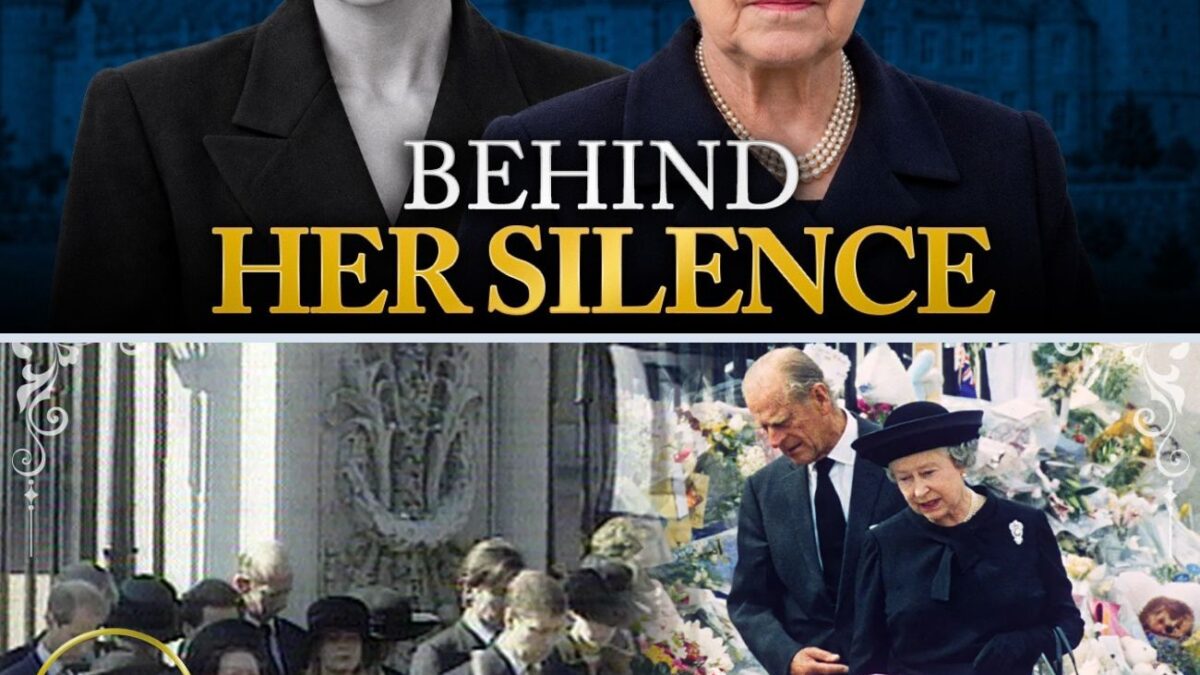
When Princess Diana died in Paris, Queen Elizabeth II stayed at Balmoral for 5 days. William and Harry were with her. London filled with flowers, and the flagpole over Buckingham Palace stayed empty. Most people remember those 5 days as coldness. A queen who put protocol before grief. But those 5 days were far more painful than that. And much of the pain she chose for herself. Her own advisers pressed her to fly a flag at half-mast. And she refused. She had the newspapers taken out of the house, so the boys would not see what was being written. By Thursday, the front pages were asking where she was. And when she finally spoke, a man in Downing Street later claimed one of her words as his own. The week begins before dawn on that Sunday. In the boys’ bedrooms at Balmoral.
At the end of August 1997, the Queen was where she was every late summer. At Balmoral, the castle her great-great-grandmother had bought in the Scottish Highlands. She was 71. Prince Philip was with her, and so was her mother at Birkhall, a few miles away on the same estate. The Prince of Wales was there with his two sons. William was 15, Harry was 12, and in 2 weeks he would be 13. Their summer holiday was nearly over. That Sunday they had been due to go back south. Their mother was in Paris with Dodi Fayed. Shortly after midnight Paris time, the car carrying them crashed in the tunnel under the Pont de l’Alma. In Scotland, it was still Saturday night.
At about 1:00 in the morning, a telephone rang in Crathie One Lodge, a house on the estate where the Queen’s Deputy Private Secretary was asleep. His name was Robin Janvrin. The call came from the British Embassy in Paris. Janvrin dressed and went straight up to the castle. The Prince of Wales was woken and told there had been an accident. For the next few hours, the plan was that he would fly to Paris to see her in hospital. Then a second call came. At 4:00 in the morning, French time, the doctors at the Pitié-Salpêtrière Hospital had declared Diana dead. She was 36. At 9 minutes past 5:00, Buckingham Palace issued a statement of exactly two lines.
“The Queen and the Prince of Wales were deeply shocked and distressed by this terrible news.”
In County Durham, the Prime Minister had been awake since just before 2:00. Tony Blair had been in office for 4 months. Before dawn, he had drafted his own statement on the telephone with his press secretary, Alastair Campbell. At half past 9:00, he spoke to the Queen and to the Prince of Wales. A little later, outside the church in Trimdon in his constituency, he called Diana the People’s Princess. Years afterwards, in his memoirs, he admitted the phrase now sounds corny. That morning, it went around the world.
At Balmoral, the boys were still asleep while all of this happened. Their father woke them in their bedrooms and told them himself. Harry’s version of that morning was published 26 years later in his memoir, Spare. In it, his father told him that his mother had been in a car crash, that she had been badly hurt, and then that she had not survived.
“Your mother’s had a car accident, darling boy.”
Harry did not cry, not a tear. His father did not hug him. He stayed in his room until 9:00 sharp, when the piper began to play outside. That is his memory, written down in middle age, of a morning when he was 12. Then the newspapers disappeared from the house. 20 years later, in a BBC documentary, William explained who had done it.
“Our grandmother deliberately removed the newspapers and things like that, so there was nothing in the house at all.”
Remember those newspapers. By Thursday, they were printing questions about the woman who had taken them away. At 11:30 that morning, the family drove to church. Crathie Kirk is the small parish church, a short drive from the castle, where the family went on Sundays at Balmoral. The Times described the scene the next day. The Prince of Wales sat in the back of a black car between his sons, in a kilt and black tie, red-faced, his eyes bloodshot. The boys wore suits and black ties. The Queen came in a black dress and a black hat, with Philip, the Queen Mother, the Duke of York, and Peter Phillips.
About a hundred parishioners were inside. During the hour-long service, no one said Diana’s name. That fact went around Britain within a day, and it became the first charge against the family. On Thursday, The Times wrote that many people felt whoever had insisted on taking the boys to church a few hours after they learned of their mother’s death had been unduly harsh. The account is more tangled than the charge. A spokesman for the church explained the silence. The children had been woken only a few hours earlier to be told. The local paper, The Herald, noticed that the prayers did refer to the tragedy without naming her. And the minister, Robert Sloan, said they had prayed that day especially for the Prince of Wales and the children. Giles Brandreth, who knew Philip, later wrote that the boys went because they wanted to. And William, as an adult, called that service a sanctuary. The place he went still in shock on the morning he was told.
So, the first scene of the week can be watched two ways. A family that would not change its Sunday even for this. Or two boys taken somewhere familiar where nobody would say the thing they had just been told. Both pictures were available that morning. Only one of them was printed. At lunchtime, the Prince of Wales drove himself to Aberdeen Airport. His staff had talked about a scheduled flight. In the end, he flew in a BAE 146 of the Queen’s flight. And with him went Diana’s two sisters, Lady Sarah McCorquodale and Lady Jane Fellowes. Jane was married to Sir Robert Fellowes, the Queen’s private secretary.
In Paris, the president of France met them at the hospital. They stayed just under half an hour, and Charles was left alone with her coffin for a few minutes in a room on the first floor of the emergency unit. That night, the plane landed at RAF Northolt, west of London. The Prime Minister was waiting on the tarmac. The coffin came off the aircraft draped in the royal standard, the flag of the monarch herself. Then the Prince of Wales flew back to Scotland to his sons. By Monday morning, the flag that covered Diana’s coffin was the only royal standard anyone in London could see. Over Buckingham Palace, there was nothing at all.
That bare roof had a reason, and the reason was older than anyone alive that week. The royal standard is not a national flag. It is the sovereign’s personal flag, and it flies only over the building where the sovereign actually is. When the Queen was in London, it flew over Buckingham Palace. When she was in Scotland, it flew over Balmoral, and the pole in London was bare. And the royal standard is never flown at half-mast. Not for anyone, not even on the death of the sovereign, because the monarchy itself never dies. The moment one reign ends, the next has begun. The king is dead. Long live the king. When King George VI died at Sandringham in 1952, no flag flew at Buckingham Palace because he was not there.
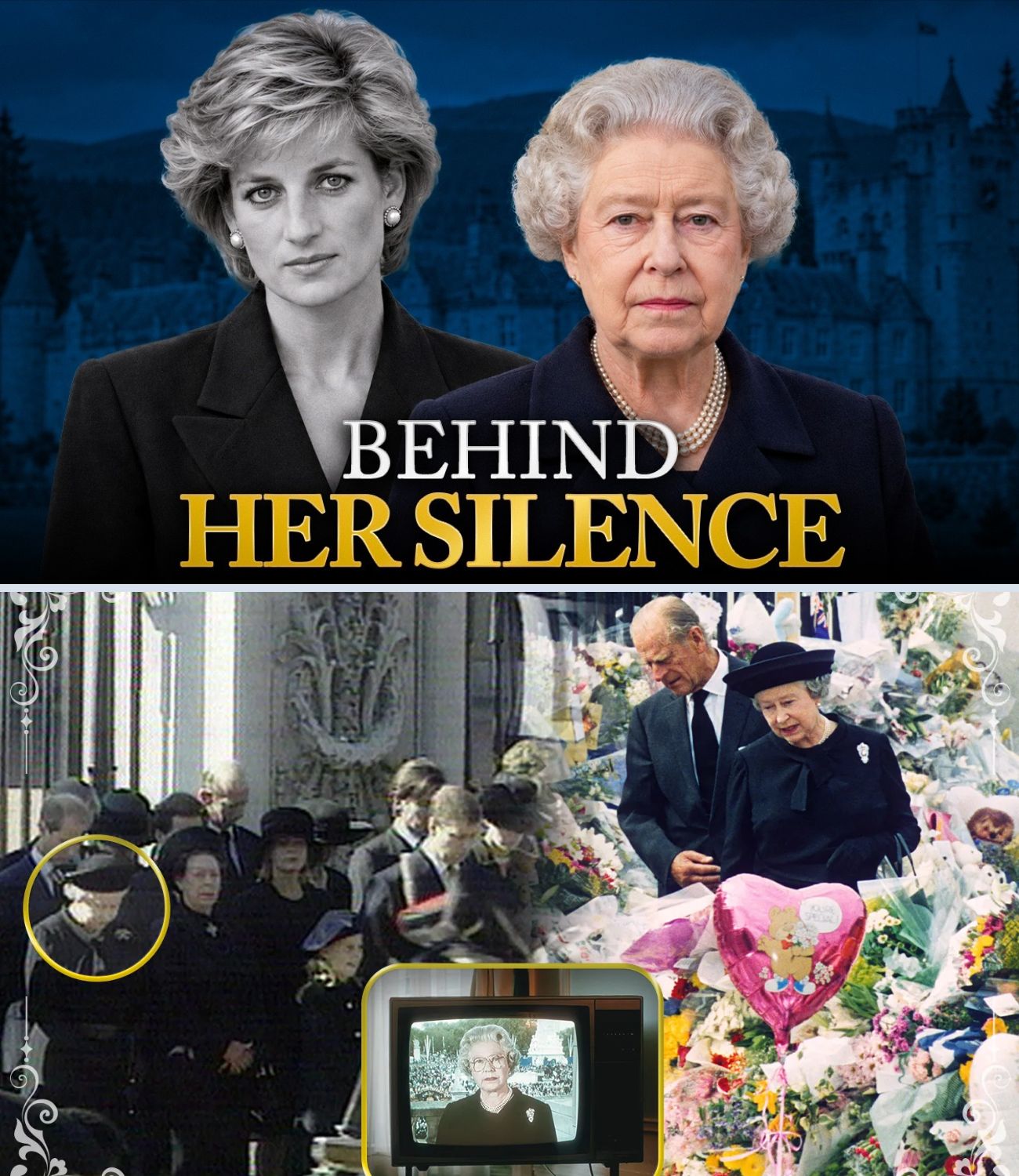
So, that week the palace roof in London, the place where the crowds were gathering, carried no flag of any kind. At the other end of the country, at Balmoral, the royal standard flew at the top of its pole, at full mast, because the Queen was in residence. Photographs of it appeared in the papers. The Times wrote on Thursday that those pictures had further fueled a feeling across the country that the family was showing too little respect for the mother of a future king.
Look at what the Queen did on the Monday, because it is the part of the story that hardly anyone tells. She ordered that the flags on public buildings across the country should fly at half-mast for Diana. Diana had lost the style of Her Royal Highness in her divorce a year earlier. The Times described the order as the Queen breaking the bounds of strict convention in the princess’s favor. The sovereign who would be accused of coldness by Thursday had on Monday already bent one rule for her former daughter-in-law. She would not bend the one that applied to her own flag.
On Tuesday, Windsor Castle gave way. Windsor and the Tower of London are royal fortresses, and their flags fly at full mast except on the death of the sovereign. After complaints from the public, the castle lowered its Union Flag to half-mast. An official explained it in a sentence the rest of the week would test.
“The public must be seen to be listened to.”
At Buckingham Palace, the poles stayed empty. Nothing in any regulation stopped the palace flying a Union Flag at half-mast while the Queen was away. The Times asked experts on ceremonial, and they could find no reason beyond tradition. That was exactly the point. The tradition was the reason. A palace source explained the logic to the paper in the language of the institution.
“The Royal Standard is never lowered because the monarchy continues.”
What happened inside the palace over that rule only came out years later. In 2011, the royal writer Robert Hardman reported that the Queen’s own senior advisers had argued for a half-mast Union Flag, and that the Queen stood resolute in defense of symbolism. Dickie Arbiter, who worked in her press office at the time, went further in his memoir in 2014. The press office was left, as he put it, thrown to the wolves over that glaringly bare flagpole. Giles Brandreth, writing in 2021, put it in terms of feeling rather than ceremony. In his portrait, the Queen was hurt and angered by the criticism, and she was not often given to anger. To her, it showed a lack of understanding of history and tradition.
So, the first pain of the week was not coldness. It was a woman of 71 who had spent 45 years treating that flag as the visible fact of the crown being told by her own staff and then by the country that the fact had to bend. She did not bend it on Monday. She did not bend it on Tuesday. And while she held to it, a queue was forming in London that would answer her in a way no flag could.
On the Monday, St. James’s Palace opened books of condolence. Diana’s coffin had been taken to the Chapel Royal there, and people came to sign. There were not many books. At first, there were only a few. The queues stretched along the pavements, and people waited 5 hours, then longer, in the late summer sun. The businessman Richard Branson said publicly that it was not good enough. The Palace added more books, then more again. And by the end of the week, there were more than 40.
On Thursday and Friday, The Times found people prepared to queue for 11 hours to write a line. Outside Kensington Palace, where Diana had lived, the flowers had begun on Sunday morning. By the end of the week, The Times estimated that a million bouquets had been laid at Kensington, at Buckingham Palace, and at St. James’s. The authorities who later cleared them gave Guinness World Records a figure by weight, between 10,000 and 15,000 tons. Most were wrapped in cellophane. Many carried notes. Some of the notes were addressed to her. Some were addressed to the family that was not there.
Inside Balmoral, none of it was visible. The boys were being looked after by Tiggy Legge-Bourke, who had helped care for them since their parents separated. By chance, she had just arrived in Scotland. The Queen’s words for it, as the biographer Penny Junor recorded them, were by the grace of God. On Tuesday, Tiggy was seen driving Harry out of the estate in a Range Rover. An ordinary outing in a week with no ordinary hour.
The work of the week was being done somewhere else and by voice. The Queen’s private secretary, Robert Fellowes, was in London. His deputy, Janvrin, stayed at Balmoral with the Queen. Every morning at 10:00, the officials planning the funeral met in the Chinese dining room at Buckingham Palace. And Balmoral joined them on an open speakerphone. Courtiers called it the squawk box. One of the men in that room later told the historian Robert Lacey that Robin had a tough job up there. Janvrin was the one person who could carry London’s arguments to the Queen face-to-face and carry her answers back.
There was a great deal to argue about. No one had planned a funeral for Diana because no one had expected her to die at 36. Within days, the officials had settled on a ceremonial funeral at Westminster Abbey on Saturday. The hardest question was who would walk behind the coffin. Alistair Campbell kept a diary that week, published 14 years later. In his entry for Monday, he wrote that the Queen and Charles had decided the boys should walk behind the coffin. And that Diana’s brother had agreed, so long as they wanted to and were not being dragooned. On one of the conference calls, Campbell recorded, Robert Fellowes asked what would happen if Charles walked and someone in the crowd turned on him. The planners did not know whether the Prince of Wales could safely be seen in public at his former wife’s funeral.
Put those two facts side by side, the private secretary asking whether the heir to the throne would be shouted at in the street was married to Diana’s sister. Fellowes was the Queen’s senior advisor, and he was also one of the family in mourning. That week he was helping to work out how to keep the Prince of Wales safe from a crowd grieving for his own wife’s sister. None of that was public. What the public saw by Wednesday was a family in Scotland and a capital filling with people.
Tony Blair saw it from Downing Street. In his memoir, he described the week this way. As the Queen stayed up in Balmoral and London became the capital of mourning for the world, the gulf between monarch and subjects became wider. On Wednesday afternoon, he decided to act. He did not call the Queen. He saw her as every Prime Minister does, but he wrote that he did not know her or how she would take the very direct advice he now felt he had to give. So, he called her son. He told the Prince of Wales the family had to come to London. Charles, by Blair’s account, agreed that they could not hide away. That was Wednesday night.
On Thursday morning, the newspapers arrived everywhere except Balmoral. Thursday, the 4th of September, was the day the week broke. The Sun put a question across its front page.
“Where is our Queen? Where is her flag?”
The Daily Express printed a demand.
“Show us you care.”
The Mirror ran large photographs of two mourners in tears with a small picture of the Queen at the bottom of the page under a headline that read.
“Your people are suffering. Speak to us, Mom.”
Go back to the newspapers that were taken out of Balmoral on Sunday. Those were the front pages two grieving boys were being kept from. They were also, by Thursday, the front pages about their grandmother. The Times, the paper of the establishment, said it in longer sentences. Its leading article that morning observed that one family, the family which of all others might offer and receive most comfort in grief, was absent from view. The royal family had chosen to stay at Balmoral, making scarcely any visible change to its routine. What, it asked, was the nation to make of silence and absence at a time of vocal and visible lamentation? A brief public appearance, the paper said, would have cheered the patient thousands outside. So would a little flexibility in the purely symbolic matter of flags.
In Downing Street, Campbell’s diary for that day records the pressure from the other end. The flag and the family staying in Balmoral had the Sun fulminating. And somebody had to persuade Tony Blair to get Charles to persuade the Queen to put a half-mast flag up there. That is the chain of command for one flag, a press secretary, a prime minister, an heir, a queen.
That morning at Balmoral, the Queen changed her mind. The decision is recorded in the Times the next day. On Thursday morning, the Queen decided that when she left Buckingham Palace for the funeral, the royal standard would come down and a Union flag would be raised at half-mast in its place. It would be the first time in history. She decided she would make a broadcast to the nation live on Friday evening. And she decided to fly to London on Friday instead of traveling down overnight. The paper put the turn in a single phrase. The Queen bowed to public pressure. It added that the change of heart was believed to have been urged very strongly on her by the Prince of Wales.
That afternoon, the palace answered its critics on camera. The Queen’s press secretary, Geoffrey Crawford, stood in front of the television cameras at St. James’s Palace and read a statement.
“The royal family have been hurt by suggestions that they are indifferent to the country’s sorrow at the tragic death of the Princess of Wales.”
Crawford went on.
“Diana was a much-loved national figure, but she was also a mother whose sons missed her deeply. William and Harry wanted to be with their father and grandparents in the quiet haven of Balmoral. And the Queen, as their grandmother, was helping them come to terms with their loss as they prepared for the public ordeal of mourning their mother with the nation on Saturday.”
Notice the word the palace chose to put the Queen inside that statement. Not sovereign, grandmother. It would be heard again.
The same afternoon, the Duke of York and Prince Edward appeared at St. James’s Palace, walked along the queue, and were mobbed as they came out onto the mall. That evening at Balmoral, the Queen, Philip, Charles, William, and Harry went to Crathie and stopped to look at the flowers people had left outside. The cameras were waiting. It was the first time any of them had been seen in public since Sunday. Harry remembered a stop like that in spare, and he placed it on the Sunday on the drive back from church. He remembered gripping his father’s hand and the rhythmic clicking of the cameras and feeling that he had given the photographers exactly what they wanted. The reporting from that week puts the family at the flowers on Thursday evening. Memory and the newspapers disagree on the day. They agree on the clicking.
That same Thursday, two polling companies were measuring how much damage had been done. The pollster Mori interviewed just over a thousand people for the American network ABC on Thursday and Friday before the Queen had said a word. Half of them said they were critical of the way the royal family had handled the aftermath of Diana’s death. Two in three said the family should have done more to show what it felt. And 54 in every hundred said the Prince of Wales should step aside in favor of William.
The other poll was taken in the queue itself. ICM questioned 433 people waiting outside St. James’s Palace to sign the books of condolence. 72 in every hundred wanted William, not Charles, as the next king. So, on the afternoon the Palace told the country the family had been hurt. The people standing outside its own door were answering a different question, not whether the Queen cared, whether her son should ever wear her crown. The leader of the opposition, William Hague, made an appeal the same day. He asked people to stop converting their grief into criticism of the royal family. And he told them everyone would want to watch the Queen the next day.
That meant the Queen had to say something. And by Friday, there were several people who would later say they helped decide what it was. Most people who know this week know it from a film. In The Queen, released in 2006, Elizabeth sits at Balmoral while a young Prime Minister rings her again and again and talks her around. She comes south because he persuades her. It is a fine film, and it was written to be one. The writer, Peter Morgan, built conversations nobody recorded, and the film even gives Robin Janvrin the job of private secretary, which in 1997 belonged to Robert Fellowes.
That version is the myth of the week, and its appeal is easy to see. It is a story with a hero. A modern man, 4 months into a new government, saves an old institution from itself. The record from that week is less flattering to everyone and harder. Blair did not ring the Queen and win her over. By his own memoir, he went around her. He rang her son on Wednesday, because he did not know her well enough to say what he wanted to say. The decision to broadcast, according to the times of that Saturday, came from Balmoral. Downing Street welcomed it eagerly, and Blair’s staff had warned palace officials about the public mood over the flag, but the broadcast was the Queen’s decision. 25 years later, in a television interview the week she died, Blair went further. In his words, she really did not need him to tell her. She sensed it, and then she responded.
So, where did the words come from? Campbell’s diary makes a claim that the film never did. According to the entry, Blair wanted the Queen to say she was speaking from the heart, and Campbell persuaded Fellowes that she should put in speaking as a grandmother. That is a claim made by a political press secretary in his own diary, published in 2011. The palace has never confirmed it. Nobody else in the room has backed it up. It cannot be checked against a draft, because no draft has been released. I am not going to treat it as fact.
What can be checked is what the Queen actually said on Friday evening.
“As your Queen and as a grandmother, I say from my heart.”
Both phrases are in it. The heart that Campbell says Blair wanted, the grandmother he says he asked for. And the word grandmother had already been in the palace’s own statement on Thursday afternoon, read by Crawford on camera a full day before. There is one more detail in that diary entry, and it is the strangest. The man Campbell says he persuaded was Robert Fellowes. If Campbell is right, the most famous word in the Queen’s most difficult speech reached her through her private secretary, who was the husband of Diana’s sister.
What the film’s version does in the end is make the week simple. A stubborn queen and a man who knew better. What the record shows is a queen moved by a chain of people, none of whom could give her an order. Her son, her private secretary, her deputy on a speakerphone, a prime minister who would not ring her directly, and a queue of strangers who were answering pollsters at her own door. None of them could make her do anything. Together, they did.
On Friday morning, she left Balmoral. The Prince of Wales flew south with his sons first. They landed and went straight to Kensington Palace, where they arrived at lunchtime to find about 10,000 people waiting at the barriers. The Times was there. The boys were tearful but composed and managed grateful smiles. Their father swallowed several times before he was able to speak to them. Within moments, people were holding flowers out across the barriers, and the three of them were carrying bouquet after bouquet from the crowd to the mountain of flowers already there. A woman in the crowd told the boys to be strong because their mum was in a good place.
45 minutes later, the Queen landed on a separate flight with Philip, her mother, and Princess Margaret. When her car reached the golden black gates of Buckingham Palace, she did something nobody had seen her do all week. She and Philip got out. They walked along the front of the palace railings, where the flowers and flags and photographs had been piling up for 5 days. The Queen shook her head and turned to her husband, pointing at the carpet of cellophane. She bent down from time to time to look at a message or a child’s toy or a photograph. Many of those handwritten messages were about Diana. Some of them, The Times noted, were critical of the royal family. She walked past them, reading.
An 11-year-old girl named Catherine Jones was holding five red roses. The Queen stopped and asked whether she would like the Queen to place them for her.
“No, your majesty,” the girl answered. “These are for you.”
The Times reported that the Queen looked shocked and moved and asked if the girl was sure they were meant for her. Behind her, the Duke of Edinburgh bit his lip. Catherine explained herself to the reporters afterwards. She had brought the flowers for Diana. Then she saw the Queen and how sad she looked and felt sorry for her after everything that had been said.
Count how many days had passed between the Sunday service at Crathie and a child at those gates handing the Queen the flowers meant for Diana. Five. In 5 days, the woman had gone from the family that would not say Diana’s name to the grandmother a child felt sorry for.
The afternoon went on. The Queen and Philip went into St. James’s Palace to see Diana’s coffin in the Chapel Royal and walked down the long corridor where the books of condolence lay. At 10:00 to 4:00 they came out through Friary Court and the crowd outside broke into applause. It went on for a long time. The Queen walked down Marlborough Road talking to the people still waiting in the queue. The Times described the crowd’s reaction in one word, relief.
At 6:00 she spoke. She did not speak from a desk in a quiet room. The broadcast came live from the Chinese dining room at Buckingham Palace. The same room where the officials had been meeting every morning around the speakerphone. The windows behind her were open and the crowd outside the palace was part of the picture. Arbiter later described the idea, the French doors open and the public beyond them as the backdrop. Outside the annual Christmas message, it was only the second time in her reign she had addressed the country this way. The first had been at the end of the Gulf War.
She began with the week itself. Since last Sunday’s dreadful news, the country had seen an overwhelming expression of sadness at Diana’s death. She named the feelings that had been aimed at her family, disbelief, incomprehension, anger. Then the line.
“So what I say to you now, as your Queen and as a grandmother, I say from my heart.”
She called Diana an exceptional and gifted human being. She said she admired and respected her for her energy and commitment to others and especially for her devotion to her two boys. And then she explained the five days in one sentence without apologizing for them.
“This week at Balmoral, we have all been trying to help William and Harry come to terms with the devastating loss that they and the rest of us have suffered.”
Near the end, she said something no one expected from a sovereign who had spent the week defending a flog. She, for one, believed there were lessons to be drawn from Diana’s life and from the extraordinary and moving reaction to her death. Blair, watching, judged it near perfect. A queen and a grandmother at one and the same time. The next morning, she would have to be both again in the street as the coffin went past her gates.
Go back to the flagpole over Buckingham Palace. When the queen arrived on Friday, the royal standard had gone up there as it always did when she was in residence. For a moment that afternoon, it seemed to be flying at half-mast. It had only slipped and it was quickly raised again. The rule held for one more night.
On Saturday morning, the 6th of September, Diana’s coffin left Kensington Palace at 8 minutes past 9 on a gun carriage drawn by six horses. The queen did not walk with it. She waited at the gates of Buckingham Palace with her family. When she left for Westminster Abbey, the royal standard came down and in its place a union flag rose to half-mast over the palace. It stayed there until midnight. It had never happened before.
As the gun carriage passed the palace, the queen bowed her head to the coffin. The gesture was noticed at once. A monarch does not bow to anyone and here was the queen bowing to her former daughter-in-law. The Guardian printed a sharper reading on Monday. Much had been made of the queen bowing her head when Diana’s casket passed, it wrote. But she had already bent her knee to Tony Blair.
The walk behind the coffin had been settled late and nobody agrees on exactly how. Campbell’s diary has the Queen and Charles deciding it on Monday. The Times was still reporting on Thursday that the boys would decide for themselves on Saturday. The two accounts have never been reconciled.
Five men walked behind it from St. James’s Palace. Diana’s brother, Earl Spencer, William, Harry, the Prince of Wales, and Prince Philip. Philip had not planned to walk. Brandreth in 2004 recorded what he said to William.
“If you don’t walk, I think you’ll regret it later. If I walk, will you walk with me?”
After Philip died in 2021, his daughter Anne remembered the moment in an interview with ITV. In her memory, it was a question of “If you’ll do it, I’ll do it.” That, she said, was him as a grandfather.
William was 15 and tens of millions were watching him. He got through it by looking at the floor so that his hair came down over his face and no one could see him. 20 years later, he called the decision to walk a sort of collective family decision. Harry in Spare remembered it differently as something two boys had been asked to do and the clink of the horses’ bridles.
In the Abbey, Diana’s brother gave the eulogy. It was taken by many as a criticism of the family sitting a few yards from him. The Times reported that the Queen looked impassive. When he finished, applause came in from the crowds outside and moved through the Abbey. In Britain, 31 and a half million people watched the funeral on television, more than had watched any single broadcast in the country’s history, and more than had watched the wedding 16 years before.
That day was the end of the five days, and it was paid for in pieces. The flag that could not fall had come down. The sovereign who did not bow had bowed. The family that would not say Diana’s name had stood in the street for her coffin. And within a day, the Queen was back in Scotland, sitting in the same pew where the week began. It was Sunday, the 7th of September. Philip and the Queen Mother were beside her at Crathie. Seven days earlier, no one in that church had said Diana’s name. This time, the congregation prayed for her by name.
After the service, the Queen had a guest at Balmoral. Tony Blair and his wife came for lunch. In other years, the Prime Minister was invited for a weekend in September. That year, it was one lunch, the day after the funeral. And the subject was what the monarchy had just learned about the country.
It learned some things at once. Robert Fellowes had already planned to leave royal service, and in 1999, Robin Janvrin, the man who had spent the week on the speakerphone at Balmoral, replaced him as private secretary. Hardman described him as the courtier who drove what the Queen herself would call the change agenda.
It learned something visible, too. The flag over Buckingham Palace is no longer allowed to be empty. When the sovereign is away, a union flag now flies there. Andrew Marr, writing in 2011, called it a new tradition. It began with the week the pole stood bare.
And it learned how to be defended. 20 years later, the family began to speak about those five days. Anne gave an interview to ITV in 2017. Her mother, she said, did exactly the right thing. She did not think either of the boys would have been able to cope if they had been anywhere else. In the BBC film that same year, William gave the reason for the newspapers his grandmother had taken out of the house. The boys needed the privacy to mourn, to collect their thoughts, and to have that space away from everybody. Thursday’s front pages had been the case against her. 20 years on, the missing newspapers at Balmoral had become the case for her.
Blair gave his verdict in 2022 after her death. She had been balancing what she had to do as a queen against what she had to do as a grandmother. And in the end, her duty came first.
But look again at Catherine Jones, the 11-year-old at the gates. She did not think the Queen had done anything wrong. Her reason fits in one line, and it is the one the adults spent 20 years arriving at.
“She is a grandmother to William and Harry, and they needed her more than we did.”
A child worked it out on the Friday.
None of this makes the week less painful. It makes it more painful. The Queen was not indifferent. She was doing two jobs that could not both be done from the same place. A grandmother needed to stay in a remote house with two boys who had lost their mother, away from the cameras and the front pages. A sovereign needed to be in London under her own flag, grieving in front of millions of people for a woman who had left her family. For 5 days, she chose the first. The country made her pay for it. On the sixth day, she gave the country the second and paid again.
So, the pain of those 5 days was not grief locked behind a castle door. It was a trade. To keep two boys out of sight, she had to give up the thing she guarded most, the rule that the crown does not bend. And when she finally bent it, she had to grieve in public, live at 6:00 on a timetable set in London. The royal standard still never flies at half-mast. That rule survived her. What did not survive was the empty pole. Since that week, a flag has flown over Buckingham Palace, whoever is at home. Once, for five days, there was nothing there. And the country noticed.
Some families answer to their children first, and some answer to a crown. This one had to do both in the same week.
You Might Also Enjoy

“We Thought They Would Negotiate”—What Argentine Soldiers Said When The British Attacked Goose Green

“You’ll Never Finish My Ruck March, Limey” — US Sergeant Who Challenged the SAS, Then Fell Out First






