Queen Mary of Teck Was A Weird Woman
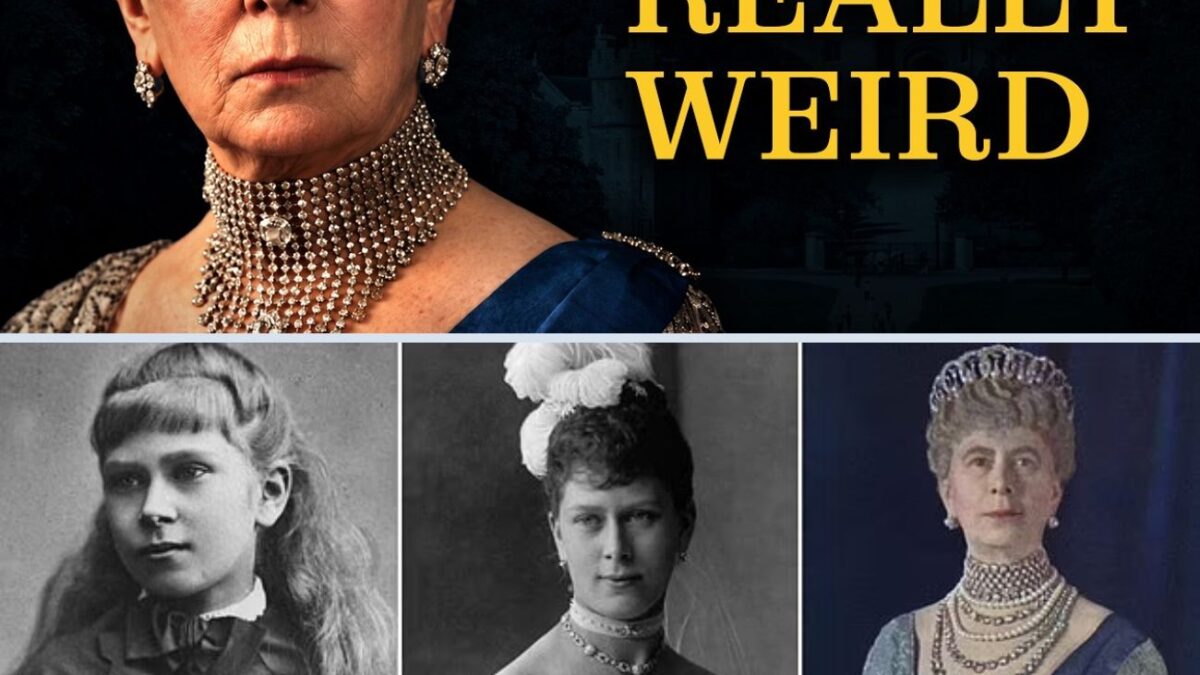
Anyone who knows Queen Mary of Teck from photographs probably remembers her as a kind of monument. She looks carved rather than born. Picture a ramrod-straight figure in an ankle-length dress, a toque balanced on her head like a small upholstered fortress, a mouth that declines to smile, and enough diamonds glittering across her front to sink a rowing boat. All finished off with an expression suggesting she just spotted a smudge on the family silver and fully intends to track down the culprit. Most people carry around exactly that version of her: the stiff jewel-encrusted grandmother of the House of Windsor, the woman who allegedly pocketed other people’s ornaments, froze out her own son, ignored her children, and never once cracked a smile in public.
Some of that holds up. A surprising amount of it doesn’t. And the bits that do hold up turn out stranger and a good deal sadder than the caricature ever lets on. Consider the raw material. Born on the shabby outer fringes of European royalty into a family so deep in debt that it would eventually decamp to Florence to economize, Mary somehow grew into the most marmoreal symbol of British majesty the 20th century produced. She suffered from an agonizing lifelong shyness, but still spent the best part of 60 years in one of the most public jobs on the planet. Her mind ran on history and on the provenance of porcelain, while her husband reportedly defined highbrow as anything he didn’t understand. And she adored her eldest son right up until the moment she chose the crown over him.
So, how does one person end up as all of these things at once? That question runs underneath her entire life. And I’d argue the weirdest thing about Queen Mary lies not in any single eccentricity, but in the way she took every awkward contradiction life handed her—the morganatic blood, the German ancestry, the dead fiance, the private grief—and hammered them into a public facade so solid that it helped hold the British monarchy together while other crowns across Europe clattered to the floor.
The cast list alone should tip you off. It runs to a fiance who died six weeks after the engagement. A nanny who pinched a future king until he cried. A husband who found ideas faintly suspicious. A czar she takes the blame for abandoning. A doll’s house with a public relations brief. And right at the very end, an old woman curtsying to her own granddaughter. Queen Mary attracts myths the way her tiaras attracted light. And some of the best-known stories about her simply don’t survive contact with the evidence. Others survive a little too well. Her weirdness, I should warn you, doesn’t belong to the fun, keeps-a-pet-alligator variety, and it falls instead into a far more unsettling category: the weirdness of someone who apparently decided quite early on that her own feelings came a distant second to the crown and who then stuck to that decision until the day she died.
A lot of her strangeness traces back to her family. Mary arrived in the world on the 26th of May 1867 as Princess Victoria Mary of Teck, a title that sounds rather grand until you read the small print. Her father, Francis, Duke of Teck, descended from a marriage that the royal houses of Europe regarded with roughly the enthusiasm you’d reserve for a wine stain on the tablecloth. His father, Duke Alexander of Württemberg, married a countess, Claudine Rhédey, and the match fell into the category of morganatic—a lovely word for a rather cruel arrangement. In a morganatic marriage, the lower-ranking partner and any children don’t share the full royal status of the higher-ranking one. Think of it as royalty with an asterisk. Francis came into the world royal, but not quite royal enough, and he lacked the style that separated the real thing from the nearly royal highness from birth.
Now, matches like that turn up all over the sprawling, overbranched family tree of European royalty. But in courts that measured rank down to the last quarter inch, an asterisk of that sort tended to follow a family around for generations. It dogged Francis. His children inherited it, too, and Mary received the title of princess along with a faint permanent whiff of “not quite.”
Then comes her mother, who frankly deserves a documentary of her own. Princess Mary Adelaide of Cambridge answered to the unkind nickname “Fat Mary”—the 19th century never wasted much time on tact—and she lived so far beyond her means that by 1883 the family owed more than £70,000. Even by royal standards she dug a spectacular hole. The solution, if you can call it that, involved packing up the household and leaving the country altogether. In 1883, the Tecks retreated into a humiliating economic exile in Florence, where the whole point lay in spending less, and they didn’t come home until 1885.
Spare a thought for a teenage Mary in the middle of all that. Packed off to Italy for two years because her mother couldn’t live within her means, she watched her family’s standing wobble in front of everyone. Hold on to that image. A girl who grows up watching her family’s status slip, who feels the ice thinning under a title with an asterisk, might reasonably grow into a woman who treats royal dignity as something to guard with her life, rather than something to take for granted. Call that my own reading rather than a documented diagnosis. But I find it hard to look at the woman she became without thinking about that teenager in Florence.
Fast forward a few decades, and that same teenager would appear in public, glittering with the Cullinan diamonds under a towering tiara, looking for all the world like someone born to them. Nobody glancing at those later photographs would guess at the unpaid bills or the morganatic asterisk behind them. That, I suspect, suited her perfectly. According to her biographer, James Pope-Hennessy—and here the irony kicks in—the very things that left Mary’s position so precarious also recommended her to the old lady at the top of the family tree. Queen Victoria wanted a British-born bride for a future king, a girl free of foreign political entanglements. Mary fit that description rather neatly. Pope-Hennessy pushes further and argues that her lack of status rendered her pliable and grateful. Hardly the most flattering thing a biographer can write about a future queen, though probably not the least accurate either. Poverty, it turns out, can work as a qualification.
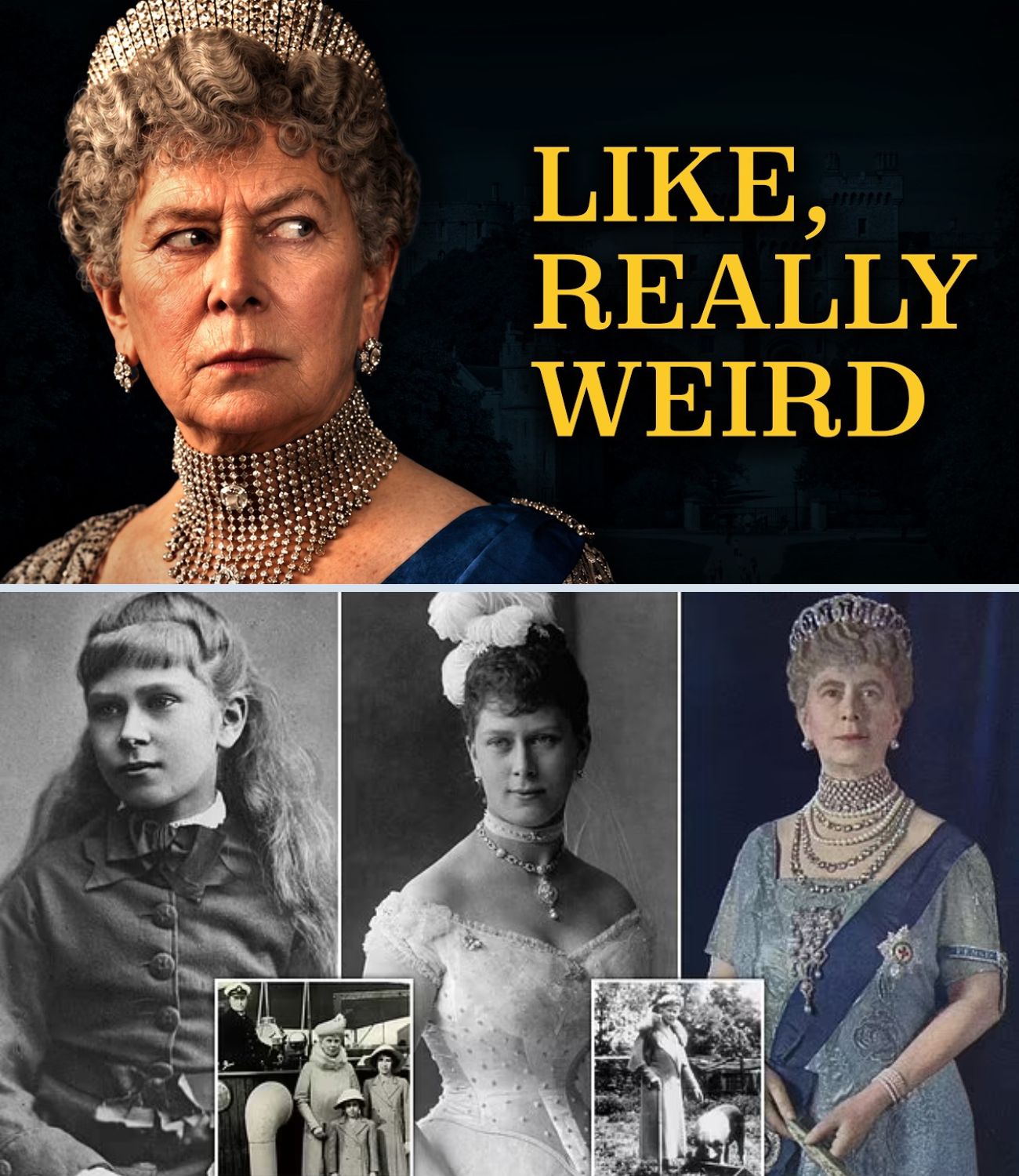
Victoria found that qualification so convincing that she ended up relying on it twice with two different brothers in the space of about 18 months. Mary collected two royal engagements in under two years, which takes some doing. The first came on the 3rd of December 1891 to Prince Albert Victor, Duke of Clarence, known in the family as Eddie, a young man in line for the throne whom the record tends to describe with a certain weary politeness as lethargic. By most accounts, convenience rather than romance drove the match, which suited Queen Victoria and lifted the Tecks out of the social shallows in a single stroke with Mary suddenly on course to become a queen.
Then six weeks later Eddie died. Influenza killed him on the 14th of January 1892. And overnight Mary slid from future queen to something much harder to name: a grieving fiancee with no crown and no obvious next move. Her diary records her reaction in a single word: “Despair.” Whatever she felt for Eddie as a person, and the evidence leaves us guessing, that one word tells you the floor fell out from under her.
Now, anyone who reads about Queen Mary will probably stumble across a longer and far more quotable line in which she supposedly wrote that, “The tragic death of my darling Eddie has entirely blighted my life.” It turns up regularly in secondary literature. The trouble lies in her primary diary entry, which, as you now know, consists of one word and contains nothing of the sort. And nobody knows yet whether she wrote the longer line in some separate letter, or whether it drifted over from Queen Victoria’s letters, or even from a popular song, and ended up pinned on Mary by mistake. Settling the matter would require a trip into her unedited 1892 letters in the Royal Archives at Windsor Castle, and I hold no ticket for that particular journey. For now, treat that quote with suspicion. It sounds like exactly what a heartbroken princess ought to write, which may explain precisely why it caught on.
So, what does a dynasty do when it loses the groom, but keeps the bride? Queen Victoria, never one to leave a perfectly good princess on the shelf, orchestrated a second engagement, this time to Eddie’s brother, George, Duke of York, in May 1893. The wedding followed on the 6th of July that year. Contemporary gossips cast Mary as a calculating climber who traded one brother for the other as smoothly as changing trains. And in fairness to the gossips, from the outside it looks awkward: dead fiance in January 1892, engaged to his brother by May 1893. The optics, as nobody put it at the time, left plenty of room for improvement.
But the gossips missed something. Historians like Kenneth Rose point to an intense, almost insular codependency that grew between George and Mary, fed by their shared grief over Eddie and by the enormous public pressure pressing down on both of them. And the letters bear this out. Shortly after the wedding, George wrote that his love kept growing stronger and stronger, and he thanked God for landing such a darling, which, for a man who spent his free time shooting birds and sorting stamps, sounds practically boyish. Two things hold true at once here, as they usually do with Mary: she accepted a husband whom Queen Victoria handed her for dynastic reasons, and she also came to love him with real devotion for the rest of their marriage. Mary never resolved that contradiction, just as she never resolved most of the others in this story, and instead she built a palace on top of it.
The palace came with a crown eventually. George ascended to the throne on the 6th of May 1910, and on the 22nd of June 1911 at Westminster Abbey, Mary received her crown as queen consort. Quite the upgrade for a girl whose family once decamped to Italy to save money.
If one accusation clings to Queen Mary more stubbornly than any other, it concerns her mothering, which supposedly took place from somewhere in the vicinity of the North Pole. The legend runs like this: an ice-cold, distant woman who abandoned her children to abusive staff and felt nothing when tragedy struck. Powerful stuff, and at best half the story.
Her first child, the future Edward VIII, known in the family as David, arrived on the 23rd of June 1894, and the most damaging evidence against her comes from him. In his 1951 memoir, A King’s Story, written as Duke of Windsor, David recalled that his original nanny used to pinch him before bringing him down to the drawing room so that he would arrive in tears and his parents would promptly dismiss him. The detail genuinely upsets. I defy anyone to read it without feeling for the small boy on the receiving end.
So where on earth did his parents look? The implication which his memoir did a great deal to cement holds that George and Mary simply didn’t notice or didn’t look closely enough to notice. And that implication permanently damaged her reputation as a mother in a way no later biography ever quite undid. Hugo Vickers, among other modern historians, thinks we treat her unfairly. Condemning Mary for her nursery arrangements, he argues, means judging a Victorian royal by the parenting standards of the late 20th century, rather like docking marks from Jane Austen for failing to mention the internet.
Fair point up to a point. None of that excuses the nanny, who remains appalling, but it does complicate the idea that Mary failed her children in some unique and monstrous way. The documentary record pulls the other way. Her letters to her children brim with endearments, and she taught them history herself, which meant handing over one of the subjects she loved most in the world. She also stepped in on their behalf, often against their father, George, who frankly terrified them.
Prince John’s story needs a different tone. So, the jokes stop here. John, her youngest son, suffered from severe epilepsy, and he lived sequestered at Wood Farm on the Sandringham estate apart from the rest of the family. On the 18th of January 1919 at the age of 13, he died following a severe seizure. Mary’s diary entry on his death reads: “A great shock though for the poor little boy’s restless soul. Death came as a great relief.”
Lines like that feed the image of a chilly, almost clinical mother, as though she wrote while ticking a box. I read it differently. Slow down. And it sounds far more like a mother who watched her child suffer and couldn’t bring herself to wish him back into that suffering. This forms the core of the myth of the heartless mother of Prince John: the idea that she callously locked her epileptic son away and felt nothing when he died. It ignores two points. For a start, keeping a child with severe epilepsy apart from the household followed standard medical practice at the time and hardly marks Mary out as a uniquely cruel mother. Her diaries, meanwhile, reveal deep distress over his condition, which rather complicates the picture of a woman who felt nothing.
So, yes, that nursery harbored a real failure. A small boy suffered in it, while the adults around him apparently noticed nothing, and no amount of historical context, however fair, turns that into comfortable reading. Yet the ice queen of legend fits awkwardly beside the woman who filled her letters with endearments and wrote about her dead son’s restless soul. Cold by our standards, possibly. But heartless looks like a verdict the evidence simply won’t support.
Almost nobody watching Queen Mary understood what they saw. She lived with an agonizing lifelong shyness, and not a charming, well-bred reticence either, but the paralyzing kind that turned small talk into an ordeal, and a room full of strangers into a siege. Pope-Hennessy’s research notes circle around two German words in connection with her. One of them, Gemütlichkeit, describes a homely, comfortable warmth that doesn’t translate neatly into English. The other, Geheimnis, simply means secret, and his notes identify the secret as the shyness itself, the thing she worked hardest to keep out of sight.
In public she rarely smiled. Crowds read that as haughtiness, the stony grandeur of a woman who considered herself above them. But the courtiers who knew her understood it as something much closer to stage fright. Picture it: a woman rigid with nerves beneath a small fortune in diamonds, and the public on the other side concluding perfectly reasonably that she must simply look down on them. Most of us know the guest who stands in the corner of every party looking furious, when in fact the poor soul spends the whole evening trying to remember how small talk works. Queen Mary played that guest, except her corner came with a crown.
I can’t prove the shyness grew out of those years in Florence when a teenage Mary watched her family’s standing wobble, and none of the biographers behind this script advances that claim. Still, the idea nags at me. A girl raised on the edge of royal respectability could hardly help dreading the wrong word in the wrong room, the one that might remind everyone of the asterisk. Yet Mary, who dreaded dinner party chatter, held near absolute sway over George, one of the most volatile men in the country, who also happened to wear the crown. During the turbulence of the First World War, and again during the general strike, it fell to Mary to manage his temper and shape how he responded in public. Shy, in other words, never meant soft.
Biographers agree on the double act, but they split over how it came about since the evidence supports more than one story. Did the steel grow naturally out of her personality over the years? Or did she bolt it on piece by piece as armor against the shyness and against a world that kept reminding her she ranked a notch below everyone else? Nobody knows for certain. Vickers adds a telling detail, though. Her shyness evaporated entirely the moment the conversation turned to art or history. If you sat Mary next to a stranger, she seized up. Sit her next to a stranger and a piece of porcelain, however, and you’d meet a different woman altogether, with the shyness nowhere in sight, and the stage fright apparently packed away for the afternoon.
I find that oddly moving. It suggests that the terrifying Queen Mary of the photographs wore her own public personality, at least partly as costume armor for a very nervous woman who worked out that if she couldn’t manage charming, she could at least manage magnificent.
I promised you eyeball caressing and I keep my promises. Queen Mary loved objects—and not in a casual pick-up-a-fridge-magnet way, but with the obsessive scholarly intensity of someone who could tell you where a thing came from and exactly who owned it before. Her knowledge of provenance ran deep, and it stretched to porcelain and Fabergé with real sophistication. Single-handedly, she cataloged the royal collection—a task you’d normally hand to a team of archivists with a generous budget—and she hunted down lost royal artifacts and reclaimed them for the crown. Impressive work, frankly. On this side of the ledger, Mary looks less like a queen and more like the most formidable museum curator Britain never officially employed.
The other side of the ledger looks rather different. When something in a private house caught Mary’s eye, she would fix her gaze on it and declare, “I am caressing it with my eyes.” And then she would carry on caressing it with her eyes for as long as it took until the host, cornered by the social pressure of the moment, handed it over as a gift. A gift in inverted commas, and hardly a subtle one. Imagine a friend admiring your jumper so pointedly and for so long that you end up peeling it off and handing it over just to end the silence, and you’ll taste a very small portion of an afternoon with Queen Mary—except that your friend presumably doesn’t wear a crown.
Out of all this grew one of the most persistent legends about her. The story runs that Queen Mary would physically pocket silver miniatures or jewels from her hosts’ homes, and that aristocrats warned of an impending royal visit would scurry about hiding their best pieces before she arrived. It paints her as a sort of tiara-wearing cat burglar, which admit it sounds like a cracking story, but no. Historians reject the idea of literal theft outright, and the earliest traceable roots of the rumor lie in aristocratic grumbling about her heavy-handed use of royal prerogative—grumbling that over time, curdled into a myth about sticky fingers. She never actually stole a thing. Why would she when she could rely on something far more effective: the social impossibility of a subject refusing a direct hint from the queen, which in some ways sounds worse. A thief at least runs a risk, whereas Mary ran none at all, because every object she acquired this way arrived with the owner’s own hands on it, courtesy of the same unwritten rule.
Exactly when that grumbling hardened into the printed legend of a kleptomaniac queen remains an open question. Society memoirs and gossip diaries from the 1920s and 1930s—the unexpurgated diaries of Henry ‘Chips’ Channon among them—might one day pin down the moment the whispers reached print. But for now the trail runs cold. That job awaits a patient researcher.
So which version do we believe? The scholarly custodian who cataloged the royal collection or the grand lady who strong-armed hostesses out of their heirlooms? Both, annoyingly. The same trained eye that sorted out centuries of royal treasures could also fix itself on your best cabinet ornament until you surrendered. And I’m not convinced Mary saw much difference between the two activities. In her mind, presumably, beautiful things simply belonged sooner or later in royal hands.
On paper, the next contradiction looks fatal. Queen Mary came from German stock on both sides. Through her father, she descended from the House of Württemberg, and through her mother from the Hanoverian line of the Cambridges. Culturally and genealogically, she belonged to Germany through and through, whatever the photographs of her in a toque might suggest.
Then came 1914. You don’t need a history degree to spot the problem. Britain spent four years at war with Germany, and its royal family carried a German dynastic name and, in Mary’s case, German blood from top to toe. Mary’s answer involved work and a great deal of it. She threw herself into the war effort, setting up sewing guilds and visiting wounded soldiers, and she kept at it relentlessly month after month with a grim stamina nobody could fault. Sewing guilds may not sound like the stuff of epic history. Next to what men faced at the front, they plainly fall short of epic, but a family whose roots ran straight back into enemy territory needed to look busy. Because a queen with German roots sitting idle in wartime looks less like decoration and more like a question mark.
Then on the 17th of July 1917, George took the radical step of changing the family’s name. Saxe-Coburg and Gotha—a name with roughly the wartime appeal of a zeppelin—vanished by proclamation, replaced by Windsor, which sounded about as English as a rained-off picnic. Mary supported the decision, and she didn’t merely nod along. She oversaw her own brothers giving up their German titles, and the results carried a faintly comic witness-protection quality. The Duke of Teck reemerged as the Marquess of Cambridge, while Prince Alexander of Teck turned into the Earl of Athlone—roughly the aristocratic equivalent of moving to a new town and introducing yourself as Dave. Same men, new letterheads.
By the end of 1917, the family looked thoroughly British on paper, and Mary’s own brothers carried brand-new British titles to prove it, courtesy of a sister who saw the whole awkward business through in person. Nobody could accuse the Tecks of half measures. What Mary felt about all this behind closed doors remains a matter of genuine debate. Cutting off the German side of the family—the side of her father and his father before him—surely cost her something, and historians disagree over how much private sorrow sat behind the public ruthlessness. Officially, though, she never looked back, not even once.
Anyway, one of the darker rumors attached to her name dates from this same stretch of the war. A persistent story claims that in 1917, Queen Mary pushed to deny asylum to Czar Nicholas II and his family, supposedly because she disliked the Czarina Alexandra. Given the fate that awaited the Romanovs, nobody should pin that on anyone lightly. The record, as Kenneth Rose’s biography of George V sets out in detail, points somewhere else entirely. In fact, the panic belonged to George himself and his private secretary, Lord Stamfordham, who fretted about the political optics of welcoming an autocratic czar to Britain and feared anti-monarchy riots at home. Mary, in this case, takes the blame for George’s nerves.
A proper irony runs through all this because Mary’s German blood looked by rights like a liability. Yet she ended the war as the face of a freshly renamed British monarchy. Even so, gossip still pinned a Russian tragedy on her, one she played no part in. The rumor mill evidently never read Kenneth Rose.
The marriage itself hides perhaps the oddest mismatch of the lot. Mary possessed a sharp, inquisitive mind. She read history avidly, spoke several languages, devoured historical biographies, haunted museums, and followed the geopolitics of her day with the fascination of someone who actually wanted to understand how the world worked. George, to put it mildly, did not share those enthusiasms. He reportedly defined highbrow as anything he didn’t understand—a refreshingly honest admission from a monarch. His life revolved around naval routine and stamp collecting with regular breaks for shooting birds, and he apparently regarded ideas the way some people regard wasps: best kept at a distance and swatted if they came too close. One can only guess at the breakfast conversation.
In public, though, Mary deferred to George utterly, even on matters where she plainly knew far more than he did. Mary, who could lecture you on the provenance of a piece of Fabergé, allowed George to dictate the exact length of her hemlines, which tells you rather a lot about the terms of their partnership, and about how much of herself she kept locked away for the sake of it. Her hemlines of all things. That hemline detail explains the silhouette we met at the very beginning of this story, the one that looks carved rather than born. By the 1920s, Mary flatly refused to adopt flapper fashions and froze her look permanently in place—ankle-length dresses, rigid toques and all—largely because George disliked modern women’s fashion. While other women’s skirts moved with the times, hers stayed exactly where George preferred them. Flappers need not apply.
I’d love to know what she thought each time she caught her reflection in a mirror. Here stood a woman with opinions on everything from Fabergé to geopolitics, dressed head to toe in George’s taste, and nothing in the record suggests she ever objected in public, which depending on your mood, reads either as admirable discipline or as something rather sad. I lean towards sad. Vickers floats a theory about all this, and I find it rather persuasive, at least as a partial explanation. He reads her obsessive collecting of antiques and her relentless organization of the royal archives as sublimation: an outlet for an active intellect trapped inside a culturally barren marriage. Sublimation, for the record, means redirecting frustrated energy somewhere acceptable. If he guessed right, then the neatly cataloged royal collection owes something to George, whom nobody could draw into a conversation about anything more cerebral than a stamp.
Don’t mistake the frozen hemline for a frozen mind, though. Mary dressed as though Edward III still sat on the throne. Yet she grasped something very modern about the crown, namely that it justifies its existence by visibly working. And she acted on that instinct with considerable shrewdness. Take Queen Mary’s Dolls’ House, completed in 1924 by the architect Edwin Lutyens. On the surface, it looks like an absurdly elaborate toy, and you’d forgive anyone for assuming a grown woman simply indulged a whim. Mary backed the project strongly, though, and not as a plaything. She treated it as a public relations exercise, a miniature shop window for modern British industry and craftsmanship. It sounds eccentric until you remember the woman behind it. Mary froze her own hemlines to please George. Yet she still understood that a miniature palace packed with the work of British makers could argue the case for national craftsmanship more persuasively than any speech from the throne.
She also became the first queen consort to actively champion women’s higher education, which sits a little oddly beside a wardrobe governed by George’s dislike of modern women’s clothes. The evidence for any personal modernity in her politics runs thin, but her instinct for the crown’s survival looks sharp enough to cut glass. She dressed like 1910 and thought like a public relations department.
If you want to watch every one of Queen Mary’s contradictions collide at once, look at 1936. Remember the history lessons? She favored David above her other children, and in his youth the two of them shared a close intellectual bond, which given the general temperature of that household, stood out a mile. George died on the 20th of January 1936, and David came to the throne as Edward VIII. He lasted less than a year. On the 11th of December 1936, over his relationship with Wallis Simpson, he abdicated and the crown passed to his brother, who reigned from then on as George VI.
Pause on the calendar for a second because 1936 treated Mary with real cruelty. In January, she lost her husband of more than 40 years. And before the year ran out, she watched her favorite son hand back the crown he barely wore. Which means that inside 11 months, she lost the man she built her life around, and in a sense the boy she raised to inherit it.
Mary’s reaction left no room for negotiation. She flatly refused ever to receive Wallis Simpson, a position she maintained with all the flexibility of a cathedral. And whatever tenderness she still felt for her son, she kept it well away from the question of Wallis. Then in July 1938, she sent David a blistering letter. “I do not think you have ever realized the shock which the attitude you took up caused your family and the whole nation,” she wrote before adding 17 words that sum up her whole approach to life: “All my life I have put my country before everything else, and I simply cannot change now.”
Nearly everything in this story fits inside that last sentence. The German titles surrendered in 1917, the hemlines set by George, the shyness bolted behind public armor, the refusal to receive Wallis. Every one of those put the crown ahead of Mary’s own wishes. She loved her son, and the evidence for that devotion runs deep. Yet she also regarded what he did as unforgivable, not because of whom he chose, but because in her view he put himself above the crown, a sin her private creed placed beyond absolution.
The two most influential accounts of the episode could hardly disagree more sharply. Pope-Hennessy framed her stance as her finest hour—the moment the crown’s great defender held the line. David, for his part, framed it as a betrayal of maternal love, and I find it difficult to read his side of things without some sympathy, even if you suspect he brought a good deal of it on himself. A bitter little call back lurks here, too. The book that did the most damage to Mary’s reputation as a mother, A King’s Story, came from the pen of the very son she chose the crown over. And while I don’t want to push that point too far, I struggle to read his memories of the nursery without remembering who wrote them and what lay between mother and son by 1951. Personally, I see no need to choose. The abdication shows her public persona winning a straight fight against her private heart, and victories like that always leave casualties behind, with her favorite son at the top of this particular list.
Old age brought Mary a weight of grief that would flatten most people. She lost her husband in January 1936 and she outlived three of her sons: Prince John in 1919; George, Duke of Kent, killed in a plane crash on the 25th of August 1942; and then on the 6th of February 1952, King George VI, the son who picked up the crown David put down. After George VI’s death, she summed up the arithmetic of her long life to Princess Marie Louise: “I have lost three sons through death, but I have never been privileged to be there to say a last farewell to them.”
I can find no joke in that, and I won’t hunt for one. The plainness of it strikes me hardest, because she sets down the loss of three sons without a flicker of self-pity, as one more fact entered into the record. A quiet irony sits inside that sentence, and I do mean quiet. Mary’s entire existence ran on ceremony—on arriving at the right place at precisely the right moment—and yet she missed all three of those farewells.
Even inside that grief, though, duty arrived first. In February 1952, when Elizabeth II returned to Clarence House as the new queen after her father’s death, Mary immediately sought out her 25-year-old granddaughter. She insisted on curtsying to her, and according to Mabel, Countess of Airlie, who recorded the scene, she explained herself in a single sentence: “Her old granny and subject must be the first to kiss her hand.”
Mary, 84, and newly mourning the third son she outlived, bent her knee to her grieving granddaughter because the granddaughter now held the crown and the crown came first. Protocol to the very end. Historians tend to read the curtsy as her life’s rule acted out in a single gesture. The crown always outranks the individual, even when the individual belongs to your own family, and everyone involved still grieves.
Mary died at Marlborough House on the 24th of March 1953, aged 85. She lived just long enough to see the new reign begin, and not quite long enough to watch the young woman she curtsied to in February 1952 actually crowned, because the coronation followed a matter of weeks later.
Pinning down the real Queen Mary proves unusually hard. The blame lies partly with Mary herself because she spent most of her life deliberately building the myth and she built it so well that it outlasted her by decades. Sources muddy things further too. What we know of her private self reaches us through a diary capable of compressing a lost engagement into a single word, letters to her children, a memoir by a son with every reason to feel wounded, and biographers weighing all of that against the public monument. So every portrait of Mary arrives with somebody’s thumb resting somewhere on the scale.
Under scrutiny, the myths fare badly. The tiara-wearing cat burglar shrinks into a queen who simply knew nobody could refuse her. The woman who doomed the Romanovs shrinks into a scapegoat for George and his private secretary. The heartless mother of Prince John shrinks into a mother following the medical practice of her day and grieving in her diary. And the “blighted my life” quote shrinks into a question mark waiting in the archives at Windsor for someone patient enough to settle it.
Lay the contradictions side by side and they pile up almost comically. Mary began as the poor relation with the morganatic asterisk and ended as the marble face of British Majesty, dreaded small talk yet managed George’s temper, loved books yet spent four decades married to George and his distrust of anything highbrow, carried German blood yet helped her family become Windsor, and chose the crown over her favorite son before curtsying at 84 to her own granddaughter.
Calling her cold takes no effort at all, and plenty of people do it. I keep coming back to those diary entries, though. A single word, “Despair,” in January 1892 and a note about a little boy’s restless soul in January 1919. Those don’t read like the words of a woman without feelings. They read like the words of a woman who decided very early that feelings belonged in a diary and nowhere else and who then kept them there for the rest of her life.
Look at the photographs again and you’ll find exactly what she wanted you to find. The toque, the diamonds, the unbending back, the monument. You won’t find the teenager bundled off to Florence so her family could economize, or the young woman who opened her diary in January 1892 and wrote a single word in it. She saw to that.
You Might Also Enjoy

“We Thought They Would Negotiate”—What Argentine Soldiers Said When The British Attacked Goose Green

“You’ll Never Finish My Ruck March, Limey” — US Sergeant Who Challenged the SAS, Then Fell Out First






