“Quit Showing Off” — US Captain Furious After Watching the SAS Fight in Ramadi.
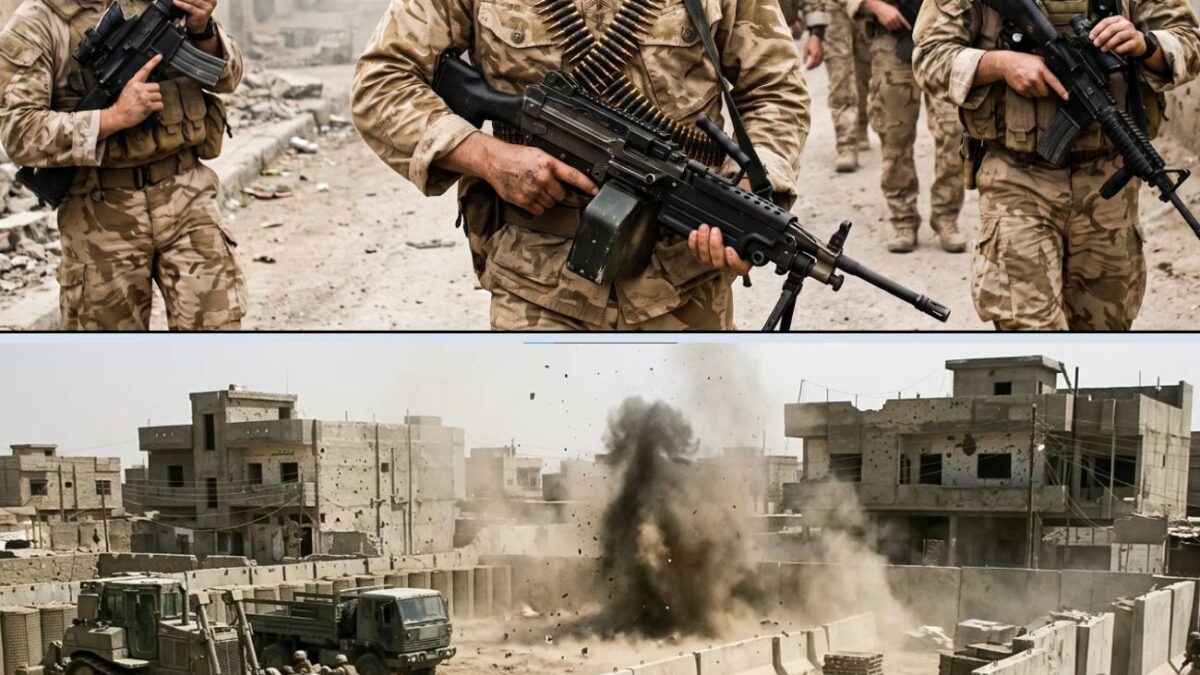
At AR042 on the morning of 27th of July 2006, a US Army captain stood on the roof of a half sandbagged combat outpost in southern Ramadi with a pair of binoculars he had stopped needing an hour ago. Below him in the gray light, eight men in civilian-looking trucks had just rolled out of the wire without a single tank in front of them. No Bradleys, no engineers with a line charge, no air on station that he had been told about. His name, for the purposes of this account, was Captain Daniel Hollis. For 19 days his company had fought for one block of that neighborhood, and it had cost him four wounded men, two destroyed Humvees, and a wall of concrete barriers he could not move another meter forward.
The eight men below him were British. By the time the sun cleared the date palms, they would be finished with the thing he had been trying to do for 3 weeks. He lowered the binoculars and said something to his first sergeant that the first sergeant would later repeat, word for word, to people who did not ask:
“Quit showing off.”
Ramadi in the summer of 2006 was the kind of city that other commanders described by pointing at a map and not finishing the sentence. It sat on the Euphrates, 60 miles west of Baghdad, a provincial capital of several hundred thousand people, and by the spring, it had become the place where the war’s arithmetic stopped working. The Marines of 3rd Battalion, 8th Marines, had held a few strong points near the government center, a battered building on the northern edge of the city center, and little else. The brigade before them, the Pennsylvania National Guard’s 2nd Brigade, 28th Infantry Division, had fought through the winter and spring with the same problem. The insurgents could attack from anywhere, and the Americans could only be sure of where they themselves stood.
In the late spring, General George Casey, the senior American commander in Iraq, halted a planned handover of the city to Iraqi forces. The security picture did not support it. Instead, he sent a brigade that had just finished a hard campaign in Tal Afar, the 1st Brigade Combat Team of the 1st Armored Division, nicknamed Ready First, under Colonel Sean MacFarland. MacFarland arrived on 21st May. The brigade took formal responsibility for the greater Ramadi area on 11th June. The plan MacFarland brought was not subtle, and it was not fast. Take the city one piece at a time. In each contested neighborhood, build a combat outpost, a fortified building ringed with concrete and sandbags, and stay in it. The brigade had done a version of this at Tal Afar. In Ramadi, the outposts went up inside insurgent strongholds with names the soldiers learned by being shot at. Falcon in the south, the cluster around the government center downtown, and a string of smaller positions in between that appeared on the maps with numbers instead of names.
Every outpost came with the same price. Before it could be a base, it had to be a hole. A few buildings seized at night, a perimeter dragged into place by engineers under fire, concrete barriers hoisted by cranes while mortar rounds arrived on a schedule the other side had worked out. Marines from a logistics detachment who helped put up the barriers at one southern outpost in late June counted more than 300 of them. A rocket landed on the position shortly after they arrived. Captain Hollis’s outpost was one of those. His company had taken the buildings on the night of 8th July. The neighborhood around it had a school, a half-finished mosque, a row of two-story houses with flat roofs, and a canal bank covered in reeds. It also had a mortar team. That was the problem. Everything else about the neighborhood, the sniper in the minaret, the bombs planted on the main road in the dark, the rifle fire at dusk, could be survived. The mortar team could not. It fired three, sometimes five rounds from somewhere inside a quarter-mile arc, usually between 1800 and 2100, and it moved before the counter-battery radar could finish telling the Americans where it had been.
For 19 days, his men had been walking those streets by day, and 19 nights the rounds had come in anyway. The company had a name for the team. They called it the accountant because it never missed a day. The first week of July had been a lesson in what the accountant could do. On 9th July, a round landed in the motor pool and set fire to a fuel pallet. On 11th July, another struck the roof of the building where Hollis’s second platoon slept and wounded a young sergeant in the shoulder. On 14th of July, the team put three rounds in a row onto the same corner of the outpost and found the range on the fourth, killing nobody by luck and by the fact that the two men standing there had been called inside to take a radio message.
Hollis was 31, a West Point graduate from Ohio, and he was good at the job in the ways the army measured. His battalion commander trusted him. His first sergeant, a man named Ray Brant, did not need to be told what to do before he did it. In the third week of July, the company’s own intelligence section produced a hand-drawn map of the neighborhood with 14 red circles, each one a house where somebody had once seen a man with a tube or a tripod. Hollis’ soldiers searched nine of them in nine days. They found weapons in three. They never found the accountant.
It is easy, from a distance, to read this as a failure of nerve or of imagination. It was neither. It was a failure of arithmetic. A company of about 120 soldiers cannot search a square mile of dense housing, hold a fortified outpost, run convoys to the airstrip, and keep a reaction force ready, all in the same week. The neighborhood absorbed every man he could send into it. And above him, the decision had already been made not to simply flatten it. The Americans had learned, in Fallujah in 2004, and through two years of bruised experience since, what flattening cost. McFarland’s guidance to his commanders, in the words of those who served under him, came down to a single line:
“Fix Ramadi, and do not create another Fallujah.”
That meant the tank main gun stayed mostly quiet inside residential streets. It meant the artillery stayed on the guns. It meant that a captain with a mortar problem got a map, a company, and a lecture on patience. So, when the call came down on the evening of 24th of July, that a small British team would be arriving at the outpost the next night, Hollis did not feel relief. He felt something closer to insult. The call came from his battalion operations officer, a major, who delivered the news the way people deliver news they have not been given permission to explain:
“A special operations element, British. Eight men, possibly nine, attached for 48 hours to a task force whose existence the major described only as the people who had asked for the outpost’s map.”
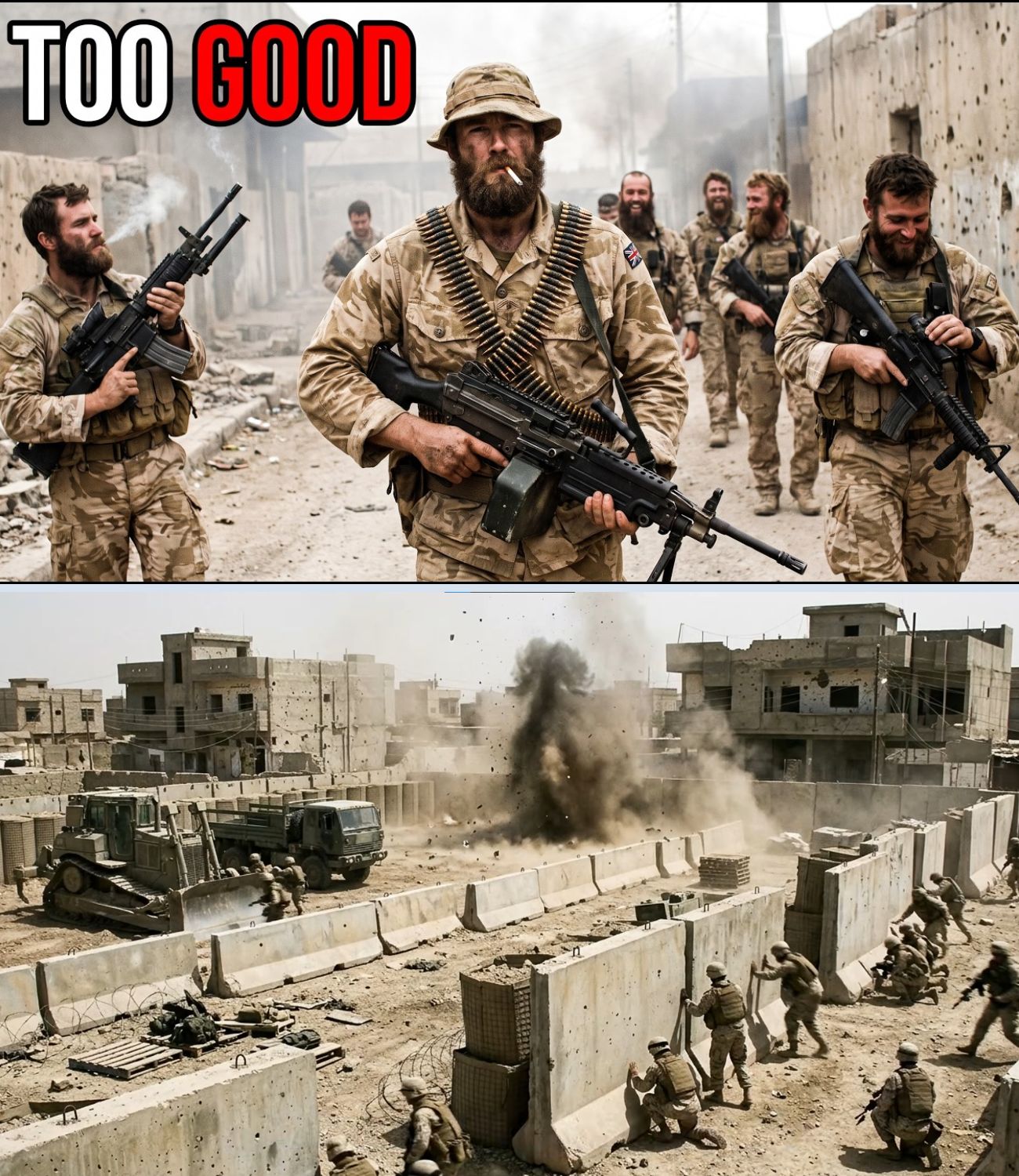
Hollis was to provide them a room, a radio net, and no questions. He asked what they wanted. The major said they wanted the accountant. The British special forces in Iraq in 2006 were a strange presence on the American side of the war, and most American company commanders had never met one. After the 2003 invasion, the United Kingdom had contributed a small permanent special forces component to the coalition’s joint special operations effort. It sat in Baghdad under the American Joint Special Operations Command, and the British called their part of it Task Force Black. It was built around a Sabre Squadron of the 22nd Special Air Service Regiment with elements of the Special Boat Service, the Special Reconnaissance Regiment, and signalers from 18 UK Special Forces Signal Regiment.
It did not belong to the British Division in Basra. It did not report to the Royal Marines or the Army Brigades in the South. Its job in the years that mattered was to find and detain or kill the senior figures of Al-Qaeda in Iraq, and it had done so by the account of the journalist Mark Urban, who wrote the most detailed public history of it at a tempo that startled the Americans who watched it. What it was not, by any published record, was a unit with a habit of working in Ramadi. No one outside the task force can say with certainty that a British team went into that city in July 2006. This account is built from what is publicly known about the unit, the city, and the pressure on both, and the men in it are stand-ins for men whose real names will never be released. That is how the regiment has always wanted it.
What can be said is how those men worked. They arrived at the outpost the night of 25 July in two vehicles that looked wrong. They were not Humvees. They were not the armored British Snatch Land Rovers that every American had seen in news footage from Basra. They were a pair of well-used dust-colored utility trucks with their rear windows blacked out, the kind of vehicle a contractor or a local sheikh’s driver might own, and they came in through the gate without a headlight on, escorted by a single American sergeant from the battalion scout platoon. The first man out was older than Hollis had expected. Late 30s, lean, with a graying stubble, and a patience about him that made the young soldiers in the yard stop talking. His name, for the purposes of this account, was Tom Reddick. He was a captain, too, in the British sense, the officer commanding a troop of the squadron. He shook Hollis’s hand, said he was glad of the room, and asked whether there was any tea. There was not. There was instant coffee in a tin and a hot plate that had blown a fuse twice. Reddick accepted the coffee.
Behind him came the rest. A big sergeant with a broken nose named, for the purposes of this account, Mick Dunmore. A signaler everyone called Jordie. A medic with a quiet voice and a bag that was heavier than any of the weapons. Two younger troopers who said almost nothing. And one man who stayed with the trucks the whole night checking something under a hood by red light, whom Hollis never learned anything about at all. None of them were wearing the right uniform, either. Some had American pattern desert camouflage. One was in a faded brown shirt. A couple had beards that would have earned a private a reprimand. They carried a mix of American and British rifles and a pair of belt-fed machine guns, and they set the weapons down on the floor of the room Hollis had given them without any ceremony, like men unpacking tools. Brant, the first sergeant, watched them for a long minute from the doorway and said to Hollis quietly that the one with the nose looked like he’d been in this city before. Hollis said that wasn’t possible. Brant said he knew.
Reddick asked for the map at 21:30. He did not ask for the red circles. He asked for the raw mortar reports, the grid squares of every impact, the time of every round, the direction the incoming had been heard from. Hollis’s intelligence sergeant, a specialist who had been up for 2 days, had them on a laptop, and he scrolled through 19 days of fire while Reddick and Dunmore stood behind him and said nothing at all. At 22:10, Dunmore asked for a pencil. He drew nothing. He tapped a spot on the screen, then another, then a third, and asked the specialist whether the rounds on the 11th and the 14th had been heard from the same direction. They had. Dunmore asked about the school. The specialist said the school had been searched twice. Dunmore asked whether the searches had been in the daytime. The specialist looked at Hollis. Hollis said yes.
“They’d be in there at night then,” Dunmore said.
It was the longest sentence he spoke that evening. By midnight, the British had given Hollis one question and one request. The question was whether his company still had a standing patrol that walked the canal bank at the same hour every morning. It did. The request was that for the next 24 hours it did not. Hollis said that was not how he ran his battalion’s patrol schedule and that he would have to clear it with his commander. He did. His commander, a lieutenant colonel who had been asked by someone far above him to give these men whatever they wanted, said yes. It was the first thing Hollis resented, not the foreign accent, not the beards. A stranger had arrived, looked at his own pattern, and found what it gave away in 30 minutes.
The mortar team knew the schedule of his foot patrols because his foot patrols were a schedule. He had been told this in training. He had briefed it to lieutenants. He had never seen it done to him. The thing Reddick understood, and Hollis had not yet had time to, was that the accountant was not hiding from the Americans. It was timing them. Every evening a patrol left the outpost at roughly 1600, walked the main road, and returned at roughly 1830. The mortar team set up when the patrol was safely back inside the wire because a patrol on the street meant a patrol that could call for a quick reaction and fire from somewhere in the neighborhood when the patrol was in. They fired between 1,900 and 2,100 from the school’s courtyard or a walled compound near it and moved before the first counter-battery sensor had finished plotting.
The men who ran it were not amateurs. By the second week of July, they had stopped using the school and begun using a rotating set of three locations within a few hundred meters of each other so that the sensors plots never landed in the same place twice. None of this was in the red circles on the intelligence map. It was in the arithmetic of the impact grids. It had always been there. The British asked for one more thing a little before 1:00 in the morning. They wanted to see the neighborhood from the roof. They did not want to walk it. They wanted a hard look at the roofline. Brandt took them up. He later said that the thing he noticed was how long they looked and how little they said. Reddick used a small monocular, not binoculars. Dunmore did not use any optic at all. He stood at the parapet with his hands in his pockets for 10 minutes and then said something to Reddick that Brandt could not hear and Reddick nodded. They came down. They went to sleep. And at 3:00 as Hollis would learn from his own radio operator, the British signaler was already awake sitting on his bunk with a headset on and a handheld radio at his knee saying nothing at all.
What Hollis did not know and would not know for years was what the British were deciding against. There were three obvious ways to go after a mortar team in a built-up area. The first was the way the American Brigade had been doing it. Saturate the neighborhood with patrols and raids until the team ran out of places to hide. That was slow. It was loud and it had been failing for 19 days. The second was to call for fire on the likely locations, a few rounds from the guns at Camp Ramadi or a pair of bombs from the air and accept the damage to the houses around them. McFarlane’s guidance did not allow that for a neighborhood where families still lived and the families were still there. The third was to wait for the team to fire and chase it in real time with a quick reaction force, which had never once worked because the team fired for 4 minutes and was gone in 5.
The British picked a fourth option, which was not to chase the team at all. They planned to be where the team would be before it arrived. This required one thing the Americans could not easily give, a small group of men who could be inside the neighborhood unseen in daylight for most of a day. The men who could do that had to look like they belonged. That was the reason for the dusty trucks. That was the reason for the beards, the mismatched uniforms, and the rudimentary Arabic that Dunmore and one of the younger troopers could speak well enough to buy a bottle of water. It was also, Hollis would conclude, the reason they irritated him so much. He had spent 19 days moving through that neighborhood as the largest, loudest object in it. His men wore armor that weighed more than 40 lb. They traveled in vehicles whose engines could be heard from two streets away. Everything about the American presence in Ramadi in the summer of 2006 announced itself, and that was the point. The coalition was there to be seen. The outposts were visible statements that the Americans were staying. The patrols were meant to be noticed. The British, who had no such mission, had come to the same ground with the opposite one.
The trucks left at 4:02. Hollis watched them go from the roof. There were eight men in them, one of them driving, and they left the post through the southern gate, not the main one, with their headlights off and no American escort. Behind them the gate closed. In front of them the street was empty except for a single dog. He lost sight of them at the first corner. For the next several hours there was nothing for him to watch and nothing for him to do. He had been told not to send the morning patrol. He had been told not to ask over the radio. He sat in the operations room with Brandt, a battered thermos of coffee, and the knowledge that eight men he did not command were walking through a neighborhood he did in his sector using the information he had gathered and he would be told about it when someone decided to tell him. Brent said nothing. Brent, who had done three tours, knew what this was.
At 06:10, a signal came on the battalion net that was not for Hollis. It was a single click of a transmit key and he never found out what it meant. At 07:15, the first call came from the British. It was Jordy, the signaller. He had a calm northern voice and a habit of speaking in short bursts. He gave Hollis’s radio operator a time, a grid and one sentence. The team was in position and the area was quiet. He asked the operator to confirm that no American patrol was moving in the grid. The operator confirmed it. Then the radio went silent for six hours. What the team did in those six hours is the part of the story no one has ever told in detail. And the rest of this account will not pretend otherwise. They did not publish a diary. No sergeant major wrote a memoir. What survives is a handful of fragments from Hollis’s radio logs, the later recollections of Brent and the pattern of the next several days.
What can be said is that the British did not occupy a building. They moved through three of them. They watched. They did not shoot. By noon, they had counted four men going in and out of a walled compound 150 m from the school, none of whom were carrying anything visible and one of whom, according to a half sentence Dunmore later spoke in the outpost’s yard, walked with a limp that matched a description someone had given a battalion intelligence officer three weeks before. The mortar team, in short, had a home. It was not the school. It was a compound behind it, the kind of place the American search teams had walked past twice because the front gate was sealed and the courtyard was empty. The tubes were not stored there. The men were. Reddick radioed that at 13:04. It was the first thing that Hollis, listening to the net in the operations room, understood to be bad news. The British had found the accountant.
The question was what to do about it. And the answer, on that afternoon in late July, was constrained by everything the Americans had built around them. A raid on the compound would be a raid on a house. That meant women and children, and Hollis’s brigade had learned expensively that a single wrong house in this city could turn a neighborhood. A raid by the British alone, eight men with no heavy support, risked an exchange of fire in a place where the nearest American reaction force was 11 minutes away at best. A raid by Hollis’s company, which could provide the heavy support, would take at least an hour to stage and would be seen by every watcher in the neighborhood before the first Bradley turned its engine over. There was also a clock. The team fired at dusk. If the raid was going to happen before the accountant fired its next rounds, it had to happen within about 5 hours. And by the British team’s own estimate, the men in the compound would begin moving at some point in the afternoon to prepare.
Reddick asked Hollis over the net for two things. A quick reaction force, two Bradleys, and a platoon parked in the outpost yard with engines running and nobody told why. And no American movement in the quarter mile around the compound until he said so. Hollis agreed to the first. He objected to the second. He told Reddick that he was responsible for the safety of every American in that sector, and he could not guarantee anything about a space he could not see. Reddick said politely that he understood and that if Hollis would give him an hour with the sector empty, it would be the quietest hour of the war. Hollis gave him the hour. He did not enjoy it.
The hour came with its own weather. By early afternoon, the thermometer on the outpost’s wall had passed 110° and the air over the rooftops shimmered so badly that the observers on the roof could not hold a steady picture of the compound through their optics. The one American sniper team on the roof, two specialists with a long rifle and a spotting scope, reported that they could see the compound’s wall and nothing behind it. Hollis passed that to Reddick and got back a single word of thanks. It meant the British were on their own in a way the Americans could not help. The overhead picture was gone as well. A small surveillance aircraft that had been orbiting the sector since morning had been pulled away for another task at 14:20 and the battalion’s request for a replacement had been answered with a time that fell after dark. Hollis’s operations officer, the same major who had brought the news 2 days earlier, apologized for it on the net in a tone that suggested he had spent the afternoon apologizing to someone else.
Every one of those facts narrowed the plan. No aircraft, no eyes on the roof, no American patrol within a quarter mile. A reaction force that would take 11 minutes to arrive in a neighborhood where the British intended to be inside for no more than 20. The only margin left was the one the men below had brought with them and it was not large. Brant stood behind his captain through all of it. He did not offer an opinion. At one point near 14:50, he put a bottle of water on the table next to the radio handset and Hollis, who had not noticed he was thirsty, drank all of it without looking at it.
At 15:11, the British moved. It was, by the accounts of the few Americans who saw any of it, almost boring. Two of the dusty trucks came down the alley behind the compound. A man with a gray beard got out of the first one with a plastic bucket and a piece of cloth and began washing the rear window. A younger man got out of the second one, spoke for a few seconds to the man at the compound gate in Arabic that was not quite right, but good enough, and walked inside. The gate stayed open. Six more men followed in less than a minute. Hollis, listening, heard none of this. What he heard was the net. For 40 seconds, there was nothing. Then Dunmore’s voice, flat, giving a single word that meant the compound was taken. Then a second word, a name, which meant someone inside had been identified. Then a third transmission from the medic, asking for a casualty collection point and a litter team at the outpost’s gate. Then the sound of vehicles, close. Nobody fired a heavy weapon. Nobody called for the Bradleys. Four men were detained alive. Three mortar tubes, a stack of rounds, a handheld GPS unit, and a notebook were taken out of the compound in the back of the second truck. One of the British was nicked on the forearm by a piece of a door. That was all. The whole operation, from the moment the gate opened to the moment the trucks rolled back toward the outpost, lasted 22 minutes.
Hollis stood in the yard when the trucks came in. He had expected something, a celebration maybe, or an apology. He had expected men tired and dirty and grim. What he got was Reddick getting out of the passenger seat of the lead truck with a small bandage on his hand and a look of faint apology, as if he had borrowed a tool and brought it back with a scratch.
“Sorry about the schedule,” Reddick said. “We needed the road.”
That was when the first sergeant heard what the captain said. It is worth pausing on what Hollis was angry about because it was not what the phrase suggests. He was not angry that the British had succeeded. He was a professional, and a professional is glad when a mortar team stops firing on his men. What he was angry about was that it had taken 22 minutes, eight men, and no heavy weapons, and that he had been trying for 19 days to do the same thing with 120 men, armored vehicles, and the full authority of an American Brigade. It made his company look slow. It made the careful grinding cost-heavy method that his superiors had chosen look like the long way round. And it made he feel in the yard of his own outpost like a man who had spent 3 weeks pushing a car uphill and had just watched someone else drive it. He said it to Brandt on the roof with the binoculars hanging at his chest and the trucks gone from the street.
Later, in the yard, when Reddick apologized, it was the same sentence and this time the British officer heard it. Reddick did not argue. He asked whether Hollis had a minute. He said he wanted to show him something in the notebook. What was in the notebook was a schedule. It was not a military document. It was a school exercise book, the kind children used in Iraqi primary schools with a faded blue cover and a stain on one corner. Inside, in a neat hand, were columns of numbers. The first column was dates, the second was times, the third was a short code, two letters and a digit. The fourth was a weather note in one or two words, wind, dust, clear. It was 19 days of mortar fire, every round, every location, and running alongside it in a separate column in a different ink was something else. A note of the American foot patrols, their start times, their return times, their route. The notebook had been recording the American schedule for the full 19 days. It was, in effect, Hollis’s own patrol log kept by the enemy.
Hollis read it for a long time.
“How many of my men do you think knew they were being logged?” Reddick asked.
Hollis said he didn’t know.
“I’d guess none,” Reddick said, “and I’d bet this is more or less what everyone in this city is doing to everyone else.”
He did not say it unkindly. He said it the way Dunmore had said they’d be in there at night as an observation about the world. Then he handed the notebook to the battalion’s intelligence officer, who had arrived in the yard by then, a major with a stricken face, and who asked Hollis, in front of Reddick, how long the company had been walking the same route. It was not a comfortable afternoon. The major wanted to know why the company’s pattern had never been varied. Hollis answered that the battalion’s own patrol order, signed 3 weeks earlier, had set the windows. The major said he knew who had signed it. Neither man raised his voice, and neither said the obvious thing, which was that the order had been written by people sitting at Camp Ramadi, who had never walked the road at 16:30 in July.
That evening, at the hour the mortar team normally fired, nothing arrived. It was the first quiet dusk the outpost had had since 8th of July. The soldiers in the yard noticed it before they understood it. Somebody laughed, a short surprise sound. Somebody else told him to shut up. By 2000, men who had been sleeping in their boots for 19 days were sleeping in their socks. Hollis did not sleep. He sat in the operations room with the notebook open on the table and read the 19 days of his own company as seen from the outside. It told him things. It told him that the enemy had not been afraid of his patrols. It had been waiting for them to end. It told him that the school search on 13th of July, the one he had considered a success because it had found two rifles, had been the day the mortar team shifted to the compound, and that the weapons found had been left behind on purpose. It told him that the sniper in the minaret had been a distraction on four separate days, drawing his attention to one end of the neighborhood while the mortar crew set up at the other. None of it was supernatural. Every piece of it was simply visible to someone who looked at the whole picture instead of the nearest piece. Hollis had been working inside the problem. The British had stood outside it, but the notebook’s last page was the one that kept him awake.
It was a list of dates with no explanation. The dates ran forward into August. The first was 2nd August. He asked the battalion intelligence officer what it meant. The officer said he did not know and that it had already been sent up to the brigade. On the following day, 28th of July, Reddick’s team left. They were gone by dawn. The two dusty trucks pulled out the same southern gate they had come in by and Hollis, standing in the yard with a coffee, did not see them go. He found the room empty and swept. On the table was the tin of instant coffee, a little emptier than before. Under it was a sheet of paper from a squared notebook and on it, in a neat pencil hand, was a single line. It said:
“Thanks for the room.”
There was no signature.
That would have been the end of the story if the notebook had been only a notebook. It was not. Within two days, the brigade’s intelligence section had read the entire thing and identified what the final page was. The dates were not arbitrary. They were the planned attack windows for a coordinated assault on three American outposts in southern and central Ramadi, which the insurgents had been preparing for weeks and which depended on the mortar crews to suppress the outposts counterfire while ground teams moved up. The notebook was the operational schedule of the cell the British had just broken and the cell had been one of at least three. The brigade had known an offensive was coming. It had not known when. That was when the story left the captain’s room and became the brigade’s.
Colonel McFarland and his staff, working from the notebook and from other intelligence that arrived in the same week, moved the outposts stand to schedules, shifted tank and Bradley platoons to positions that covered the likely approaches, and told their company commanders to expect a heavy fight on or near 2 August. On the morning of 2 August 2006, it came in the biggest single battle the brigade had fought in the city to that date. It began before 8:00 in the morning when an insurgent sniper shot a Navy SEAL taking part in a clearing operation in the city and pinned down the rest of his team. Tanks and Bradleys from 1st Battalion, 37th Armor, the Bandits, moved in to relieve them and fought through a five-block area. The SEAL team, men of SEAL Team 3, lost Petty Officer Mark Lee that day, the first SEAL killed in the Iraq War. The armor reported the bodies of at least 12 insurgents and indications that as many as 15 more had been dragged away. The tanks and Bradleys fired 11 main gun rounds, six TOW missiles, 100 25-mm rounds, and 2,000 rounds of coaxial machine gun fire, according to the reports in the following days, in a city where the rule had been to avoid exactly that.
Hollis’s company was not in the main fight. His outpost took three mortar rounds in the early afternoon, all of which landed in the courtyard where the Bradleys had been parked an hour before, and none of which hurt anyone. He understood why. It was not that the accountant was gone. A cell is not a man. Another team of mortarmen had arrived to replace the ones in the compound, as Reddick had said they would. It was that the schedule was gone. The new team did not know when his patrols went out because he had changed them. Brant, who disliked change on principle, had done most of the work. They had patrolled at different times each day. Some days the first patrol went out at 5:00 in the morning. Some days there was no patrol at all, and a reaction force sat inside the wire with its engines warm. A small section of two men watched the schoolyard from a rooftop every evening in turns, with no plan except to be bored. For the first time since 8 of July, the neighborhood had no calendar to read.
And yet Hollis’ anger did not leave. It took a different form. It was no longer directed at the British for succeeding. He had made a kind of peace with that. It was directed at the fact that they had been allowed to succeed in a way he had not, and that the people who had set that up somewhere above him had not asked what it might cost the men who stayed. Because the British left, that was the thing nobody said. They went back to Baghdad to a squadron whose job was to do this somewhere else on the next night. The neighborhood remained. The families who had watched the compound taken, who had seen eight men take four of their neighbors in 22 minutes and vanish, remained. And the Americans who held the outpost on the edge of it, the men who would be seen as the people behind the raid, whether they were or not, remained, too. Hollis said it to his battalion commander on 3rd of August. He was careful about how he said it. He did not say the British had been wrong. He said that the neighborhood was going to remember this, and that the only people it could reach were his. The lieutenant colonel did not argue. He had been thinking about the same thing for a week.
In the weeks that followed, the cost came due, though not in the form anyone had expected. It was lower than predicted. There was no wave of retaliation, no riot, no sudden flare of fire from every rooftop. A cell broken was a cell broken. What did arrive in the second and third weeks of August was a trickle of people at the gate of the outpost. A shopkeeper, a school teacher, a boy of about 15 with a bandaged hand. They came with small pieces of information, an address, a name, a rumor about a car parked behind a garage, and they gave them to a young American sergeant who spoke a little Arabic and wrote them down. None of them said why they were coming now. Hollis suspected he knew. The men in the compound had not been neighbors. The tribe that ran that part of the city had not liked them. Their removal, carried out by foreigners in a way that cost the neighborhood nothing, had made a statement that months of American patrols had not. There were men who could find the people hurting the area and remove them quickly without burning it down. The Americans were not the ones who had done it, but the Americans were the ones who would be asked to do it again.
That was the quiet shift beneath the story. The brigade had been fighting for the city streets. In the autumn, as the tribal leaders of Anbar began to move, the fight changed to something else. In September, Sheikh Abdul Sattar Abu Risha and a group of other Sunni tribal leaders formally declared war on Al-Qaeda in Iraq and offered to work with the Americans, the beginning of what became known as the Anbar Awakening. McFarland accepted. The outposts that had been planted in the summer, the ones that had cost so much, turned out to be what the sheikhs could see. They were the proof that the Americans were staying. Hollis would never claim that a 22-minute raid in July had caused any of that. It would have been absurd. The Awakening had its own causes, its own men, its own price. Abu Risha himself would be killed by a roadside bomb in Ramadi on 13th of September 2007, a few days after meeting the American president at a base in Anbar.
But he did come to believe something smaller, and he said it years later to a room of young officers at a training course in Georgia. The British had not solved Ramadi. They had solved a mortar team. What they had done, without intending to, was show a commander what his own problem looked like from outside. That was what he told them. Then he told them about the notebook. He told it the way he had told himself, without embellishment, a blue exercise book, 19 days of mortar fire and 19 days of his own patrols written side by side in two inks, a schedule he had not known he was keeping. A captain in the back row asked what he would have done differently if he had known. Hollis said it was a good question and that the honest answer was he would have done what Brandt did in August. He would have changed the clock. And then, after a moment, he said the second thing he would have done was thank the man who showed him. He told them that he never had, not in person.
There is a version of this story that ends with the captain’s anger. The neat shape of the phrase, “Quit showing off.” It would make a good title and it is, but it was never the real ending and the men who were there knew it. The real ending is smaller and more physical. In the spring of 2007, after the brigade had handed Ramadi to its successors in February, after the outposts had been turned over to the Iraqi police and the Marines, Hollis was in Baghdad on a staff course. At a coalition headquarters building in the city, passing a corridor outside an office he had not been told to visit, he saw a man he half recognized, late 30s, lean, talking quietly to a colonel. The man looked up. Their eyes met for a moment. Neither said anything. Hollis went to the end of the corridor and turned the corner, and when he looked back, the man was gone.
He told Brandt about it that night over the phone. Brandt, who had retired by then and was working as a school bus mechanic in Texas, thought about it and said that was probably right. If the man had stopped, one of them would have had to say something.
“Still got that sheet of paper?” Brandt asked.
Hollis said he did. It was in a drawer in his quarters, folded in four. The squared paper gone soft at the creases.
“Thanks for the room.”
In a neat pencil hand. No signature, no unit, no date. He kept it for the rest of his career. When he was posted again, he moved it from drawer to drawer. When he retired, it was in the pocket of the last uniform he wore. The mortar team in the compound is recorded nowhere. The notebook went into a classified channel and did not come out. The British team has no entry in any official history of the battle and the regiment’s policy on that is the same as it has always been. What remains is a school exercise book with a faded blue cover somewhere in a government archive. 19 days of an enemy’s arithmetic and a single line in pencil on a sheet of squared paper in a drawer in a house in Ohio.
You Might Also Enjoy

“We Thought They Would Negotiate”—What Argentine Soldiers Said When The British Attacked Goose Green

“You’ll Never Finish My Ruck March, Limey” — US Sergeant Who Challenged the SAS, Then Fell Out First






