Rob Lowe CONFIRMS Tyler Perry SOLD Meghan And Harry’s Montecito Mansion For $16 7M!
The Quiet Exit on the Private Lane
For years, the narrative emanating from the sun-drenched avenues of Santa Barbara County was polished to an immaculate sheen. We were fed a modern fairy tale of two courageous, self-made modernisers who had walked away from the ancient, dusty confines of a thousand-year-old monarchy to forge a fiercely independent, commercially triumphant empire under the California sun. Every red-carpet appearance, every glossy magazine spread, and every multi-million-dollar streaming announcement was meticulously orchestrated to reinforce a single, triumphant word: independence.
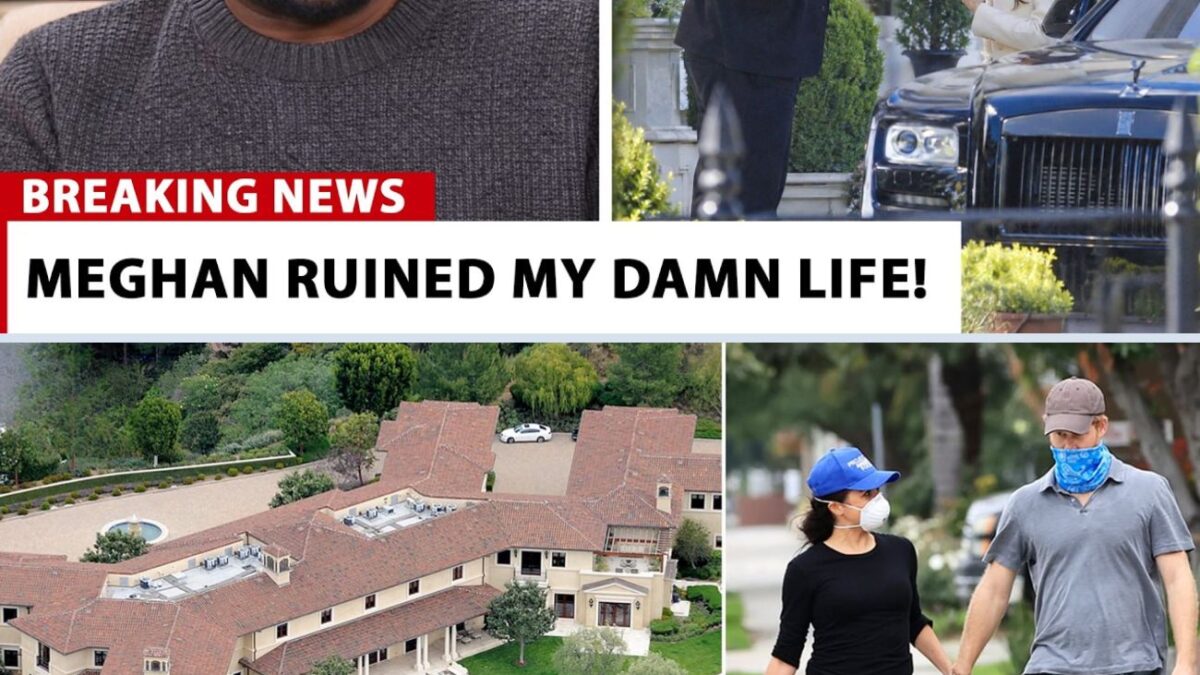
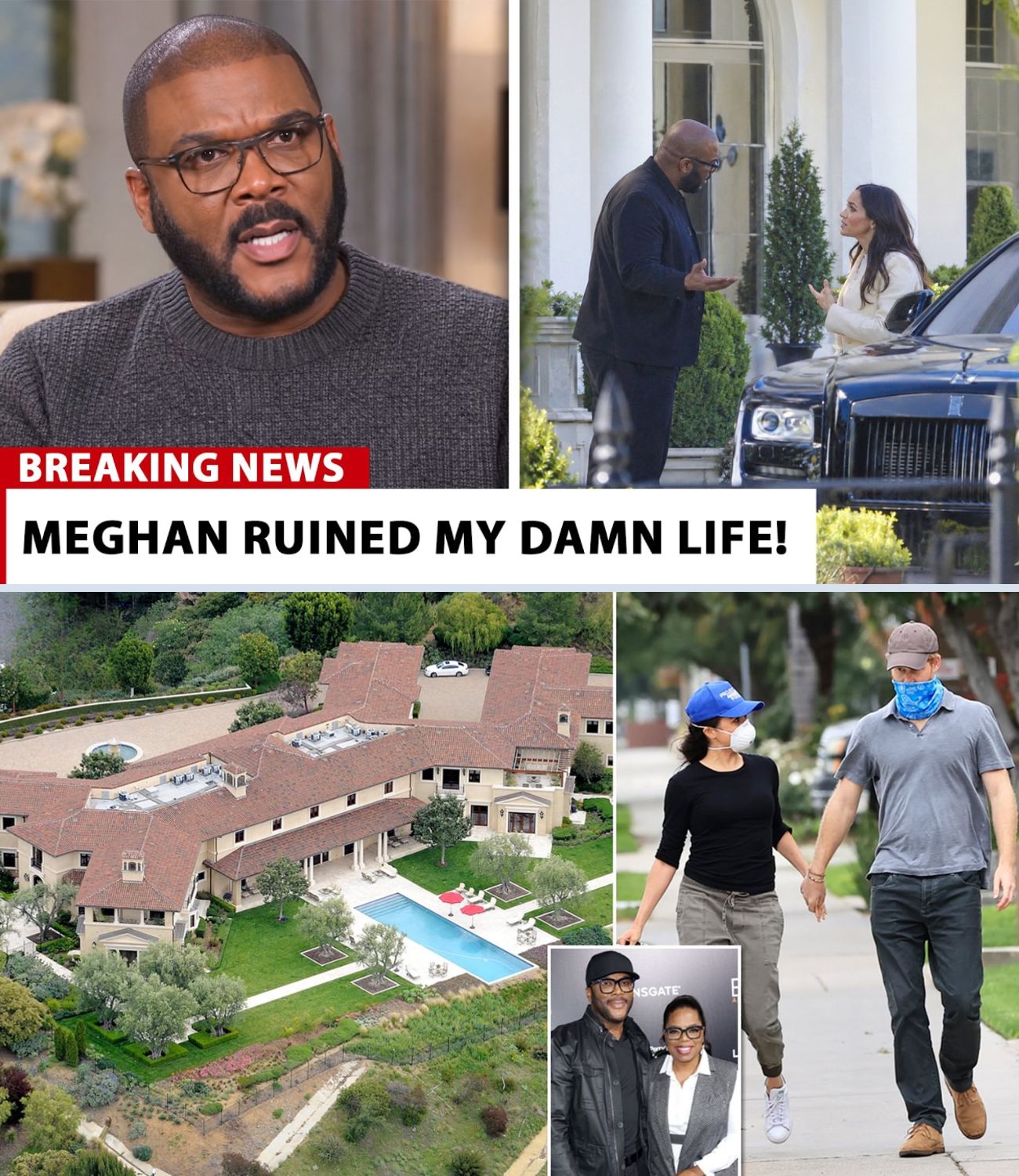
Yet, as any seasoned observer of high society knows, illusions can only outrun arithmetic for so long. The unravelling did not begin with a dramatic press conference or an official statement from Buckingham Palace. It started with a casual conversation over a garden fence. Actor Rob Lowe, standing on his porch in Montecito, watched a fleet of heavy-duty moving vans back down the private drive of the sprawling estate next door. Turning to his long-time neighbours, Lowe delivered a single, devastating sentence that instantly bypassed the local gossip columns and sent shockwaves through Hollywood: “Tyler took the house.”
That seven-word remark shattered a four-year mythology. When Prince Harry and Meghan Markle touched down in Southern California in the spring of 2020, fleeing the turbulence of royal life, the world was led to believe they had purchased their magnificent Mediterranean-style compound with their own hard-earned capital. It was heralded as the ultimate proof of their newfound financial autonomy—the moment a prince rejected the crown and built his own American dream from scratch.
However, corporate filings and legal documents examined by property insiders tell an entirely different story. The corporate structure, the primary guarantees, and the legal deed of trust sitting beneath that $16.7 million estate were never held in Prince Harry’s name, nor in Meghan Markle’s. From day one, the entire transaction anchored back to Tyler Perry. The entertainment mogul had not merely provided a temporary roof during their initial weeks of exile; he had engineered the entire financial foundation that made their California lifestyle possible.
For four consecutive years, while the couple filmed Netflix documentaries in front of manicured hedges and delivered pontifications from mahogany desks, Perry quietly absorbed the relentless financial bleeding. The public enjoyed the comforting illusion of absolute ownership while Tyler Perry held the actual paper. That single legal distinction explains why the property is currently being liquidated without Harry or Meghan wielding any meaningful control over the outcome.
The Burning Arithmetic of a Pseudo-Royal Court
To comprehend why Tyler Perry’s patience finally evaporated, one must examine the staggering overhead required to maintain a pseudo-royal court in the heart of affluent Santa Barbara. When the Duke and Duchess of Sussex stepped away from official working royal duties, they did not simply leave behind patronages and ribbon-cuttings; they abandoned a multi-million-dollar institutional machine that had underwritten their security, domestic staff, travel, and household expenses since birth.
Recreating that protective cocoon in the United States demands an astronomical monthly cash flow just to keep the lights on. At the apex of this expenditure sat their private security operation. Insisting that a 24-hour armed detail, armored vehicles, and advanced perimeter surveillance were absolute non-negotiables, Harry’s security apparatus alone burned through millions of dollars annually. Add to that the crushing property taxes on a sprawling Santa Barbara compound, landscaping crews, estate maintenance, legal retainers, high-powered public relations firms, and an army of domestic staff required to curate an effortless public image, and the burn rate quickly breached $4 to $5 million a year.
Initially, the public was assured that blockbuster commercial agreements would replenish these coffers indefinitely. The 2020 announcements of partnerships with Spotify and Netflix—widely reported to be valued north of $100 million—convinced many that an exiled royal could effortlessly transition into a billionaire media mogul. But corporate Hollywood operates on ruthless metrics. A headline announcement is not cash in a bank account; deals demand concrete deliverables, and the deliverables soon stalled.
Spotify terminated its partnership after a solitary podcast series, with senior executives publicly labelling the couple as “grifters.” Netflix similarly tightened the screws, demanding tangible content and reportedly requiring corporate lawyers to sit in on routine creative conference calls. The commercial pipeline was running bone dry, and the grand financial empire was evaporating before their eyes.
The King’s Unyielding Verdict
The ultimate catalyst for the crisis, however, originated 6,000 miles away in London. Harry had harboured a deeply ingrained psychological assumption throughout his adult life: he genuinely believed that his father’s paternal affection—and the lingering guilt surrounding Princess Diana’s tragic memory—would always prevent the royal vault from locking permanently against him. He assumed that when financial desperation struck, blood would ultimately thicker than constitutional protocol.
When Harry journeyed back to Britain under the guise of family outreach, he operated under the firm conviction that physical proximity would force a reconciliation, unlocking fresh cash transfers and the reinstatement of his taxpayer-funded police protection. Instead, he walked straight into a brick wall.
King Charles III, operating with the cold, unbendable finality of a monarch done being manipulated, dispatched an official communication through the royal household. The letter stated in unambiguous, unyielding English that Harry and Meghan remained strictly non-working royals, and that sovereign funding and state-backed protection would never, under any circumstances, be extended to them. In diplomatic terms, this was no temporary pause; the heavy oak door had been bolted from the inside, the keys thrown away, and the Sussexes formally expunged from the institutional balance sheet.
Deprived of any hope of a royal bailout, the Montecito mansion instantly transformed from a symbol of triumphant independence into an unpayable financial liability.
The Neighbours Who Exhaled
While the financial pillars cracked in America, local residents in Montecito experienced a profound sense of collective relief rather than sympathy. When the couple first arrived in 2020, preaching a desperate need for privacy and a quiet sanctuary to raise their young children, the ultra-wealthy enclave expected a low-profile family. Instead, they found themselves hosting an intrusive, six-year documentary production that shattered the community’s tranquil equilibrium.
Monteceto is an exclusive enclave of fewer than 9,000 residents where an unwritten social code reigns supreme: leave your ego at the gate, eschew flashy displays of armed security, and treat neighbours with basic decency. Famous actors, retired tech executives, and international financiers have inhabited those quiet lanes for decades without disruption. Yet, the moment the Sussexes settled in, the neighbourhood was treated like an outdoor soundstage.
Production vans and idling delivery trucks routinely blocked private lanes before dawn. Surveillance drones hovered relentlessly over eucalyptus trees, peering into neighbouring backyards and terrifying local pets. Simple errands were staged like military extractions; guards adorned with semi-automatic weapons stationed themselves visibly at the village petrol station, manufacturing an atmosphere of perpetual peril.
Social friction compounded the isolation. When an elderly female neighbour walked to their security gates bearing a handwritten welcome note and a bottle of fine Santa Barbara wine, she expected a polite nod. The following morning, she found both the unopened wine and the note discarded on her doorstep—a chilling rejection of basic human warmth. While Oprah Winfrey’s gates remained perpetually open to them, ordinary residents were stonewalled. At a popular local village bistro, Meghan reportedly threw a fit upon discovering she was placed on a short waiting list for a table, storming out in a huff as if the restaurant had committed lese-majesty.
Consequently, when Rob Lowe broke the news of Tyler Perry liquidating the property, the neighbourhood did not mourn; it simply exhaled. The camera crews packed up, the drones vanished, and the community returned to its peaceful quietude.
The Cotswolds Pivot and the Advent Calendar Fiasco
Faced with impending foreclosure in California, Meghan attempted a high-stakes two-pronged public relations pivot: crafting the illusion of a graceful European relocation while executing one final, desperate financial squeeze on Tyler Perry.
The first prong involved staging picturesque countryside strolls in the English Cotswolds. Photographed alongside high-society figures like Ellen DeGeneres and Portia de Rossi, she sought to frame a financial eviction as an act of noble maternal devotion—suggesting the family was merely returning to traditional European roots for the children’s education.
To fund this new chapter, her lifestyle brand, As Ever, launched a luxury holiday advent calendar in collaboration with Compartés Chocolates. Priced at a staggering $148 (pushing past $200 with shipping and taxes), the box offered twenty-four tiny chocolates—roughly £4.67 per bite. The breathtaking irony lay in the packaging: emblazoned across the front was an illustration of her sundrenched Montecito villa complete with California palm trees, marketed to British families battling a punishing cost-of-living crisis. It was a tonal disaster that underlined her severe disconnect from ordinary economic realities.
Behind closed doors, the real hustle unfolded. Instructed by Meghan, Harry placed an urgent call to Tyler Perry, deploying a script dripping with emotional blackmail. Harry leaned heavily on the memory of Princess Diana, invoking the vulnerability of young children and warning of the catastrophic PR fallout if the billionaire who rescued them in 2020 was exposed as the man rendering them homeless.
This time, however, the con game hit a brick wall. When Perry examined his accounting ledgers and tallied four consecutive years of unpaid carrying costs, emergency bailouts, and unfulfilled promises, his sympathy vanished. Recognizing that his generosity had been cataloged merely as an extraction mechanism, Perry bypassed negotiations entirely. He instructed his legal team to list the Montecito estate immediately under his sole legal authority, setting a fire-sale valuation to clear outstanding encumbrances and wipe his balance sheet clean.
The Iron Gate Slams in London
Realising the American dream was dead, Harry made a frantic dash back to London, assuming the palace would soften. He miscalculated profoundly. King Charles and Prince William had established an impregnable operational firewall.
Intelligence networks across Whitehall had long intercepted the reality of the Montecito mortgage distress. When Harry requested an urgent audience, he was met with a complete communications blackout. Charles’s private switchboard was given strict instructions: no phone calls put through, no emails forwarded. Official replies maintained that His Majesty’s diary was utterly full and no unscheduled meetings could be accommodated.
Prince William took an even sterner posture, refusing any private dialogue lest it be transcribed and monetised into future media content. By withholding royal access, the palace stripped Harry of his last remaining currency, leaving him stranded as an unemployed private citizen with an astronomical security bill.
Public hostility in Britain matched this institutional coldness. Over 4,000 residents in Brighton and Hove petitioned to strip them of their Sussex titles, chanting “Not my duke.” On national television, political figures openly joked about deporting Meghan back across the Atlantic. Meanwhile, Tatler magazine published its definitive Cotswolds special edition, executing a total editorial blackout of the Sussexes while gracing the cover with British actress Hayley Atwell—proving the local aristocracy viewed the exiles as entirely irrelevant.
The social rejection permeated daily life. At a historic Oxfordshire pub, the Three Horseshoes, pub staff reportedly took their cue from village sentiment and quietly refused to serve her table—a devastatingly British expression of silent contempt. Similarly, an attempt to enrol their children in an exclusive local prep school collapsed within days after their demands for disruptive motorcade escorts infuriated local parents.
The Portugal Escape Hatch and the Invictus Fallout
With California real estate in freefall—the Montecito mansion quietly marked down to a fraction of its original asking price to attract cash buyers—and Britain slamming its doors, the Sussexes turned their gaze toward the Iberian Peninsula. Real estate insiders in Lisbon confirmed discreet inquiries into properties in the exclusive coastal enclaves of Comporta and Melides. Portugal emerged not as a triumphant European expansion, but as a desperate escape hatch for a couple who had exhausted every option between their two native shores.
Simultaneously, corporate fallout struck their crown jewel: the Invictus Games. Promised multi-million-dollar sponsorships from tech giant Amazon for the upcoming Birmingham games evaporated as corporate boards recoiled from associating with a discredited prince whose own family refused him entry.
Back in Montecito, the inevitable physical reality finally manifested. Moving vans rolled down the private drive; domestic staff were handed abrupt two-terminations; and security cameras were unbolted from the trees. The armed guards packed up their gear and departed, leaving the private lane in peaceful silence.
Rob Lowe and his neighbours simply drew a collective breath, consigning the four-year American experiment to the past tense. Prince Harry and Meghan Markle discovered a harsh, unalterable truth: you cannot build a permanent dynasty on the quicksand of entitlement. While the British monarchy endures through quiet discipline, duty, and constitutional resilience, the illusion of Montecito has dissolved into the ledger books of reality—proving once and for all that the bill for independence always comes due.
You Might Also Enjoy

“We Thought They Would Negotiate”—What Argentine Soldiers Said When The British Attacked Goose Green

“You’ll Never Finish My Ruck March, Limey” — US Sergeant Who Challenged the SAS, Then Fell Out First






