Rob Lowe CONFIRMS Tyler Perry SOLD Meghan And Harry’s Montecito Mansion For $16 7M!
THE GREAT MONTECITO LIQUIDATION: How Tyler Perry Pulled the Plug on Harry and Meghan’s Multi-Million-Pound Illusion
When the Moving Trucks Roll Down the Lane
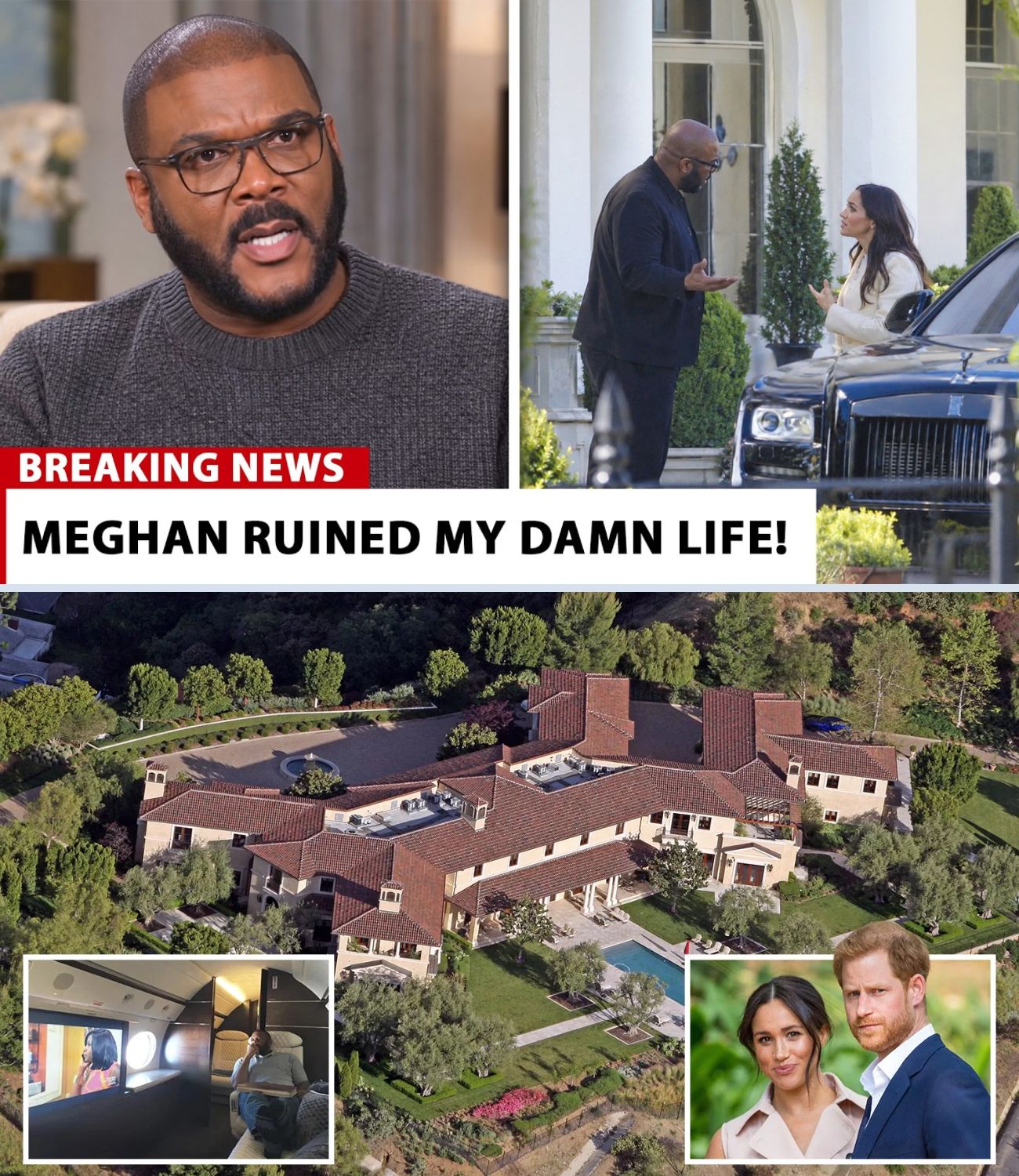
Rob Lowe stood quietly on his balcony in Montecito, watching the heavy-duty moving trucks navigate the winding, eucalyptus-lined road back to the sprawling Mediterranean estate next door. To anyone else, it might have looked like routine housekeeping, but to those familiar with the quiet rhythm of this ultra-exclusive enclave, it was the unmistakable visual of an empire crashing down. Turning to his neighbour, Lowe delivered a single sentence that sounded as though it had been ripped straight from a high-stakes political drama: “Tyler took the house.”
For weeks, that exact phrase had been echoing in hushed whispers across the manicured lawns and gated driveways of Santa Barbara County. When historians and financial analysts finally trace how Prince Harry and Meghan Markle reached the precipice where a billionaire benefactor had to step in and liquidate their prized $16.7 million California sanctuary, the narrative ceases to resemble a modern royal fairy tale. Instead, it lays bare an extraordinarily costly accounting disaster that finally caught up with two of the most polarising figures on the global stage.
For four long years, the public was fed a carefully curated narrative. We were told from the outset that Harry and Meghan had purchased that vast, sun-drenched estate entirely with their own hard-earned capital. It was billed as the definitive proof of their financial independence—the moment the wayward prince cast off the golden shackles of the British monarchy to become a self-made American success story, funding his family’s extravagant lifestyle through lucrative multi-million-pound content deals.
Yet, according to confidential property documents and legal sources scrutinised by industry insiders, the reality was starkly different. The grand estate was never registered in Prince Harry’s name. Nor was it registered in Meghan Markle’s. The underlying corporate structures, the foundational financial guarantees, and the legal mortgage tethering the property to reality all pointed back to one man: Tyler Perry.
The Architect of the California Dream
It was Perry who had quietly swooped in during the chaotic spring of 2020, offering them sanctuary when they fled across the Atlantic amidst a blaze of media publicity. While the public envisioned a simple act of temporary charity, Perry’s intervention went far deeper. He did not merely lend them a roof for a fortnight; he essentially underwrote the entire financial foundation that made their California experiment possible.
For four consecutive years, while the couple filmed glossy Netflix documentaries in front of strategically positioned garden fences and conducted high-profile interviews from their lavish home offices, Perry bore the staggering weight of the operation. He absorbed the invisible losses as maintenance costs skyrocketed, property taxes came due, and private security bills swelled to astronomical proportions. The public was blissfully unaware that the people projecting an image of untouchable corporate independence were entirely dependent on the silent goodwill of an American media mogul who held the actual deeds to their existence.
This distinction is not merely academic; it explains why the estate was dismantled without Harry or Meghan having any genuine control over the trajectory of the process. While their public relations machine was busy orchestrating a very different kind of headline across the Atlantic, the ground in Montecito was literally shifting beneath their feet.
The Parallel Realities of Oxfordshire and California
The timeline of their final months in America reads like a masterclass in deflection. While Meghan Markle was photographed executing picturesque countryside outings in Oxfordshire—wearing a crisp light blue shirt and white jeans, artfully cultivating the aesthetic of a triumphant British comeback—the financial machinery in California was seizing up.
Furniture moving trucks were quietly backing into the Montecito property under the cover of morning mist. Local household staff received abrupt, two-week termination notices, their employment contracts dissolved overnight. It wasn’t Prince Harry or Meghan Markle wielding the pen to reorganise their assets; it was Tyler Perry’s legal representation executing damage control.
This coordinated smoke-and-mirrors campaign was designed to shield the public from an inescapable financial truth. Stepping away from the British royal family meant walking away from a multi-million-pound institutional apparatus that had quietly absorbed the staggering costs of security, private travel, staff wages, and residential upkeep since Harry’s infancy. Attempting to replicate a royal court on the sun-baked coast of California required an immense, relentless river of cash.
The private security detail alone—insisted upon by Harry, featuring round-the-clock armed guards, heavily armoured vehicles, and perimeter surveillance—drained millions from their accounts annually. Add to that the eye-watering property taxes of Santa Barbara County, legal retainers, public relations firms, and an army of domestic workers, and the budget became a bottomless pit.
For a brief window, massive corporate partnerships seemed to bridge the gap. The 2020 announcements of multi-million-pound deals with Spotify and Netflix led many to assume Harry had proven the sceptics wrong. But commercial contracts in the entertainment industry are not blank cheques; they demand tangible, high-performing output. That revenue flow soon hit a brick wall. Spotify unceremoniously ended their partnership after a single podcast series, with senior executives reportedly labelling the venture a failure. Netflix tightened the corporate screws, demanding strict deliverables and insisting that company lawyers sit in on key conference calls. The commercial engine meant to fuel their lavish lifestyle was sputtering out.
The King’s Iron Door and the Shattered Illusion
The ultimate catalyst for the crisis, however, came from across the ocean. Harry had spent years operating under a deeply ingrained assumption regarding his father, King Charles III. He believed that familial lineage and paternal guilt—rooted in the tragic legacy of Princess Diana—would ultimately override political reality. He convinced himself that geographical proximity or a well-timed emotional appeal would force a reconciliation, unlocking new financial transfers and restoring the taxpayer-funded security detail he felt he was owed.
When Harry recently touched down in the United Kingdom, he was acting on the premise that the palace doors would swing open. Instead, he was met with an official message from the sovereign that ended the game once and for all. According to insiders who caught a glimpse of the correspondence, King Charles wrote in a tone that was chilling, formal, and entirely devoid of emotional leverage.
The letter made it unequivocally clear that working royal status is not a moveable feast. Sovereign funding and state-backed protection mechanisms would never be reinstated, and the decision was final. The door was not merely ajar; it was locked from the inside, the keys discarded, and their names permanently excised from the institution’s active rosters.
The moment that royal verdict was delivered, the California dream evaporated. Without sovereign backing to bail them out, the $16.7 million Montecito palace was transformed from a symbol of rebellious freedom into an unpayable, suffocating liability.
The Montecito Backlash: A Community Breathes a Sigh of Relief
While the financial walls were closing in, the local reaction within Montecito itself tells a compelling story of alienation. When the couple first arrived in 2020, the local populace—comprising fewer than 9,000 residents, including quiet billionaires, retired tech moguls, and legendary actors—assumed they were simply a young family seeking peace.
That illusion shattered almost immediately. Montecito operates on a strict unwritten social contract: leave your ego at the gate, keep a low profile, and respect the profound tranquillity of the region. Instead, the arrival of the Duke and Duchess of Sussex transformed sleepy residential lanes into an outdoor television production set.
Security drones hovered persistently over eucalyptus trees, peering into neighbouring gardens and unsettling local pets. Armed guards loitered openly around the village petrol station, sporting semi-automatic weapons in a theatrical display of perpetual siege mentality that grated on long-term residents.
Anecdotes of social isolation quickly piled up. In the early days, a well-meaning elderly neighbour walked up to the security gates bearing a handwritten welcome note and a bottle of fine Santa Barbara wine. The following morning, she found the unopened envelope and the sealed bottle left out on the curb like discarded trash—rejected as an unacceptable breach of protocol. While Oprah Winfrey’s gates remained open to them, ordinary community members were treated as potential security threats.
Consequently, when Rob Lowe broke the news to his neighbours that Tyler Perry was liquidating the property, the reaction across the enclave was not one of sympathetic sorrow. There was no weeping in the rose gardens. Instead, the entire neighbourhood drew a collective, audible sigh of relief. The film crews packed up their gear, the drones were grounded, and the quiet dignity of the California coast was finally restored.
The Cotswolds Spin and the Compartés Chocolate Scandal
Faced with the collapse of their American venture, Meghan Markle’s public relations team pivoted to an ambitious, two-pronged counter-offensive designed to reframe their impending exit as a glamorous, European lifestyle choice.
The strategy was simple: flood the lifestyle press with subtle hints of a permanent move to the picturesque Cotswolds in England. By projecting an image of rural British sophistication—photographing sunny garden lunches and mingling with high-profile acquaintances—they hoped to control the narrative before the property repossession became public knowledge. Financial distress would be cleverly disguised as maternal relocation.
To fund this new chapter, immediate liquidity was required. Just in time for the winter holiday season, a high-end collaboration with Compartés chocolates was launched. Amid a punishing cost-of-living crisis across Britain, where ordinary working families were rationing their heating, the launch featured a limited-edition $200 advent calendar containing twenty-four tiny chocolates—working out to nearly five pounds per bite.
The insult, however, lay in the design. The box featured an Italian-style illustration of their sunny Montecito mansion, complete with palm trees and roaming chickens. British consumers were essentially being asked to fund a sugary shrine to a California estate they could no longer afford, all while being fed stories about a permanent return to British soil.
The local aristocracy, meanwhile, was wholly unimpressed. When Tatler magazine published its much-anticipated special issue celebrating the elite social circles of the Cotswolds, featuring British actress Hayley Atwell on the cover and dozens of pages dedicated to regional tastemakers, Prince Harry and Meghan Markle were not mentioned even once. The local elite did not need to issue a press release rejecting them; they simply pointed their cameras elsewhere, making it abundantly clear that the return of the Sussexes meant little to nothing to high British society.
The everyday reality was harsher still. During an outing to the historic Three Horseshoes pub in Oxfordshire, designed to project effortless integration into rural life, staff members quietly refused service, enacting a classic, understated form of local rejection. When the couple attempted to enrol their children in an exclusive local academy—demanding private car convoys, blocked-off parking, and heavy security that brought narrow country lanes to a standstill—other parents pushed back. Faced with local amusement rather than deference, the children were swiftly withdrawn.
The Final Showdown with Tyler Perry
Back in California, the final act of the financial drama was playing out behind closed doors. Meghan’s final playbook relied on emotional blackmail. Insiders revealed that Harry was instructed to make an urgent, personal phone call to Tyler Perry, leveraging memories of Princess Diana, invoking the vulnerability of young children, and warning of the public relations disaster that would unfold if the world learned that their benefactor was throwing them out.
The strategy was designed to force Perry into extending yet another line of credit. But this time, when Perry opened the ledgers, the illusion shattered. The audit revealed four consecutive years of emergency withdrawals, ballooning maintenance expenses, and a cycle of manufactured crises used to justify infinite financial bleed.
Perry did not scream, nor did he issue an angry tabloid statement. He simply contacted his legal counsel and issued irrevocable instructions: the Montecito estate was to be listed immediately for open market sale, priced aggressively to clear all accumulated bank debts and county taxes.
When Harry frantically called back, begging for a delay to arrange a dignified exit strategy, the response was uncompromising. There would be no delay, no joint PR statement masking the transition as a mutual choice, and no special consideration for royal pride. The property was placed under strict legal receivership. Valued on paper at an optimistic $34 million during their peak ambitions, the estate’s asking price plummeted toward reality as it was slashed to $14.65 million to attract genuine cash buyers.
Portugal and the Closing Doors
With America closed off and Britain hostile, the couple’s gaze drifted toward the southwest coast of Europe. Reports from Lisbon property markets confirmed that the Sussexes had been making discreet inquiries regarding coastal retreats in Melides and Comporta, Portugal.
While their media allies spun this as an ambitious continental expansion of a global philanthropic portfolio, the reality was stark. It was not a triumphant royal conquest; it was a desperate European retreat. They could no longer afford the astronomical upkeep of the United States, and permanent stability in the United Kingdom remained a daily public humiliation.
Even their philanthropic endeavours felt the shockwaves. Preparations for the upcoming Invictus Games in Birmingham hit a severe sponsorship drought. Major corporate backers, wary of an association with a financially strained prince whose calls are ignored by his own flesh and blood, hesitated to release funds.
The Anatomy of a Fallen Strategy
As the moving trucks finally pulled away from the Montecito estate, leaving behind an eerie silence where private security drones once buzzed, the deeper lesson of the Sussex saga became glaringly apparent.
Prince Harry and Meghan Markle built their multi-million-pound post-royal existence on a fundamentally flawed premise: the belief that institutional legacies, sovereign nations, and billionaire donors could be treated as an inexhaustible line of credit with zero consequences. They assumed that the profound public sympathy surrounding the tragic loss of Princess Diana in 1997 was an immortal currency that could never lose its value.
In the entertainment capitals of Hollywood, controversy is currency, and playing the victim generates headlines. But in the enduring mechanics of global institutions and established societies, power is rooted in quiet discipline, public service, and an unwavering commitment to duty over self-promotion.
King Charles III and Prince William understood a fundamental truth that Harry allowed his arrogance to eclipse: ancient monarchies do not endure by engaging in public spats with exiled relatives. They simply stand firm, let the noise exhaust itself, and allow the unyielding laws of financial reality to complete their work.
Today, Prince William and Princess Catherine stand as the undisputed, stable future of the British monarchy, earning widespread public respect through patience, resilience, and steady adherence to their national obligations.
Prince Harry, by contrast, finds himself adrift between two continents that have effectively closed their doors. In the United Kingdom, he is met with deep public weariness and local resistance—such as the 4,000 petitioners in Brighton demanding the formal stripping of his titles. In the United States, the glamorous Hollywood illusion has dissolved, replaced by unsparing financial audits, cancelled corporate contracts, and the quiet liquidation of a rented dream.
The grand Montecito experiment is over. The keys have been returned, the creditors have settled their accounts, and the world has moved on to the next chapter, leaving behind the sobering wreckage of a strategy built entirely on sand.
What are your thoughts on the unfolding events surrounding the Sussexes’ departure from California? Share your perspective in the comments section below.
You Might Also Enjoy

“We Thought They Would Negotiate”—What Argentine Soldiers Said When The British Attacked Goose Green

“You’ll Never Finish My Ruck March, Limey” — US Sergeant Who Challenged the SAS, Then Fell Out First






