Royal Family TRANSFORMED Forever! Anne SIGNS The DECISION Charles Never Dared To Make!
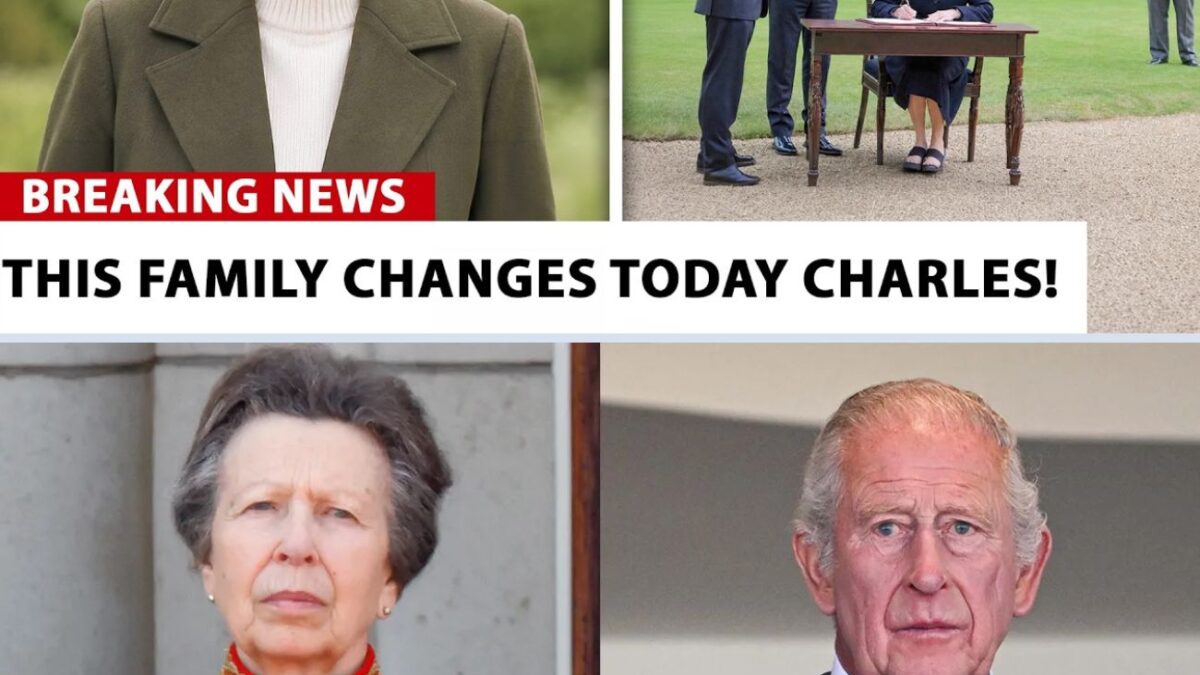
The Queen Who Lost Her Pen: Inside Princess Anne’s Palace Coup That Shook the Monarchy to Its Core
History in the British monarchy is rarely written with the theatrical crash of falling pillars; more often, it arrives on a single sheet of cream paper, carried quietly across a polished parquet floor. But the events that unfolded in a crowded central London conference hall this autumn shattered that polite illusion. Princess Anne, the unflinching Princess Royal, stood before three hundred people, held up a single document, and signed away an entire era of unchecked household power. In the front row, Queen Camilla went visibly pale, rose before the final sentence had even left Anne’s lips, and walked out of the room. By evening, the Queen’s office had summarily cancelled every engagement scheduled for the weekend, plunging Clarence House into an icy, impenetrable silence.
The palace has offered no explanation. Anne has remained characteristically mute. Camilla’s staff have retreated behind closed doors. Yet that profound, heavy vacuum of sound is the loudest testament to a constitutional earthquake that has been rumbling beneath the royal household for months. At the heart of the storm lies a thirty-four-word clause—a legal tether designed to rein in a queen’s private office, signed into effect not by a reigning monarch, but by his sister while he was thousands of miles away.
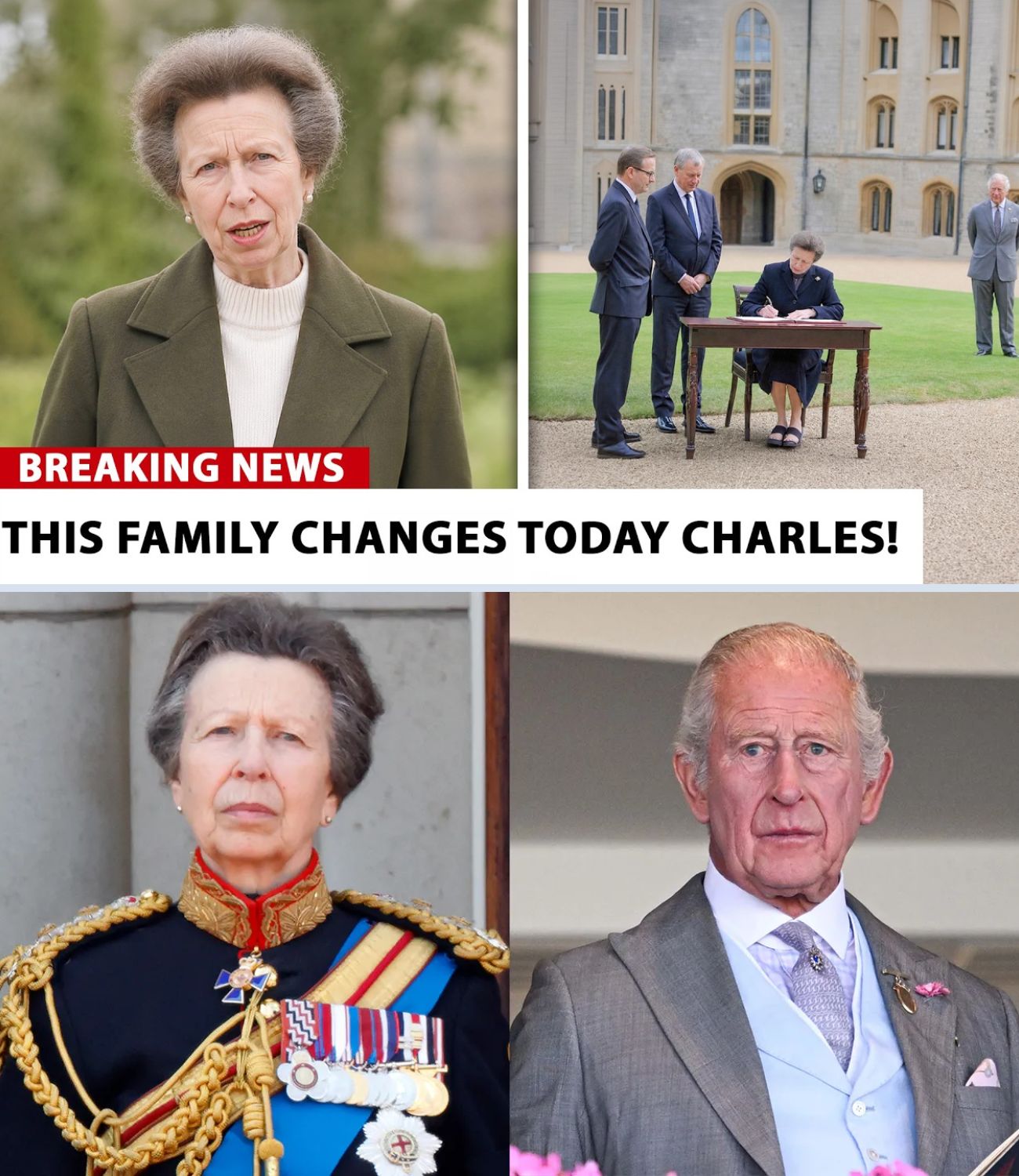
The King’s Departure and the Mechanics of State
The groundwork for this extraordinary confrontation was laid the moment King Charles boarded a flight on October 27 for a demanding nine-day tour of the Caribbean. Beginning in the Bahamas for his first official visit as sovereign, moving onward to Guyana to mark sixty glorious years of diplomatic ties, and culminating in Antigua and Barbuda for the Commonwealth Heads of Government Management meeting, the itinerary was punishing. Though Camilla was scheduled to join him later in the week, her absence during the opening leg left a noticeable administrative gap at the centre of British governance.
Even abroad, a monarch’s work never truly ceases. Red dispatch boxes follow the crown across oceans, continents, and time zones; papers have famously been signed from holiday villas and hospital beds alike. The man responsible for orchestrating this relentless river of statecraft is Sir Clive Alderton, private secretary to the King since September 2022. Having served Charles and Camilla during their tenure as Prince of Wales and Duchess of Cornwall, Alderton understands the delicate, competing factions of the royal household better than almost anyone.
Yet there are limits to what even a seasoned courtier can absorb. For months, Whitehall corridors had hummed with rumors regarding a steady stream of requests emanating from the Queen’s side of the household. These were not minor administrative queries; they included proposed appointments, residential allocations, and honors packages carrying the names of Camilla’s adult children—Tom and Laura, aged fifty-one and forty-eight respectively—who hold no royal titles of their own. As the pile grew, the private secretary’s office reportedly found itself caught in an impossible balancing act, weighing each exceptional favor against institutional propriety. The solution, drafted by harried officials, was a single, definitive page intended to establish absolute boundaries. All it required was the King’s signature.
The King’s signature, however, was the one thing it never received.
The Unsigned Folder in the King’s Study
To understand why that signature stalled, one must look at the peculiar legal architecture of the British crown. The system of Counselors of State—trusted senior royals empowered to execute routine administrative duties, hold Privy Council meetings, and receive ambassadors in the monarch’s absence—has existed for over a century, formalised by the Regency Act of 1937. By law, a Counselor cannot act alone; at least two must operate in tandem, their executive powers derived from letters patent signed by the sovereign prior to departure.
For decades, the roster of Counselors was small and predictable. Then, the modern era exposed structural vulnerabilities. By 2022, with Prince Andrew retired from public duties and Prince Harry based permanently in California, the active pool had dwindled dangerously. Swift parliamentary action in December 2022 added Princess Anne and Prince Edward permanently to the list, ensuring reliable execution of state duties.
When Charles jetted off to the Caribbean this autumn, he signed the letters patent unlocking that constitutional machinery for his sister and his brother. But the specific buff folder concerning Clarence House appointments had sat in his Buckingham Palace study long before his departure—and it carried a strange, silent history.
According to those familiar with the internal dispatch logs, the folder bore a penciled item number on its cover and three identical, sobering entries beside it: returned unsigned. One entry in March. Another in June. A third in September. Three separate times, the document had crossed the threshold of the sovereign’s private study; three separate times, it had emerged completely untouched.
The conclusion drawn by palace insiders is as human as it is constitutional. Charles had accepted the necessity of the clause in principle, recognizing the wisdom of re-establishing institutional control over household patronage. Yet, when faced with the prospect of formally restricting his own wife while she sat across the dining table from him, he simply could not bring himself to apply the ink. He wanted the overreach checked, but he lacked the heart to wield the pen. Instead, he left the folder on his desk, signed the letters patent empowering his sister, and flew across the Atlantic.
The Morning at Buckingham Palace
If the King hoped the problem would quietly dissolve in his absence, he fundamentally underestimated the Princess Royal.
On the second morning of the royal tour, shortly before nine o’clock, Anne arrived at Buckingham Palace unaccompanied, driving herself in an unmarked car. Accompanied by a senior member of the private secretary’s staff, she marched straight into the King’s study. The morning red boxes awaited her attention, and she tackled them with her characteristic brisk efficiency—standing at first, reading at lightning speed, and authorizing routine ministerial papers and Privy Council notices.
Then, the administrative aide stepped forward, laid the dispatch log beside the box, and pointed a finger at the penciled item number.
The drama escalated rapidly. Around 8:45 AM, a trusted staffer who had served the Queen for fifteen years appeared at the study door carrying a leather folder intended for royal review. Protocol intervened: a clerk politely informed her that the room was strictly closed during Counselor operations. As she waited in the corridor for eleven minutes under the watchful eyes of footmen and messengers, word reached Camilla’s private apartments.
Within twenty minutes, the Queen arrived herself. Dismissing all aides and officials—even a footman carrying a fresh tray of tea—she closed the heavy oak door behind her.
What transpired inside that room remains a matter of strict internal briefing. Camilla’s opening inquiry was measured: she asked whether Charles was aware of the proceedings. Anne’s response was ice-cold; she noted that the King had signed the letters patent knowing precisely who would occupy the chair, and with what mandate.
Realising the trap closing around her, Camilla appealed for time. She pointed out that she would be standing beside her husband in Antigua by November 1st, arguing that the matter should await his return so it could be settled with him in the room. Furthermore, she reportedly offered a compromise: she sat on the Counselor list herself and could serve as the second signature, provided two specific lines in the clause were softened.
Anne’s reply was characteristically unforgiving. The document, she stated flatly, contained no soft lines. It had already been returned unsigned three times; she would not make it four. Camilla departed by a private side door, her weekend itinerary hanging by a thread.
The Second Signature and the Thirty-Four Words
Anne was now confronted with a unique constitutional hurdle: a Counselor of State cannot act alone, and the only other eligible royal in the building had just walked out. Prince William, demonstrating the hereditary instinct for self-preservation reminiscent of his mother Diana, had already been approached and had respectfully declined. While fully supporting the principle of administrative oversight, he refused to place his signature on a document directly curbing his stepmother’s household while his father was abroad.
Left with little choice, Anne reached for her younger brother. Prince Edward, the Duke of Edinburgh, maintains a reputation as the family’s most reliable, non-combative workhorse—recording over 313 official engagements in 2025 alone. Driving up from Bagshot Park in Surrey, Edward arrived at the palace shortly before noon.
Reading the single-page document once, he posed a single, pragmatic question: had the private secretary’s office cleared the wording? Assured that it was categorized as standard household administration falling well within their remit, Edward took a pen from the King’s tray and inscribed his signature directly beneath his sister’s. The clock on the mantelpiece ticked to 12:12 PM.
The text of that historic document, spanning exactly thirty-four words, reads as follows:
“From the day of signature, the Queen’s private office answers to the King’s private secretary. No one may propose an appointment, residence, or honor in her name or her family’s without his written consent.”
It was a masterclass in bureaucratic jujitsu. The clause did not strip Camilla of her title—an action legally impossible for Counselors to execute—but it seized her pen. Every patronage request, honorary nomination, and family favor originating from her corridor now had to pass through the desk of Sir Clive Alderton before achieving validity.
The Fallout and the Public Reckoning
The administrative machinery moved with terrifying speed. Within an hour, three authenticated copies were generated. The signed original was secured directly in Anne’s possession, deposited into a plain folder to prevent any convenient “misplacement.”
By 3:10 PM, a palace messenger carried a sealed envelope straight to the head of the Queen’s private office. Witnesses report that upon reading the single-page decree, the senior official sat down heavily, while junior staff members froze at their desks. The receipt was signed in absolute silence. For the remainder of that afternoon, the telephone lines on that floor remained dead.
The immediate casualty was Camilla’s weekend schedule. Exactly fourteen pending administrative requests—ranging from high-profile residential viewings to honor-associated luncheons and family appointments—were sitting in the queue. Without the written countersignature of the King’s private secretary, not a single one could advance. By evening, the invitations had been discreetly withdrawn, one telephone call at a time.
Sensing the ground shifting beneath her feet, Camilla placed an emergency call to King Charles later that evening in the Bahamas. Operating four hours behind London time, the King took the eleven-minute call between engagements. According to sources familiar with the exchange, he listened intently before delivering a crushing verdict: the document stood. He refused to declare it premature, nor did he offer to revoke it upon his return. The one man holding the constitutional power to erase those thirty-four words was the very man who had quietly permitted his sister to sign them into existence.
When friendly media contacts attempted to spin the document as a mere “draft” carrying no legal weight, Anne decided to end the war of briefings once and for all.
Her diary had long scheduled a speech at a prominent conference in central London—a routine morning engagement addressing local volunteers. Camilla’s name was listed on the official programme as a guest of honor. To withdraw at the eleventh hour would have generated unwanted speculation, so Anne attended, stepping up to the lectern with a quiet, steely resolve.
Delivering her address in her usual dry, practical tone, Anne spoke for nine minutes on civic duty. Then, reaching into her folder, she produced the cream sheet of paper, lifting it high at arm’s length so the bold ink signatures were visible to the back rows. In an even, uninflected voice, she read the thirty-four words aloud to the assembly, explaining clearly that she and the Duke of Edinburgh had executed their lawful duties as Counselors of State the previous noon.
The reaction in the hall was instantaneous. Camilla, seated in the front row clad in a pale blue coat, rose abruptly from her chair, her face drained of color. For ten suffocating seconds, absolute stillness gripped the room. Then, ignoring her lady-in-waiting’s instinctive reach for her sleeve, the Queen picked up her handbag, walked briskly down the aisle, and swept through the side doors. The heavy thud of that door closing behind her became the defining sound of the modern royal era.
A Glimpse Toward Tomorrow
By nightfall, newspaper front pages across Britain had immortalised the moment, christening Camilla “The Queen Who Lost Her Pen.” Buckingham Palace issued a terse, unyielding statement confirming that the Counselors of State had acted strictly within their constitutional powers on a matter of routine household administration.
As King Charles prepares to reunite with his wife on November 1st, the political landscape of the British monarchy has fundamentally shifted. Sir Clive Alderton’s upcoming departure in the summer of 2027 means that whoever inherits the post of private secretary will step into a reformed court where the sovereign’s office holds undisputed supremacy over every corner of the estate.
History reminds us that royal consorts without blood lineage must ultimately navigate a diminishing horizon; one need only look back to Queen Adelaide in 1837 to see how a dowager’s allowance and residence are dictated entirely by the reigning monarch of the day. By establishing this precedent today, Princess Anne has ensured that the financial and administrative parameters of tomorrow will be guarded by the lineage of William and Catherine, rather than the informal networks of a previous generation.
The cream paper rests safely in the sovereign archives, locked behind institutional protocols that no individual—no matter how elevated their station—can bypass. And as Prince William surveys the quiet dignity of his father’s restored court, the message sent across the London hall remains crystal clear: dynasties endure not through personal favors, but through unyielding, uncompromised duty.
You Might Also Enjoy

“We Thought They Would Negotiate”—What Argentine Soldiers Said When The British Attacked Goose Green

“You’ll Never Finish My Ruck March, Limey” — US Sergeant Who Challenged the SAS, Then Fell Out First






