Royals STUNNED As Kensington Palace CONFIRMS SHOCKING News About William And Kate’s New Home!
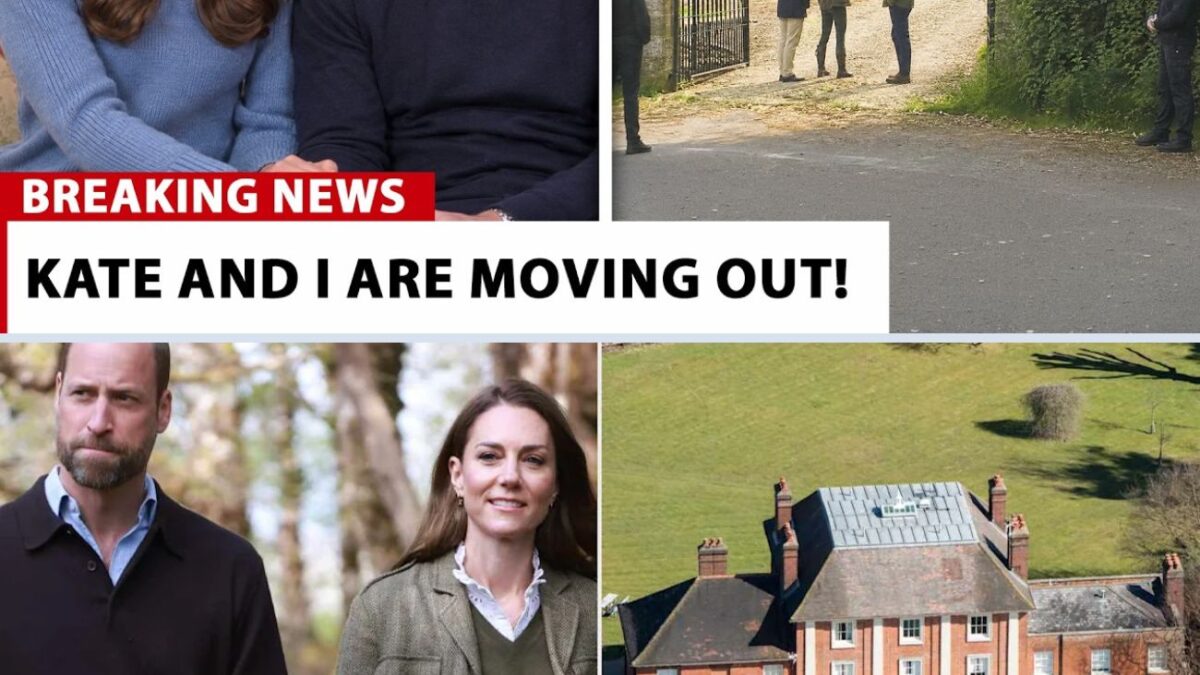
INSIDE THE REVOLUTION: The Shocking Truth Behind William and Kate’s Secret Sanctuary at Forest Lodge—Why the Future King and Queen Just Shattered Centuries of Royal Tradition!
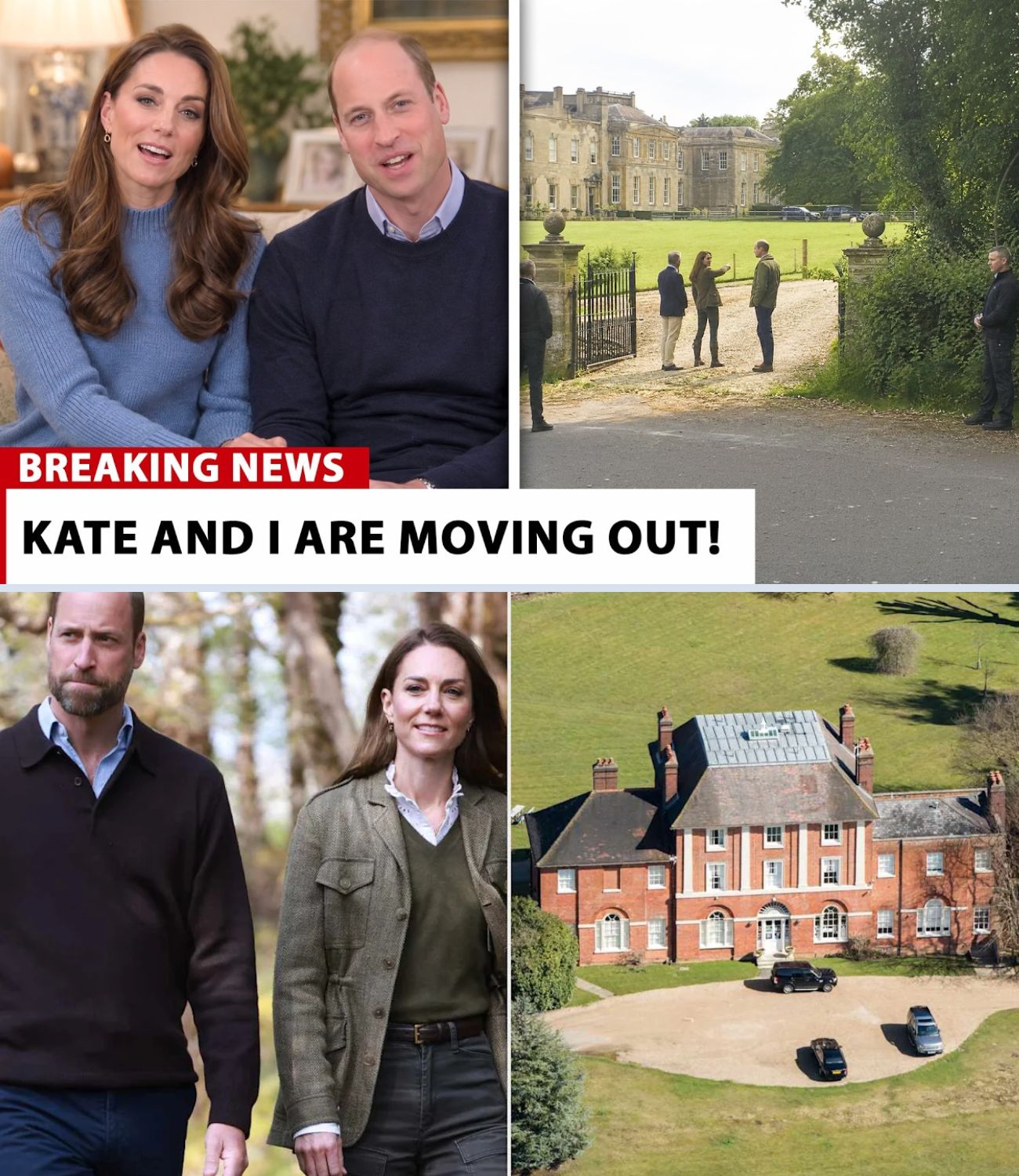
For months, the grand corridors of court gossip were entirely consumed by a singular, intoxicating narrative. Royal watchers, tabloid editors, and palace insiders were locked in a unanimous fever-dream: Prince William and Princess Catherine were packing their bags for Fort Belvedere. It was a theory that practically wrote itself. Steeped in dramatic history, sprawling across the edge of Windsor Great Park, and famously tied to the scandalous abdication of Edward VIII, Fort Belvedere felt like a cinematic stage fit for a future King and Queen who suddenly found themselves needing room to breathe. It was grand, it was imposing, and it carried that unmistakable aura of ancient royal power.
And then, with a swiftness that left royal correspondents blinking in disbelief, Kensington Palace blew the entire speculation market wide open.
They weren’t moving to Fort Belvedere. They weren’t leaning into the gilded excess of traditional royal real estate. Instead, the palace quietly confirmed to the press that the Prince and Princess of Wales, alongside their three children, Prince George, Princess Charlotte, and Prince Louis, were setting their sights on an entirely different address: Forest Lodge.
If you thought this was merely a routine estate swap between royals, think again. The choice of Forest Lodge—and the astonishing, unprecedented ground rules William and Catherine have laid down for their new chapter—signals something far more radical. It is nothing short of a quiet revolution at the heart of the British monarchy. Beneath the polite veneer of a property announcement lies a profound, uncompromising rejection of how things have always been done. By refusing state funding for renovations and entirely banning live-in staff, William and Catherine are tearing up the old job description of royalty and drafting an entirely new one from scratch.
To understand why this move has sent seismic shocks through the establishment, we have to wind the clock back to the summer of 2022—the moment the couple initiated what history will likely record as the Adelaide Cottage Experiment.
The Adelaide Cottage Experiment: When Less Became More
For generations, the default setting for young senior royals was London. Kensington Palace was more than just a postcode; it was an institutional nerve center, a high-security fishbowl located right in the throes of the capital where the press could camp outside the iron gates and turn everyday family life into an endless global media cycle.
When William and Catherine packed up their brood and walked away from that institutional gravity in 2022, it sent shockwaves through royal circles. They traded the palatial grandeur of London for Adelaide Cottage, a charming but objectively modest four-bedroom home tucked away in the quiet acreage of Windsor Great Park. At the time, cynical tongues wagged. Was it a temporary staging post? Was it a brief hospice-adjacent retreat to be close to the ailing Queen Elizabeth II in her final years? Or was it simply a whimsical lifestyle break for the children?
As it turned out, it was none of those things. It was a stress-test.
William and Catherine were quietly evaluating whether a modern family could actually survive outside the suffocating gilded cage of traditional royal operation. They enrolled Prince George, Princess Charlotte, and Prince Louis into Lambrook School, ditching the intimidating pomp of elite London prep academies. They wanted school runs without convoys of blacked-out security vehicles. They wanted weekend strolls without lenses zooming in from every tree line. And astonishingly, it worked.
Insiders close to the couple noted that Adelaide Cottage transformed from an experimental refuge into a genuine, beating heart of a home. For the first time, Catherine found a rhythm that allowed her to be a hands-on mother in a way that the rigid, protocol-bound corridors of Kensington Palace never permitted. They discovered the profound luxury of ordinary, unscripted domesticity.
Yet, time moves on, and children grow. Prince George’s recent milestone—his twelfth birthday—marked the exact moment the cozy cottage narrative began to stretch at the seams. Growing children require space, autonomy, and a degree of privacy that four bedrooms simply cannot sustain. Naturally, the rumor mill ground into gear, churning out the Fort Belvedere hypothesis because it matched the public’s ingrained script of how future monarchs are “supposed” to live.
The Fort Belvedere Mirage: Rejecting the Gilded Cage
The public obsession with Fort Belvedere revealed a fascinating psychological chasm between how observers view the monarchy and how William and Catherine actually intend to run it. Fort Belvedere is dripping with dramatic historical baggage. It is loud, it is sprawling, and it carries the weight of a bygone era of monarchical theatricality.
When Kensington Palace stepped in to shut down the Fort Belvedere rumors while confirming the move to Forest Lodge, they were sending an intentional message. Forest Lodge, an elegant Grade II-listed Georgian mansion boasting eight bedrooms, a tennis court, and ample green space within Windsor Great Park, is discreet. It is historic, certainly, but it is fundamentally understated. It sits safely away from the flashbulbs, shielded by the natural topography of the Berkshire countryside.
Consider the alternatives that historical precedent laid at their feet. Buckingham Palace looms as the ultimate administrative stage; Windsor Castle stands as the ultimate stone fortress. Both are brilliant, glittering nerve centers of statecraft. Yet, William and Catherine actively turned their backs on both. By choosing a property that the vast majority of the British public had never even heard of prior to the announcement, they made a resounding statement: they do not wish to reign from behind towering fortress walls, nor do they want their children to grow up inside a living museum.
This is a couple actively rewriting their own job description. They are diagnosing the deep malaise that has historically afflicted royal families—where institutional duty systematically devours personal well-being—and they are inoculating their household against it.
The Human Cost: A Sanctuary Born From Trauma and Grief
To view this relocation purely through the lens of real estate is to miss the beating, emotional heart of the story. Forest Lodge is not just an upgrade in square footage; it is a tactical retreat designed for psychological survival.
The past few years have been an exercise in unremitting endurance for the Wales family. They have carried the crushing weight of institutional transition, bidding farewell to the towering pillars of their family: Prince Philip and Queen Elizabeth II. They have weathered vicious, relentless media storms and invasive public speculation during Catherine’s harrowing health struggles. Layer onto that the compounding agony of prolonged, public family fractures with Prince Harry and Meghan Markle, alongside the omnipresent, suffocating scrutiny of raising children who are destined to wear the crown, and the picture becomes stark.
One insider put it with searing bluntness: moving offers a fresh start, a clean slate, and a vital chance to leave some of the most unpleasant, agonizing memories of recent years firmly in the rearview mirror.
Adelaide Cottage, despite its peaceful charm, remains inextricably linked in the family’s collective memory to a period of immense grief, medical terror, and unprecedented stress. Forest Lodge represents the ultimate restart button. It is an intentional sanctuary where a father can slam the door on the circus of public life and simply be a dad, and where a mother can recover and nurture her family away from the relentless glare of the tabloid microscope. It is a deeply human response to extraordinary circumstances, explaining why they have been so utterly fearless in breaking protocol to achieve it.
The Ultimate Bombshells: Private Funding and No Live-In Staff
If the choice of location raised eyebrows, the logistical details attached to the move caused total cardiac arrest among royal commentators. William and Catherine have implemented two rules regarding Forest Lodge that completely shatter centuries of royal tradition.
First, they are paying for every single pound of the renovations out of their own private pockets. No government handouts. No dip into the Sovereign Grant. No reliance on the hard-pressed British taxpayer to fund their domestic comfort.
The ghost of Frogmore Cottage still looms large over royal finances. The multi-million-pound taxpayer-funded refit that preceded the Duke and Duchess of Sussex’s brief occupancy became an absolute PR disaster—a lightning rod for accusations of entitlement and excess that haunted Harry and Meghan for years. William and Catherine watched that masterclass in public relations self-destruction unfold in real-time. They witnessed how swiftly public adoration evaporates the moment the House of Windsor is perceived to be living lavishly at the public’s expense.
By drawing a hard, unyielding line and declaring that they are funding their own permanent home, William and Catherine have executed a masterstroke of modern accountability. It strips away any ammunition critics might use to accuse them of draining state coffers. It demonstrates financial transparency and responsibility, granting them an invaluable moral high ground in any future debates concerning royal budgets.
Yet, the second revelation is arguably even more radical. They will not have any staff living in the house.
Let that sink in for a moment. For centuries, the machinery of senior royal existence has hummed along courtesy of a permanent, resident army of butlers, nannies, cooks, and private secretaries living under the same roof. The royal household has always functioned as a self-contained estate powered by round-the-clock internal personnel.
William and Catherine have slammed the brakes hard on that ancient tradition. By completely eliminating resident staff quarters from their daily domestic equation, they are making a staggering statement about the kind of environment they want to cultivate. They want privacy above all else. They want their home to operate like a normal, high-functioning household rather than an around-the-clock royal production line.
Insiders emphasize that this is a core component of their mission to raise George, Charlotte, and Louis with genuine independence. They refuse to let their children grow up coddled by an invisible caste of servants whose sole purpose is to tidy their rooms, polish their cutlery, and manage every minute of their existence. They want the future King of England and his siblings to understand the mechanics of normal, everyday life. It is about control, autonomy, and dismantling the toxic narrative that royal blood equals immunity from domestic reality.
A Blueprint for the 21st-Century Throne
When you step back and look at the panoramic view of this entire maneuver, the implications stretch far beyond a simple change of postcode. This is an ideological manifesto.
William and Catherine are systematically dismantling the archaic notion that the British monarchy must be synonymous with palace excess and out-of-touch isolation. They are proving that a future king does not need to hide behind towering stone ramparts and rely on an entourage of midnight butlers to remain relevant.
Instead, they are betting everything on authenticity. They are wagering that a modern, grounded monarchy—one that pays its own way, does the school run in peace, cleans up its own messes, and puts emotional survival ahead of rigid protocol—will resonate far more deeply with a skeptical 21st-century public than any amount of crown jewels ever could.
Of course, this strategy carries profound risks. By stripping away the impenetrable aura of mystique that protected past monarchs, they are exposing themselves directly to the shifting winds of public opinion. They are daring the world to judge them not by their titles, but by their character.
Yet, looking at William’s life trajectory—shaped indelibly by watching his mother, Diana, suffocate under the crushing weight of protocol and institutional machinery—this move makes perfect sense. It is the protective act of a husband and a father drawing a line in the sand and declaring to an ancient, demanding institution: You will not consume my family.
As the Welsh family settles into the leafy tranquility of Forest Lodge later this year, they are doing much more than unpacking moving boxes. They are authoring a brand-new chapter for the House of Windsor. They are proving that duty and personal happiness are not mutually exclusive, and that the future of the British crown will be defined not by the cold sparkle of distant castles, but by a quiet, stubborn insistence that family always comes first. And in doing so, they might just have saved the monarchy from itself.
You Might Also Enjoy

“We Thought They Would Negotiate”—What Argentine Soldiers Said When The British Attacked Goose Green

“You’ll Never Finish My Ruck March, Limey” — US Sergeant Who Challenged the SAS, Then Fell Out First






