She Paid a Million for a Husband Who Never Touched Her. Then the Law Erased Him: Alice Thaw
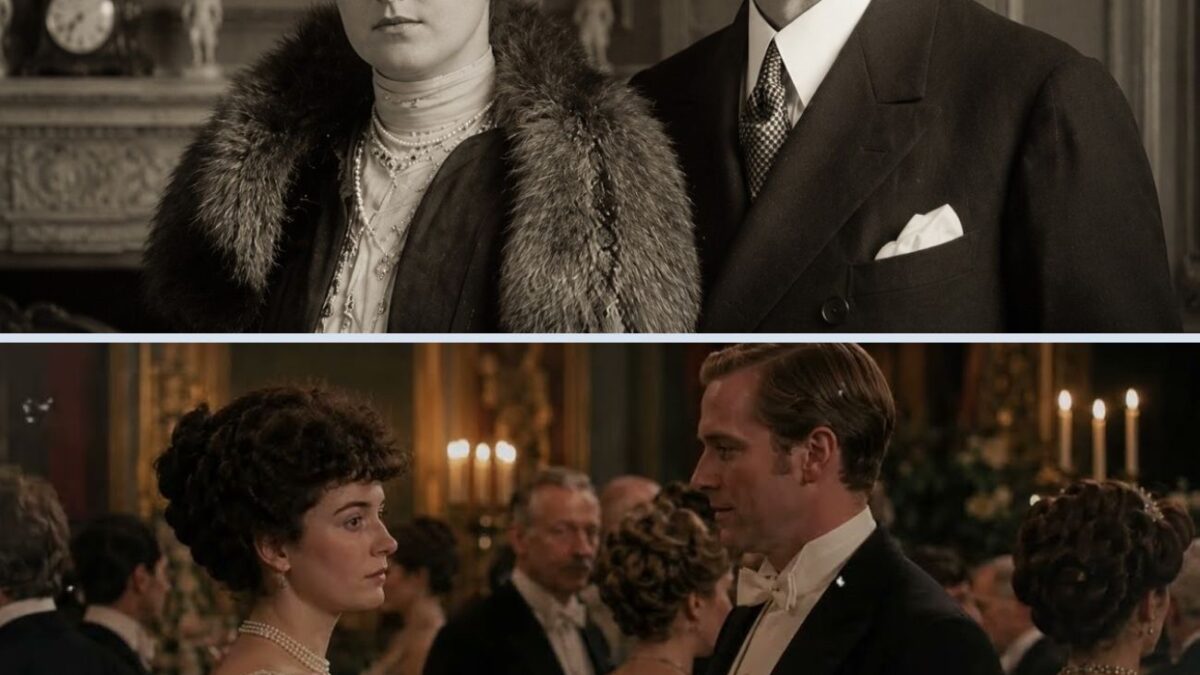
1908, a London court. Two court-appointed doctors prepare to examine a countess and a count to determine if their marriage ever took place. Her name was Alice Thaw, daughter of a Gilded Age fortune, sister of the man who shot architect Stanford White in the trial of the century. Back in 1903, the world had paid a fortune to make her a countess. By 1908, a physical examination was needed to prove that the marriage had ever existed. This is the story of a woman who married for a title and spent the rest of her life trying to get it back.
By the spring of 1903, the American press had already given the transaction a name: the dollar princess trade. A British title, old and without money; a new and enormous American fortune. Somewhere between them was the bride, who was expected to put up the money and smile. Alice Cornelia Thaw was 23 years old, the youngest daughter of one of the 100 richest men in American history. The boyfriend who was courting her that winter had already tried unsuccessfully to marry two other American heiresses before her. According to all accounts, the wedding that awaited them in Pittsburgh that April would be remembered as the social event of the season. She was not remembered for that. Records from that day describe a fully assembled wedding party, seated guests, crowds gathered in the street, and a groom who refused to cross the threshold. Something was being resolved first. Something that had nothing to do with love and everything to do with a sum of money. According to several accounts, her mother was negotiating a lower price that very morning.
His older brother’s name was Harry. Harry Thaw was 26 years old when he brought a ruined English lord to Lafayette Square that winter. And it didn’t occur to her, not once, in the following 8 weeks, that the man was there because of her sister. The wedding was scheduled for 4:00. At 3:30, the Calvary Episcopal Church in Pittsburgh was full. 400 guests inside, a crowd of strangers pressing against the gates outside, struggling to catch a glimpse of the bride. Alice Cornelia Thaw was 23 years old and, according to all accounts from that morning, she was ready. The boyfriend wasn’t.
In a side room behind the vestry, George Francis Alexander Seymour, Earl of Yarmouth, heir to the Marquessate of Hertford, a failed actor who once toured American vaudeville under the stage name of Eric Hope, refused to cross the threshold. Not because of doubt, but because of arithmetic. The sum most commonly cited in newspapers afterwards was $1 million, a figure that, according to several accounts, he had decided that very morning was not enough. With the church already full, he sent a notice downstairs saying that he required more money before continuing. Mary Copley Thaw, the bride’s mother, spent what must have been the last quiet hour of her daughter’s youth negotiating with a groom to get her into the church. She paid. The ceremony began at 4:00 sharp, just as the invitations promised. And none of the 400 guests inside Calvary Episcopal Church ever knew how close the social event of the season came to simply not happening.
There was a second absence that afternoon, and this one there was no amount of money that could remedy. Harry, the brother who had made the introductions in the first place, was supposed to walk his sister down the aisle. He didn’t appear. His brother Josiah had to do it in his place. And the Pittsburgh newspapers noted, almost in passing, that Harry was said to have opposed giving the earl any authority over Alice’s inheritance. His half-brother Benjamin didn’t come either. She had told her family before the wedding that she intended to stay as far away from the Earl of Yarmouth as an ocean would allow. Thus, Alice Thaw entered her own wedding, having already received, in the clearest way a family can say something, through who attended and who did not, exactly what some of the people who loved her thought of the deal she was making.
To understand how a 23-year-old heiress ended up standing at an altar being bought in installments, we have to go back nine years, to the year in which her father could no longer protect her from anything. William Thaw had made his fortune the old-fashioned way: canals and then the railroads that replaced them. A fortune large enough to place him, according to historians’ calculations, among the 100 richest men in the history of the United States. He was also, according to most accounts, a genuinely generous man. He endowed scholarships at Harvard and Princeton, and his wife would continue with that instinct long after he was gone. He died in 1889, shortly after the family finished building Lyndhurst, their new mansion in Squirrel Hill, Pittsburgh. Alice was nine years old. She would grow up in a house that her father built and in which she could never grow old.
He left behind 10 children, five from his first marriage and five from his second marriage to Mary Sibbet Copley Thaw. Alice was the youngest of Mary’s five children, after Harry, the eldest, who, even as a young man, was the most watched. After Margaret, three years older, the sister with whom Alice would remain closest for the rest of her life. After Edward and Josiah, who would one day fulfill a fraternal duty that Harry could not. And there was Benjamin, his father’s half-brother from his first marriage, old enough to have strong opinions about who belonged in the family and who didn’t. It was Harry, restless and magnetic, already beginning to acquire the reputation that would one day eclipse any other Thaw, who rented the old Cameron mansion in Lafayette Square for the winter season of 1902. It was Harry who filled it with parties, and it was Harry who, that January, brought home a guest, an English lord in his thirties, recently declared bankrupt in a London court. He had already spent 3 years failing as a legitimate actor and one more failing as a vaudeville comedian. According to the family’s own later account, he had already courted at least one other American heiress before meeting Alice.
Mary Copley Thaw was not, in her own right, a woman who did things halfway. In the years following her husband’s death, she would go on to endow the first scholarship that Harvard’s Peabody Museum awarded specifically to a woman. Clearly, she believed in giving ambitious daughters a foothold that the world would not otherwise offer them. It is one of the quietest ironies of that winter in Washington that the same instinct, the conviction that it was worth paying for a woman’s future, was about to be spent on buying a husband for her own daughter. The courtship that followed was fast enough to raise eyebrows even by the standards of a season made precisely for this type of alliance. There was a trip to New York with her mother to buy the trousseau. There were dinners with the British ambassador, appearances at parties all over Washington, and an engagement announced within a month of meeting. Alice’s family had $10 million behind them by then. The Earl of Yarmouth had an allowance of 200 pounds a year and a father who had already cut it once. In less than 3 months they were married, and at some point in that exchange, in the span of 11 short weeks between the introduction and the altar, a 23-year-old who had spent her entire life being introduced to the world as the daughter of William Thaw became something entirely different: the Countess of Yarmouth.
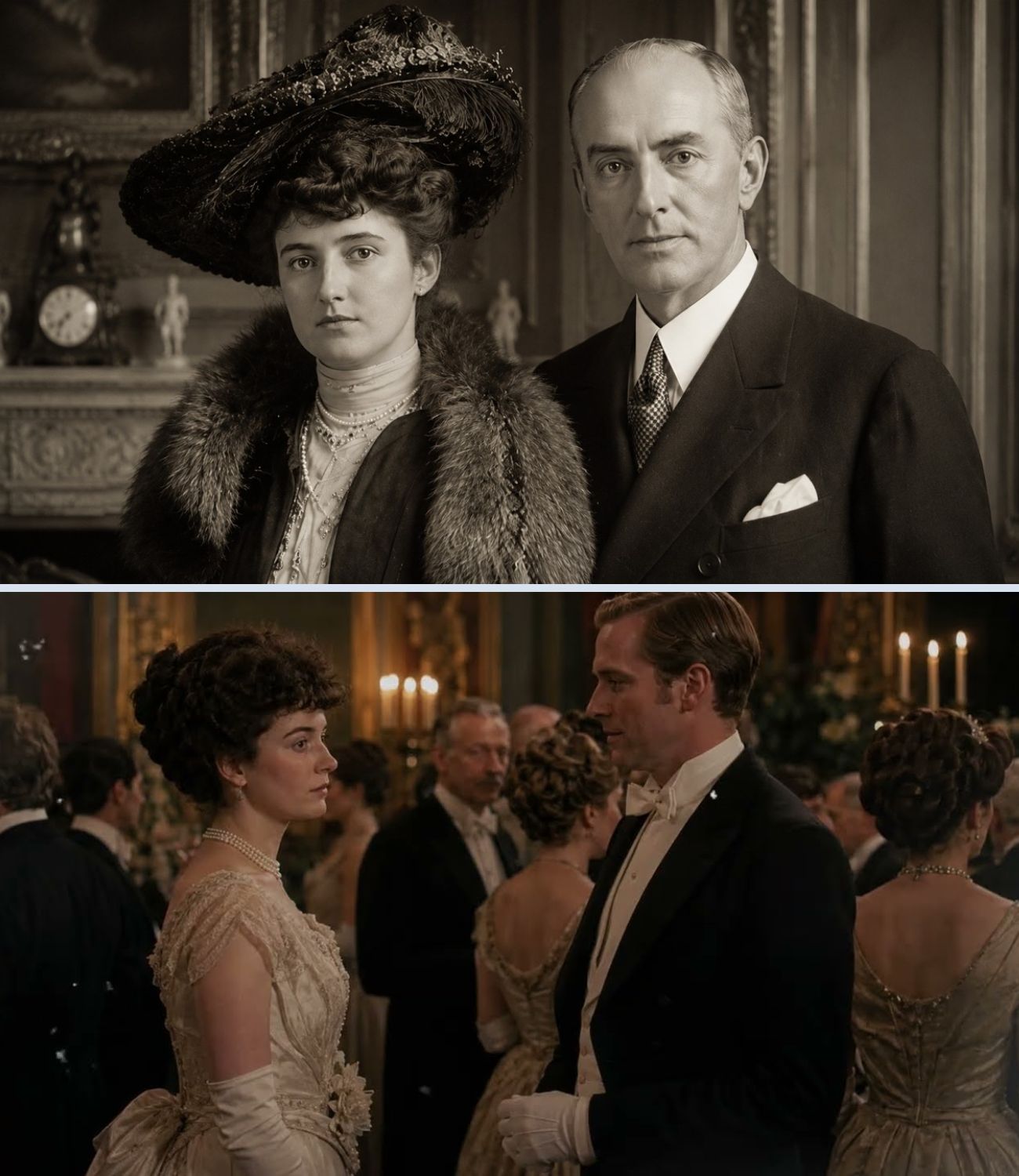
His own name did not disappear from the newspapers. It simply stopped being the first name that came to everyone’s mind. She and the earl set sail for England a few days after the wedding. They returned to the United States more than once in the following years, for Christmas 1904 and again the following year. Always publicized, always photographed, always, on paper, a countess and her husband keeping up appearances on both sides of the ocean. What the photographs couldn’t show was what the marriage truly contained behind them. A countess and her husband arriving on the same ocean liner twice a year, smiling for the same reporters. That was real, verifiable, and true. Whether anything else about the marriage was equally real is a very different question, and for a long time no one outside the family thought to ask it. They wouldn’t have to wait long to have a reason to stop staring at Alice, because by then, in a rented house not far from where this story began, her brother Harry had already met the woman who was about to make the name Thaw unforgettable.
For reasons that had nothing to do with a wedding in Pittsburgh and everything to do with what came after. The woman’s name was Evelyn Nesbit, and by the time Harry Thaw met her, half of New York already knew it. She had been a chorus girl and model for artists since she was 15 years old. Her face was on postcards, in magazine illustrations, in paintings by men twice her age. Before Harry, there was Stanford White, New York’s most celebrated architect, twice her age, who had befriended her family, gained her trust, and, according to her own later account given under oath, drugged and assaulted her in a bedroom lined with floor-to-ceiling mirrors when she was 16. She told Harry about it years later. He never forgot it. Harry married her anyway in 1905, against the wishes of his mother and everyone else. Mary Copley Thaw had spent much of that same decade building her family’s respectability, one donation at a time. Hospital pavilions, university scholarships, her late husband’s name engraved on buildings that would outlast them all. A chorus girl with White’s fingerprints on her past was not part of that plan. But Harry was never a man who would let his mother’s plans hold him back. And by the time the wedding took place in Pittsburgh at the same family home where Alice had once stood before her own altar, there wasn’t much left to do but attend.
Four thousand miles away in London, the sister-in-law of Harry Thaw’s new wife read about it in the newspapers like everyone else. Alice had her own home to manage by then, her own social calendar, her own version of a life that seemed, from the outside, completely stable. If that’s how it felt from within, that was another matter. One that, in the autumn of 1905, no one asked her about. All everyone in both countries wanted to talk about was Harry. They would have much more to talk about before the year was out. On the night of June 25, 1906, Harry and Evelyn were in New York. A stop on their way to a European holiday. They had dinner at a restaurant near Madison Square Garden. Midway through the meal, Stanford White, the architect, the man Evelyn had once told Harry had hurt her, came in and sat nearby. Harry didn’t say much. He simply changed his plans. Instead of continuing on to Europe that week, he bought tickets for that evening’s premiere at the Garden’s rooftop theater, a musical revue called Mam’zelle Champagne, performed inside a building that White himself had designed 11 years earlier.
White arrived at the rooftop show shortly after 11, taking a table near the stage. Witnesses would later describe Harry walking through the crowd for almost the entire performance, carrying a heavy black coat over his arm despite the summer heat. A coat that the cloakroom employee had tried to take from him twice and that he had refused to hand over on both occasions. At one point, according to later testimonies, Evelyn herself suggested that they leave. They got up to leave. It was as they were leaving, as they passed by White’s table, that Harry changed direction. When the last number ended and the lights began to dim, he crossed the room, took the revolver from under his coat and fired three times. The first shot went through White’s eye. He was dead before he hit the ground. For a moment, in a theater built for the spectacle, almost no one in the audience understood that what they had just seen was real. Then the shouting began. Harry stayed where he was, with the gun still raised, and made no attempt to flee. When the police reached him, he offered an explanation that would be reprinted in newspapers on four continents before the week was out:
“I killed him because he ruined my wife.”
By morning, the news had crossed the ocean. It arrived in London the way most things arrived for the Countess of Yarmouth that year: through newspapers, secondhand, several days late, and framed by headlines that used her family name more freely than ever before. The reporters, who had only shown a passing interest in the wealthy American woman who married a ruined English lord, suddenly found a much more useful angle. Alice Thaw, the sister of the man who shot Stanford White. It would be the framework that the world would use for the rest of its life. Regardless of what the newspapers said about her own marriage that year—and, in fact, much less was written about it than in 1903—none of that would ever again be the most important thing anyone knew about Alice Thaw. Twenty years of carefully building a reputation, one hospital wing and one fellowship at a time, had just been overtaken by three gunshots and a headline.
British newspapers, always eager for reasons to poke fun at the growing influx of American heiresses marrying into the nobility, would have found the story hard to resist for a completely different reason. Here was a countess, a titled member of the English aristocracy, whose own brother had just shot a man dead in front of a thousand witnesses. In a marriage market already uneasy about what American money was buying, it’s not hard to imagine what the name Thaw became that summer in certain London salons. Somewhere within those conversations was a 26-year-old woman who had done nothing except share a last name. The trial that followed, beginning the following January, would be remembered by one reporter as a courtroom filled with Bowery toughs, Harlem gangsters, Tenderloin pimps, Broadway actors, Fifth Avenue gentlemen, Wall Street manipulators, uptown voluptuous types, and downtown thugs. The entire social fabric of a city gathered in a room waiting to hear exactly how ruined Evelyn Nesbit had been and by whom. It would take the jury less than a year to fail to reach a verdict. A second trial and a very different outcome would follow the next year. Harry was declared insane instead of guilty and sent not to prison, but to a mental asylum on the Hudson where he would remain for years.
And somewhere beneath it all, beneath the headlines, beneath the psychiatrists arguing about her brother’s sanity, beneath a spectacle so grand it swallowed every other family story, Alice Thaw’s own marriage, 5,000 miles from the courtroom, was already beginning to look far less quaint than the 1903 wedding photos had promised. No one was looking closely enough yet, not when there was a court across the Atlantic demanding everyone’s attention. In a matter of months, Alice would cross that ocean herself, returning to the country she had left as a bride for reasons that had nothing to do with her own marriage. Alice crossed the Atlantic in the early months of 1907, traveling with her mother back to the country she had left as a fiancée four years earlier. She wasn’t going home. She was going to a court in Manhattan to hear testimony about her brother’s marriage, her brother’s obsession, and the night her brother killed a man in front of witnesses.
The Earl of Yarmouth did not make the crossing with her. That fact would not have meant anything to most of the reporters covering the trial. It would come to mean a lot. By the time Alice took her seat in that room, the crowd inside was telling their own story about how much this had transcended a private family matter. High society names alongside society reporters alongside spectators who had queued since dawn for a seat. They had all come to see a Thaw. Alice witnessed it as family. Present, observed, photographed upon entering and leaving, forced to appear composed before an audience that never asked if she was. Her mother sat beside her for most of the process. Her husband, on the other side of the ocean, did not. Something he heard in that room had nothing to do with his brother’s sanity. Lawyers for both sides spent long stretches of testimony dissecting the precise details of what Stanford White had done to Evelyn Nesbit a decade earlier. The champagne, the mirrored room, her age. By the standards of 1907, it was something almost unthinkable to say aloud in an open court. The most private rape of a young woman read into the public record, debated, and printed the next morning for breakfast tables across the country.
Alice had come to support her brother. What she witnessed instead was a masterclass on how little privacy the law was willing to grant a woman once her life became useful to someone else’s case. I would need that lesson again sooner than I thought. Mary Copley Thaw was 64 that spring, enduring her son’s murder trial during the day and, according to most accounts, discreetly managing her daughter’s affairs by letter in the remaining hours. It is difficult to find a single story about her from that spring that does not describe her as someone composed. It’s easier in retrospect to imagine what that composure was costing him. One child judged for his mental health in a Manhattan court, another living across the ocean in a marriage that, in practice, had already ended in a country where no one at home paid enough attention to ask.
As the trial dragged on toward its unresolved end that spring, Alice did what she could from afar for the brother the family had already half lost. It is said that she wrote to a woman he probably met in London social circles, who understood exactly what it meant to be trapped in a famous marriage: Consuelo Vanderbilt, then Duchess of Marlborough, who had spent years quietly campaigning for prison reform in England. The Duchess responded by writing to a friend in New York, and in November 1907, the two of them made the journey north to Matteawan, the asylum where Harry hoped to learn if he would ever be free again. The New York Times covered the visit. According to her account, Harry never looked in her direction the entire time they were there. It is worth dwelling on that detail because it says something true about where all the attention in this family had been directed by 1907. Two of the most powerful women in the English-speaking world had crossed an ocean and traveled up the Hudson to see him, and Harry Thaw didn’t even bother to look them in the eye.
No one that autumn was making a comparable effort for Alice. She did, in fact, have someone close by who understood exactly what she was going through. Although the two women may never have directly compared notes, that same year, an ocean away from Matteawan, the Duchess of Marlborough’s own marriage had quietly fallen apart. She and the Duke had separated in 1906, after 11 years which, in her own words, had not brought them any closer.
“Time had only accentuated our differences. The nervous tension that tends to grow between people of different temperaments, condemned to live together, had reached its peak.”
She said it about her own marriage, to a different duke in a different county. It could have been written just as easily about the one of which Alice was still, on paper, a part.
Because this is what the newspapers covering Thaw’s trial that year were not covering at all. By the time Alice Thaw boarded that ship in early 1907, she and the Earl of Yarmouth had not lived as husband and wife in any meaningful sense for some time. The court records of the divorce proceedings that would follow show two separate addresses, an ocean apart from each other in everything that mattered, even though both were in England. Alice in a house on Clarges Street in Westminster, her husband 30 miles from London on a sprawling estate called The Homestead in Buckinghamshire, which belonged to a wealthy lepidopterist who collected butterflies for a living. They kept up appearances in front of the cameras when it was necessary to agree. A countess and her husband arriving together, smiling for the same reporters who once covered their wedding. Between those encounters, they simply didn’t do it. Nobody published a word about it in either country that year. There was no scandal to report, no fights, no public accusations, just two addresses separated by 30 miles and a silence that neither party seemed interested in breaking.
A marriage doesn’t need a headline to end. Sometimes it just requires two people to stop discreetly showing up in the same rooms, and a family with a much noisier history to keep the world from noticing. It wasn’t just a marriage that remained unresolved between those two directions. There was also the money. The agreement that her mother had negotiated at the church door four years earlier. Shares and income linked to a marriage that, on paper, still existed. Ending it discreetly, as the Count would have preferred, would have meant leaving that agreement exactly as it was. Ending it in any other way would mean asking a court publicly, and on record, to decide whether the marriage had ever truly been a marriage. The marriage that the world saw being bought in Pittsburgh in 1903. The one that technically remained intact on all the society pages of two countries.
It had already ended in every practical sense years before anyone made it official. Alice spent 1907 not defending a marriage, but living discreetly away from it, while the attention of the whole world was fixed 3,000 miles away on a courtroom, on a chorus girl, on a brother who would not look anyone in the eye. Which left an open question about everything that came after. A question that no newspaper in either country was asking yet, but one that a court would eventually have no choice but to answer. If a marriage had already ended in everything that mattered, in everything that two people actually live their lives in, what would it take to end it in the only way that still mattered to the law? The answer, when it came, was given discreetly and mostly out of sight of the newspapers that were still obsessed with his brother.
In January 1908, Alice instructed her lawyers to file the lawsuit. In reality, it was no surprise to anyone who had been paying attention, which by 1908 was hardly anyone outside the family. The press coverage treated it less as news than as confirmation of something that had been assumed for a long time. A story from that time clearly expressed it. For years, it was a well-known fact that the count’s mistreatment of his wife began a few months after the wedding. Nobody seemed too surprised. They had simply been waiting for Alice to do something about it. The count, for his part, spent the intervening years giving the marriage very little reason to survive. Whatever the million dollars demanded at the church door was supposed to solve, it didn’t solve his relationship with money. At one point, he was still settling his own debts through his father’s intervention, making sure, in his own words, to make it clear that his wife was not the one paying them.
“I want it to be understood that my wife is not paying for them for me.”
He had married one of the richest women in the United States and yet he felt the need to say it out loud.
It is worth reflecting for a moment on what that phrase really reveals. Five years after the negotiation at the church door that made headlines on two continents, the Earl of Yarmouth was still explaining himself to his creditors, still, in some corner of his life, exactly the same man he was before he met Alice Thaw. Whatever the marriage promised to fix in him, it didn’t fix anything. He had only given the world a more expensive name to attach to the same old debts. No letters from Alice survive that explain, in her own words, the moment when she decided that enough was enough. That is, in its own way, consistent with everything else about her. A woman whose most momentous decisions tend to survive only in the paperwork that others generated around her. But it’s worth trying to imagine what that winter looked like from the inside, stripped of headlines. A woman under 30 in a rented house on a quiet Westminster street, meeting with lawyers instead of guests. Going through the particular administrative grief of undoing something that 400 people stood up to see her do. There would have been documents to sign. There would have been a question, phrased by lawyers in careful legal language, of exactly what she was willing to say about a marriage that spent so many years publicly pretending to be intact.
Notably, her mother does not appear in the record this time as she did in 1903. There is no evidence that Mary Copley Thaw crossed the ocean to manage this negotiation. No reported figures changed hands to make this happen. Whatever was decided that winter, Alice seems to have largely decided it on her own. The first major decision of her adult life, according to records, that no one else negotiated for her. And yet, the paperwork circulating in London that winter kept calling her by a name she was actively working to return. In some law offices during the first weeks of 1908, letters addressed to the Countess of Yarmouth, a title that had practically been bought for her five years earlier, continued to arrive. A title that her own older brother had refused to bestow upon her. It would continue to appear printed on the envelopes for a few more months. Right up until the decree that finally allowed him to stop responding to him. It’s worth noting how differently that title reads once you know what she was doing with him. Silently, at the exact same time as his correspondence continued to arrive. Not a woman defending her place within a marriage, but a woman dismantling it. One legal document at a time. Under a name that no longer described anything real about his life.
The news of the lawsuit finally reached the general press. And once she did, the reporters wanted the one thing Alice’s lawyers were determined not to give them. The reasons. Most divorces in high society at the time followed family and publicity channels. Cruelty, abandonment, adultery; the standard vocabulary of failed marriages among the rich. Alice’s request did not use any of those words. What he did allege, his lawyers would not yet reveal. The silence itself became news. If it wasn’t cruelty and it wasn’t another woman, the London gossip columns wanted to know, then what exactly could justify the dissolution of such a famous marriage? For a time, speculation filled the void left by the lawyers. Some newspapers suggested madness, pointing hopefully to the family’s other, more famous legal drama that year. Others assumed some private cruelty too delicate to print. A few, closer to the truth than they knew, simply published that the marriage had never been real and left it at that, without explaining what they meant, because they didn’t know yet either. Nobody guessed correctly. What Alice’s lawyers were actually preparing to argue was stranger and more clinical than anything the gossip columns could have imagined. And by the spring of 1908, it would no longer be possible to keep him out of the newspapers at all.
There is a particular kind of dread that comes from having seen firsthand exactly what a courtroom can do to a woman’s most private affairs. A year earlier, Alice had sat in a Manhattan gallery and listened to lawyers discuss exactly what had happened to Evelyn Nesbit in a room with mirrored walls, exactly how old she was when it happened, and how much of it a jury needed to hear before they could decide anything at all. I had seen it become public property, printed, debated, and turned into a spectacle for readers who would never meet the woman at the center of it all. Now, a year later, it was her turn to hand over the details of her own marriage to a court and trust that the law would treat them with more care than the newspapers had treated Evelyn. By 1908, there was very little evidence to suggest that this was the case. The Count, for his part, did not challenge what was being prepared against him. Whatever was coming, he seemed to want to end it almost as much as she did, which, in its own quiet way, told its own story about a marriage that no longer had anything worth fighting for. By early spring, the case already had a hearing date. The lawyers for both sides had exchanged private details that neither wanted to make public yet, and at some point in that exchange, one of them made a clinical request, unusual and almost unknown in a case of this profile, which would turn a discreet and whispered separation into the kind of process that no wedding announcement prepares a bride to imagine.
What exactly was being asked for, and to whom? That spring, London newspapers could only speculate. They wouldn’t have to wait much longer to stop guessing. They didn’t have to wait long. By February 1908, the application that had been quietly negotiated between lawyers became part of the public record, and London newspapers finally got the story they had been circling for months, although not the one most expected to find. The court, upon hearing Alice’s request, ordered something almost never seen in a case of this importance: a formal medical examination of both spouses, conducted by doctors appointed by the court itself, to determine a single, narrowly and unbearably intimate question. Not whether the Count had been cruel, nor whether there had been another woman, another man, or any of the usual reasons why a marriage like this was allowed to end. The court needed to know something much more basic, something that no social wedding announcement had prepared anyone to ask aloud: whether in half a decade of marriage the union had ever been consummated. The language the court used to formulate the question, preserved in the historical record of the case, was as clinical as the request itself. An examination of the organs and generating parts of both parties to verify the matter. Two doctors appointed by an English court in 1908 examined a countess and an earl to medically determine whether a marriage that had occupied headlines on two continents had actually begun in the most basic physical sense.
Think about this for a moment. Every part of what the world had observed in 1903, the crowds outside Calvary Episcopal Church, the million-dollar negotiation at the church door, a congregation standing to witness what the newspapers called the wedding of the year, had all produced, in the end, a marriage that a court now needed doctors to confirm had ever existed, in fact. The wedding had been real. The dress had been real. The money had been devastatingly real. The marriage itself, according to what those two doctors would report to the court, had not been. It’s hard not to notice the echo. A year earlier, in a Manhattan courtroom, lawyers had precisely dissected what had been done to Evelyn Nesbit’s body, in which room and at what age, and published the details for a breakfast-reading public. Now, in a quieter courtroom across the ocean, it was Alice’s own body that was being entered into the legal record, examined and reported by men she had never met, so that a judge could determine something that no one had thought to ask her directly. Two women, one family, with a terrible year between them. Both were forced to hand over their most intimate parts to a system that called this justice.
There is no surviving account of how Alice endured the exam itself. No letters, no diary entries, nothing in her own words to describe how she felt having the most private failure of her adult life confirmed by strangers and entered into a legal record that two governments would keep in their archives. The silence there is its own kind of answer. Some things, even a woman who has spent her entire adult life letting other people narrate her private affairs, manages to keep to herself. Her mother’s name does not appear anywhere in the surviving record of the exam itself, but it is hard not to think of Mary Copley Thaw here, the woman who had spent a fortune funding the first scholarship her former university awarded to a female scholar, believing, or at least it seemed so, that it was worth investing in a woman’s future. Regardless of what she believed that February, watching from wherever she was, the daughter for whom she had once bought a title was now proving, to strangers, that the title never described a real marriage. One thing is to buy your daughter a place in history. It’s quite another thing to see how the law dismantles it to determine if the purchase even worked.
What the court concluded, it concluded quickly. On August 12, 1908, the marriage of Alice Cornelia Thaw and George Francis Alexander Seymour, Earl of Yarmouth, was formally annulled; not dissolved, not terminated, but annulled, the specific legal term that meant something stranger and more absolute than divorce. A divorce ends a marriage; an annulment declares that, in the eyes of the law, there was never really a marriage to end. Which is the answer, finally, to the question that this whole story has been surrounding from the beginning. The world called it the wedding of the century. A packed church witnessed it happening. One million dollars changed hands to make sure that was the case. And in the end, the only court that mattered ruled that, in every sense that the law was willing to acknowledge, it had never actually happened.
The newspapers that had spent a year speculating about cruelty and scandal didn’t quite know what to make of such a silent response. There was no villain to name, no lover to photograph, and no cruelty dramatic enough for a headline. A few published the story with visible disappointment, padding it with old details from 1903 to give it some of the color that the royal verdict lacked. Most simply printed the fact of the annulment in a few short lines, buried behind whatever their brother was doing that week, and moved on. It was, in its own strange way, the least covered major event of Alice Thaw’s adult life. The only time the truth about her turned out to be too private, too clinical, and too sad to create a satisfying story. The scandal the world had been waiting for never really came. What came instead was simply the truth, and the truth didn’t sell nearly as many newspapers as everyone had hoped.
The financial arrangements followed shortly afterwards. The shares, the agreement negotiated at the church door in 1903, returned to the family that had provided them. It would take until 1910 and one more round of lawyers for the last of it to change hands completely. A slow and unglamorous coda to a marriage that had begun with everyone watching and ended with almost no one paying attention. And Alice did something else in the meantime. Something that cost nothing and changed everything. She stopped responding to the name she had been called by in every letter she received since that April afternoon in Pittsburgh. The Countess of Yarmouth, a title bought on installments outside a Pittsburgh church, officially ceased to exist. Instead, a woman again signed her own name, Alice Copley Thaw, so, according to the records, it was the first time since 1903 that anyone had asked her to.
There is a version of this story that ends at the door of a church, the same one with which this video opened, a congregation waiting inside Calvary Episcopal, a groom refusing to enter until the price was right. It would be easy to end there too, to let that single scene represent everything that came after. But the truest ending is quieter and further removed from any crowd. It happened in a law office in London on an ordinary afternoon, which no newspaper considered worthy of being photographed, where nobody was standing, nobody was looking, and nobody was negotiating anything at all. Just a woman, alone, signing a name that was entirely her own. And then, in November 1908, Alice Copley Thaw boarded a ship called the Adriatic and sailed back home. Not as a countess, not as anyone’s wife, not even as the sister the world had been talking about for two years instead of her. Just a 28-year-old woman crossing the same ocean she had crossed as a bride a lifetime ago, taking nothing back with her but her own name and the silent, hard-won knowledge of exactly what it had cost her to keep it.
For a few years after that, there wasn’t much to tell, which was, perhaps, exactly what she had been trying to build. In 1911, on her own, without a husband and without any mother negotiating anything on her behalf, Alice bought a historic house on F Street in Washington, which was once the home of a Chief Justice, and hired an architect to modernize it while keeping its old federal structures intact. It was the kind of decision a woman makes when she is finally furnishing a life of her own choosing. She stayed close to her sister Margaret. He largely stayed out of the newspapers that once followed his every move. And somewhere in that silence, through an old school friend who had settled in Milton, Massachusetts, she met a Boston stockbroker named Jeffrey Whitney.
Their engagement was announced in December 1912, and the announcement itself said more about the woman Alice had become than any reporter of that season.
“Cards will be sent,”
wrote the New York Times in announcing the engagement of his son, Geoffrey W. Whitney, to Alice Cornelia Thaw, formerly Countess of Yarmouth and, since her divorce, known as Mrs. Copley Thaw. Previously, since her divorce, not even the wedding announcement could leave out the title, including it as a sort of credential before getting to the name she had actually chosen. Alice, on the other hand, chose a completely different answer. He closed his front door to the press and made it known that he would not receive anyone. The same woman who was once paraded before a church full of guests, now refused to let a single reporter through her door.
They married the following spring, on April 22, 1913. Not in a cathedral, not before a crowd, but at Plum Orchard, her sister Margaret’s quiet estate on Cumberland Island, Georgia. There was no million-dollar negotiation at the door. There wasn’t a crowd outside trying to see anything. There was only family, a garden, and a wedding that appeared in the newspapers exactly one day. What followed was, by any measure, an ordinary life. And for Alice, that may have been the main purpose. She and Geoffrey settled in Milton, raised two children, and eventually built a summer house overlooking the harbor in Woods Hole, where her husband spent his free time developing new rose varieties for a commercial nursery, and where, by all surviving accounts, she was simply a wife and mother among neighbors who had no reason to think of her as anything else.
It’s not a detail that leads to a dramatic ending. It is, perhaps, exactly the ending that a woman who spent her twenties being public property could have most desired. A garden that no one was looking at. A marriage that no one needed a court to verify. The house on F Street, the one she had bought entirely on her own before all this started. She rented it out for more than a decade and finally sold it in 1925 to a congressman and his wife, who would fill it with the kind of quiet, ordinary family life that Alice herself had finally found. He continued building homes, in other words, long after he no longer needed someone else’s name to do it.
Geoffrey Whitney died in 1953. Alice followed him two years later, on May 8, 1955, at her home in Milton. He was 75 years old. The New York Times published his obituary the next day. It began like this:
“Alice Cornelia Thaw Whitney, widow of Geoffrey G. Whitney, Boston stockbroker and sister of the late Harry K. Thaw, passed away yesterday at her home.”
Sister of the late Harry K. Thaw. 52 years after a wedding that the world called the event of the century. 47 years after a court ruled that the wedding never legally took place. One more marriage, one more name, a whole second life quietly built on an island and in a garden. And in the end, the official newspaper still couldn’t get hold of his name before resorting to his brother’s. She had spent five decades trying to be known as something more than someone else’s story. On the last day someone wrote about her, that is still, in the end, exactly what she was.
You Might Also Enjoy

“We Thought They Would Negotiate”—What Argentine Soldiers Said When The British Attacked Goose Green

“You’ll Never Finish My Ruck March, Limey” — US Sergeant Who Challenged the SAS, Then Fell Out First






