She Was Aunt to the Queen and Sister to Two Kings — So Where Did Her Jewels Go
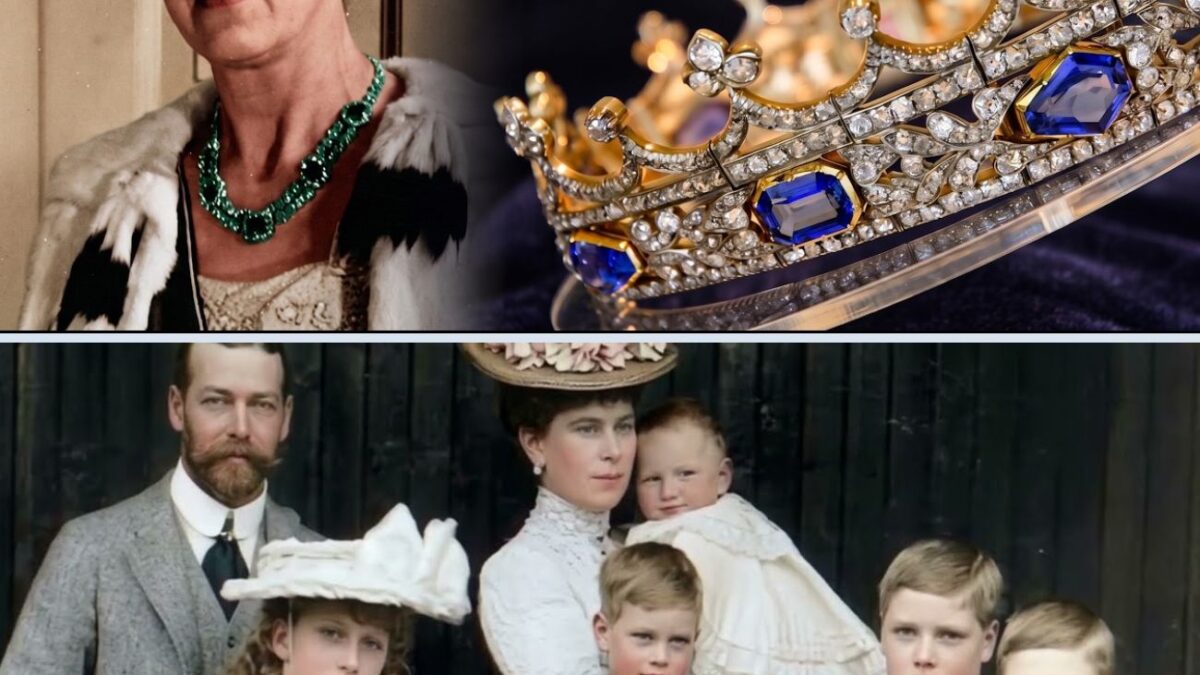
THE CURSE OF THE VANISHED CROWN: How the Forgotten Princess Royal Lost a Multi-Million-Pound Jewel Empire While History Looked Away
In a quiet, climate-controlled gallery at the Victoria and Albert Museum in London, resting securely behind a single, thick pane of glass, sits a small, exquisitely crafted sapphire coronet. Designed by Prince Albert himself for Queen Victoria in the year of their marriage, it remains one of the most culturally significant jewels of the nineteenth century. In the spring of 2016, this historic piece very nearly slipped through Britain’s fingers entirely, sold off to an anonymous overseas buyer. Only an emergency government export ban, followed by the extraordinary philanthropic rescue of a dedicated family who handed it directly to the nation, kept the coronet on British soil. Today, it belongs to the public.
Yet, for more than forty years, that glittering crown belonged to one woman. She was neither a reigning queen nor a celebrated society beauty whose face launched a thousand tabloid columns. She was a princess whose name has been so thoroughly scrubbed from the popular consciousness that most modern Britons would struggle to identify her in a line-up.
As the daughter of one king, the sister to two more, and the blood aunt to Elizabeth II—the monarch who would reign longer than any other in British history—she occupied a position of absolute royal supremacy. She was showered with a fortune in glittering jewels that would make modern monarchs green with envy. And yet, across her lifetime and the bitter years immediately following her death, almost every single piece slipped silently through her fingers, vanishing into the opaque shadows of private vaults and anonymous auction houses.
This is the strange, melancholic story of Princess Mary, the Princess Royal, and the breathtaking treasures that were gifted to her in triumph and parted with in quiet desperation.
The Girl Called “Diamond”
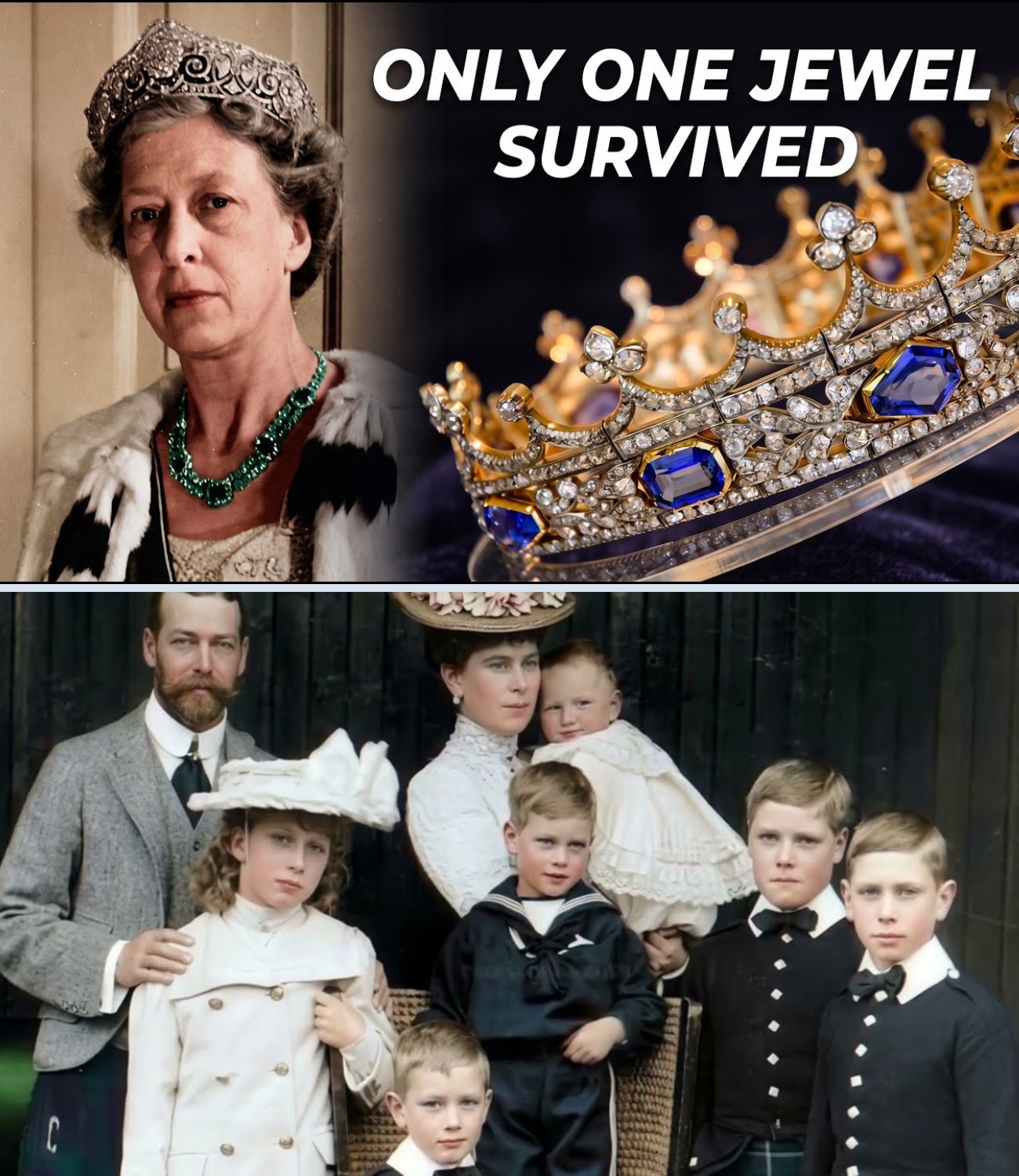
The story begins in the crisp spring of 1897 at York Cottage, a remarkably modest red-brick dwelling nestled on the sprawling Sandringham estate in Norfolk. The domestic arrangement was deliberately unpretentious—a pointed contrast to the glittering opulence usually associated with the House of Windsor’s ancestors. Queen Victoria, the formidable matriarch of Europe, still occupied the throne, reigning as the infant’s great-grandmother.
When the newborn was christened Victoria Alexandra Alice Mary, the old Queen reportedly remarked that because the child had arrived during her Diamond Jubilee year, she might just as well have been named “Diamond.” Within the intimate confines of her family, however, she was simply known as Mary.
She was the third child born to the future King George V and his wife, Mary of Teck, and crucially, she was their only daughter, trapped in a relentless domestic corridor between a row of boisterous brothers, including David and Bertie—the two boys who would both, in turn, ascend to the British throne. The household that forged her character was uncompromisingly disciplined. Her father, George V, prized strict order, military punctuality, and unswerving routine above almost everything else, maintaining an emotional distance that left little room for warmth. Her mother had grown up with royal blood coursing through her veins but without the vast financial security usually attached to such a station. That early financial insecurity forged in Mary of Teck an architectural, unyielding devotion to the monarchy as an absolute institution—something to be protected, meticulously arranged, and above all, made to endure against the shifting tides of history.
Young Mary was raised to be useful to her family long before she was ever encouraged to cultivate an identity of her own. Her first great act of public service did not emerge from the sheltered corridors of a palace, but from the brutal crucible of the First World War.
The Christmas Tin Heroine
By 1914, the British crown was facing an unprecedented domestic and psychological crisis. A devastating European war was pitting cousin against cousin across blood-soaked trenches, and the British royal house—burdened by its historic German dynastic name of Saxe-Coburg and Gotha—suddenly looked dangerously foreign to the very subjects dying in its name. The institution desperately needed to humanise itself.
Into that moment of profound national anxiety stepped a seventeen-year-old princess with a remarkably simple, brilliant idea. In October 1914, mere weeks into the global slaughter, Mary launched a massive public fundraising appeal. Every single sailor serving out on the freezing seas and every soldier fighting in the muddy trenches of the Western Front, she proposed, should receive a personal Christmas gift sent directly from home.
The British public responded with staggering generosity. Within weeks, the fund had surged past £150,000—the equivalent of many millions in modern currency—and kept climbing until, by the time it officially closed in 1920, it had manufactured and distributed more than 2.5 million individual gifts, with the surplus funds directed straight to a maternity hospital founded by her mother.
The gift itself was a small, exquisitely embossed brass box designed by two prominent architects. Yet its physical journey was fraught with drama. The raw brass had to be shipped across the Atlantic from the then-neutral United States, and one gargantuan consignment went straight to the bottom of the Atlantic when its transport vessel was torpedoed.
Inside each gleaming tin went tobacco and cigarettes for the smokers, writing paper for the non-smokers, sweets and aromatic spices for troops hailing from India, and a small card bearing the youthful princess’s own photographic portrait. As donations poured in like a tidal wave, the scheme expanded to embrace the wounded, frontline nurses, prisoners of war, and the shattered families of the men who never returned.
Those humble brass tins frequently outlived the men who carried them into battle. One veteran recorded in his memoirs that his tin had taken the direct impact of a shrapnel bullet—a projectile that had passed clean through the soldier walking directly in front of him, only to be deflected by the Princess’s brass box. Decades later, when Mary toured Canada on official duties, elderly veterans still emerged from the crowds to proudly show her their dented, treasured tins.
It was, at its core, a masterstroke of monarchical PR. It placed a compassionate young woman’s face into the breast pocket of every man in uniform, making a remote, intimidating institution feel intensely personal at the exact historical second it needed to.
When Mary turned twenty-one, she requested an unusual birthday present from her royal father: permission to train as a professional nurse. She became the very first child of a reigning British monarch to undergo rigorous medical training at the Great Ormond Street Hospital for Children, making it abundantly clear to the ward matron that she demanded no special treatment. Every gruelling chore, from scrubbing floors to emptying bedpans, was to be shared equally.
That November, mere days after the armistice silenced the guns, she became the first member of the royal family to cross the Channel to visit field hospitals in France. Nursing was never a fleeting PR gesture for Mary; it was the unyielding throughline of her entire adult life.
The Staggering Wedding Treasury
In November 1921, the nation’s favourite princess became engaged to Henry Lascelles, the wealthy heir to the Earldom of Harewood. The proposal had taken place quietly at York Cottage, kept under wraps because royal protocol dictated that before a king’s daughter could marry, the sovereign himself had to pass a formal Order in Council granting explicit consent.
Their wedding at Westminster Abbey in February 1922 was a magnificent state occasion. Henry Lascelles was fifteen years her senior, a Yorkshire aristocrat of immense landed wealth, and a man who cut an imposing figure. For generations, historical gossips framed this union as a tragic, loveless match—a young, vibrant princess sacrificed on the altar of dynastic duty to a much older, austere man. Yet, meticulous modern archival research paints an entirely different picture. Husband and wife shared a genuine, deep-seated passion for horses, fine art, country gardens, and, rather uniquely, an obsessive devotion to cultivating rhododendrons. When Lascelles eventually passed away, Mary was not privately relieved; she was utterly devastated.
What concerns us here, however, is not merely the emotional landscape of the marriage, but the staggering avalanche of physical wealth that accompanied it. The wedding gifts displayed for public inspection at St. James’s Palace constituted one of the most magnificent private treasuries assembled in the twentieth century.
First among them was Queen Victoria’s sapphire coronet, designed by Albert and crafted by Joseph Kitching—the very jewel that would decades later spark an international rescue mission at the V&A. Then came a breathtaking diamond tiara constructed by royal jewellers from a suite of stones known as the “Clanricarde diamonds.” These stones had languished untouched in a damp bank vault for over a century, accompanied by an eerie family legend foretelling that they would one day grace the brow of a king’s daughter.
The gifts kept coming: a dazzling diamond fringe tiara gifted by her new in-laws; a massive diamond civic chain presented by the City of London; and a peerless suite of Russian sapphires carrying a pedigree stretching back to 1857, when they were gifted to a Russian grand duke’s bride.
Most poignant of all was an emerald and diamond necklace with the tenderest origin imaginable. Throughout the dark years of the First World War, Mary had toiled shoulder-to-shoulder with the volunteer nurses of the Red Cross. Those working women had pooled their own modest earnings to purchase their beloved princess a wedding present. The vibrant green emeralds were their collective tribute.
Remember that necklace. Its ultimate fate is one of the saddest chapters in royal jewellery history.
The Yorkshire Princess and the Fires of War
Marriage carried Mary away from the stifling formality of London, first to Goldsborough Hall and later, at the close of the decade, to Harewood House—a magnificent stately home framed by Capability Brown landscapes and furnished with priceless Chippendale antiques and Old Masters. Among the proud people of Yorkshire, she quickly shed her royal aloofness and became simply and affectionately known as their “Yorkshire Princess.” She raised two sons there, George and Gerald, anchoring herself deeply into the local community. In 1932, her father formally bestowed upon her the historic title she remains best known by: the Princess Royal, an honour strictly reserved for a single royal daughter at a time.
Then broke the tumultuous decade of the 1930s, tearing at the fabric of the entire royal family. By temperament, Mary was the quiet glue that held her chaotic relatives together—the only sister among a knot of notoriously difficult, emotionally damaged brothers, acting as a tireless correspondent who kept a watchful, calming eye on each of them.
When her closest brother, David, ascended the throne as Edward VIII in 1936 only to hurl the monarchy into an existential crisis by abdicating within the year to marry Wallis Simpson, it was Mary who felt the shockwaves most acutely. Her quieter, more hesitant brother, Bertie—who had never expected or desired the crown—was thrust into the spotlight as King George VI. The family Mary had spent her life binding together had come perilously close to self-destruction.
When the Second World War erupted, Mary threw herself into the national effort with characteristic grit. Appointed controller commandant of the Auxiliary Territorial Service (ATS), she criss-crossed the country visiting army camps, canteens, and anti-aircraft batteries. When a critical national campaign faltered, she took unprecedented action. In 1941, with the National Blood Transfusion Service facing a desperate shortage of donors, a recorded radio appeal by the princess failed to shift the needle. Unfazed, Mary travelled directly to the Leeds School of Medicine and publicly donated her own blood before an assembly of invited press photographers. Within a single week, the service logged over 10,000 new donors.
Yet the war’s most terrifying, personal blow struck through her eldest son, George. Serving as an army officer, he was severely wounded and captured in Italy in 1944 on the exact anniversary of his father’s wartime injuries. Because he was the King’s own flesh and blood, the Nazi high command refused to treat him as a standard prisoner of war, locking him away in Colditz as a high-value political hostage.
In the dying, chaotic weeks of the Third Reich, Adolf Hitler personally signed George’s death warrant. He was spared execution only because the German general tasked with carrying out the order recognised that the war was already catastrophically lost, willfully disobeyed the Führer’s command, and handed the young prince over to Swiss authorities. Thus, the princess who had spent decades sending comfort parcels to other mothers’ sons spent the final months of the war pacing the floors of Harewood House, praying her own boy would come home alive. He did.
Her husband, however, was not granted such longevity. Henry passed away in 1947, leaving Mary—who had entered marriage purely out of a sense of royal duty—profoundly, inconsolably bereaved. She flatly refused to permit a single room or painting at Harewood House to be altered, taking to placing her Christmas portrait each year directly beneath a painting of her late husband, keeping his gaze fixed upon her much as Queen Victoria had once preserved the memory of Prince Albert.
Widowhood, Empire, and the Silent Sell-Off
Widowhood did not cause Mary to retreat from public life; if anything, her sense of duty sharpened into an unyielding blade. In 1951, she shattered a centuries-old glass ceiling by becoming the first woman ever to serve as chancellor of a British university, presiding over the University of Leeds. In 1956, she was made an honorary general in the British Army in recognition of a lifetime spent championing servicemen.
As she entered her sixties, the Foreign Office deployed her across the globe to act as the face of the Crown during the painful, delicate dismantling of the British Empire. She stood in for her young niece, Queen Elizabeth II, at the independence ceremonies of Trinidad and Tobago in 1962 and Zambia in 1964. During a Canadian tour, she was admitted as an honorary bencher of the Law Society of Upper Canada—quipping drily to reporters that while she had never been much of a lawyer, she was certainly fast becoming one.
Yet, behind the glittering facade of state banquets and ribbon-cuttings, a quiet financial crisis was unfolding. A sprawling, architectural masterpiece like Harewood House is not merely a historic monument; it is a bottomless financial abyss. To keep the roof from leaking, the staff paid, and the estate functioning in the post-war economic wasteland, the Princess Royal began very quietly to sell off her treasures.
In 1960, the magnificent Romanov sapphires and the Red Cross emerald necklace—purchased with the hard-earned pennies of frontline nurses—went under the hammer at Christie’s auction house. The Romanov sapphires were snapped up by an agent acting for American jeweller Harry Winston, vanishing immediately into private, unseen collections. The nurses’ emeralds fetched a modest £36,000 and dissolved into the shadows, surfacing precisely once more at a Geneva auction three decades later before disappearing again, their modern whereabouts entirely unknown.
A Sudden Fall and the Final Dispersal
The end came with shocking suddenness. In the spring of 1965, on a remarkably mild, summer-like afternoon, Mary was taking a stroll through the manicured grounds of Harewood House with her surviving son George and two of her young grandchildren. She stumbled on the uneven turf and fell heavily. The boys sprinted back to the house to summon medical assistance, but before help could arrive, the Princess Royal passed away quietly in her son’s arms. She was sixty-seven years old.
In the weeks prior to her fatal fall, she had been doing what she had done every day of her life: quietly holding the royal family together. She had represented the Queen at a state funeral abroad and had travelled to a London clinic to sit bedside with her exiled brother, the former Edward VIII, as he recovered from eye surgery—facilitating one of the exceedingly rare occasions when the royal family opened its doors to the Duchess of Windsor.
Following her death, the remainder of her legendary jewel collection came apart at the seams. Her son, facing crushing death duties and estate maintenance costs, tipped the treasury onto the open market. The great Clanricarde diamond tiara was sold. The City of London’s massive diamond chain was sold. Queen Victoria’s matching sapphire necklace was sold.
Like so much of the collection, they vanished into anonymous hands, their paper trails going stone cold in auction ledgers. The diamond fringe tiara had already departed years earlier, quietly absorbed into the vault of the Dukes of Westminster, where it remains hidden to this day.
And that, remarkably, is almost the entirety of it. A multi-million-pound fortune in diamonds, sapphires, and emeralds—amassed across a royal lifetime and displayed in all its glory at a single historic wedding—was completely dispersed within a single generation, swallowed whole by anonymous global buyers.
Only a single piece was ultimately rescued from oblivion: Queen Victoria’s sapphire coronet, saved from foreign export by a last-minute national rescue effort and placed behind glass at the Victoria and Albert Museum.
Princess Mary remains a deeply fascinating study in historical irony. She is barely remembered by the general public today. Yet her most enduring legacy is not a glittering crown or a priceless gemstone, but a humble, battered brass Christmas tin sitting quietly in dusty attics across the Commonwealth, more than a century after she dreamed it up.
She never rebelled, she never manufactured a scandalous tabloid headline, and she never once sought the spotlight for her own aggrandizement. That quiet, unswerving devotion to duty is precisely why history casually mislaid her. But a life is not empty simply because it was lived without noise. Harewood’s lost jewels may be gone without a trace, but the quiet dignity of the forgotten Princess Royal remains a treasure far more enduring than gold.
You Might Also Enjoy

“We Thought They Would Negotiate”—What Argentine Soldiers Said When The British Attacked Goose Green

“You’ll Never Finish My Ruck March, Limey” — US Sergeant Who Challenged the SAS, Then Fell Out First






