“That’s Not Regulation” — The Pentagon Officer Sent to Fix the SAS, Then Sent Home in a Week
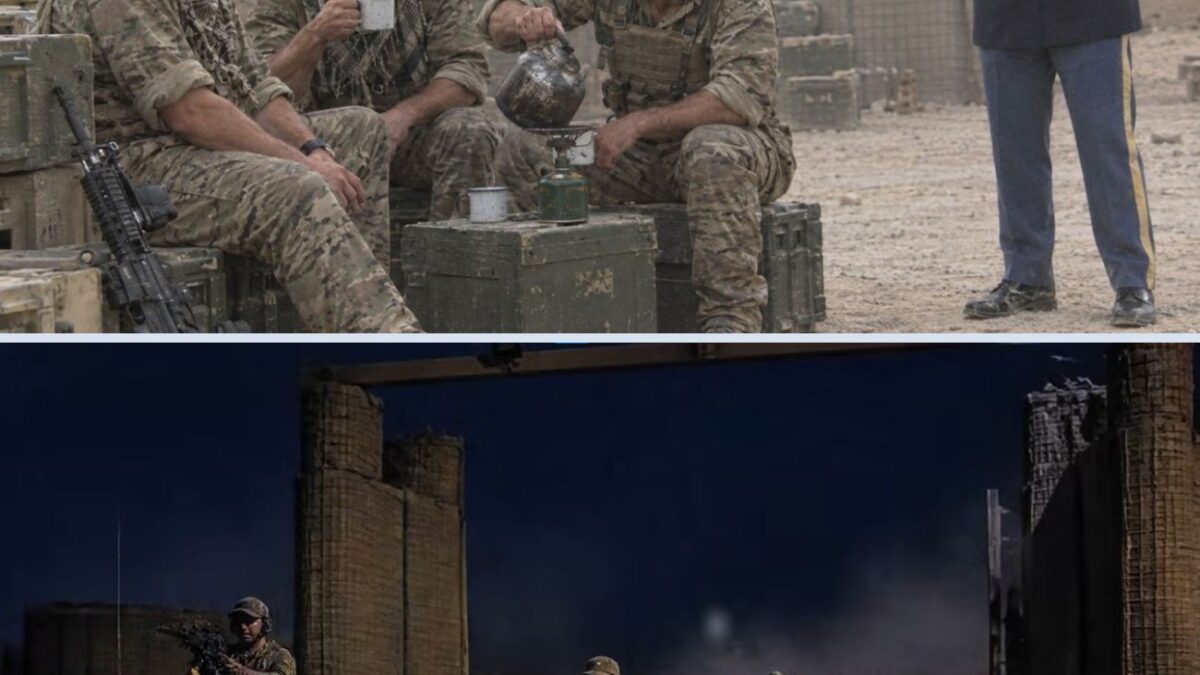
There is a corner of a forward operating base in western Iraq in the summer of 2007 where four men in no particular uniform are making tea on a camping stove at 9:00 in the morning, and the colonel standing over them has just told them to their faces that they are not an elite unit at all. He has said it loud enough for the Rangers on the sandbag line to hear him, loud enough for the interpreter to pause mid-sentence, and loud enough that the kettle, which is doing nothing wrong, suddenly sounds obscene.
“That’s not regulation,”
he says, and he taps the laminated card in his breast pocket as he says it.
“None of this is regulation. The hair’s not regulation. The beards aren’t regulation. The scarves aren’t regulation. The kettle, gentlemen, is not regulation.”
He looks at the man holding the kettle, who does not stop pouring.
“You are a drinking club with rifles.”
Nobody laughs. The man with the kettle finishes the mug he is pouring, hands it across to the man with the long hair under the baseball cap, and reaches for the next mug in the stack. The squadron sergeant major opens a battered tin of loose-leaf. The major he has addressed, left-handed, holding a small green notebook, writes one short line and closes the cover. The colonel waits for an answer that does not come, taps the card a second time, and walks off into the operations tent with his folder under his arm.
He will remember saying it. He will be made to. That is what you are watching unfold. A United States Army colonel, nine years deep in the Inspector General track, author of the grooming standards update that has his signature on the bottom of it, dispatched to a joint base in Al Anbar province to put a British squadron in order, and the clock, from the moment he said the words ‘drinking club’, is seven days. He will not reach the eighth. He will not be relieved for incompetence, and he will not be relieved for cause. He will be withdrawn, quietly, by his own side, by a brigadier general on a secure line, because the squadron he came to correct will, inside those seven days, do something in front of him that the United States Army cannot pretend it did not see.
He said,
“Drinking club with rifles.”
By the following Friday, the Pentagon’s own after-action summary, with a British signature on it and an American one beside it, will read 19-3-0. He will not be allowed to read it in private. He will be made to read it standing.
The colonel’s name was Prescott H. Vane, and he had been, by any serious measure, a competent soldier for a very long time. He was 58 years old in the summer of 2007. He was a West Point graduate, class of 1982. He had deployed with the 17th Infantry Division to Panama in 1989 as a captain, and he had deployed again as a major with VII Corps staff during Operation Desert Storm, and he carried a Bronze Star from the second of those tours, awarded for the kind of staff work that does not photograph well, but keeps battalions fed and fueled, and in the right grid square at the right hour. He had commanded a battalion of military police at Fort Hood in the late ’90s. He had spent the first two years of the global war on terror as a brigade inspector general in the 1st Cavalry Division, and he had spent the nine years since on the inspector general track proper, three of them at the Pentagon, in the office that owns the Army’s grooming, bearing, and uniform standards.
His name was on the bottom of the current update. He kept a laminated copy of the relevant extract in his breast pocket, and he tapped it lightly with two fingers when he was about to say something he intended to be remembered. Nobody who worked with Prescott Vane in a garrison would have called him a fool. He was punctilious, well-read, polite to subordinates, and demonstrably effective at the specific thing the United States Army had asked him to be effective at for most of a decade.
The reason he was sent to Al Asad in the summer of 2007 was not stupid, either. There had been a small cluster of friction incidents on joint bases in Anbar and Baghdad through that spring. Nothing operational, nothing combat-related, nothing involving British units in particular, but enough paper on the Pentagon’s desk about dress standards, duty uniform on shared installations, salute discipline, and the appearance of coalition personnel to generate a short-notice attachment visit.
Colonel Vane was the obvious man. He was instructed in writing to spend one week attached as a liaison observer at the forward operating base to compile a bearings and discipline annex, and where appropriate, to make corrective recommendations to the senior British officer on site. The instruction did not say fix the Special Air Service. The instruction said observe and recommend.
Vane, who read the instruction twice on the flight out and once more at Baghdad International, understood it as fix.
He landed on a Monday morning. The heat on the apron was the heat of a desert in July, and the dust on the apron was the dust of a desert in July. And the two chief warrant officers who met him at the terminal were in slightly dusty combat uniforms and slightly dusty baseball caps, and they addressed him crisply as ‘sir’ and drove him 20 minutes across the base to his accommodation.
He changed into his service uniform: dark blue jacket, medals, light blue trousers with the yellow stripe, white shirt, black tie, because that is what Inspector General work looks like, because the uniform is itself a form of authority, and because he had been told the senior British officer on site held the rank of major, and he intended from the first handshake to be unambiguous about which of them was in charge of a conversation about standards.
He walked out across the compound in his service dress with his folder under his arm at the hottest hour of a July morning past Rangers in combat uniform who looked at him and said nothing. And he arrived at the corner of the compound the British squadron had quietly made their own, a sandbagged bay under a stretch of camouflage netting. Three Pinkies parked nose out, a pile of green ammunition crates, a camping stove, a kettle, four men around it, none of them in anything the United States Army would recognize as regulation.
He stood at the edge of the bay for perhaps 40 seconds looking from face to face, and he said the sentences you have already heard in the order you heard them. Then he walked into the operations tent, found Major Ashworth-Blake’s chair empty. The major had followed him in and was standing a polite half pace behind him and said, quietly enough that only three people heard him, and loudly enough that all three remembered it.
“Major, I’m here to help you look like a serious unit. If I were you, I would start by looking like one yourself.”
The major wrote one line in his green notebook and said,
“Thank you, Colonel. We’ll see what the week brings.”
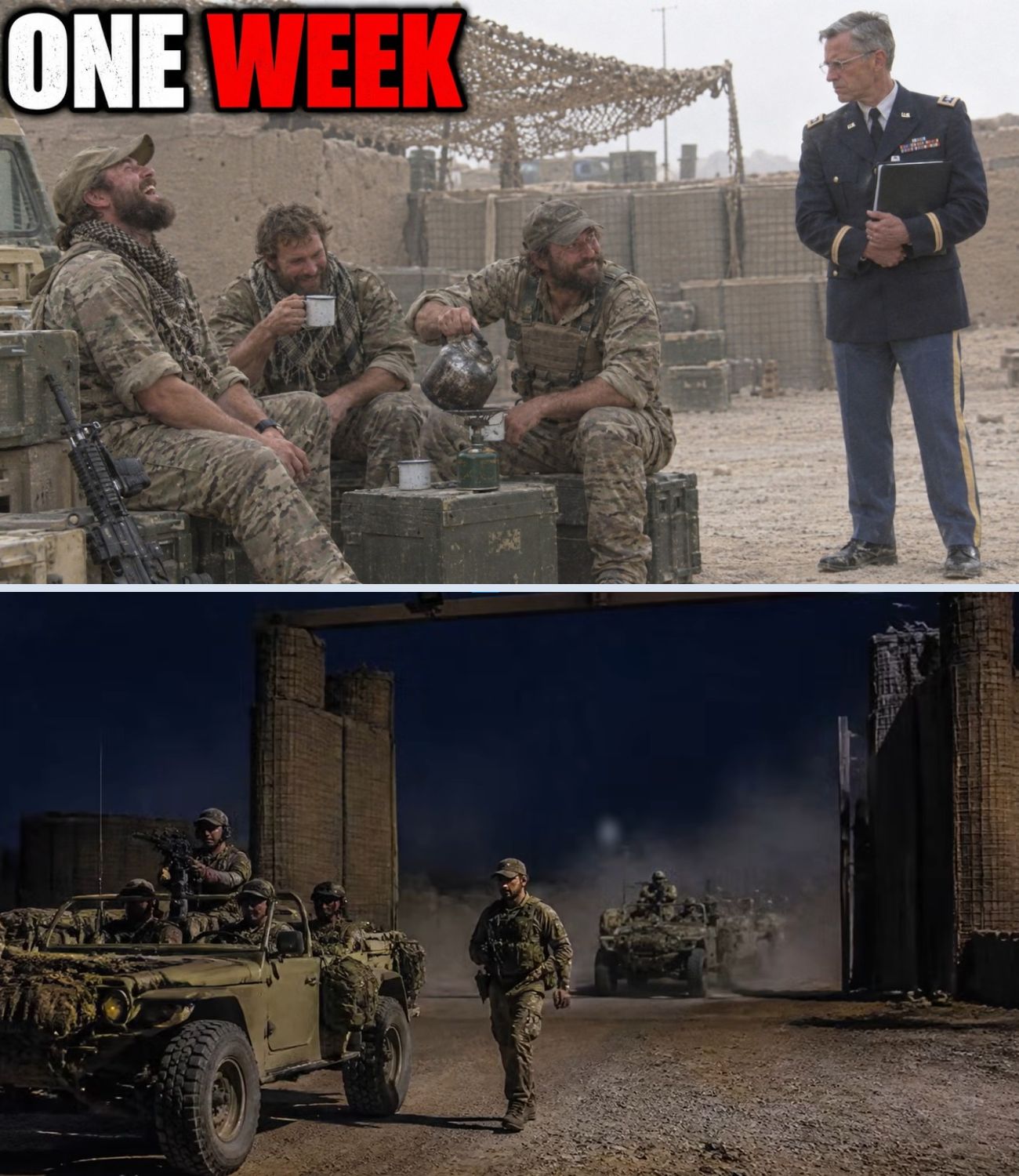
The British corner of the base was, in the technical sense, a squadron forward operating location, a quarter of a hangar, half a dozen living containers, a signal shelter, a vehicle bay with four Pinkies, and two long-wheelbase Land Rovers rigged for the mobility troop task, and the sandbagged bay under the netting where the kettle lived. There was no sign. There was no painted unit crest. There was no notice board. If you did not know what you were looking at, you would have mistaken it for a contractor’s compound, which was, in some weeks, the point.
The brew kit under the netting was not decoration. It was where the squadron’s day began and ended. And in practical terms, it was where the squadron’s command node sat, because that was where Major Edmund Ashworth-Blake could be found when he was not in the signals shelter, where Rennick was always to be found when he was not asleep, and where any troop commander with a problem brought it.
Squadron Sergeant Major Dougal Rennick’s tin of loose-leaf Yorkshire tea, a battered thing with the paint half gone, older than most of his troop, and probably older than two of the Pinkies, sat on the top crate, and the kettle came off the stove roughly every 40 minutes from first light to last. There was a quiet rule, never written down, that if you were drinking from the brew kit, you were not having an argument. The arguments happened 15 metres away in the signals shelter, and they ended before the next pot.
Staff Sergeant E1 Price Howell, air troop senior, sniper qualified, Welsh enough that his vowels were a joke in his own squadron, was the man with the long hair under the baseball cap. He had been in the regiment nine years. He was, in a thing he did not know he did, humming when he worked. Four bars of a chapel hymn his mother had sung in a valley he had not been home to in two years. Repeated between tasks, under the breath, inaudible past three paces.
Sergeant Finbarr Doolan, Finn to his troop, mobility County Louth by birth and Manchester by school, was the lead driver on the Pinky that was already loaded for that night’s lift. And the film canister wedged above the rev counter on his dashboard, which Vane did not notice and would not have asked about, held his two-year-old daughter’s first milk tooth posted out to him in the diplomatic bag by his wife three weeks before.
Corporal Noel Varga, mountain troop, was sorting breaching charges in the vehicle bay with two fingertips that stopped at the second knuckle on his left hand, a Norwegian story he would not tell, and Trooper Harry Linwood, youngest blade in the squadron, boat troop attached, had a paperback thriller held together with black electrical tape in his left cargo pocket, half out, which he would not read while there was work being done.
The product the squadron made went every evening between 1900 and 2000 from Ashworth-Blake’s green notebook to a laptop in the signals shelter to the J2 intelligence cell in the main operations building, where a British staff sergeant and an American chief warrant officer called Elton Rouse, long service, long enough in Iraq to be greeting Rennick by his first name, processed it onto the task board. The product was the only thing that mattered. The product was this. Here is who was in that house tonight. Here is what came out with him. Here is what his telephone said in the 40 minutes between the door going in and the detainee being handed up the chain.
The squadron did not brief its work in the operations tent. The squadron did not announce. The squadron handed in. If you wanted to know what the British had done the night before, you read the board in the morning. And if you could read the board, you knew.
Colonel Vane spent his first full day attempting to observe. He stood in the signals shelter for 40 minutes and heard nothing he could use. He stood at the back of the J2 brief at 1700 and watched a British staff sergeant hand two sheets of paper across a table, nod, and leave. He walked past the brew kit three times and each time the kettle was on and each time the men around it fell polite without falling to attention. And each time he found himself oddly with less to say than he had had the time before.
He wrote in his own folder in a hand that was becoming slightly tighter that the unit demonstrated a casual approach to information discipline and that standard reporting cycles were not in evidence. He did not write that he could not find a single piece of paper he was allowed to read.
By the end of Monday, the squadron had put two Pinkies out of the gate at 2100, lifted a man in a village outside Hit who had been on the J2 board for 11 weeks, and been back on the base through the brew kit and into their bashers before Vane’s shaving water boiled. He did not know they had gone. He did not know they had come back. The product the next morning was on the board. The gun by then was loaded.
Tuesday morning, Colonel Vane came out of his accommodation in service dress again. He would do this every morning of the week, and every morning of the week it would cost him more than it bought him. And arrived at the British vehicle bay at 8:00. He had decided overnight that if the squadron would not let him observe its reporting, he would at least conduct a bearings inspection on its personnel. He stood at the open end of the bay, folder in hand, and asked Ashworth-Blake, with the politeness of a man about to be unpleasant, whether the squadron might line up for a brief standards walk.
The major closed his notebook, said,
“Of course, Colonel.”
And nodded at Rennick. Rennick put down the mug he was holding, said one word,
“Lads.”
And inside 90 seconds there were 22 men in a loose single rank down the length of the bay, none of them in matching kit, several of them in beards that would have taken a battalion commander to the hospital in Fort Hood. Vane began at the right of the line. The first man was Varga, mountain troop, and Vane stopped in front of him and extended his hand in the manner of an officer who intends his handshake to be the beginning of the inspection.
Varga took the hand. Vane felt what was wrong with it before he saw what was wrong with it. The index and middle fingers of Varga’s left hand, the hand Vane had been offered, ended at the second knuckle, and the skin where they ended was the mottled purple-white that comes of weeks of frostbite and years of healing. Vane did not drop the hand. To his credit, as a man, he did not. He said,
“Corporal, where did you lose those?”
“Winter deployment, sir,”
said Varga.
“A few years ago.”
“Where?”
“Norway, sir.”
“Which exercise?”
“I’d rather not say, Colonel.”
Vane held the hand a moment longer than was polite, released it, and moved to the next man. He did not write anything.
Standing six paces back, out of the direct line but inside the sight line, was Major Daniel Kreft, United States Army Rangers, Vane’s exec on the attachment. Cuffs rolled to precisely the same inch on each forearm because he knew Vane watched for it. Kreft had not spoken since breakfast. He was watching his colonel inspect a line of men whose business he, Kreft, was beginning to understand, and his colonel was not. And he could feel, in the way a professional soldier feels these things, the moment the inspection stopped being an inspection and started being evidence of something. He saw Vane’s hand come away from Varga’s hand. He saw the tiny telling pause before Vane moved on. He did not catch Rennick’s eye because Rennick was looking at the floor, which was itself the sergeant major’s way of saying he had seen it, too.
Vane walked the line. He noted on his folder four beards non-compliant with grooming extract paragraph 3-2, six head covers non-regulation, 11 items of personal kit worn out of pattern, one shemagh patterned red and white, one wristwatch civilian non-issue, one novel protruding from a cargo pocket. He did not note the two fingertips. He stopped at Price Howell and asked for the make of the scope on the rifle leaning against the crates behind him, and Price Howell politely told him the make, and Vane wrote it down with the care of a man who was being told something he did not know. He stopped at Doolan and asked why the driver of a tactical vehicle was wearing a baseball cap.
Doolan said,
“Keeps the sun off, Colonel.”
Vane wrote that down, too. He paused once briefly by the Pinkies, and in a half-sentence that would never make it into his annex, he said to Kreft,
“The vehicles are at least clean.”
It was the only concession the entire morning offered, and it was glancing, and it led nowhere because the question Vane had come to the compound to answer was not whether the vehicles were clean.
Chief Warrant Officer Rouse, who had been standing by the signals shelter with a mug of the squadron’s tea in his hand, finished the mug, walked over, and said, in a voice that had 31 years of the United States Army behind it,
“Sir, may I offer a word?”
“Please, Chief.”
“That man you shook hands with, sir, the corporal. He came off a ridge in northern Norway in ’03 after 72 hours in a hole he dug himself with a casualty on his back and he walked the last 4 km because the quad bike didn’t make it. He doesn’t tell the story. The reason you don’t have the exercise name, sir, is the exercise doesn’t have a name you’d find in the manual.”
Rouse paused. He was not angry. He was not even emphatic.
“I’d stand down the inspection, sir, with respect.”
Vane said,
“Noted, Chief.”
And finished the line. He had come to the compound to prove that these men were not an elite unit. He had, in 40 minutes, documented one shemagh, one paperback, four beards, and the fingertips of a corporal who had walked out of a Norwegian winter with another man on his back. And that was only the first time that day he would be wrong.
Tuesday afternoon, Vane sat in the operations tent for three hours and nobody told him anything. He was not excluded. He was simply not included, which, as every staff officer eventually learns, is a different and more complete form of being outside a thing. He drank one cup of coffee from the American side of the mess tent. He wrote in his folder that squadron briefing cycles for coalition observers appeared to be ad hoc.
At 1600, he walked across to the vehicle bay and told Ashworth-Blake, in a voice that had slightly less card tapping in it than the mornings, that he would like to accompany whatever activity the squadron intended to conduct that evening.
Ashworth-Blake looked at him for one slow second, wrote one line in the green notebook, and said,
“Colonel, you can come as far as the forming up point, not past it. You’ll ride with Major Kreft in the Ranger vehicle. You’ll stay in the vehicle. The reason, sir, is not politeness.”
“Understood, Major.”
“I don’t think you do, Colonel, but we’ll see.”
At 2000, the forming up point was a scrape in the desert 9 km beyond the wire, and the two Pinkies and the long-wheelbase Land Rover were parked in a shallow horseshoe with their engines off, and the men moving between them were doing so without torches, without shouting, and without, it seemed to Vane in the back of the Ranger vehicle, any of the ceremony of departure a serious operation ought to possess. Doolan was in the driver’s seat of the lead Pinky, and in the half-light Vane could see, if he squinted, a small white object in a transparent canister wedged above the instruments on the dashboard. He did not know what it was. He would never find out. Doolan’s two-year-old daughter’s milk tooth rode on every job he drove, had done for three months, would do for the next two years. It was the only superstition he admitted to his wife.
The vehicles pulled off the horseshoe at 21:12. They did not accelerate hard. They did not line up. They went in a rolling order that had no obvious order, down a wadi line and out of the ambient light and into a dark that absorbed them inside 90 seconds. The last thing Vane heard was not an engine. It was Rennick, three vehicles away, saying something very short to the air troop staff sergeant, and the air troop staff sergeant replying with a single syllable, and both of them laughing briefly under their breath. Then nothing.
Hassan al-Dulaimi, the squadron’s attached interpreter, Baghdad-born, Oxford-educated, a man who had corrected an entire operations tent’s Arabic exactly once in his first week, and had never needed to again, was in the back of the Ranger vehicle with Vane and Kreft, because Hassan went where the net could reach him. Through the radio speaker, 4 km out, someone on the squadron net said a word in Arabic that Vane half recognized and could not place.
Hassan, quietly, to no one in particular, said,
“That’s not quite the word. The word they want is the next one along. It doesn’t matter. He’ll understand.”
Vane wrote in his folder that the interpreter had corrected a transmission. He did not write what the transmission was for. He had not been told.
The vehicles came back at 23:41. There was a man in the back of the lead Pinky with his wrists plastic-cuffed and a sandbag over his head, and he was walking, which told Kreft more than any briefing would have, because men who come back on their feet from a British lift are men the squadron intends to hand up the chain intact. The man was moved, without ceremony, into the J2 cage. Rennick took his helmet off and put the kettle on. Ashworth-Blake wrote one line in his notebook. Nobody told Vane what had happened.
The product went up at 0700 the next morning. On the board, two sheets of paper and a photograph. A name Vane did not recognize and would, three weeks later in Washington, finally understand the significance of. The schoolgirls, he had called them, the men who had just lifted a Jaysh al-Mahdi facilitator out of a courtyard in Hit without firing a round were, by his own words of the morning before, a drinking club. He wrote in his folder that evening that the squadron’s reporting culture does not permit meaningful oversight and did not sleep well, because somewhere behind the complaint, he was beginning to suspect that there was nothing in the reporting culture that oversight would have improved.
By Thursday, Colonel Vane had stopped asking to accompany. He was invited. He did not know why he was invited, and he did not ask. The task was an overwatch position on the flat roof of a disused agricultural building 11 km northeast of the base from which an air troop sniper pair would cover a daylight meeting between a tribal elder and a man the J2 cell believed to be a bomb maker’s quartermaster. The British intention was not to shoot the elder. The British intention was that if the quartermaster, who did not know he had been identified, reached for the small weapon he was known to carry concealed, he would not reach it twice.
The rooftop was 640 metres from the meeting point. The wind was from the northwest at eight knots, variable. The temperature on the tiles was warm enough that heat shimmer began at 400 metres and smeared the far end of the glass. Price Howell lay on the roof with a rifle whose scope Colonel Vane had asked the make of three days earlier, and his number two, a corporal from his own troop, whose name does not matter for this telling, lay beside him with a spotting scope and a notebook. Vane and Kreft and a Ranger staff sergeant called Declan were ten paces back in the shadow of a parapet with a second spotting scope between them, instructed to look, not speak, and under no circumstances to appear on the skyline.
Price Howell was humming. He did not know he was humming. Four bars, a Welsh hymn, the valley his mother had sung in, repeated under the breath between breathing cycles.
The Ranger staff sergeant heard it, looked across at Kreft, raised an eyebrow a quarter of an inch, and said nothing. His own corporal five minutes later whispered to him,
“Is he singing?”
And Declan whispered back,
“He’s working. Shut up.”
The meeting began at 11:41. The elder arrived first with two men. The quartermaster arrived at 11:43 with one. Through the glass at 600 metres, you could see the elder’s hands open on his knees, and you could see the quartermaster’s hands, which were not. At 11:53, the quartermaster said something that caused the elder to lean back, and the quartermaster’s right hand moved in the slow, deliberate way of a hand that is going somewhere it has gone before. Towards the small of his back.
Price Howell stopped humming. The spotter called the wind. The spotter said one word, which was ‘send’, and Price Howell sent, and the rifle on the roof made the dull domestic noise of a suppressed carbine in open air. Not a bang, more a thump through the chest, and 640 metres away, the quartermaster’s right hand stopped before it reached what it had been reaching for, and he fell forward across the carpet without the elder understanding for a full three seconds what had happened.
The elder looked up. The elder looked at the hills. The elder, who had been briefed in a different conversation entirely, stood up with his two men and walked without hurry to the vehicle they had come in. He was home by last light.
Colonel Vane did not say anything on the roof. He did not say anything in the vehicle on the way back. Kreft, in the front seat, caught the Ranger staff sergeant’s eye in the mirror, and Declan, who had been in the army 15 years and had never seen a shot called cleaner, moved his head half an inch, the small American affirmative of a man who has just watched something he will not forget. Vane saw the look. He saw his own exec receive it.
He did not open the folder. That night he sat in his accommodation with the folder closed on his knees for 90 minutes before he opened it. And when he opened it, he did not write anything. The page he turned to had at the top, in his own hand from Monday, the words ‘drinking club with rifles’, which he had written there to remind himself to use the phrase in his report. He did not strike it through. He did not add to it. He simply closed the folder again. The ratchet by then had reached the last tooth before the drop.
Friday morning, 0700. The J2 cell has set up two rows of folding chairs in the briefing room and the task board has been turned to face them. The British staff sergeant who runs the board for the squadron is standing to the left of it with a telescopic pointer that he will not use because he does not need to. Chief Warrant Officer Rouse is sitting in the front row with a notebook open on his knee. Kreft is beside him. Colonel Prescott H. Vane, in service dress for the fifth morning in a row, is in the aisle seat of the front row, folder closed, hands flat on the folder, laminated card untouched in his breast pocket. Behind them, two rows back, Ashworth-Blake sits with his green notebook open on the first line of the day. Rennick stands at the back with a mug.
The board is turned around. On the left of the board are the weekly intake targets issued by the coalition task force, which Vane has never seen. On the right are the squadron’s results. Between them is a thin red line that the staff sergeant drew the previous evening with a ruler.
The staff sergeant says, in the flattest voice in the room,
“Week ending today, 19 high-value detainees lifted and handed to task force custody, cross-referenced against the J2 priority list. Three hostages recovered alive. Two coalition contractors held in Hit since May. One local national lifted from a safe house north of Rutbah on Wednesday. Zero friendly casualties over the reporting period. 164 operational hours.”
He pauses. He is not performing. He is reading.
“The figures are reconciled with Task Force J2 as of 0600 this morning. The reconciliation signature is Chief Warrant Officer Rouse.”
Rouse does not stand. He raises a hand briefly from his knee. He says,
“Confirmed. Signed off at 0550. Numbers match ours, sir. All 19 are on our board. All three recoveries are at Balad Medical as of this morning. I walked the ward at 0400. They are alive.”
He looks at Colonel Vane for half a second, not unkindly, and goes back to his notebook. The staff sergeant turns to the second sheet.
“Yesterday’s lift at Rutbah produced one detainee. Interpreter present at interrogation handover. The detainee said one sentence that is on the record. Mr. Al Dulaimi.”
Hassan Al Dulaimi, sitting on the end of the second row in a creased linen shirt, stands and says, in the same quiet voice with which he had corrected a transmission on Tuesday night,
“The detainee said, in Arabic, ‘You came through the wall I was leaning against and I did not hear you.’ The translation is literal. He said it twice. He asked who you were. He was told that you were British soldiers, he said, and this is also literal, ‘Then it is finished.’ He has given up seven names and two locations since 0300.”
The names and locations are on the board. He sits down. The staff sergeant turns the sheet. There is nothing on the next page but a small addendum. He reads it anyway.
“Thursday’s overwatch task, grid northeast of this location. single round fired at 640 m, suppressed confirmed hit, target neutralized, principal evacuated unharmed. Shooter air troop. The round is recorded as one of one.”
Ashworth-Blake stands up at the back of the room. He does not raise his voice. He has been in the army 17 years and he has made exactly two speeches in that time and this is not one of them. He says,
“Colonel Vane, you asked on Monday whether we were an elite unit or a drinking club with rifles. The board behind the staff sergeant is the only answer the squadron is going to offer you. It is the answer we offer every Friday. We did not change it this week on your account. If you would like the detail on any of the 19, Chief Warrant Officer Rouse will walk you through them this afternoon. If you would like the detail on the three, Balad Medical will not permit you onto the ward in service dress. So, I would suggest combats. Thank you for your attention, sir.”
He sits down. He writes one line in the green notebook. Colonel Vane’s hands are still flat on the folder. He has not moved them in four minutes. He is looking at the number on the right of the board, 19-3-0-164, and the small part of his mind that is still Inspector General Track is noting that the figures have been reconciled by an American Warrant Officer with 31 years in and signed off before dawn. And the rest of his mind is doing a thing he has not had to do since he was a captain in Panama, which is reorganizing in real time what he thought he knew.
He does not open the folder. He does not tap the card. Hear that number again: 19-3-0. In the room with him sits the man who signed it off, the man who translated the sentence that produced seven more names, the officer whose squadron did it, and the sergeant major whose kettle has been on every 40 minutes through all of it. The board does not care that the colonel is in service dress. The board is the board. The debt, if you have been counting since Monday, has just been paid in a currency the United States Army cannot dispute. Its own warrant officer’s signature under a British figure on a Friday morning with the man who said ‘drinking club’ sitting in the aisle seat.
For 20 seconds after Ashworth-Blake sat down, nobody in the briefing room moved. The staff sergeant closed the board. Rouse closed his notebook. Hassan folded his hands. The board stayed as it was. Vane stood up. He said,
“Thank you, Major.”
He said it to the room and to no one. He walked out of the briefing room without opening the folder. Kreft followed him. In the corridor, Kreft stopped him politely with a hand that did not quite touch his elbow and said the sentence that is the thing one of Vane’s own men was always going to have to say to him because the lane requires it, and because Kreft had been building to it since Tuesday.
“Sir, with respect, we came out here to measure them against our standards. The problem is that their standards are producing our outcomes. I don’t know what we write in the annex, sir. I don’t think there’s an annex we can write that doesn’t make the army look worse than they do.”
Vane looked at him. He said,
“Noted, Major.”
He did not say it unkindly. He said it the way he had said it to Rouse on Tuesday, which was the way a man says a word when the word is costing him more than he can afford to show.
The phone call came at 1100. Vane took it in his accommodation. Brigadier General Hollis T. Marable, on a secure line from the Pentagon, said four sentences in total, and Vane did not interrupt any of them. The last sentence was,
“You will be on the rotator out of Al Asad tomorrow morning. The annex will not be filed. Thank you, Colonel.”
Marable did not explain himself. He never did. He hung up.
Vane sat on the edge of the camp cot in his service dress with the receiver in his hand for a full minute before he put it down. He packed in the afternoon. The folder went into the bottom of the case under the service dress tunic. The laminated card stayed in the breast pocket because it had not been produced, and because to remove it now would be to admit to himself that he had removed it. He did not change into combats. He had never changed into combats on the base, and he was not going to change now.
He walked in service dress from his accommodation to the vehicle that was to take him to the airstrip. And the route took him, as it had to, past the sandbagged bay under the camouflage netting. The kettle was on. Rennick was pouring. Price-Howell was laughing at something Linwood had said. Doolan was already in the driver’s seat of a Pinky loaded for a job he would run that night and that Vane would never know had happened. Varga, two fingertips short, was passing a mug across to a Ranger corporal who had not been there on Monday.
They did not stop. They did not turn. They did not acknowledge him, and the not acknowledging was not rudeness. It was the only reckoning this lane allows. The men he had called a drinking club carried on being what he had called them, and the colonel in service dress walking past them with a folder he would never file understood for the first time precisely what the phrase had meant.
On the crate nearest the entrance to the bay, Linwood’s paperback thriller, cover held on by electrical tape, read on every rotation he had been on since he passed selection, sat closed. He had been working for seven days. He had not opened it. The book, if you want the small symbol the narrator will not oversell, was the week in miniature. The squadron had been too busy producing 19-3-0 and zero to read a chapter.
Colonel Prescott H. Vane got into the vehicle. Kreft shut the door. The vehicle pulled away. The kettle came off the stove at the next 40-minute mark, which the colonel did not hear because by then he was already on the apron, in service dress, in the dust of a desert in July, waiting for an aircraft to take him home a day earlier than his instruction had asked him to leave.
He had been right about the tea and wrong about the men who drank it. He had been right that the beards were not regulation, right that the shemaghs were not regulation, right that the kettle on the camping stove in a corner of a joint base in Al Anbar province was, by the laminated card in his breast pocket, not regulation. And he had been wrong about the only thing the week had actually asked him to measure, which was whether the men around the kettle were, in the terms his own army used behind closed doors, an elite unit.
The number on the board on Friday morning said what the number on the board on Friday morning said. The chief warrant officer who signed it off was his own. The exec who named it in the corridor was his own. The decision to withdraw him was his own side’s. He had not been corrected by the British. He had been corrected by the arithmetic. That is what a drinking club with rifles looks like when the rifles work and the arithmetic is kept by somebody else.
In the sandbagged bay, after the Pinky had gone out of the gate again at 2100, Rennick closed the lid of the battered tin of Yorkshire tea for the night, set it down on the top crate, and turned off the camping stove. The kettle cooled. The hymn Price Howell did not know he hummed went quiet in a valley 11 km northeast where a rifle was being cleaned on a tailgate. Ashworth-Blake wrote the last line of Friday in the green notebook, one line as always, no more, and closed the cover.
Somewhere over the Atlantic, a colonel in service dress was asleep against a window with a folder closed on his lap, and the annex it did not contain was the loudest piece of paper in the United States Army that week.
You Might Also Enjoy

“We Thought They Would Negotiate”—What Argentine Soldiers Said When The British Attacked Goose Green

“You’ll Never Finish My Ruck March, Limey” — US Sergeant Who Challenged the SAS, Then Fell Out First






