The 5 Deadliest British Generals of WW2 — Ranked by Destruction
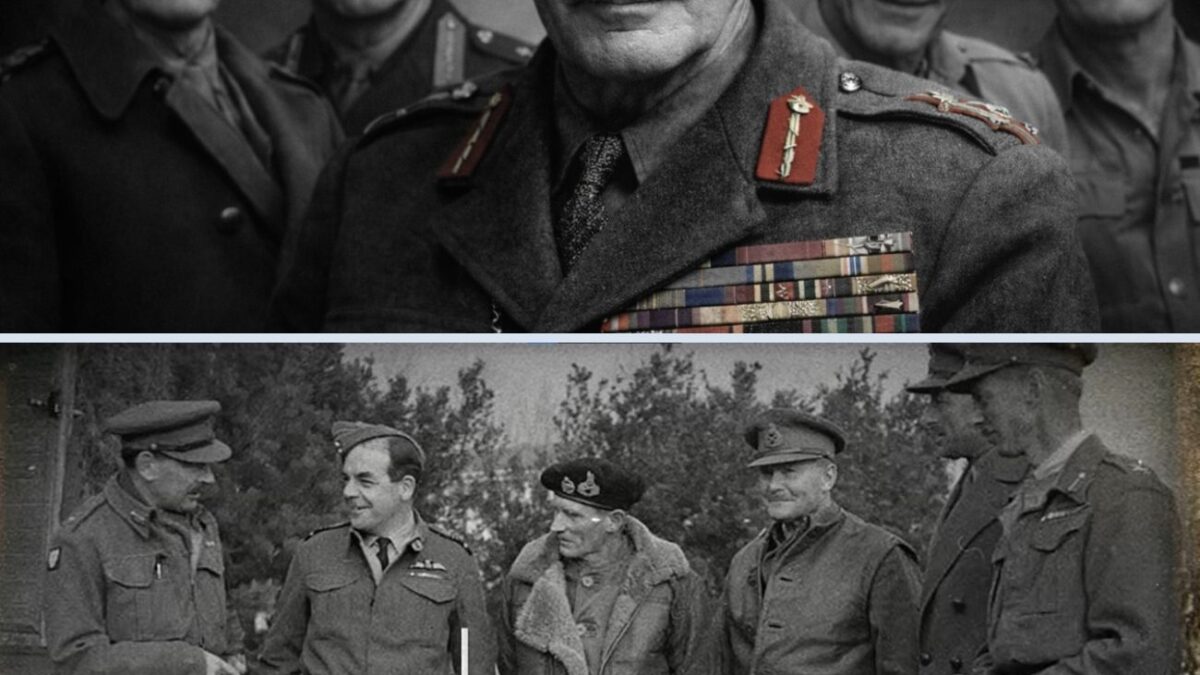
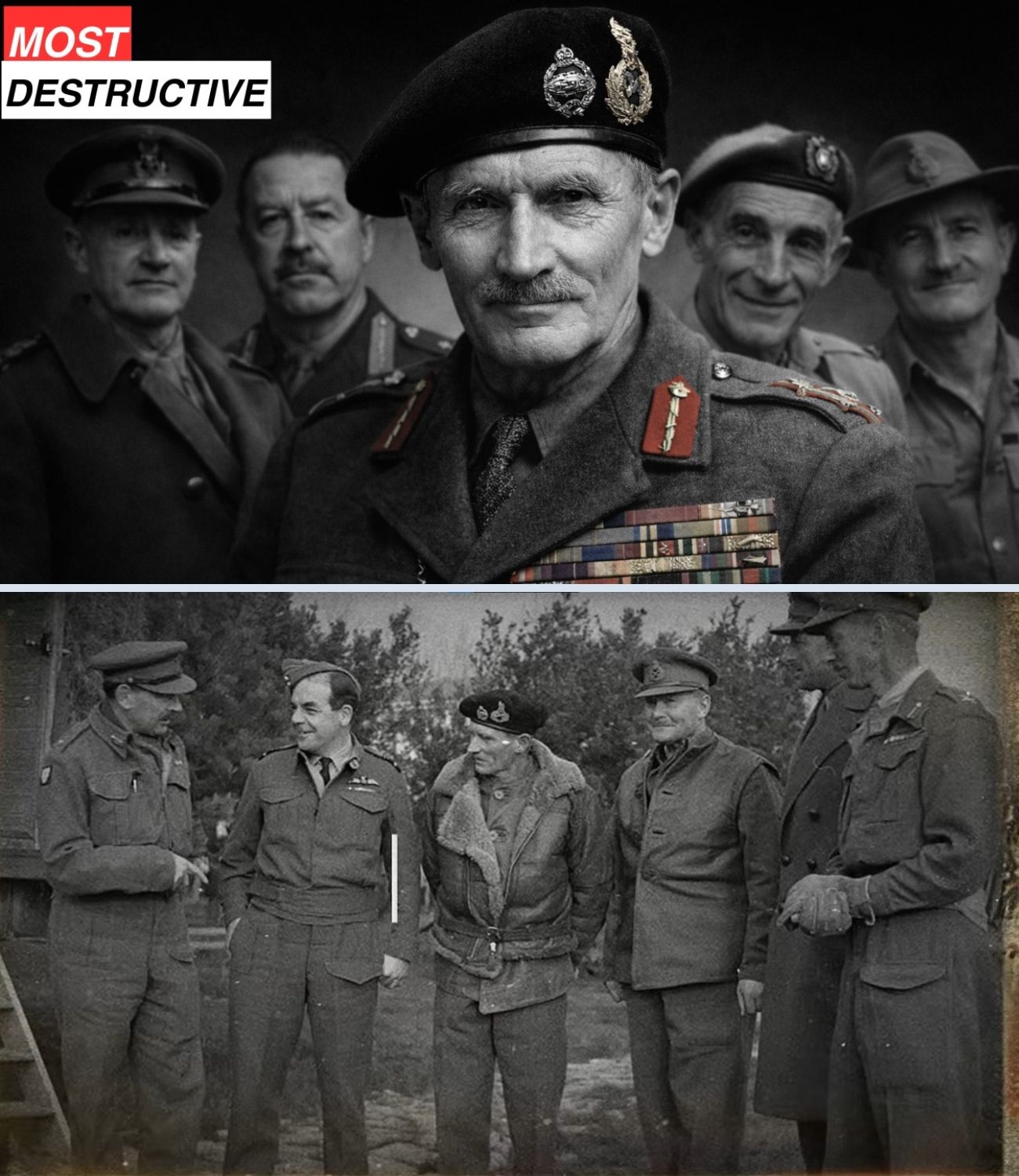
2 million. That’s how many enemy soldiers these five British generals destroyed between 1940 and 1945. Not wounded, not pushed back, destroyed, killed, captured, or left to starve on bypassed battlefields from Eritrea to Burma. Over 1,300 British generals served in World War II. Only five of them produced casualty figures so devastating that entire enemy armies ceased to exist under their command. Number five destroyed a force four times his size and lost fewer than 500 of his own men doing it. Number four delivered the first Allied strategic victory of the war and nobody remembers his name. Number three ground the German army to dust across the longest Allied campaign in Europe. Number two is the most controversial British commander of the 20th century and his numbers speak louder than any debate. And number one, he inflicted the worst defeat in Japanese military history and the country he saved barely remembered him. This isn’t about medals or monuments. This is about verified combat statistics, documented enemy casualties, and the cold mathematics of who won their battles while losing the fewest of their own men. Let’s count down the five deadliest British generals of World War II.
Now, let’s start with number five. Here’s what you need to know about Richard O’Connor. In December 1940, he was given 36,000 men and told to raid the Italian positions in Egypt. The end of what was supposed to be a five-day operation turned into one of the most lopsided victories in military history. The Italian 10th Army, 150,000 strong, had invaded Egypt and dug in around Sidi Barrani. O’Connor was outnumbered more than four to one. His signature concept was something we’d now call tempo warfare. Move faster than your enemy can think. If you arrive before his defenses are ready, his numbers don’t matter. O’Connor launched Operation Compass on the 9th of December 1940. Within three days, his forces had captured 38,000 Italian prisoners and suffered just 624 casualties. But O’Connor didn’t stop. He kept going. Bardiyah fell by the 5th of January 1941 with another 36,000 prisoners. Tobruk fell on the 22nd of January netting 25,000 more. And when the remnants of the Italian 10th Army tried to escape west along the coast road, O’Connor sent the 7th Armoured Division on a daring dash across the desert interior to cut them off at Beda Fomm. It worked. The entire Italian army was trapped.
Here’s the statistic that defines O’Connor. Over 500 miles advanced, 10 enemy divisions destroyed, 138,000 Italian and Libyan prisoners captured, over 12,000 enemy killed or missing, 400 tanks seized, 850 guns taken, total British casualties fewer than 2,000 men of whom roughly 500 were killed. To put that in perspective, O’Connor captured more prisoners in two months than the entire British army took in the first two years of World War I. A British officer at Sidi Barrani described the scene as capturing five acres of officers and 200 acres of other ranks.
The enemy’s assessment, Marshal Rodolfo Graziani, commander of the Italian 10th Army, “I suffered a nervous breakdown and retired from active duty.”
Italian military analysts acknowledged after the war that O’Connor’s speed of advance made conventional defense impossible. By the time their commanders identified his axis of attack, O’Connor was already past them cutting their retreat. O’Connor wanted to push on to Tripoli and finish the job. Churchill overruled him diverting forces to Greece. Two months later, Rommel arrived in North Africa and the desert war that should have been over in February 1941 dragged on until May 1943. O’Connor himself was captured by a German patrol in April 1941. He spent two and a half years in an Italian POW camp near Florence, tried to escape twice, and was recaptured both times. He finally got out in December 1943 after the Italian surrender and made it back to VIII Corps in Normandy and Market Garden. Richard O’Connor died in 1981 at age 91. His biography is titled The Forgotten Victor. That tells you everything. He delivered Britain’s first major land victory of the war at a cost so low it almost seems like a clerical error. That’s why he’s number five.
And if you think those numbers are impressive, wait until you see what our number one did with even less. But first, number four. Here’s what you need to know about William Platt. In January 1941, he led a force from Sudan into Eritrea and helped destroy Mussolini’s entire East African empire. Nearly 300,000 Italian and colonial troops defended a territory of over a million square miles. That’s bigger than France, Germany, and Spain combined. The British Commonwealth force that dismantled it never exceeded 70,000 men. And the man who fought the campaign’s bloodiest battle was a fiery little general most people have never heard of. Platt commanded the northern prong of General Wavell’s three-pronged assault on Italian East Africa. His signature concept was relentless pressure. Hit the enemy at the point of his greatest confidence, crack it, and the rest collapses. For the Italians, that point was Keren. The Battle of Keren, fought from the 3rd of February to the 27th of March 1941, was the decisive engagement of the East African campaign and some of the most savage fighting the British army saw anywhere that year. 23,000 Italian and colonial troops defended a mountain fortress above the Dongal As Gorge against Platt’s 4th and 5th Indian Divisions. And the terrain was so extreme that men fought hand-to-hand on cliff faces. An Italian lieutenant led a cavalry charge of 500 horsemen into machine gun fire. 179 riders were killed. Veterans who later fought in Italy, Burma, and Northwest Europe said the same thing. Nothing was worse than Keren.
Here’s the statistic that defines Platt. After cracking Keren, his forces took Asmara and the vital port of Massawa reopening the Red Sea to Allied shipping. He then drove south and accepted the surrender of the Italian Viceroy, the Duke of Aosta, at the mountain fortress of Amba Alagi on the 19th of May 1941. Across the full East African campaign, the British Commonwealth forces captured over 230,000 Italian and colonial prisoners and occupied 360,000 square miles of territory. The entire campaign, which destroyed Mussolini’s African empire, had cost fewer than 5,000 Allied dead.
The enemy’s assessment, the Duke of Aosta, who commanded all Italian forces in East Africa, wrote in his diary during the final siege, “Constant firing all day long. We spend the day jumping from one rock to another, belly to the ground.”
As his colonial troops deserted and turned on their Italian officers, one bitter fascist official told a war correspondent, “We knew the end was coming when they stopped saying we were invincible.”
The East African campaign was the first Allied strategic victory of the entire war. It freed up the Red Sea for American supply ships, released Indian divisions for North Africa, and proved that the Axis could be beaten. Platt was knighted for his role and later served as Commander-in-Chief, East Africa Command. He died in 1975 at age 89. No film, no biography on the bestseller lists, just the quiet record of the man who helped deliver the war’s first real victory. That’s why he’s number four.
But these first two entries are just the warm-up. The next three generals operated on a scale that dwarfs everything you’ve seen so far. Here’s what you need to know about Harold Alexander. In September 1943, the Allies invaded Italy expecting a quick march to Rome. It took 20 months. Alexander commanded every day of it. As head of the 15th Army Group, Alexander oversaw the longest continuous Allied campaign of the war from the invasion of Sicily in July 1943 to the German surrender in May 1945. His signature concept was the meat grinder. Alexander didn’t seek dramatic breakthroughs. He applied relentless coordinated pressure across a 20-nation coalition until the enemy cracked. At Monte Cassino alone, the Allies launched four separate assaults between January and May 1944 to break through the Gustav Line. The ancient monastery was bombed to rubble by over 200 aircraft. Polish troops stormed the ruins. New Zealanders, Indians, and Gurkhas bled on mountainsides so steep that tanks couldn’t reach them against German paratroopers dug into positions that turned every yard into a killing zone. It took 5 months and 55,000 Allied casualties to crack a single defensive line.
Here’s the statistic that defines Alexander. German casualties across the Italian campaign totaled roughly 336,000 killed, wounded, and captured. When the war ended in Italy on the 2nd of May, 1945, Alexander accepted the conditional surrender of Army Group C. Nearly 1 million German soldiers laid down their arms. It was the first mass capitulation of German forces in Europe, 6 days before V-E Day.
The enemy’s assessment, Field Marshal Albert Kesselring, Alexander’s opposite number in Italy, was routinely described as a genius of defensive warfare. Yet even Kesselring admitted after the war that Allied air power was the greatest single reason for German defeat. He couldn’t hold against Alexander’s coalition. Alexander himself said of Kesselring that he and his soldiers fought hard but clean.
Alexander’s critics say Italy was a sideshow. But on D-Day, the Italian campaign was tying down nearly 70 German divisions. There were only 33 in northern France to face the invasion. Alexander’s meat grinder made the liberation of France possible. When Harold Alexander served as Governor-General of Canada after the war and was created Earl Alexander of Tunis, he died in 1969 at age 77. No Hollywood film, no dramatic legacy, just the quiet record of the man who bled the German army dry for 2 years and ended with a million men surrendering to him. That’s why he’s number three.
Now, if you’ve made it this far, you already know more about British generalship than most people who watch World War II videos. But the next two entries are where the numbers become genuinely staggering. Stop right here and understand this number. 700,000. That’s the combined enemy casualties inflicted under Bernard Montgomery’s command across three major theaters of war. No other British general comes close. Montgomery’s signature concept was the set piece battle. No improvisation, no gambles, overwhelming superiority in men, tanks, artillery, and air power applied with mathematical precision. His critics called it slow. His soldiers called it staying alive. It started in the desert. At the Second Battle of El Alamein in October 1942, Montgomery commanded 195,000 men against Rommel’s combined German-Italian force of roughly 104,000. After 13 days of fighting, the Axis line broke. Around 37,000 Axis soldiers were killed or wounded, roughly 30% of their force, plus another 30,000 taken prisoner. Among the captured was the Africa Corps commander, General Wilhelm von Thoma. When the Axis forces in North Africa finally surrendered in May 1943, around 240,000 German and Italian soldiers were taken prisoner. The entire Axis presence on the continent was annihilated.
Then came Normandy. On the 6th of June, 1944, Montgomery commanded all Allied ground forces for the largest amphibious invasion in history. Nearly 160,000 troops crossed the channel on D-Day under his operational plan. Historians estimate the Battle of Normandy cost the Germans approximately 450,000 casualties, including 240,000 killed or wounded. More than 40 German divisions were destroyed. When the Falaise Pocket was sealed in August 1944, between 80,000 and 100,000 German soldiers were trapped. Roughly 10,000 to 15,000 were killed. Another 40,000 to 50,000 were captured. General Eisenhower visited the Falaise battlefield 48 hours after the pocket closed. He described it as one of the greatest killing fields of any of the war areas, a scene that could only be described by Dante.
Here’s the statistic that defines Montgomery. Add North Africa, Sicily, and Normandy as a Northwest Europe together. Over 700,000 enemy casualties under one man’s command. His 21st Army Group then fought across Belgium, the Netherlands, and into Germany, accepting the surrender of all German forces in Denmark, the Netherlands, and northern Germany on the 4th of May, 1945. To put that in perspective, Montgomery’s combined casualty count exceeds the entire population of Liverpool at the time.
The enemy’s assessment, Field Marshal Gerd von Rundstedt, one of Germany’s most senior commanders, said after the war, “Montgomery was very systematic. That is all right if you have sufficient forces and sufficient time.” It was a backhanded compliment, but Rundstedt also admitted that Montgomery was the one general who never suffered a reverse. The Germans perceived him as a fierce and pitiless man. When the war ended, Admiral Dönitz chose to surrender specifically to Montgomery. That tells you who the Germans took seriously.
Bernard Montgomery died on the 24th of March, 1976 at age 88. Churchill’s verdict still holds, “In defeat unbeatable, in victory unbearable.” He is buried in Binstead, Hampshire, beneath a simple headstone, the most controversial and statistically destructive British general of the war.
So, why isn’t he number one? Because there’s one man whose achievement was, by every measure of military skill, more impressive. Here’s what you need to know about William Slim. He killed more enemy soldiers relative to his resources than any British commander in the Second World War. He did it in the worst fighting conditions on Earth, against an enemy that almost never surrendered, with an army the British government treated as an afterthought. And when it was over, they sacked him before the victory parade. In 1943, Slim took command of the newly formed 14th Army in Burma. His troops called themselves the Forgotten Army. Every spare tank, plane, and bullet went to North Africa, then Italy, then Normandy. Slim got what was left over. His soldiers fought in jungles so dense you couldn’t see 20 yards. Temperatures exceeded 45°. Malaria killed more men than the Japanese. His signature concept was what historians now call the maneuverist approach. Don’t fight where the enemy is strong. Use deception, cut supply lines, let isolation do the killing. The enemy? The Imperial Japanese Army was, man for man, the most fanatical fighting force of the war. Japanese soldiers did not surrender. The capture rates across the Pacific ran between 1 and 3%. Every position had to be taken by killing virtually every defender. No mass surrenders, no columns of prisoners, just killing.
Slim rebuilt the 14th Army from a demoralized force into the instrument that inflicted the single worst land defeat in Japanese military history. The Battles of Imphal and Kohima, fought from March to July 1944, were the turning point. The Japanese 15th Army, 85,000 strong, invaded northeast India. Slim’s forces held. Then they counterattacked. Here’s the statistic that defines Slim. The Japanese lost over 53,000 dead and missing from that single campaign. Their 15th Army was annihilated. Five divisions were virtually destroyed. British and Indian casualties were under 17,000. That’s a kill ratio of more than three to one. It’s against an enemy that fought to the death in terrain that favored the defender. No comparable ratio exists in any other British campaign against the Japanese.
But Slim didn’t stop at Imphal. He pursued the shattered Japanese back across the Chindwin, then across the Irrawaddy. He used deception to convince them he was making his main thrust at Mandalay, while secretly sending his strongest corps to seize Meiktila, the critical road and rail junction behind enemy lines. When the Japanese realized what had happened, it was too late. Their supply network collapsed. He reconquered a country the size of France in 5 months.
The enemy’s assessment, after the war, Major General Ichida of the Japanese Army admitted that Allied air supply permitted ground forces to consolidate without retreating, rendering Japanese infiltration and encircling tactics abortive. Slim had neutralized the one tactic that made the Japanese unstoppable since 1941. General Mutaguchi, who led the invasion of India, was relieved and forced into retirement in disgrace. He never recovered from the defeat Slim inflicted.
Across the entire Burma campaign, Japanese forces suffered over 100,000 dead under Slim’s command. And unlike the Western Front, where prisoners inflated casualty figures, almost every Japanese casualty was a fatality. The Japanese did not surrender. They died. And what did Britain do with its finest general? In 1945, just as Slim was about to take Rangoon, Mountbatten replaced him. When the Burma victory documentary was released, Slim appeared in the last 10 minutes. The first 50 focused on Mountbatten and Wingate. And Mountbatten himself later called Slim the finest general the Second World War produced.
Slim wrote one memoir, Defeat into Victory, considered one of the greatest military autobiographies ever written. He served as Chief of the Imperial General Staff and Governor-General of Australia. He died in 1970 at age 79. The 14th Army never forgot him. They called him Uncle Bill. He was the only British general in the war who went into the ring, got knocked out, climbed back in, and beat his opponent flat. He did it with fewer resources, worse conditions, and a harder enemy than anyone else on this list. And he did it while barely anyone at home was watching. That’s why William Slim is number one.
Let’s add them up. O’Connor, 150,000 enemy destroyed in 2 months. Platt, over 230,000 enemy captured and an empire destroyed. Alexander, 336,000 enemy casualties and a million surrendered. Montgomery, over 700,000 enemy casualties across three theaters. Slim, over 100,000 Japanese dead in Burma, five British generals, over 2 million enemy soldiers destroyed. That’s more than the entire German army lost on the Eastern Front in any single year of the war.
You Might Also Enjoy

“We Thought They Would Negotiate”—What Argentine Soldiers Said When The British Attacked Goose Green

“You’ll Never Finish My Ruck March, Limey” — US Sergeant Who Challenged the SAS, Then Fell Out First






