The British SAS Unit that Stayed in Rhodesia and Fought on When London Said Stop
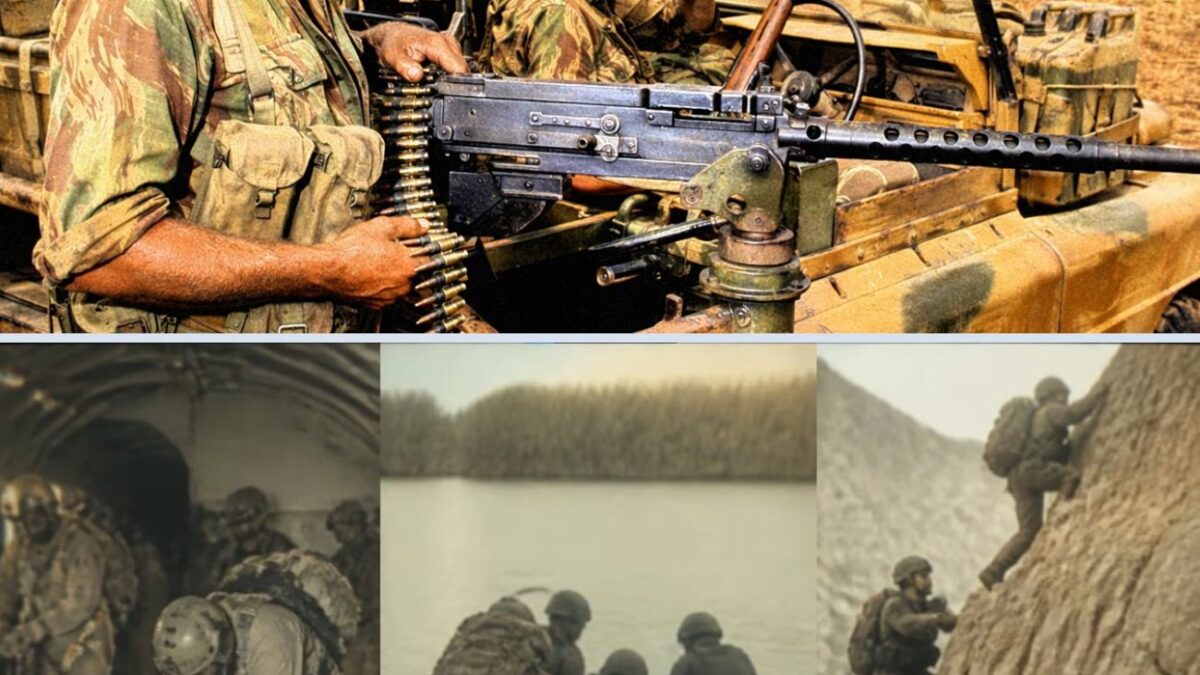
C Squadron, 22 Special Air Service Regiment. That is the name. Say it once. Then ask what it meant. In 1951, it meant a British Army unit. The squadron was raised from Southern Rhodesian volunteers. It wore the British cap badge. It served under a British colonel in the jungles of Malaya. It carried a British number on its order of battle. In 1965, the country those volunteers came from broke with London. The squadron did not. In 1980, the squadron was disbanded. A telegram came from Hereford. Some men went south to Durban. Some quietly went home to Britain. Some packed for Australia. Some never spoke of any of it again.
This is the story of one squadron name, just the name. C Squadron. Born inside the British Special Air Service, carried forward through one colonial emergency, returned to Africa, severed from its parent regiment, rebuilt under a different flag, then fought a 15-year war the parent regiment had been officially separated from for almost the whole of it. It is a genealogy, five generations of one designation, five movements of one lineage, from Hereford to Salisbury, from Salisbury to dispersal.
This is not the story of the Malayan Scouts as a whole. That story is told in a separate script on this channel, and the founding of the parent unit under Michael Calvert in 1950 is treated there in full. This script picks up only the Rhodesian branch of the tree, where it came from, what it became, where it ended.
Begin with the first generation. In July of 1950, an idea was put to the Southern Rhodesian Army headquarters. The British had reformed the Special Air Service to fight communist insurgents in Malaya. Two squadrons already existed under Major Michael Calvert. They were known as A Squadron and B Squadron. A Squadron had been pulled together from volunteers in the Far East. B Squadron had come from 21 SAS reservists who had originally been raised for Korea and then diverted. A third squadron was wanted. Calvert looked to the Commonwealth. Calvert went to Rhodesia personally. He met with the Southern Rhodesian government. He asked for 100 men. The call went out and the applications came back. 1,000 men volunteered.
That number matters. It was not the British Army calling, it was a colony being asked to supply a squadron. And the colony’s white male population was small. A thousand applications was the ceiling the recruiters set, not the ceiling the population offered. Many of these men had been too young to fight in the Second World War and felt, in the language of the time, that they had missed their war. Rhodesia had contributed heavily to the British war effort against Germany and Italy in proportion to its population. And several Rhodesians had served with the wartime SAS, though only one man born and bred in Rhodesia, Lieutenant Ken Harvey, had served in the original L Detachment lineage.
The men applying in 1950 were the younger brothers of that generation. They were farm boys, clerks, mechanics, men from Bulawayo and Salisbury and Umtali, drawn from a settler society of perhaps 200,000 whites in a country whose entire white male population of military age was a fraction of any English county. That was the distinctive thing about the recruitment base. The Malayan Scouts as a parent unit had pulled A Squadron from regular soldiers already in theater and B Squadron from British reservists. C Squadron came from a single colonial society. Almost every man knew somebody who knew somebody else. They had attended the same schools. They had grown up with farms and bush and tracking. They did not need to be taught to shoot or to live outdoors.
The selectors took 100 of the thousand. Two officers ran the screening and the early training. Lieutenant Peter Walls, Lieutenant Don Campbell-Morrison. Walls was 23 years old at the time. He had been commissioned during the Second World War, had served briefly with the Black Watch in Italy at the very end of the fighting, and was a Sandhurst-trained Rhodesian. Don Campbell-Morrison was his second in command, also a wartime veteran. They drilled the hundred men hard in Rhodesia before deployment.
The unit, as initially constituted, was not yet called C Squadron. It was called the Southern Rhodesia Far East Volunteer Unit. It was also called, in the early administrative paperwork, the Malayan Scouts Rhodesian Section. The name C Squadron came later after the unit reached theater. Calvert watched them train for several days after their arrival and made the decision personally. He said,
“It is a pleasure to have these Rhodesians under my command.”
From that point forward, the unit’s official designation was C Squadron, Malayan Scouts, 22 SAS. By the end of 1951, when the parent regiment was formally constituted in the British Army list as 22 Special Air Service Regiment, the designation became simply C Squadron, 22 SAS. On the 6th of March, 1951, the squadron paraded through Salisbury behind the band of the Rhodesian African Rifles. Walls was promoted to acting major. Campbell-Morrison was promoted to captain. The lieutenants under them were Mick Queitsi, Terry Dill Russell, Charles Pavlich, and Don Webb. The sergeants included Viv Johnson and Paul Eckard. The corporals included Ron Reed Daily, Neil Moran, Ossie Davies, and Len Riley. Remember the name Ron Reid Daily. He surfaces again two decades later in another unit on the same family tree. Eight days after the parade, on the 14th of March, the squadron sailed for Singapore.
That is the first generation, a single squadron drawn entirely from one colonial population, screened from a pool of 1,000, trained briefly in Rhodesia, and shipped to the British war in Malaya under officers whose names would carry forward. Now the second generation, the same 100 men in theater. C Squadron arrived in Malaya in the spring of 1951. Calvert was their commanding officer at that point, though he would be invalided home before the year was out. Lieutenant Colonel John Sloane took over command of the parent regiment. The squadron set up at the Malayan Scouts base camp at Kota Tinggi in Johore, where John Woodhouse, a name that would later become central to 22 SAS, was running an ad hoc induction program.
The operational signature C Squadron developed inside Malaya was deep jungle endurance patrolling. The work was not glamorous. It was, in the candid words of the period, lonely, hazardous, and often unrewarding. A typical patrol would be inserted on foot or by parachute through the jungle canopy, carry two weeks of rations, and walk for weeks looking for communist terrorist encampments hidden in the dense interior. The men were resupplied by airdrop. Their uniforms rotted off their backs. They lived on tinned rations.
They were doing what would later become the textbook task of the regiment. Long-range penetration of country the enemy considered safe, the destruction of cleared cultivation areas the communists used to feed themselves, the ambush of trails, and the patient work of winning over the aboriginal tribes who the insurgents had been pressing for labor. The Rhodesian character of C Squadron was visible from the start in how they fought. They were comfortable in the bush. They tracked instinctively. They were patient. They were older on average than the British conscripts in the rest of 22 SAS, which gave them fewer administrative problems on long patrols, and they were almost entirely volunteers rather than national servicemen. They proved themselves in the assessment of officers like Woodhouse to be exceptionally hard men in a setting where hardness was the basic requirement of survival.
The squadron served almost 2 years in Malaya. The tour was eventually extended slightly, and the total who served amounted to 119 men, known informally inside the unit as the Happy Hundred and the Naughty 19, the latter being a draft of replacements sent out after the original number had begun to attrit. Three men were killed in action. Many were decorated. Peter Walls was appointed a member of the Order of the British Empire on the 1st of May 1953 for his command of the squadron. This is the period in which the lineage really begins. The men who served with C Squadron in Malaya carried away a doctrine. They learned how a long-range patrol moved through jungle. They learned how to live for weeks off air drops. They learned the discipline of small unit insertion. They learned the British SAS habits, the British SAS pace, the British SAS’s culture, and they took it home with them.
That brings the genealogy to the third generation. The return. In the spring of 1953, C Squadron came home. The unit was disbanded almost immediately on arrival in Southern Rhodesia. 22 SAS at Hereford did not lose the C designation entirely. The letter was held on the regimental order of battle, but the men of the Happy Hundred returned to civilian life or to other Rhodesian units, the squadron as a fighting formation ceased to exist for nearly a decade.
The country they came home to was about to be reconstituted. On the 1st of August 1953, the Federation of Rhodesia and Nyasaland came into being, joining the self-governing colony of Southern Rhodesia with the protectorates of Northern Rhodesia and Nyasaland under a single central government in Salisbury. The Federation handled defense, foreign affairs, and economic policy for all three territories. It was a British construction intended to develop the region economically while keeping it inside the imperial framework. And for 10 years it operated producing measurable growth in gross domestic product and standards of living, though under sustained political opposition from the African populations of the two northern territories.
For the SAS lineage, the Federation period is dormant. The squadron was not in service. The men were dispersed back into civilian life or into the wider Rhodesian and federal armies. The connection to 22 SAS at Hereford was preserved only on paper and through the personal contacts of the Malayan veterans. The reawakening came in November 1959. The Federal Assembly in Salisbury decided to form a parachute evaluation detachment to examine the practicalities of military parachuting and parachute training inside the Federation with a view to the possible formation of an airborne unit. The decision was announced by the Federal Minister of Defense, Mr. Caldecott, with Sir Roy Welensky, the Prime Minister of the Federation, as the principal political driver behind the project.
In 1960, a detachment of Royal Air Force instructors arrived in Salisbury under Squadron Leader E. Minter to train the parachute evaluation detachment. By March of that year, the first wings were issued. The experiment was judged a complete success. In July 1960, the decision was taken to form a regular European Special Air Services Squadron inside the Federal Army. In late 1960, number one training unit was formed. This unit, once trained, would produce two new formations. The first battalion, Rhodesian Light Infantry, and a reborn C Squadron of the SAS. Six volunteers from the Air Force were sent to Royal Air Force Abingdon in England for parachute instructor training in early 1961. Another group of volunteer officers and men were sent to Hereford to attend British SAS selection. The link with the parent regiment, which had been preserved on paper, was now reactivated in person.
By April 1961, the new squadron was being formed in Ndola in Northern Rhodesia. The commanding officer was Major Brian Robinson, who had been serving with 22 SAS at Hereford and was now returned to take command of the new Federal unit. Robinson brought six former members of the original C Squadron with him. A further six men were sent through to England to complete selection. By July 1961, the basic course was issued its wings by Walls and ski himself. In August 1962, the unit had sufficient men to be declared operational. It was designated C Squadron, Rhodesian Special Air Service.
This is the doctrinal moment. The new squadron was not improvising. It was being built directly on the Hereford pattern by men who had passed Hereford selection and who in some cases had served on operations with 22 SAS in the intervening years. Members of the new C Squadron took part in operations in Aden in the Middle East alongside 22 SAS during the early 1960s and gained desert experience that would have no immediate operational application back home, but which cemented the working relationship between Salisbury and Hereford. For these few years between 1961 and 1963, the Rhodesian squadron functioned almost as a detached element of the British regiment, paid by the Federation, manned by Rhodesians, but operating inside the British SAS framework and answerable in practice to British operational direction when serving abroad.
That arrangement could not survive the political dissolution of its parent country. The Federation began to come apart at the seams in 1962 and 1963. The African nationalist movements in Northern Rhodesia and Nyasaland had grown to the point where the white-led federal center could no longer hold them. Britain decided that the Federation would be wound up. The Rhodesia and Nyasaland Act was passed in July 1963. The Federation of Rhodesia and Nyasaland Dissolution Order in Council was approved by the House of Commons in December of that year. On the 31st of December 1963, the Federation ceased to exist.
For C Squadron, the dissolution was nearly fatal. The squadron had been based in Ndola inside what would now become Northern Rhodesia, soon to be independent as Zambia. The Federation’s armed forces were broken up and redistributed among the three successor states under the terms negotiated at the dissolution conference. Most of the squadron’s white personnel did not wish to serve under the new Northern Rhodesian government, which would be African-led. The federal authorities offered what was called the golden handshake, a separation payment for soldiers who chose to leave. Many of the squadron’s members took the payment and left the army. Some, including most of the officers and the commanding officer at the time, elected to remain in Northern Rhodesia for personal reasons. Of the squadron’s strength at the moment of dissolution, only 31 members made the move south to Southern Rhodesia. The squadron was relocated to Cranborne Barracks in Salisbury. It had to be rebuilt almost from scratch.
That is the third generation. A squadron raised on the Hereford pattern with direct doctrinal continuity, almost destroyed by the political dismemberment of the country whose army had hosted it, it survived because 31 men were prepared to move and continue. And because the institutional memory of the original Happy Hundred had been preserved well enough to allow the unit to reconstitute.
The fourth generation is the rupture, the cut. In May 1964, the rebuilt C Squadron in Salisbury was used operationally for the first time at Lake Kariba against insurgents who had crossed in from Zambia. The operation was small. The squadron at that point was small. The Bush War had not yet begun in earnest. The political situation in Southern Rhodesia, however, was rushing toward a crisis. The country, alone among the former territories of the Federation, was not being granted independence by Britain on terms its white government would accept. Britain insisted on majority rule, or at least on a clear timetable toward it. The Rhodesian Front, the white-led party that had come to power under Ian Smith, refused. Negotiations between Smith’s government and successive British prime ministers, first Harold Macmillan, then Alec Douglas-Home, then Harold Wilson, went nowhere.
On the 11th of November, 1965, Ian Smith and his cabinet signed the unilateral declaration of independence. Southern Rhodesia, now styling itself simply Rhodesia, declared itself independent of Britain. It would no longer take instruction from London. It would no longer be bound by British law. It would no longer be a colony. Britain did not recognize the declaration. No country in the world recognized it, except South Africa and Portugal in informal practice. The United Nations imposed sanctions, arms embargoes followed. The supply of British-made military equipment to Rhodesia ceased abruptly.
For C Squadron, the unilateral declaration was a severance. The doctrinal link with 22 SAS at Hereford was no longer politically tenable. A British Army regiment could not have a squadron in any operational sense inside the army of a country in open rebellion against the crown. The administrative link was cut. Hereford could no longer second officers to Salisbury. Salisbury could no longer send men through British selection. The squadron on paper was now part of a Rhodesian army that the British government regarded as illegal.
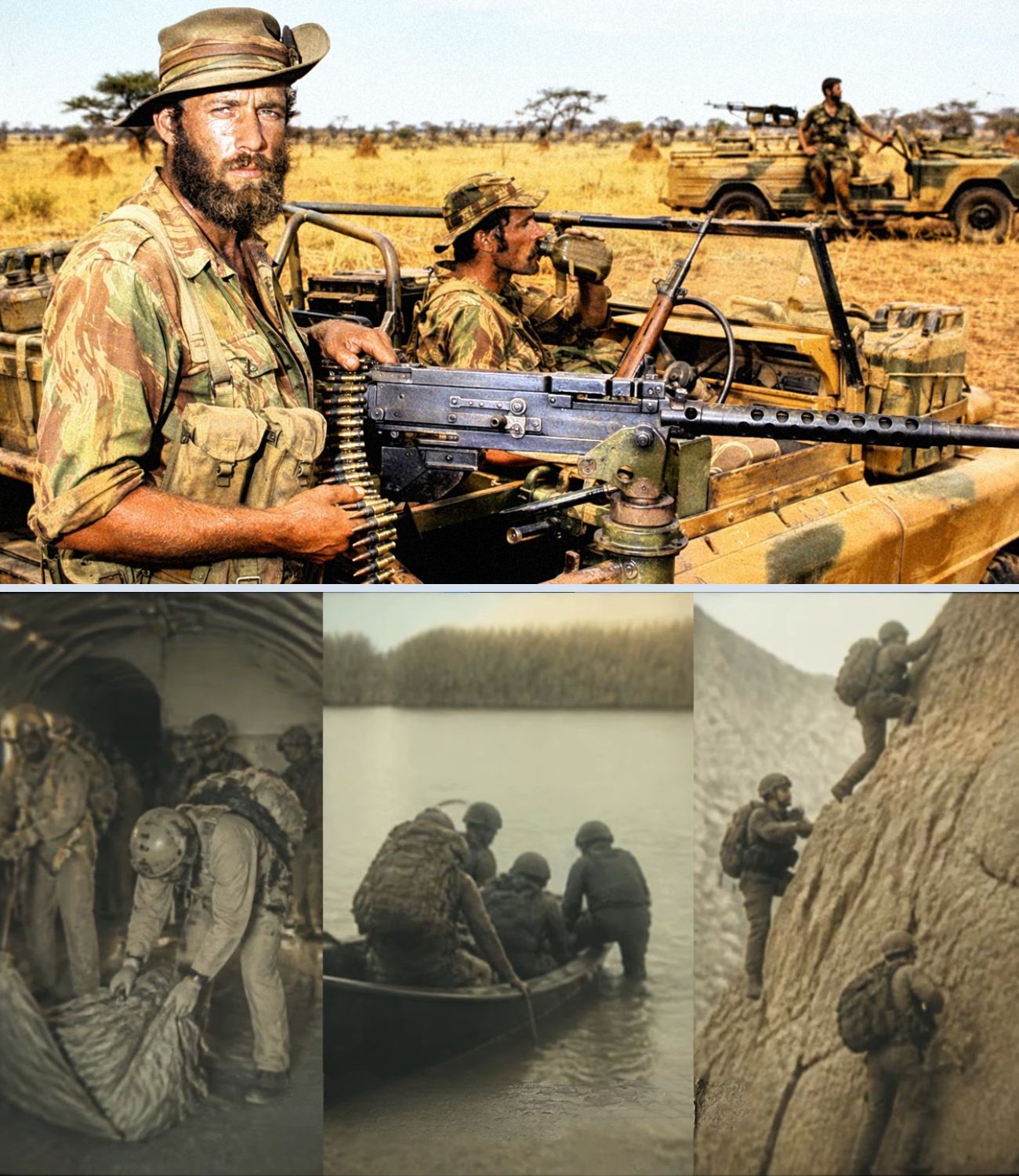
And yet the squadron carried forward its inheritance. It kept the name. It kept the cap badge. It kept the winged dagger. It kept the motto, “Who dares wins.” It kept the Hereford doctrine. It kept the small four-man patrol structure. It kept the selection course modeled on the British one. It kept the troop organization. Air troop for parachuting, boat troop for amphibious operations, mountain troop for vertical work, mobility troop for vehicle operations. It kept the language. It kept the manuals. It kept everything that could be kept. The order of battle position at Hereford was preserved. 22 SAS continued to list C Squadron on its order of battle, even though the men carrying that designation now answered to a government Britain did not recognize.
This was a peculiar arrangement that has no exact parallel in modern military history. A British Army squadron in administrative existence at Hereford and in operational existence in Salisbury, separated by a constitutional rupture neither side had fully digested. Some men inside the squadron at the moment of severance had been seconded from Hereford. They had to decide which side they were on. Several returned to Britain. Brian Robinson himself, the squadron’s first post-Malaya commanding officer, was still serving at Hereford at the time of the declaration. He chose to come home to Rhodesia to lead the new unit. He brought his Hereford training with him. He brought the doctrine with him.
The fourth generation is the squadron that fought under that severed inheritance. It was the squadron of the Bush War. The Bush War proper is generally dated from the early 1970s, though incursions had begun earlier. The first significant cross-border raid by Rhodesian forces engaged in 1966. From April of that year onward, groups of guerrillas infiltrated Rhodesia from Zambia in steadily increasing numbers. The war is usually said to have begun in earnest on the 21st of December, 1972, when ZANLA launched an attack on Altina Farm in the northeast of the country.
In the early years of the conflict, C Squadron was small. It numbered, at its peak, around 250 men, though that figure includes a covert D Squadron drawn from South African special forces who served inside the Rhodesian SAS as a quiet form of cross-border cooperation. Recruitment was difficult. Rhodesia’s white population was tiny. The manpower demands of the wider army were heavy, and the SAS selection standards were deliberately kept high. Animosity between the SAS and the Rhodesian Light Infantry, from which most SAS recruits were drawn, complicated the picture further.
It is worth pausing on the comparison with the Selous Scouts, since the two units have been tangled together in popular memory and are often treated as interchangeable. They were not. The Selous Scouts were a different kind of unit with a different doctrinal lineage. They were formed in 1973 by Lieutenant Colonel Ron Reid-Daly, the same Ron Reid-Daly who had been a corporal in C Squadron in Malaya at the request of the Army Commander, General Peter Walls. Their specialty was pseudo operations. Their men were drawn from across the Rhodesian Security Forces, including from the Special Branch of the British South Africa Police. And a substantial proportion of their operators were turned former insurgents who had been persuaded to switch sides. They wore guerrilla uniforms. They imitated guerrilla speech. They entered insurgent areas posing as insurgents, gathered intelligence, and called in conventional forces for the killing. The Selous Scouts accounted for, on Rhodesian figures, around 68% of guerrilla casualties inside Rhodesia during the Bush War. Their work was intelligence-led and was claimed within the country, which is to say their operating space was domestic.
C Squadron, the Rhodesian SAS, ran a different game. Its work was external almost entirely. Its operators were not pretending to be anything other than what they were. Its doctrine was the Hereford doctrine. Small four-man patrols inserted deep into hostile territory by foot or by parachute or by canoe conducting reconnaissance, sabotage, and direct action against enemy infrastructure. It was the squadron’s job to fight the war outside Rhodesia’s borders, Mozambique, Zambia, Botswana on occasion, and Angola briefly. The Selous Scouts did pseudo work. C Squadron did long-range raiding. The two units cooperated, but they were not the same animal.
The fifth generation then is the squadron’s operational identity as Rhodesian SAS through the heart of the Bush War from the early 1970s to 1980, the years in which the squadron’s character as a separate Rhodesian formation was fully formed. During those years, the squadron expanded. In June 1978, it was redesignated 1 Rhodesian Special Air Service Regiment, reflecting its growth beyond squadron strength. It moved to a new base named Kabrit after the original SAS wartime base in Egypt. Brian Robinson commanded for much of the middle period. Garth Barrett commanded toward the end. Other names from that period, Bentley, the squadron commanders before Barrett, appear in the operational record alongside Robinson’s.
The operational tempo through the late 1970s was brutal. Members of the squadron later said that more operational parachute jumps, more reconnaissance insertions, and more camp attacks were carried out by the Rhodesian SAS during those years than by any other SAS pattern formation in the same period. The unit was used hard and used often because the country had nothing else of comparable quality, and because the war was being fought from external camps the conventional Rhodesian army could not reach.
The operations break into types. There was deep penetration, small patrols inserted into Mozambique and Zambia to reconnoiter guerrilla camps, observe movement on key roads and rail lines, and lay deliberate ambushes, the classic SAS use of the four-man stick. Operation Cheese in 1979 sent SAS teams 750 km into Zambia to sabotage the main road and rail link over the Chambeshi River between Zambia and Tanzania, which carried Chinese military aid south. The insertion was supported by a South African Air Force C-130 Hercules. It was, in geographical terms, one of the longest reach SAS-style operations of the entire post-war period, comparable in distance with anything the parent regiment at Hereford had attempted.
There were the mounted column raids, Land Rovers and Unimog trucks driven across the border at night armed with heavy machine guns and recoilless rifles charging enemy camps in pre-dawn assaults, and withdrawing before air or armor could respond. This was a doctrine adapted from the original wartime SAS in the Western Desert, where the founding patrols of David Stirling’s unit had used jeeps to raid German airfields, and the Rhodesians revived it in a different terrain.
And there was Operation Dingo. This is the operation that became, for the squadron’s veterans, the defining external action of the war. On the 23rd of November, 1977, the Rhodesian Air Force and 184 SAS and Rhodesian Light Infantry paratroopers attacked an enormous Zanla base, known as New Farm at Chimoio, 90 km inside Mozambique. The base was estimated to hold around 10,000 cadres. Two days later, on the 25th, the same force attacked a second base at Tenbu, more than 200 km inside Mozambique, north of Tete on the Zambezi River. That base held around 4,000.
The operation was planned by Brian Robinson on the army side, and by Group Captain Norman Walsh on the air force side. The aircraft involved were Hawker Hunters, English Electric Canberras, Vampires, Dakotas for the parachute drops, and Alouette gunships for the airborne fire support. The lead pilot on the strike, Squadron Leader Rich Brand, brought the Hunters in at treetop height. Estimates of casualties varied wildly. The Rhodesian claim was that more than 6,000 insurgents were killed across the two days. Other estimates were lower. The Rhodesians lost two men killed, eight wounded, and one aircraft. It was the largest SAS-led external battle of the Bush War, and in scale, it was the largest airborne assault carried out by any SAS pattern formation since the Second World War. Operation Dingo became the template.
Throughout 1978 and 1979, similar large-scale external attacks were mounted. Operation Gatling, on the 19th of October 1978, struck ZIPRA camps in Zambia using the same combined arms model. Operation Uric, from the 1st to the 7th of September 1979, attacked bridges and a ZANLA staging point in Gaza province in Mozambique. Operation Miracle, also in 1979, attacked entrenched ZANLA positions inside Mozambique and was one of the few external operations in which the Rhodesians took meaningful casualties. There was a raid on the home of Joshua Nkomo, the ZIPRA political leader, in Lusaka in 1979. There was a sustained campaign against the supply lines into Mozambique and Zambia in the final months before the ceasefire. The squadron was working at a tempo that other special forces formations of comparable size would have found unsustainable.
This is the squadron in its final form, a small unit working on doctrine that had been brought from Hereford in 1961 and updated through 20 years of African war, drawn from a settler population that was now in open political conflict with the country whose regiment had originally raised it, operating across borders the parent regiment had never crossed, in a conflict the parent regiment had been ordered for 15 years to have no part in, and then the war ended.
The Lancaster House conference opened in London in September 1979. The Rhodesian government, by then technically the government of Zimbabwe-Rhodesia, under Bishop Abel Muzorewa, had agreed to negotiate with the nationalist movements. Britain chaired, the Patriotic Front of ZANU and ZAPU was represented by Robert Mugabe and Joshua Nkomo. The Rhodesian side was represented by Muzorewa and Ian Smith. The conference ran for 14 weeks. On the 21st of December, 1979, a settlement was signed. The settlement provided for a ceasefire, for the return of Rhodesia to legal British administration under Lord Soames for a brief transitional period, for the holding of universal franchise elections, and for the recognition of whatever government those elections produced. The elections, held in February and March 1980, were won decisively by Robert Mugabe’s ZANU-PF. Mugabe became Prime Minister of the new state of Zimbabwe in April 1980.
For C Squadron, for one Rhodesian Special Air Service Regiment, as it now properly was, the settlement was the end. The unit could not exist inside an army loyal to a government formed from the political wing of the guerrilla movement it had spent the last decade fighting. There was no future in remaining. Through the course of 1980, the squadron was wound down. On the 31st of December, 1980, the unit was formally disbanded.
A telegram arrived from 22 SAS at Hereford. It was short. The phrase that was remembered from it by the men who saw it was that
“God had been with the unit, and that it had done its duty.”
The telegram acknowledged, in those carefully chosen words, what had been preserved across the 15 years of severance. That the squadron, however illegitimate its government in the eyes of London, had remained a unit of the family in the eyes of the family.
That is where the genealogy ends. Or rather, that is where it disperses, because there is no clean ending to a unit of this kind. There is only the question of where the men went. The largest single group went south. Lieutenant Colonel Garth Barrett, who had commanded the unit in its final period, took more than a hundred ex-members of the SAS across the border into South Africa, where they formed the core of a new unit designated Six Reconnaissance Commando, based in Durban. Six Recce became one of the operational components of the South African Special Forces during the late stages of the South African Border War and many of the Rhodesian SAS men spent the next decade fighting in Angola and South West Africa under a different flag.
A smaller number joined other South African formations. Some went to 32 Battalion, the famous Buffalo Battalion of the South African Defense Force, whose ranks were already partly drawn from former Portuguese colonial soldiers and former Rhodesian operators. Willem Ratte, a former Rhodesian SAS officer, transferred into 32 Battalion in 1979 and rose eventually to Lieutenant Colonel inside the South African Special Forces. Other Rhodesian SAS veterans joined Five Reconnaissance Regiment.
Several quietly returned to Britain. They were British or Commonwealth nationals in many cases who had joined the Rhodesian SAS as volunteers from outside the country. Some of them attempted to rejoin 22 SAS at Hereford. Their position was difficult. Hereford had been formally severed from the Rhodesian unit since 1965 and the men returning were technically applying as outsiders, but their experience was considerable and there was institutional sympathy for them. A small number passed selection again and served quietly at Hereford in the 1980s.
A larger number emigrated to Australia. The Rhodesian diaspora of the early 1980s was substantial and Australia was a common destination. Some of those who went found their way into the Australian Special Air Service Regiment, also a direct descendant of the original 22 SAS lineage, and continued to soldier in green for another decade. Others went into civilian life and never spoke of their previous service. A smaller number went to New Zealand. A few went to Canada. A handful went further afield into private military work in Africa and the Middle East. Mike Hoare’s mercenary work in the Seychelles in 1981, the abortive coup attempt at Mahé, drew on the broader Rhodesian veteran population, though the SAS itself as an institution had no part in it.
Some stayed in Zimbabwe. There were men, particularly senior officers who had reached the rank of colonel or above, who attempted to make their peace with the new government. Most found it impossible. The historical record contains the cases of a small number of former SAS officers who briefly held positions inside the new Zimbabwe National Army during the transition period, but almost all had emigrated by the mid-1980s, and some stayed quietly and never soldiered again.
That is the dispersal. Look at it from a distance. The squadron was raised in 1951 from 1,000 applications by a colonial government acting in support of a British colonial war. It fought one campaign under direct British command in Malaya between 1951 and 1953. It was disbanded for eight years. It was re-raised in 1961 as part of a federation that would dissolve two years later. It was severed from its parent regiment in 1965 by an act of unilateral political independence its own government had taken. It then fought for 15 years a war the parent regiment had been formally separated from for the entirety of the fighting. It was disbanded for the second and final time in December 1980, and its veterans scattered across at least half a dozen other armies in several continents.
The awkward fact at the center of this story is the gap. From 1965 to 1980, the squadron carried a designation, a doctrine, a cap badge, a motto, and a set of operating procedures, all of which had been inherited from a regiment in another country that no longer formally recognized it. The men in the squadron knew this. The men at Hereford knew this. The relationship was preserved in private and disavowed in public. When the disbandment finally came, the telegram from Hereford was as close as the parent regiment had been able to come in 15 years to acknowledging the unit’s continued existence. The Rhodesian SAS did not start its life as a national special forces unit. It started its life as a colonial squadron of a British regiment and it died as the residual operational identity of a country that no longer existed.
The lineage runs from L Detachment in the Western Desert in 1941 through the post-war reformation of 22 SAS, through the Happy Hundred in Malaya in 1951, through Ndola in 1961, through Cranborne Barracks in Salisbury, through Cabrit, through 15 years of cross-border war, and then out into the South African Defense Force, into the Australian SAS, into Hereford in small unannounced numbers, and into the silence of men who returned to civilian life. The Rhodesian SAS’s veterans took the doctrine with them everywhere they went. The four-man patrol, the free-fall insertion, the deep reconnaissance, the mounted column, the patient approach to selection. These had all been carried from Hereford. In 1961, they went out again in 1980 into 6 Recce and into 32 Battalion and into the Australian Special Air Service Regiment. And they shaped each of those units in turn, though the men carrying the doctrine seldom advertised where they had learned it.
The name itself disappeared. C Squadron as a designation on the order of battle of 22 SAS at Hereford was eventually retired. The letter held in memory but lost in service. The Rhodesian SAS Association still exists, run by surviving veterans with members scattered across the Southern Hemisphere and Britain. They hold reunions. They keep records. They remember. That is the genealogy. From Hereford to Salisbury, from Salisbury to Durban, to Sydney, to Perth, to Brisbane, to London, to Vancouver, to silence. Five generations of one squadron name, the raising in 1951 under Peter Walls. The Malayan tour, the Federation reincarnation under Brian Robinson. The severance after the unilateral declaration in 1965, the 15-year war fought under a severed inheritance culminating in Operation Dingo and the rolling cross-border campaign of the late 1970s under Bentley and Robinson and Barrett. And finally, the disbandment on the 31st of December 1980.
The unit that had been born of 22 SAS in 1951 ended its life fighting a war 22 SAS had been officially separated from for 15 years. Its veterans dispersed into half a dozen other armies and the lineage, where it survives at all, survives in the habits and the procedures of those other armies carried forward by men who once belonged to a squadron whose country no longer exists. That is the severed lineage. That is the family tree. Say the name once more:
“C Squadron, 22 Special Air Service Regiment.”
The name is the genealogy. It carries everything that came before and everything that came after in seven words and every man who served under it knew by the end that the seven words named the unit that had outlived the regiment it was born from, outlived the country that adopted it, and outlived the political settlement that finally folded it. The squadron is gone. The lineage in scattered form is not.
You Might Also Enjoy

“We Thought They Would Negotiate”—What Argentine Soldiers Said When The British Attacked Goose Green

“You’ll Never Finish My Ruck March, Limey” — US Sergeant Who Challenged the SAS, Then Fell Out First






