The Duke Of Kent’s 91st Birthday! What The Royal Family Just Did Left Britain In Tears!
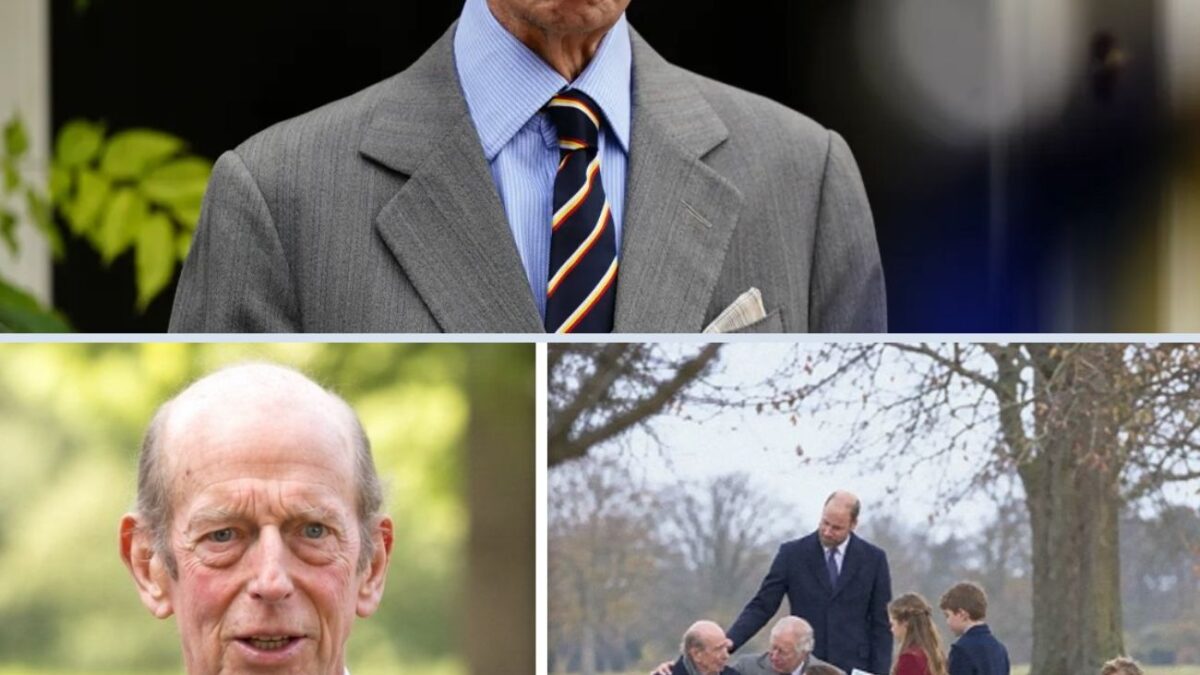
The Balcony and the Bagpipes: How the House of Windsor Saved Its Eldest Son from the Silence of Grief
Every June, the royal machinery of Buckingham Palace executes a script that has governed British public life for generations. The King anchors the centre of the balcony, the Prince and Princess of Wales stand steadfastly beside him, and their children press their hands against the gilded stone rail. When the Red Arrows tear down the Mall in a deafening roar of crimson, white, and blue, human instinct commands that every face turn upward toward the sky.
Yet last June, during the height of the Trooping the Colour celebrations, one man at the extreme edge of that famous stone ledge looked downward instead.
Prince Edward, Duke of Kent—at ninety years of age the oldest working member of the British royal family—slowly reached into the breast pocket of his dark morning coat. He withdrew a modern smartphone and, half-hidden behind an ornate stone pillar a few paces away from the bustling family group, began quietly filming the crowds below.
Across the nation, millions watching the live broadcast from their living rooms froze. Social media erupted within minutes. “Couldn’t someone go and stand with him?” wrote one distressed viewer online, capturing a wave of public emotion. “I was in tears. He looked so utterly alone.”
To the millions watching through telephoto lenses and television screens, it was a searing portrait of modern isolation: a frail nonagenarian adrift in a sea of younger, busier relatives, recording memories on a glowing screen because he had no one left to share the moment with. But the public narrative missed the truth entirely. Those who watched that afternoon were unaware that in the nine months since Edward had laid his wife of sixty-four years to rest, the House of Windsor had been executing a quiet, deliberate, and unprecedented rescue operation for one of its most loyal, understated servants.
It was never announced with fanfare. There were no press releases trumpeting royal charity or family solidarity. It simply unfolded organically—first inside a Catholic cathedral that had never before held a royal funeral, then behind the closed oak doors of Windsor Castle, and finally, on a sunlit palace balcony where family members quietly closed the physical gap around a grieving man.
As the Duke of Kent approaches his ninety-first birthday, the story of how his family brought him back from the precipice of absolute loneliness reveals a side of the British monarchy that rarely makes the history books.
A Century in the Wings
Prince Edward has never asked to be famous. To the average citizen consuming daily tabloid headlines, he is an elusive figure from a bygone era—a remarkably tall, aristocratic gentleman who could easily walk down a London street unrecognized by the crowds. Yet his lineage is woven deeply into the bedrock of twentieth-century British history.
Born in Belgrave Square on October 9, 1935, his infant cry was witnessed by godparents that included King George V. He is the eldest of the last four living grandchildren of that same sovereign, and a first cousin to Queen Elizabeth II. For more than seventy years, Edward has served the crown without ever demanding the blazing light of its centre stage. While others courted controversy or chased newspaper columns, he quietly inspected military barracks, opened regional hospitals, championed engineering guilds, and presided over the All England Lawn Tennis Club at Wimbledon for over half a century.
When a family’s history spans decades of unimaginable social and political transformation, its younger members inherit established protocol. But what a family does when one of its patriarchs is suddenly left entirely alone at ninety is written down in no constitutional handbook. It relies entirely on human decency—qualities that institutional machinery often struggles to quantify.
Edward’s early life was scarred by sudden tragedy. In August 1942, when he was just six years old, his father, Prince George, Duke of Kent, was killed when his Sunderland flying boat crashed into a hillside in Caithness, Scotland. The boy inherited the dukedom that very day, bearing a title he has now held for an astonishing eighty-four years.
For sixty-four of those years, his anchor was Katharine Worsley.
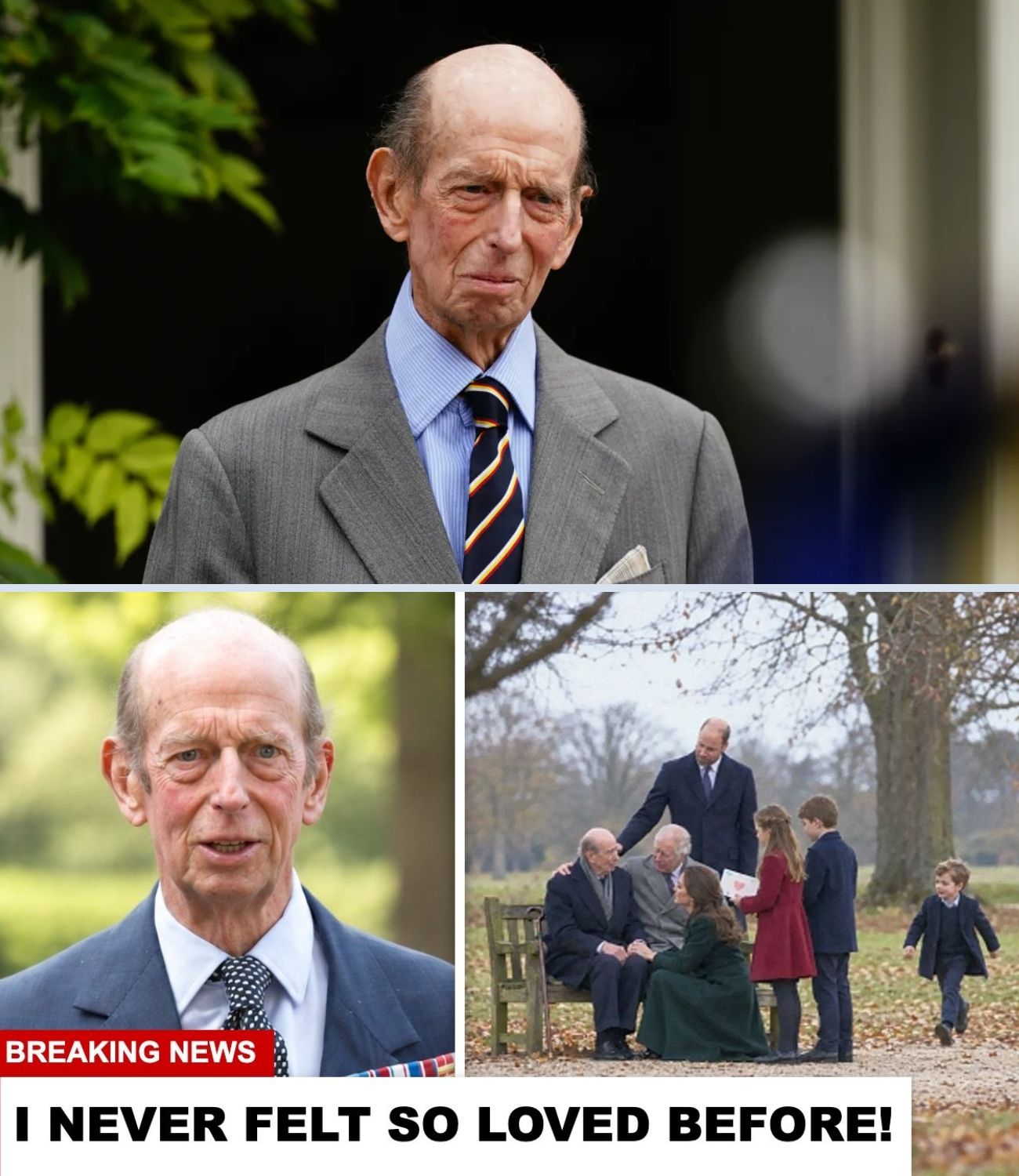
They met while Edward was stationed as a young army officer with the Royal Scots Greys at Catterick in Yorkshire, having trained rigorously at Sandhurst. Katharine was the daughter of a Yorkshire baronet from Hovingham Hall—a spirited, unconventional young woman whose deep passion for classical music matched Edward’s own quiet reserve. Though Edward’s mother was initially hesitant about the match, the couple married on June 8, 1961, inside the soaring Gothic arches of York Minster. It was the first royal wedding held in that historic cathedral in 633 years.
Together, they carved out a life of understated public service. While Edward fulfilled his military and royal duties, Katharine forged her own remarkable path away from the spotlight. Tennis fans around the world remember the deeply moving scene in 1993 when she tenderly cradled a sobbing Jana Novotna on Centre Court after the Czech player blew a lead against Steffi Graf.
Few outside Yorkshire, however, knew of the secret life she built away from palaces. Beginning in 1996, Katharine quietly took a job teaching music at a primary school in the economically deprived city of Hull. Driving a 400-mile round trip every single week for eight years, she slipped through the school gates unrecognized by most parents. To the children, she was simply “Mrs. Kent.” To the local community, she was just an elderly volunteer with a remarkable ear for the piano.
Yet Katharine possessed a fierce internal independence that would ultimately set her apart from every other Windsor. In 1994, two years before her first drive to Hull, she took a step no senior British royal had taken since the Reformation: she converted to Catholicism. It was a deeply personal spiritual journey born of quiet conviction—a decision that was respected by the Queen, but one that quietly underscored her lifelong refusal to conform blindly to institutional molds.
When Katharine, Duchess of Kent, passed away peacefully at Kensington Palace on September 4, 2025, at the age of ninety-two, the royal family faced a delicate and unprecedented dilemma: how to say goodbye to a woman who had lived on her own terms, bridging the divide between the Church of England and the Catholic faith.
Breaking Centuries of Protocol
The events of September 2025 signaled the opening salvo of the family’s quiet intervention for the grieving Duke.
Consider what rested upon Katharine’s coffin as it made its final journey. There were white roses representing her beloved Yorkshire, sprigs of rosemary for remembrance, and fresh boughs of yew snipped directly from the historic gardens of Hovingham Hall, the house where she was born. But true to her unconventional spirit, her remains were not taken to Westminster Abbey or St. George’s Chapel at Windsor—the traditional resting places where the House of Windsor has bid farewell to its dead for centuries.
Instead, her coffin was taken to Westminster Cathedral.
On September 16, 2025, the senior members of the British royal family attended the first royal Catholic funeral in modern British history, and the first royal funeral the cathedral had ever hosted. King Charles was there in solemn attendance. So were the Prince and Princess of Wales and the Princess Royal. A personal message from the Pope was read aloud beneath the cavernous Byzantine domes, while the choir lifted their voices in Mozart’s Ave Verum Corpus—Katharine’s absolute favourite piece of music, which she had famously chosen years earlier during an appearance on Desert Island Discs.
The palace press office never released an explanatory brief detailing how those delicate ecumenical decisions were reached. No outsider can definitively say who first proposed breaking centuries of royal tradition to honour a duchess’s chosen faith. But the symbolism was staggering. The King, who serves as the Supreme Governor of the Church of England, sat respectfully through a Catholic requiem mass to honour his cousin’s wife. It was a precedent carved out of pure empathy.
The evening before the funeral, ninety-year-old Edward had arrived at the cathedral leaning heavily on a walking stick, his devoted daughter, Lady Helen Taylor, steadying his arm as he watched his wife’s casket brought across the threshold. The psychological weight of the coming months loomed like a shadow over the elderly duke. In less than three weeks, he would face his first birthday without her.
The Windsor Intervention
That birthday arrived on October 9, 2025. The Duke of Kent turned ninety.
Instead of allowing him to languish in quiet obscurity behind the gates of Wren House at Kensington Palace, the royal machine swung into action under direct royal instruction. Edward spent the afternoon sharing a modest birthday cake at the Polish Hearth Club in South Kensington alongside his younger brother, Prince Michael of Kent.
Publicly, the royal social media accounts posted a simple, warm greeting: “90 today.” But the accompanying photograph told a deeper story. It was not a solitary portrait of the Duke, nor was it a nostalgic throwback of him alongside Katharine. It was a striking frame captured during the coronation, showing Edward’s aged hand resting trustingly inside King Charles’s palm.
Beneath the image sat a sentence that caught royal watchers by surprise: “Later this month, the King will host a birthday reception for the Duke at Windsor Castle.”
True to their word, weeks later, the ancient state rooms of Windsor opened their doors for a private family gathering designed specifically to encircle the widower with blood relatives. Princess Alexandra attended. Prince Michael was there. The Princess Royal made the journey, alongside the Duke of Gloucester.
Step back and consider those names. The Duke of Kent, his sister Alexandra, his brother Michael, and their cousin Richard of Gloucester represent the very last four living grandchildren of King George V. Gathering all four aging royals under one roof for a private birthday celebration was not merely a social call; it was a powerful, unspoken reclamation of family history. It was a collective declaration that as the older generation fades into twilight, they will not be permitted to fall through the cracks.
The momentum did not stop at Windsor. Throughout the autumn and winter, the family’s invisible safety net kept catching him. When December arrived, 1,600 guests filed into Westminster Abbey for the Princess of Wales’s annual Christmas carol service. Among them sat Lady Helen Taylor with her children, surrounded by young musicians from Future Talent—the musical charity Katharine had co-founded back in 2004 to champion gifted children from low-income backgrounds. Her legacy was being kept alive in the very rafters of the nation’s spiritual home.
By spring, Edward was back in his heavy velvet robes. On May 7, he stood upright at the great west door of St. Paul’s Cathedral, draped in the brilliant turquoise mantle of the Order of St. Michael and St. George, waiting patiently to greet the King in his capacity as Grand Master of the order. Walking down the historic aisle immediately behind the sovereign without assistance at the age of ninety, he later rested in a wheelchair for the duration of the service, refusing to let frailty rob him of his duty. At every major national milestone of the year, the Duke of Kent was there—not lingering nervously at the margins of the narrative, but woven firmly into its core.
The Pipers’ Lament
Which brings us back to that sun-drenched balcony in June, and the viral photograph that sparked a wave of public concern across the English-speaking world.
When the camera panned back from the tight crop that made Edward look isolated against a stone pillar, the wider frame revealed a far gentler reality. Sir Tim Laurence stood just a step away. The Duchess of Edinburgh was nearby. The Duke and Duchess of Gloucester formed a protective human barrier around their elderly cousin. Whether palace aides orchestrated the seating plan with deliberate care to keep him company, or whether it was simply instinctive family affection, no one on that balcony would ever formally confirm. But the visual evidence exists, dispelling the internet’s brief panic.
And then there is the matter of the smartphone. For a man born in 1935—whose infant cries were heard by George V—whipping out a pocket computer to record the Red Arrows from the most photographed balcony on earth is a charmingly rebellious act of modern humanity. Who was the shaky footage captured for? Perhaps his ten grandchildren. Perhaps simply for his own quiet reflection on a Tuesday evening. The palace has maintained a dignified silence, as is its custom.
Yet the true emotional key that unlocks this entire chapter of the Duke’s life lies not in London, but in the haunting music of the bagpipes.
On October 9, 2024, as Edward marked his eighty-nine birthday, three pipers from the Royal Scots Dragoon Guards—the regiment born from his own beloved military home, the Royal Scots Greys—marched onto the gravel driveway outside Wren House. Katharine sat by the open doorway in her wheelchair, wrapped in soft blue cashmere, wearing a pair of bright pink trainers that flashed cheerfully in the autumn light. When the haunting skirl of the pipes faded into the Kensington air, Edward stepped forward to thank the young soldiers.
Nobody watching those photographs published that afternoon could have known they captured the final public images of the Duchess alive.
Eleven months later, those exact same bagpipes played for her again. As her casket was carried through the heavy oak doors of Westminster Cathedral, a solitary piper from the Royal Dragoon Guards—a regiment she had proudly served as Deputy Colonel-in-Chief—stood in the cavernous nave and played a traditional lament entitled Sleep, Dearie, Sleep. It was the exact same spine-tingling tune that had echoed across Windsor during the funeral of Queen Elizabeth II just three years prior.
Reflect upon the immense emotional resonance of that single year for one man. The same haunting sound, heard twice within twelve months. First, on his own doorstep for a birthday celebration with his wife smiling beside him in pink trainers. Then, beneath the stone arches of a cathedral for her final, heartbreaking farewell.
Seen against that profound landscape of loss, the events of the past year take on an entirely different hue. A king stepping into a Catholic cathedral to honour his cousin’s wife. A private birthday banquet hosted within the ancient walls of Windsor Castle. Young scholars playing Katharine’s musical charity back into the heart of Westminster Abbey. A cluster of aging cousins standing close on a palace balcony to shield an old soldier from the bitter wind of public pity.
The Unbreakable Edge of the Crown
As the Duke of Kent reaches his ninety-first birthday, his journey offers a vital lesson for an institution facing an uncertain future.
The British monarchy is visibly shrinking. As the years march on, the weight of the crown will increasingly lean upon the royals stationed at its edges—the Kents, the Gloucesters, Princess Alexandra—those quiet, uncomplaining stalwarts who spent decades cutting ribbons, opening regional civic centres, and shaking thousands of damp hands while the global camera lenses chased younger, more glamorous faces.
For generations, the inner workings of the House of Windsor were viewed as cold, transactional, and ruthlessly devoted to duty above human feeling. But this past year has offered a rare, heartwarming glimpse of an institution learning to care for its own. When grief threatened to swallow the oldest servant of the crown, his family did not issue a memo; they simply showed up.
In a cathedral that had never welcomed a royal coffin, in a castle hall opened for a birthday cake, and on a crowded balcony where relatives stood close enough to touch, the message was delivered without words. Edward may have spent sixty-four years standing quietly away from the centre of power, but when the shadows lengthened around him in his tenth decade, the family made sure he was never forced to walk through the dark alone.
You Might Also Enjoy

“We Thought They Would Negotiate”—What Argentine Soldiers Said When The British Attacked Goose Green

“You’ll Never Finish My Ruck March, Limey” — US Sergeant Who Challenged the SAS, Then Fell Out First






