The Four Daughters-in-Law of Queen Victoria: Jealousy, Animosity, and Royal Drama
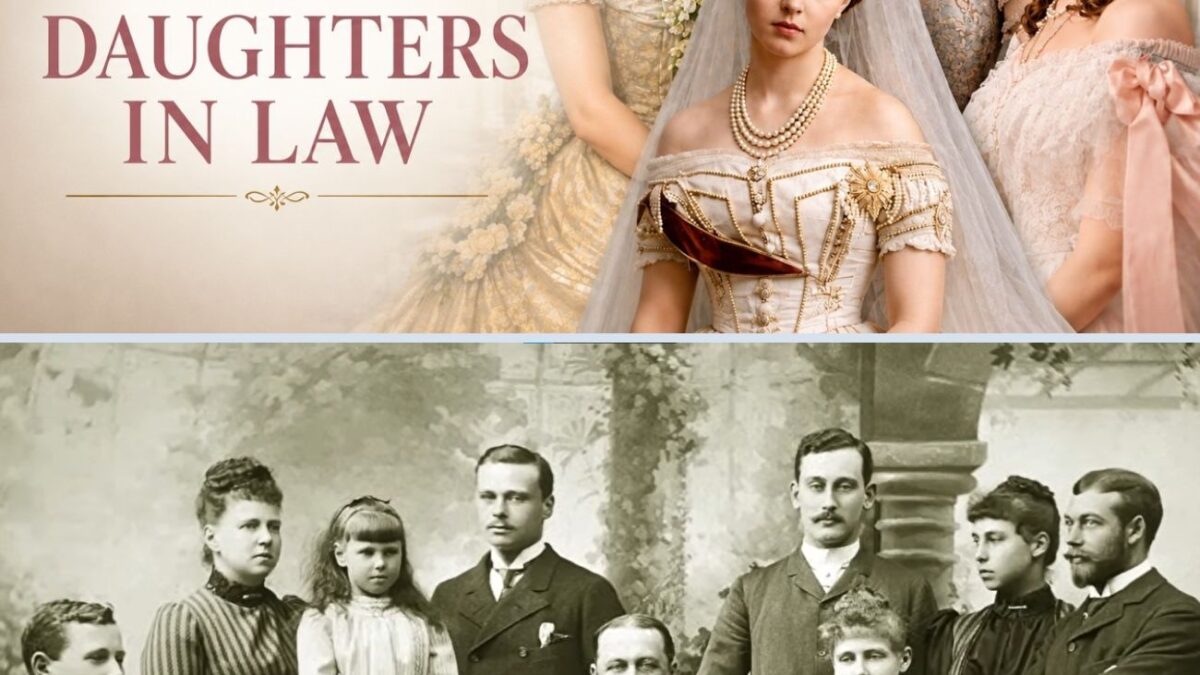
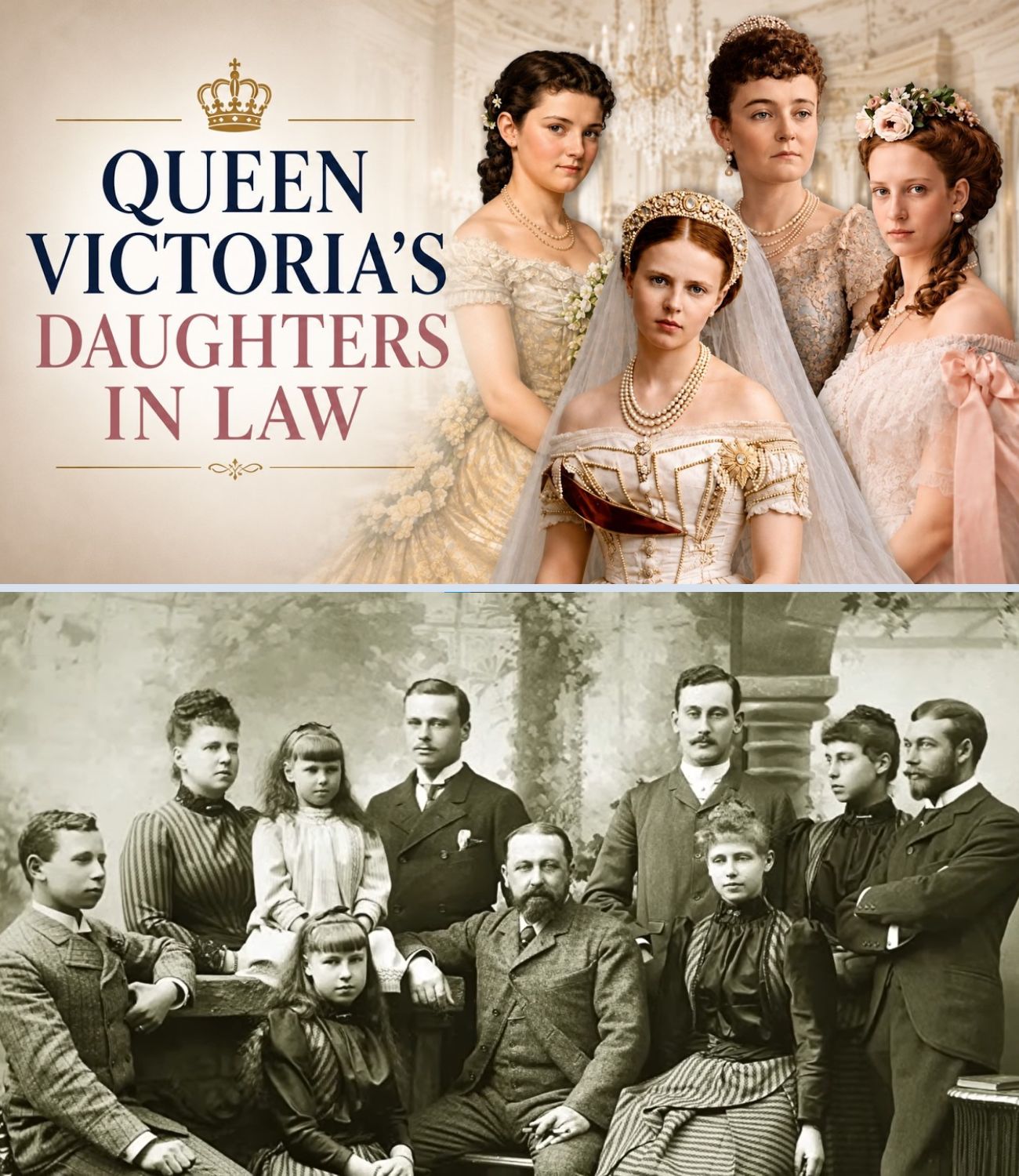
Imagine being a daughter-in-law to the formidable Queen Victoria, a monarch so commanding that even within her family, her word was virtually law. Between 1863 and 1882, four young women from different corners of Europe entered Victoria’s family by marrying her four sons. Queen Victoria is often called the grandmother of Europe for her many royal grandchildren, but it bears remembering that her daughters-in-law themselves came from some of Europe’s most illustrious royal houses. From an impoverished Danish princess to the only daughter of a Russian Tsar, each of these women brought her own heritage, strengths, and challenges into the British royal fold.
Princess Alexandra of Denmark came from quite humble beginnings for a future Queen of England. Born the daughter of Prince Christian of Schleswig-Holstein, who unexpectedly became King Christian IX of Denmark during her youth, Alexandra’s family lived modestly by royal standards. She and her siblings grew up with thrift and simple living, even doing their own sewing despite being of royal blood. This unpretentious upbringing endowed Alexandra with a grace and genuineness that would later endear her to the British public.
At age 16, Alexandra’s life changed forever when Queen Victoria’s eldest son, Albert Edward (“Bertie”), came looking for a bride. The handsome but wayward Prince of Wales fell in love with the Danish princess almost at first sight during an arranged meeting in 1861. The match initially gave Queen Victoria pause. Politically, Denmark was embroiled in a bitter dispute with Prussia over Schleswig-Holstein, and Victoria—who sympathized with her German relatives—worried that Alexandra’s Danish loyalties could be problematic. Nonetheless, Bertie was smitten, and after he dutifully ended a youthful affair with an Irish actress, he proposed to Alexandra in September 1862. The 18-year-old princess accepted, and the couple married in March 1863 in a grand ceremony at St. George’s Chapel, Windsor, albeit subdued in pageantry because Queen Victoria was still in deep mourning for Prince Albert. Victoria even insisted the wedding party wear mourning shades of lilac and gray instead of bright colors.
Thus began Alexandra’s 38-year tenure as Princess of Wales, the longest anyone has ever held that title. Life as the Princess of Wales thrust Alexandra into the spotlight of British public life. With Queen Victoria withdrawing from public duties after Albert’s death, it was left to Bertie and Alexandra to represent the monarchy’s youthful, glamorous face. Alexandra’s beauty, elegance, and kindness quickly captivated the nation. She set fashion trends across Europe; for example, after a bout of rheumatic fever in 1867 left her with a permanent limp, high society ladies reportedly imitated her gait, creating a fad known as the “Alexandra limp.” She also popularized high necklines and choker necklaces to cover a small scar on her neck, inadvertently starting a long-lasting fashion for pearl chokers. In an era when royals were expected to be remote, Alexandra’s charm made her deeply beloved. Crowds cheered her warmly, sometimes even more loudly than her husband, a popularity that perhaps irked Queen Victoria at times.
Yet, behind the public adoration, Alexandra’s life at court was not without hardship. She had to contend with a domineering mother-in-law who offered unsolicited advice on everything from child-rearing to household matters. Queen Victoria could be critical. For instance, she disapproved when Alexandra continued an active social life even after giving birth, believing her daughter-in-law too frivolous and insufficiently deferential to the Prussian relatives that Victoria favored. Their relationship, though genuinely affectionate, was sometimes strained by such differences. The Queen even tried to interfere in the naming of Alexandra’s children, causing friction in the family. Alexandra, for her part, maintained outward respect, but quietly asserted herself in areas she cared about, such as the upbringing of her children and loyalty to her own family overseas.
A source of pain in Alexandra’s marriage was Prince Bertie’s notorious infidelity. The fun-loving Prince of Wales kept company with a string of mistresses, among them society beauties like Lily Langtry, Daisy Greville (Countess of Warwick), and Alice Keppel. These affairs were an open secret. Alexandra chose to respond with dignity and patience.
When asked how she tolerated her husband’s dalliances, she once remarked:
“He loved me the most.”
Indeed, Alexandra maintained that whatever other liaison Bertie pursued, his deepest affection remained with her. In a remarkable show of grace, she even allowed Alice Keppel, his final mistress, to visit the ailing king on his deathbed in 1910, permitting her husband a measure of comfort in his last moments. Alexandra’s forbearance in the face of Bertie’s indiscretions earned her public sympathy and added to the image of her as the wronged but dignified wife. As one historian noted of Alexandra’s response to the infidelities, she bore them with dignity—a quality that only increased her esteem in Victorian eyes.
Despite personal trials, Alexandra found fulfillment in many aspects of her role. She threw herself into charity work, serving as patron to hospitals, fundraising for the poor, and popularizing causes such as health care for the deaf (she herself had significant hearing loss from hereditary otosclerosis). Her family life brought joys and sorrows. She bore six children with Bertie, though two sons would not live to old age: her infant son, Alexander John, died just a day after birth in 1871, and in 1892, she faced the devastating loss of her eldest son, Prince Albert Victor (“Eddie”), to pneumonia during an influenza epidemic. Alexandra was heartbroken, much like Queen Victoria after Prince Albert’s death, and preserved Eddie’s room and personal effects exactly as they had been in his lifetime, a shrine to her departed child.
Other children thrived. Her second son became King George V, and her daughters Louise, Victoria, and Maud made illustrious marriages (Maud even became Queen of Norway). Through it all, Alexandra remained fiercely protective of her children and deeply involved in their upbringing, at times clashing with Queen Victoria, who had strong opinions on her grandchildren’s education and marriages. When Queen Victoria died in 1901, Bertie ascended the throne as King Edward VII, and Alexandra became Queen Consort after nearly four decades of waiting. As queen, Alexandra carried out her public duties impeccably, from state visits to hospital openings, always radiating kindness and regal glamour. Though Edward VII’s reign was short (1901–1910), the royal couple set a tone of elegance and sociability that defined the Edwardian era.
Alexandra’s age-old poise proved valuable during the 1902 coronation. When Edward fell gravely ill days before the scheduled event, Alexandra calmly stepped in to attend public engagements in his stead so as not to alarm the nation. After surgery saved the king’s life, the coronation was postponed by only a few months—a crisis deftly managed in part thanks to Alexandra’s composure. Edward VII’s death in 1910 left Alexandra a widow at 65. As Queen Mother during the early reign of her son George V, she remained a revered figure in Britain. Although she retreated somewhat from public life in her later years, preferring a quieter existence at Sandringham and Marlborough House, Alexandra still found purpose in charity. During World War I, she made visits to hospitals and organized relief efforts, offering maternal comfort to wounded soldiers. The war years were personally painful: the Kaiser brought war to her beloved England, and her own brother, King George of Greece, was deposed. But Alexandra maintained a stoic public front, living to see the war’s end and the dawn of the 1920s.
When Queen Alexandra died in 1925 at the age of 80, enormous crowds lined the streets of London for her funeral, a testament to how deeply loved she had remained since that first moment she stepped onto English soil as a Danish princess in 1863. Alexandra’s legacy was that of a compassionate, fashionable, and resilient royal who balanced the demands of duty with personal grace. She had endured a strict mother-in-law, a philandering husband, debilitating health problems, and wrenching bereavements, yet she remained in the public imagination the very picture of regal benevolence. In many ways, this first daughter-in-law of Queen Victoria set the template for royal consorts: dignified under pressure, devoted to charity, and unswervingly loyal to the crown and family. It is no wonder that even Queen Victoria, for all their occasional tensions, came to value Alexandra highly. As one contemporary noted, her enormous charm made the people love her—a quality that helped secure the British monarchy’s popularity during a crucial era. Alexandra of Denmark had truly grown from a shy, impoverished princess into a queen and queen mother who left an indelible mark on British royal history.
In January 1874, the Winter Palace in St. Petersburg hosted one of the 19th century’s most opulent royal weddings. Grand Duchess Maria Alexandrovna of Russia (1853–1920), the only surviving daughter of Emperor Alexander II, married Prince Alfred, Duke of Edinburgh, Queen Victoria’s second son. The match was unprecedented; never before had a daughter of the Romanov Tsars married into the British royal family. It was a union born of youthful attraction, but forged amid great political calculation and cultural tension. Maria’s journey from the gilded courts of Russia to the restrained halls of Victorian England would prove anything but smooth.
Maria Alexandrovna grew up amid the splendor of the Russian imperial family. As the cherished only daughter of Tsar Alexander II, she enjoyed a privileged and lavish upbringing in palaces like Tsarskoye Selo and the Winter Palace. Her father adored her; courtiers noted that the Tsar spent much of his free time doting on Marie, as she was known in the family. From her German-born mother, Empress Maria (formerly Princess Hesse of Hesse-Darmstadt), the Grand Duchess inherited intellectual curiosity and was taught English from an early age by British nannies. She became fluent in four languages and developed a reputation for being strong-willed, stubborn, and uncompromising in getting her way. Used to the deference accorded to an imperial princess, the young Maria had a confident, some said imperious demeanor.
At 15, Maria met Prince Alfred, Duke of Edinburgh, Queen Victoria’s sailor son, during a visit to her mother’s Hessian relatives in 1868. Alfred was 24, reserved and gentle with a passion for music. The two bonded over their mutual love of music—he played the violin, she the piano—and spent long walks together during a second meeting in 1871. By then, a genuine affection had blossomed. However, when Alfred asked for Maria’s hand, both sets of parents recoiled. Tsar Alexander II, deeply attached to his daughter, hated the idea of losing her to life abroad, cited Maria’s youth as a reason to delay, and resented Britain due to Russia’s hostility toward England after the Crimean War. On the British side, Queen Victoria was initially aghast. No British prince had married a Romanov before, and Victoria foresaw problems with Maria’s Orthodox religion, immense dowry, and the political rivalries between the empires. The queen called Russia unfriendly toward Britain and fretted about Russian ambitions in Asia, writing that the prospect of this marriage gave her mixed feelings.
Yet Alfred and Maria were undeterred by their elders’ objections. By 1873, their determination and perhaps some diplomatic hope that an Anglo-Russian union could ease tensions on the world stage led both courts to relent. Prince Alfred formally proposed to Grand Duchess Maria in July 1873 at her family’s summer villa. She accepted, and he jubilantly telegrammed Queen Victoria:
“Cannot say how happy I am.”
The queen gave her blessing despite lingering doubts, privately noting she didn’t yet know Maria and anticipating many difficulties ahead.
Those difficulties began with arduous negotiations over the marriage terms. Tsar Alexander demanded that his daughter keep her style of Imperial Highness and rank above all other women in the British court except the queen. He also provided an astronomical dowry: Maria received over a million rubles in trust plus a hefty annual allowance, a fortune far exceeding the usual provisions for British princesses. This massive dowry rooted in the Romanovs’ vast wealth would later fuel a certain snobbery in Maria, who was used to a level of opulence unknown even in Britain’s royal circles. The wedding itself was a two-part extravaganza. On January 23, 1874, in the Winter Palace, Alfred and Maria were wed first in a glittering Russian Orthodox ceremony under the gilded domes and then in an Anglican rite. The Grand Duchess wore a mantle of crimson velvet and ermine and a Romanov tiara heavy with diamonds. Queen Victoria sent a magnificent diamond necklace as a gift to adorn her new daughter-in-law. The Tsar famously kept the newlyweds in Russia for a time after the wedding, even preserving their honeymoon suite at the Alexander Palace for two decades in the hope his beloved daughter might visit often.
But in March 1874, Prince Alfred brought his bride home to England, where Queen Victoria greeted Maria with curiosity and hope. After meeting her, Victoria wrote that she formed a high opinion of her, praising Maria’s intelligence, good nature, and lack of pretension.
“Everyone must like her,”
the Queen remarked approvingly of the 20-year-old Duchess of Edinburgh. It seemed a promising start.
However, integrating a Russian Grand Duchess into the British royal family proved challenging to Victorian society. Maria could seem haughty or snobby, as later observers noted. Accustomed to the grandeur of the Romanov court, she was unimpressed with comparatively frugal British manners. She brought Russian-style extravagance to her new homes, decorating Clarence House in London with heavy continental furniture and gold icon lamps, which raised some eyebrows. More seriously, Maria showed open disdain for certain British customs. She scandalized London society by smoking cigarettes in public, something proper English ladies simply did not do at the time. When criticized for her coarse habit, she shrugged off British opinion and continued as she pleased. Maria’s forthright demeanor, described as almost masculine by the standards of the day, and her tendency to speak her mind freely, did not endear her to everyone at court. The British press and public, used to demure princesses, often found her too blunt and imperious.
Most problematic was Maria’s insistence on her royal status. In Russia, as the Tsar’s only daughter, Grand Duchess Maria had ranked above all women except her mother. Suddenly in London, she found herself expected to yield precedence to Queen Victoria’s other daughter-in-law, the Princess of Wales, Alexandra of Denmark. Maria bristled at this; she simply could not accept taking a backseat to Alexandra at state occasions. After all, in Maria’s eyes, she was an emperor’s daughter, whereas Alexandra, though the future queen, was born a mere princess of a smaller kingdom. This dispute over precedence became a bitter point of contention. Backed by her father the Tsar, Maria at times demanded to be treated in Britain according to her Russian rank, even being styled Imperial Highness, which infuriated the Princess of Wales and caused tension in the family. Queen Victoria refused to budge on British protocol: in England, Maria was a royal duchess, Her Royal Highness, and would have to accept her place behind the Princess of Wales. Resentfully, Maria did so, but the episode soured her relationship with her sister-in-law Alexandra, whom she considered a light-minded socialite. The two women developed a long-standing mutual dislike, adding a private family rivalry to the public protocol dispute.
Home life for the Duke and Duchess of Edinburgh was initially pleasant enough. They took up residence at Clarence House in London and a country home at Eastwell Park in Kent, and in the first decade of marriage, Maria bore Alfred five children in quick succession. She was a devoted if strict mother. Notably, Maria defied Victorian convention by breastfeeding her babies herself, a practice at which Queen Victoria, who believed aristocratic mothers should employ wet nurses, reacted with horror. But Maria was headstrong in doing things her way. Motherhood, however, did not bind the couple closer. Maria soon discovered that Alfred, like many men of his class, including her own father, was not a model of fidelity; he frequented gentlemen’s clubs and reportedly had dalliances elsewhere. Disappointed, Maria withdrew further into her own circle. The marriage, as one historian wrote, crumbled almost from the start. By the 1880s, Alfred had become a heavy drinker, growing moody and ill-tempered, and the pair often lived essentially separate lives. Maria was deeply hurt by her husband’s neglect and infidelities, but for the sake of appearances, she kept up a united front, only much later confessing that throughout her marriage, she never felt like anything more than his legitimate mistress. The romance that had defied empires to bring them together did not last, and Queen Victoria’s private prediction that the couple’s happiness would not last for long proved sadly true.
Perhaps unsurprisingly, the Duchess of Edinburgh found greater happiness away from England. In 1876, Alfred’s naval career took them to the Mediterranean when he was posted to Malta as commander of the fleet. The warm climate and relative informality of Malta cheered Maria. She gave birth to her daughter Victoria Melita on the island and wrote that life there was a refreshing break from England, where she often felt constrained and criticized. Maria also traveled frequently to visit her many royal relatives across Europe, trips that conveniently took her away from her husband. She visited Russia nearly every year, remaining very close to her father the Tsar. Tragically, in 1881, Alexander II was assassinated by revolutionaries, and Maria rushed back to St. Petersburg to mourn him. Her loss was immense; she had been her father’s favorite, and his violent death shook her to the core.
In 1887, Alfred resigned from the navy and the family moved to Coburg in Germany, anticipating a major change. Alfred was heir presumptive to his childless uncle, Duke Ernst II of Saxe-Coburg and Gotha, the duchy of Prince Albert’s family. When Duke Ernst died in August 1893, Alfred inherited the ducal throne, and Maria finally became a sovereign duchess, a position she relished.
“A real godsend,”
she called this change, delighted to at last preside over her own court in Coburg, free from the shadows of Queen Victoria and British expectations. In Coburg, Maria enthusiastically renovated castles, patronized the arts—especially theater and opera—and engaged in charitable works such as establishing a home for the mentally disabled. No longer the junior royal at distant Buckingham Palace, she was now the first lady of a German duchy, a role that suited her prideful nature.
Her happiness in Coburg was marred, however, by personal sorrow. In February 1899, her only son, young Prince Alfred (“Affy Jr.”), died at the age of 24 under mysterious circumstances. The official cause was listed as consumption, but rumors abounded that he shot himself during a bout of depression, possibly related to a scandal. Maria was devastated by the loss of her son and heir. Queen Victoria wrote that poor Marie had a terrible trial to bear in burying her child. Barely a year later, in July 1900, Maria’s husband, Duke Alfred, died as well after an illness exacerbated by his alcoholism. At age 46, Maria Alexandrovna found herself a widow with three surviving daughters and a duchy that would soon pass to a new male line (Alfred’s successor in Coburg was eventually Queen Victoria’s grandson, Charles Edward).
The Dowager Duchess Maria lived on in Coburg and in Europe through the tumultuous early 20th century. She remained a formidable matriarch to her daughters: Marie (“Missy”), who became the famous Queen of Romania; Victoria Melita (“Ducky”), who scandalized Europe by divorcing her first husband (a grandson of Queen Victoria) and then marrying Maria’s own cousin, Grand Duke Kirill of Russia; Alexandra, who married into the Hohenlohe-Langenburg princely family; and Beatrice (“Baby Bee”), who married a Spanish infante. Family discord continued to flare; Maria quarreled with Queen Victoria over Ducky’s divorce and remarriage, for instance, and she and Alfred had disagreed over Missy’s marriage, as Maria preferred her daughter marry a Romanian prince rather than the British prince her husband suggested. Through all these dramas, Maria projected confidence and resilience.
World War I brought Maria’s world crashing down. Her sympathies in the war lay firmly with Germany, the country she had adopted and where two of her daughters lived, and she had little love for Britain or for her nephew, Tsar Nicholas II, with whom she had a frosty relationship. But the war’s outcome was ruinous for her family. In 1917, she learned that Nicholas II and the entire Russian imperial family, including several of her own relatives, had been murdered by the Bolsheviks. The Romanov dynasty that she was born into had been wiped out. The German Empire too fell, and with it the Coburg ducal throne; in November 1918, her young grandson Charles Edward’s son was forced to abdicate as Duke of Saxe-Coburg. Maria lost most of her vast wealth when the new regime seized Romanov assets, as much of her fortune had remained in Russian trusts now inaccessible. Anti-Russian sentiment in Germany during the war had even driven her from Coburg; at one point, an angry mob confronted her in the Bavarian town of Tegernsee, and she fled to neutral Switzerland for safety.
By 1919, the Dowager Duchess was living in exile in Zurich in greatly reduced circumstances. The hardships of war and exile aged her dramatically; once stout and imposing, she became frail and tremulous, suffering from the frailties of age and chronic gastric illness. On October 25, 1920, Grand Duchess Maria Alexandrovna died in her sleep in Switzerland at age 67. In accordance with her wishes, her body was taken back to Coburg and laid to rest beside her husband and son in the ducal mausoleum. Reflecting on her mother’s life, Princess Marie of Romania wrote:
“She was profoundly religious. I hope God will not disappoint her as most things and beings did in this life.”
It was a bittersweet epitaph for a woman who had begun life with every advantage—a doting father, immense wealth, and royal status—yet found much of her journey filled with disappointment and disillusionment.
In March 1879, Windsor Castle hosted a royal wedding that got far less fanfare than those of the Prince of Wales or the Duke of Edinburgh, but which would bind the British and Prussian royal families together. Prince Arthur, Duke of Connaught, Queen Victoria’s third son, married Princess Louise Margaret of Prussia, known in England as Louise Margaret, sometimes just Louise. Though not a household name today, Louise Margaret’s life offers a fascinating glimpse into the duties of a royal consort who quietly supported the British crown across the globe. Her story is one of steadfast duty, significant travel, and unsung contributions played out in the long shadow of her domineering mother-in-law.
Princess Louise Margaret Alexandra Victoria Agnes of Prussia (1860–1917) was born in Potsdam into the Prussian Hohenzollern dynasty. She was a great-niece of Kaiser Wilhelm I, but her immediate family line was a junior one. In fact, Louise Margaret’s parents had an infamously unhappy marriage: her father, Prince Friedrich Karl, a famed Prussian general, desperately wanted a son. When Louise was born as his fourth daughter, Prince Friedrich Karl, in a fit of rage, beat his wife for failing to produce a male heir. The abuse was so severe that the Prussian king, the baby’s great-uncle, had to intervene to prevent an official separation. Little Louise thus entered the world amid domestic turmoil. Eventually, a son was born in 1865, but her parents thereafter lived largely apart, and affection was scarce in that household. Nevertheless, Louise received a princess’s education with the added strictness typical of a Prussian court upbringing, being trained in multiple languages, arts, and the rigorous social etiquette of the Hohenzollerns. By the late 1870s, she was of marriageable age, and Queen Victoria, ever on the lookout for suitable matches for her children, took notice.
Prince Arthur, Duke of Connaught, first met Princess Louise Margaret in 1878. Arthur, an easygoing career army officer, had remained a bachelor into his late 20s, unusual for a Victorian prince. Queen Victoria initially had reservations about Louise Margaret as a daughter-in-law; the young princess was not considered a great beauty, and Victoria noted she had rather plain looks and some broken teeth—hardly a flattering description. More concerning was the potential scandal attached to Louise’s family: her parents’ estrangement and her father’s brutish behavior were hardly ideal references, and the queen did not relish tying the royal family to what she called unpleasant family matters in Prussia. Yet Arthur was fond of Louise, and importantly, the match had dynastic appeal, linking Victoria’s offspring to the Prussian royals at a time when Britain and Germany were on cordial terms. In the end, Victoria consented. When Arthur and Louise wed at St. George’s Chapel, Windsor, on March 13, 1879, the Queen took pains to welcome her new daughter-in-law kindly, gifting Louise Margaret a magnificent diamond tiara and pearl pendant, ensuring the Prussian princess shone with appropriate splendor on her wedding day. Thus, Louise Margaret became Her Royal Highness, the Duchess of Connaught and Strathearn.
The early years of her marriage were spent far from the public spotlight of London. Arthur was a professional soldier, and Louise spent the first 20 years of their marriage accompanying her husband on his various military assignments around the British Empire. In essence, she became a nomadic military wife, albeit one of royal status. The couple set up temporary homes in distant postings such as India, Egypt, and Canada whenever Arthur’s career demanded, while maintaining a base in England at Bagshot Park in Surrey as their country seat and Clarence House in London. Louise proved adaptable and dutiful in these travels. Life on the move could be challenging—packing up households, dealing with tropical climates or colonial social scenes—but she rarely complained publicly. Instead, she devoted herself to supporting Arthur and engaging with local communities as a representative of the crown.
Louise and Arthur had three children in the 1880s: Margaret, Arthur Jr., and Patricia. Family life had to mesh with military life; for instance, their first child, Margaret, was born in London in 1882, but their son was born in 1883 while Arthur was posted in India. Some historians note that Louise, though loving, had difficulty bonding with her children in their early years, possibly due to frequent moves and the practice of leaving the very young in England while she accompanied her husband abroad. However, whenever circumstances allowed, Louise took an active role in her children’s upbringing. She was a conscientious mother who insisted on a solid education, and her daughter Margaret would recall that her mother was affectionate but instilled in them a sense of discipline and service. Indeed, all three children grew up to embody a spirit of duty: Princess Margaret of Connaught married the Crown Prince of Sweden (becoming Crown Princess Margareta, an ancestor of today’s Swedish and Danish monarchs); Prince Arthur of Connaught became a British military officer and governor-general; and Princess Patricia, after years of royal service, made an unorthodox but happy marriage to a commoner. Louise Margaret’s legacy thus extended into the modern royal families of Europe; through Margaret, she is a great-grandmother of Sweden’s King Carl XVI Gustaf and Denmark’s Queen Margrethe II.
The Duchess of Connaught’s most significant chapter came in 1911 when Prince Arthur was appointed Governor-General of Canada. For the first time, a member of the British royal family would serve as the crown’s viceroy in Ottawa, and Louise became Canada’s vice-regal consort. She and Arthur, along with their youngest daughter Patricia, moved into Rideau Hall in Ottawa and enthusiastically took up their new roles. Louise approached her Canadian duties with energy: she hosted countless official events, traveled extensively across the vast country from the Maritimes to the prairies, and endeared herself to Canadians with her down-to-earth manner. She particularly threw herself into charitable works. During World War I, which broke out during their tenure in 1914, the Duchess of Connaught sponsored Red Cross hospitals for the Canadian Expeditionary Force and served as patron or fundraiser for organizations aiding soldiers and their families. She famously knitted socks and rolled bandages alongside other Canadian women, setting an example of hands-on wartime service. One Canadian encyclopedia notes that she personally sponsored medical units that cared for the wounded, underscoring her compassionate engagement in a time of crisis.
Louise Margaret’s time in Canada, however, was cut short by ill health. In late 1916, after five years in Ottawa, the Connaughts returned to England with Louise suffering from bouts of bronchitis and exhaustion; the harsh Canadian winter of 1916–1917 aggravated her condition. Tragically, on March 14, 1917, Princess Louise Margaret died in London of bronchial pneumonia, a complication likely of the Spanish influenza pandemic already emerging. She was only 56. In a quietly trailblazing move, the duchess left instructions for cremation and thus became the first British royal ever to be cremated rather than buried intact. This choice was highly unusual at the time and caused some surprise in royal circles, but it reflected the Connaughts’ practical, modern outlook. Her ashes were placed in an urn and interred at Windsor with full honors alongside the coffins of her royal in-laws.
Princess Louise Margaret’s death during the Great War meant she did not live to see the world completely transformed, with the German and Russian monarchies fallen and her husband’s first cousins—the Kaiser and the Tsar—in exile or dead. Prince Arthur lived until 1942, long enough to see another war, and he always fondly remembered Louise as a devoted partner in all his endeavors. Queen Victoria’s early doubts about this daughter-in-law had long been allayed. Louise Margaret had proven to be a steady, loyal, and hardworking member of the royal family. Unlike her flashier sisters-in-law, she rarely made headlines, but she earned respect through quiet competence. Victoria once described Louise as sensible and straightforward, appreciating that she brought no drama to the family, only support.
On a spring day in 1882, the chapel at Windsor Castle was once again the venue for a royal wedding, this one tinged with both joy and poignancy. Prince Leopold, Duke of Albany, Queen Victoria’s youngest son, took as his bride Princess Helena of Waldeck and Pyrmont, often called Helena in English. Leopold, a gentle, scholarly prince, suffered from hemophilia—the bleeding disease—and had been somewhat coddled by his mother. His marriage to Helen was a chance at a normal life, though shadowed by the risk that Leopold’s health posed. For Helen, it was a leap into an unfamiliar world, from a tiny German principality to the British royal family, but one she embraced with courage and compassion. Their union, though tragically short, proved happy, and Helen’s conduct earned Queen Victoria’s lasting love and respect.
Princess Helena Friederike Helen of Waldeck and Pyrmont (1861–1922) was the daughter of Prince George Victor of Waldeck and Pyrmont, a small sovereign state in Germany, and Princess Helena of Nassau. One of seven siblings, Helen was connected to European royalty in interesting ways: her sister Emma was Queen of the Netherlands, and another sister, Marie, married the future King of Württemberg. Waldeck-Pyrmont’s court was modest in scale, but Helen received a remarkably serious education. Her father was a progressive ruler who even appointed Helen, while still a teenager, as superintendent of the principality’s infant schools, a role in which she helped design educational curricula. Intellectually inclined, Helen enjoyed solving mathematical problems and reading philosophy, which earned her a bit of a “blue stocking” reputation. Crown Princess Victoria of Prussia (“Vicki”), Queen Victoria’s eldest daughter, affectionately warned her mother that Helen was an intellectual. Queen Victoria initially found that description worrisome, imagining an overly serious, perhaps pedantic princess who might not fit into the family, and was also concerned that such a brainy young lady might be aloof or lack warmth. But Vicki, an inveterate matchmaker, believed Helen’s strong mind and kind heart would be the perfect complement to her beloved brother Leopold, who was himself studious and gentle.
Leopold and Helen were introduced, and by all accounts they had an instant rapport. The prince, who had long struggled to find a bride willing to take on the risk of his illness, was charmed by Helen’s empathy and intelligence. They became engaged in late 1881. Queen Victoria, upon meeting Helen, soon changed her tune from her earlier apprehensions; she discovered that far from being a cold bluestocking, Helen was down-to-earth and caring. Victoria wrote happily to Vicki that she was pleased Helen liked to go among the people, noting with approval the princess’s interest in welfare work and her ease with ordinary folks. The young Helen showed a genuine love of welfare work and was anything but a stuffy intellectual in person, and the queen quickly came to hold this daughter-in-law in high esteem, admiring Helen’s well-educated mind and kind, indulgent disposition.
The wedding took place on April 27, 1882. Princess Helen, just 21, walked down the aisle of St. George’s Chapel on the arm of her father, wearing a dress of white satin and tulle. Prince Leopold, 29, waited for her in full military dress, perhaps steadied by his cane as his condition caused joint pains. Queen Victoria, in attendance wearing black mourning as always, allowed herself rare delight at seeing her baby son marry, recording that the couple looked very much in love. After the marriage, Leopold and Helen set up home at Claremont House in Surrey, a gracious mansion lent by Queen Victoria. For the first time, Leopold was free from his mother’s constant supervision, and Helen proved the perfect companion for him. They shared interests in literature and music, hosted learned friends from Oxford (Leopold had studied there), and spent quiet evenings reading side by side. Leopold proudly introduced Helen to his circle of scholars, delighted that his wife could hold her own in conversation with theologians and philosophers. Though Helen was of a younger generation, the professors were impressed by the Duchess of Albany’s erudition and genuine curiosity, and she maintained these intellectual friendships even after Leopold was gone.
The couple’s happiness was palpable, but so was the fragility of their time together. Leopold’s hemophilia meant any small injury could be fatal, and he often suffered ill health. Helen took on the role of gentle nurse and watchdog, encouraging him to be careful without diminishing his sense of independence. In 1883, Helen gave birth to their first child, Alice, named after Leopold’s late sister. Queen Victoria rejoiced at the arrival of another grandchild and noted how well Helen was doing as a mother and wife. By early 1884, Helen was pregnant again. That winter, on medical advice, Prince Leopold traveled to the south of France seeking warmer weather for his joints, while Helen, advanced in pregnancy, stayed in England. In Cannes in March 1884, tragedy struck: Leopold slipped and fell (some accounts say he slipped on his yacht, others that he fell in a club), and due to his hemophilia, the internal bleeding in his brain could not be stopped. He died suddenly at just 30 years old.
The news devastated Helen; their marriage of barely two years was over, and she was a widow at 23. Equally crushed was Queen Victoria, who had adored Leopold and now turned an even more protective eye toward the widowed Helen. In July 1884, Helen was delivered of a healthy son born four months after his father’s death, whom she named Charles Edward. The queen comforted Helen through her confinement, and the two women grew very close in shared grief. Victoria wrote of Helen’s strength and sweet demeanor in sorrow, calling her “my dear Helen” and admiring how bravely she bore her misfortune.
Despite her own heartbreak, the Duchess of Albany, as Helen was now styled, devoted herself to helping others. True to the promise Queen Victoria had seen, Helen vigorously continued her welfare work and charitable activities. In 1894, she was a founding member of the Deptford Fund, an organization aimed at improving the lives of London’s poorest through housing and employment programs, and she was active in supporting hospitals, especially those related to maternity care and children, reflecting perhaps her empathy as a young mother. Helen also became an important figure in the extended royal family, a stalwart presence at gatherings and a beloved “Aunt Helen” to Victoria’s many grandchildren. She never remarried; by all accounts, her brief experience of wedded happiness with Leopold remained a cherished memory she did not wish to replace. Instead, she poured her love into her children and her work. Helen raised Princess Alice of Albany to be a poised, socially conscious woman (Alice would marry Prince Alexander of Teck and later become Countess of Athlone, carving out her own long career of public service well into the mid-20th century). Helen’s son Charles Edward, by a twist of fate, was tapped in 1899 to inherit the German duchy of Saxe-Coburg and Gotha—the same title Maria Alexandrovna’s husband and son had held. Queen Victoria chose Charles Edward, her own grandson, to succeed in Coburg after the earlier line failed. So in 1900, at just 16, young Charles Edward was sent to Germany to assume his ducal responsibilities. It was undoubtedly painful for Helen to see her only son leave England to be educated and raised as a German duke, but nevertheless, she supported his destiny, traveling with him to Coburg initially and ensuring he was settled with suitable guardians. In a sad coda, Charles Edward would later fight against Britain in World War I and lose his titles, but that was long after Queen Victoria and Helen had both passed on.
During the Edwardian period and into the World War I years, Helen remained in England and continued her quiet good works. When war broke out in 1914, she had close family on both sides—her son and sister in Germany, and her adopted country, Britain, at war with them. She kept a low profile, not drawing attention to her German connections, and focused on nursing and relief efforts. Her cosmopolitan family background gave her a nuanced perspective on the war’s tragedies, and one can imagine she privately grieved the rift it caused among her relatives. After the war, with Germany in defeat and revolution, Helen likely thanked Providence that her late husband had not lived to see the beloved Coburg lands in chaos and her son stripped of his position. She spent her final years partly in Germany and Austria near her son and grandchildren. In 1922, while staying at her son’s residence in Austria (he had been exiled from Coburg), Helen, Duchess of Albany, died at age 61. She was buried in a quiet Tyrolean churchyard far from the pomp of Windsor—a reflection of the fact that by then the world of princes and dukes she had known was much changed.
Princess Helena of Waldeck and Pyrmont’s life may lack the high drama of her sisters-in-law, but it exemplifies a different kind of royalty: learned, compassionate, and steadfast. She won over the initially skeptical Queen Victoria with her eagerness to go among the people and help those in need, and indeed, Victoria came to regard Helen with great respect and affection, a testament to how this young princess from a minor state exceeded expectations. Helen’s marriage to Leopold was a gamble of love and duty; knowing she might have only a short time with him, she nevertheless gave him happiness and two children, an act of personal bravery and devotion. After Leopold’s death, Helen could have vanished from the public eye, but instead she transformed her personal sorrow into a life of service for the next nearly four decades. The people who benefited from her schools, funds, and hospitals likely never knew the full royal pedigree of their benefactor; to them, she was the kind lady who cared about their lot. And within the royal family, Helen became a trusted, admired figure. One of Queen Victoria’s granddaughters wrote that Aunt Helen showed compassion to others suffering heartache, no doubt drawing on her own experience of loss. With intellect, heart, and resilience, Helen had all three, and in Queen Victoria’s family, she found a sphere where those qualities were put to noble use. The matriarch who had once feared getting an intellectual in the family ended up counting Helen among the dearest of her daughters-in-law. The Duchess of Albany’s quiet legacy lived on through her children and through the causes she championed, reminding future generations that royal influence could indeed be a force for good among the people.
You Might Also Enjoy

“We Thought They Would Negotiate”—What Argentine Soldiers Said When The British Attacked Goose Green

“You’ll Never Finish My Ruck March, Limey” — US Sergeant Who Challenged the SAS, Then Fell Out First






