The IRA Ambush That Walked Into an SAS Trap
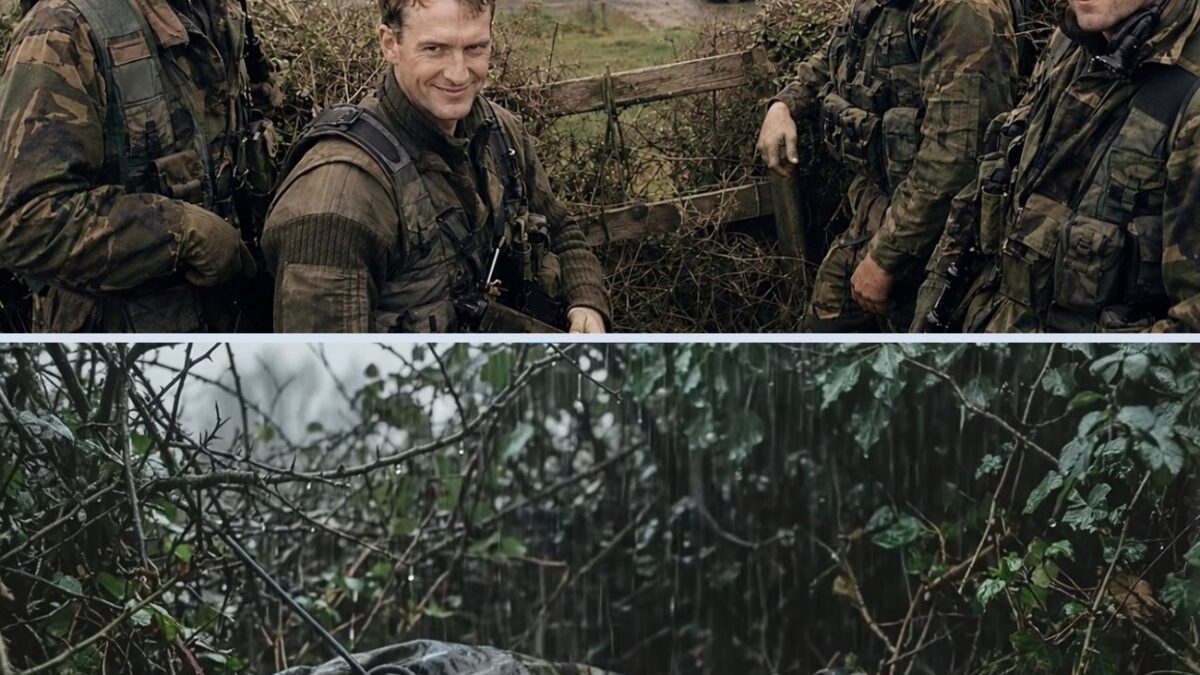
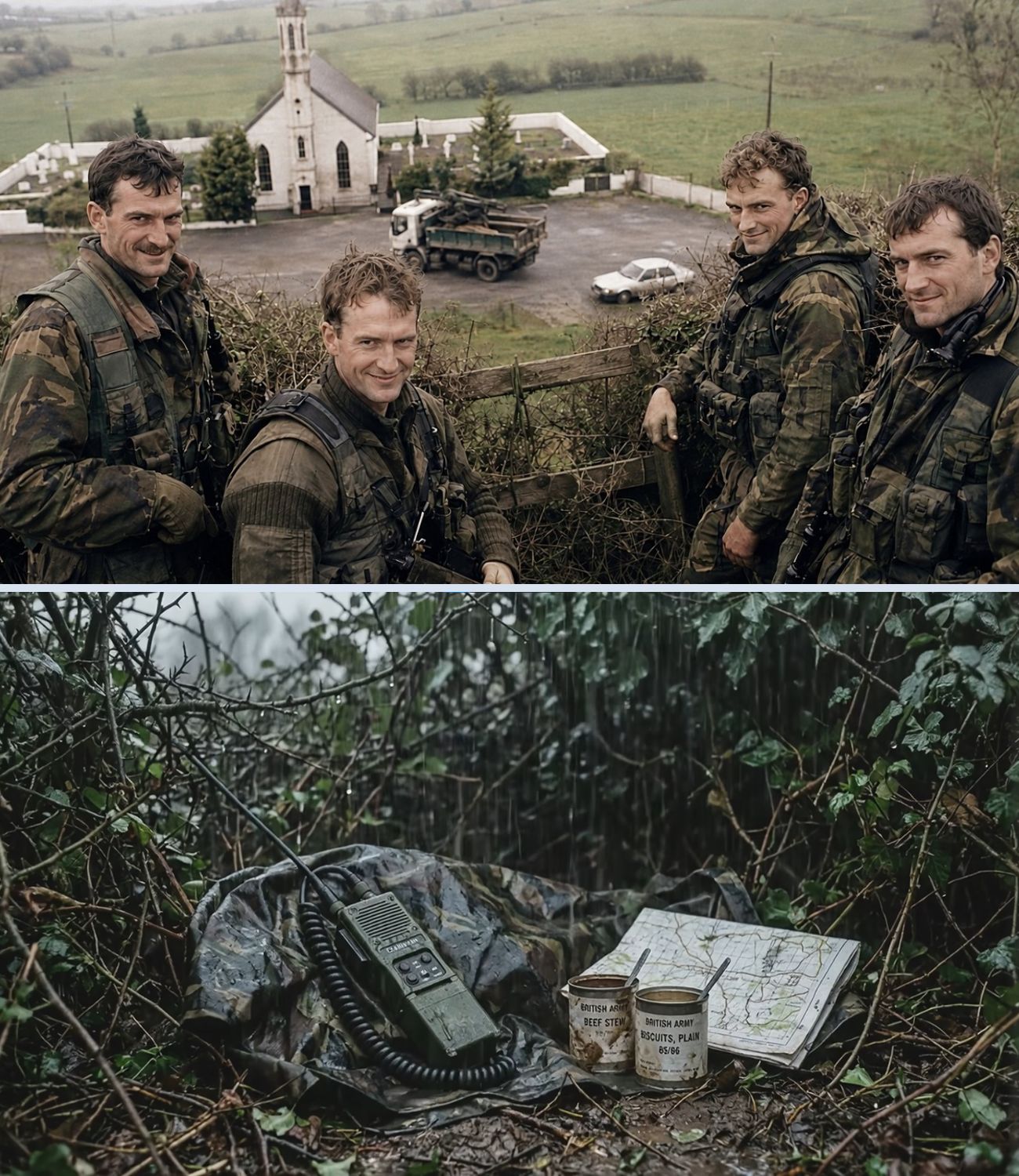
You are about to spring an ambush, and you do not know that you are already lying inside someone else’s. You are one of five men of the Provisional Irish Republican Army in a Ford Cortina on a road in South Armagh, and the trap closing around you was laid 3 days ago without a sound by the most secretive soldiers the British Army owns, men whose faces you will never see.
It is 20 minutes to 9:00 on a wet Tuesday evening in the last summer of the middle 1980s. The road runs between two hedges so tall and so old that with the light gone out of the sky, you cannot see the fields on either side of it. You think the dark is yours. It is not. There are five of you in the car.
Brendan Trainor is at the wheel. He is 34, a farmer’s son from outside Crossmaglen with a stiff left hip from a fall off a tractor at 19, and he rubs it without noticing when he is thinking. He is thinking now. Fergal Mackin sits in the passenger seat humming under his breath the same four bars of the same old rebel song. Declan Rafferty is in the back.
He is 22, a butcher’s son from Cullyhanna, and he wears his mother’s miraculous medal on a bootlace under his jumper because she made him promise. Sean Og Cassidy sits beside him, sober and silent, checking his watch too often. And in the boot, curled against the spare wheel with his cheek to the metal, lies Pádraig Mulholland.
He is the poacher, the scout, the eyes of the unit, and he is listening to the road under the tires the way other men listen to a radio. All five of you are very good at what you do. That is what makes what is about to happen so terrible. Months before this Tuesday, in a back kitchen in Cullyhanna, an older man told the youngest of you a thing he had told nobody else.
“You do not go against them,” he said. “You do not even go looking. And whatever they leave behind, you do not touch.”
He would not say who they were or how he knew. There would be, later, one survivor of the road between the two hedges. In a hospital ward 6 weeks after, that survivor would say one thing about what happened out there.
He would say it once, to one person, and never again. That line is at the end of this. Everything between here and there is the reason he would not say it twice. South Armagh in that decade was not, if you lived there, a place in the ordinary sense. It was a weather. The border ran through it like a stitch through a wound, and no map ever drew it right.
There were fields the Ordnance Survey placed in one country and the farmer placed in another. There were lanes that dropped into a dip between two hedges and rose out of it into a different jurisdiction without a signpost. The land was small-fielded and heavy-hedged, and the roads were cratered by charges laid in other years and patched with tarmac of a dozen different ages.
From the air, it looked like a green quilt. On the ground, at night, it was a maze that hated soldiers. In the villages, the pubs went quiet when a stranger came in and started up again when he left. A British patrol could walk a lane in daylight and be watched from four farmhouses at once. And every one of those watchers would swear afterwards that he had seen nothing.
The helicopters came and went overhead because the roads were not safe for the green army’s lorries. The country kept its own council, and it kept it well. The five in the Cortina knew this ground the way you know the inside of your own mouth. They had been born into it. As boys, they had walked it with their fathers, minding cattle.
Mulhol had poached hares out of every field between Crossmaglen and the Newry Road. He could tell you which gate squeaked and which did not, which farmer would look the other way and which would not, and where the badger set lay in the hedge north of the lay-by they were driving towards. This was his country.
On that Tuesday, he believed it belonged to him. The lay-by on the concession road had been chosen months before by a man who was not in this story. It was a shallow pull-off scraped into the verge on the north side of a road that ran straight for about 400 yd between two hedges of blackthorn, so thick a dog could not push through them.
South of the road, past the far hedge, the ground fell away into a wet field that ended in an alder wood. North of the road, past the near hedge, the ground rose into a stubble field that ended at the ruined gable of an old byre. Halfway along the straight, a stone culvert took a stream under the road. The day before yesterday, a device had been placed in that culvert.
Its wires ran up through a drain into the near hedge, then along the hedge bottom to the ruined byre, where a man was meant to crouch that night with a firing plunger. That man was Seán Óg Cassidy. Within a quarter of an hour of the Cortina’s arrival, he would be there, and the car would be one man lighter. The Royal Ulster Constabulary Land Rover was expected between a quarter past nine and 20 to 10.
It came along that road three nights out of five on a rotation the unit had watched for four months. The plan was old-fashioned, and in one form or another, it had worked half a dozen times on other roads in other years. The device would open the vehicle, the Cortina, parked nose out in the lay-by 200 yd to the west, would come up fast with Brendan and Declan out of the doors with rifles.
Then Macken would take the wheel for the run home because nobody drove a border lane in the dark like Fergal Macken. From the flash to the last shot it would take perhaps 20 seconds and then they would be over the border and gone. That was the plan. It was a good plan. Built by men who had built plans like it before and lived.
At 8 minutes past 9:00, Trainer walked 80 yards to the phone box at the crossroads, made one short call, and walked back. Remember that call. It matters at the end. By 10 past 9:00, the men were in their places. Cassidy was in the buyer with the plunger between his knees and his watch turned to the inside of his wrist so the face would not catch the moon if there had been a moon.
Mulhall was out of the boot and moving low along the hedge towards a gap he knew meant to lie up in the stubble, watch the road east, and give the flick of a torch when the lights came. Trainer sat in the driver’s seat with the door open and one boot on the ground listening. Macken sat in the passenger seat with the engine off humming four bars and again four bars and again.
It was his tell and every man in the unit knew it. When Fergal hummed, Fergal was calm. In the back, Rafferty had an Armalite across his knees and one hand on the metal under his jumper and he was praying quietly the way his mother had taught him. The night around them was the ordinary night of that country in July.
A cow lowed once far off towards the alder wood. A dog barked twice at a farm they could not see and stopped. Something small, a shrew or a young rat, moved in the ditch by the Cortina. The wind was light and westerly and carried the smell of wet grass and slurry, and faintly, the diesel of some tractor still working a mile off. Frogs were talking in the wet field beyond the far hedge, dozens of them, a low continuous rasp, the way frogs will on a warm, damp night. Remember the frogs.
Everything that is about to happen begins with them. Every unit in South Armagh in those years lived with a rumor it would not admit in daylight that it believed. In daylight, the enemy was the RUC and the green army. The boys in the towers, the boys in the Land Rovers, the boys in the sangars along the border.
Those you could see. Those you could count and plan against. At night, in the back kitchens, over the third cup of tea, the rumor was a different one. It said that sometimes there were other men in the hedges. Not many. Not often. But sometimes. These men wore no uniform you could name, and traveled in no vehicle you could describe.
And when they came, they did not come to fight. They came to watch. Sometimes, after the watching, they did a thing. Once they had done it, they were not there anymore. And the ground where they had lain gave you nothing back. The rumor said they were the regiment. Nobody in the back kitchens ever used the word. You said them.
You said the ones from over the water. If you had drink taken and wanted to sound harder than you were, you said the boys in the ditch. You did not say the word. To say it was to draw them, the way the older generation believed that naming certain things in certain houses would draw them in. The older man in Killyhana had been in the movement in the ’70s, and late in the ’70s he had walked away from it and would never say why.
When young Rafferty came to him for advice, he gave the boy three sentences and held his eye through all of them.
“You do not go against them,” he said. “You do not even go looking. And whatever they leave behind, you do not touch.”
He did not blink at any of them. And afterwards, he looked into his tea for a long time. Rafferty came away from that kitchen shaken in a way he could not explain to Trainer afterwards. Trainer listened, thought about it, and said:
“He’s an old man, Deck. He’s an old man who’s had a hard road. Say a prayer for him.”
In the daylight, that was enough. Then there was the blade. For a week, it lay on a table in the back room of a pub in Dundalk. A knife nobody there owned, and nobody would say where it had come from. It had turned up in a hedge on the northern side, near the place where two volunteers had gone missing on a job, and been found 3 days later in a state nobody wanted to describe. Somebody had picked it up and brought it south. Then it was gone.
Six months later, the man who had carried it south died of a heart attack at 43. And there was talk that he had never been right in himself after touching it. That talk was foolish, of course, the sort of thing old women said. In daylight, it was foolish. At night, in a back kitchen over the third cup of tea, it was a little less foolish.
The Green Army could not catch these men, the rumor said, because they were not the Green Army. The RUC could not catch them because they did not use the roads. The intelligence branches could not catch them because it was the intelligence branches that put them out. They lay in the ditches for days. They ate cold rations.
They did not smoke, and they did not move. When a farmer walked his dog past them at 10 ft, they did not so much as breathe wrong. There were stories of such men found on a hillside above a farm 3 days after the farmer had shooed his dog out of a briar for whining at nothing. There was a story of a lieutenant in an English regiment who walked along a hedge in Fermanagh on a bright afternoon and stepped over a man in a hide without seeing him.
The man in the hide said nothing and lay there another 2 days before he came out. Those were stories. The five in the Cortina knew, the way they knew their own hands, that the way to survive in this country was to treat stories as stories. A unit that believed in ghosts froze and a unit that froze went to jail or worse.
So that summer trainer ran his unit hard on the things that could be seen. The rotor of the Land Rovers, the times of the helicopters, the pattern of the vehicle checkpoints. He ran it easy on the things that could not be seen because to run hard on those was to lose your mind and men who lost their minds got other men killed.
He had told Rafferty this the week before. He had told Cassidy, who did not need telling, and he had told Mulholland more gently and Mulholland had answered only:
“I know the ground, Brendan. If there’s a man in it, I’ll smell him.”
In the daylight, that was enough. You do not go against them. You do not even go looking. And whatever they leave behind, you do not touch. In the back kitchens, they said that sentence and then they laughed and then they had another cup of tea. It was a joke there, the sort of joke people told about weather. At 9 minutes past 9 on a wet Tuesday evening on the Concession Road, the joke stopped being a joke.
Nobody in the Cortina heard it stop. Nobody could have. That was the whole point of it. Mulholland came through the gap in the hedge into the stubble field the way he had come through it a hundred times before. Low and slow, with his boots turned sideways so the stubble would not crackle under him.
He settled into the shallow trough he had scraped that morning at the foot of the hedge, put his elbows on the wet earth, and his chin on the backs of his hands, and looked east along the concession road towards where the Land Rover would come. After about a minute of looking, moving nothing but his eyes, he saw a print in the mud six feet from his right elbow.
It had not been there when he scraped his trough at half past six that morning. It was a partial, the heel and about half the sole. It was not a Wellington, and it was not a farmer’s boot. The tread was fine and close-cut. The tread a walking boot might have if that boot had been made for a purpose. It was pressed keenly into mud that had been rained on at 7:00 and again at 8:00.
And it was crisp, which meant it had been made after 8:00. It had been made in the last hour. The print pointed away from the hedge. It was the mark of somebody who had come along the hedge from the west and had done one of three things at that spot. He had stepped out into the field for a stride and back, or he had turned and gone back the way he came, or he was still ahead of Mulholland in the hedge, further east.
Mulholland lay very still and counted the men who might have made it. The farmer whose field this was, an old lad called Kearney who kept three cows and drank in Silverbridge, did not own boots like that and did not walk his fields at night in July. The lad who did Kearney’s silage used the tractor and wore Wellingtons.
Nobody from the movement came to this field at all. It had been kept clean of them since April. That left an inventory of nobody.
“So it must be somebody,” he told himself, “a farmer from a place he did
You Might Also Enjoy

“We Thought They Would Negotiate”—What Argentine Soldiers Said When The British Attacked Goose Green

“You’ll Never Finish My Ruck March, Limey” — US Sergeant Who Challenged the SAS, Then Fell Out First






