The ONLY British Royals Who Didn’t Hate Wallis Simpson After 1936 Crisis: Princess Marina of Greece
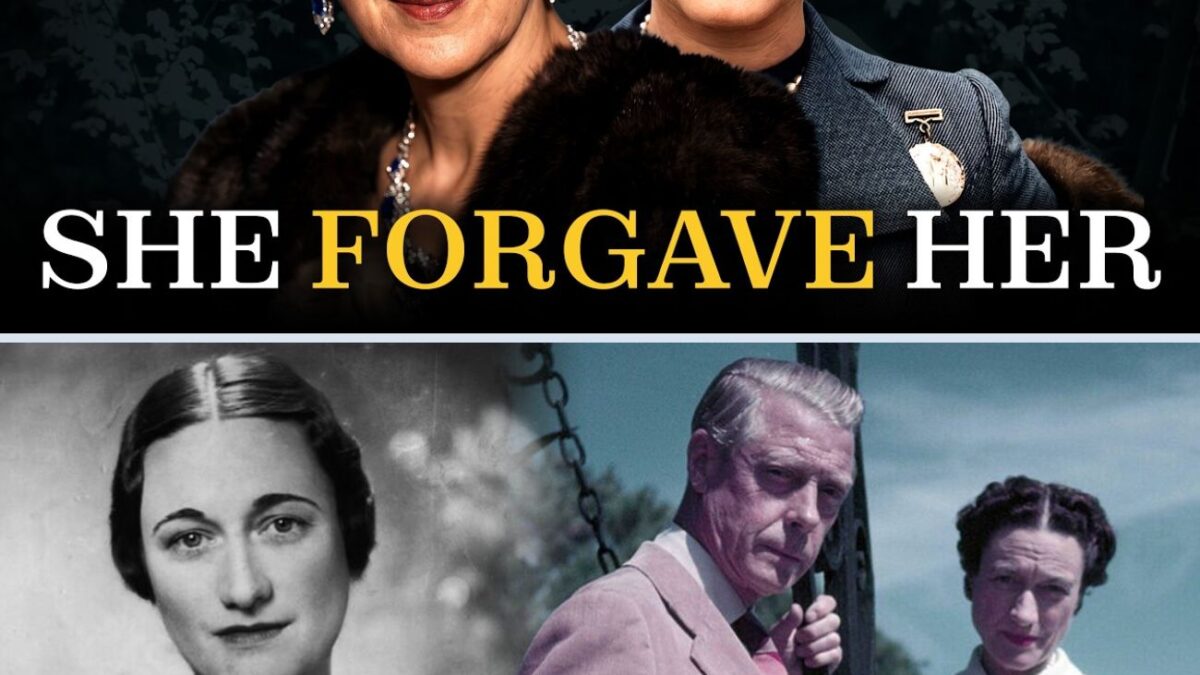
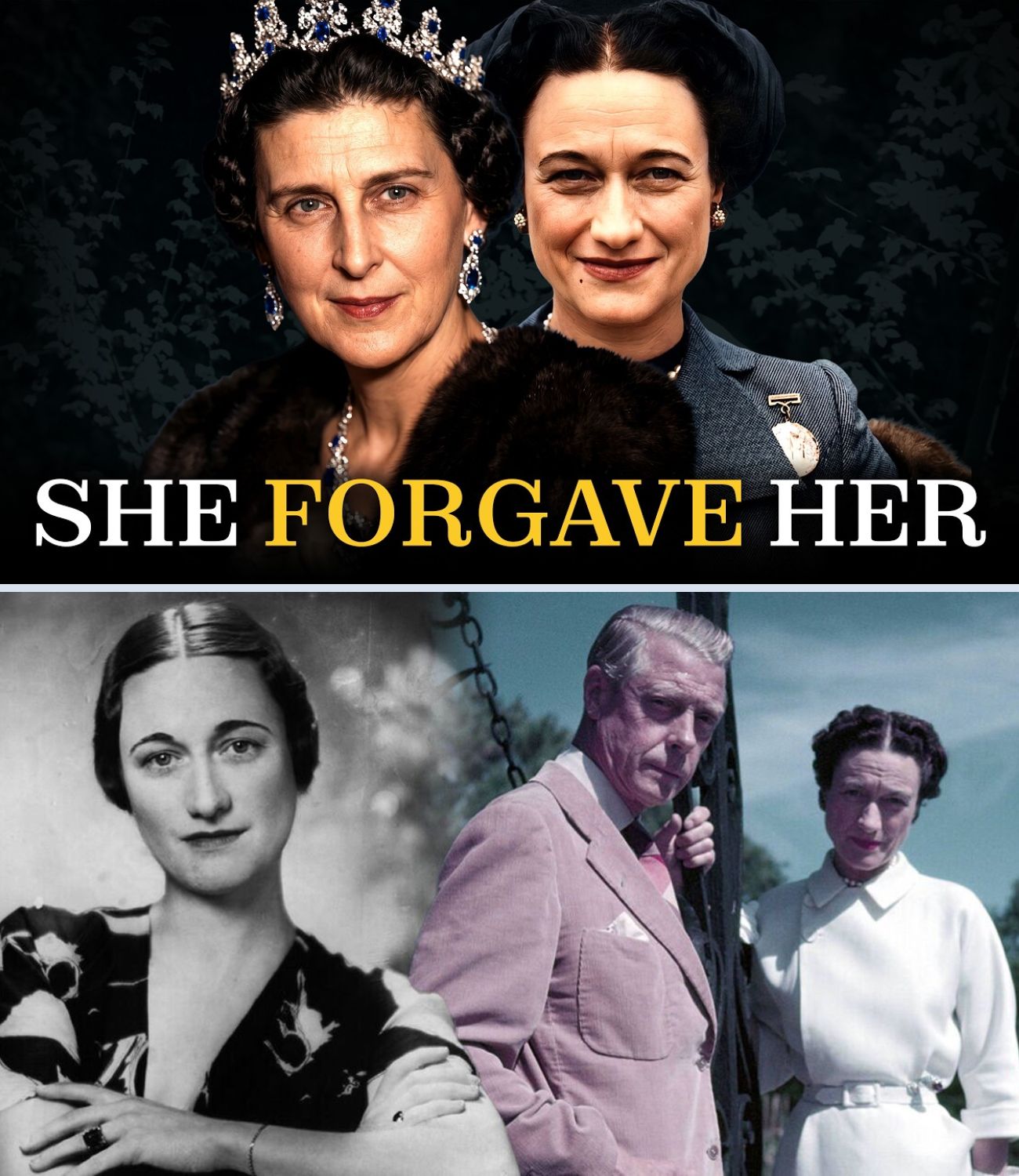
It is March 1965 and a woman walks into a hospital room at the London Clinic in central London. She moves with the particular straightbacked confidence of someone raised to believe that bloodlines determine destiny, that ancestry separates people into categories more fixed than law, more permanent than money.
Princess Marina of Greece and Denmark, the Duchess of Kent, great-granddaughter of Tsar Alexander II of Russia and granddaughter of King George I of Greece, carries herself like a person who has never once doubted her position in the hierarchy of human beings. And waiting inside that room, recovering from eye surgery, sits the Duke of Windsor, once King Edward VIII, once the ruler of half the planet, now a 70-year-old man with failing vision and a wife.
The British monarchy has spent nearly three decades pretending he does not exist. That wife, Wallis Simpson, the Duchess of Windsor, rises from her chair as Marina enters. What happens next breaks a silence that has lasted 29 years, one manufactured not by geography or scheduling conflicts, but by an entire institution that enforced it through protocol, sustained it through resentment, and deepened it with the help of a single letter that vanished into the chaos of the Second World War and may never have reached the person it addressed. Wallis drops into a curtsy.
Marina surprises everyone. She ignores the curtsy and pulls Wallis into an embrace, the kind of physical warmth that the British royal family dispenses about as freely as it distributes crown jewels. Behind Marina stands her daughter, Princess Alexandra, watching her mother do something that no one in Buckingham Palace had bothered to do in a generation: treat Wallis Simpson like a member of the family.
The two women spend the next hour together talking in that hospital room while the Duke of Windsor looks on, presumably relieved, possibly confused. So, how did this happen? How does a woman born into Russian-Greek royalty, a woman so conscious of her own bloodline that she openly looked down on her sister-in-law, Elizabeth Bowes-Lyon, for not being born royal enough, end up embracing the American divorcee that the British monarchy decided to erase from its social register? And more importantly, does this mean that Marina actually liked Wallis Simpson?
The answer is far stranger than a simple yes. Because Marina didn’t speak to Wallis for 29 years, didn’t write, didn’t visit, didn’t acknowledge her existence at family gatherings because there were no family gatherings to acknowledge her at.
Wallis and the Duke of Windsor lived in permanent exile, mostly in France, cut off from the institution that once revolved around the Duke’s name. And Marina, for all her connections to the Duke through her late husband, joined the boycott with the same quiet obedience that every other member of the family demonstrated. But to understand why that embrace in 1965 carried the weight it did, and to understand why calling Marina the only royal who didn’t hate Wallis distorts the actual story into something almost unrecognizable, you have to go back 30 years to a very different kind of gathering.
On November 29, 1934, Princess Marina of Greece and Denmark married Prince George, Duke of Kent, at Westminster Abbey in one of the most elaborate royal weddings London had seen in years. George occupied a peculiar position within the House of Windsor. He belonged to that younger-brother stratum of royalty, where expectations ran lower, but freedom ran wider, a man closer in temperament to the nightclub set than the privy council. He also happened to be the favorite brother of Edward, Prince of Wales, the glamorous, popular heir to the throne, who had not yet decided to detonate the British monarchy from the inside.
Marina, by contrast, brought a pedigree that outranked most of the family she married into, and she knew it. Born into the Greek and Danish royal houses, linked by blood to the Romanovs through her mother, Grand Duchess Elena Vladimirovna of Russia, Marina traced her lineage back to Tsar Alexander II, a connection that, in the aristocratic calculus of European royalty, placed her several rungs above anyone who had merely been born British and titled. According to royal biographers, she viewed her new sisters-in-law with something between condescension and bemused tolerance. Elizabeth Bowes-Lyon, the future queen mother, came from the Scottish aristocracy, impressive by commoner standards, but to Marina, not royal, not really. Marina’s snobbery operated not as a personality flaw, but as a world view, a system for organizing human beings into a ranked taxonomy based on who their grandparents happened to be.
Fluent in five languages, dressed with a continental elegance that British royals of her generation rarely matched, she moved through palace life with the air of someone who had condescended to join a family that should by rights have felt grateful for the upgrade. Biographers have noted that she found Elizabeth Bowes-Lyon distinctly lacking in the one quality Marina valued above all others: a bloodline that touched a throne. Bowes-Lyon came from the Scottish aristocracy, an ancient and respectable house, but not a royal one. And to Marina, that distinction mattered more than character or warmth or any accumulation of personal qualities.
Among the wedding guests on that November day sat Wallis Simpson and her then-husband, Ernest Simpson, present because of Wallis’s closeness to Edward, who as Prince of Wales occupied the social center of gravity around which the rest of the family orbited. At this point, Wallis and Edward’s relationship had not yet exploded into the constitutional crisis that would define the decade. She was an invited guest, nothing more, or so the official framing suggested.
Marina and Wallis occupied entirely different positions at that ceremony. One knelt at the altar in a gown designed to signal dynastic continuity, while the other sat in a pew, an American woman married to an Anglo-American businessman, carrying no title and no claim to the vast machinery of protocol that governed every handshake in the room. The distance between them seemed permanent, fixed by birth and by the architecture of monarchy itself.
Within two years, that architecture would crack in half. On December 11, 1936, King Edward VIII, Marina’s brother-in-law, George’s favorite brother, the man who once represented the future of the British Empire, signed his abdication papers and surrendered the throne to marry a woman the government, the Church of England, and the Dominions had all refused to accept as queen. The Duke of Kent, Marina’s husband, acted as one of the witnesses. He put his name on the document that ended his brother’s reign, a piece of paper that simultaneously reshaped the succession, elevated his other brother to the throne as King George VI, and turned Edward from a king into a man without a country, a title held in reserve, and a wife the family intended to punish by omission for the rest of her life.
Wallis Simpson occupied a position that no protocol manual had ever anticipated: a twice-divorced American commoner for whom the king of England had abandoned his duties and his empire. The Church of England, which the monarch nominally headed, refused to sanction a marriage to a divorcee whose former husband still lived, and the Prime Minister, Stanley Baldwin, told Edward plainly that the government would not support it.
Dominion governments in Canada, Australia, and South Africa echoed the refusal. Edward chose Wallis over the crown, and in doing so handed the burden of kingship to his younger brother, Albert, a man with a stammer, a horror of public speaking, and no desire whatsoever to occupy the throne.
The abdication triggered a reaction inside the royal family that operated less like grief and more like an immune response. Edward, now titled the Duke of Windsor, had broken the first rule of monarchy—you do not quit—and the institution responded by sealing the wound with protocol, silence, and a very specific kind of cruelty. They gave Wallis no royal title. By marriage, she became the Duchess of Windsor, but the designation Her Royal Highness—the three words that would have granted her the right to be received, curtsied to, and treated as family—never came. George VI denied her the style deliberately. The Queen Mother endorsed the decision with enthusiasm, and the rest of the family, including Marina, fell into line.
On June 3, 1937, the Duke of Windsor married Wallis Simpson at the Château de Candé in France. The ceremony should have drawn at least some family representation given that it remained a marriage involving the former king. George VI, however, explicitly forbade any member of the royal family from attending. Not one cousin, not one aunt, not one sibling crossed the Channel. Neither Marina nor the Duke of Kent appeared.
The wedding took place in a kind of aristocratic vacuum. Friends, hangers-on, and a few sympathetic members of the European diplomatic circuit filled the pews. But the bride and groom stood at the altar knowing that the groom’s entire family had chosen collective absence as a political statement.
From that point forward, the estrangement became institutional. The royal family did not simply distance themselves from Wallis; they constructed a bureaucratic architecture of exclusion—guest lists from which she vanished, invitations that never arrived, court circulars that recorded every minor royal lunch except any meal that involved the Windsors.
The machine of monarchy, which runs on custom and repetition, simply stopped including Wallis Simpson in its routines, and over time the absence hardened into something that felt less like a decision and more like a natural law. Marina, who had sat in the same room as Wallis at her own wedding just three years earlier, joined that absence without recorded protest.
What followed the abdication looked from the outside like a clean break. Edward and Wallis settled into exile, drifting between hotels in Austria, châteaux in France, and the occasional transatlantic crossing, living on a combination of Edward’s private income, negotiated financial arrangements with the crown, and the hospitality of people who found the idea of entertaining a former king irresistible.
The Duke of Kent, to his credit, did not sever contact with his brother entirely. In February 1937, just weeks before the wedding in France, George visited Edward at the Hotel Bristol in Vienna. The two brothers met privately, away from palace staff and court circular scribes, in the kind of off-the-books reunion that the royal family permitted as long as nobody talked about it publicly and nobody brought Wallis into the room.
Marina did not accompany her husband on this trip. No historical record places her at any visit to Edward during these years, and no evidence suggests she made any private effort to contact Wallis after the abdication. Whatever personal acquaintance had existed between the two women—and given Marina’s aristocratic disdain for anyone without royal blood, that acquaintance likely never ran deep—evaporated entirely after 1936.
This matters because the myth that Marina maintained some kind of warm, continuous friendship with Wallis throughout the exile years dissolves upon contact with the actual chronology. Marina did not buck the family line, did not write secret letters of support, did not slip invitations under the palace door when nobody watched. Instead, she followed the same script that the Queen Mother, Queen Mary, and every other member of the family followed.
The Windsors existed on paper, occasionally in newspaper headlines, and never under any circumstances at the dinner table. The door closed on Wallis Simpson on the day of the abdication, and Marina locked it behind her along with everyone else.
For five years, the Windsors circled the edges of European society while the family they left behind pretended the problem had resolved itself. And then in August 1942, something happened that should have cracked the door back open, but instead sealed it for another two decades.
On August 25, 1942, a Short Sunderland flying boat carrying the Duke of Kent crashed into a hillside in Caithness, Scotland, killing everyone on board except the tail gunner. George, Marina’s husband, died at 39. The crash occurred during a wartime flight to Iceland. The aircraft, carrying George and 14 others on a Royal Air Force mission, struck Eagle’s Rock, a hillside in the Scottish Highlands, in poor weather. Only the rear gunner survived.
George became the first member of the British royal family to die on active military service in over 500 years, a distinction the family absorbed with the mixture of public stoicism and private devastation that the Windsor household had long perfected.
The death struck Marina with a force that those around her described as devastating. She lost not only her husband but her primary connection to the inner circle of the royal family: the brother who still talked to Edward, the man who bridged the gap between the exiled Windsor household and the palace that had expelled it.
With George gone, Marina’s position in the family hierarchy shifted from wife of the king’s brother to widow of the king’s brother, a distinction that carried less political gravity than it might seem, but that mattered in the claustrophobic social ecology of the British court.
The Duke of Windsor, learning of his brother’s death from across the Atlantic, wrote a letter of condolence to Marina. By every account, the letter expressed genuine grief since Edward and George had remained close even after the abdication, and the loss of his favorite brother affected Edward deeply.
Marina never received the letter. What happened to it remains even now a matter of historical speculation rather than confirmed fact. Some historians, including Greg King, have suggested that the letter either genuinely disappeared in the tangled wartime mail system—transatlantic postal routes in 1942 operated under convoy schedules, military censorship, and U-boat interference that made reliable delivery a gamble—or that palace courtiers intercepted it deliberately, believing that any communication between the Windsor household and the grieving Duchess of Kent threatened to reopen a wound the institution preferred to keep closed.
Neither explanation has been definitively proven, but the consequences of the letter’s disappearance carried a weight that far exceeded the weight of the paper itself. Marina, receiving no word from her brother-in-law during the worst moment of her life, concluded that Edward had simply not bothered to write. She interpreted his silence as a deliberate snub, the former king too absorbed in his exile and his American wife to acknowledge the death of his own brother.
The resentment this produced in Marina calcified over the following years into something harder and colder than the general family boycott. The rest of the Windsors shunned Wallis out of institutional obligation and political convenience. Marina added personal contempt to the mix, fueled by what she believed to be Edward’s callous indifference to George’s death.
Whether anyone in the palace knew the letter existed and chose to bury it, whether some courtier or secretary read Edward’s words of sympathy and decided with the bureaucratic confidence that only a monarchy can produce that those words should never reach their intended recipient, we do not know. The file, if it ever existed, has not surfaced in public archives.
What we do know is that the missing letter extinguished whatever faint hope remained that George’s death might pull the families closer. It accomplished the opposite. Marina’s grief hardened into a wall, and behind that wall, the silence between her and the Windsors stretched on for another 23 years.
Twenty-nine years. That number deserves its own moment because it carries a specific physical reality that abstract descriptions of estrangement tend to flatten. Twenty-nine years means that a woman who attended your wedding in 1934 will not appear in the same room as you again until 1965, by which point the world has survived a global war, witnessed the collapse of the British Empire, buried multiple members of the family you both belong to, and watched an entire generation of children grow into adults who have never met you.
For Wallis Simpson, those 29 years unfolded in a strange gilded purgatory. She and the Duke of Windsor lived primarily in France, occupying a house in the Bois de Boulogne that the French government provided rent-free, attending parties thrown by people who found the couple fascinating in the way one finds a historical curiosity—fascinating, interesting to observe, enjoyable to host, but ultimately disconnected from anything that still mattered. The Windsors entertained, traveled, dressed impeccably, and waited year after year for an invitation from across the Channel that never arrived.
Marina, meanwhile, raised three children—Edward, Alexandra, and Michael—managed her position within the royal family with the particular skill of someone who understood that widowhood in a monarchy requires constant quiet navigation, and continued to look down on anyone she considered beneath her station, which, given her lineage, included most of the human race.
The two women existed on parallel tracks separated by the English Channel, by the protocols of Buckingham Palace, by the memory of a dead husband, and by a letter that may or may not have been deliberately destroyed. None of this suggests friendship, and none of it suggests that Marina privately disagreed with the family’s treatment of Wallis. Every available piece of evidence points in exactly the opposite direction. Marina participated in the boycott fully, added her own personal grievance to it after 1942, and gave no indication for nearly three decades that she intended to break ranks.
And then in March 1965, she walked into a hospital room. The Duke of Windsor checked into the London Clinic in early March 1965 for surgery to repair a detached retina, a procedure that, while not life-threatening, required him to travel from Paris to London and submit himself to a brief period of medical vulnerability on British soil.
Wallis accompanied him and remained at his side during the recovery. The visit presented the royal family with an awkward logistical problem because a former king lying in a London hospital bed could not simply be ignored. Press and public alike knew the circumstances, and allowing the Duke of Windsor to undergo surgery in London without a single family visitor would have produced the kind of headline that Buckingham Palace spent enormous energy preventing.
Queen Elizabeth II visited. The young Queen, who had maintained a cautiously cordial relationship with her uncle since her own accession in 1952, arrived at the London Clinic and spoke with both the Duke and Wallis in a meeting that, while brief and formal, at least signaled that the monarchy recognized the existence of the two people it had spent decades trying to forget. The visit carried diplomatic precision—warm enough to avoid embarrassment, controlled enough to avoid the appearance of full reconciliation.
Mary, Princess Royal, Edward’s own sister, also visited the London Clinic during the same period, carrying the particular poignancy of someone making peace with a sibling she had barely seen in 30 years. Within weeks of this visit, on March 28, 1965, Mary died, and the trip to the London Clinic became one of the last public acts of her life.
And then Marina came. She arrived accompanied by her daughter, Princess Alexandra, who at 28 already possessed a reputation for being warmer and more socially relaxed than most members of the family. Mother and daughter entered the hospital room together, and what followed contained a gesture so unusual within the context of royal family behavior that multiple biographers recorded it independently.
Wallis, seeing Marina enter the room, dropped into a curtsy, the formal acknowledgement of a woman who, despite never receiving the title of Her Royal Highness, apparently still felt the instinctive pull of royal protocol when confronted with someone who outranked her by birth. The curtsy communicated deference, caution, and the particular vulnerability of a woman who has spent 29 years being told through silence that she does not belong.
Marina ignored the curtsy. Instead, she stepped forward and embraced Wallis physically, warmly, in the kind of unscripted human gesture that the British royal family almost never performs in documented encounters. The embrace bypassed protocol entirely, treating Wallis not as a disgraced outsider requiring formal submission, but as a woman who had been absent for too long and deserved at minimum the acknowledgement of a hug.
They talked for an hour. What they discussed remains unrecorded in any public archive—no transcript, no diary entry, no letter recounting the conversation has surfaced. But Wallis later described the meeting to friends and biographers, and her words carried a tone that sounded less like relief and more like the particular sadness of a person who recognizes how much time has been wasted, calling it one of the most touching moments of her life.
An hour. That’s what 29 years of silence collapsed into: 60 minutes in a hospital room after three decades of institutional cruelty, personal resentment, and a missing letter that may have been lost to the Atlantic or lost to a palace filing cabinet. An hour during which two women—one born into Russian-Greek royalty, one born in Blue Ridge Summit, Pennsylvania—sat together and pretended briefly that the previous generation of decisions had not cost both of them something neither fully recovered.
Princess Alexandra watched it all, standing in the room while her mother and aunt by marriage reconnected across a gap so wide that most families would have declared it permanent. Alexandra’s presence mattered. She represented the next generation, the younger royals who carried none of the personal bitterness of the abdication era and who could afford socially and politically to treat Wallis Simpson as a relative rather than a mistake.
Two years later, on June 7, 1967, the Duke and Duchess of Windsor returned to London for a public ceremony that would have been unthinkable a decade earlier: the unveiling of a memorial plaque dedicated to Queen Mary outside Marlborough House. Queen Mary, Edward’s mother, the woman who had refused to formally receive Wallis Simpson for the entirety of her life, died in 1953 without ever relenting on her position. That the Windsors now attended a ceremony honoring her memory introduced a particular kind of irony that the British monarchy absorbs without comment, the way old stone absorbs rain.
Among the more studied moments in the long saga of Windsor family dysfunction, the Queen Mother—Elizabeth Bowes-Lyon, now the Duchess’s official nemesis within the family—attended the unveiling and exchanged a brief, reportedly reluctant handshake with Wallis. Bowes-Lyon had refused to visit the London Clinic in 1965, sending flowers instead, a choice that communicated exactly the level of warmth she intended: present enough to avoid scandal, absent enough to make a point.
After the plaque unveiling, the Windsors did not return to their hotel. Instead, they drove to Kensington Palace for lunch with Princess Marina and her family. The lunch happened; this much royal biographers agree on. What they do not agree on, and what the official record does not confirm, involves nearly everything else about the meal. The atmosphere has been described as tense by some biographers, though whether this tension reflected genuine hostility, residual awkwardness from three decades of estrangement, or simply the ordinary discomfort of eating roast chicken with people you haven’t properly spoken to since the Depression remains unclear. Specific details—who sat where, what topics dominated the conversation, whether Marina’s sons Edward and Michael engaged warmly or maintained a polite distance—survive only as anecdote, not as documented fact.
One detail, however, has been confirmed and carries a particular sting: the lunch never appeared in the court circular. The court circular, the official daily record of royal engagements published in newspapers across the Commonwealth, listed every meeting, reception, and state dinner that members of the royal family attended. It recorded handshakes with ambassadors, openings of hospital wings, and visits to Boy Scout jamborees, the kind of relentless catalog of royal busyness that made the institution feel permanent and purposeful. But the lunch at Kensington Palace on June 7, 1967, at which a former king and his wife sat at the table of a senior royal and broke bread for the first time in three decades, received no mention. Someone somewhere in the palace bureaucracy decided that this particular event did not happen.
Royal commentators have widely speculated that the omission reflected pressure from the Queen Mother, who viewed any normalization of the Windsors’ status as a personal affront and who retained enough influence within the palace apparatus to ensure that certain events simply vanished from the record. Whether she actively intervened to suppress the entry, or whether palace staff anticipated her displeasure and self-censored, no official documentation proves. The court circular gap remains a gap—silent, pointed, and entirely consistent with the way the monarchy handled Wallis Simpson for 40 years.
Marina hosted that lunch. She opened her home, set a table, and received the Windsors two years after the London Clinic embrace. But she did so knowing that the institution she belonged to would pretend the meal never took place.
If the story ended here—if Marina alone had broken ranks and embraced Wallis and invited the Windsors into her home while every other royal kept their distance—the framing of this narrative would hold. Marina would occupy a unique position, the only royal who defied the boycott. But she didn’t occupy that position alone. And the record of other royals who extended similar gestures to the Windsors during the 1960s and 1970s dismantles the claim of Marina’s singularity with blunt efficiency.
Start with Queen Elizabeth II herself, who visited the Windsors at the London Clinic in March 1965 before Marina arrived, making her the most senior and most politically exposed royal to break the ice. Seven years later, in May 1972, Elizabeth visited the Windsors again, this time at their home in Paris as the Duke lay terminally ill with throat cancer. That visit communicated finality; the family acknowledged at the very end that a dying man deserved to see his niece. When the Duke died on May 28, 1972, Elizabeth politely received Wallis at Buckingham Palace during the funeral arrangements, offering formal hospitality that the palace could have easily withheld, but chose this time not to.
Mary, Princess Royal, Edward’s own sister, also visited her brother and Wallis at the London Clinic in 1965, just days before her own death on March 28 of that year. A woman who likely knew she did not have long to live, Mary chose to see her brother one last time, and she chose to do it in a room where Wallis Simpson sat beside him. That visit carried a rawness that Marina’s later embrace, for all its warmth, did not quite match.
Lord Mountbatten, the family’s most politically connected and most self-serving member, had spent decades calibrating his relationship with the Windsors based on which position offered the greatest personal advantage, shunning the couple for years before reversing course. When Wallis flew from Paris to London for the Duke of Windsor’s funeral on June 2, 1972, Mountbatten personally greeted her at the bottom of the airplane steps at Heathrow and escorted her through the arrival process with visible kindness, a display of public gallantry that would have astonished anyone who remembered his earlier coldness.
Even Princess Alexandra, Marina’s own daughter, acted independently when she accompanied her mother to the London Clinic in 1965 and engaged with both Windsors with a warmth that biographers noted separately from Marina’s behavior. Her generation, unburdened by personal memories of the abdication crisis, found the family’s decades-long grudge against Wallis increasingly difficult to sustain, which may explain why the younger royals moved toward reconciliation with less hesitation than their parents.
The picture that emerges from the 1960s and 1970s contradicts the notion that Marina alone broke ranks. Multiple royals—the Queen among them, along with Mary, Mountbatten, and Alexandra—all made gestures of varying warmth toward the Windsors during this period. The boycott did not crack in one place; it cracked in several places simultaneously as the generation that remembered the abdication aged out of dominance and the generation that inherited the grudge found it increasingly absurd to maintain.
One person, however, never cracked. The Queen Mother’s grudge against Wallis Simpson outlasted the grudges of every other member of the family, and its roots ran deeper than protocol or politics. Elizabeth Bowes-Lyon—later Queen Elizabeth, later the Queen Mother—believed that the abdication had thrust her husband onto a throne he never wanted, that the stress of kingship during the Second World War had weakened his health, and that Wallis Simpson bore indirect but undeniable responsibility for the chain of events that killed him. George VI died of lung cancer in 1952 at the age of 56. And while the medical cause pointed to a lifetime of heavy smoking, the Queen Mother’s private calculus connected his death to the burden Edward dropped on his shoulders in 1936.
Whether this reasoning holds up to medical scrutiny matters less than the fact that the Queen Mother believed it absolutely, and that this belief transformed her opposition to Wallis from institutional protocol into a personal vendetta. The hostility lasted until her death: a refusal to visit the London Clinic in 1965, a visibly reluctant handshake at the 1967 plaque ceremony, no private invitations extended to Wallis, no acknowledgment of her as a legitimate member of the family, and in no documented encounter anything warmer than the minimum courtesy required to avoid public embarrassment.
Wallis herself summarized the family’s collective behavior with a precision that no biographer has improved upon. When she looked back on the funeral arrangements in 1972, after the Queen and the palace staff had guided her through the rituals with careful, measured politeness, Wallis observed: “They were polite to her, polite and kind, especially the Queen, but they were cold.”
David, she noted, using the Duke of Windsor’s family name, always told her they were cold—polite, and kind, and cold. Six words that captured 40 years of institutional behavior more accurately than any biography.
On August 27, 1968, Princess Marina died at Kensington Palace. She passed at 61, three years after the embrace at the London Clinic, one year after the lunch the court circular pretended never happened. The Duke of Windsor attended her funeral, traveling from Paris to London to mourn a woman who had been his brother’s wife, who had refused to speak to his own wife for 29 years, and who had finally, late and imperfectly, reached across the gap with all the complicated weight of a family that communicates through silence.
Wallis did not come, remaining in Paris, deliberately choosing absence out of respect for the family’s grief and unwilling to risk turning Marina’s funeral into another chapter of the Windsor controversy. The decision reflected a calculation that Wallis had perfected over decades of exile, knowing when her presence would help and when it would become the story. And at Marina’s funeral, she understood she would become the story, so she stayed away.
The Duke attended alone, and whatever he felt, standing in a church full of relatives who had spent 30 years deciding how much of him they could tolerate, he kept to himself. The funeral passed without incident. The Windsors returned to Paris, and the family absorbed the loss of Marina the way it absorbed every loss: with protocol, with flowers, with entries in the court circular, and with the quiet redistribution of apartments and titles that follows every royal death like paperwork follows a transaction.
Strip away the mythology and the record tells a simpler and less flattering story than the one often promised. Marina did not befriend Wallis Simpson after 1936; she erased her, participating fully in the family’s collective punishment of a woman whose crime amounted to marrying a man who happened to be king, and adding personal bitterness to institutional cruelty after 1942 when a letter of condolence—a letter that may have been genuine, that may have expressed real grief—either sank into the wartime postal chaos or disappeared into a palace filing cabinet because someone decided that compassion between the Windsor and Kent households threatened the official narrative.
When Marina finally broke the silence in 1965, she did so in the context of a broader thaw that included the Queen, Mary, and eventually Mountbatten—warmly, yes, with the embrace, the hour-long conversation, and the lunch at Kensington Palace—but within a pattern, not against it. The boycott fractured across multiple points in the 1960s, driven less by individual courage than by the dying off of the generation that held the grudge most tightly. The Queen Mother held the line; everyone else, in their own way, let it go.
Marina’s embrace mattered most of all to Wallis, who remembered it with emotion, and to the family, which watched one of its most aristocratic and protocol-conscious members choose physical warmth over institutional distance. That gesture demonstrated something about the system itself: that even within a monarchy designed to sustain resentment indefinitely, individual humans occasionally reach a point where the silence costs more than breaking it.
But Marina did not spend 30 years quietly championing Wallis from the inside, did not resist the boycott, and did not, until the very end of her life, treat Wallis Simpson as anything other than the woman who destroyed her brother-in-law’s reign, disrupted her husband’s family, and, she believed, failed to write a single word of sympathy when that husband died on a Scottish hillside in 1942.
The embrace in the London Clinic arrived 29 years late, alongside similar gestures from other family members who broke their silence in the same period, in a room that contained a man recovering from eye surgery, a wife who had spent three decades learning to absorb rejection with a practiced smile, and a woman whose entire life within the royal family had been shaped by the conviction that birth determines everything, including apparently the timeline on which you forgive.
In the end, what Marina demonstrated had nothing to do with being the only royal who didn’t hate Wallis Simpson. Nearly all of them eventually stopped hating her, partly because hatred requires energy, partly because the generation that cared most about the abdication started dying, and partly because maintaining a grudge against a couple in their 70s living quietly in Paris began to feel, even by royal standards, excessive.
What Marina demonstrated in that single gesture at the London Clinic, in that single lunch at Kensington Palace, in those final three years of her life, came down to something smaller and more honest: she demonstrated that reconciliation, even when it arrives absurdly late, even when it follows decades of silence that could have been broken at any point, still carries weight.
A hug in a hospital room does not undo 29 years, but it acknowledges them. Wallis Simpson received many things from the British royal family over the course of her life: a title without the honorific, a home in exile, polite handshakes, reluctant flowers, and the occasional carefully staged visit designed to prevent bad headlines. From Marina, in March 1965, she received something the institution almost never produces: a moment of unscripted warmth from a woman who, by every measure of her own biography, should have been the last person in the family to offer it. And then Marina died, and Wallis stayed in Paris, and the royal family carried on, polite and kind and cold.
You Might Also Enjoy

“We Thought They Would Negotiate”—What Argentine Soldiers Said When The British Attacked Goose Green

“You’ll Never Finish My Ruck March, Limey” — US Sergeant Who Challenged the SAS, Then Fell Out First






