The Queen Mother ABSOLUTELY Despised Edward VIII, Here’s Why
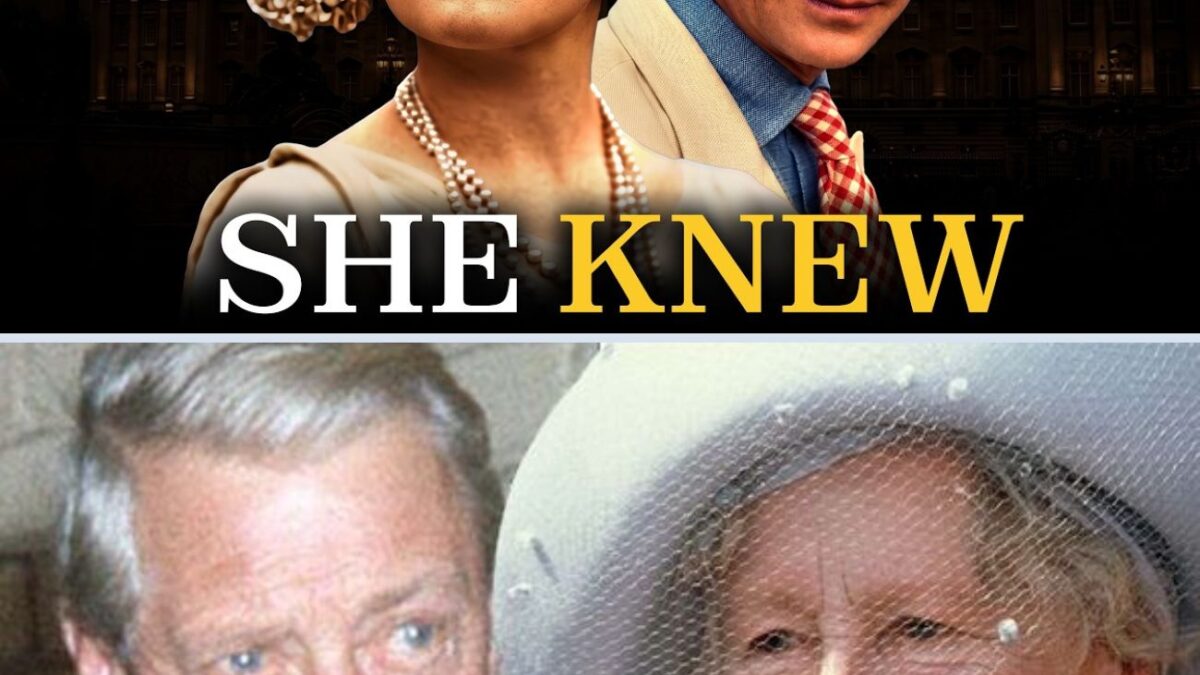
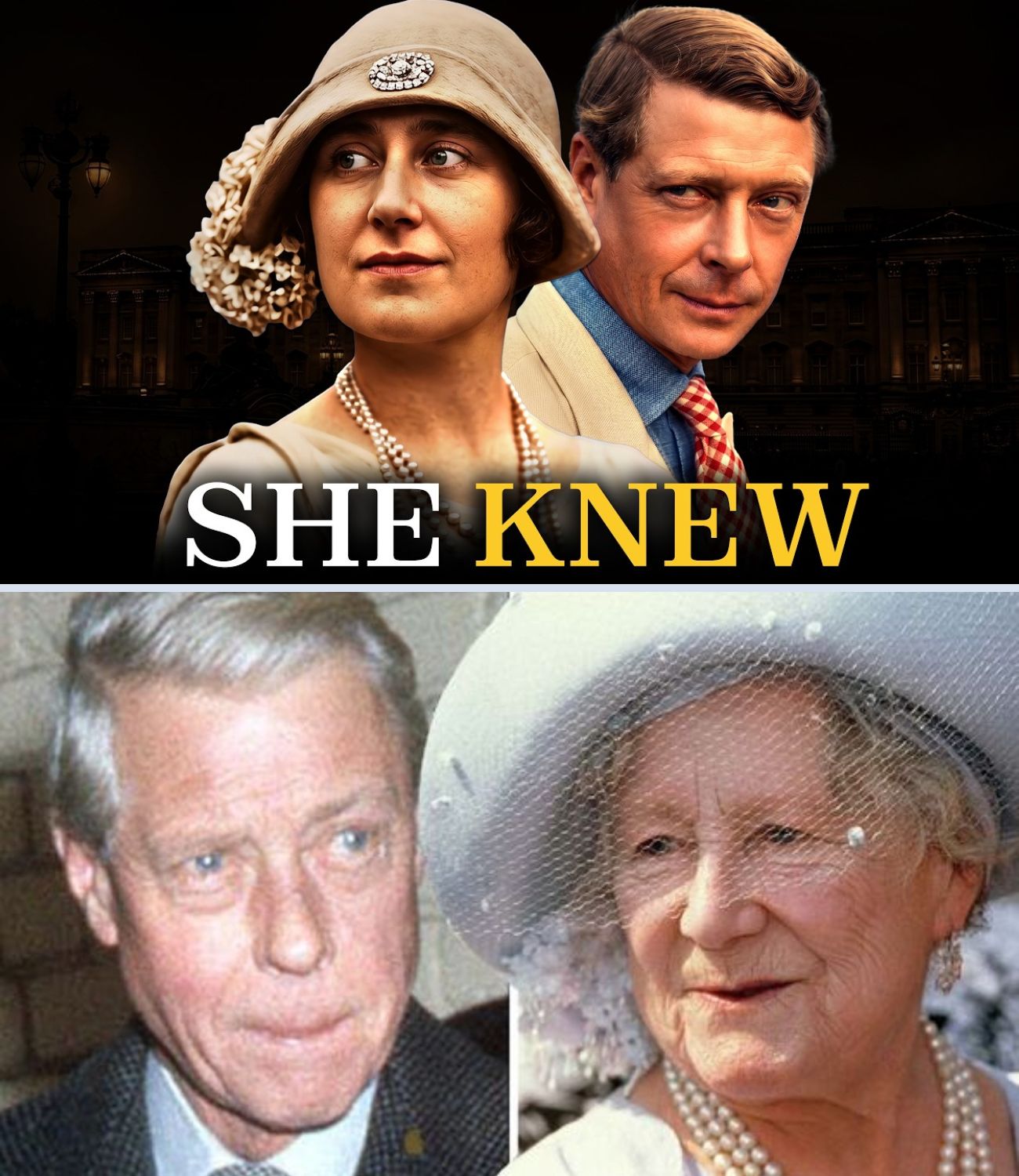
If you grew up in Britain any time between, say, 1950 and 2002, you knew the Queen Mother, or at least you believed you did. The little round woman in the pastel hat and the matching coat, waving from a carriage with one gloved hand, and clutching a gin and dubonnet with the other, beloved and unthreatening, and perpetually cheerful, like a porcelain figurine come to life at a garden party, only slightly tipsy.
And that image wasn’t entirely wrong. Elizabeth Bowes-Lyon, later Queen Elizabeth, later still the Queen Mother, really did love a drink, really did adore horses and really did possess a warmth that could disarm a room. People who met her talked about the way she locked eyes with you, as if nobody else existed, giving each person the fleeting impression that they were for that instant the only human being on earth who mattered.
Politicians and palace staff alike worshiped her. She lived to 101 years old, died peacefully in her sleep in 2002, and the nation mourned her like a beloved aunt they’d never actually spoken to properly. Lovely image, very tidy, and almost entirely incomplete. Behind the wave and the pastels and the carefully managed public sweetness, something far colder ran through this woman, a fury she carried for more than six decades, never once relinquished, and barely ever spoke aloud.
It pointed at one man, not a foreign enemy or a political rival, but her own brother-in-law, the former King Edward VIII, the Duke of Windsor, the man who, in her telling, ruined everything. Now, if all you know about Edward VIII is the vague romantic outline, he gave up the throne for love, moved to France, lived out his days in dignified exile with the woman he chose over the crown, then the Queen Mother’s fury might strike you as disproportionate, a bit dramatic, maybe even petty in that specifically aristocratic British way where the real wounds are never discussed and the surface ones become lifelong feuds. But I’d argue it reached beyond pettiness and beyond drama and that the full picture is stranger and more layered than either the romantic version or the bitter version would suggest.
Because what the popular telling usually leaves out is this. Elizabeth didn’t just dislike Edward. She blamed him with an intensity that never softened across 50 years of widowhood for destroying her husband’s health, stealing their private family life, and putting him in an early grave. Not metaphorically. She genuinely believed Edward’s abdication killed her husband. Whether she judged correctly is a different question, and we’ll get to it.
But to understand why she felt it so deeply, why the anger never faded even when the people she blamed lay long dead, we need to go back further than the abdication crisis itself to a time when Elizabeth Bowes-Lyon and the future Edward VIII weren’t enemies at all, but were by all accounts genuinely fond of each other. And that’s what turns the whole thing worse.
Let’s rewind to the early 1920s. Elizabeth Bowes-Lyon, daughter of the Earl of Strathmore, married Prince Albert (Bertie), the second son of King George V, in 1923 at Westminster Abbey. By all accounts, Bertie felt absolutely besotted with her, the kind of quiet, intense devotion that never quite finds the right words, but shows up in everything else.
Elizabeth reportedly turned him down at least once before accepting, not because she didn’t care for him, but because she dreaded the fishbowl existence of royal life, the loss of privacy, the relentless public scrutiny that came with marrying into the House of Windsor. Smart instinct, as it turned out, a premonition of exactly the kind of life she’d spend the next eight decades living, though even her worst imaginings probably couldn’t have predicted how it would actually unfold.
But more on that in a moment. Bertie’s older brother, David, the Prince of Wales, the heir apparent, the future Edward VIII, didn’t yet resemble the cautionary tale he’d later become. He occupied the role of golden boy in the British Empire. Handsome, effortlessly charming, magnetic in the way that certain people are who seem to fill a room just by walking into it.
Letters preserved in the royal archives from this period paint a picture of genuine warmth between Elizabeth and her brother-in-law, an appreciation for his ease in social situations and a gratitude for his steadfast support during the wedding. He treated her kindly, put her at ease in unfamiliar surroundings, and proved himself the sort of brother-in-law who rendered family gatherings bearable rather than endurable.
To be fair, most people felt that way about David in the 1920s. Charisma practically leaked out of him. He toured the empire like a rock star, shook hands with miners and war veterans, and the press adored him with the kind of uncritical enthusiasm that never ages well. If you’d told anyone in 1925 that this man would one day abandon his duty for a twice-divorced American socialite and spend the rest of his life in bitter Parisian exile, they’d have assumed you were writing particularly bad fiction.
But Elizabeth noticed cracks forming well before anyone else seemed willing to acknowledge them. As the 1920s gave way to the 1930s, David’s behavior shifted: a growing recklessness, a casual disregard for the unwritten rules that held the monarchy together. An apparent boredom with protocol that curdled into open contempt for the very institution he stood to inherit.
Historians point to a growing unease on Elizabeth’s part. Not about David personally, not yet, but about the direction in which he seemed to be drifting. She valued tradition, order, and the quiet stability of domestic life. And David increasingly and visibly valued none of those things, chasing affairs and shirking obligations and treating the prospect of becoming king with the enthusiasm of a man facing a lengthy dentist appointment.
Elizabeth watched all of this unfold from 145 Piccadilly, the London house she shared with Bertie and their two daughters, the future Queen Elizabeth II and Princess Margaret. Their life there felt warm, private, and deeply contented, with Bertie doting on the children while Elizabeth ran the household with a kind of steely grace that could have governed a small country and frequently in practice did.
They weren’t expecting the throne, didn’t want the throne, and built their entire existence around the comforting assumption that David would eventually ascend, do the job adequately, and leave them alone. That life at 145 Piccadilly became for Elizabeth something close to sacred, the one achievement she constructed entirely on her own terms, proof that a royal existence could also be a genuinely happy one with Bertie adoring her, the children thriving, and the household running smoothly.
And beyond the front door, the future king of England kept methodically dismantling every expectation the country placed on him, though Elizabeth couldn’t yet have known just how catastrophic the consequences would grow. Spoiler: David did not do any of those things.
Bear with me while I lay out the full sequence, because the abdication crisis of 1936 didn’t arrive out of nowhere. It crept up slowly, gave everyone plenty of warning signs that they chose to ignore, and then detonated with a force that rearranged the entire constitutional order of Britain in a matter of days.
By the mid-1930s, David fell completely and irreversibly for Wallis Simpson: sharp-tongued, sharp-dressed, American, and still married to her second husband at the time. Not her first, but her second, the first marriage already dissolved in divorce. In the context of 1930s British society, where the Church of England’s position on divorce stood not merely conservative but doctrinally absolute, and where the king sat as the church’s nominal supreme governor, this amounted to something beyond minor social awkwardness. It proved radioactive.
The British press, in one of those gentleman’s agreements that seem quaint by modern standards, agreed to keep the relationship out of the papers. But the American press felt no such obligation, and the affair splashed across front pages from New York to Chicago for months before the British public caught on.
When the dam finally broke in Britain in December 1936, events moved with terrifying speed. Edward, who ascended the throne earlier that year following the death of George V, declared that he intended to marry Wallis regardless of the consequences. Prime Minister Stanley Baldwin, speaking on behalf of the cabinet and the Dominion governments, informed him in measured but unmistakable terms that a twice-divorced woman could not be accepted as queen consort.
Edward received a compromise, a morganatic marriage, in which Wallis would become his legal wife, but would not receive the title of queen and any children would not inherit the throne. He turned it down flat. On December 11, 1936, Edward VIII signed the instrument of abdication and broadcast a now famous radio address to the nation, telling the listening public in a voice that rang calm and slightly wounded:
“I could not carry the burden of kingship without the help and support of the woman I love.”
The BBC transmitted the address from Windsor Castle, and millions of people across Britain and the empire listened in stunned silence, many of them hearing for the first time that their king planned to leave and grasping in the same breath that he already left. Romantic, perhaps, if you listened from a comfortable distance and held no personal stake in the outcome. Entire generations would later romanticize the gesture: the king who gave up everything for love.
But imagine just for a moment listening from 145 Piccadilly. Imagine you stood there as Elizabeth Bowes-Lyon in your drawing room, absorbing the news that your shy, stammering husband—a man who never trained for kingship, never wanted it, never even considered the possibility that it would fall to him, and who suffered so severely from a speech impediment that public speaking caused him physical anguish—now bore the title King George VI, King of the United Kingdom, the Dominions, and the entire British Empire, effective immediately.
William Shawcross in his official biography of the Queen Mother described the abdication as:
“a terrible surprise that shattered the family’s private world.”
And shattered isn’t an exaggeration or biographer’s hyperbole, but almost too mild. The quiet domestic life at 145 Piccadilly, the bedtime stories, the corgis, the garden, the relative anonymity of being the Duke and Duchess of York, all of it evaporated in a single evening.
Elizabeth, who dreaded royal life even as a duchess, and initially turned down Bertie’s proposal partly out of that dread, now found herself queen consort. Every fear she harbored about marrying into the royal family came true, amplified a thousandfold, delivered to her doorstep by the one person who should have prevented it.
She didn’t view Edward’s decision as a noble sacrifice for love, not for a second. She saw a man who abandoned his post, deserted in what she considered the most cowardly way possible by wrapping dereliction in the language of romance. Not brave, not understandable, simply selfish. In her eyes, Edward took one look at the weight of the crown, decided he didn’t fancy carrying it, and dropped it squarely onto the shoulders of the one person least equipped to bear it.
And what gnawed at her most, I think, more than the loss of privacy, more than the overnight transformation of their lives, came down to the asymmetry of choice. Edward could walk away, but Bertie couldn’t. No mechanism existed for a second abdication, no procedure for handing back a crown once it landed on your head, and nobody asked Bertie whether he wanted to wear it.
From that December onward, the warmth Elizabeth once felt for David didn’t merely cool; it curdled into something permanent, structural, load-bearing. The slow-burning, bone-deep kind that only grows harder and colder as the decades pass, the kind that outlasts the person you’re angry at and then outlasts you.
Lessons were not learned, at least not by Edward. But Elizabeth absorbed the lesson of December 1936 into her bones, and it shaped every decision she took about her brother-in-law for the next 66 years: that duty cannot be outsourced, that love does not excuse abandonment, and that the people left behind always pay the heavier price.
So the abdication happened. Bertie became George VI. Elizabeth became Queen Consort. And Edward, newly styled the Duke of Windsor, decamped to France with Wallis Simpson, expecting rather naively—with the particular naivety of a man who never in his life heard no and meant it—that the family would eventually come around, welcome Wallis, perhaps even invite them home.
That didn’t happen. And the person most responsible for making sure it never happened—not in 1937, not in 1947, not in 1957, not ever—remained Elizabeth. In 1937, King George VI issued new letters patent acting on the advice of his cabinet, but with Elizabeth’s fierce and vocal support operating behind the scenes. The letters patent granted Edward the style of Royal Highness, acknowledging his former status, but pointedly denied the same courtesy to Wallis Simpson, with any children they might produce also excluded. In the language of royal protocol, the document represented a demotion: deliberate, calculated, and permanent. And Elizabeth pushed harder than anyone in the family to enforce it to the letter.
You might think all this amounted to mere procedure, a technicality, paper shuffling. But in the world of the British monarchy, titles carry weight that outsiders rarely appreciate. Denying Wallis the HRH didn’t function as bureaucratic housekeeping; it delivered a message in the only language the monarchy truly speaks:
“You are not one of us, and you will never be one of us.”
As long as Elizabeth drew breath and held influence, that message never wavered. The Duke and Duchess of Windsor remained in exile in France, largely frozen out of British royal life, their existence in Paris taking on a peculiar quality: glamorous on the surface with dinner parties and fashionable friends, but fundamentally hollow, a life of perpetual displacement. They occupied a grand house, entertained visiting Americans who found the former king exotic and romantic, and cultivated an image of sophisticated martyrdom, but they remained completely cut off from the institution.
Edward abandoned no official role, no state functions, no place in the family’s ceremonial life. Edward lingered in the brutal arithmetic of the monarchy as a private citizen with a title and a grudge, reduced to a kind of permanent European holiday funded by a combination of his personal fortune and a negotiated annual stipend from the crown. He wrote letters to his mother, Queen Mary, and to Bertie, sometimes pleading for reconciliation, sometimes petulant about money, occasionally self-pitying in the way that only a former absolute monarch can manage.
Wallis, for her part, did not absorb the snub with grace. Archival correspondence tells us that Edward and Wallis developed their own private vocabulary of contempt for the family that shut them out. Elizabeth, with her fondness for food and her rounded figure, earned the nickname “Cookie,” a mocking reference to a stout Scottish cook, the kind of insult that derives its cruelty from its specificity. Princess Elizabeth, the future queen, they dismissed as “Shirley Temple,” reducing the heir to the throne to a saccharine child actress, an insult that, unlike Cookie, targeted a child who bore no responsibility for any of it.
The hostility ran in both directions, and neither side showed the faintest interest in de-escalation. What’s worth noting, though, is the asymmetry in how each side waged this particular cold war. Edward and Wallace traded barbs in private correspondence, throwing insults from the safety of their Parisian drawing room, while Elizabeth’s hostility operated on an entirely different register: not mockery, not catty nicknames dashed off in letters, not venting to friends, but something colder.
She simply refused to acknowledge that Wallis existed. According to biographers, Elizabeth adopted a policy of near-total silence on the subject of the Duchess of Windsor, never speaking Wallis’s name if she could possibly avoid it, never engaging with the topic when others raised it, treating her brother-in-law’s wife as though she’d been administratively deleted from the family record. Arguably colder than any nickname, because you can recover from being mocked, but being erased is another matter entirely.
A widely circulated quote attributed to Elizabeth claims she told confidants that:
“the two people who have caused me the most trouble in my life are Wallis Simpson and Hitler.”
A brilliant line, punchy, absurd, the sort of thing you’d expect from a woman of her generation and temperament, and the kind of quote that biographers dream of finding in the archive. But serious historians treat it as all but apocryphal, since no archival evidence supports it and the quote directly contradicts her well-documented refusal to speak about Wallis at all. It reads like something someone invented to capture the spirit of her feelings—accurate in tone, false in fact—rather than something she actually uttered over afternoon tea.
To be fair, the spirit of the quote probably isn’t far from the mark, and she likely regarded Wallis and Hitler as belonging to roughly the same category of catastrophe visited upon her family and her country. She just didn’t voice it aloud, because voicing it would mean acknowledging Wallis. And acknowledging Wallis remained something Elizabeth Bowes-Lyon absolutely, categorically, for 65 years refused to do.
And then Bertie died on February 6, 1952. King George VI passed away in his sleep at Sandringham, 56 years old, after a reign that spanned the Second World War, the birth of the welfare state, and the beginning of the end of the British Empire. The official cause of death: coronary thrombosis complicated by lung cancer. Surgeons removed part of one lung the previous year in an operation that slowed but did not stop the spread. He smoked heavily for most of his adult life, consuming cigarettes at a rate that alarmed his doctors and surprised nobody who understood the pressures he operated under.
And the medical evidence pointed in one direction: the smoking killed him.
None of those medical facts, however, left the slightest impression on Elizabeth’s interpretation of events. In her telling—and she never wavered from this position, not once, not across 50 years of widowhood stretching from 1952 to her own death in 2002—the crown killed her husband. Not the cigarettes, not the cancer, not the genetic predispositions or the wartime stress or the fact that Bertie’s own father died relatively young. She traced the cause back to one person: Edward.
Edward, who could have done the job himself but chose not to, who walked away, moved to France, married the woman he wanted, and left Bertie to be crushed slowly, painfully over 16 years by a weight that belonged on someone else’s shoulders.
Historians treat this attribution with sympathy, but also with the kind of analytical distance that Elizabeth herself could never manage on this particular subject. Both William Shawcross and Hugo Vickers note that her refusal to confront the smoking—the actual physical, demonstrable cause of her husband’s death—functioned as a psychological coping mechanism, one she never abandoned because she never needed to. Confronting the reality that Bertie’s own habits contributed directly to his early death would have meant grappling with the randomness and the self-infliction of it, an unbearable thought for anyone, let alone a woman who idolized her husband.
Blaming Edward gave the grief a target, a narrative, a villain, and it converted a senseless medical tragedy into a story with a clear moral architecture: duty abandoned, consequences suffered, innocence destroyed. The story held together in a way that cancer never does.
And here’s the uncomfortable middle ground that historians occupy: she wasn’t entirely wrong. Nobody disputes that the cigarettes inflicted the physical damage, but the stress of kingship accumulated over 16 years with relentless grinding force. Night after night of bombing during the Blitz with the royal family remaining in London while Buckingham Palace itself took direct hits, constant public appearances and morale-boosting tours through bomb-damaged neighborhoods, and the speeches—God, the speeches—costing Bertie agonizing, humiliating effort every single time. Each one a private battle against his stammer fought on a public stage.
All of it piled onto a man who never trained for the role and who carried it not out of desire or ambition, but out of sheer dogged, uncomplaining obligation. Sixteen years of unbroken service from the chaos of the abdication through six years of total war and into a post-war era of rationing, imperial decline, and national exhaustion until at 56 his body simply stopped.
Elizabeth watched that entire arc unfold beside him, watched the toll accumulate year by year, and drew her own conclusions about who bore responsibility. Did the crown accelerate his decline? In all likelihood, yes, though we’ll never know for sure, because the counterfactual version of Bertie’s life—the one where he remained the Duke of York and smoked just as heavily, but without the crushing daily pressure of running a country through war and reconstruction—exists only as a thought experiment.
But Elizabeth believed it with every fiber of her being, and that belief hardened over the years into something indistinguishable from established fact in her mind: not a theory, not an interpretation, but the simple and obvious truth of what happened to her husband.
After Bertie’s death, Elizabeth dressed in black, withdrew from public life for several months, and quietly considered whether she might retreat permanently from the world, perhaps to Scotland, to a castle, to a life of private mourning, away from the institution that swallowed her family whole. She didn’t, though, re-emerging eventually as the Queen Mother, taking up her public duties again with the same measured warmth and carrying her grief and her blame like twin weights she refused to set down.
Edward attended the funeral, awkward and unwelcome, a ghost from a chapter the family wanted sealed. And Elizabeth endured his presence, but offered nothing beyond the bare minimum that protocol demanded: no warmth, no reconciliation, not even the polite fiction of forgiveness.
And one more detail, because it matters for understanding the scale of what we’re talking about: Elizabeth turned 51 when Bertie died, and she lived another 50 years, half a century of widowhood, during which her animosity toward Edward, and especially toward Wallis, never softened, never mellowed, never displayed the faintest hairline crack of forgiveness. Edward himself died in Paris in 1972, attended in his final weeks by Wallis and a dwindling circle of aging friends. And Wallis lingered on until 1986, increasingly frail and isolated, still without the HRH denied to her nearly 50 years earlier. Elizabeth outlived them both by decades, and the passage of time changed absolutely nothing about how she felt.
That’s not a grudge. That’s architecture: something built deliberately, maintained with care, and woven into the structure of who she became after December 1936.
One of the frustrations of studying the Queen Mother is that she controlled her own record with a discipline bordering on the obsessive. Unlike Edward, who poured his grievances into letters and memoirs and radio addresses with reckless abandon—the man simply could not stop explaining himself—Elizabeth curated what survived with steely precision, knowing that letters outlasted their authors, that archives became public eventually, and selecting every phrase with that knowledge firmly in mind.
But she wasn’t flawless at it, and the letters that do survive paint a portrait that her public persona never quite revealed. In 1940, with the war underway and Edward serving as governor of the Bahamas—a position the family regarded less as a diplomatic posting and more as a convenient way to keep him far from London, far from the press, and far from any possibility of embarrassing the crown—Elizabeth expressed her concerns in private correspondence quoted by William Shawcross in his official biography. Writing about Wallis, she noted that the Duchess remained held in low opinion and could not be relied upon to set a proper example for the colonial community, warning that:
“a very difficult situation will arise over his wife,”
in a carefully calibrated mixture of genuine worry about the political implications and barely concealed personal contempt.
What strikes me about this letter isn’t the hostility—that’s expected by 1940—but the control. Elizabeth didn’t rant or lose her composure. Even in a private letter that she probably assumed nobody outside the family would ever read, even behind closed doors, she framed every objection in the language of duty and propriety, wrapping her personal fury in institutional concern. Like, for example, Wallis registering not as a bad person in Elizabeth’s careful phrasing, but as a bad example, a poor representative, a potential liability to the crown’s reputation, with every criticism dressed in constitutional clothing and every personal wound disguised as a policy concern.
Masterful in a way, the letter reads like a legal brief disguised as personal correspondence, each objection calibrated to land on institutional rather than emotional ground, and slightly terrifying if you think about what it takes to maintain that level of emotional discipline for decades on end: the sheer willpower required to feel something burning and express it freezing.
Then there’s the letter to Queen Mary written in the raw, immediate aftermath of George VI’s death in 1952. In it, Elizabeth wrote:
“It is impossible for me to grasp what has happened. He was such an angel to the children and me, and I cannot bear to think of Lilibet so young to bear such a burden.”
On the surface, it reads as a straightforward letter of grief: a widow struggling to absorb an unimaginable loss, a mother worried about her 25-year-old daughter suddenly ascending to the throne under the weight of an institution that already consumed one generation of her family. But look at the language, because it echoes so young to bear such a burden. That word burden runs through the entire story like a bass note. Burden of the crown passed from Edward to Bertie when Edward refused to carry it. From Bertie to Lilibet when the crown finished with Bertie.
Elizabeth spent 16 years watching her husband stagger under that weight, watching him fight through speeches, endure the Blitz, manage a post-war nation while his health deteriorated in real time, and now watched the same weight descend onto her daughter. Meanwhile, the man who started the entire chain, who tipped the first domino in December 1936, still drew breath, still living comfortably in Paris, still married to the woman for whom he abandoned everything, still suffering—as far as Elizabeth was concerned—no consequences whatsoever for the wreckage left behind.
If you wanted to identify the single emotional thread running through Elizabeth’s entire adult life, from the abdication to her own death 66 years later, it would be this: the people she loved kept being forced to carry burdens that were never intended for them, and the person who created those burdens never bore any of the cost.
There’s one more quote worth addressing, though it arrives with a heavy caveat. Royal biographer Michael Thornton claimed that the Queen Mother once justified Edward’s permanent exile by telling him directly:
“A country can only have one king at a time.”
It’s a magnificent line: cold, constitutional, and utterly final, the verbal equivalent of a door closing and locking from the inside, exactly the sort of thing you’d want Elizabeth to have declared.
But Thornton occupies a contested space in the literature of royal biography, and we should be honest about that. His 1985 book, Royal Feud, positioned itself as a definitive account of the Windsor family’s internal wars, but mainstream historians treated him as a controversial secondary source, someone given to dramatic claims and not always rigorous about sourcing or documentation. Compared to the archival letters in Shawcross’s official biography, which drew directly from the royal archives with the family’s cooperation, Thornton’s firsthand accounts rest on considerably shakier ground. Did Elizabeth say it? Possibly. The line does capture something true about her worldview and her temperament, but we should probably file it under things that are almost too perfect to verify, a category that in royal history tends to be rather crowded.
Now, before we close, I need to address one more theory about why Elizabeth despised Edward and Wallace with such unrelenting intensity, because it keeps circulating in tabloid columns and Wikipedia rabbit holes and refuses to die, and it’s worth examining properly, if only to explain why virtually every credible historian who looked at it dismissed it out of hand.
In 2016, Lady Colin Campbell—a socialite, broadcaster, and self-appointed royal commentator whose books tend to generate considerably more tabloid headlines than academic citations—put forward a claim that Elizabeth Bowes-Lyon’s lifelong hostility toward Wallis Simpson actually stemmed from romantic jealousy. According to Campbell, young Elizabeth harbored feelings for David, the charismatic older brother, and wanted to marry him herself, and when David chose women like Wallace over her, the rejection supposedly curdled into a hatred she carried for the remaining decades of her life.
A neat theory, I’ll give it that much, taking a complicated, multi-layered resentment built on duty and grief and institutional loyalty and compressing it into something simple and psychologically familiar: the woman scorned. On the surface, it explains the intensity of the grudge, the refusal to forgive, the decades of frozen hostility, and it even possesses a certain soap opera elegance, the kind of explanatory tidiness that produces excellent television but tends to collapse under historical scrutiny.
And collapse it does, because the theory rests on absolutely no evidence whatsoever. Not a letter, not a diary entry, not a credible firsthand account, not a single scrap of documentation from the royal archives or from any other verified source. Lady Colin Campbell presented the claim, as Christopher Wilson—another royal biographer—noted with evident frustration, without a single shred of historical evidence to support it.
Historian Andrew Roberts addressed the claim with characteristic directness:
“No reputable historian believes the Queen Mother ever fell in love with the future Edward VIII, let alone tried to marry him.”
That’s about as definitive a dismissal as you’ll encounter in academic circles, where hedging language and diplomatic qualification tend to be the default mode of disagreement. Wilson pushed further, pointing out the social mechanics that render the theory implausible even on its own terms. Elizabeth, as the daughter of an earl, belonged to the Scottish nobility, a perfectly respectable tier of the aristocracy, but one that operated in a different orbit from the Prince of Wales and heir to the British throne.
“She and David,” Wilson observed, “were never in the same league.”
Not because Elizabeth ranked beneath David in any meaningful sense, but because the marriage market of the 1920s British upper class ran on specific, well-understood tracks. A daughter of the Scottish nobility didn’t set her sights on the Prince of Wales any more than a country solicitor aimed to become Lord Chancellor.
And here’s where the theory falls apart entirely, even for those who might find it emotionally persuasive on first hearing: it doesn’t explain anything better than the existing evidence already does. We don’t need a secret romantic rejection to account for Elizabeth’s fury. The abdication—documented, devastating, historically verified from every possible angle—provides more than sufficient cause, from the destruction of her family’s private life to the burden forced onto her husband, to the early death she attributed to that burden, to the exile she enforced with unwavering determination. All of it flowing logically and coherently from a woman who believed her brother-in-law betrayed his duty, wrecked her family, and never paid any price for doing so.
Adding a rejected love affair doesn’t deepen the story, but cheapens it, turning a genuine, historically grounded resentment into a romantic cliché, jealousy dressed up as political conviction without—and I cannot stress this enough—any historical evidence at all. The theory exists and it circulates in tabloid columns and on certain corners of the internet where speculation and evidence enjoy equal billing. But when the actual documented reasons for Elizabeth’s fury run this deep, inventing additional ones isn’t analysis; it’s fanfiction, the historical equivalent of adding a subplot to a building that already stands perfectly well on its own foundations.
So, where does all of this leave us? With a woman who contained, as most people do, but few as dramatically, several contradictory selves at once: the smiling grandmother and the implacable enemy, the grieving widow and the calculating political operator, the woman who charmed every room she walked into and the woman who refused to speak another woman’s name for six decades straight.
Elizabeth Bowes-Lyon loved her husband with a devotion that never dimmed, even across half a century of widowhood, adoring her daughters, cherishing her position as the nation’s favorite grandmother, drinking her gin, betting on her horses, attending garden parties, opening hospital wings, and living to 101 with the apparent contentment of someone who reconciled herself with the world. But she never reconciled with Edward, never reconciled with Wallis, and never reconsidered—not once in 66 years—the verdict she reached in December 1936: that David committed the ultimate act of betrayal, and that Bertie and Lilibet and the family and the country paid the price for his selfishness.
Did she judge correctly? Partly. And the word partly does heavy lifting in that sentence. The abdication imposed an enormous burden on George VI, and the stress of kingship very likely worsened his health and shortened his life, even if the cigarettes inflicted the bulk of the physical damage. Edward’s decision proved selfish in the specific and defensible sense that he chose his own desires over his family’s well-being, and Elizabeth earned the right to resent that.
But she also refused to see the full picture: refused to acknowledge Bertie’s smoking, refused to consider that Edward might have been genuinely incapable of performing the role without causing even greater damage, refused to grant even the bare possibility that walking away from a job you know you’ll fail at might, in some narrow circumstances, be the less destructive option.
Her anger ran real and earned, but it also ran convenient—and convenient is a hard word to use about someone who suffered genuinely, but I’ll use it anyway. The anger gave her grief a shape and a direction, converting a chaotic, painful loss into a clean moral story with a villain and a victim. And the alternative—accepting that her husband’s death grew partly from his own habits, partly from random biology, partly from the accumulated weight of choices nobody predicted—offered no such comfort.
Edward died in Paris in 1972, attended in his final days by Wallis and a shrinking circle of aging friends and hangers-on, and Elizabeth did not visit. Wallis died in 1986, frail and largely forgotten, still without the HRH denied to her nearly 50 years earlier by letters patent that Elizabeth fought harder than anyone to enforce. And Elizabeth did not comment. She never commented because commenting would have meant breaking a silence she maintained with the discipline of a woman who understood that some grudges are not flaws of character, but load-bearing walls.
When Elizabeth herself died in 2002 at the age of 101, the nation mourned the woman with the wave and the pastels and the smile that could warm a room, the wartime icon, the grandmother, the last great lady of a vanished era. Almost nobody in the eulogies or the newspaper columns mentioned the grudge, and almost nobody talked about the cold, carefully maintained fury she carried since that December evening in 1936 when her brother-in-law chose a woman over a crown and left her husband standing in the wreckage.
But it lived there, beneath the hats and the waves and the gin: present in the way she stiffened when Edward’s name arose in conversation, in the way she maintained Wallis’s exile with bureaucratic precision long after anyone else in the family might have relented, and in the letters she wrote, and perhaps more tellingly, the letters she didn’t. She loved fiercely, grieved permanently, and blamed without mercy: a woman who smiled for the cameras and carried ice behind her eyes, full of contradictions that never canceled each other out, but coexisted uncomfortably for 101 years without ever reaching resolution.
Quiet, unyielding, and all the way to the end through six decades of widowhood, through two more reigns, through a century that reshaped every institution except her anger: completely unresolved.
You Might Also Enjoy

“We Thought They Would Negotiate”—What Argentine Soldiers Said When The British Attacked Goose Green

“You’ll Never Finish My Ruck March, Limey” — US Sergeant Who Challenged the SAS, Then Fell Out First






