The Queen Mother ABSOLUTELY Despised Prince Philip, Here’s Why
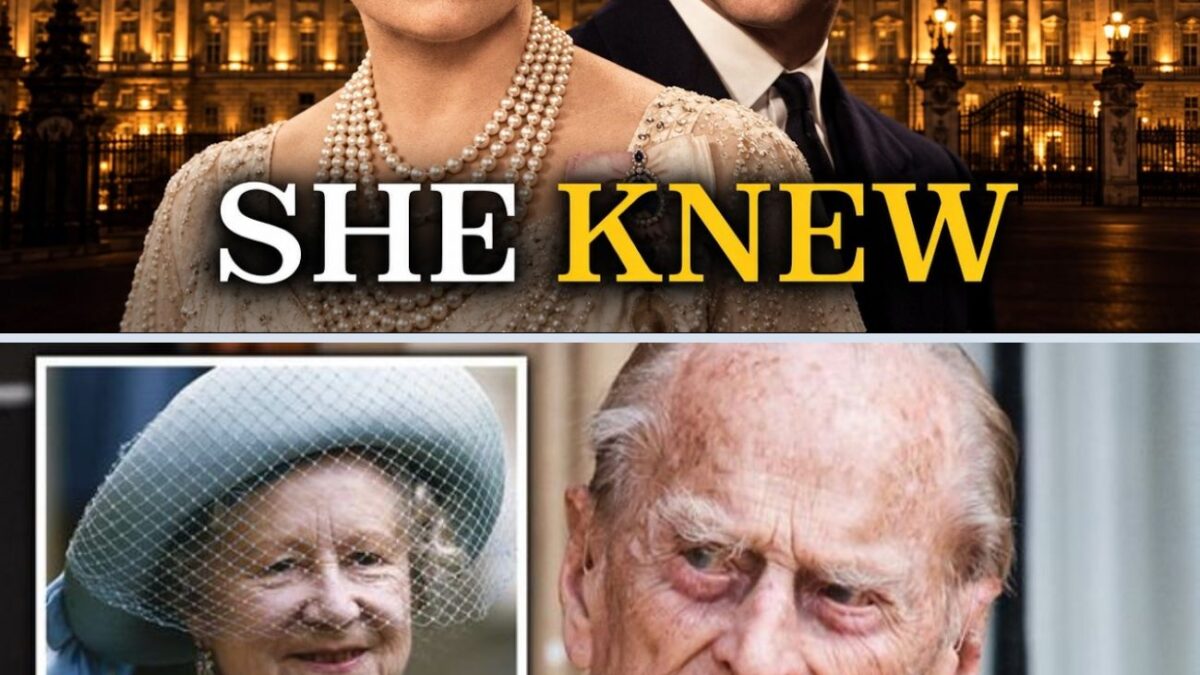
In April 1952, the British cabinet decided that Prince Philip’s children would not carry his name. He had been consort two months. The public saw a grieving nation, a young queen, and a devoted mother-in-law in pearls. The decision came from inside the family. Philip told friends, “I am nothing but a bloody amoeba. The only man in England forbidden to pass on his own name.” He had just renovated Clarence House. He was ordered out. His mother-in-law moved in for 49 years. She had opposed the marriage from the start. The real answer starts six years earlier at Balmoral.
Start with how the name thing actually happened because the mechanics tell you everything about who held what. In February 1952, with the king barely buried, Philip’s uncle, Lord Mountbatten, was entertaining at Broadlands, his estate in Hampshire. According to the account that reached the palace, he announced to his guests, “The house of Mountbatten now reigned in Britain.” One of the guests was Prince Ernst August of Hanover. He went straight to Marlborough House and told Queen Mary, the old queen, George V’s widow, who had already watched one family crisis nearly take the monarchy down. Queen Mary told Jock Colville. Colville told Winston Churchill. Churchill took it to the cabinet on the 9th of April 1952. The cabinet advised the new queen that her house and family would continue to be called Windsor. She issued the declaration on the 21st. It took less than 2 months from a dinner party boast to a constitutional instruction. That is not slow government. That is a system with its guard already up.
And here is the part that gets skipped. The Queen Mother was not a bystander in that. She and Queen Mary were on this question the same person. Several biographers have described her as actively supporting the move through her own channels and through her brother David Bowes-Lyon who had the kind of access to her that no private secretary ever gets. Nobody recorded her saying anything decisive in writing. She didn’t need to. The decision went exactly where she wanted it to go, and the man it humiliated was her daughter’s husband. Philip’s reaction survives in the recollections of friends repeated by Brandreth and others, and it’s worth noting it is recollection rather than a contemporary document. He said, “I am nothing but a bloody amoeba. I am the only man in the country not allowed to give his name to his own children,” even allowing for the usual drift in a quoted remark. The sentiment is consistent with everything he did for the next 8 years.
Now, the house. Philip and Elizabeth had moved into Clarence House in July 1949 after a long and expensive refurbishment. It was the first home of their own. He had been deeply involved in the work, the fittings, the layout, the modernization. For a man who had spent his childhood being passed between relatives in three countries, a house he had chosen the wiring for was not a small thing. When George VI died in February 1952, Churchill insisted the sovereign live at Buckingham Palace. That was the constitutional position, and nobody seriously argued it. So, Philip lost the house.
The Queen Mother, meanwhile, did not want to leave the palace. She had been there 16 years. She made it clear she was in no hurry. She finally moved into Clarence House in May 1953, and she lived there until she died in 2002. 49 years in the house her son-in-law had built for himself. That’s not a conspiracy. It’s the natural outcome of a system where the sovereign’s mother outranks the sovereign’s husband in every room except the one with a throne in it. But the sequence is the sequence. Within 15 months of the king’s death, Philip had lost his home, his surname’s future, and the small kingdom of the one household he’d been allowed to run.
He also lost the argument about what she would be called. The correct term for the widow of a king is Queen Dowager. She refused it. She thought it sounded like something out of a pantomime, and more to the point, it sounded finished. She settled on Queen Elizabeth, the Queen Mother, a title that had barely been used in Britain before, and which neatly solved a problem that was never really about vocabulary. Her daughter was Queen Elizabeth. She was also Queen Elizabeth. The new construction let her stay queen in her own right in the same sentence as the monarch forever. She invented her own job title and then occupied it for half a century. Philip spent 5 years without a rank in his own family.
Grieving widow is how the public read her in 1952. It’s not wrong. The king’s death wrecked her and the letters she wrote in that first year are genuinely hard to read. It’s just incomplete. The woman in black at Westminster Abbey was also the most experienced political operator left in the building, and she had just watched a Mountbatten try to put a flag on the monarchy. To understand why that particular word, Mountbatten, made her move so fast, you have to go back 16 years to the event that defined her entire adult life.
In December 1936, Edward VIII abdicated to marry Wallis Simpson, and Elizabeth’s husband, Bertie, a shy man with a stammer who had never expected or wanted the throne, became King George VI. She never forgave it. That’s not interpretation. Her correspondence is explicit about the damage she believed had been done, and she carried the grudge against the Duke and Duchess of Windsor to the end of her life more than 60 years later. When George VI died at 56 in 1952, she believed and said that the strain of a job he was never meant to have had killed him.
Here’s the connection that matters. The young Prince of Wales, the man who became Edward VIII and then walked away, had spent his wildest years with a particular traveling companion on his imperial tours. That companion was Dickie Mountbatten. Mountbatten had been close to the man whose selfishness she held responsible for her husband’s early death. Mountbatten had married an heiress, cultivated the press, and made a career out of proximity to royalty. When he started telling dinner guests that the house of Mountbatten now reigned, she did not hear an uncle boasting. She heard the same family, the same appetite coming back for a second try, and Philip was Mountbatten’s project. Everyone involved knew it.
Which brings us to the boy himself and to what he actually was in 1939 when a 13-year-old princess first paid attention to him. Philip had been born on Corfu in 1921 and carried out of Greece in a fruit crate before he could walk after his uncle the king was deposed and his father was tried by a revolutionary court. His family scattered. His mother, Princess Alice, was institutionalized for several years in the late 20s after a breakdown. She later founded a religious order and lived as a nun. His father drifted to the south of France. By his teens, Philip was living out of other people’s houses. His grandmothers at Kensington Palace, his uncle George Milford Haven, then Mountbatten. He owned, by most accounts, very little.
He also had four older sisters and all four married German noblemen. Sophie married Prince Christopher of Hesse who joined the Nazi party and ran a Luftwaffe surveillance operation. Three of Philip’s sister’s husbands were party members. A fourth sister, Cecile, died in a plane crash at Ostend in 1937. And the photographs of Philip at her funeral in Darmstadt, walking between mourners in Nazi uniforms, existed and were known about inside the palace. None of that was his doing. All of it was his problem.
The meeting is the part everyone thinks they know. 22 July 1939, Royal Naval College, Dartmouth. The king and queen visited with their two daughters. There was mumps and chickenpox in the college, so the princesses were kept apart from most of the cadets, and a young cadet named Philip of Greece was assigned to entertain them. He showed off on the tennis courts. Elizabeth, 13, apparently did not look at anybody else. Here’s the thing about that story. Our main source for the detail is Marion Crawford, the governess, in her 1950 memoir. Crawford was cut off completely by the family for publishing it, which is itself telling, and her book has to be read as an interested account written for money after a rupture. But the visit happened, the assignment happened, and Mountbatten was on the royal yacht that weekend. He had been steering his nephew toward that deck for years.
So the question isn’t whether Philip was attractive. By every account, he was tall, blonde, funny, physically fearless, and genuinely distinguished in the war that followed, mentioned in dispatches at Matapan. The question is what Elizabeth’s mother saw when she looked at him across the next seven years. She saw a man with no country, no money, no property, and no British passport. She saw a Greek-Danish prince whose brothers-in-law had been in the Wehrmacht. She saw Mountbatten’s nephew arranged in her daughter’s line of sight by Mountbatten himself. And the courtiers around George VI, the loyal circle, whose views survive in diaries and in interviews given later, put it in plain terms. They considered him rough, ill-mannered, poorly educated, and unlikely to be faithful.
Inside the Queen’s own circle, and particularly around her brother David Bowes-Lyon, the nicknames reportedly ran to “the Hun” and “Charlie Kraut.” Those come to us through biographers rather than from any document in her hand, and that distinction matters. What is not disputed is the behavior. She did not want it, and she slowed it down. Philip proposed in the late summer of 1946 at Balmoral and Elizabeth accepted before asking her father. She was 20. That detail has been softened in a hundred retellings into something charming. It was not charming to her parents.
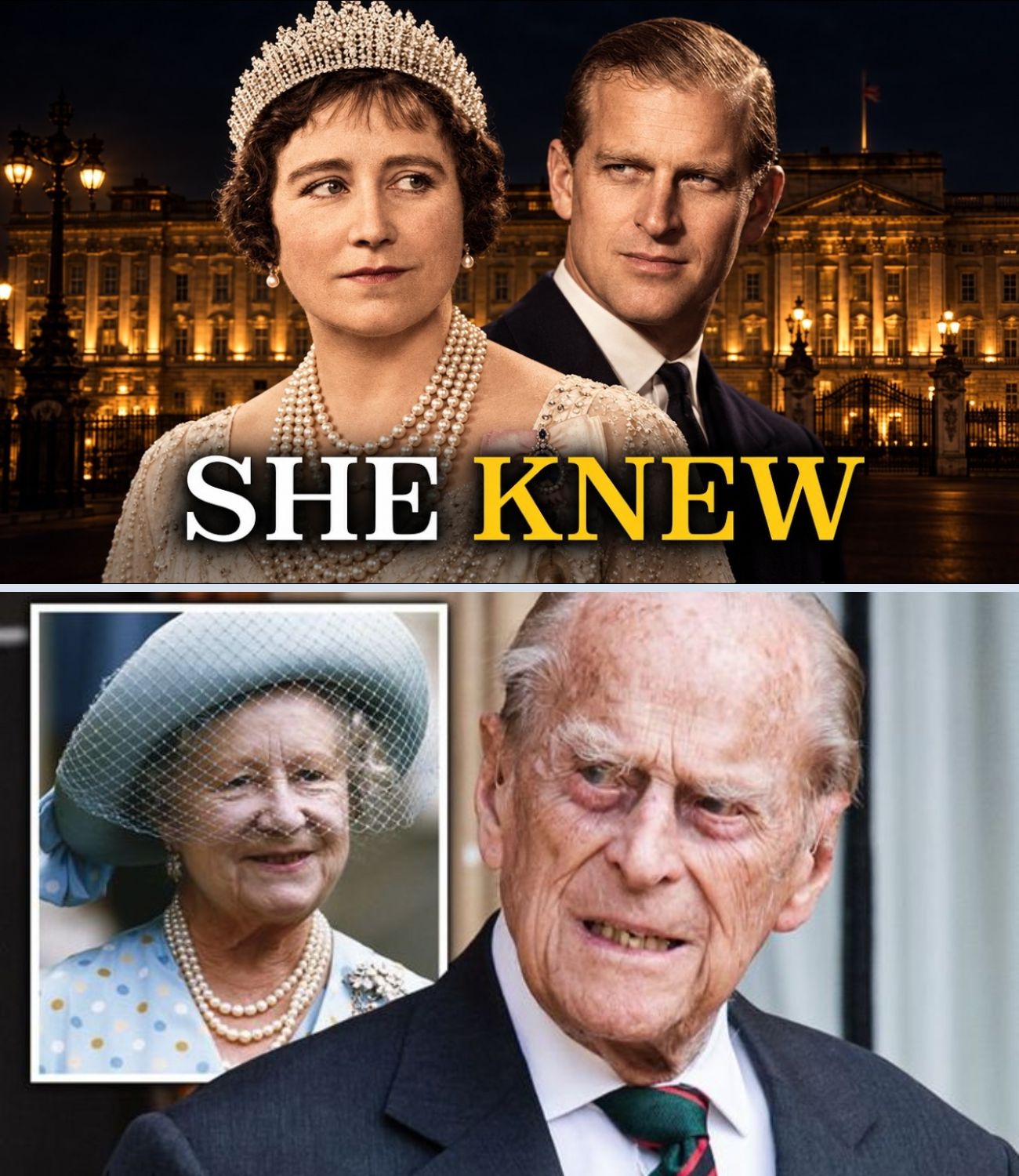
George VI’s condition was that nothing be announced until after the royal family’s long tour of South Africa, which ran from February to May 1947, 4 months on a different continent with her parents, her sister, and no fiancé. It was framed as giving her time to be sure. It functioned as a test to see whether the thing would survive distance. She came back and the engagement was announced on the 10th of July, 1947. The delay had failed, but it established the terms early, and the terms never really changed. Philip could have the girl on the family’s timetable under the family’s conditions after satisfying the family’s doubts.
In the months before the wedding, he gave up his Greek and Danish titles, renounced his claim to the Greek throne, took British nationality, and converted from Greek Orthodoxy to the Church of England. He also had to take a surname since he no longer had one. Mountbatten pushed Mountbatten. Philip signed the papers as Lieutenant Philip Mountbatten. Keep that signature in mind. 5 years later, a cabinet would meet to make sure it stopped with him.
The wedding was set for the 20th of November 1947, and the invitations went out with a set of omissions that nobody at the time was allowed to call what they were. Philip’s three surviving sisters were not invited. Sophie, Margarita, Theodora, all living in Germany, all married into German houses, two of them widowed or separated by the war. Britain was 2 years out of a conflict that had killed hundreds of thousands of its people. And the palace position, communicated through officials rather than written down as policy, was that German princesses could not walk into Westminster Abbey on international newsreel. Philip accepted it. He did not fight it in any way, the record shows.
So on the morning of his own wedding, the man had precisely one blood relative in the building, his mother. Princess Alice came from Athens, where she had spent the war sheltering a Jewish family in her apartment, an act that would later get her honored at Yad Vashem. She was profoundly deaf. She had by then begun wearing the gray habit of the nursing order she founded. She sat in the abbey dressed as a nun among the tiaras, and she had sold the last of her remaining jewels to provide stones for the ring her son gave Elizabeth. That’s the ring, platinum, a three-carat round diamond flanked by smaller stones made up by Philip Antrobus Limited from a tiara that belonged to a penniless exiled princess living in occupied Greece. The Queen wore it for 74 years. It is the single most photographed object in this entire story, and almost nobody knows that it was in a literal sense everything Philip’s family had left.
The night before the ceremony, George VI granted him a title, Duke of Edinburgh, Earl of Merioneth, Baron Greenwich, and His Royal Highness. Not prince. That omission has been explained away for decades as an oversight or a technicality. It wasn’t. Philip had been born a prince of Greece and Denmark and had given it up to marry her. He was now in the court circular of the country he had just adopted. A duke outranked by his own wife, outranked by his mother-in-law, outranked by the minor royalty filling the pews. He would wait 10 years to get the word back.
He also gave up smoking that morning. He had been a heavy smoker. Elizabeth’s father had smoked himself into the lung cancer that would kill him 5 years later, and Philip apparently decided on the day that it was going. Multiple accounts from inside the household confirm he never had another cigarette. It’s a small thing that tells you he could be absolutely rigid when he decided a thing was over. Remember that when we get to the fights he didn’t win.
The marriage itself worked and it is important to be honest about that or the rest of the story makes no sense. The surviving letters from the first years are affectionate on both sides. George VI wrote to his daughter after the wedding in terms that were warm about Philip and plainly heartbroken about losing her. The Queen Elizabeth’s mother could be perfectly charming to her son-in-law in person. She was charming to everybody. That was the entire technology of her career. What she would not do was give him anything that constituted actual authority.
Between 1947 and 1951, Philip got the closest thing to a real life he would ever have. He was posted to Malta in 1949 as first lieutenant of HMS Chequers and later given his own command, HMS Magpie. Elizabeth flew out to join him for long stretches. They lived at the Villa Guardamangia, rented from Mountbatten, and by every account from the staff and from the Queen’s own later comments, it was the happiest period of her adult life. She drove herself. She went to the hairdresser like a naval wife. The children stayed in England with their grandparents, which we’ll come back to because it mattered more than anyone understood at the time.
In July 1951, with the king’s health collapsing, Philip took indefinite leave from the Navy. He was 30. The career was finished, and both of them knew it. 7 months later, George VI was dead. And everything described at the start of this story happened in the space of a single year. The surname, the house, the title she invented for herself.
Now watch what the Queen Mother built next because this is where it stops being grief and starts being architecture. Clarence House did not become a dowager’s cottage. It became a second court. She had her own private secretary, her own treasurer, her own equerries, her own ladies-in-waiting drawn from the aristocratic families she’d known since the 1920s. She had her own racing operation. She bought into hunt racing in 1949 and stayed in it for 50 years with her own trainers, her own colors, and a Rolls-Royce fitted so she could follow the meetings. She had the Castle of May bought as a ruin in Caithness in 1952 and restored as her private retreat, bought with her own money in her own name.
She had Royal Lodge at Windsor and Birkhall on the Balmoral estate, both of which she simply kept. Birkhall had been the king’s house. She held it until she died. Charles only got it in 2002. The overdrafts at Coutts became a recurring item in the press and in later accounts from courtiers. The exact figures reported over the years are disputed and you should treat the specific numbers you see quoted with caution. What is not disputed is the pattern. She operated on the principle that bills were a matter for other people and the civil list and later the Queen’s own purse covered the difference. One figure she never had to worry about was the one at the bottom of the statement.
Compare that to the household her son-in-law was running. Philip’s income came from the civil list set by Parliament. He had no estate of his own, no inheritance, no private fortune. His mother had no money. Everything he had came through his wife or through the state. Here is the structural fact under the whole relationship and it’s almost never said plainly. The Queen Mother was financially free. The consort was not. So he went to work on the only thing available, the machine itself.
Philip arrived at Buckingham Palace in 1952 and found an institution that had barely changed since his wife’s grandfather. He did what an energetic naval officer with nothing else to do would do. He toured the kitchens. He had intercoms installed. He went through the household accounts and asked why things cost what they cost. He introduced a footman to the idea of walking rather than being driven across the forecourt. He questioned the wine orders. He looked into whether the palace needed quite so many people whose jobs had been invented under Queen Victoria.
The old guard loathed it. The letters and later interviews from courtiers of that generation are full of a particular tone. The amused lethal condescension of people who have decided a man is not quite one of them. He was “the German” in some circles. He was the naval officer who thought a palace was a ship. And every one of those courtiers had been appointed under George VI, which is to say under her. The clearest test came with the coronation.
Philip was made chairman of the coronation commission in 1952. It was a genuine appointment with genuine responsibility, and it was, to be fair, a kindness from his wife—a real job in a year when he’d lost everything else. His major proposal was that the ceremony be televised. The cabinet opposed it. Churchill opposed it. The Archbishop of Canterbury opposed it. The old palace establishment opposed it on the grounds that cameras in the abbey would cheapen a sacrament. The young queen was initially opposed too. Philip pushed. The decision reversed in October 1952 with the sanctuary area excluded from the cameras.
On the 2nd of June 1953, over 20 million people in Britain watched it live, and more bought their first television sets for that single morning than for any event before it. He was right. It is probably the single most consequential thing he did in the first decade. And the modern monarchy’s entire relationship with broadcasting starts there. Now look at what he did in the abbey that day.
After the crowning, the peers came forward to pay homage. The first was the archbishop. The second was Philip. He climbed the steps, removed his coronet, knelt in front of his wife, placed his hands between hers, and swore to become her liege man of life and limb, and of earthly worship, and faith and truth to bear unto her, to live and die against all manner of folks. Then he stood, touched the crown, kissed her cheek, and backed away. That footage has been played for 70 years as the image of a devoted husband. It is also read exactly as written, a feudal oath of subordination sworn by a man to his wife in public in front of the entire Commonwealth 5 weeks after his mother-in-law moved into the house he had rebuilt.
Look at the photograph again. He is kneeling. Seated behind her in the royal gallery in a coronet and a gown with an 8-foot train is the Queen Mother who had not been required to kneel to anyone since 1936 and never would be again. The marriage had been a marriage in 1947. By the summer of 1953, it had become something else. A constitutional arrangement in which one party held every card the law recognized, and the other party held his wife’s affection and nothing else that could be written down.
He said it himself years later in terms that stayed just inside the bounds of loyalty. He told Basil Boothroyd, who wrote an authorized profile in 1971, that in the first years of the reign, the general assumption was that he had nothing to do and nothing to say, and that people’s attitude was that he should be seen and not heard. Constitutionally, he observed, he did not exist. He was describing a job. He was also describing a household, and the household had a landlady.
There was one more front and it was the one that would take 20 years to resolve. Charles was born in November 1948. In August 1950, during the Malta years and during the South African tour and during the long absences that the job generated from 1952 onward, the children spent enormous amounts of time with their grandmother. That was normal for the class and the era. It was also in this particular family a transfer of something that could not be taken back. By the mid-1950s, there were effectively two theories of how the heir to the throne should be raised, and they were held by two people who were never once going to agree.
Before that fight broke into the open, the marriage itself went through the only period when outsiders were seriously invited to speculate about whether it would survive. In October 1956, Philip left on a 4-month tour aboard the royal yacht Britannia. The official purpose was opening the Melbourne Olympics and visiting the remote corners of the Commonwealth: the Falklands, South Georgia, Antarctic research stations, Tristan da Cunha, the Gambia. These were places no member of the royal family had ever reached. The tour was real work and he did it seriously.
He also spent Christmas apart from his wife and New Year and their 9th wedding anniversary, and he did not come back until the 12th of February 1957. The press noticed. Baltimore newspapers ran the rumor first in the American style and it crossed the Atlantic within days. The Duke of Edinburgh had a woman in London. The marriage was in trouble. The voyage was a separation with a flag on it.
Then two things happened in sequence that made it worse. Mike Parker, Philip’s private secretary and closest friend since the war, was served with divorce papers by his wife Eileen while the yacht was at Gibraltar. Parker had been Philip’s shipmate, his best man’s equivalent, the co-founder with him of the Thursday Club, a boozy lunch society in Soho whose membership included photographers and actors, and whose reputation was considerably racier than anything ever proved about it. Parker resigned. He had to. A divorcing man could not serve the Queen’s husband in 1957. He left the yacht at Gibraltar and flew home into a pack of reporters.
Within a day of that, the palace did something it almost never does. On the 11th of February 1957, Commander Richard Colville, the Queen’s press secretary, issued a statement saying it was quite untrue that there was any rift between the Queen and the Duke of Edinburgh. That is an extraordinary document. Buckingham Palace in the 1950s did not answer gossip. Its entire operating principle was that gossip was beneath acknowledgement. Colville was famous for telling Fleet Street nothing at all for decades as a point of professional pride. For that man to put out that sentence means the pressure inside the building had become unmanageable. And a denial always does the same thing: it converts a rumor into a subject.
The Queen flew to Lisbon and joined Britannia there on the 16th of February for a state visit to Portugal. The famous story, and it is a good one, is that when Philip came aboard the aircraft, the Queen and her ladies were wearing false ginger beards, mocking the beard he had grown during the voyage. The anecdote appears in multiple accounts and is usually told as proof that everything was fine. It may well have happened. It also happened in front of nobody who could independently confirm it. And it has the convenient shape of something a family tells about itself.
What we do know for certain is what was published 6 days later. On the 22nd of February 1957, the Queen issued letters patent granting her husband the style and title of a prince of the United Kingdom. 10 years after the wedding, 5 years into the reign, 6 days after she met his plane in Lisbon in the middle of the worst press of their marriage. The official explanation was that it was long overdue and that the Queen had wanted to do it for some time. That’s probably true. Several biographers have also concluded that the timing was not accidental, and the simplest reading is the most persuasive one. The institution needed to say something louder than a denial, and the only currency it had was rank.
He had been brought into the family and stripped of his name, his navy, his house, his religion, and his original title. Now, the family gave one piece back at the exact moment the family needed him to look like a satisfied man. Here’s what makes it more complicated than a simple humiliation: he wanted it. He had been quietly irritated about the prince question for a decade. When it came, he got the thing he wanted in the manner that most emphasized that it was hers to give. That is the whole relationship in one gazette notice.
So why didn’t he leave? It’s a serious question and the answer isn’t romantic. Start with the obvious. There was no mechanism. Divorce from the sovereign in 1957 was not a private matter. It was a constitutional emergency, and the last time a royal marriage question had come up—Edward and Mrs. Simpson 21 years earlier—it had taken down a king. More immediately, the Queen’s own sister was living proof of the rules. Princess Margaret had spent 1953 to 1955 trying to marry Group Captain Peter Townsend, a divorced man, and had been told by the church, the cabinet, and the Commonwealth governments that it would cost her her royal status and income. She gave him up in October 1955 with a public statement about being mindful of the church’s teaching. The Queen Mother’s role in that episode has been argued over ever since. What is certain is that nobody in that house was under any illusion about what the institution did to inconvenient attachments.
Then the material facts. Philip had no money. He had no career. He’d given up the Navy at 30 and there was no going back to it. He had no house in his own name. He had two children whose upbringing he didn’t control and who didn’t legally carry his surname. If he walked out, he walked out into nothing, and he took his wife’s reign down with him. He also, by every indication in the record, didn’t want to. The affection between them is documented across decades in small, unglamorous ways. Her reliance on his judgment in private, his absolute refusal to ever publicly undercut her, the Queen’s own line at their golden wedding in 1997 that he had been her strength and stay all these years. People who worked for both of them said the same thing independently over 50 years: she listened to him in the room. She listened to him. The difficulty was never whether he was loved. It was whether being loved came with anything.
Which brings us to the one round he won. Philip had not let the surname go. Between 1952 and 1960, he kept raising it and the Queen kept hearing it. And at some point in the late 50s, the question stopped being about Mountbatten’s vanity and started being about her husband’s standing in his own house. The surviving evidence for this is unusually good because the prime minister wrote it down. Harold Macmillan’s diary entry for the 2nd of February 1960 records that the Queen had, in his phrase, this Mountbatten family name very much on her mind. He also recorded that she only wished, had in fact for some time wished, to do something to recognize her husband’s position, and that the matter was causing her considerable distress.
Macmillan handed it to the Lord Chancellor, Lord Kilmuir, and asked for a formula. The timing is not incidental. The Queen was 8 months pregnant with Andrew, her first child in 10 years, and had already decided to step back from engagements. Mountbatten’s wife, Edwina, had died suddenly in Borneo the previous February. The old man was pushing again, and his nephew had a narrow window. On the 8th of February, 1960, 3 weeks before Andrew was born, an order in council was made, and the Queen made a declaration. Her descendants, other than those with the style of Royal Highness and the title of prince or princess, and female descendants who marry, would carry the name Mountbatten-Windsor.
Read that carefully because it is a masterpiece of institutional compromise. The house remains Windsor. The Queen’s children remain princes and princesses, so none of them would ever use the surname in ordinary life. The hyphen only activates down the line for descendants outside the inner royal circle at exactly the point where nobody important is watching. Philip got a name that would take two generations to appear anywhere that mattered. He took it after 8 years of being an amoeba. He took the hyphen.
The Queen Mother’s view of it is not recorded in anything she wrote that has been published. Queen Mary had died in 1953 and was no longer there to object. Churchill had resigned in 1955. The two people who had blocked it in 1952 were gone or diminished, and that is almost certainly why it passed in 1960 and could not have passed in 1952. She lost that one by outliving the wrong allies. It was the only structural defeat of her entire run, and she absorbed it the way she absorbed everything, which is to say without comment in public forever now.
And this is where a simple villain story would fall apart. The two of them were not permanently at war on every front. And in 1957, Philip did something that complicates the picture considerably. In August of that year, a young peer named John Grigg, who had just inherited the title Lord Altrincham, published an article in his own small-circulation magazine attacking the court. He said the Queen’s entourage was tweedy, aristocratic, and drawn from a single narrow cast. He said her style of speaking was “a pain in the neck.” He described her public manner as that of a “priggish schoolgirl.”
It caused a national detonation. He was slapped in the street by a member of the League of Empire Loyalists, denounced by bishops, and dropped by the BBC. The specific accusation that landed hardest was about the court. And the court he was describing was substantially her court. The old families, the Bowes-Lyon circle, the Scottish landowners and guards officers who had been appointed under George VI and had never left. Philip’s documented position on Grigg’s criticism was that most of it was correct. He had been saying versions of it inside the palace since 1952. He also defended the institution publicly and never once allowed daylight between himself and his wife on it. The reform of court presentations, the end of debutantes being presented at palace parties—which happened in 1958—came out of that period, and Philip and Margaret both pushed for it.
So, you have a man who agreed with the attack on his mother-in-law’s world, who used the opening to modernize what he could, and who never said a word against her where it could be quoted. He fought her institutions. He did not fight her. That’s not restraint for its own sake. He had worked out the rule that governed the rest of his life. He could win arguments about systems, and he could never win an argument about family.
And in 1961, the two of them finally collided over a subject where there was no system to reform. There was only a 12-year-old boy and two completely opposed ideas about what should be done with him. Charles was not an easy child to plan for. The accounts from inside the household are consistent on this, and they come from people with no reason to agree. He was shy, anxious to please, sensitive to atmosphere, easily wounded, and happiest with adults who spoke softly. He had done two years at Hill House in Knightsbridge, and then been sent to Cheam, Philip’s old prep school in Berkshire, in 1957. The first night, by his own later account, and by the accounts of staff, he was miserable.
By 1961, the question was where he would go next, and it had become the only domestic argument in that family that was ever seriously contested. The Queen Mother wanted Eton. Her case, which survives in her own letters and was quoted directly in William Shawcross’s authorized biography in 2009, was practical and personal at once. Eton was 400 yards from Windsor Castle. Across the bridge, the boy could be seen regularly. He would be among the sons of families the crown had known for centuries, which mattered to her, not out of snobbery alone, but because she thought the heir needed a network, not a toughening. She wrote that she believed Charles was the sort of boy who would be made very unhappy by the alternative. She thought the alternative would break something in him.
Philip wanted Gordonstoun. His case was also sincere. Gordonstoun on the Moray Firth had been founded by Kurt Hahn, the German Jewish educationalist who had run Salem, the school Philip attended in Bavaria before the Nazis drove Hahn out. Hahn’s method was cold showers, long runs, seamanship, mountain rescue, responsibility given early, and a deliberate flattening of social difference. It had rebuilt Philip after his family dissolved. It was in a real sense the only institution that had ever given him an identity he chose. He wanted it for his son because it had worked for him and because he believed proximity to Windsor would produce a courtier rather than a man.
There is a third factor and it is not a small one. Eton was the heart of the English establishment that had spent a decade treating Philip as an interloper. Sending Charles there meant handing the heir to the apparatus of the Queen Mother’s world. Philip’s objection was never only pedagogical. The Queen did not overrule her husband. That is the critical fact and it is the first time in this story that the balance moves on education; on the upbringing of the children she deferred to him consistently and said so to people around her. He had been given almost nothing. He had been given this. Charles went to Gordonstoun in May 1962. Philip flew him up himself in a Heron of the Queen’s Flight.
It was, by any measure that counts, a disaster. The letters Charles wrote home from Moray were published decades later by Jonathan Dimbleby in his 1994 authorized biography, which Charles cooperated with and provided his correspondence for. In them, he described being hit, being kicked in corridors at night, being made to sleep in a dormitory with a window permanently open, and being the loneliest he had ever been. He wrote that he hated it, that he could hardly bear it, that he counted the days. One line is quoted more than the others: that he could not stand being in a place where he was so utterly miserable and that the people who made it so were the people who thought bullying the heir was a legitimate sport.
Those are his words at the time, which is why they carry weight that later interviews would not. He later described Gordonstoun as “Colditz in kilts,” a phrase he may or may not have originated. It circulated widely and he used it. And he also decades afterward said publicly that the school had taught him self-discipline and that he was grateful for it. Both things are in the record. Grown men are allowed to hold two views of their childhood. Here is what matters for this story. The person Charles wrote to over and over from Moray. The person who answered, who sent food and sympathy and funny letters, who told him he was loved and that the time would pass, was his grandmother.
Philip won the decision and lost the boy. That is the deepest reversal in the whole 55 years, and neither of them engineered it. The Queen Mother did not need to campaign against Philip after 1962. She simply had to be the person in the family who had been right. Every letter from Scotland confirmed it. Every holiday at Birkhall and Royal Lodge, where Charles went for fishing and gardening, and the company of an old woman who liked opera and never raised her voice, deepened it. Clarence House had been his house. Then it was her fortress. Now it became a refuge for the heir to the throne, and it stayed one for 40 years.
The relationship between Charles and his grandmother became one of the defining attachments of his life, and it had direct institutional consequences. When his marriage to Diana collapsed in the 1990s, the Prince of Wales moved into St. James’s Palace and leaned heavily on the circle around Clarence House. The Queen Mother’s household, her staff, her social world, the Shand Kydd and Parker Bowles families, and the old county families were the same world Camilla Parker Bowles came from. It was at Birkhall and at the Queen Mother’s houses that Charles and Camilla could be together in the years when they could be together almost nowhere else.
The Queen Mother’s biographer, Hugo Vickers, and others have documented how far she went to accommodate that relationship socially and how carefully it was never discussed. Philip’s position on the Diana crisis was different in kind. His letters to Diana during the separation period, which she described to friends and which Diana’s own circle later characterized as surprisingly warm, show a man trying to negotiate rather than to shelter. He also famously wrote to Charles in blunt terms about his responsibilities. The grandmother sheltered, the grandfather instructed. 30 years after the Gordonstoun argument, each was doing exactly what the other had predicted.
Now watch what both of them did with the 50 years of stalemate because this is where you see what kind of operators they actually were. Neither one ever had the confrontation. There is no recorded scene, no shouting match, no letter of rupture, no cold Christmas documented by a witness. In 55 years of living in the same small number of houses, attending the same services, sitting at the same tables, there is not one public breach. They were photographed together constantly: at Balmoral, at Sandringham, at the Garter ceremony, at every Trooping the Colour, and in every photograph they are perfectly civil. That’s not evidence that the tension didn’t exist. It’s evidence of what both of them were.
Her method was never to engage. People who worked for her for decades described the same technique. If a subject displeased her, it did not come up. She would change tack, offer a drink, move the conversation somewhere pleasant, and the thing would simply never be discussed again. Staff called it affectionately “the ostrich”—her ability to decide a problem was not occurring. Combine that with an absolute refusal to ever give an interview, ever explain herself, or ever let a disagreement reach paper that could be published, and you have a woman who was functionally unattackable.
She also outlasted everybody. That was a strategy as much as an accident of health. Queen Mary gone in 1953. Churchill out in 1955. Eden dead in 1965. Colville retired. Her brother David died in 1961. On the other side of the ledger, Philip’s great patron Dickie Mountbatten, the man whose dinner party boast started all of it, was killed by an IRA bomb on his boat at Mullaghmore in August 1979. Philip lost the only relative who had ever fought for his standing. She did not lose anyone who mattered to her position because by then her position was simply that she existed and was adored—and adored she was.
That was the other half of the architecture. From about 1960 onward, the Queen Mother became the most popular member of the royal family by a wide margin and stayed there for 40 years. The Blitz, the smile, the hats, the horses, the gin. It was partly genuine. She had real charm and real courage and had earned the wartime credit honestly. It was also a public position so secure that no one inside the family could move against her ever on any subject.
Philip built something else entirely and he built it from scratch. The Duke of Edinburgh’s Award began in 1956, designed with Kurt Hahn and with the athlete John Hunt. It had nothing to do with the court and nobody at the palace could interfere with it. By the time he stepped back, it operated in more than a hundred countries and had passed through millions of young people. It carried his name, not Windsor, not Mountbatten-Windsor. Then the Windsor Conferences, which he started in 1965, closed meetings at St. George’s House on industry, religion, and public policy built for argument rather than ceremony.
Then the World Wildlife Fund, which he led internationally from 1981. Then Sandringham and Balmoral, where in 1952 he was handed the management of the estates and proceeded to run them as actual businesses. New farming methods, commercial forestry, a fruit farm. The Sandringham visitor operation opened to the public in 1977. And then in 1969, the film Royal Family was Philip’s project more than anyone’s. He chaired the advisory committee. He pushed for access and the Queen was persuaded. For the first time, cameras followed the family privately: the barbecue at Balmoral, the breakfast table, the Duke of Edinburgh cooking sausages. 40 million people in Britain watched it. It was broadcast in 130 countries.
It was also, in the view of a great many people since, the beginning of the end of royal mystique, and the Queen Mother was reportedly opposed to the whole idea from the start. She never appeared in it in any substantial way. Her entire theory of monarchy was that you are seen and never explained. His theory was that an institution that refuses to communicate dies. Two power bases, two completely opposed doctrines of what the monarchy was for. One household.
By the 1970s, the thing had settled into a shape that neither of them would have chosen, but both could live in. At Balmoral in August, she would be at Birkhall, 8 miles up the Dee with her own staff, her own guests, her own table, her own hours. The Queen and Philip would be at the castle. Visits went in both directions and were warm and were, in every account that survives, entirely surface. They had divided the territory. She had the household, the social world, the public affection, and the grandson. He had the marriage, the estates, the reforms, and a name on a youth award in a hundred countries. Each had something the other could not take and had stopped trying to take. That is not love and it is not hatred. It’s a treaty between two people who were never going to be able to remove each other, negotiated in silence over 50 years and honored completely.
Which leaves one question still open. When it finally ended, when one of them was gone and the story started to be written down, who held the pen? She did. Of course she did. She had been preparing for it since 1936. Start with what she destroyed and what she kept because those two decisions were the same decision. The Queen Mother never gave an interview. Not one in 101 years. She never wrote a memoir, never cooperated with an unauthorized book, never corrected a story, never responded to a criticism.
When Marion Crawford published her governess memoir in 1950—affectionate, harmless, and entirely without permission—she was cut off absolutely. Her cottage at Kensington Palace was taken back. Letters stopped being answered. She lived another four years in Aberdeen and never spoke to any of them again. Inside the family, “doing a Crawfie” became the term for betrayal. That was the lesson transmitted to everyone who worked in her house for the next 50 years. You may serve and you may not speak.
What she did instead was keep paper. She kept it obsessively: letters to her from the age of four, letters she received across nine decades, drafts of letters she sent, diaries, telegrams, menus, racing notes. She also destroyed selectively: her own correspondence with her husband about the abdication period has gaps, and Shawcross notes material she chose not to preserve. But the volume that survived was enormous, and it went into the royal archives at Windsor, in the Round Tower, under her control and then under her daughters’.
And then late in life, she did one more thing: she authorized her biography. She chose William Shawcross. She gave him, through the arrangement set up before her death, full access to her papers in the Royal Archives. Papers nobody else had seen or would see. The book came out in 2009, 7 years after she died, 976 pages, published with the palace’s blessing and built almost entirely from documents she had decided to leave behind. That is how you win an argument you refuse to have for 50 years. You don’t answer your critics. You curate the evidence and then you die before the book comes out.
Read the Shawcross biography on Philip and you find a woman with reservations about the marriage in the 1940s—reservations she overcame—and a son-in-law she came to respect. Read it on Eton and Gordonstoun and you find her letters in full, making a reasoned case for a sensitive boy. And you do not find Philip’s letters because Philip’s letters are not in her archive. He wrote few, he kept fewer, and he spent his life telling people that his private views were nobody’s business. The official record of that disagreement exists in one hand only: hers.
Philip’s own method was the opposite, and it cost him. He gave interviews—hundreds—and said what he thought, which is how a man ends up remembered for a string of remarks about “slitty eyes” and Hungarians and the wiring in Scottish houses rather than for the coronation broadcast, or the award, or the estates. He was blunt on the record and locked on the subject that actually mattered. For 50 years, he refused to discuss the family in any serious way on the grounds that discussing it was the one thing that would damage his wife. He gave his account exactly twice late in life, and both times he did it sideways.
The first was Basil Boothroyd’s 1971 profile, where he said that constitutionally he did not exist and that the general assumption in 1952 was that he had nothing to do and nothing to say. The second was Giles Brandreth, who talked with him repeatedly over years and published in 2004 and again in 2021. Brandreth’s Philip is dry, specific, and careful. On the surname, Philip told him the facts and let them sit there. On his role, he said he had done what he could with what he was allowed. On his mother-in-law, he was courteous and gave nothing.
What he did say more than once, and what people who knew him both repeated, was that he regarded the court he inherited as a machine that had used up George VI and would have used up his wife if nobody fought it. That is the closest thing we have to his side of the case. And notice what it does. It isn’t an attack on her. It’s an attack on the thing she built her life inside, which she would never have distinguished from herself.
She died on the 30th of March, 2002, at Royal Lodge, Windsor, aged 101, with the Queen beside her. Margaret had died 7 weeks earlier. More than 200,000 people filed past the coffin in Westminster Hall over 3 days in queues that ran back across Lambeth Bridge through the night, which is a fact worth sitting with. Half a century after she stopped being a queen consort, she could still empty central London. At the funeral at Westminster Abbey on the 9th of April, Philip walked behind the coffin. He was 80. Charles walked beside him.
Now the houses: Clarence House sat empty for 2 years while it was refurbished again. In 2003, the Prince of Wales moved in with his sons. Camilla Parker Bowles moved in with him. In 2005, they married, and the woman the Queen Mother had quietly sheltered for a decade became the legal occupant of the Queen Mother’s house. Birkhall went to Charles, too. He and Camilla spent their honeymoon there. So, the final accounting on property reads like this: the house Philip renovated in 1949 and was ordered out of in 1952 passed from his mother-in-law to his son and from his son to his son’s second wife, and Philip never lived in it again for a single night of his life.
He died at Windsor Castle on the 9th of April 2021—19 years to the day after he walked behind her coffin. 19 years is a long time to hold the field alone. He used it to finish the work. He carried on with the award, retired formally from public duties in 2017 at 96 after more than 22,000 solo engagements, and kept driving a carriage team into his late 90s. He outlived the woman, the court, the critics, and the century. But she had already written the ending, which brings us back to where this started and to the thing that has been sitting in plain sight the whole time.
In 1952, a cabinet met to ensure that Philip’s name would stop with him. He called himself an amoeba. He got 8 years later a hyphen that only activated for descendants far enough down the line that nobody would ever see it, which at the time looked like a consolation prize dressed up as a constitutional act. Look at it now: Peter Phillips, Zara Tindall, the Queen’s grandchildren outside the direct royal line, Mountbatten-Windsor. Harry and Meghan’s children, Archie and Lilibet, registered as Mountbatten-Windsor. When Harry was married at Windsor in 2018, the register carried it. When the Sussexes’ children’s births were registered, it carried it.
The hyphen won slowly, invisibly, generation by generation, exactly the way he was forced to accept it in 1960. The name he was told he could not give to his own children attached itself permanently to hers. She beat him in 1952 and he collected in 2019. And the photograph: go back to the 2nd of June 1953. Westminster Abbey. Philip in the coronet he has just removed, kneeling in front of his wife, hands between hers, swearing to be her liege man of life and limb. Behind her in the gallery, the Queen Mother, 52 years old, a widow of 16 months in the house she will not vacate for another month and the position she has just invented for herself.
For 70 years that image has been read as devotion. It is devotion. It’s also an exact photograph of the settlement. The woman with the property, the money, the staff, the court appointments, and the public love, seated above the man with the title she had argued against in a ceremony his mother-in-law’s establishment had fought him over broadcasting. He knelt because the constitution said so, and because the family had made sure that was all he would ever have.
Here’s the correction this story needs, though, and it’s the one the title can’t quite carry: despised is the wrong word. There is no document in which she expresses hatred for him. No quoted outburst, no letter, no witnessed scene. What exists is a 20-year record of behavior. She opposed the engagement and delayed it. Her circle called him names she never had to write down. She supported the ruling that took his name from his children. She kept the house he built. She kept the court that blocked his reforms. She fought him for the heir and lost the argument and won the boy. And she never in 101 years said a single word about any of it in public.
That isn’t hatred. Hatred is loud and it leaves evidence. This was containment. She looked at a stateless young man with a Nazi brother-in-law and a Mountbatten for an uncle standing 6 feet from the throne her husband had died holding, and she decided what he would be permitted to become. Then she held that line for half a century without raising her voice once. And he, for his part, built everything he had outside the walls she controlled—the award, the conferences, the estates, the film—because that was the only territory she couldn’t reach.
Two people who could not remove each other in the same family for 55 years. One kept the household and the grandson. The other kept the marriage and the name. The last thing to say about her is the thing she was best at, and it’s the trait that was there from the beginning. She was the girl from Glamis who charmed a shy second son into a throne, who never once in 80 years of public life gave an interview, who understood before anyone else in that family that the person who survives is not the person who wins the argument, but the person who is still there when the paperwork is filed.
She left 976 authorized pages. He left a hyphen.
You Might Also Enjoy

“We Thought They Would Negotiate”—What Argentine Soldiers Said When The British Attacked Goose Green

“You’ll Never Finish My Ruck March, Limey” — US Sergeant Who Challenged the SAS, Then Fell Out First






