The Queen Mother’s BEHAVIOR At Diana’s Funeral Was Much COLDER Than You Think
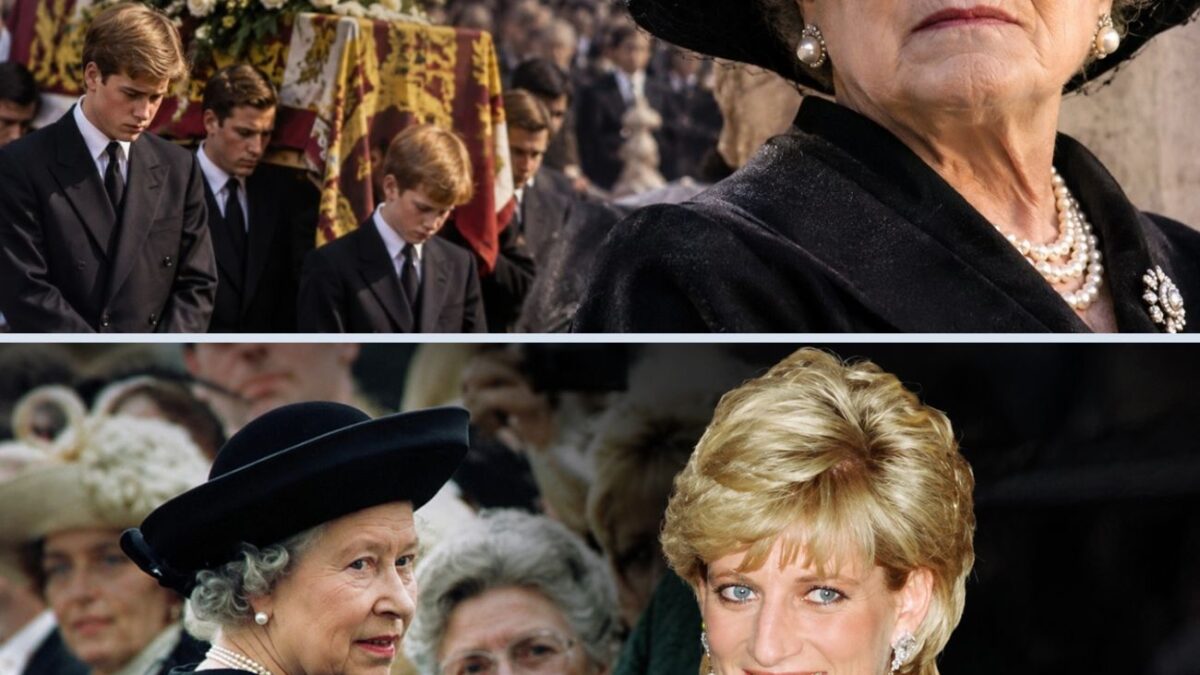
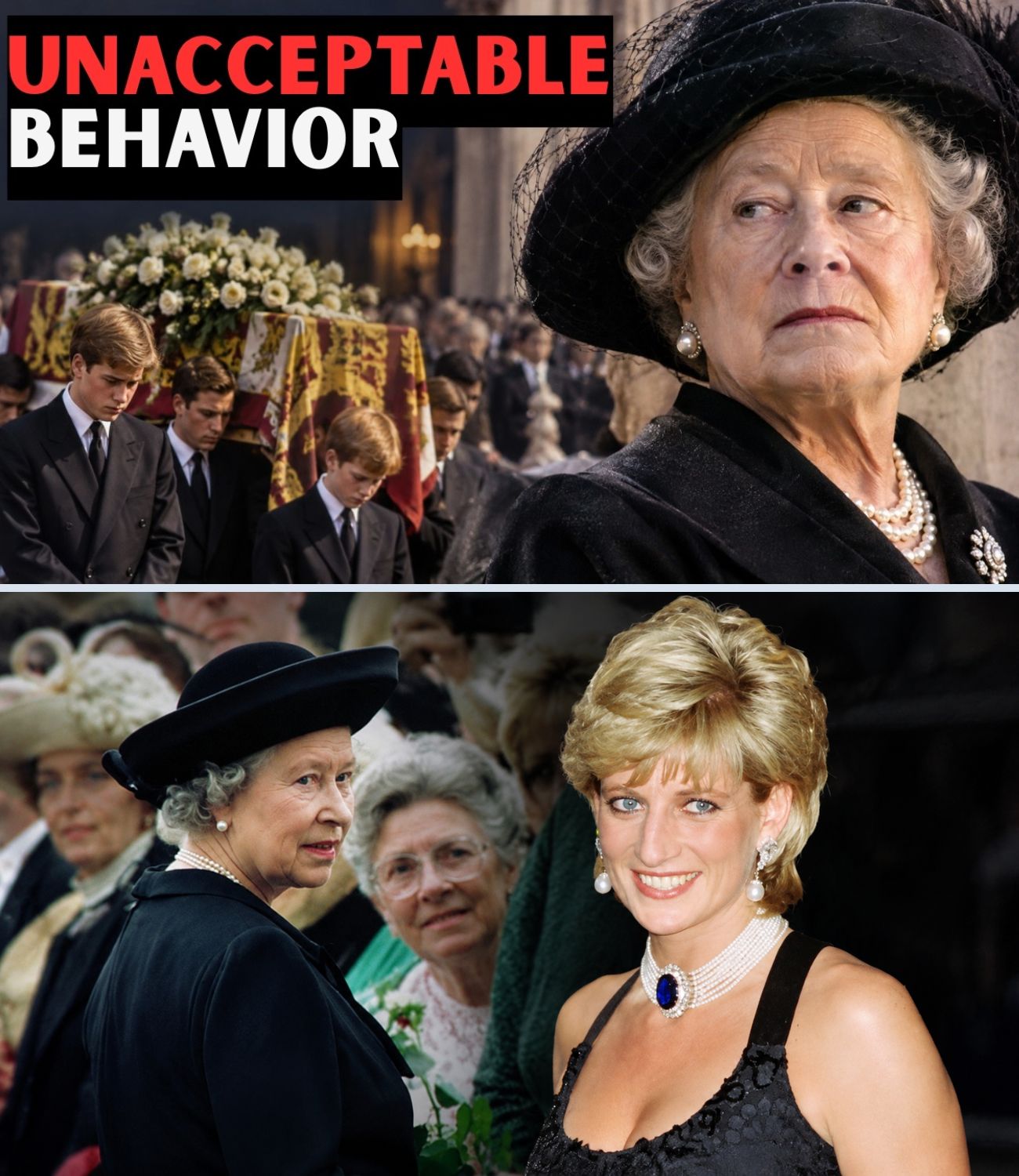
Inside Westminster Abbey on the 6th of September 1997, a 97-year-old woman sat in black among 2,000 mourners while an estimated two and a half billion people watched on television. She had been crowned in that same building 60 years earlier. Outside, strangers wept openly, threw flowers at a hearse, and demanded the monarchy answer for its silence.
Inside, the Queen Mother’s face was composed, still, and unreadable. Her great-grandsons, 15 and 12, had just walked behind their mother’s coffin. The applause that broke out during Earl Spencer’s address was reportedly the first ever heard at a royal funeral in the abbey. She did not join it.
The coldness was not a lapse. It was a philosophy. To understand what that composure actually meant, you have to leave the abbey and travel back 61 years to a moment that broke Elizabeth Bowes-Lyon’s life in half. On the 10th of December 1936, her brother-in-law, King Edward VIII, signed an instrument of abdication at Fort Belvedere in Surrey.
He chose Wallis Simpson, a twice-divorced American socialite, over the throne of the United Kingdom and the British Empire. And in doing so, he forced Elizabeth’s husband, Albert, Duke of York—a man with a pronounced stammer and no desire whatsoever for kingship—to become George VI. Elizabeth went from being the Duchess of York, comfortable and largely out of the spotlight at a safe distance from the crown, to Queen Consort virtually overnight.
She reportedly never forgave Wallis Simpson. Not for the affair, not for the social scandal, but for the transfer of weight. Her husband had not asked for the crown. He received it because one woman’s personal desires had been allowed to override institutional duty. The lesson Elizabeth drew from 1936 was absolute and permanent.
Personal emotion was the single greatest enemy of the monarchy. Private feelings publicly displayed could bring the entire system crashing down. She carried that conviction through the rest of her life: through wartime, through widowhood, through five decades as the matriarch of the most famous family on earth. And it is the single most important fact you need to understand about her behavior at Diana’s funeral.
George VI was crowned at Westminster Abbey on the 12th of May 1937, and Elizabeth was crowned beside him in a ceremony attended by over 8,000 people. The ritual took place in the same nave where six decades later she would sit through the funeral of the woman she reportedly considered the monarchy’s greatest modern threat.
The new Queen Consort understood something that day that would define her for the next 65 years of her life. The monarchy had just survived a near-fatal crisis caused entirely by one person’s refusal to separate private desire from public role. Her job, as she apparently saw it from that day forward, was to make absolutely certain it never happened again.
Not on her watch, not in her family, not under any circumstances. What followed was one of the most successful public image reconstructions in modern royal history. Elizabeth became the warm, accessible, perpetually smiling face of a monarchy that had been badly shaken by the abdication. She visited bombed neighborhoods during the Blitz alongside her husband.
She refused to leave London when Buckingham Palace itself was struck by German bombs in September of 1940. She famously remarked at the time that she was glad the palace had been bombed because it meant she could look the East End in the face. She waved at crowds. She smiled for cameras.
She charmed foreign dignitaries and factory workers alike. She attended race meetings. She hosted luncheons and dinners with apparent ease and genuine warmth. The British public adored her. Newspapers printed photographs of her smiling among rubble and wreckage. She became living proof that the monarchy was resilient, human, and emotionally present.
But behind the public warmth was a private discipline that bordered on ruthlessness. She understood the power of media better than almost anyone in the royal family. She understood that the monarchy’s survival depended entirely on projecting stability, continuity, and emotional control at all times and under all pressures, and she enforced that understanding privately within the family with an iron hand that the public almost never saw.
George VI died in his sleep at Sandringham House on the 6th of February 1952 at the age of just 56. He had been in declining health for years, his lungs ravaged by a lifetime of heavy smoking, and had undergone surgery for lung cancer the previous autumn. Elizabeth was 51 years old when she became a widow.
She reportedly believed the stress of kingship—the kingship that had been forced on him against his will by the abdication—had shortened his life considerably, perhaps by decades. That grief was real, deep, and lasting. But she processed it privately, maintained her composure in every public appearance, wore mourning as protocol demanded, and expected every other member of the family to do exactly the same without complaint.
Mourning was permitted. Visible emotional collapse was not. The institution came first. The institution always came first. She moved out of Buckingham Palace and into Clarence House on The Mall in London in 1953, where she would live for nearly half a century.
She maintained a household staff of approximately 50 people. She kept an active social calendar that continued remarkably well into her 90s. She developed and maintained a passionate and very expensive interest in horse racing, eventually recording 449 winners in her racing colors over more than five decades. And she reportedly accumulated a growing overdraft at Coutts Bank that would eventually reach an estimated 4 million pounds.
She spent freely and generously on entertaining, gifts, racing, and personal pleasures of every kind. But she controlled the family’s emotional economy with absolute austerity. Material indulgence was perfectly acceptable. Emotional indulgence was not. That distinction was not hypocrisy to her. It was doctrine. It was the price of keeping the crown intact.
Then in the summer of 1980, a young woman named Diana Spencer entered the picture. She was 19 years old. Prince Charles was 32. The Queen Mother reportedly approved of the match with enthusiasm. Diana was aristocratic, the daughter of an earl raised on the Sandringham estate in Norfolk within sight of the royal family’s own country retreat.
She was young, photogenic, apparently compliant, and seemed ideally suited to the role the family needed filled: a future Queen Consort who would produce heirs, appear gracefully in public, support the institution loyally, and above all else, keep her private feelings entirely private.
Diana visited Clarence House during the courtship and was received warmly. She visited Royal Lodge, the Queen Mother’s beloved country residence in Windsor Great Park, where the old woman entertained lavishly and held court among her own extensive circle. The Queen Mother reportedly found the young woman charming, appropriate, and suitably deferential.
The family had selected Diana partly because she seemed controllable, pliable, willing to be shaped by the institution she was entering. The Queen Mother approved for precisely the same reason. A bride who would do as she was told. A bride who would learn the rules and follow them. A bride who would not become another Wallis Simpson.
The wedding at St. Paul’s Cathedral on the 29th of July 1981 was watched by an estimated 750 million people worldwide. The enormous silk taffeta dress with its 25-foot train. The glass coach through cheering London streets. The crowds numbering hundreds of thousands. The balcony kiss at Buckingham Palace.
It looked like the monarchy at its most magnificent and assured. A global spectacle of institutional confidence. The Queen Mother had spent decades building exactly this kind of public display: warmth projected through ceremony, stability projected through scale, continuity projected through a young bride entering the institution with apparent joy and gratitude.
The system was working. The formula was holding. The problem was simply that Diana was not what they thought she was—or more precisely, she was not going to remain what they wanted her to be. The seemingly compliant bride would soon become something far more dangerous to the institution than anyone inside the palace anticipated.
The marriage deteriorated within its first two or three years, quickly and painfully. Diana struggled with bulimia, intense loneliness, and the dawning realization that Charles had maintained his relationship with Camilla Parker Bowles throughout the courtship and into the marriage itself. She lived in Apartments 8 and 9 at Kensington Palace, a grand but isolating set of rooms within the palace complex.
The Queen Mother lived at Clarence House less than a mile away. Two royal women in two London residences separated by a short walk and an unbridgeable philosophy of what it meant to be part of the royal family. Diana wanted emotional honesty within her marriage and from the institution around her. The Queen Mother believed emotional honesty expressed publicly, or even acknowledged openly within the family, was the most dangerous thing a royal person could offer the world.
It was a crack in the wall, and cracks spread. When Diana’s distress became visible to the outside world through the tears, the dramatic weight loss, the increasingly strained and unhappy public appearances, and the whispered reports from palace insiders, the Queen Mother reportedly viewed it not as genuine suffering requiring compassion or intervention, but as self-indulgence requiring correction—a failure of duty, a failure of character, a fundamental refusal to do what every royal consort before her had been expected to do without public complaint.
Endure privately, perform publicly, protect the institution above all personal cost. The Queen Mother had done exactly that through decades of difficulty. She had smiled through the Blitz, through her husband’s declining health, through his early death at 56, through decades of solitary widowhood in which she rebuilt herself as a public figure while grieving entirely in private.
She had swallowed her feelings and projected warmth for the cameras and the crowds. She expected Diana to do precisely the same. Diana could not or would not. The distinction mattered enormously to the Queen Mother. It did not matter at all to the millions of people who were beginning to see Diana as something the monarchy had not produced in generations: a royal figure who was visibly, vulnerably, recognizably human in her suffering.
Then Diana did something the Queen Mother had spent her entire adult life ensuring no member of the royal family would ever do. She went public with the private pain. Andrew Morton’s book, Diana: Her True Story, published in 1992 and secretly authorized by Diana herself through recorded interviews, told her version of the marriage in devastating and specific detail: the unhappiness, the isolation inside Kensington Palace, the eating disorder, the rival, the cold institution that had absorbed a young woman and offered her ceremony, wealth, servants, and titles in exchange for silence and obedience.
The Queen Mother reportedly viewed this publication as the worst breach of royal protocol since the abdication of 1936. The parallel to Wallis Simpson was, in the Queen Mother’s mind, explicit and damning. Another woman was prioritizing personal truth over institutional loyalty. Another woman was using public sympathy as a weapon aimed directly against the crown. The only difference—and it was a crucial one, that made Diana arguably more dangerous—was that she was doing it from inside the family rather than from outside.
The Panorama interview made everything immeasurably worse. On the 20th of November 1995, Diana sat in front of BBC cameras in Kensington Palace itself and spoke to approximately 23 million British viewers about the marriage, about Charles, about Camilla Parker Bowles, about the monarchy and its future. She was composed, carefully dressed, articulate, and absolutely devastating in her candour.
The Queen Mother had understood the power of media and public image better than almost anyone in the family for six unbroken decades. She had used warmth, smiles, accessibility, and carefully managed public charm to rebuild the monarchy after the abdication crisis of 1936. And now she watched a younger woman deploy the exact same tools, the same instinctive media mastery, the same natural ability to connect with an audience emotionally, but independently, without institutional permission, and directly against the interests and reputation of the family.
The student had not merely learned from the institution’s playbook. She had surpassed it completely and turned the weapon around. The Queen Mother reportedly wanted her expelled from the family entirely after the interview aired. The divorce came through on the 28th of August 1996 after months of negotiations overseen by the Queen herself, who had written to both Charles and Diana urging them to agree to an early divorce.
Diana lost the style Her Royal Highness. She remained Diana, Princess of Wales, but the three letters that had marked her full membership in the royal institution were formally stripped away. The Queen Mother reportedly supported this removal with enthusiasm. It was, in practical terms, a bureaucratic act—a change of styling on official documents, court circulars, and formal correspondence—but it carried deeply personal meaning.
The family had used this precise mechanism before. Wallis Simpson, Duchess of Windsor, had been denied the style of Royal Highness after the abdication, a slight that reportedly embittered her for life. The parallel between Diana and Wallis was deliberate and unmistakable to anyone who understood the institution’s internal logic. The monarchy had a proven method for handling women who threatened its stability: strip the formal status, reduce the official connection, control the narrative.
The problem in 1996 was that the mechanism no longer worked the way it had in 1936. Removing Diana’s title did not diminish her public standing in the slightest. It amplified public sympathy enormously. The machinery of institutional erasure, which had operated effectively on Wallis Simpson in a pre-television age, backfired completely and irreversibly in the modern media landscape that Diana had mastered.
The summer of 1997 arrived quietly. The royal family gathered at Balmoral Castle in Aberdeenshire for the annual August holiday, following the same pattern they had observed for generations. The Queen Mother was comfortable and contented there. The Scottish estate sat 500 miles from London, surrounded by grouse moors and Highland landscape, and the steady routine of entertaining, correspondence, afternoon walks, and weekly church services at Crathie Kirk suited her perfectly.
It was entirely insulated from public pressure. It was familiar, predictable, private, and calm. It was everything the London media world was not. Diana, meanwhile, was on holiday in the Mediterranean with Dodi Fayed. Photographs of Diana on yachts and beaches filled the tabloids that summer—images of freedom and glamour that existed in stark and deliberate contrast to the controlled routines of the Balmoral estate.
The two women existed in entirely separate orbits by this point, connected only by the institution they had fought over for more than a decade, and by the two boys they both, in very different ways, loved. Then on the night of the 30th of August, a telephone call came from Paris. Diana, Princess of Wales, was dead at 36 years old, following a car crash in the Pont de l’Alma tunnel.
The family was informed at Balmoral in the early hours of the 31st of August. And what happened next inside that castle over the following six extraordinary days between Diana’s death and her funeral became the worst public relations crisis the British monarchy had faced since the abdication crisis 61 years earlier. By multiple biographical accounts citing sources from within the royal household, the Queen Mother was the single most unyielding voice behind the family’s initial response to the disaster.
She reportedly told the Queen that the family should not return from Balmoral to London. She viewed the public mourning sweeping the country as hysteria—temporary, irrational, beneath institutional response. Dignifying it with a royal return to London would set a dangerous precedent that could never be retracted. The monarchy did not bend to public emotion. The monarchy maintained its composure and waited patiently for public emotion to exhaust itself and pass.
This was the lesson of 1936 applied with full and unyielding force to 1997. Personal feelings, even the entire nation’s collective personal feelings, were subordinate to institutional composure, established protocol, and the long view of monarchical survival. The bare flagpole at Buckingham Palace became the most visible and incendiary symbol of the family’s refusal to acknowledge what was happening.
No flag flew at half-mast because protocol dictated that the royal standard only flew over the palace when the sovereign was physically in residence, and the Queen was 500 miles away at Balmoral. The Queen Mother reportedly supported strict and absolute adherence to this established rule. The empty flagpole enraged the country. It looked like deliberate indifference. It looked like institutional contempt.
An estimated 1 million bouquets of flowers were left outside the gates of Kensington Palace, Diana’s former home, creating a sea of cellophane, handwritten cards, candles, and stems that stretched across the lawns and spilled onto the pathways. The scent of decaying flowers reportedly became overwhelming within days. Crowds gathered at Buckingham Palace and demanded visible mourning from the family. Newspaper headlines turned openly hostile. Opinion polls showed a clear majority of the British public believed the Queen should return to London immediately and publicly acknowledge the national grief.
The Queen Mother reportedly counseled patience and firmness throughout:
“Wait it out. The institution has survived worse than public tears and newspaper editorials.”
But Tony Blair, the Prime Minister, who had called Diana “The People’s Princess” within hours of her death in a phrase that immediately entered the national vocabulary, understood something the Queen Mother either could not see or would not accept.
The rules governing the relationship between the monarchy and the British public had fundamentally changed. Media culture had changed. Public expectation of emotional authenticity had changed. Diana herself had changed them irrevocably. Blair’s office pressured the palace relentlessly through back channels.
The family continued to resist. Six days passed. Each day the public anger intensified visibly. Each day the Queen Mother reportedly held the line. And each day the monarchy edged closer to a crisis of legitimacy and public confidence that composure and protocol alone could not resolve. The old guard lost.
On the 5th of September 1997, the evening before the funeral, Queen Elizabeth II appeared on live national television from a room inside Buckingham Palace and addressed the country directly. She spoke, as she carefully phrased it, as a grandmother. She acknowledged the public grief. She praised Diana’s energy and commitment. She expressed admiration for the way Diana had handled her charitable work.
It was precisely the kind of visible, personal, openly emotional public statement that the Queen Mother’s philosophy would never have permitted under any circumstances. The daughter broke the mother’s fundamental rule in order to save the institution the mother had spent six decades protecting. The strategy that had preserved the monarchy since 1936 was abandoned in a single evening broadcast.
The next morning before the funeral began, a Union flag was raised over Buckingham Palace and lowered to half-mast. It was the first time in recorded history that any flag other than the royal standard had flown over the building. The Queen Mother reportedly viewed both concessions as unnecessary and dangerous surrenders of established protocol to the pressure of raw public emotion. But her daughter had already overruled her.
The family entered Westminster Abbey for the funeral. The procession moved from Kensington Palace through Hyde Park along Constitution Hill, past the gates of Buckingham Palace where the half-masted Union flag now flew, down The Mall, through Horse Guards, and into the abbey. The gun carriage bore Diana’s coffin, draped in the royal standard with three wreaths of white flowers. On one of them resting among the lilies, a small card in a child’s handwriting read simply:
“Mommy.”
Prince William, 15 years old, and Prince Harry, just 12, walked behind the coffin alongside their father, Prince Charles, their grandfather, Prince Philip, and their uncle Earl Spencer. Their young faces were visible to the entire watching world. Their great-grandmother was already seated inside the abbey, composed, dressed in black with hat and veil, present in the building where she had been crowned 60 years and 4 months earlier.
The visual contrast between the boys’ visible anguish and the old woman’s absolute stillness was, depending entirely on who was watching and what they believed about royal duty, either the finest remaining expression of institutional discipline, or the most damning piece of evidence for institutional detachment from basic human empathy.
Earl Spencer delivered a funeral address that was aimed like a weapon directly at the institution the Queen Mother had spent her entire life building and defending. He spoke about Diana’s compassion and her natural warmth toward the vulnerable. He spoke about her extraordinary ability to connect with ordinary people suffering from illness and isolation. And then he made a pointed statement about Diana needing no royal title to generate her particular brand of magic.
It was a direct and unmistakable public reference to the family’s removal of her Her Royal Highness status after the divorce. The words were a calculated challenge delivered from a pulpit inside the royal family’s own most sacred ceremonial church. And then something extraordinary happened—something that had reportedly never happened before at any royal funeral in Westminster Abbey in its entire history stretching back nearly a thousand years: the congregation applauded.
The sound began outside the abbey among the vast crowds listening on loudspeakers in the surrounding streets and parks, and it rolled through the open west doors and into the nave itself like a wave. Inside the building, mourners joined in enthusiastically. The applause was sustained and unmistakably loud in a space designed for silence, prayer, and solemn ceremony.
Accounts from biographers differ on the Queen Mother’s exact visible reaction. Some describe what appeared to be displeasure briefly crossing her face. Others describe complete and total stillness, as if the sound were happening in another room entirely and had nothing to do with her. Both descriptions may be accurate at different moments during the sustained ovation. What is entirely consistent across every major biographical account is that she did not join the applause.
That applause was the sound of the Queen Mother’s lifelong philosophy being publicly and unmistakably rejected inside her own coronation church. She had taught the family for 60 years that composure equaled strength, that silence equaled dignity, that the institution must never, under any pressure or provocation whatsoever, bend to emotional demands from the public or from anyone within the family itself. And on the 6th of September 1997, 2,000 people broke that rule while she sat among them in the same building where she had been crowned queen.
The funeral ended. The congregation filed out of the abbey in near silence, the echoes of applause still hanging in the air like something that could not be taken back. Diana’s coffin was driven north to Althorp, the Spencer family estate in Northamptonshire, where she was buried on a small island in the center of an ornamental lake known as the Round Oval. The burial was private, maintained entirely by the Spencer family, deliberately and permanently separate from the royal family’s official burial sites at Windsor.
The Queen Mother returned to Clarence House on The Mall and closed the door behind her. She would live another 4 years and 7 months after that funeral. Her daily routine continued with remarkable and deliberate consistency throughout. She attended race meetings at Cheltenham, Ascot, and Sandown Park. She entertained guests at Clarence House and at Royal Lodge in Windsor. She maintained her correspondence with friends and family. She made public appearances well into her 100th year and beyond. She kept her household staff of approximately 50 people fully employed.
If the crisis of September 1997 had inflicted any wound on her understanding of the monarchy she had dedicated her entire adult life to protecting, she showed absolutely no public sign of it whatsoever. The institution itself, however, had quietly begun to retire her philosophy, even while she was still alive and still influential. The flag protocol she had fought so hard to maintain became permanent and unquestioned. The Union flag now flies at Buckingham Palace whenever the sovereign is not in residence and is lowered to half-mast for every significant royal or national death.
The family’s entire public relations approach shifted under the pressure of the Blair era toward greater visible emotion, more accessible personal media appearances, and a willingness to acknowledge private grief in public that the Queen Mother would almost certainly have considered both unnecessary and actively dangerous to the institution.
The public still loved her, though. The woman whose behind-the-scenes counsel had nearly produced a constitutional crisis in September of 1997 remained, as an individual, one of the most personally popular members of the royal family until the day she died. The public separated the institution’s perceived failure from the individual’s lifelong charm and warmth. They forgave the family and continued to adore the smiling grandmother figure who waved from carriages, backed winners at the races, and was rumored to enjoy a gin and Dubonnet before lunch—which was, if you think about it carefully, exactly the kind of dangerous distinction the Queen Mother’s own philosophy was specifically designed to prevent.
She believed the institution and the individual were inseparable. That was the whole point of her life’s work. The public proved her wrong by loving her while condemning the family she had shaped. The Queen Mother died on the 30th of March 2002 at the age of 101, seven weeks after the death of her younger daughter, Princess Margaret, who had died on the 9th of February at the age of 71. The Queen Mother had buried her own child and then followed her within two months.
Her funeral was held at Westminster Abbey on the 9th of April—the same building, the same nave, the same ancient stone floor. The crowds gathered outside were respectful and genuine in their grief. The mourning inside was dignified, orderly, and composed. The ceremony was exactly what she would have wanted and exactly what she would have designed.
But nothing about her funeral approached the volcanic emotional intensity of Diana’s five years earlier. There were no mountains of flowers piled against palace gates, no hostile newspaper headlines demanding answers, no crisis of public confidence in the monarchy, no applause inside the abbey. She received in death exactly what her philosophy had always demanded in life: a proper farewell conducted with composure, witnessed with appropriate restraint, unmarked by visible emotional excess of any kind.
She was buried in the King George VI Memorial Chapel at St. George’s Chapel, Windsor Castle, beside her husband, the king whose early death she had blamed on the abdication for 50 years. Diana remained on the island at Althorp, maintained by the Spencer family, permanently separate from any royal burial site. Two women, two graves: one placed inside the institution’s walls forever, exactly where she had always insisted on being; one placed deliberately outside by a family that had been pushed away by the philosophy the other woman spent her life enforcing.
Clarence House did not remain a memorial to the Queen Mother for long. After her death, the residence became the official London home of Prince Charles and Camilla Parker Bowles. The home of the woman who had fought hardest against Diana’s influence on the monarchy became, within a few years, the home of the woman Diana had identified publicly as the cause of her unhappiness. The building adapted without sentiment or ceremony. The institution continued on without pause.
The Queen Mother’s personal rooms were modified and redecorated for new occupants. Her presence faded gradually into the walls and architecture. Today, Clarence House opens to visitors during summer months. Tourists walk through rooms where the Queen Mother lived and entertained for nearly 50 years. And Diana’s name is mentioned inside those rooms more frequently than the name of the woman who actually occupied the building for half a century.
The flag protocol the Queen Mother resisted is now standard practice. The public broadcasts she considered unnecessary are now expected. The visible emotional engagement she viewed as institutional weakness is now widely understood as institutional survival. The monarchy adapted by abandoning almost everything the Queen Mother believed was essential to its preservation. And the monarchy survived—not because of her advice, but because her daughter chose on the 5th of September 1997 to break the rule her mother had enforced without a single exception since 1936.
Westminster Abbey still stands. Visitors walk through the nave without knowing that the same stones held a coronation in 1937 and a funeral in 1997. They do not feel the distance between those two ceremonies: 60 years, two women, one philosophy tested to its absolute breaking point.
The Queen Mother’s composure at Diana’s funeral was not the absence of feeling. It was the presence of a decision made 61 years earlier in the same building when another woman’s personal desires had threatened the crown. She decided then that the institution mattered more than any individual inside it. She held that line at the funeral. She held it while her great-grandsons walked behind their mother’s coffin. She held it while the congregation applauded a speech that challenged everything she had spent her life building. She held it while the entire country wept for a woman she reportedly believed had betrayed the family.
The monarchy is still here. The flag flies at half-mast now whenever it is supposed to. The Queen Mother would not have approved.
You Might Also Enjoy

“We Thought They Would Negotiate”—What Argentine Soldiers Said When The British Attacked Goose Green

“You’ll Never Finish My Ruck March, Limey” — US Sergeant Who Challenged the SAS, Then Fell Out First






