The Real Life of King Charles is Even MORE Disturbing Than You Think
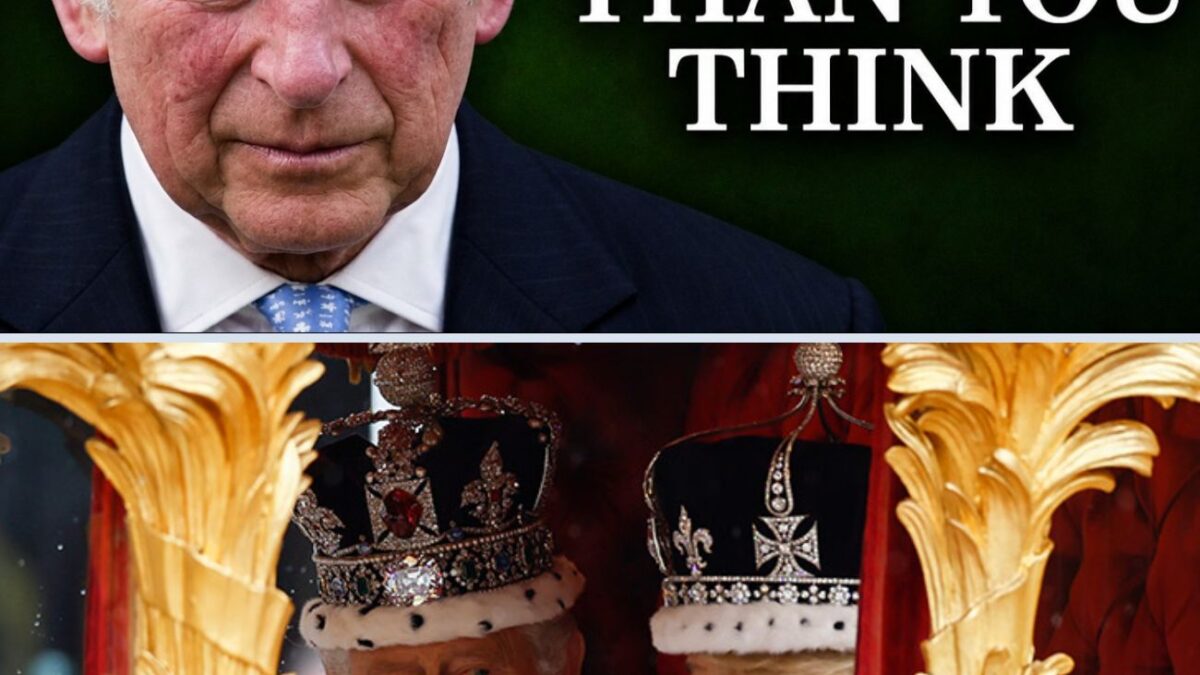
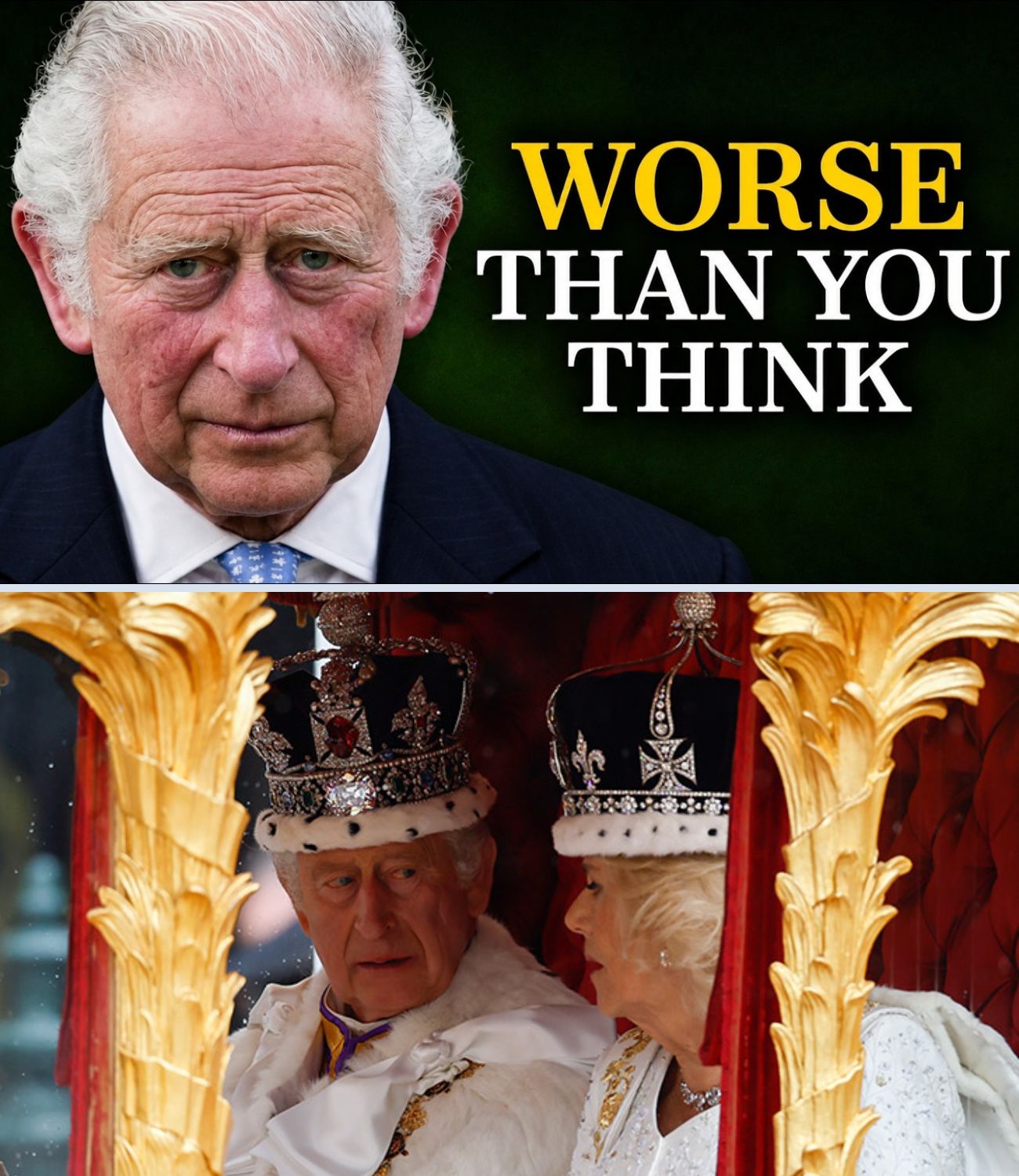
The crown was resized to fit her head. May 6th, 2023. Westminster Abbey. Queen Mary’s crown altered, lowered onto Camila. Three rows back sat Harry, half hidden behind a feathered hat. He was gone before the balcony. You know the familiar version, the wronged princess, the mistress, the cold prince. Here’s what it leaves out.
In 2005, Clarence House promised in writing she would be called Princess Consort. That promise was quietly withdrawn, and by 2023, Diana’s famous interview had been disowned, its award returned, its broadcast rights surrendered. The archive changed hands. To understand how, start with a 1974 letter. It was written by Louisie Mountbatton, Charles’s greatuncle, the man the prince called his honorary grandfather.
And it survives because Jonathan Dimbleby was given access to Charles’s private correspondence for the authorized biography published in 1994. The advice is specific. Mountbatton told him to enjoy himself, to have his affairs, to get all of that out of his system, and then to marry a suitable, attractive, sweet, charactered girl before she had a chance to meet anyone else she might fall for.
Read that last clause again, before she meets anyone else. The qualification isn’t love, it’s availability. The girl is being described the way you’d describe a property that hasn’t been viewed yet. This is the operating instruction at the center of everything that follows. Not cruelty, not coldness. A rule handed down affectionately by a man Charles trusted more than his own parents that split his romantic life into two separate categories with two separate functions.
One category was for feeling, the other was for the succession. And by 1974, he had already lost the first one. Camila Shand married Andrew Parker BS on the 4th of July 1973 at the guard’s chapel in Wellington barracks. It was a society wedding of the kind London still turned out for household cavalry, a princess in the congregation, the Queen Mother sending a gift.
Charles was not there. He was at sea with the Royal Navy in the Caribbean aboard HMS Manurva. He had known Camila since roughly 1971. Friends of both later said the relationship had been serious in the way that matters at that age, which is to say it was easy. She was a year and a half older. She had been raised in the same horse and hedro world.
She teased him. And she didn’t audition. He didn’t fight for her. That’s the part worth sitting with. He went to see. She married a household cavalry officer she’d been involved with on and off for years. and Charles wrote about it afterward in the terms of a man who assumed the matter was closed. Biographers disagree about how close the two came to an engagement before 1973.
Dimby suggests Charles hesitated. Others suggest he was never encouraged to move, but nobody disputes the outcome. He complied. He accepted the ruling. He let it go. Hold that pattern because it repeats for the next 30 years with only one variation. He complies first and relitigates later.
Always later, always after the people who made the ruling are gone. The man who made this particular ruling died on August 27th, 1979 when the IRA detonated a bomb on his fishing boat off Mulligmore in County Siggo. Mountbatton had been in practical terms Charles’s private life manager, the one adult in the system he talked to about women, the one who lent him broadlands for weekends, the one whose letters he kept.
After that funeral in September 1979, the prince was 30 years old, unmarried, heir to the throne, and structurally alone in a household staffed by people who worked for his mother. The pressure that followed wasn’t subtle and it wasn’t private. Fleet Street had turned the search for a Princess of Wales into a running commercial serial. Photographers were staked outside the flats of every girl he was seen with.
Anna Wallace, Sarah Spencer, Deina Sheffield, Jane Ward. Each one surfaced. Each one was priced and rated in the papers. Each one was eliminated. usually because something in her history disqualified her. Sarah Spencer talked to journalists and was finished. Deina Sheffield had a former boyfriend who sold his account.
The disqualifying material was almost always the same material. A past Mount Batton’s instruction had been written 5 years earlier as a vunular advice. By 1980, it had hardened into a job description with a very short list of eligible applicants. Which brings us to a hay bale in a field in Sussex, July 1980. The setting was a house party at Pworth after a polo match.
And the account of what was said there comes from Diana herself, recorded on tape in 1991 and published the following year. She was 19. She had met Charles before in 1977 in a plowed field at Althorp when he was there as her older sister’s boyfriend. This time she sat beside him and talked about Mount Batton’s funeral, about watching him walk up the aisle, and thinking he looked desperately sad, and that he needed someone to look after him.
Whether the words were exactly those, we have only her version, but the effect is corroborated by what happened next, which is the part that isn’t in dispute. Within weeks she was invited to Balmoral for the Braar gathering in September 1980 and the invitation came through the correct channels which in that family means something.
She was staying with her sister at Craighan Lodge on the estate. She fished, she walked, she sat on the heather in the rain without complaining. She was photographed across the river D by a reporter who had crawled in on his stomach and she passed. Understand what passing meant? The checklist was not affection.
The checklist was Protestant, aristocratic, no serious romantic history, no divorced parents on the wrong side of a scandal. And on that last point, the family made an exception. It would not have made for a commoner because the Spencers were the Spencers. Her father was the eighth earl. Her grandmother, Ruth, Lady Fermoy, was one of the Queen Mother’s closest companions and a woman of the household.
Diana had grown up at Park House on the Sandringham estate, which the Spencers rented from the Queen. The two families had been in and out of each other’s houses for generations. That’s the detail people skip. The Windsor were her landlords. She was raised inside the system that selected her, and she’d watched it from the servant side of the fence since childhood.
Close enough to know the rules, not close enough to be protected by them. There was something else in that childhood that shaped everything afterward, and I’ll give it to you in one line because that’s all it needs. Her mother left Park House in 1967 when Diana was six. The custody battle that followed was decided in her father’s favor, and one of the witnesses who testified against her own daughter was Ruth, Lady Fermoy, Diana’s grandmother, the queen mother’s lady in waiting, the family court and the royal household over overlapped in one person.
So when Lady Fermoy later took her granddaughter aside before the engagement and warned her that royal life was not what she imagined that these people’s sense of humor and their way of life were different, that she might find it strange. That was not a stranger’s caution. That was someone who had already chosen the institution once.
Diana went ahead anyway. She was 19. She had left school without passing her exams. She was sharing a flat in Kolhern Court that her parents had bought her and she was working part-time at a kindergarten in Pimlo. Against that, she was being offered the most visible position available to a woman in Britain.
The engagement was announced on February 24th, 1981. The ring came from Gard, a 12 karat salon sapphire surrounded by 14 diamonds priced at around £28,000. Diana chose it herself. That has often been told as charm. The girl who picked the biggest one in the tray. The relevant fact is the tray. The ring was not commissioned, not designed, not made for her.
It was a catalog item from Gard’s existing collection. The kind of piece any customer with the money could have ordered. There is a photograph from that day of her hand on his arm. The sapphire turned to the cameras. It became one of the most reproduced images of the decade and every element of it is genuine except the implication.
Then came the interview and the BBC, the two of them on a garden step at Buckingham Palace and the question everyone remembers.
Are you in love?
Diana said, “Of course.”
Charles said, “Whatever in love means.”
It has been quoted ever since as the coldest six words in modern royal history. And I think the standard reading is slightly wrong in a way that matters.
Listen to the full answer. And he’s fumbling, hedging, doing the thing he did whenever a question touched feeling in public. He seems to be saying that love is hard to define. He is also very visibly not answering. Both things are true. That’s the shape of this entire story. a man who kept telling the truth in a register nobody was willing to hear while the institution around him printed something simpler.
Between that interview and the wedding, Diana moved into Clarence House and then Buckingham Palace and the record of those 5 months is thin in official terms and vivid in her own. She has described being left almost entirely alone in a household with no instructions, no allies, and no defined role. Contemporary staff accounts broadly support the neglect if not the emotional temperature.
And then there is the bracelet. Her account given on tape and published in 1992 is that shortly before the wedding, she walked into the office of Michael Colbornne, Charles’s assistant private secretary, and found a parcel. Inside was a gold chain bracelet with a blue enamel disc engraved with two letters G and F.
Glattis and Fred, the private nicknames Charles and Camila used for each other. It was a gift and it was going out, not coming in. Diana said she confronted him. She said he gave it to Camila anyway days before the ceremony. Every version of that story traces back to one interested witness who was by then fighting a public war, but the nicknames are independently documented.
The bracelet was later photographed on Camila’s wrist, and no one on Charles’s side has ever produced a competing explanation for what the parcel was. 9 days later, 750 million people watched her walk up the aisle of St. Paul’s Cathedral. The dress had a 25- ft train, and it had to be crushed into the glass coach to get her there.
When she stepped out at the west door of St. Paul’s, the silk was creased. That detail survives in the memory of the designers, Elizabeth and David Emanuel, who spent the drive worrying about it. St. Paul’s had been chosen over Westminster Abbey for a practical reason. Capacity. The Abbey could seat around 2,000. St.
Paul’s took 3 half thousand and the route from Buckingham Palace was longer which meant more crowd more camera time more of the thing the wedding was actually for. The BBC and ITV both cleared their schedules. The global figure usually given is 750 million viewers which was at the time the largest live audience for any event in human history.
Inside the guest list was a diagram of the system. heads of state, crowned heads of Europe, the prime minister, the Archbishop of Canterbury, and a congregation of Windsor relatives sitting in strict order of precedence. Nancy Reagan represented the United States. The Spencers were there in force, but the arrangement of the building made the hierarchy plain enough.
This was not two families joining. This was one family absorbing a woman. She got his names in the wrong order. Standing at the altar 19 days past her 20th birthday, she said, “Philip Charles Arthur George.”
He, for his part, garbled the line about worldly goods. The papers found both slips endearing and ran them as evidence of nerves and youth, which is exactly what they were.
Camila Parker BS was in the congregation. So was her husband. Andrew Parker BS rode in the procession as a serving officer of the household cavalry in uniform on a horse. The honeymoon started at Broadlands in Hampshire, Mount Batton’s house, where the Queen and Prince Philip had spent their own wedding night in 1947. The choice was traditional and also given who had drafted the instructions Charles was now executing, faintly ceremonial.
From there they flew to Gibralta and joined the royal yacht Britannia for a cruise through the Mediterranean. What happened on that honeymoon exists in two versions and only one of them is on the record in the participant’s own words. Diana’s account recorded in 1991 and published the following year includes two objects.
The first was a set of cufflinks, two intertwined seas, which she said Charles wore at a dinner aboard Britannia, and which she said Camila had given him. The second was a pair of photographs of Camila that she said fell out of his diary at Broadlands. Take those claims for what they are. A woman speaking on tape 9 years later while engaged in a public struggle over how her marriage would be understood.
She is a firstirhand witness and an interested one. Charles never publicly disputed the cufflinks. He never publicly confirmed them either. What we can say with confidence is that the nicknames were real, the friendship was continuous, and the surviving correspondents and staff testimony from the 1980s do not describe a man who cut contact with Camila Parker BS in July 1981.
After Britannia, they went to Balmoral, not for a week, for most of the rest of the summer. This is where the shape of the marriage announced itself, and it had nothing to do with romance. Balmoral is the family’s Scottish estate, 50,000 acres. And the Windsor’s routine there is close to lurggical, stalking, fishing, picnics, the same guests, the same hills, the same dinners, year after year, from August into October.
Charles had been going since infancy. It was the place he was happiest and the place he was least available. Diana was 24 weeks married, several weeks pregnant, and installed in a Highland house full of her husband’s relatives and his mother’s staff for 2 months. She was photographed at Balmoral looking well and rested.
She also, by multiple accounts, including her own, spent long stretches unwell and in her room, and the household’s response was to treat it as a temperament problem. By November 1981, the pregnancy was announced. The announcement solved the succession question in under 16 months. It did not solve anything else.
Now look at the property because property is where the power in this marriage is easiest to see. Highrove House in Glostershare was bought in 1980 by the Duchy of Cornwall, the estate that funds the Prince of Wales for a reported £865,000. That purchase happened before the engagement, before Diana was a candidate.
Charles selected a country house without reference to a wife, and the house he selected sat roughly 11 mi from Bolahhide Manor, where Andrew and Camila Parker BS were then living. I want to be careful here because the proximity has been treated in a lot of retellings as proof of intent, and it isn’t.
That corner of Glstershare is the heart of the Buffett Hunt country. Half the people Charles rode with lived within 15 mi of each other. The relevant point isn’t conspiracy. It’s simpler and colder than that. Highrove was chosen for his life, his garden, his hunting, his friends, his circle, and then a wife was added to it.
She had no house of her own. She never had one. Kensington Palace Apartments 8 and nine were crown property, granted, not owned. Hygrove belonged to the duche. Balmoral and Sandringham belonged to the queen personally. Every roof over her head for the next 15 years was allocated to her. She had no independent income either. The Spencer money was her father’s and then her brothers.
The Elder and Alth passed to Charles Spencer in 1992. Diana’s entire financial existence ran through the duche of Cornwall, which is to say through her husband’s office, and the offices were separate. This is the structural detail that ends up mattering more than any affair. The Prince of Wales had his own household, private secretary, press secretary, deputies, the whole apparatus.
Diana was given staff, but the staff reported into a system built around him, and the ones who became loyal to her tended not to last. Oliver Everett, a rising foreign office diplomat who was secounded to be her private secretary, was gone within about 2 years, pushed out after the relationship soured. Edward Aden, Charles’s private secretary and the son and grandson of private secretaries to previous monarchs, resigned in 1985.
A marriage where each partner has a press operation is not a marriage. It is a coalition with two spokesmen. That arrangement was in place from the beginning and within a decade it would be aimed inward. Prince William was born on June 21st, 1982 at St. Mary’s Hospital, Paddington. Charles was present at the birth which was not usual for his family and was noticed in the hours afterward.
He was by every account delighted. What followed was harder and it is documented in her own words. Diana described a severe post-natal depression through the second half of 1982. Described being unable to cope, being prescribed anti-depressants she resisted taking, being regarded by the household as a problem to be managed.
She also spoke in the 1991 tapes and again on television in 1995 about bulimia which she said began in the engagement period and worsened badly in those years. The systems response is the tell. There was no obvious mechanism for a young woman inside that household to get sustained help without it becoming an institutional event. Doctors came.
Advice was offered. The dominant instinct from the top of the family down was containment. Charles’s behavior in this period is where one-dimensional villain falls apart. He brought in doctors. He was by several staff accounts frightened and out of his depth. He was also a man who had been raised to believe that emotional difficulty was handled privately and stoically.
married to someone whose difficulty was neither private nor stoic, and his tolerance ran out faster than her illness did. Then the public story and the private story split for good, and it happened on a tour. In March 1983, they went to Australia and New Zealand for 6 weeks. They took William, who was 9 months old, which broke precedent and was Diana’s doing.
The tour was a phenomenon. Crowds in Brisbane and Sydney were enormous, and they were not there for the heir to the throne. There are contemporary recordings of walkabouts where the disappointment is audible. People on the side of the street that Charles took, groaning, calling out that they wanted her. He heard it.
He made jokes about it in speeches, the dry, self-deprecating kind, and the jokes got less funny as the tour went on. He told friends afterward, and Dimbley reports this from his own conversations with Charles, that he found it bewildering and difficult to be the one nobody had come to see. She was 21 and had been in the job for 20 months.
Here is the reclassification, and it’s the first real one. The marriage had been assembled as a dynastic transaction. a suitable girl secured before she met anyone else, producing an heir inside two years. That transaction executed perfectly. What nobody in the household had modeled was that the acquired asset would turn out to be, in pure public terms, more valuable than the principal.
From 1983 onward, the most powerful thing Diana possessed was the only thing she had brought with her that the Windsor could not allocate, confiscate, or fund the camera’s preference. That is real power. It is also on its own useless power because it could not buy her a house, change her staff, alter her schedule, or make her husband come home.
It could only be spent in public, and spending it in public damaged the man she was married to. By 1984, the tabloids had a running theme about the Prince of Wales being upstaged in his own life, and the private consequence was immediate. Tours began to be planned with separate programs, separate engagements, separate cars.
What was sold to the press as an efficient division of labor, she does the hospital, he does the trade delegation, was also a method of ensuring the two of them appeared in front of the same crowd as rarely as possible. Prince Harry was born on September 15th, 1984. Diana later said the months before his birth were the closest she and Charles ever were.
She also said that something in Charles’s reaction in the delivery room, a remark about the baby’s coloring and about it being another boy, marked the point after which the marriage, in her telling, effectively finished. The remark, if it was made as she described it, was thoughtless rather than monstrous. She treated it as a verdict. Both of them independently and much later dated the real end of the marriage to around 1986.
Charles told Dimby the marriage had irretrievably broken down by then. Diana said the same thing to different people at roughly the same point. Which means that for the next six years, two general elections, a dozen foreign tours, three royal weddings, and hundreds of photographs of the four of them smiling on the steps of aircraft.
The most famous marriage in the world was being performed by two people who had privately agreed it was over. The performance held. Then a telephone line in Glostershare stopped being private. The recording was made on the night of December 18th, 1989. A 6-minute conversation between Charles and Camila, intercepted off a mobile phone network, taped by someone whose identity has never been established and whose method has never been satisfactorily explained.
It sat somewhere for 3 years. Then in January 1993, it was printed first in Australia, then in the British tabloids and transcribed in full, including the passage about reincarnation and the trousers that has been a punchline ever since. Strip out the joke and read what’s underneath because the joke buried the evidence.
The conversation is domestic. They talk about when they can next speak, about whose house is free, about a diary. He says he needs her advice on a speech. She tells him his work is what she admires most about him. They say good night roughly a dozen times, neither willing to hang up. It is not the tape of an affair. It is the tape of a marriage, the wrong one.
That’s what made it constitutionally lethal rather than merely embarrassing. The heir to the throne, the future supreme governor of the Church of England, was on record in a settled, tender, operationally routine relationship with a married woman, not a lapse, a parallel household conducted by telephone.
There was a matching recording on the other side, and it came out first. In August 1992, The Sun published a tape of Diana talking to James Gilby recorded on New Year’s Eve 1989, three weeks before the Charles tape. On a separate interception, he calls her Squidgy repeatedly. She talks about being tortured by this family, about not wanting to get pregnant, about her marriage as something she endures.
Two intercepted calls made within a month of each other at the end of 1989, revealing two people each emotionally invested elsewhere. The symmetry is almost comic. The consequences were not symmetrical at all. And the reason is the thing this whole story turns on. Charles had an institution. Diana had the public. Before either tape surfaced, she had already made her move.
and it was the single most aggressive act of her life. In 1991, she began cooperating with a book. The mechanics matter. Andrew Morton, a tabloid royal reporter, could not approach her directly without it being noticed. So, the questions went in and the answers came out through Dr. James Colthurst, a friend of Diana’s since 1986, who cycled to Kensington Palace with a list and came away with cassettes. six tapes.
Her voice, her account, recorded in her own sitting room and smuggled out by a man on a bicycle. Diana, her true story, was published in June 1992. The palace strategy was immediate denial. Courtiers briefed that Morton had invented it, that he’d relied on disgruntled friends, that the princess had nothing to do with it.
The Press Complaints Commission chairman called the coverage an odious exhibition of journalists dabbling their fingers in the stuff of other people’s souls. Then the Sunday Times ran a photograph of Diana visiting the mother of Carolyn Bartholomew, one of the named sources, which was a signal to everyone in Fleet Street, that the book carried her blessing.
The full confirmation came in 1997 after her death when Morton published the transcripts and the tapes themselves became public. The denial had been false. She had authored it. Understand what she put in that book. Bulimia, suicide attempts, the Camila relationship named it was the most damaging document ever voluntarily released about the British monarchy by a member of it.
and she released it about herself because her own suffering was the only ammunition she owned. That was the trade. She detonated her privacy to break the story’s monopoly, and the story from then on was hers. The queen’s response came 6 months later in a speech at Guild Hall on November 24th, 1992 with a throat infection and a voice that had gone. She called it an anis horrib.
Four days earlier, Windsor Castle had caught fire. Two royal marriages had already collapsed that year. Anne divorced, Andrew separated. The public was arguing about who should pay for the castle repairs. Between the fire and the speech on November 2nd, Charles and Diana flew to South Korea for a 5-day tour.
Those photographs are the ones people remember. Two people beside each other at a war memorial, at a banquet, on a walkabout, neither looking at the other, both faces set. British papers called them the Glums. A tour that had been designed as a demonstration of unity functioned instead as a public autopsy. Here is the part that changes what you’re looking at.
Diana had asked not to go. Charles had asked that the tour be cancelled. Both had told their offices the trip was pointless. The decision to proceed was taken above them. The foreign office wanted it. The palace wanted the display. And the two of them were flown 11 12,000 mi to stand next to a person they had separately informed their staff they could no longer stand next to.
Look at the career photographs again. That isn’t a couple failing to hide their misery. That’s a couple who filed an objection and were overruled. Five weeks later, it ended. On December 9th, 1992, the prime minister, John Major, stood in the House of Commons and read a statement announcing that the Prince and Princess of Wales had decided to separate.
He said the decision had been reached amicably. He said they had no plans to divorce. And then he added the sentence that gave the whole thing away. There is no reason why the Princess of Wales should not be crowned queen in due course. That was not a throwaway. It was the government of the United Kingdom on the floor of the Commons attempting to keep a constitutional option open for a marriage that both parties had privately abandoned 6 years earlier.
The separation was real. The fiction being defended was that it changed nothing. It changed everything and everyone involved knew the reason why and nobody would say it out loud. The Church of England. This is the constraint that explains the next four years and it is not abstract. The sovereign is supreme governor of the church.
The church did not then permit the remarage of divorced people in church while a former spouse lived. In 1936, Edward the Va had been removed from the throne over precisely this, and the man who did most to remove him, Archbishop Cosmo Lang, had made the moral case explicitly. The queen had been 11 years old when it happened.
She had watched her father take a job that killed him because of it. So divorce for Charles was not a private decision. It was an argument with his mother, his mother’s church, and the memory of his grandfather. Which means the marriage survived for reasons that had nothing to do with either person in it. And here is where I want to slow down because the standard telling goes straight from the separation to the war.
and it skips something true. The two years after December 1992 were in stretches the calmst the relationship ever managed. They were living apart. She at Kensington Palace, he at H Highrove, and then St. James’s Palace, and the removal of the requirement to perform unity took the temperature down. They cooperated on the boys. Both of them were at Lro.
Both of them dealt with the school. When William went to Eaton in 1995, it was a joint decision. Diana in this period was doing the best work of her life. In April 1993, she went to Zimbabwe. She had already in April 1987 done the thing that permanently altered public understanding of AIDS in Britain. Shaking hands unglloved with a patient at Middle Sex Hospital in front of cameras at a moment when the tabloids were still printing that the illness could be caught from cutlery.
That was hers, her instinct against advice. Charles in the same period was doing work that would take 30 years to be taken seriously. The Prince’s Trust, the architecture arguments people mocked him for, organic farming at High Grove, which the press treated as the eccentricity of a man who talked to plants.
Two genuinely capable public figures, separately excellent, together, a catastrophe. The truce lasted until each of them concluded independently and within 12 months of each other that the other was controlling the story. In December 1993, Diana announced she was withdrawing from public life. She gave a speech to a charity lunch, said she was asking for time and space, and thanked the public for their kindness.
It read as a retreat, and it was reported as a breakdown. It lasted less than a year. Charles moved first, and he moved with the full weight of his office. He had given Jonathan Dimbleby, a serious broadcaster, not a royal correspondent, unprecedented access. His private papers, his letters, his diaries, his friends, his staff, and more than a 100 hours of interviews. It was authorized.
It was intended as a corrective. Two decades of press coverage had left him, in his own view, unfairly drawn. And this was the rebuttal. The documentary aired on ITV on June 29th, 1994 to an audience of around 14 million. The material was mostly about work, the trust, his beliefs, the strain of the role.
Then Dimbley asked whether he had tried to be faithful and honorable to his wife.
Charles said, “Yes.”
Then he said, “Until it became irretrievably broken down, us both having tried.”
The Prince of Wales had admitted adultery on national television. The book followed in October, and the book was worse for him than the film. In it, drawing on Charles’s own papers and interviews, Dimblebeby described the Queen as detached and Prince Philillip as harsh, and reported that Charles had been pushed toward the marriage by his father, that a letter from Philillip in 1980 had presented him with a choice between marrying Diana or releasing her, and that Charles had read it as an ultimatum.
Prince Philip’s response, according to several accounts, was that he had written to help, not to command, and that he had offered advice, not instruction. The letters themselves have never been published.
Historians have only Charles’s reading of them, filtered through an authorized biographer working for him. The man had gone on television to explain himself and ended up blaming his parents in print. And he had handed Diana the one thing she had never had, documentary proof. In his own voice, with his own authorization, she had taken 14 months of silence.
She spent it constructing an answer. The night the Dimbeby film aired, Diana attended a serpentine gallery gala in a short black off-the-shoulder Christina Stambolian dress. she had owned for three years and never worn. The papers named it the same evening. It appeared on every front page beside stills of Charles confessing.
She had understood something about this fight before anyone advising her did. The institution controlled the archive, the houses, the money, the staff, and the church. It did not control the photograph. She was about to test how far that went. The approach came through her brother and that is the first thing the BBC got wrong.
Martin Basher was a reporter on Panorama with no royal track record. In September 1995, he was introduced to Earl Spencer, Diana’s brother. And over a series of meetings, he showed him bank statements appearing to prove that two men, one a former employee of Spencer’s were being paid by the security services to spy on Diana. Spencer persuaded introduced him to his sister.
Bashier then told Diana a series of things about surveillance, about people in her own household being paid to inform on her, about the extent to which she was watched. The documents were forged. Basher had commissioned a graphic designer at the BBC to mock them up. That finding is not speculation, and it is not Charles’s side of the story.
It is the conclusion of an independent investigation by Lord Dyson, a former master of the roles commissioned by the BBC and published on May 20th, 2021. Dyson found that Basher acted deceitfully, that he breached BBC editorial guidelines and that the BBC’s own 1996 internal inquiry into the matter had been woefully ineffective and had covered up what it found.
The director general, Tim Davyy, apologized unreservedly. The BBC returned the 1996 BAFTA. The program had won. It wrote to Charles, to William, to Harry, and to Earl Spencer. It undertook never to broadcast the interview again in full. Hold that in one hand. Now, hold what she actually said. Panorama aired on November 20th, 1995 to 22.
8 8 million British viewers. She wore heavy coal. She spoke slowly. She said she had suffered from bulimia and self harm. She said the establishment had decided she was unstable. She said she would like to be a queen of people’s hearts. And she said she did not think she would ever be queen of this country.
And she said the line that outlived everything. Well, there were three of us in this marriage, so it was a bit crowded. None of that was false. Charles had confirmed the adultery himself 17 months earlier. The bulimia was documented in her own 1991 tapes. The three in a marriage line is as a description of the relationship from 1981 onward defensible on the evidence.
So you have to say both halves and people almost never do. The interview was obtained by fraud. The content was largely true. Those facts do not cancel each other. And the reason they matter so much is what happened to the recording afterward, which we’ll come back to because it is the last turn in this story and it happens 26 years after she died.
The immediate consequence was fast and it was terminal. Diana had not told the queen. She had not told her own private secretary, Patrick Jeepson, who resigned in January 1996, having discovered his employer had conducted the most consequential interview of her life without informing her office.
She had told nobody on the inside. On December 20th, 1995, the Queen wrote to both of them separate letters delivered by hand instructing them to divorce. The prime minister and the Archbishop of Canterbury had been consulted. The woman, who had spent four years defending the fiction that nothing needed to change, had finally been given a reason she could not manage.
The negotiation ran through most of 1996, and it was ugly in the specific way that money and titles are ugly. Diana announced in February that she had agreed to a divorce and would retain the title Princess of Wales, an announcement the palace publicly corrected within hours, saying no decision had been made on titles. The decree ni came in July.
The decree absolute on August 28th, 1996. The terms, as reported at the time, and never seriously disputed, a lump sum of around£17 million plus roughly £400,000 a year for her private office paid by Charles. She kept her apartments at Kensington Palace. She kept her jewelry. She remained Diana, Princess of Wales, and she was named as a member of the royal family. And she lost the HR.
That detail has been argued about for 30 years. The persistent claim is that the queen stripped it from her. What Charles’s office and later Diana’s own friends said is more uncomfortable. That the queen was willing to let her keep it, that Charles was willing, and that Diana chose to surrender it or was advised that keeping it while living independently was untenable.
Accounts conflict. Jeffson’s version and Charles’s Camp’s version differ on who suggested what. What isn’t in dispute, is the practical effect, and William reportedly told his mother he would give it back to her when he was king. She was 35. She had no title that outranked her own daughters-in-law would one day hold, no constitutional role, no HR, and 17 million.
She also, for the first time since 1981, had no household reporting into her ex-husband’s office. Watch what she did with that. She cut her staff to a skeleton. She resigned from more than a 100 charities and kept six. She stopped using police protection, a decision her friends and her security advisers both argued against, and which she insisted on because it meant nobody in the royalty protection branch filed a daily report on her movements.
Think about what that trade actually was. She gave up armed protection to gain privacy from her own former family’s information system. Then she took the only asset she had and spent it deliberately. In January 1997, she flew to Angola with the Red Cross. On the 12th of that month, outside Huambo, she walked a partially cleared minefield in a visor and a flack jacket marked with the Halo Trust logo.
She did it twice because the first pass hadn’t given the photographers a clean shot and she knew that that is not cynicism that is competence. She had spent 16 years learning exactly how an image travels and she had finally aimed the skill at something other than her marriage. A junior minister in the conservative government called her a loose cannon and suggested she was illinformed about landmine policy. The row ran for days.
The Ottawa Treaty banning anti-personnel mines was signed in December 1997. In June 1997, she auctioned 79 of her dresses at Christies in New York, including the one she’d worn to dance with John Travolta at the White House. It raised more than $3.2 million for AIDS and cancer charities. William had suggested the sale.
Every item in it had been bought, worn, and photographed during the marriage. She was liquidating the costume. Now run Charles’s track alongside hers for the same 18 months because it is the most revealing parallel in this entire story. On July 18th, 1997 at Highrove, Charles hosted a 50th birthday party for Camila Parker Bowls.
Not a private dinner, a party with guests at his house on a date the press had in advance. Camila and Andrew Parker BS had divorced in January 1995. She was now a single woman appearing at the Prince of Wales’s home in an openly hostess adjacent role. The party was a test run by a professional. Mark Boland had joined Charles’s staff in 1996 from the Press Complaints Commission where he had been director.
He was hired as assistant private secretary and later deputy. His job, as everyone involved has since acknowledged, was the rehabilitation of Camila. Inside the office, the project had a nickname, Operation PB. Bolan’s method was incremental, and it was patient. Feed the sympathetic papers. Cultivate specific columnists.
Allow Camila to be glimpsed, then named, then photographed, then acknowledged. Never force a step before the polling supported it. By the summer of 1997, the operation was running well. Charles’s approval numbers were recovering. Camila was at his house, at his table, with his friends, and it had cost him almost nothing. 6 weeks later, Diana was killed in a car crash in Paris.
The 31st of August, 1997, she was 36. Charles flew to Paris with her sisters and brought the body back to RAF Northalt. He was at Balmoral when the news came with both boys and the decisions taken in that house over the following 5 days are the clearest picture we have of what the institution thought it was for.
There was no flag at half mast over Buckingham Palace because the only flag flown there was the royal standard and the royal standard flies only when the sovereign is in residence and is never lowered. It is a rule about the continuity of the crown. For a week it read to the entire country as indifference. The crowds grew.
The flowers at the Kensington Palace gates piled 4 ft deep. The papers, several of which had bought the photographs that chased her, turned on the family with a ferocity that had no modern precedent. Show us you care. Where is our queen? They came back to London on September 5. The queen broadcast live that afternoon, speaking, as she put it, as a grandmother.
A Union flag was flown at half mast over the palace. A break with centuries of protocol conceded under public pressure. The funeral was on September 6th at Westminster Abbey. Charles walked behind the coffin with Prince Philillip, Earl Spencer, and the two boys. William was 15. Harry was 12. The decision to have them walk has been defended and attacked ever since.
Harry has since written that he was told he had to. And then Diana’s brother stood up in the pulpit. Charles Spencer’s address is the most extraordinary thing ever said in that building about a serving royal family delivered in their presence at a funeral they were paying for. He called his sister the very essence of compassion. He said she needed no royal title to generate her particular brand of magic.
And he pledged on behalf of her blood family that they would continue the imaginative way in which she was steering the boys so that their souls were not simply immersed by duty and tradition. That last line was a direct accusation in a church 20 ft from the Prince of Wales. Then the sound came in from outside.
The crowd in Hyde Park watching on screens began to applaud. The applause moved up Whiteall, reached the abbey doors and entered the building. It traveled forward through the nave and the congregation, bishops, ambassadors, the government joined it. Remember that room and remember that sound. In the years afterward, the Spencer family took control of what remained.
Diana was buried on an island at Althorp on private land accessible only by arrangement. Her brother built a visitor exhibition there and ran it on his terms. The Diana Princess of Wales Memorial Fund was established within days and raised over 100 million. The family that had produced her, reclaimed her, and Charles, whose approval rating in September 1997 collapsed to a point where serious newspapers were openly discussing whether the monarchy could survive him, kept Mark Boland in post.
Operation PB resumed, cautiously at first, then not. The relaunch took 16 months of planning, and it lasted 11 seconds. On January 28th, 1999, the Ritz Hotel in Piccadilli hosted a 50th birthday party for Annabelle Elliot, Camila’s sister. Charles attended, so did Camila. The end of the evening had been arranged in advance.
They would leave together through the front into a pen of roughly 200 photographers who had been told where to stand. The pictures ran everywhere the next morning. Charles slightly ahead, Camila behind him in black, neither touching, both walking to a waiting car. That was the first authorized photograph of the two of them together in 28 years.
It was staged, timed, and released by the office of the Prince of Wales, and Boland has never pretended otherwise. Put it beside the other photographs. The garden step in February 1981. The ring turned toward the cameras. Korea 1992. Two people who had asked not to be there. Angola 1997. A visor and a flack jacket.
This is a family that communicates through photographs the way other families communicate through wills. What followed was a decade of the most disciplined reputation work in modern British public life. Camila met William in 1998 at St. James’s Palace, a meeting arranged by the boy’s own request. According to Bolan’s later account, she appeared at High Grove.
She appeared at official engagements. In June 2000, the queen, who had avoided her entirely for years, who had reportedly refused to attend any event where she was present, was in the same room with her at a party for King Constantine of Greece. That was the unlock. Once the sovereign had been photographed in the same building, the rest was sequencing.
Bolan left in 2002. The job was substantially done. They married on April 9th, 2005 at the Guild Hall in Windsor, not St. George’s Chapel, not any church at all. A civil ceremony in a register office, which the government’s own lawyers had to publicly confirm, was even lawful for a member of the royal family because the 1949 marriage act appeared to exclude them, and the Lord Chancellor issued a statement saying, “Human rights law overrode the doubt.”
The wedding had been scheduled for April 8th. It was moved by a day because Pope John Paul II’s funeral fell on the 8th, and Charles was representing the Queen in Rome. The Queen did not attend the marriage ceremony. She attended the blessing afterwards at St. George’s and the reception and she gave a speech about the Grand National.
Buckingham Palace said she felt it was more appropriate for her as Supreme Governor of the Church of England not to be present at a civil wedding. 24 years earlier, there had been 750 million viewers and a 25- ft train. This one was a register office, a rescheduled date, and a mother who came to the second half.
And then on the day of the wedding, Clarence House issued a statement of its own. It said that Mrs. Parker BS would be known as HRH, the Duchess of Cornwall, not Princess of Wales. And it said this, “It is intended that Mrs. Parker BS should use the title HR the princess consort when the prince of Wales exceeds to the throne.”
That sentence was the price of the marriage.
Polling through 2004 and 2005 was clear. A majority of the British public accepted the marriage and a majority did not want Camila as queen. The commitment was issued to close the gap in writing on the record by Charles’s own office. It stayed on the Clarence House website for years. 17 years later, it was withdrawn.
On February 5th, 2022, the 70th anniversary of her accession, Elizabeth II published a message to the nation. Most of it was gratitude. Near the end came a single sentence, saying it was her sincere wish that when her son succeeded, Camila would be known as queen consort. No consultation, no debate. a 95-year-old woman 7 months from death settling the question permanently while she still had the authority to make it unanswerable.
The Queen Mother’s method applied by her daughter. You don’t win the argument. You outlive the people who would have made it. She died on September 8th, 2022. By the time the coronation invitations were printed in April 2023, the wording had contracted again. Not Queen Consort, just Queen Camila. Now consider what else had happened in 2021, 15 months before that accession message.
The Dyson report landed in May. The BBC apologized, returned the BAFTA, and undertook not to broadcast the Panorama interview again. William issued a statement from Kensington Palace saying the interview had contributed significantly to his parents’ relationship worsening and had since hurt countless others.
Harry issued his own, saying the practices that exploited his mother ultimately took her life. The BBC subsequently confirmed it would never license the interview for sale to other broadcasters and would not use the footage again except in exceptional circumstances. I want to be precise about this because it is where the story ends and it is easy to get wrong.
Nobody destroyed the tape. It exists. It is quoted, clipped, described, taught. Basher’s deceit was real. It was proven. And the BBC’s suppression of the 1996 inquiry was a genuine institutional disgrace that deserved every word Dyson gave it. And the effect, regardless of anyone’s intention, is that the most watched statement Diana ever made about her own marriage is now formally classified by the organization that made it as an artifact of fraud.
Her words are still true. Their status is not. She burned her privacy in 1991 to get the story out of the palace’s hands. The mechanism she used to finish the job in 1995 turned out to be compromised. And 30 years later, that compromise was the instrument that took the story back. The coronation was May 6th, 2023 at Westminster Abbey, the same building.
26 years after the applause came in from Hyde Park through the west door, Camila was crowned with Queen Mary’s crown, taken from the tower, resized for her, reset with the Cullinan three, four, and five diamonds from the late queen’s personal collection. The Coor which had crowned the Queen Mother in 1937 was deliberately left out to avoid a diplomatic row with India.
The choice of an existing crown rather than a new one was announced as an act of sustainability and efficiency. It was also the only crown on the premises that had never been worn by a queen consort with an undisputed claim to it. Mary of Tech had worn it as the wife of a king who inherited by Wright, and it had sat in a museum for 60 years, waiting for someone the institution decided to use it on.
Harry sat in the third row behind Princess Anne’s hat with no formal role. He left the abbey and was on a flight back to California the same day for his son’s birthday. There is no photograph of him on the balcony because he wasn’t on it. Spare had been published 4 months earlier in January 2023. 2 and a half million copies in its first week.
It is the last uncontrolled account of that family that exists and it is a memoir written by an interested party sold commercially contested in detail by people who were there. It is not an archive. Archives are held by institutions. The Royal Archives are at Windsor. The duche papers are the duchies. The Dimblebee letters went back to Charles.
Diana’s tapes went to Morton. Her dresses went to auction. Her body went to an island owned by her brother. And her interview went into a BBC vault marked unusable. Look at the ring one more time. 12 carats. Salon Sapphire Gared catalog number chosen off a tray in February 1981 by a 19-year-old who thought she was picking jewelry.
It went to Harry after her death. the boys chose and William took her watch. In 2010, Harry gave it to his brother for the Middleton engagement and it has been on the hand of the Princess of Wales ever since. Photographed at every state occasion, every Christmas at Sandringham, every balcony appearance, not preserved, not retired, in circulation.
That’s the answer to the question the title asks. And it isn’t a monster in a palace. It’s a system that assigns people, uses them, and keeps the objects. Charles is a man who did genuinely love one woman for 50 years and married her the moment it became survivable. He is also a man who let a 19-year-old be selected for him because his great uncle told him to find a girl before she met anyone else and who then for a quarter of a century ran a professional operation to reverse the outcome he had complied with and won.
He got the marriage. He got the crown. He got the title his own office promised in writing he would never claim for her. And the woman who wore the dress raised the heirs and changed how a country talked about illness and grief has one photograph left in general circulation and it is a 12 karat sapphire on somebody else’s hand.
You Might Also Enjoy

“We Thought They Would Negotiate”—What Argentine Soldiers Said When The British Attacked Goose Green

“You’ll Never Finish My Ruck March, Limey” — US Sergeant Who Challenged the SAS, Then Fell Out First






