The SAS Defied Direct Orders to Save Their Own Men
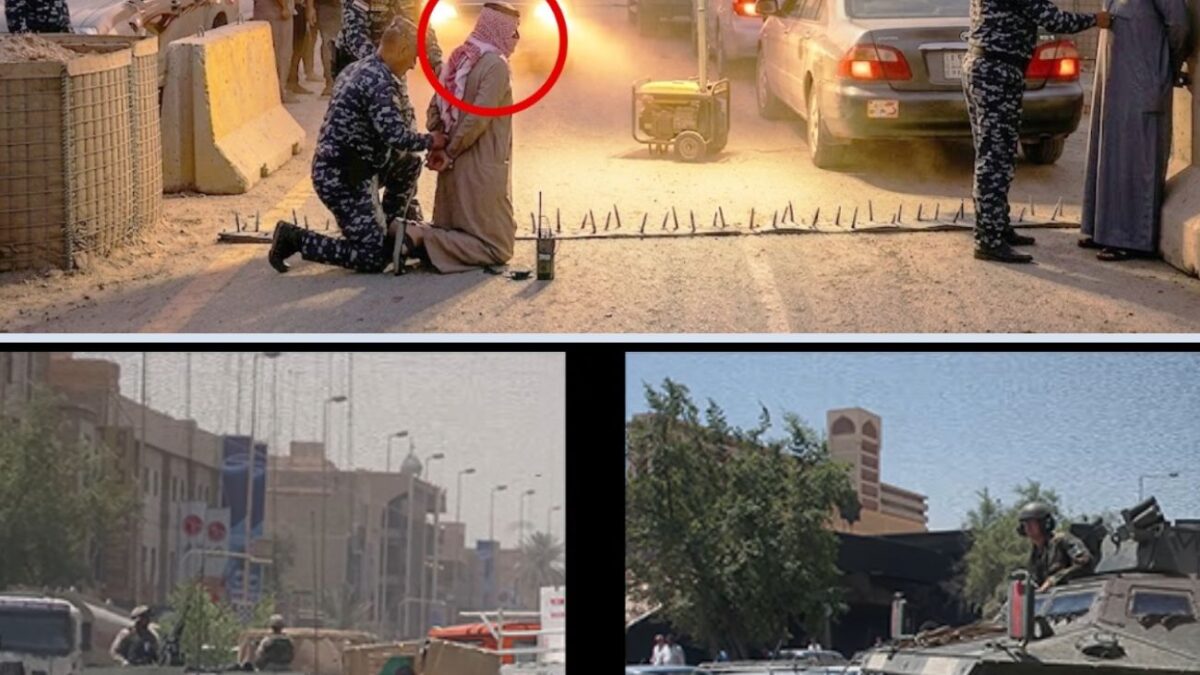
On the evening of the 19th of September 2005, a group of British soldiers sat in a base in Basra and stared at a television screen. What they saw made the blood drain from their faces. Two men, badly beaten, faces swollen and cut, sat slumped in front of a camera. An Iraqi announcer read their charges in Arabic. Murder. The men would face trial. If convicted, they would be executed. The soldiers watching the screen knew those faces. They had eaten with those men, trained with them, fought beside them. And now, somewhere in the city just beyond the base walls, two of the most highly trained soldiers in the world were sitting in an Iraqi police cell waiting to die. What happened next would force the British government to make a choice it never wanted to make. And when London gave its answer, the men on the ground decided they had heard enough.
Basra in 2005 was not the city the British Army had hoped it would be. Two years after the fall of Saddam Hussein, the newspapers back home still carried headlines about reconstruction and progress. But the soldiers living inside the city knew a different truth. The streets were dangerous in ways that were hard to explain to people who had never walked them. Not dangerous in the way of open warfare, where the enemy wore a uniform and stood on the other side of a line. Dangerous in the quiet, suffocating way of a city where you could not tell friend from enemy until it was too late.
The problem was the police. After the invasion, Britain had taken responsibility for security in southern Iraq. Part of that job meant building a new Iraqi police force from scratch. On paper, once the force existed, thousands of officers had been recruited, trained, and put into uniform. On paper, they answered to the new Iraqi government and worked alongside coalition forces to keep order. In reality, something far darker had taken root. Shia militias had been working for months to get their own people inside the police. Not a few officers here and there, entire units. By the middle of 2005, British commanders in Basra had come to a grim conclusion. Of the roughly 3,000 officers serving in the city, fewer than one in four could actually be trusted. The rest had divided loyalties at best and were working directly for the militias at worst.
One unit in particular had become a problem that could no longer be ignored. The Jamiyat was a police force within the police force, 200 to 300 strong. It operated out of the Al Jamiyat station in southern Basra. Its officers wore police uniforms and drove police vehicles, but the orders they followed did not come from the Interior Ministry. They came from the militia commanders who had placed them there. The Jamiyat had been linked to kidnappings, torture, and the killing of people it had been assigned to protect. Sunni Arabs, former government officials, anyone the militia wanted gone had a way of passing through the Jamiyat’s hands and never coming back.
At the top of that operation sat one man, a senior Iraqi police official whose name had appeared too many times in too many intelligence reports. British forces had been watching him for weeks. The picture that was forming was serious enough that something had to be done. Someone had to get close. Someone had to watch him, document what he was doing, and build the kind of evidence that could be used to take him down. That job fell to two men from British special forces. Press reports in the years that followed named the two operators as Campbell and Griffiths. The Ministry of Defense has never officially confirmed either name and likely never will. Beyond what the press was able to piece together, very little has ever been formally acknowledged. Some accounts suggested the surveillance element of Operation Hathor may have involved operators from the Special Reconnaissance Regiment rather than 22 SAS directly. The distinction in terms of what happened next matters very little. These were British special forces soldiers. That is what the city was about to find out.
Operation Hathor was the name given to the special forces detachment running covert operations in Basra. It was a small unit by design, a handful of operators working quietly alongside British forces in the city, gathering intelligence, watching targets, building pictures of the militia networks that were eating the police force alive. Campbell and Griffiths were part of that detachment. On the morning of the 19th of September 2005, they had a specific job. Watch the police official, document his movements, get the evidence, and get out.
They dressed carefully that morning. Traditional Arab garments, a dishdasha, loose and long, the kind of clothing worn by millions of men across southern Iraq every single day. A keffiyeh headdress to cover the head and frame the face. Everything chosen to make two British soldiers invisible in a city that would kill them if it knew who they were. They climbed into an unmarked local vehicle, the kind of car that would not draw a second glance on any street in Basra, and drove into the city.
Covert surveillance is slow, quiet work. There is nothing glamorous about it. It is hours of sitting still, watching, waiting, keeping your breathing steady while the world moves around you. And every instinct you have tells you to move. You watch a man walk to his car and you do not move. You watch him speak to someone you do not recognize and you do not move. You memorize faces, number plates, times, the small details that mean nothing on their own but everything when you put them together. You trust your training and you trust your partner and you do not make a sound.
Campbell and Griffiths had been at it for hours. The target had gone about his day without any sign that he knew he was being watched. The intelligence the two men were building was exactly what Operation Hathor needed. Piece by piece, the picture was coming together. And then, at some point in the afternoon, they had enough. The mission was complete. All that was left was to drive out of the city, get back to base, and hand over what they had gathered. The hard part, they believed, was over.
They were wrong. Neither man could have known, as they pulled out into that afternoon traffic, that within 6 hours their faces would be on television screens across Iraq, that British soldiers would watch that broadcast in silence and reach for their weapons, that a commanding officer would pick up a phone and be told no twice before deciding that some orders were not worth keeping. All of that was still ahead. Right now, there was only the car, the road, and a checkpoint that had not been there that morning.
The streets of southern Basra were busy in the way that Middle Eastern cities are always busy in the afternoon, loud and close and full of movement. The car moved through it without attracting attention. They were nearly clear. And then, ahead of them, a group of Iraqi police officers stepped into the road and raised their hands, a checkpoint. Campbell and Griffiths slowed the car and stopped. There was no reason at that moment to believe this was anything other than a routine stop. Checkpoints were everywhere in Basra. You stopped, you were waved through, you drove on. They had their cover. They had their clothing. They had their training. There was no reason this could not be talked through.
But the tension in Basra that week was different. Just days earlier, British forces had arrested a senior Iraqi police official suspected of corruption. The city’s police force was angry. And the men at this checkpoint were not waving anyone through. The officer who approached the car was not alone. Two others hung back behind him, hands resting on their weapons, watching the vehicle with the particular stillness of men who have already decided something. Campbell and Griffiths would have clocked that immediately. Two exits, three officers, weapons visible. The arithmetic of the situation was getting worse with every second the car sat still.
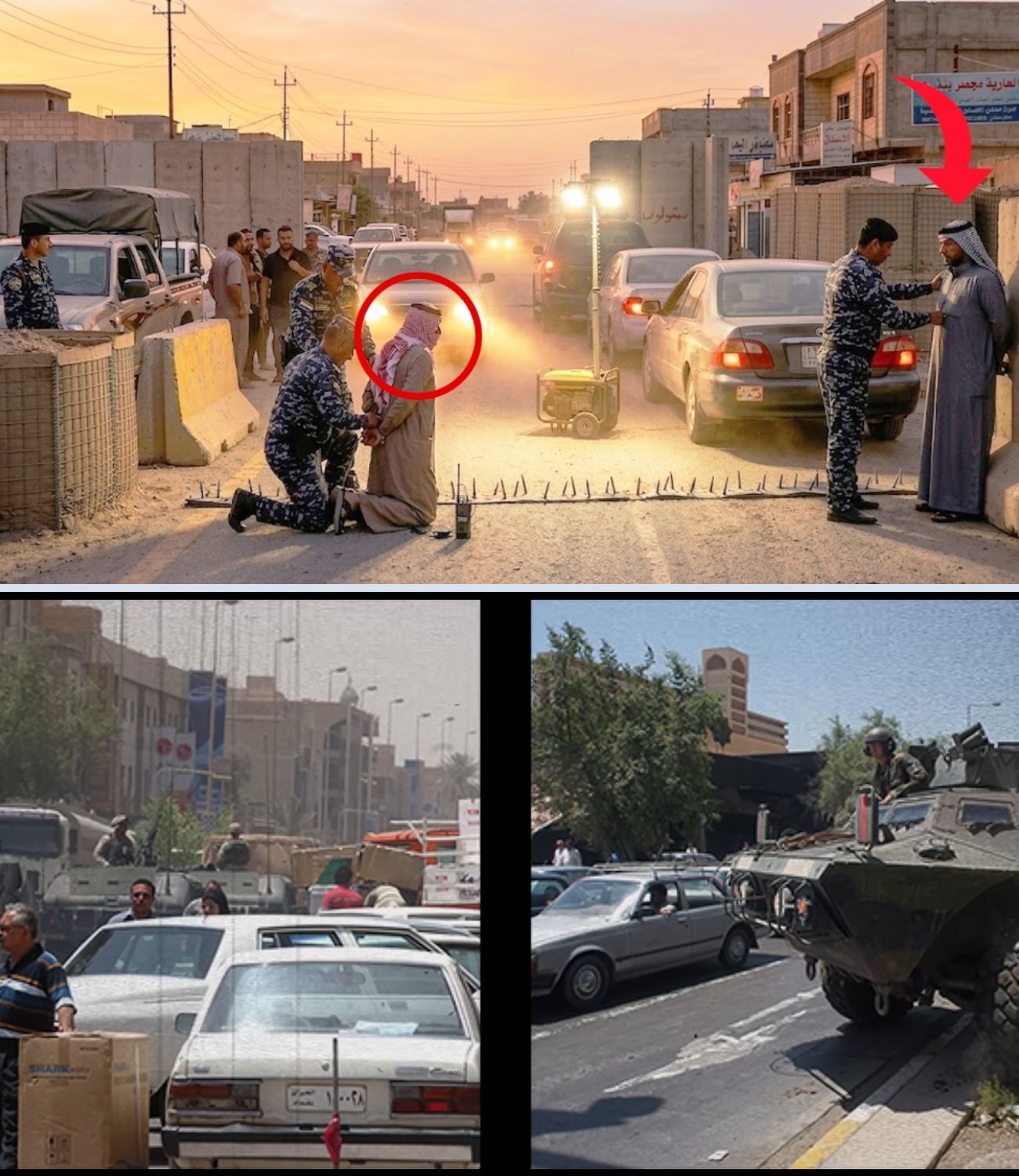
They kept their voices level. They kept their hands visible. They were 30 seconds from being clear of the city, 30 seconds from a debrief and a hot meal and a mission marked complete. The officer leaned in closer. One of the officers approached the car. He leaned in close, the way a man does when he wants to see something he is not supposed to miss. Campbell and Griffiths held themselves still. They spoke, tried to explain, tried to do what trained operators do in moments like this. Talk calmly, give nothing away, find the words that make a problem smaller instead of bigger. For a few seconds, it might have worked. Then the officer reached into the car.
What happened in the next few moments happened fast. The officer grabbed for one of the men. There was a struggle. Campbell and Griffiths made the only decision available to them in that fraction of a second. They opened fire. Two Iraqi police officers were shot. At least one of them died as the car accelerated hard into the afternoon traffic, tires loud on the road, the city suddenly awake and hostile around them.
Iraqi police vehicles came after them immediately. Blue lights, sirens, the kind of pursuit that turns every street into a trap. Campbell and Griffiths pushed through the city as fast as the car would go, cutting through side streets, looking for a gap. They were trying to reach an emergency rendezvous point, a pre-planned location where they could be extracted if something went wrong. But the police were everywhere. The radio calls had gone out. The city was closing around them. They could not outrun it.
At some point, the two men made a decision that takes a particular kind of discipline to make. They stopped the car. If they could not escape by speed, they would try once more to talk their way out. Two operators against a city full of armed police officers, and they chose to stop and speak rather than fight and die. That is not cowardice. That is the kind of cold, clear thinking that the SAS selects for and trains into its people over years of the hardest soldiering in the world. Pick the ground you can win on. This was not that ground.
The police did not want to talk. They were pulled from the car, beaten in the street, hands bound, pushed into a police vehicle, and driven to Al Jamiyat station. The same station they had been watching that morning. The station run by the same militia-connected officers their intelligence operation had been built to expose. The irony of it was almost impossible to process. They had spent the day building the case against this place. Now, they were inside it, at its mercy. Now with no way to call for help, and no way out.
Within hours, the photographs appeared on Iraqi television. Two men in t-shirts, faces cut and swollen from the beating, sitting in front of a camera they had not chosen to face. The Iraqi announcer read the charges clearly.
“The two men had murdered an Iraqi police officer. They would face justice under Iraqi law.”
The penalty for murder in Iraq, under the laws then in effect, was death. The broadcast went out across the city. It went out across the country. And somewhere in a British military base in Basra, a group of soldiers sat down in front of a screen and watched two of their own stare back at them from a police cell waiting to find out if anyone was coming.
Back at the base, phones were already ringing. Radios were already crackling. The special forces detachment in Basra had been tracking the situation from the moment contact was lost. Now, they had confirmation of where their men were and what they were facing. The commanding officer of 22 SAS began making calls. 20 operators from a squadron were already moving. A C-130 transport aircraft was being readied. A Predator drone was being vectored over the Al Jamiyat station, its camera feeding live footage back to the joint operations center. A Lynx helicopter followed it into the sky above the prison. The pieces were moving into place. The soldiers on the ground knew what had to be done. London was about to tell them they were wrong.
The C-130 landed in Basra, and the men of A squadron came off it fast. 20 operators, some of the most capable soldiers in the British Army, and moving with the kind of focus that does not draw attention even when everything around it is falling apart. They had been briefed in the air. They knew where Campbell and Griffiths were. They knew the station. They knew the threat. They were ready to go in that night and bring their men home.
Above the Al Jamiyat station, the Predator drone circled in the dark, its camera locked onto the building below. The Lynx helicopter fed the same picture from a different angle. Back at the joint operations center, officers watched the live feed on screens, tracking every vehicle that moved near the station, every figure that appeared in the courtyard, every light that went on or off inside the building. The intelligence picture was as clear as it was going to get. The assault plan was drawn up. The men were in position.
Then the call came from London. The British government had been watching the situation develop with growing alarm. What had started as a covert intelligence operation gone wrong was threatening to become something far larger and far harder to contain. The Iraqi government was furious. The streets of Basra were beginning to fill with people who had seen the broadcast and wanted to know why British soldiers had killed an Iraqi police officer. Militia commanders were watching carefully, waiting to see what the British would do next.
In London, the calculation was political as much as it was military. An armed rescue mission, tanks and soldiers smashing into an Iraqi police station, could trigger a confrontation that would make the situation in Basra dramatically worse. The government decided the risk was too great. The order came down clearly.
“Stand down. No rescue mission. The matter would be resolved through negotiation.”
The men on the ground received that order and said nothing. Then one of the operators looked back at the screen. The drone feed was still live. You could see the station. You could see the courtyard. You could see the door behind which two British soldiers were sitting with their hands bound, waiting for a government that had just decided they were a diplomatic problem. Someone in the room turned the volume down on the radio. Nobody turned off the screen.
The negotiators went in instead. Two officers from 12th Brigade headquarters drove to the Al Jamiyat station with a letter. An ultimatum from the British command demanding the release of the two soldiers under the terms of the agreement that governed coalition forces in Iraq. And under that agreement, any British soldiers detained by Iraqi authorities were to be handed over to British military command immediately. It was a legal argument, a piece of paper carried into a building run by people who answered to no law the letter recognized.
The officers never came back out. They were taken at the door and held inside the station alongside Campbell and Griffiths. The negotiation had lasted minutes. Now Britain had four soldiers inside that building instead of two.
Outside the station, the situation was getting worse by the hour. Word had spread through the neighborhood. A crowd had gathered, drawn by the broadcast, by rumor, by the anger that had been building in Basra for months. People lined the streets around the station, watching the British vehicles parked outside. Then the first stone came. Then another. And then the petrol bombs started. A Warrior infantry fighting vehicle took a direct hit from a petrol bomb and caught fire. The flames climbed the side of the armored hull, bright orange against the night sky, and the soldiers nearby could not put it out fast enough. Three British soldiers were wounded in the violence outside the station. The crowd was growing, not shrinking. The men trying to hold the cordon were doing it under a hail of stones and fire with orders that told them they could not go in.
Inside the joint operations center, the screens still showed the live feed from the drone above, the station, the courtyard, the crowd outside, and somewhere inside those walls, four British soldiers in a city that wanted them dead. Then the camera caught something new. A car had pulled up to a side entrance of the station, and figures moved quickly in the courtyard. Two men were brought out, not walking, being moved, hands bound, pushed toward the open boot of the car. The drone operator watched. The Lynx crew watched. The officers at the screens watched. Campbell and Griffiths were being transferred, taken somewhere else, somewhere the British Army did not know and could not follow.
The intelligence assessment that came back was stark. British analysts believed the Iraqi police intended to hand the two men to a Shia militia operating in the city. Iraqi Hezbollah was the name attached to that assessment. It was never officially confirmed, but the men reading it had no reason to doubt it, and no time to wait for certainty. The officer commanding the SAS in Basra heard the intelligence assessment and understood exactly what it meant. If those two men reached the safe house before morning, they would not be alive by the time the sun came up. He picked up the phone and called London one more time.
The man on the other end of the line in London listened. He heard the intelligence assessment. He heard the timeline. He heard the words Shia militia and execution and before morning. And when the SAS commander finished speaking, the answer that came back was the same answer that had come back every time before it.
“No.”
There would be no sanctioned rescue mission. The political situation was too delicate. The risk of escalation was too high. Britain was trying to build a functioning relationship with the Iraqi government and the Iraqi security forces. And sending SAS operators and armored vehicles crashing through a police station in the middle of Basra would destroy whatever was left of that relationship in a single night. The order stood. Stand down. Wait. Trust the process.
The SAS commander put the phone down. He stood for a moment in the way that men stand when they have just been told something they cannot accept and have not yet decided what to do about it. Around him, the men of A Squadron were still in their kit, still watching the screens, still waiting. The drone above the city was still transmitting. The car carrying Campbell and Griffiths was still moving through the streets of Basra toward a safe house that intelligence said they would never come back from.
There is a particular kind of moment that comes in the life of a soldier when the orders he has been given and the thing he knows to be right pull in opposite directions so hard that something has to give. Most soldiers never face it. The men who do face it carry it for the rest of their lives, whatever they decide. The SAS commander was facing it now, alone in a base in southern Iraq, with the clock running and two of his men running out of time.
He thought about the order. He thought about what disobeying it would mean. A career built over years of service gone. A court-martial. Criminal charges, possibly. The kind of institutional consequences that the British military reserves for officers who believe their own judgment outranks the chain of command. He thought about all of it. Then he thought about Campbell and Griffiths. Two men who had done everything right, who had dressed in the right clothes, driven the right car, run the right operation in one of the most dangerous cities in the world, who had been stopped at a checkpoint through no fault of their own and found themselves inside a machine that wanted them dead. Two men who had spent the whole of their adult lives learning how to operate in the dark so that the country they served would never have to know the things they did or the risks they took. Two men who, right now, were in the boot of a car being driven toward an execution that their own government had just decided it could not afford to prevent.
The SAS commander made his decision. He did not make it loudly. He did not make a speech or issue a declaration. He simply turned to his men and told them they were going in. In the simplest terms, what happened next would define the night and everything that followed it. The SAS defied direct orders to save their own men. The operators of A Squadron did not ask questions. They did not hesitate. They had been ready for hours. The plan was already drawn. The target was already known. All that had been missing was the word, and now they had it.
The plan had to be adjusted for what the drone had seen. Campbell and Griffiths were no longer inside the Al Jamiyat station. They were in a safe house somewhere nearby, a building that intelligence was still working to pinpoint precisely. That meant splitting the force. A small team of SAS operators would assault the safe house the moment its location was confirmed. A larger force, supported by Warrior infantry fighting vehicles and Challenger 2 tanks from the Staffordshire Regiment and the Coldstream Guards, would hit the Al Jamiyat station simultaneously, freeing the two brigade officers still being held inside and cutting off any possibility of the militia using the station as a fallback position. Two assaults, one night, no authorization.
The Warriors began to move. The Challenger 2 tanks rolled out of the base and onto the streets of Basra, their engines shaking the ground beneath them. Overhead, the drone and the Lynx helicopter tightened their orbits, watching every entrance to the safe house, every vehicle on the surrounding streets, every figure moving in the darkness below. The convoy drove through the city without lights where it could, moving steadily toward the station or toward the crowd that had been there hours ago and might still be there now, toward whatever was waiting on the other side of that wall. Nobody in London had given the order. Nobody in London had been asked. The SAS was going to get their men back.
The streets of Basra at night had a particular quality that soldiers who served there never forgot. The air was warm and heavy, carrying the smell of dust and diesel, and something else underneath it that was harder to name. The city did not go quiet after dark the way cities in other countries did. It shifted. The daytime noise of traffic and markets and children gave way to something lower and more watchful. Dogs in the distance. Generators humming behind compound walls. The occasional sound of a vehicle moving fast somewhere out of sight. A city that never fully slept because it could not afford to.
The convoy moved through it steadily. Warriors and Challenger 2 tanks, tons of British steel rolling through narrow streets that were not built for them. Past buildings with their shutters down and their lights off. Past corners where figures stood and watched and said nothing. The soldiers inside the vehicles kept their eyes on the streets and their hands on their weapons. The drone overhead tracked every meter of their progress, watching the roads ahead, watching for anything that moved in the wrong direction at the wrong speed.
Above the safe house, the Lynx helicopter held its position. Intelligence had confirmed the location. A building not far from the Al Jamiyat station, unremarkable from the outside, the kind of place that gave nothing away. The small SAS team assigned to hit it was moving on foot, closing in from a direction the cameras had confirmed was clear. They had one job. Get inside. Get their men out. Do it before anyone inside had time to react.
The timing had to be precise. Both assaults needed to happen at the same moment or one would compromise the other. If the station assault went in first, the men at the safe house would hear it and have time to act. If the safe house team moved early, the station would go to alert and the officers inside would be in more danger than they already were. Everything had to land at the same second, coordinated across two separate locations in a city where the communications were unreliable and the margin for error was zero.
Then the convoy turned the last corner toward the Al Jamiyat station, and the men inside the vehicles braced for the crowd that had been there hours before. Hundreds of people, angry, armed with stones and petrol bombs, the kind of mass that could slow an armored column and give the men inside the station time to do things that could not be undone. The Warriors slowed as they came around the bend. The street was empty. Nobody could say with certainty where the crowd had gone or why. Perhaps word had spread that something was coming. Perhaps the lateness of the hour had sent people home. Perhaps the city had simply decided that tonight was not the night to be standing in the street in front of armed soldiers. Whatever the reason, the road to the station was clear and the convoy did not slow down to ask questions.
The Warriors accelerated. Inside the lead vehicle, the driver fixed his eyes on the wall ahead and pushed the throttle down. The Warrior hit the outer wall of the Al Jamiyat station at full speed. The wall gave way. Concrete and dust and the shriek of metal. And then the vehicle was through, rolling into the compound with the rest of the convoy right behind it. Challenger 2 tanks came through behind the Warriors, their mass collapsing sections of wall that the first vehicles had only cracked. The noise was enormous. The kind of noise that reaches through walls and floors and wakes an entire neighborhood and tells it that something irreversible has just begun.
Infantry poured out of the Warriors into the compound, moving fast and low, spreading through the station in pairs, clearing rooms, shouting commands, looking for anything that moved and was not British. The police officers inside had seconds to decide whether to fight or run or freeze. Most of them froze. Some ran. Nobody made the decision that would have made the night significantly worse.
At the same moment, a mile away, the SAS team reached the safe house door. The lock held for less than a second. They went through it fast, moving through the building the way they had been trained to move through buildings since the day they earned the right to wear the sand-colored beret. Room by room. Quick and certain and without hesitation.
The building was smaller than it looked from outside. There were not many rooms to clear. They found the locked door at the back. The door was solid. No window. No sound from the other side that anyone could hear over the noise of their own breathing and the distant thunder of the station assault echoing across the rooftops. One of the operators tried the handle. Locked from the outside, which meant whoever had put people in this room had not expected those people to be leaving on their own terms. That was either a good sign or a very bad one, and there was only one way to find out. They went through the door.
The room on the other side was small and dark and smelled of heat and concrete. Two men sat on the floor against the far wall, wrists bound, faces marked from the beating they had taken hours ago at the checkpoint, clothing they had not chosen to be wearing. They looked up when the door came in and the light hit them, and for a fraction of a second, nobody moved. As soldiers who have been waiting in a dark room long enough stop expecting the door to open in their favor. It takes a moment for the brain to catch up with what the eyes are seeing. Campbell and Griffiths were alive.
The operators moved into the room fast, cutting the bindings, checking the men over, getting them to their feet. There was no celebration, no words beyond what was necessary. That is not how these men operate. You do the job, you get your people out, you get clear of the building and back to a position where you can defend what you have just done. Everything else comes later. The team moved back through the house the way it had come in. Campbell and Griffiths between them and out into the Basra night.
At the Al Jamiyat station, the infantry had swept the compound and found the two brigade officers who’d been taken earlier when they arrived with the ultimatum letter. Both were alive. Both were shaken but unharmed in the way that men are unharmed when the thing that was going to happen to them did not quite get the chance to happen. They were brought out through the broken wall and loaded into a vehicle.
The Warriors began to pull back. The Challengers held their positions, engines idling, covering the withdrawal with the kind of mass that discourages anyone still watching from the shadows from deciding this is a good moment to act. The convoy moved back through the streets of Basra the way it had come. Slower now. The urgency of the approach replaced by the steady, watchful calm of extraction. The drone overhead stayed on station, tracking the surrounding streets, watching for vehicles that turned toward the convoy and did not turn away. None did. The city was still. The generators hummed behind their walls. The dogs had gone quiet.
By the time the last vehicle rolled back through the gates of the British base, all four soldiers were accounted for. Campbell and Griffiths were taken immediately to the medical facility on base. Their injuries from the beating were serious but not life-threatening. They had been in that locked room for hours in a building in a city that had decided what was going to happen to them well before the SAS came through the door. The difference between what had happened and what had almost happened was a decision made by one man who had been told no and said yes anyway.
In London, the phones were ringing. The Ministry of Defense had been watching the operation unfold in real time through the same drone feeds that had guided the assault. They had given no authorization. They had issued a direct order to stand down and that order had been ignored by the commanding officer of one of Britain’s most revered military units. The political fallout was immediate and it was serious. Questions were asked at the highest levels of government. The words court-martial were used in more than one conversation.
The SAS commander who had made the call was looking at consequences that could end everything he had built over a career that most soldiers could only dream of. He had known all of that before he gave the order. He had stood in that base in Basra with the clock running and his men running out of time and he had weighed every one of those consequences against the image of two soldiers in the boot of a car being driven toward an execution. And he had decided that some things matter more than career, more than institutional approval, more than the comfort of following an order you know to be wrong because following it means nobody can blame you for what comes next.
The Warriors were back inside the wire. The Challengers had gone quiet. Somewhere in the medical facility, Campbell and Griffiths were being treated by people who were very glad to have something to treat. The night was over. The reckoning was just beginning.
The British government’s first response to the events of that night was to say that nothing had happened. A spokesman confirmed that two British soldiers had been detained by Iraqi police and subsequently released. He did not mention the tanks. He did not mention the Warriors smashing through the station wall. He did not mention the SAS team that had gone through a locked door in a safe house on the other side of the city at the same moment. The official position issued to the press in the hours after the assault was careful and minimal and designed to make the night sound like a misunderstanding that had been resolved through the proper channels. The proper channels, of course, had been a Challenger 2 tank at full speed.
The story did not stay buried for long. It never does when tanks drive through the walls of a police station in the middle of a city of 2 million people. Journalists in Basra had seen the fires from the petrol bombs. Iraqi officials had seen their station reduced to rubble. Photographs had been taken. Witnesses had talked. Within 48 hours, the full shape of what had happened was coming out in newspapers and broadcast reports and the British government found itself in the position of having to explain something it had already said had not occurred.
The explanation, when it finally came, leaned heavily on the truth about the Al Jamiyat station, the militia infiltration, the torture, the killings, the intelligence that British forces had been gathering for months about what was happening inside that building and the men who ran it. The argument made carefully and with the backing of the intelligence record was that the Iraqi police unit holding Campbell and Griffiths could not be trusted to hand them over alive, that the normal processes had failed when the brigade officers were taken hostage, and that the situation had deteriorated to a point where the safety of British soldiers left no other option. The operation, the government said, had ultimately been necessary and justified.
What the government did not say, at least not publicly, was that the operation had happened against a direct order. That part of the story came out later in dribs and drabs through journalists and former soldiers and the occasional memoir that pushed as close to the classified line as its author dared. The commanding officer who had made the call was never formally charged, never court-martialed. The institutional reckoning that had seemed inevitable in the hours after the assault never fully arrived. Whether that was because the government decided that punishing the man who had saved two soldiers from execution would look worse than letting the matter quietly settle or because enough people in enough important positions privately agreed that the right call had been made has never been entirely clear. Probably, it was both.
The Basra police chief, Mohammed Al Waili, gave an interview in the days after the raid that said more about the state of the city than any official statement ever could. Asked about the loyalty of the officers under his command, he paused before answering. He trusted fewer than a quarter of his own force, he said. Of the roughly 3,000 officers serving in Basra, he could vouch for perhaps 700 and the rest were an unknown quantity at best and actively working against everything he was trying to build at worst. He said it plainly without apparent embarrassment because it was simply the truth of the situation and he had run out of reasons to pretend otherwise.
That admission mattered more than anything the British government said in its carefully worded press releases. It confirmed what the soldiers on the ground in Basra had known for months. The institution they had been asked to work with, to trust, to build a future on had been compromised at its core. The Jamiyat was not an anomaly. It was a symptom. And the events of the 19th of September 2005 had stripped away the last pretense that the problem could be managed through negotiation and patience and letters of ultimatum delivered by officers in staff cars.
Operation Hathor continued after the raid. The SAS detachment stayed in Basra. The work of watching and documenting and building cases against the militia networks inside the police force went on. But something had shifted. The raid had made visible what everyone on the ground already understood. The coalition was not operating inside a functioning state that needed guidance and support. It was operating inside a city where the institutions of order had been captured by the people they were supposed to control and where the rules that governed what soldiers could and could not do were sometimes the last line of defense for the very men those rules were supposed to protect.
Campbell and Griffiths recovered from their injuries. They returned to duty. In the years that followed, neither man said much publicly about what had happened to them in that station or in that locked room in the safe house. That is consistent with who they were and what they had signed up to be. The SAS does not trade in public statements or personal profiles. It trades in results, in quiet, in the kind of work that only becomes known when something goes wrong or someone makes a decision that cannot be hidden. The man who made that decision on the night of the 19th of September has never been fully identified in public reporting. His name has not been attached to a medal citation or a regimental history or a documentary interview. He made his call, got his men back, and went back to work. That too is consistent with the institution he served.
There is a version of events in which the British government’s caution that night was reasonable, in which the fear of escalation and the fragility of the political situation in southern Iraq were legitimate reasons to pause, to try negotiation first, to avoid the kind of unilateral military action that could make a bad situation catastrophic. That version is not entirely wrong. The people who issued the stand down order were not villains. They were men and women sitting in offices in London working with the information they had, trying to balance competing pressures that were all real and all serious. But they were sitting in offices in London. The men who ignored the order were sitting outside a prison wall in Basra watching a live feed of a car driving their colleagues toward an execution with the clock running and the phone already back in its cradle. They had a view of the situation that no office in London could replicate. No matter how good the intelligence feed or how large the screen. They knew things that the paperwork did not contain and the briefings did not capture. They knew what was in that locked room. They knew what would happen if they waited until morning. Sometimes the only honest answer to the question of who was right is this. The people who were there.
You Might Also Enjoy

“We Thought They Would Negotiate”—What Argentine Soldiers Said When The British Attacked Goose Green

“You’ll Never Finish My Ruck March, Limey” — US Sergeant Who Challenged the SAS, Then Fell Out First






