The SAS Team So Untraceable, The CIA Was Ordered To Stop Tracking Them
“Zero correlated track, recommend termination of live partner testing protocol.”
Marcus Dinger read the line twice before he set the report down on his desk, and the second reading told him nothing the first hadn’t already made clear. It was late April 2010, in a secure office at a facility outside Washington belonging to the CIA’s Directorate of Science and Technology.
And the report in front of Dinger closed out three years of work on a programme called Cobalt Mesh, a system combining satellite imagery, signals collection, and thermal analysis designed to track high-value targets who understood how to avoid being tracked. Dinger was 47, three years into running the programme with a funding decision sitting two weeks out that had been waiting more or less openly on exactly the kind of validation this report was supposed to deliver.
It had not delivered it. Zero correlated track meant the system had produced nothing. Not a partial signature, not a probable location, not a single data point across the entire testing window that matched the subject it had been pointed at. The subject in this case had not been a simulated target built to make the technology look impressive.
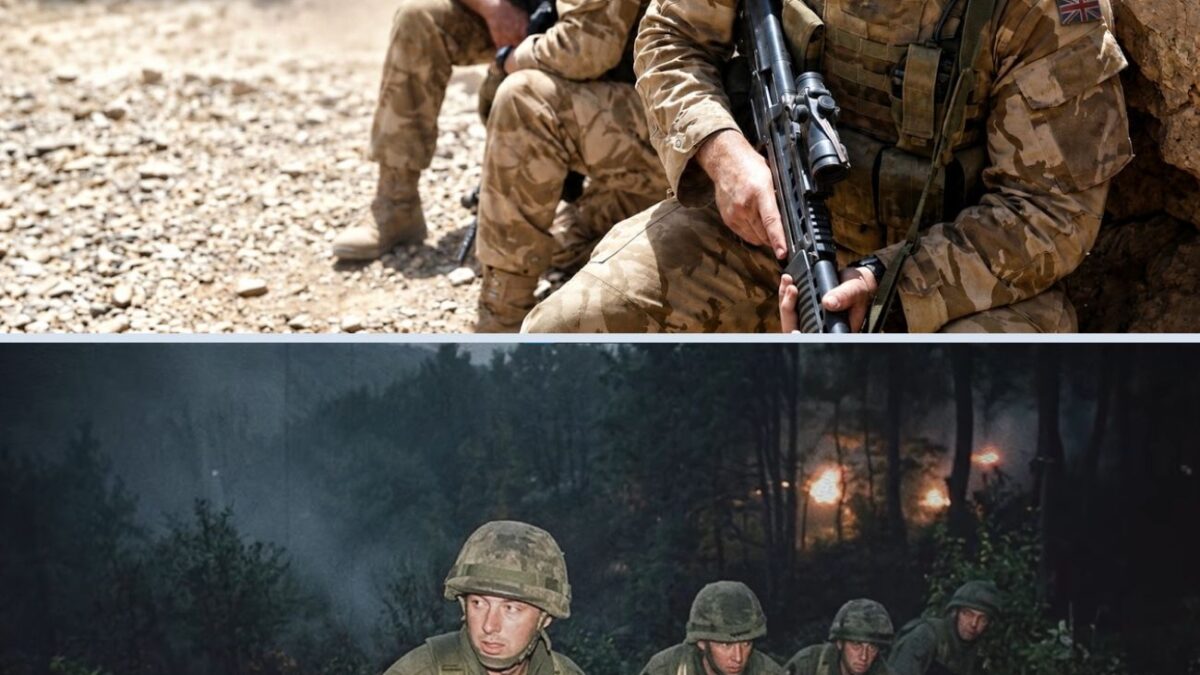
It had been a real four-man patrol from the British Special Air Service already operating in Helmand Province on an actual reconnaissance mission, testing the system’s real capability against a genuine professional adversary rather than a staged exercise built to succeed. Dinger had approved that arrangement himself weeks earlier through a formal technical liaison channel with the British Ministry of Defence, judging correctly that a live operational test against real tradecraft would tell him more in a single mission than a dozen controlled simulations ever could.
What the report in front of him did not explain, and what Dinger had no way of knowing yet sitting at his own desk in Virginia, was exactly how four men moving through a stretch of hostile Afghan terrain had managed to leave nothing behind for a three-year multi-million dollar system to find.
The answer, though nothing in that report pointed toward it, had nothing to do with anything built specifically to defeat Cobalt Mesh. It had been built 10 years earlier on a hillside in Bosnia by a much younger version of the man commanding that patrol, learning a lesson the hard way that had never once in the decade since required updating for a threat as new as an American satellite.
By April 2010, coalition forces in Helmand Province had moved into what commanders were calling a consolidation phase. The surge of additional troops through the preceding year had pushed insurgent forces out of several previously contested districts and forced the wider campaign into a slower, more methodical effort to hold and clear ground rather than simply fight for it.
Nad Ali, a rural district northeast of the province’s main population centers, sat on the list of areas still requiring a full clearing operation. Insurgent elements dug into compounds and irrigation ditches that had absorbed fighters and weapons for years without any sustained coalition presence to challenge them. What made Nad Ali a specific concern beyond the ordinary difficulty of clearing contested ground was a detail that had surfaced through several separate intelligence reports over the preceding two months. Local insurgent elements in the district appeared to have acquired surveillance equipment, thermal imaging devices, and rudimentary signals detection gear, likely captured or purchased through regional smuggling networks rather than supplied by any state sponsor.
Equipment like that in the hands of a well-organised insurgent cell changed the calculus for any coalition force operating nearby, turning what should have been a straightforward reconnaissance problem into one where standard camouflage discipline alone might not be enough to guarantee a patrol stayed unseen.
Confirming exactly what the coalition would be facing once the clearing operation began required eyes on the ground first: a covert reconnaissance patrol capable of moving through the district undetected long enough to map insurgent positions, confirm troop concentrations, and identify, if possible, where that captured surveillance equipment was actually being used.
That task fell to Captain Michael Sorley’s patrol, already in theatre and available for exactly the kind of quiet, patient work the mission required before anyone committed a larger force to ground that might already be watching them arrive. Dinger had built his entire career around the specific discipline of technical collection, enlisting in the Air Force in 1981 at 18 and spending five years working signals intelligence support before leaving the service in 1986 with a technical background that made him an obvious recruit for the agency’s own collection programs a couple of years later.
He joined the CIA in 1988 at 25, and the 22 years since had run almost entirely through the Directorate of Science and Technology. Programme after programme built around the same underlying question: how to find people who had spent their own careers learning how not to be found by anyone.
By the time he took over Cobalt Mesh in 2007, Dinger had already helped build and validate three earlier collection systems over the preceding 15 years, each one incrementally more capable than the last, and each one facing the same fundamental problem when it came time to prove its worth to the people who controlled its funding.
A system built to detect sophisticated tradecraft could only be validated meaningfully against sophisticated tradecraft. And simulated exercises, however carefully designed by people who genuinely knew what they were doing, rarely produced the same behaviour from a test subject who knew at some level that nothing real was actually at stake in the outcome.
Dinger had watched two earlier programs pass every simulated test on the books cleanly and then underperform badly once deployed against real targets who moved and thought differently than any actor in a controlled exercise ever quite managed to. That history sat directly behind the decision he made in March 2010, three weeks before the scheduled funding review, when the technical liaison channel with the British Ministry of Defence surfaced an opportunity he judged immediately, almost instinctively, worth pursuing.
A Special Air Service patrol was already committed to a covert reconnaissance mission in Helmand Province—real terrain, real operational stakes, real tradecraft discipline exercised because the patrol’s own survival genuinely depended on it rather than because some testing protocol asked them to perform it convincingly for an audience.
Dinger proposed through the same formal channel that Cobalt Mesh be tasked against that patrol during the mission itself, not as a hostile surveillance effort, but as a cooperative technical evaluation the British command would need to authorize and consent to before it could proceed at all. The British side approved the arrangement after reviewing exactly what Cobalt Mesh would and would not be permitted to do, restricted strictly to passive collection with no operational tasking authority over the patrol itself.
A distinction Dinger had insisted on personally and precisely because he understood how badly the relationship between the two intelligence services would suffer if the arrangement ever looked like anything other than what it actually was on paper. In his own professional judgment, the opportunity was close to unrepeatable in any practical sense.
Simulated targets could be built more elaborate and more expensive with every test cycle, and none of them would ever replicate what a genuinely skilled team did automatically under real pressure without needing anyone to remind them the stakes were genuinely real rather than scored on a whiteboard afterward. What Dinger could not fully account for, sitting in Virginia, weighing the decision against a funding clock he had every reason to take seriously, was the second half of the equation he had only half considered: that testing against a live operational mission meant his own programme’s collection activity, however passive it was designed to be, would now exist inside the same window and the same geography as an actual operation a partner nation’s men were depending on to keep them alive.
He had judged the technical value of the test carefully. He had not yet judged, because nobody involved in approving it had pushed him to, exactly what his own system’s presence might cost the mission it was quietly watching. What Cobalt Mesh had actually been tested against in Nad Ali was not a set of countermeasures built to defeat satellites, signals collection, and thermal sensors specifically, whatever Dinger’s own report might eventually assume once someone finally explained it to him.
It was a complete discipline of signature management that Sorley had built into every patrol he commanded over the preceding decade. Three separate pillars that had nothing to do with any American testing protocol and everything to do with a lesson learned somewhere else entirely years before Cobalt Mesh had ever existed as a line item in anyone’s budget request.
The first pillar was radio discipline, and it was the most rigid of the three by a considerable margin. Sorley’s patrols transmitted only during pre-briefed windows, kept every transmission compressed to the shortest possible burst rather than anything resembling ordinary conversation, and treated any deviation from that schedule as a genuine tactical failure rather than a minor lapse worth a quiet word afterward.
Because a radio transmission, however brief, was a signal that travelled in every direction at once and told anyone equipped to listen for it exactly where the transmitting antenna had been standing at the moment it keyed. A patrol that transmitted only when necessary on a schedule an adversary couldn’t predict in advance gave that adversary nothing to triangulate against beyond a handful of brief windows scattered unpredictably across an entire mission’s duration.
The second pillar was thermal signature management, a discipline considerably harder to maintain in practice than radio silence because a human body radiated heat constantly and involuntarily regardless of what its owner intended it to do. Sorley’s patrols used terrain deliberately to break line of sight to likely observation angles rather than trusting distance alone.
Timed movement through exposed ground to periods when thermal contrast with the surrounding environment was naturally lowest—usually the hottest part of the afternoon when ambient ground temperature nearly matched a man’s own skin—and treated any position held for an extended period as a location requiring the same careful selection a sniper gave a firing point. Cover from thermal detection weighed alongside cover from a rifle site as though the two threats carried genuinely equal weight, because in Sorley’s own experience on one specific occasion a decade earlier, they had.
The third pillar was newer, added to the discipline only in the years since satellite reconnaissance had become a capability ordinary insurgent groups occasionally had access to through state sponsors or black market intelligence channels, though it followed the exact same underlying logic as the other two rather than introducing anything genuinely different in principle.
Low Earth orbit reconnaissance satellites passed over any given point on the ground on predictable schedules, their orbital paths calculable well in advance by anyone with access to public tracking data or slightly more sophisticated software than a hobbyist might use. Sorley’s patrols planned movement through the most exposed stretches of any route around those predictable windows, treating a satellite pass the same way a patrol treated a known enemy observation post: a specific mappable hazard to route around deliberately rather than simply hope to avoid through general caution and good luck.
None of these three disciplines had been built with an American testing programme in mind, and none of them changed in the slightest once Sorley learned through the same formal liaison channel that had approved the test that Cobalt Mesh would be watching his patrol during the Nad Ali mission. He gave his men no special briefing about the American system, no adjustment to standard procedure, no acknowledgement at all beyond confirming the terms of the arrangement with his own chain of command.
The patrol simply did what it always did, moving, transmitting, and holding position exactly the way 10 years of accumulated discipline had trained every man in it to move, transmit, and hold position, without needing to think about which specific threat that discipline happened to be defeating on any given night. That indifference was, in its own way, the entire answer to the question sitting unanswered on Dinger’s desk back in Virginia.
Cobalt Mesh had not been outmaneuvered by a countermeasure designed to beat it specifically, tailored to its particular sensors or its particular collection windows. It had simply run into a discipline built years earlier for reasons that predated the system entirely. A discipline so thoroughly internalized by the men practicing it that adding one more technical threat to the list of things it happened to defeat required no adjustment at all, because the discipline had never been built around defeating any single threat in the first place.
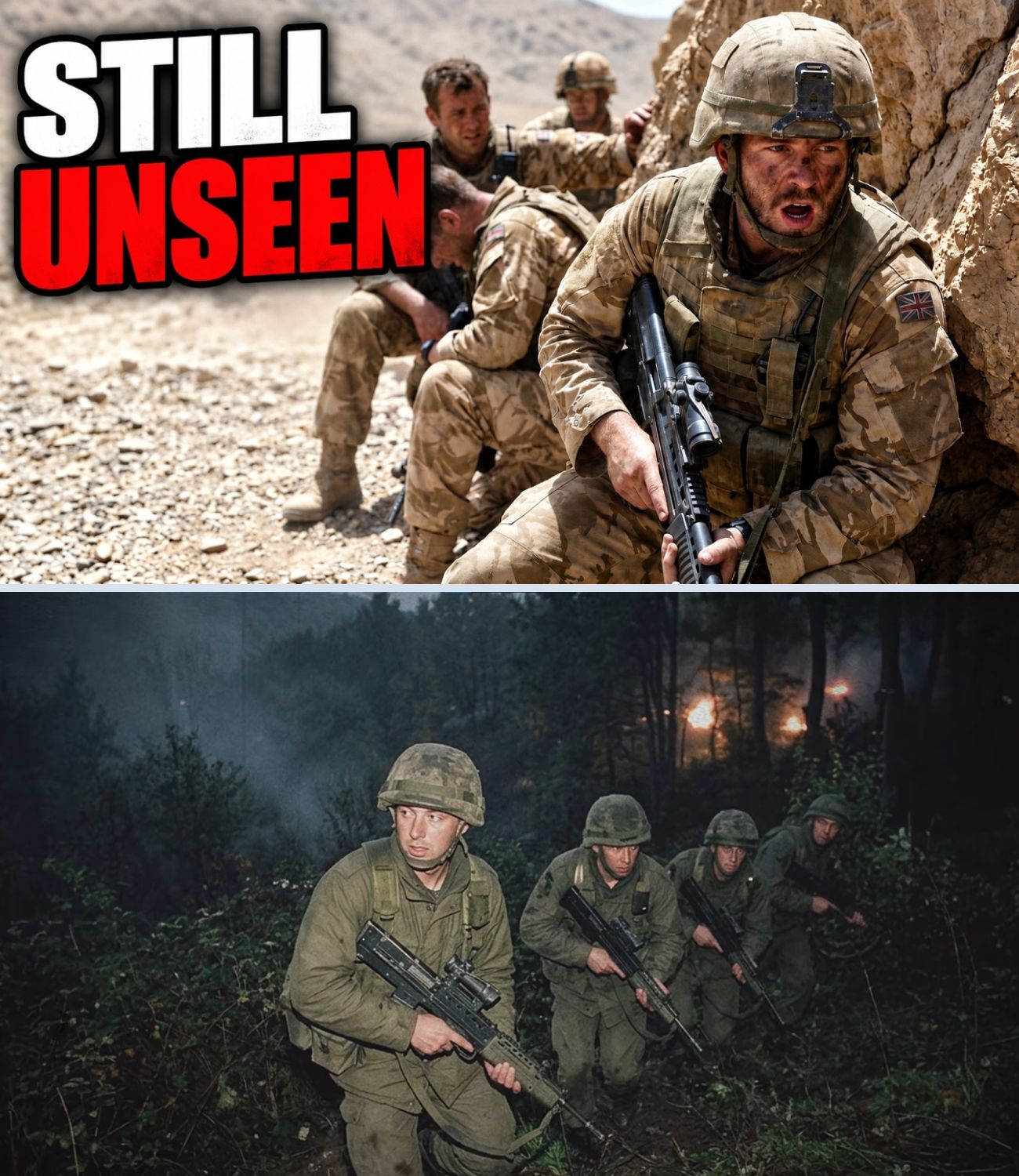
It had been built around a much older, much more personal understanding of what any detectable signature of any kind from any source could actually cost. Sorley was 25 in the autumn of 2000, one year past selection, attached to a small surveillance element supporting SFOR’s continued stabilization mission in Bosnia, tasked that particular week with confirming the movements of a man suspected of involvement in wartime atrocities and believed to be sheltering under a false identity in a farmhouse compound roughly 40 km from the nearest SFOR position.
The surveillance team’s job was patient and unglamorous: days spent establishing and holding observation positions overlooking the compound, confirming patterns of movement and security before anyone higher up the chain decided whether and how to act on what the team reported. The four-man team, Sorley among them, had established their primary observation position on a wooded rise roughly 600 m from the compound, close enough to observe clearly through field glasses, and far enough by every standard the team had been trained against up to that point in their careers to remain undetected by anything short of a deliberate, organised search using equipment none of them expected to encounter that week.
What none of them had accounted for, because nothing in the pre-mission briefing had suggested it, was that the compound security detail—four or five armed men rotating through informal guard duty around the property—had access to a piece of equipment nobody expected a group of that size and disposition to have acquired: a thermal imaging device, almost certainly former Yugoslav military stock that had found its way into private hands through the same black market channels flooding the region with surplus weapons in the years after the wider conflict had ended.
On the second evening of the surveillance, one of the security detail’s men climbed to the compound’s low roof line with the device and began sweeping it slowly across the surrounding terrain, a routine security check that nobody on Sorley’s team had any reason to expect, and that came within, by the team’s own later estimate, perhaps 30 metres of catching all four of them in a single sweep.
It was cold enough that night that the team’s own body heat, even through careful positioning against the terrain, would have registered clearly against the cooler surrounding ground had the sweep continued another few degrees further in their direction. The man on the roof line paused, seemed to hesitate, and moved the device onto another arc of the perimeter instead, whether because he’d seen nothing worth stopping for, or because the team’s positioning had simply put enough terrain between them and his line of sight that the margin held.
Sorley, watching the sweep through his own glasses from the observation position, understood immediately what he’d just watched and understood with equal immediacy that it changed the entire risk picture for the rest of the mission. He needed to report the discovery—a genuine and significant change to the threat assessment that the rest of the operation depended on knowing about—and the team’s radio protocol called for exactly that kind of update to go out promptly rather than wait for the next scheduled window hours away.
The transmission went out at 2140, compressed and brief by any ordinary standard, perhaps 11 seconds of actual transmission time carrying the essential details of what the team had just observed. It should have been short enough by every piece of training any of the four men had received to be functionally safe against anything except a dedicated purpose-built direction-finding effort actively listening for exactly that frequency at exactly that moment.
What none of them knew, and what the mission’s own intelligence picture had entirely failed to flag, was that the same black market channels supplying the compound security detail with a thermal device had also supplied them weeks earlier with a rudimentary radio direction-finding rig—crude compared to anything a state military would field, but functional enough in the hands of someone who understood roughly how to use it to produce a rough bearing on a transmission of even modest length.
The compound security response began moving toward the team’s general position within 11 minutes of the transmission, not with the precision of a team that had pinpointed an exact location, but with enough confidence in a general bearing that avoiding contact required the team to abandon the observation position immediately rather than wait and hope the response was heading elsewhere.
Sorley gave the order to extract at 2153, the four men moving fast and low away from the rise toward the pre-planned rally point roughly 2 km to the northeast, radios silent now by necessity rather than schedule. The security detail’s search element, moving with local knowledge of terrain the team didn’t share, closed the gap faster than the extraction plan had comfortably accounted for. Contact came at 2211: a burst of undisciplined but genuinely dangerous fire from a wooded treeline the team’s own route had unavoidably needed to cross, close enough that Sorley felt at least one round pass near enough to hear it rather than simply hear the shot that fired it.
The team returned fire in short, controlled bursts—enough to break the contact rather than win it outright—and continued moving toward the rally point while a supporting element, alerted by the team’s own emergency transmission moments into the contact, began moving to cover their final approach. All four men reached the rally point and the waiting vehicles inside 19 minutes of the initial contact, extracting without serious injury beyond a graze one trooper carried on his forearm from a round that had passed close enough to draw blood without doing anything more than that.
The mission itself, in the narrow sense the after-action report used to describe it, had succeeded. The team had confirmed the suspect’s presence, documented the security detail’s routine, and extracted intact information that fed directly into the operation that eventually led to the suspect’s capture weeks later through channels that had nothing further to do with Sorley’s own team.
What the after-action report did not fully capture, because it was not the kind of thing an after-action report was designed to capture, was the specific shape of the lesson Sorley carried away from that night personally. He had watched two entirely different technical threats—one visual and one electromagnetic—nearly compromise the same mission within roughly 2 hours of each other, both threats produced by an adversary whose access to sophisticated equipment nobody in the planning process had anticipated or budgeted for.
The lesson was not that thermal imaging was dangerous, and it was not that radio transmissions were dangerous. It was that any detectable signature, regardless of which sense or which spectrum an adversary happened to be equipped to exploit, represented an equally serious vulnerability that deserved equally serious discipline, and that assuming an adversary’s technical sophistication based on their apparent size or organization was a habit that had nearly gotten four men killed on a cold hillside in Bosnia.
Sorley carried that unified understanding forward through every command he held over the following decade of his career, building first a rigid radio discipline into every patrol he ran, then extending the same underlying logic to thermal signature management as his own experience and the regiment’s accumulated doctrine matured around the problem, and finally, as the decade wore on and satellite reconnaissance capability spread beyond state militaries into the hands of increasingly well-resourced non-state actors and their sponsors, extending the identical logic a third time to account for a threat that had barely existed as a practical concern when he was 25 years old on that Bosnian hillside.
By the time he commanded the four-man patrol that walked unbothered and unaware straight through three years of American technical investment in Nad Ali, the discipline that defeated Cobalt Mesh had already been complete, tested, and entirely unremarkable to the men practicing it for the better part of 10 years.
Sorley’s patrol inserted into Nad Ali on the night of the 12th of April, four men moving on foot from a helicopter drop point 6 kilometres outside the district’s populated areas: Corporal Danny Okonquo on point, Trooper Stefan Marrick carrying the patrol’s radio set, and Trooper Callum Beatty rounding out the element behind Sorley himself.
The mission called for four full days of covert observation, confirming insurgent positions and troop concentrations across a stretch of compounds and irrigation ditches the coalition’s own maps only partially understood, before extracting on the 16th ahead of the clearing operation the reconnaissance was meant to support directly.
Roughly 600 km away at a fusion cell coordinating Cobalt Mesh’s collection effort, the system began its own work the moment the patrol crossed the insertion point: satellite tasking requests already filed against the district’s coordinates for the full 4-day window, signals collection antennas oriented toward the same stretch of terrain, and thermal analysis software running continuously against whatever imagery the satellite passes actually produced.
Dinger himself was not present at the fusion cell, monitoring instead from Virginia through the same reporting chain that would eventually deliver him a single line confirming the result. But the technicians running the collection effort day-to-day understood exactly what was being asked of the system and worked the problem with the same seriousness they’d have given a genuinely hostile target rather than a cooperative exercise.
The patrol’s movement through the first two days followed the same rhythm every man in it had practiced for years without needing to discuss it aloud, muscle memory built through repetition rather than active decision-making under pressure. Daylight hours were spent in concealed observation positions chosen as carefully for their thermal profile as for their sight lines: low ground shaded from direct sun and backed by terrain that broke line of sight to the compounds most likely to hold captured surveillance equipment, each position confirmed as suitable before any man actually settled into it for the hours ahead.
Movement between positions happened during narrow windows Sorley’s own mental schedule tracked against the district’s satellite overflight pattern, calculated well before insertion and refined as the mission progressed, each shift timed to keep the patrol under whatever cover the terrain offered during the specific minutes a low Earth orbit pass might actually produce usable imagery of the ground below.
Cobalt Mesh’s satellite collection returned nothing across those first two days beyond empty terrain and, on one pass, a brief thermal anomaly near a compound wall that the analysis team correctly identified as livestock rather than anything worth escalating to the fusion cell’s leadership.
The signals collection effort fared no better despite dedicated antennas covering the full frequency range Sorley’s patrol was known to operate on. Sorley’s patrol transmitted exactly twice in the first two days, both times compressed bursts under 15 seconds carrying essential situation reports rather than anything resembling routine chatter, and both times timed against the patrol’s own internal schedule rather than any predictable interval an adversary, human or automated, could plausibly learn to anticipate and prepare for in advance.
By the third day, the patrol had confirmed what the mission had actually been sent into the district to find. Okonquo, working the district’s eastern edge from a position overlooking a cluster of three compounds, spotted a fighter carrying what field glasses confirmed as a handheld thermal device roughly similar in profile to the kind Sorley had encountered a decade earlier in Bosnia, moving it in slow, uncertain arcs across open ground the way a man checks equipment he doesn’t entirely trust rather than one who’s operated it for years and knows its limitations intimately.
Marrick, cross-referencing the sighting against the patrol’s growing map of compound activity built up over the preceding two days, identified a second location roughly 400 m away where a fighter appeared to be working with a handheld radio scanner, sweeping slowly across frequencies rather than monitoring a single fixed channel the way ordinary routine communications discipline would normally suggest a trained operator should do.
The confirmation mattered enormously to the mission’s actual purpose: precise evidence of exactly the technical threat the coalition needed to understand fully before committing a larger force to the district for the clearing operation already scheduled for the following week.
It also meant the patrol was now operating inside the effective range of two separate detection capabilities simultaneously—the same category of threats Sorley had learned to respect on a cold Bosnian hillside 10 years earlier, now confirmed as active and genuinely present in the exact ground his patrol needed to cross to complete its final day of observation and reach the extraction point on schedule the following night.
Sorley spent the remainder of the third day working through the tactical implications with Okonquo and Marrick in a low, careful exchange conducted almost entirely through hand signals and whispered fragments rather than anything approaching normal conversation, the same radio discipline that had kept them invisible for three days now extending to their own internal planning as well.
The final leg of the mission—a movement roughly 2 km south to confirm troop concentrations at the district’s largest compound—would carry the patrol directly through the effective detection range of both the thermal operator and the radio scanner they had just identified, a route that could not be avoided entirely without abandoning the last piece of intelligence the mission had been sent to collect.
Sorley made the call to proceed, timing the final approach for the deepest part of the night when the compound’s own security rotation historically thinned to its weakest coverage and the ambient temperature gap between a moving body and the surrounding ground reached its narrowest natural margin of the entire day.
The patrol moved out at 0230 on the 15th, the deepest part of the night and the exact window Sorley had calculated against both the compound’s thinnest security rotation and a satellite pass Cobalt Mesh had tasked for that same stretch of terrain roughly 40 minutes later. Neither fact had any bearing on the other in Sorley’s own planning process; he had chosen the window purely against the insurgent threat, the same calculation he would have made if no American system had ever been watching at all that night or any other night of the mission.
Okonquo led the approach along a route that kept the patrol in the lowest available ground for the full 2 km, using an irrigation ditch running roughly parallel to their intended path for the first 600 m before the terrain forced a shift onto more exposed ground closer to the compound itself.
The four men moved at a pace slow enough to look from any distance like nothing was moving at all, each step placed and waited before the next began, the same discipline that had carried them through four full days of observation without a single close call worth logging in anyone’s after-action report.
At 0247, the patrol crossed within 180 m of the position where Okonquo had spotted the thermal operator the previous day, close enough that a competent sweep at that range would have registered four human shapes clearly against the cooler surrounding ground had anyone actually been working the device at that particular hour.
The compound security rotation, exactly as Sorley had calculated based on four days of patient observation, had thinned to a single man walking a slow border circuit near the main gate rather than actively working the thermal device at all, the equipment itself, as far as the patrol could tell through brief observation from distance, sitting unused inside the compound for the entire night.
At 0251, roughly 90 seconds before the patrol cleared the exposed stretch entirely, the tasked satellite pass began its collection window directly overhead, sensors oriented toward exactly the ground the patrol was crossing at that precise moment.
The thermal contrast between four moving bodies and the surrounding terrain, already narrowed by the pre-dawn hour to its smallest natural margin of the full 24-hour cycle, sat below the threshold the system’s own analysis software required to flag a confident detection, four faint, ambiguous signatures indistinguishable in the imagery the pass actually produced back at the fusion cell from thermal noise the software routinely discarded without escalating it to any human analyst.
The patrol reached its final observation position at 0310, confirmed troop concentrations at the district’s largest compound over the following 90 minutes of careful, silent watching without a word exchanged between any of them, and moved out toward the extraction point at first light, the same radio discipline holding through the withdrawal that had held through every single hour before it across the full four days.
Neither the compound security detail nor Cobalt Mesh’s collection effort logged anything across that entire window beyond ordinary, unremarkable terrain. What defeated both threats simultaneously that night was, in the plainest possible sense, the exact same behaviour viewed from two entirely different vantage points, one human and one entirely automated.
The discipline that kept four men below a fighter’s thermal sweep was mechanically identical to the discipline that kept them below an orbital sensor’s detection threshold: the same timing, the same terrain use, the same fundamental refusal to produce a signature large enough or sustained enough for anything human or automated to act on with any real confidence.
Sorley had never once planned the mission around Cobalt Mesh specifically, not for a single hour of the entire four days; he had planned it as he always did around the one threat that had ever actually mattered to him, and the American system had simply been standing in the same blind spot as everyone else that night, watching exactly the same nothing.
The full technical debrief reached Dinger’s desk two days after the single-line report that had first stopped him cold, a longer document walking through four days of satellite tasking, signals collection, and thermal analysis that had produced across the entire window nothing correlating to the patrol’s confirmed movements at all.
The explanation, once a British liaison officer walked him through the outline of what Sorley’s patrol had actually been doing, landed with the specific quiet weight of something that should have been obvious well before three years and a significant budget had gone into finding out the hard way. What settled the question of the protocol’s future was not the technical failure alone.
A separate section of the review compiled by the fusion cell’s own senior analyst, rather than anyone with a stake in Cobalt Mesh’s continued funding, flagged the arrangement’s actual risk in terms nobody on the American side had fully worked through before approving it: tasking additional satellite coverage and active signals collection over Nad Ali, however passive the intent, had generated a measurable spike in technical activity focused on that exact district during the exact window a partner nation’s patrol was operating covertly inside it, a footprint that any sufficiently alert adversary monitoring for unusual coalition attention might have noticed and acted on regardless of what Cobalt Mesh itself had or hadn’t managed to detect in return.
Command’s decision when it came addressed both problems in the same short memo: the protocol was terminated, and live partner testing against operational missions was prohibited going forward without a far more rigorous review of exactly what risk the collection effort itself introduced onto the ground it was watching.
Dinger signed off on the decision without argument, three years of work closing not with a technical vindication, but with the plainer, harder lesson that validating a system against something real meant accepting that the system’s own presence became part of what was real, whether anyone had accounted for that cost going in or not.
Zero correlated track. Four days, two threats defeated by one unchanged habit. And a three-year programme closed not because it failed to find the men it was looking for, but because looking for them at all had never been as safe as anyone testing it had assumed.
You Might Also Enjoy

“We Thought They Would Negotiate”—What Argentine Soldiers Said When The British Attacked Goose Green

“You’ll Never Finish My Ruck March, Limey” — US Sergeant Who Challenged the SAS, Then Fell Out First






