The Unit Inside the SAS That Even Special Forces Won’t Talk About
There is a building beside the Thames in Vauxhall that most people walk past every day without knowing what happens inside it. It has no military markings, no uniformed guards, nothing that would catch your eye for more than a second. Inside that building, decisions are made that never appear in parliamentary records, never reach a ministry desk, and never get discussed in any briefing room that a general has access to. When those decisions require action on the ground, they don’t call the SAS. They call the men who used to be SAS.
The men who passed the hardest selection process in the world, and then passed a second one nobody talks about. The men who, by the time they walk through that second door, had already ceased to exist on paper. This is the story of that unit. Most people who follow British military history believe they know where the ceiling is. They know about the parachute regiment. They know about the Royal Marines. They know that somewhere above those two sights a harder standard still, a place called Hereford, where a selection process so brutal that it kills candidates in peacetime produces the men the British government calls when everything else has already failed. The Special Air Service, the SAS. By any measure, by any comparison with any other military unit on Earth, these men represent the highest expression of what a soldier can be trained to become. That is what most people know.
What most people do not know is that the ceiling is not the ceiling. Inside the special forces community, inside the tight world of Hereford and Poole, there is a door that most operators never see and fewer still are ever shown. It does not have a sign. It is not announced. There is no ceremony attached to being asked to walk through it. But for a small number of men in every generation, men who have already proved themselves at the highest level the British military offers, the door exists. And what is on the other side of it is a unit that the Ministry of Defense has never officially confirmed, that parliamentary oversight does not formally reach, and that operates under a set of rules entirely separate from anything the armed forces recognize.
That unit is known in the limited circles where it is known at all as the Increment. The name is informal. There is no cap badge attached to it. No regimental history. No parade. The Increment is not a regiment. It is not a squadron. It is a standing capability. A pool of operators drawn from serving members of the SAS and the SBS, seconded not to any military command, but directly to the Secret Intelligence Service, to MI6, to the organization that sits in that building beside the Thames and makes decisions that no minister will ever be asked to explain in public.
That distinction matters more than it might seem. When the SAS deploys, there is always a paper trail. It is classified. It is restricted. But it exists. A commanding officer signs off. A chain of command runs from the patrol on the ground to the ministry in London. If something goes wrong, if men are killed or captured, or if an operation causes a diplomatic incident, there is a structure that absorbs the consequence. Inquiries happen. Reviews happen. Parliament may not be told everything, but it is told something. The military is accountable, even when that accountability operates in the dark.
The increment does not work that way. Picture a man in a corridor. No rank on his shoulder. No service number on his chest. No document in his jacket that connects him to any regiment or any government department that a lawyer could subpoena. He is about to walk out of a building and into a city where his presence cannot be officially explained. The legal framework that makes that possible is called the Intelligence Services Act. It gives MI6 authorities the military does not have. Operations conducted under it do not require military sign-off. They do not generate the same kind of record. The oversight that applies is narrower, quieter, and conducted by a committee that meets in rooms most members of Parliament will never enter. When this man lands in whatever city he is heading to, he is not a soldier in any legal sense his government will acknowledge. He is a civilian asset. A man whose presence cannot be confirmed by anyone with a uniform or a title. That is not an accident. That is the entire point.
There are things that need to be done in the world that the SAS cannot do. Not because the SAS lacks the skill or the courage or the capacity, but because the SAS, by its nature, carries a flag. When a special forces unit deploys, the country it belongs to is implicated. Governments can deny the details of an operation. They cannot deny that their special forces exist or that they operate in certain theaters. The increment fills the space where even that level of implication is too much. The space where what needs to happen cannot, under any circumstances, be traced back to a British soldier.
For the men selected into that unit, this is not an abstraction. It is a daily operational reality. They are SAS operators. They have passed the selection that less than 10% of candidates complete. They have years of combat experience across theaters that most soldiers never see. By the time the question is put to them, they are already among the most capable human beings their country has ever produced. And the question is not about skill, or endurance, or tactical judgment. It is simpler than any of that. How far are you willing to disappear? Not from the battlefield, not from danger, from everything else. From your name, from your record, from the professional identity that every soldier, however secretive his role, can at least acknowledge to himself. From the knowledge that if something goes wrong, the organization will come for you, will fight for you, will at the very least confirm that you existed, and that what you did mattered. The men who answered yes to that question are why certain things got done that could not have been done any other way. What made them capable of saying yes, and what that answer cost them, is what this story is about.
To understand what the increment selects for, you have to first understand what SAS selection produces. Not the statistics, not the attrition rate, not the famous hills of the Brecon Beacons in January. The product, the human being who comes out the other side. SAS selection does not build soldiers. It reveals them. The physical demands are real, and they are severe. The distances covered, the weight carried, the time allowed, the conditions endured. Men have died on selection, not as a failure of the process, but as a consequence of it. The standard does not move to accommodate the weather or the candidate or the year. It is what it is. The candidates who cannot meet it do not pass.
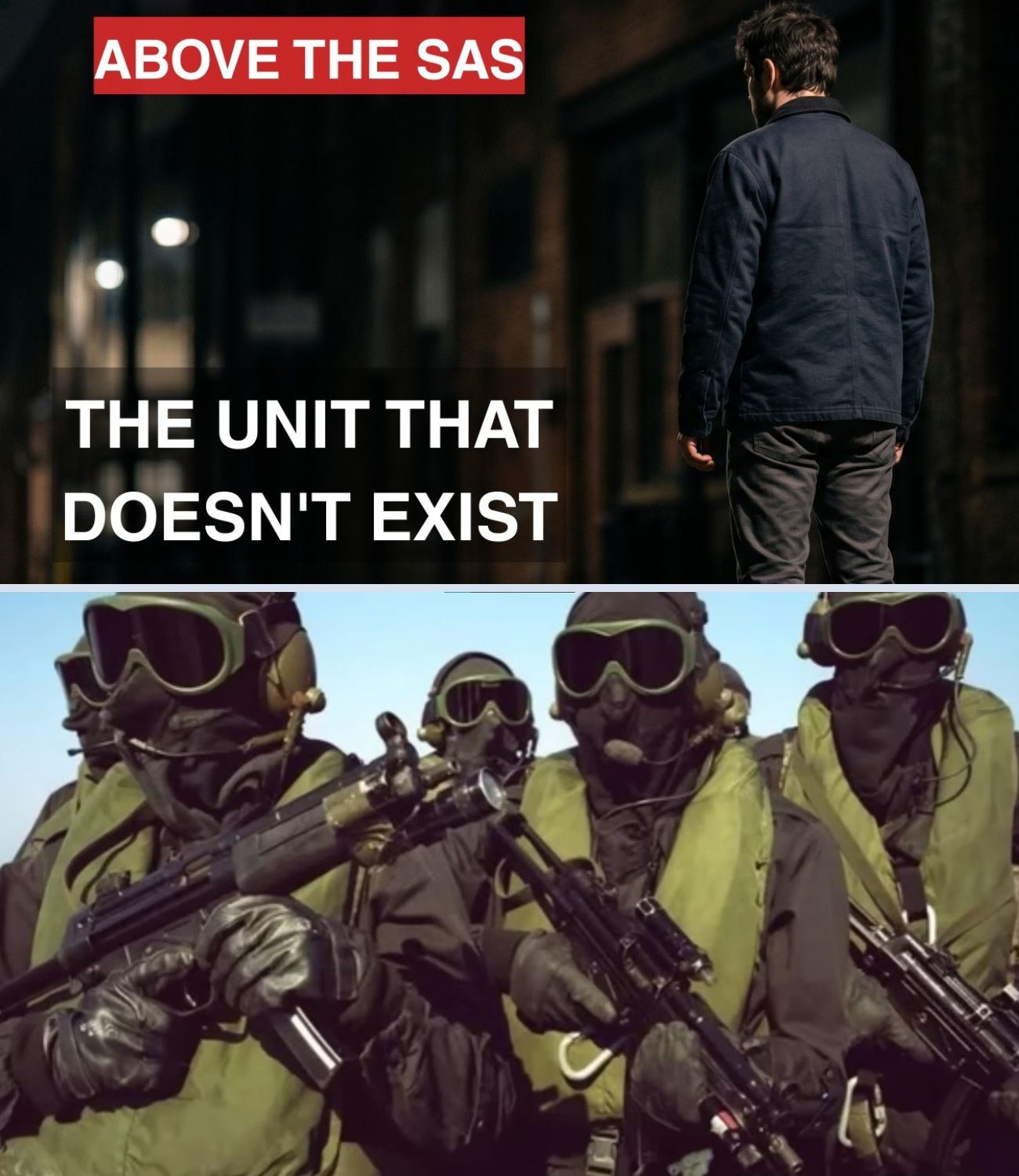
What is less understood is what the process is actually filtering for beneath the physical surface. The men who pass share a psychological profile that is consistent and rare. They are not reckless. They are not aggressive in the way that popular imagination tends to picture elite soldiers. They are calm. Calm under conditions that produce panic in other people. They make good decisions when the information is incomplete, when the situation is deteriorating, and when the consequences of a wrong choice are immediate and irreversible. They function alone, not just tolerate solitude, but function inside it without the scaffolding that most human beings need to operate. The company of a unit, the reassurance of a chain of command, the knowledge that someone above them has the larger picture. SAS operators do not require any of that to keep moving forward.
That profile is extraordinary. It takes years to develop and a rare kind of person to develop it in. The British Army produces thousands of soldiers and from that pool, across years of searching, selection identifies a few hundred men who have it. And that profile is not enough for what the Increment needs. This is what separates the second selection from the first in a way that goes beyond difficulty or endurance. The Increment is not looking for a harder version of the SAS operator. It is looking for a different one. A man who has everything Hereford requires and then one additional quality that selection does not test for and cannot produce. A quality rarer than physical courage, rarer than tactical intelligence, rarer than the ability to function alone in a hostile environment. The ability to not exist, not tactically, not operationally, as a person.
An SAS operator in a forward operating base in Afghanistan is invisible in the sense that his mission is classified and his methods are not discussed. But he is a soldier. He wears a uniform or something close to one. He operates within a military structure. His colleagues know who he is. His commanding officer knows where he is. His family knows he is in the military, knows he deploys, knows that when he comes home there are things he will not talk about. That invisible has edges. It has a shape. The people around him know the shape even if they cannot see inside it. The Increment operator does not have that shape. He is not a soldier on a classified deployment. He is a civilian. His cover is not a thin, professional fiction maintained for the duration of an operation. It is a constructed identity that has to hold indefinitely under sustained scrutiny from people who are not enemy interrogators, but are in a different way far more dangerous to the cover. His neighbors, his family, the friends who knew him before he became whatever he is now. People who love him and who are, because they love him, paying close attention.
This is what the second selection tests for. The closest parallel that exists in any profession is the long-term deep cover officer. The man or woman who spends years inside a target organization building real relationships, earning real trust, while holding a constructed identity at the center of every interaction. Intelligence services have studied this profile for decades because the failure mode is catastrophic. A soldier who breaks under interrogation costs an operation. A deep cover officer who breaks costs lives, networks, years of work, and the people who trusted him. But that parallel only goes so far. The deep cover officer, at some level, has a framework around him. Handlers, controllers, people who know what he is doing and why. People he can speak to, carefully and within limits, about the reality beneath the cover. The increment operator in the deepest deployments does not have that. The support that MI6 provides is real, but it is not a regiment. It is not the brotherhood that special forces units build across years of shared danger. He left that brotherhood when he walked through the second door. He cannot go back to it for comfort or the simple human confirmation that what he is doing is known and valued by people he respects.
He chose that. The selection process is designed partly to find men who understand what they are choosing. Not intellectually, in their bones. Candidates who arrive thinking of this as career progression, as the next challenge, as the logical next step, tend not to pass. Not because they lack the skill, but because they have not fully reckoned with the cost. The men who pass share something harder to measure. A relationship with their own identity that is unusually loose. Not unstable. Loose. They do not grip their sense of self so tightly that the removal of its external markers constitutes a crisis. They know who they are at a level that does not require confirmation from outside to stay intact. That quality cannot be trained into a man. It can only be found in one. The finding of it is what the second selection is for. By the time a man passes, he has shown that he can stand in the space between identities and function there. That he can carry the knowledge of what he actually is while presenting something entirely different to everyone around him. That he can do that not for a week or the duration of an operation, but across the arc of a career that will leave no official record and produce no public acknowledgement. He has answered the question. And now he has to live inside the answer.
In 2002, a senior prosecutor at the International Criminal Tribunal for the former Yugoslavia sat in a briefing room in The Hague and looked at a file that should not have existed. It contained movement patterns, safe house locations, contact networks, and daily routines of three men who had been successfully invisible for years. Men with resources, protection, and every reason to believe they had disappeared permanently. The prosecutor asked the obvious question:
“Where did this come from?”
The answer he received was the same answer that kept appearing whenever certain operations produced results that conventional intelligence collection could not account for. It came from the right people. No unit name. No operational detail. No paper trail that led anywhere a lawyer could follow. Just results that should have been impossible, and a source that officially did not exist. The prosecutor put the file to use and did not ask again. That was the arrangement. That was always the arrangement. That prosecutor was not the only one who stopped asking.
The Increment does not publish its operational history. It does not hold reunions. Its former members do not write memoirs. What is known about its activities comes from investigative journalists, academic researchers, former intelligence officials speaking carefully and obliquely, and the occasional document that reveals a corner of something larger without revealing the whole. What follows is what that reporting has established, not confirmed operational detail, reported. The distinction matters, and this script will not pretend otherwise. With that said, here is what the reporting shows.
The first theater where the Increment’s presence appears consistently in the historical record is the Balkans. The mid to late 1990s. The wars in Bosnia and Kosovo had produced a problem that the international community could not solve through conventional means. The International Criminal Tribunal for the former Yugoslavia had indicted dozens of individuals for war crimes. Some of the most serious among them, men responsible for massacres, ethnic cleansing, the destruction of civilian populations, were living openly in territories where they had political support, local protection, and in some cases armed bodyguards. The international community knew where they were. NATO forces were present in the region, and for years, nothing happened.
Radovan Karadžić spent over a decade in plain sight. He was living in Belgrade under a false name, working as a spiritual healer, growing a beard long enough that the people who passed him on the street every day had no idea they were walking past a man indicted for genocide. Ratko Mladić, responsible for the massacre at Srebrenica, was sheltered in Serbian villages for 16 years before he was found. These were not men hiding in bunkers. They were men protected by communities, by networks, by a political environment that made official action too costly to contemplate. The reasons were real. Arresting a protected war crimes indictee in a Bosnian Serb stronghold meant sending soldiers into a hostile environment, triggering a potential armed confrontation, and creating a diplomatic incident that could destabilize the fragile peace that had taken years to negotiate. The SAS had the capacity to conduct those arrests. The political cost of using them openly was considered too high. The increment operated in that space.
What the reporting suggests, drawn from multiple sources across two decades of investigative journalism, is that British intelligence ran operations against ICTY indictees in the Balkans, using operators who carried no military identification, worked under civilian cover, and whose presence in the region was not acknowledged by any British official. Some of those operations were surveillance and intelligence collection, building target packages, confirming locations, establishing patterns of movement. Some of them, according to the reporting, went further. The details of what further means in this context have never been officially confirmed. The pattern of what happened to certain indictees in the years following those reported operations is part of the public record.
The second theater is Iraq. Not the invasion of 2003, but the years immediately before it. The intelligence picture that shaped the decision to go to war was built partly on human intelligence collected inside Iraq under conditions that no uniformed presence could have maintained. This is not a controversial claim. Post-war inquiries acknowledge that human intelligence on Iraq’s weapons programs was inadequate, contested, and in critical areas, wrong. What those inquiries do not address in detail is how that intelligence was collected and by whom.
What the reporting suggests is that in the years between 1998 and 2003, British intelligence ran close access operations inside Iraq that required men moving under civilian cover through a denied area, making contact with sources, collecting material from facilities that satellite imagery could not adequately read, doing all of it without any trace that could be connected to British military or intelligence activity. The men conducting those missions were not analysts. They were not case officers in the traditional sense. They were operators who could handle the physical demands of working in a hostile environment while maintaining a cover that would hold under scrutiny from a security service actively looking for exactly that kind of presence. That is a narrow and rare capability. It is what the Increment was built for.
The third chapter has no single theater and no specific timeline. It is the ongoing reality of what a unit like this exists to do. There are countries where British interests operate at a level that would cause serious damage if acknowledged. There are actions that need to be taken in those countries that cannot be connected to the British government in any traceable way. There are individuals who need to be found or watched or in some cases stopped in environments where sending a special forces unit is politically impossible and sending an intelligence officer without physical backup is operationally reckless. The Increment is the answer to that category of problem, not a last resort, a standing answer, maintained at consistent readiness, designed from the ground up for the kind of situation where the only workable solution is a man trained to the highest standard the British military produces, but carrying none of the markers that would identify him as such.
The men in that unit understand what they signed up for. They know that the operation they are running will not appear in any record. They know that if it succeeds, the credit will go to something else or to no one at all. They know that if it fails, if they are captured or killed or compromised, the response from London will be silence, not the silence of an organization protecting them by not commenting, the silence of an organization that cannot acknowledge them without unraveling something much larger than a single operation. There is no rescue plan. That is not drama. It is administrative fact. Every other special forces unit at the extreme end of a compromised operation has something coming for it. The SAS will fight to recover its own. The SBS will fight to recover its own. The military chain of command has mechanisms, imperfect and sometimes slow but real, for extracting its people from situations that have gone wrong. Those mechanisms exist because soldiers exist within a structure that claims them.
The increment operator is not claimed. He went through the second door and the door closed behind him. The organization that sent him knows where he is. It will not come through the wall to get him back. What it will do, if he survives and returns, is exactly what it has always done. Say nothing. Record nothing. And ask him, when the time comes, if he is ready to go again. Most of them say yes. That single detail, more than any operational history, more than any reported mission, is the clearest statement of what these men are. Not what they can do. What they are. Because the choice to go again, made in full knowledge of what going again means, is not a product of training or conditioning or pressure from above. It is a choice made freely by a man who already knows the answer to every question he has not been allowed to ask out loud.
And somewhere right now, in an ordinary seat on an ordinary flight, one of those men is on his way home. The man at the cafe table folds his newspaper. He has been sitting there for 4 hours and the operation is over and nobody in the cafe knows that anything happened. The waiter who refilled his coffee twice thought he was a businessman waiting for a meeting that never came. The couple at the nearest table paid no attention to him at all. The two men who walked past the window at 11:43 and did not come in because of what they saw in his newspaper have no idea what they avoided or why. He leaves a tip that is appropriate but not memorable. He walks to a car not registered to his real name. He drives to an airport and boards a flight on a passport that belongs to a man who does not exist.
Somewhere over the continent in a seat between a sales representative from Stuttgart and a retired teacher from Lyon, he allows himself to think about home. About the person who will be at the door when he gets there. About the question he will be asked. The same question he is always asked. Delivered with that particular mixture of relief and resignation he has learned to recognize and has never found a way to make easier.
“How was the trip?”
“Fine,” he will say. “Quiet. Nothing interesting.”
And that will be the most complete truth he is permitted to tell.
This is what chosen invisibility costs. Not in the acute intensity of a moment where everything is at stake and the training takes over and the body and the mind do what they were built to do. In the long tail of it. In the years of returns. In the accumulation of conversations that cannot happen and questions that cannot be answered and a professional identity that exists nowhere that people who love him can see. Every soldier who serves in a special forces unit carries a burden of silence. Operations that cannot be discussed. Casualties that cannot be explained in full. Decisions made under conditions that have no adequate civilian translation. The men of the SAS carry that. The men of the SBS carry that. It is a weight former operators describe consistently. The isolation of an experience that the people around you cannot begin to place.
The increment operator carries something different in kind, not just in degree. The SAS soldier can say, at the very least, that he served. That he was there. That the regiment he belongs to is real, and its history is known, and its sacrifice is recorded. He cannot tell you what he did on a specific night in a specific place. But he can tell you what he is. He can locate himself inside a tradition that has a name and a meaning the people around him can partially grasp. The increment operator cannot do that. The organization he belongs to does not exist. The career he has built has no record he can point to. The professional identity that gives a soldier not just a role, but a self, the knowledge of what he is in the world and why it matters, is unavailable to him even in private. He is not SAS on a classified deployment. He is not anything the military has a category for. He is a man who answered a question and has been living inside that answer ever since. In a space that has no official name and no acknowledged history and no way of being explained to anyone outside the very small circle of people who already know.
What that does to a person across a decade of it is something former operators have spoken about only in fragments, obliquely, in ways that share a common shape without ever naming it directly. Not the trauma of combat, not the weight of loss, something quieter and stranger. The difficulty of finding yourself beneath layers of constructed identity that have been maintained so long and so completely that the line between them becomes unclear. Some come back from it. Some find their way home to something recognizable. Some do not. The men who pass the second selection are chosen partly because they have a relationship with their own identity that can withstand that pressure. The looseness the selectors are looking for. The capacity to carry a self that does not require external confirmation to stay intact is what makes this life possible. Not easy. Not without consequence. Possible.
But the ones who come through it, the ones who find their way back, describe something that has no military equivalent. The strangeness of re-entry. The difficulty of being present in ordinary moments after years of treating ordinary moments as cover. The relationships that did not survive the weight of permanent silence. And the ones that did. And what they required of the people on the other side of them. A kind of love that asks almost nothing and receives almost nothing in return. And holds anyway. Not many people are capable of that. Not many soldiers find it. The ones who do are, in a way that is entirely real and entirely unrecorded, part of what makes this unit function.
The Increment produces no public heroes. It buries its losses in silence. It exists in no official document you will ever read, but it continues. In every generation, a small number of men are asked the question. A smaller number say yes. A smaller number still are selected. And from that group, the smallest number of all come through it with something intact that resembles the person they were when they walked through the second door. Those men are the reason certain things happened that could not have happened any other way. In the Balkans in the 1990s, when war criminals walked free and the international community looked at its hands. In Iraq before the war, when the intelligence picture was being built by people who cannot be named in any document you will ever read. In places and at times that will not appear in any history, because the people who made that history were selected for their ability to leave no trace of having been there.
There is a building beside the Thames in Vauxhall. Inside it, decisions are made that never reach a parliamentary record. When those decisions require a man on the ground, they need someone who has already answered the hardest question in British special forces. Not can you pass selection. Not can you operate under fire. How far are you willing to disappear? The men who said yes are still out there. Some of them are on flights right now between cities you would recognize, carrying names you will never know. Doing work that will never be acknowledged by anyone with a title or a podium. Some of them have come home for the last time and are sitting in ordinary houses in ordinary streets trying to remember how to be a person the world can see. All of them answered the question and all of them are living inside the answer.
You Might Also Enjoy

“We Thought They Would Negotiate”—What Argentine Soldiers Said When The British Attacked Goose Green

“You’ll Never Finish My Ruck March, Limey” — US Sergeant Who Challenged the SAS, Then Fell Out First






