The Untold Story of Princess Diana’s Mother, Frances Shand Kydd
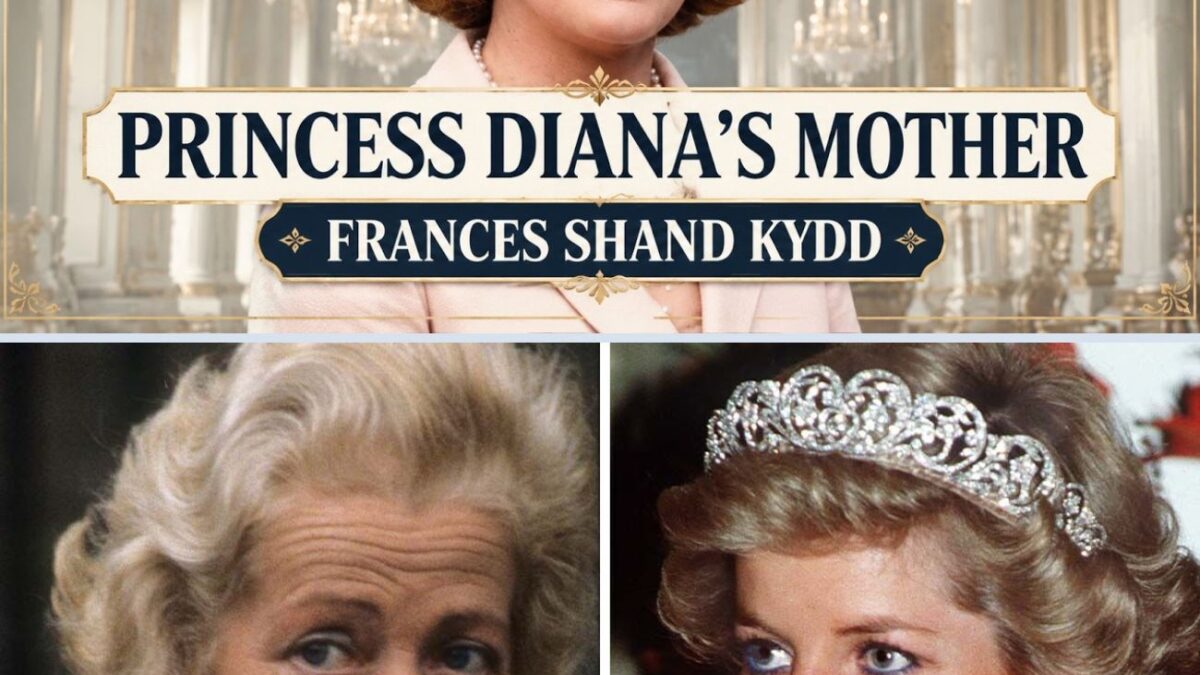
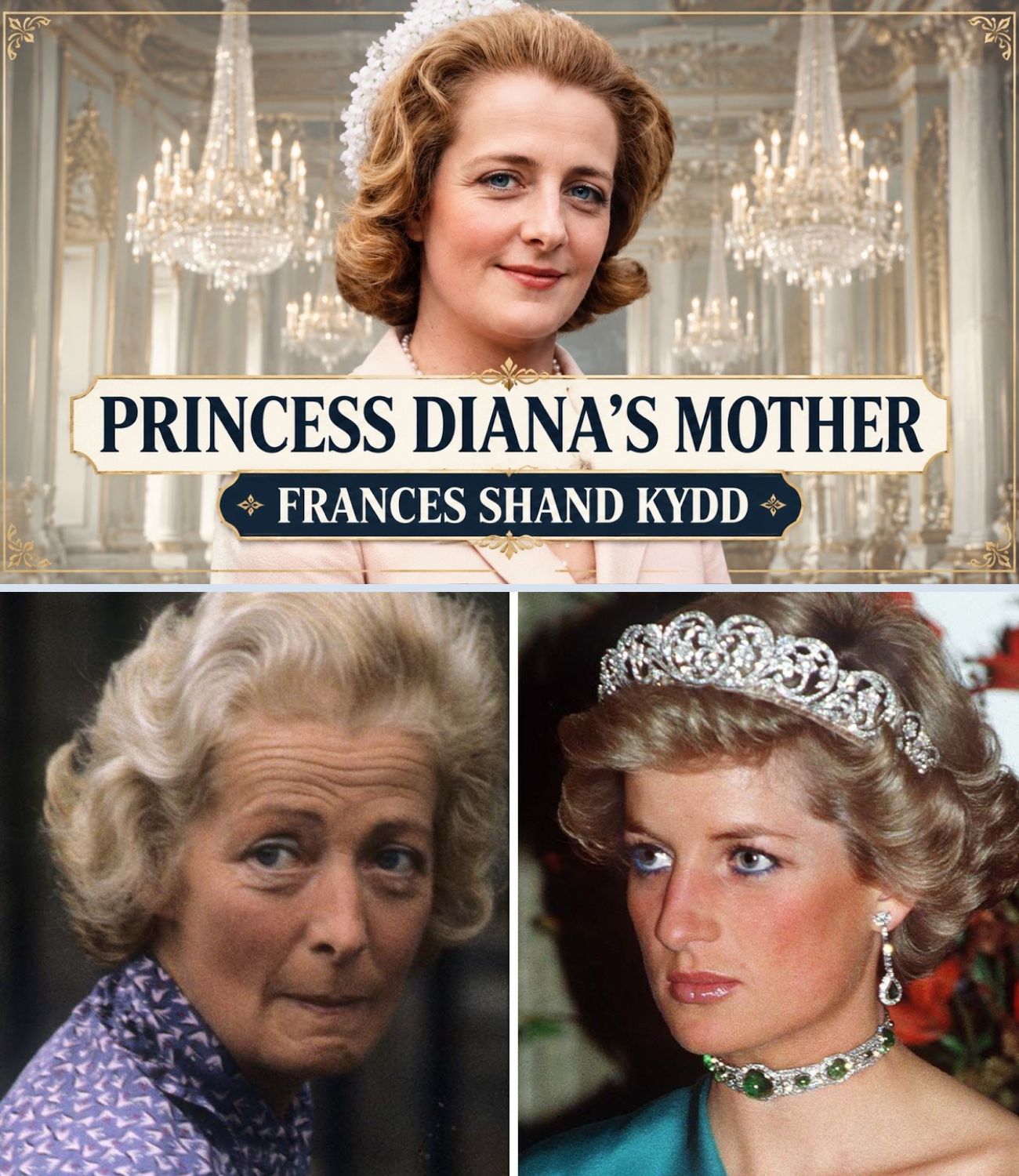
Francis Ruth Burke Rush was born into the rarified world of British aristocracy, a life of privilege, pedigree, and proximity to the crown. In fact, her birth on January 20th, 1936 coincided with the death of King George V. And it’s said that Queen Mary learned of baby Francis’s arrival just before the king’s passing.
Francis was the youngest daughter of Edmund Rush, fourth Baron Fermoy, a close friend of King George VI, and his wife Ruth, Lady Fermoy, a noted society figure who served as a confidant and lady in waiting to Queen Elizabeth, the Queen Mother. With such lineage, Francis grew up literally in the shadow of royalty, raised on the royal Sandringham estate at Parkhouse in Norfolk.
She had an elder sister and a younger brother and their upbringing was steeped in aristocratic tradition. Educated at home by a governess and later at a convent school, young Francis excelled in both academics and sports, becoming headgirl and captain of games by her mid-teens. A talented athlete, she even qualified for a national tennis tournament, a chance to play at Wimbledon, though an untimely appendicitis foiled that dream.
From an early age, it was clear that Francis was being groomed for a high society life. In the post-war era of the 1950s, an aristocratic young woman’s path often led from finishing school to making a grand society debut and ultimately to a suitable marriage. Francis had beauty, charm, and impeccable connections, all ingredients for a coveted match in the eyes of British high society.
It wasn’t long before that match materialized. In 1952 at just 16, Francis met the man who seemed a perfect fit for her aristocratic pedigree. John Johnny Spencer, Viscount Althorp. Johnny Spencer was 12 years her senior and heir to the illustrious Spencer earldom, a family intertwined with the royals for generations.
He served as an equerry to both King George VI and the young Queen Elizabeth II. And as Viscount Althorp, he was poised to become the eighth Earl Spencer. For Francis, the match was dazzling on paper, and society took notice. Their courtship was brief, and by early 1954, the engagement was announced. On June 1st, 1954, the couple wed in Westminster Abbey with all the pomp one would expect of a union between two prominent aristocratic clans.
The Spencer family’s stately seat, Althorp House. This grand Northamptonshire estate held by the Spencer family for over 500 years symbolizes the lofty aristocratic world Francis married into. The wedding was heralded as the society wedding of the year attended by Queen Elizabeth II, Prince Philip, the Queen Mother, and Princess Margaret among other luminaries.
At just 18, Francis became the youngest 20th century bride to marry at the abbey’s altar. Newspaper photos showed a radiant teenage bride in a gown of ivory silk, exchanging vows with a 30-year-old viscount under the abbey’s soaring vaults. It looked like a fairy tale come to life. Yet behind the fanfare and fabulous guest list, there were hints of trouble.
According to later accounts, the charming Johnny Spencer had a dark side. Once the honeymoon glow faded, Francis discovered her husband could be a heavy drinker and an overbearing personality. Tina Brown, chronicler of royal lives, described Johnny as outwardly affable, but privately an abusive bully who demanded a son and heir from his young wife.
This demand would soon become the central pressure point in their marriage. For now, however, Francis dutifully stepped into her role as Viscountess Althorp, and the newlyweds began their married life first in the countryside where Jon took a farming course and then at Parkhouse on the Sandringham estate. There on royal property lent to the Spencers, the stage was set for a growing family and mounting expectations.
Life as Viscountess Althorp was steeped in tradition. Francis was expected to run grand households, attend society functions, and above all produce offspring to secure the Spencer lineage. The pressure to bear a male heir for the Spencer title was intense and unrelenting. In 1955, barely a year into marriage, 19-year-old Francis delivered her first child, a daughter, Sarah.
Two years later came another daughter, Jane. The family rejoiced at these healthy children, up to a point. Privately, Johnny Spencer’s satisfaction was tempered by the fact that neither child was the coveted son. In order to produce a male heir, he made Francis go through six pregnancies in 9 years, of which only four were carried to term, and he resented her having any independent life.
Tina Brown later revealed in her account of the marriage. This startling claim hints at two miscarriages or lost pregnancies amid the push for a boy, underscoring how single-minded and merciless the expectation was. By 1959, Francis was pregnant for the third time, and hope for a son ran high. On January 12th, 1960, she went into labor and delivered a baby boy, John Viscount Althorp II, seeming to fulfill her duty at last.
But joy turned to tragedy within hours. Baby Jon lived only 10 hours before dying, likely from a severe lung or birth defect. The loss was devastating to Francis. Even more chilling was how her husband handled it. Lord Spencer forbade Francis from even seeing the infant. He had the baby’s body taken away, and the nursery doors literally locked while Francis, still weak from childbirth, begged to see her son.
“My baby was snatched away from me, and I never saw his face,” Francis later recalled bitterly.
Not in life, not in death. No one ever mentioned what had happened. The callousness of this episode, a mother shut out from grieving her newborn, scarred Francis deeply and drove an emotional wedge into the marriage.
Johnny Spencer, for his part, seemed to view the infant’s death less as a personal tragedy and more as a frustrating setback in the quest for a male heir. Francis was still only 23, but she had already endured more than many women do in a lifetime. High society scrutiny, two successful pregnancies, at least one miscarriage, and the death of a son she was never allowed to hold.
And still the pressure did not relent. Just over a year later, in July 1961, Francis gave birth yet again to a daughter. This fourth child was Diana, the future princess of Wales. But within the Spencer family, Diana’s arrival was met with thinly veiled disappointment. There was a great sense of disappointment that Diana was not a boy.
And it was noted that the parents hadn’t even picked out a girl’s name ahead of time. For a week, the baby went unnamed, as if the family struggled to accept another daughter. A cruel whisper ran through the older generation. What was wrong with the mother blaming Francis for this perceived failure to produce a male? Imagine the sting of hearing such words from one’s in-laws and aristocratic elders.
Still only in her early 20s, Lady Althorp was made to feel that she was somehow deficient for having healthy girls. Francis’s own mother, Ruth Lady Fermoy, even urged her to undergo medical consultations to figure out why she produced only healthy girls. Dutifully, Francis submitted to a series of intrusive gynecological exams at Harley Street Clinics in London.
These intimate tests, essentially searching for a non-existent problem, left her humiliated and shaken, as she later described, humiliating and unjust. It was a testament to the era’s ignorance. After all, the father’s sperm determines a baby’s sex, not the mother, and to the cold reality that in aristocratic circles, a woman’s worth was tied to giving birth to sons.
At long last, in May 1964, Francis bore a healthy boy, Charles Edward Maurice Spencer, the much longed for heir and now the ninth Earl Spencer. Johnny finally had his son. By outward appearances, the Spencer family unit was complete. Four surviving children titles secured. But the psychological toll of that heir race was disastrous.
Decades later, Charles Spencer, Francis’s son, would reflect on his parents’ marriage during those years and call it a dreadful time, saying the strain of producing an heir was probably the root of their divorce, because I don’t think they ever got over the strain. Indeed, achieving the goal had not saved the marriage.
The damage inflicted along the way was irreparable. The fairy tale of Viscount and Viscountess Althorp was about to come crashing down in scandal. By the mid 1960s, Francis Spencer was a mother of four and still only in her late 20s. Outwardly, she had everything an aristocratic wife could want, wealth, status, beautiful children.
In reality, her marriage to Johnny Spencer had grown cold and miserable. Johnny’s heavy drinking and bullying temperament made home life at times a nightmare. He had also engaged in extramarital dalliances discreetly as aristocratic husbands often did in that era and Francis found herself desperately unhappy. She later admitted that she felt stifled and unloved and that Johnny resented her having any independent life beyond her duties as wife and mother.
It was in this context that Francis met Peter Shand Kydd. A meeting that would change the course of her life. Peter Shand Kydd was a wealthy married businessman, heir to a wallpaper manufacturing fortune with a confident charm. The exact circumstances of their introduction are hazy. But by 1966, Francis and Peter had become close and fallen deeply in love.
For Francis, Peter represented the affection and freedom she’d been longing for. He was attentive, fun-loving, and treated her as an equal, a stark contrast to the stern viscount she was married to. Their connection quickly escalated into a full-blown affair. In 1967, at age 31, Francis made the shocking decision to leave Johnny Spencer for Peter Shand Kydd.
To label this choice bold would be an understatement. It was practically unheard of in her social set. Aristocratic wives of that era were expected to grin and bear unhappiness, not flee. The British press, ever hungry for scandal, pounced on the story of the Earl’s wayward wife. Here was a viscountess, daughter of a baron, abandoning her noble husband and young children to run off with a dashing outsider.
The tabloids branded Francis with a damning nickname, the bolter. A term borrowed from 1920s high society lingo to describe a woman who bolts from her marriage for another man. Suddenly, Francis Spencer was cast as a notorious social renegade. High society’s reaction was equally severe. Doors that were once open to Francis slammed shut.
Even more painful, her own family turned against her. Ruth, Lady Fermoy, Francis’s formidable mother, was mortified by her daughter’s scandalous conduct. Lady Fermoy had long been a close friend to the Queen Mother and a bastion of conservative values. She reportedly viewed Francis’s affair as an unforgivable disgrace. When Viscount Althorp moved to divorce Francis on grounds of adultery, Lady Fermoy sided with her son-in-law over her own daughter.
In the 1969 divorce proceedings, Lady Fermoy actually testified in court against Francis, bolstering Johnny Spencer’s case that his wife was an unfit mother due to her adultery. It was an astonishing betrayal that laid bare the rigid code of the aristocracy. Maintaining honor and tradition mattered more than maternal bonds.
As one observer noted, Francis could not even turn to her own mother in her hour of need. The deck was stacked thoroughly against her. The Spencer divorce became one of the most acrimonious high-profile splits of the decade. In April 1969, proceedings culminated with Francis being officially branded a marriage breaker and an adulteress by the court.
She had already moved out two years prior, so there was no doubt she had left the marital home to live with Peter Shand Kydd, and Peter’s own wife had named Francis as the other woman in her divorce filing. The salacious details were splashed across newspapers. Francis’s reputation was in tatters. Moral judgment from the press and the public was swift.
The image of a mother leaving her four children, then aged around 5 to 14, was especially shocking to the 1960s public. Mothers in custody disputes usually prevailed, but not this time. The court, influenced by the testimony of Lady Fermoy and the norms of the day, decided that Johnny Spencer, Viscount Althorp, should have sole custody of all the children.
Francis lost not only her marriage, but effectively her kids as well. It’s hard to overstate how devastating this outcome was for her. Francis was a loving mother by all accounts, but in the eyes of the law and society, she had committed the ultimate sin, deserting her family. The judge’s decision meant Diana, 7, Charles, 5, and their older sisters, Sarah and Jane, would remain with their father at the Spencer family estate.
Francis was permitted only limited visitation. Worse yet, Johnny Spencer, embittered by the affair, reportedly made it difficult for her to see the children. Young Diana, in particular, felt her mother’s absence acutely, later describing a childhood memory of her mom kissing her goodbye on the driveway at Althorp, with little Diana watching her car disappear down the long drive, not understanding why she wasn’t coming back.
Society’s censure of Francis was severe. In drawing rooms and society pages, she was vilified as a selfish woman who put passion before duty. Decades later, a grown Charles Spencer would reflect on this period, saying of his mother:
“Our father was a quiet and constant source of love, but our mother wasn’t cut out for maternity. She was in love with someone else, infatuated, really.”
Those words spoken with a mix of hurt and understanding capture how Francis’s own children came to view the situation. In their eyes, she had loved Peter more than she loved them. It’s a harsh verdict, but one rooted in a child’s pain of feeling abandoned.
One month after the divorce on May 2nd, 1969, Francis quietly married Peter Shand Kydd in a small civil ceremony. There were no royal attendees, no grand society turnout. The wedding that had been front page news in 1954 was now a footnote in 1969. For many, Francis Shand Kydd, as she was now known, became a pariah, a fallen aristocrat who had defied the expectations of her class.
The fallout within her own family was permanent. She and her mother, Lady Fermoy, remained estranged for the rest of Lady Fermoy’s life, never truly reconciling after the courtroom betrayal. Francis had paid an enormous price for following her heart. With her new husband by her side and a cloud of scandal trailing behind, she turned her back on the world that had turned its back on her.
Following the scandal, Francis and Peter Shand Kydd sought refuge far from the prying eyes of the British press. In 1972, they purchased a 1,000-acre farm on the remote Isle of Seil off Scotland’s west coast. Seil is a sparsely populated, ruggedly beautiful island connected to the mainland by a tiny stone bridge often dubbed the bridge over the Atlantic.
On this tranquil island near Oban, Francis began a second act of her life, one defined by simplicity and relative obscurity. The Scottish island where Francis settled with Peter Shand Kydd offered seclusion and natural beauty, a world apart from London’s spotlight. Here the former society darling lived in a whitewashed farmhouse amid green pastures and slate-gray shores.
A haven far from Fleet Street’s reach. On Seil, Francis embraced a down-to-earth lifestyle that would have been unthinkable during her days as viscountess. She opened a small gift shop on the island, selling locally made crafts and souvenirs to tourists. Neighbors would see her walking her dog along the winding rural lanes or fishing in the coastal waters.
She developed a real love of fishing. She dressed in tweeds and wellies rather than designer couture. By all accounts, Francis integrated well into the close-knit Scottish community. Locals came to know her not as that infamous Spencer woman, but as Mrs. Shand Kydd, a friendly, if somewhat private neighbor who lent a hand at church bake sales and learned the Gaelic names of the hills.
This tight-knit community treated her with respect and helped her reclaim a sense of normality after the trauma of her public disgrace. Friends said later that in these years Francis found a degree of peace and contentment that had long eluded her. Meanwhile, back in England, her children were growing up under the care of their father and their formidable paternal grandmother.
In the mid-1970s, Earl Spencer, Johnny had inherited the title in 1975, moved the family from their rented Park House at Sandringham to Althorp, the grand Spencer ancestral estate in Northamptonshire. Surrounded by 13,000 acres of rolling parkland and a mansion filled with centuries of Spencer portraits, Diana and her siblings were raised in a world steeped in history, a world their mother was now absent from.
Francis’s contact with her children during their school years was limited to holiday visits and letters. Those visits, when they happened, were sometimes awkward and emotionally charged. Young Diana, for instance, would later recall how upsetting it was to bid her mother farewell after a rare visit. The pain of those partings may have sowed some of Diana’s deep-seated fears of abandonment.
Over time, there were small thaws. By the late 1970s, as her daughters reached adulthood, Francis managed to rebuild a cordial relationship with them. Lady Sarah and Lady Jane, her two eldest, came to accept their mother’s choices and stayed in touch. Even Diana, who had been just a toddler when Francis left, reconnected with her mother as a teenager.
Though they couldn’t be considered close in the traditional sense, Diana did not exclude her mother from her life. There were even happy moments. In 1980, Francis was invited to Balmoral Castle to celebrate Diana’s engagement to Prince Charles, signaling that whatever the past, she was still Diana’s mother and part of this milestone.
But the true test of their relationship and Francis’s reemergence into public view was about to arrive with Diana’s meteoric rise to global fame. On July 29th, 1981, Lady Diana Spencer married Prince Charles, the heir to the British throne, and instantly became the Princess of Wales. For Francis Shand Kydd, watching her 20-year-old daughter walk down the aisle of St.
Paul’s Cathedral in that iconic silk gown, it must have been a proud and surreal moment. Less than a dozen years earlier, Francis had been ostracized from high society. Now she was seated in the cathedral among royals and dignitaries as the mother of the bride, a bride who had captured the world’s imagination. In that moment, Francis’s past scandal was eclipsed by Diana’s radiance.
She could take quiet satisfaction that despite all the turmoil, her daughter had made a historic match. However, along with pride came a renewal of the spotlight, something Francis had sought to avoid for years. Diana’s marriage thrust Francis back into the glare of publicity. The media suddenly remembered that the Princess of Wales had a mother, and that mother had a notorious history.
Old news clips about the bolter were dusted off. Photographers camped out near Francis’s Scottish home, hoping to catch a comment or a candid photo of Princess Di’s mum. At first, Francis maintained the low profile she preferred. She gave no interviews during the fairy tale wedding period, and at the wedding itself, she stayed firmly in the background.
But inevitably, being Diana’s mother meant the press would not leave her alone indefinitely. As the 1980s progressed, Francis was pulled further into Diana’s dazzling and often turbulent orbit. She occasionally visited Diana at Kensington Palace or joined family holidays. There’s a famous photograph from the mid-1980s of Diana on holiday in the Caribbean with Princes William and Harry alongside Francis and one of Diana’s nieces.
In it, Francis, dressed casually and wearing sunglasses, looks more like an ordinary grandma playing with kids on the beach than a member of the extended royal family. But such relatively normal moments were the exception. More often, Francis watched Diana’s public life unfold from afar on her TV screen in Scotland.
She saw the fairy tale become complicated, the cracks in Diana’s marriage, the relentless paparazzi pursuit, and her daughter’s struggles with bulimia and loneliness behind the scenes. Francis empathized deeply with Diana’s difficulties, having survived her own tabloid hell years before. She would later say that being constantly in the spotlight just wears you down, and that the media pressure was a major factor in the breakdown of Diana’s marriage.
This was something she spoke from experience about, as she told one interviewer in 1996. Indeed, the parallels were uncanny. Francis’s second marriage would soon collapse under strains not unlike those Diana faced, albeit on a different scale. By the late 1980s, the relentless attention on the Spencer family had taken a toll on Francis’s husband, Peter Shand Kydd.
He had married a woman who he thought had left the aristocratic soap opera behind, only to find himself living in the long shadow of the most famous woman in the world, his stepdaughter Diana. Paparazzi and press often wanted Diana’s mum, not Peter, in their stories. As Francis later acknowledged, I became Diana’s mum and not his wife, and the pressure on Peter was overwhelming and finally impossible for him.
Their quiet life on Seil was interrupted by media inquiries and curious tourists. Peter, a proud man, chafed at playing second fiddle to Diana’s saga. In June 1988, after 19 years of marriage, Peter abruptly left Francis for a younger woman, no less. The irony was cruel. Francis had once shattered a marriage by running off for love, and now her own marriage was shattered by her husband doing the same.
Friends say Francis was blindsided and heartbroken by Peter’s betrayal. She had truly loved him. He was the man she had sacrificed so much to be with. And now she found herself alone at 52 with a second divorce looming. The tabloids couldn’t resist pointing out the symmetry. The bolter had been bolted, but this time there was also a measure of public sympathy for Francis.
She wasn’t a reviled figure anymore. She was the princess’s mum, a somewhat pitiable figure whose husband had dumped her. Francis herself pointed to the unsought limelight brought by Diana’s global fame as a catalyst for her marriage’s failure. One might say Diana’s royal ascent indirectly cost Francis the personal happiness she had finally found. It’s a tragic twist.
The very thing that gave Francis a renewed place in society being Diana’s mother also contributed to the collapse of her private world with Peter. With her children grown and gone, and now no spouse by her side, Francis faced the next chapter of life on her own, and she sought strength and solace in a perhaps unexpected place.
After her second marriage disintegrated, Francis Shand Kydd underwent a profound personal transformation. In 1994, at age 58, she converted to Roman Catholicism. This decision raised some eyebrows. The Spencers and Fermoys had always been Anglicans in the Church of England. But for Francis, it was a deeply sincere choice.
Some who knew her believed that Catholicism’s emphasis on forgiveness and redemption resonated with her, a woman who had long carried guilt and been judged harshly by others. Additionally, living in Argyll, Scotland, she had been surrounded by a vibrant Catholic community which welcomed her with open arms. Yet, even in this relative isolation, Francis could not entirely escape the looming presence of her royal daughter’s high-profile life.
By the mid-1990s, Diana’s personal struggles were making global headlines. Her separation then divorce from Prince Charles. The famous BBC Panorama interview where Diana laid bare her unhappiness and her emerging role as an international humanitarian icon. Francis watched with concern and perhaps occasional disapproval.
She hailed from a generation that believed in keeping private matters private and she reportedly felt uneasy about Diana’s willingness to speak openly to the press about the royal family’s troubles. Mother and daughter, once bonding over their parallel unhappy marriages, now found themselves at odds over how to handle adversity and fame.
This growing tension would sadly come to a head just before fate intervened. By 1996, Diana was officially divorced and carving out an independent life while Francis was firmly ensconced in her quiet Catholic existence on Seil. The two women were in contact, but their relationship had become delicate. The same protective impulse that led Francis to shield her own privacy now made her critical of Diana’s very public crusade to control her narrative.
In early 1997, Francis gave a candid interview to a magazine, the one aimed at raising money for the Iona prayer house. In it, she spoke with a mother’s frankness and perhaps indiscretion about Diana’s situation. She criticized both Diana and Charles for airing their marital troubles so openly and expressed the view that some matters should remain within the family.
She also voiced her personal frustration at how the media had intruded on all their lives, saying no one had considered her feelings amid the divorce and memorial plans, asking pointedly:
“Wasn’t Diana also my daughter?”
For Francis, these remarks were honest and born of hurt. For Diana, they were the ultimate betrayal. When the interview was published, spring 1997, Diana was reportedly livid. She felt her mother had cashed in on her name, even if it was for charity, and aired criticisms that Diana considered both disloyal and hypocritical. After all, Diana might have thought, “Who was her mother to lecture about keeping things private, given the past?” The rift that ensued was swift and deep. Diana cut off communication.
Several letters that Francis wrote to her daughter that summer came back unopened. In essence, Diana ghosted her own mother as a form of reproach. Friends of the princess noticed that Diana did not want to discuss Francis at all in those months, and Francis, proud and stubborn in her own way, retreated rather than fight it out in public.
It’s worth noting that this estrangement was not solely due to the interview. Some insiders claimed that Francis had also voiced strong disapproval of Diana’s personal life at the time, including her relationship with Dodi Fayed, who was Muslim, which allegedly did not sit well with Francis’s religious sentiments. Whether or not that’s true, what’s clear is that by the summer of 1997, mother and daughter were not on speaking terms.
Then came August 31st, 1997, the day Diana died in a car crash in Paris, sending shock waves around the world. Francis Shand Kydd was asleep in Scotland when the phone rang in the middle of the night with the horrific news. Diana, her estranged baby girl, was gone in an instant at just 36 years old. No mother and daughter ever plan on the last conversation being the last.
But for Francis, this reality was crushing. She had not reconciled with Diana. Their last interactions had been angry and bitter. Now there would be no chance to say sorry, no chance to hug, no chance to explain. Francis was devastated by Diana’s death. It was a grief almost too great to bear compounded by the torment of regret.
Friends say she repeatedly said she was haunted by the fact that there was no time for a reconciliation. In the immediate aftermath, Francis remained very private in her mourning. During Diana’s monumental public funeral, Francis maintained a stoic composure at Westminster Abbey. But those close to her knew she was shattered inside.
The world saw Earl Spencer, Diana’s brother, give a fiery eulogy and the young princes William and Harry walking behind the coffin, but Francis stood quietly with the family out of the spotlight. Afterwards, she retreated to Scotland, avoiding the media and finding solace in prayer for her daughter’s soul.
She later described Diana’s death as a hurt beyond measure, telling one interviewer that the families of Henri Paul, the driver who also died, had the sorest ache of all. A remarkably compassionate statement that acknowledged others’ pain amidst her own. For a time, the tragedy did help bridge some gaps.
Francis grew closer to her surviving children, especially her daughters Sarah and Jane, as the Spencer family united in protecting William and Harry. Indeed, to Francis’s surprise, Diana’s will named her as one of the executives and assigned her special responsibility for overseeing the upbringing of Princes William and Harry. It was Diana’s olive branch, a sign that despite their estrangement, Diana trusted her mother to watch over her boys’ welfare.
Francis took this duty seriously, though in practice the boys’ father and the royal family were primary guardians. It nonetheless provided a sliver of comfort that Diana had not completely shut her out where it mattered most. Still, the ensuing years were not free of drama for Francis. She was called to testify at official inquests and inquiries into Diana’s death.
In one infamous incident in 2000 at a hearing in London, Mohamed al-Fayed, father of Dodi Fayed and proponent of conspiracy theories, verbally attacked Francis in front of reporters. He blasted her as a bad mother, a snob who behaved like the Queen of Sheba, furious that she wouldn’t endorse his belief that Diana was murdered.
Francis held her tongue, refusing to be drawn into a public spat with Al-Fayed. But the episode was a reminder that even in mourning, her old judgments followed her. Tabloids gleefully revived her bad mother label at times, noting that she and Diana had been estranged. It seemed Francis could never fully escape scrutiny.
One particularly painful point for her was feeling sidelined in the memorials to Diana. In 2002, when a design for a public Diana memorial, a fountain in Hyde Park, was announced, Francis complained that no one’s ever taken the trouble to ask me my thoughts. She even wrote to the culture secretary to remind officials that Diana had a mother who was alive and should be consulted.
To some, her remarks came across as bitter or attention-seeking, but to others it was understandable. The establishment that once shunned her was now essentially ignoring her, even in her daughter’s legacy. Francis said pointedly:
“If Diana had still been married, the family, the royals, would handle everything. But she had divorced.”
For many people, Diana’s death simply became a matter of state. But wasn’t she also my daughter? Those words encapsulate Francis’s complicated position. Inside yet outside, the mother of a beloved icon yet not part of the official family structure. In truth, by the early 2000s, Francis’s public appearances were rare.
She preferred her solitude on Seil, coping with her grief and increasingly with health struggles of her own. She had developed a tremor that was later diagnosed as Parkinson’s disease. And in 2003, she was also found to be suffering from an aggressive brain illness. Some reports say brain cancer. This once vibrant woman became physically frail, her speech and movement impaired.
Yet she bore these hardships with dignity, fortified by the stoicism that had seen her through so many storms. On June 3rd, 2004, Francis Shand Kydd died at her home on Seil at the age of 68. A spokesman indicated she passed away peacefully after a long illness. The little girl, born on a monarch’s estate, who lived to see her own daughter become a princess, was gone, closing a chapter of royal and aristocratic history.
Her funeral was deliberately low-key, held in the local cathedral of Oban. There was no massive public spectacle, no live TV coverage. Yet in attendance were two young men who symbolized the link between Francis and Diana, Prince William and Prince Harry. The two princes, just 21 and 19 at the time, quietly slipped into the funeral to pay respects to their grandmother.
William even gave a reading during the service, a touching gesture of family unity. Despite any past estrangements, the presence of Diana’s sons at Francis’s funeral signaled that the bond of blood and love endured. It was as if Diana through her boys was there, too, in spirit, bringing things full circle and healing old wounds.
Her life was a continuous, captivating narrative, as dramatic as any novel. From aristocratic splendor to scandalous elopement, from maternal estrangement to spiritual redemption, Francis Shand Kydd’s story is a reminder that behind the public images of sinner or socialite or princess mother lived a real complex human being. History may remember her chiefly as the mother of Diana, but as this exposé has shown, Francis’s own life was filled with passion, pain, and perseverance enough for a spotlight of its own.
It is a story of love and loss, of scandal, and salvation. The tumultuous saga of Francis Shand Kydd, a woman who lived her life in the long shadow of the crown, yet managed in the end to find her own small rays of light.
You Might Also Enjoy

“We Thought They Would Negotiate”—What Argentine Soldiers Said When The British Attacked Goose Green

“You’ll Never Finish My Ruck March, Limey” — US Sergeant Who Challenged the SAS, Then Fell Out First






