“They Cried Like Babies” — British SAS Witness Account Of SEAL Team Panic In Afghanistan
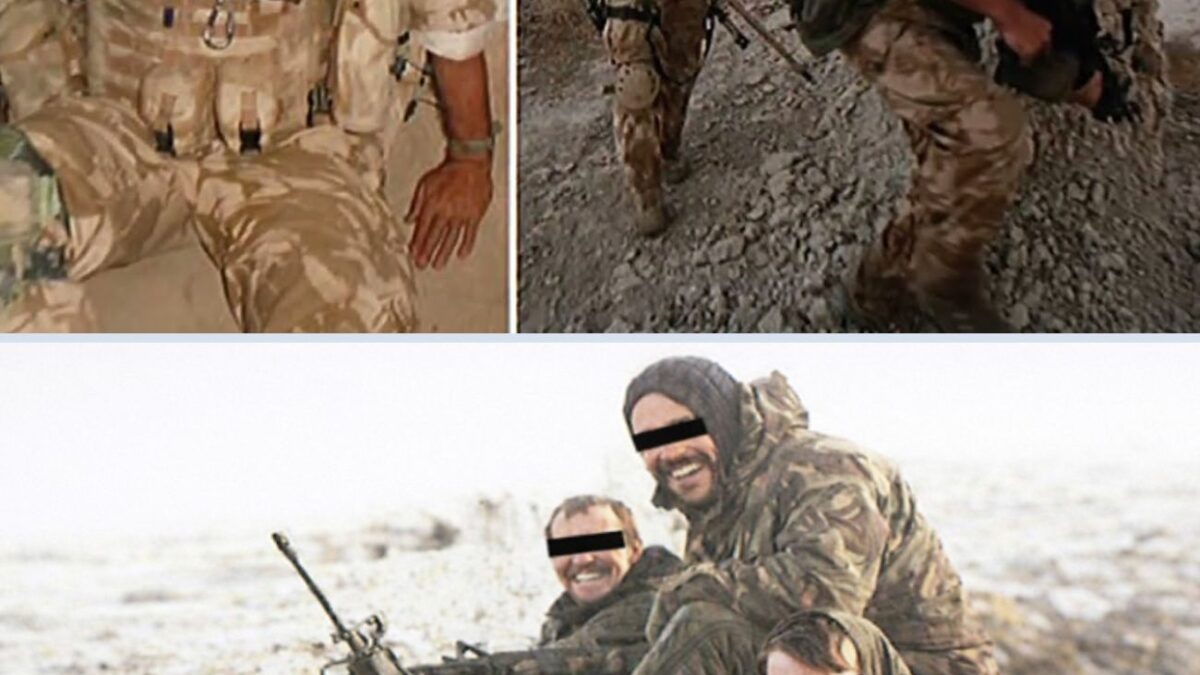
November 2001, Tora Bora mountain. Altitude 3,000 meters above sea level. Temperature drops to minus 15 degrees Celsius at night. And during the day, the rocks get so hot that you can’t touch them with your bare hands. It was here, in this stone hell on the border of Afghanistan and Pakistan, that an operation took place which the American command preferred not to talk about, because what happened at that time became one of the most humiliating failures of an elite American unit and the clearest proof that the British SAS are truly a separate breed of fighters.
It all started with arrogance bordering on recklessness. The command of SEAL Team 6, the Navy’s legendary special operations unit, had been given the mission to clear a network of caves where high-ranking members of Al Qaeda were believed to be hiding. Twenty-four operators, the best equipment in the world, real-time satellite communications, air support.
The mission seemed destined for success. Equipment worth more than $80,000 was carried by each operator: latest generation night vision devices, GPS systems accurate to 3 meters, encrypted communication channels, assault rifles with laser designators. Behind them stood the full power of the American military machine with a budget of hundreds of billions of dollars per year.
When the British from the 22nd SAS Regiment were offered to join the operation as consultants, the American commander literally mocked his British colleagues:
“We’ll take care of it ourselves, guys. Go get some rest. Watch how real professionals work.”
These words were later cited in intelligence reports as a classic example of the catastrophic overestimation of one’s abilities. The American officer only knew one thing: in a few hours, he would be sitting in a corner of the base, repeating the same phrase over and over again, until a British doctor injected him with a sedative. Overconfidence is a dangerous thing in the mountains, where every stone can hide a sniper and every path a minefield.
The British actually got out of the way. Eight men from B Squadron positioned themselves at an observation post 4 kilometers from the target area. Their equipment seemed almost archaeological compared to American gear: worn tactical vests, old maps in plastic cases, compasses instead of GPS navigators.
But each of these eight men had passed a selection process from which only a fraction survived. Each had spent at least five years in the regiment, participated in operations on three continents, and knew what real combat meant—not drills on a pristine shooting range in Virginia, but blood, dirt, and death. Their job was simply to monitor the situation and be ready for evacuation if anything went wrong.
Sergeant David Clark, a 12-year veteran of the regiment, later admitted in an interview with a classified military publication:
“We knew it would end badly. We knew that from the very beginning. The Americans went there like on parade, with noise, lights, and radio communications on open frequencies. We couldn’t not intervene, but we were ordered to remain silent and observe.”
Clark had fought in Northern Ireland, where one mistake cost lives. He had worked in Bosnia, where the British restored order. He knew the price of overconfidence.
The SEALs began the operation at 0000 hours sharp on November 15. Four groups of six men each, each with a designated area of responsibility. They moved in column along a narrow mountain trail, lighting the way with tactical flashlights. Radio communications were carried out almost continuously—coordination, verification of communications, confirmation of position. From the point of view of American doctrine, everything was correct: constant communication, clear distribution of roles, technological superiority. From a mountain warfare perspective, it was suicide. The insurgents heard them from a kilometer away.
The first two hours went as planned. The caves seemed empty, abandoned. The Americans were already beginning to relax, joking on the radio, discussing where they were going to celebrate the success of the mission. One operator even suggested taking a photo of himself against the mountainous landscapes for Instagram. They had no idea that the fighters had observed each of their steps for the last 40 minutes. The Taliban and Al-Qaeda fighters were masters of mountain warfare. They grew up in these mountains, raising sheep there as children and fighting the Soviet Union in the 1980s. For them, these rocks were home; for the Americans, it was a hostile planet.
And that’s when the hell started. The third group was ambushed in a narrow passage between the rocks. Al-Qaeda militants knew these mountains like the back of their hand. They let the Americans advance into a natural funnel with rock walls rising 20 meters on each side. It was an ideal kill zone—a narrow, unsheltered passage with high walls from which fire could be directed from above and below.
The fighters blocked the exits with heavy rocks which they had prepared in advance and opened fire from three sides simultaneously using automatic weapons, RPG-7 grenade launchers, and improvised mines buried in narrow spots. All of this fell on the SEALs in a matter of seconds. The first American fell five seconds after the shooting began—a bullet in the neck, instant death.
The second was injured in the leg and started screaming into the radio, demanding medical evacuation. The others tried to fight back, but couldn’t determine where the shots were coming from. The echo in the gorge created an acoustic illusion; the sounds of gunfire reflected off the rocks and seemed to come from all directions at once.
From the SAS observation post, they saw everything thanks to high-end night vision devices and thermal imagers. They heard panicked screams on the radio and saw the Americans rushing between rocks trying to find shelter. Corporal James McIntyre, a sniper experienced in Northern Ireland and Kosovo, recorded a phrase in his logbook that became legendary in British barracks:
“They lost their formation two minutes after contact began. After five minutes, half of them no longer knew where the others were. After ten minutes, they were shooting in all directions, without distinguishing their targets.”
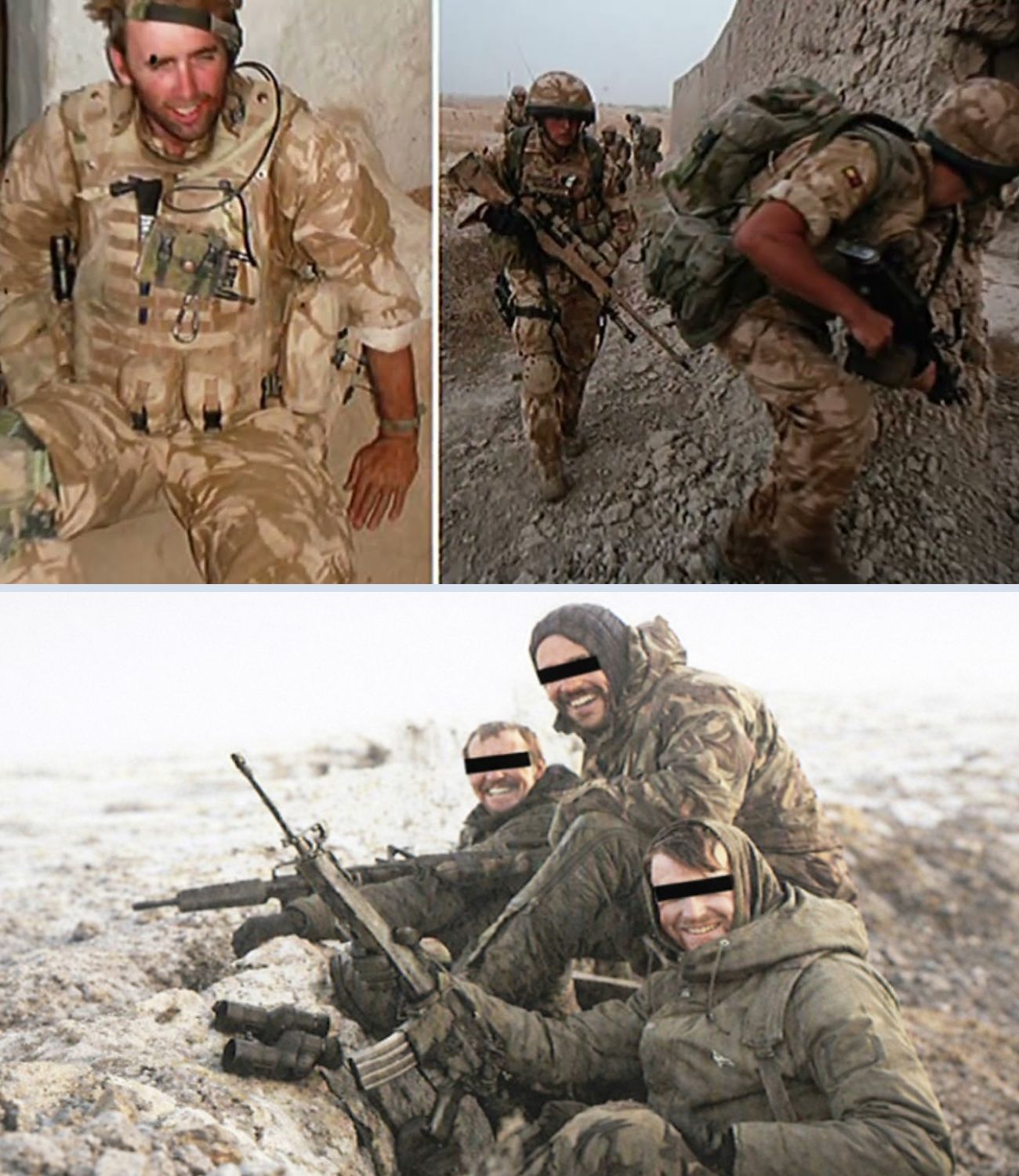
McIntyre was a professional sniper with 42 confirmed kills. He had seen battles in Belfast where British soldiers resisted the fire of militants. He had seen Kosovo, where Serbian snipers hunted peacekeepers. But he had never seen such panic.
These were not beginners. These were fighters who had successfully completed one of the toughest training programs in the world. Each of them had spent months training in Coronado, enduring brutal physical conditioning where candidates sleep four hours in five days, swimming in the icy waters of the Pacific Ocean, carrying boats on beaches, performing thousands of push-ups in wet sand. They were taught to shoot, to parachute, to demolish structures, to engage in hand-to-hand combat. But they hadn’t been taught the essentials: how to keep your sanity when the whole world falls into chaos, when comrades die nearby and there is nowhere to wait for help.
The SEAL Group Commander, Major Robert Jenkins, requested immediate air support. He was 39 years old, a graduate of the Annapolis Naval Academy, with 14 years of service and multiple awards. On paper, the perfect officer. In reality, a man who, for the first time in his life, was confronted with a situation not described in the regulations.
The problem was that the coordinates he had submitted turned out to be inaccurate. In the mountains, GPS navigation malfunctioned due to magnetic anomalies and heavy cloud cover. Satellite communications went out every few minutes. The systems the Americans relied on were failing one after another. The drone’s first missile fell 150 meters from the militants’ positions; the second fell 200 meters from the Americans themselves.
The explosion raised a column of dust and shrapnel, injuring two other SEALs. Panic intensified. People started shouting simultaneously into the radio, interrupting each other, creating informational chaos. An operator demanded evacuation by helicopter. Another shouted that he had seen militants at 50 meters. A third simply repeated:
“We are all going to die! We are all going to die!”
Radio discipline—the foundation of all military operations—collapsed completely. And the British continued to silently observe, consumed by a sense of utter helplessness. Sergeant Clark later said it was unbearable to watch allies die and have no right to intervene. A military order is a military order. The British were strictly prohibited from participating in the operation without direct authorization from the American command. Politics, bureaucracy, interdepartmental approvals—all of this continued to work even as people died in the mountains.
Twenty minutes passed. The Americans had lost three wounded, and two were out of ammunition. Medical supplies were running out, and fighters were only increasing the pressure, advancing like a pack of wolves that had smelled blood. Al-Qaeda militants were fanatics, but intelligent and experienced fanatics. They did not launch a frontal assault; they methodically tightened their encirclement, using every fold of the ground.
It was then that a request came through the encrypted communications channel that would forever enter the dark annals of American special forces:
“Immediate assistance required. Evacuation request. Request for support fire. Seek all the help available. For the love of God, help us.”
Major Jenkins’ voice trembled. The officer who had refused British help only six hours earlier was now pleading for rescue.
Lieutenant Colonel Andrew Harrison, commander of the British group, received authorization to intervene only seven minutes later. Seven minutes of bureaucratic approval between US and British commands. Seven minutes during which all 24 men could have died. Seven minutes which showed the real impact of military hierarchy and inter-allied diplomacy.
When authorization was finally granted, the British acted with formidable efficiency. Eight men divided into two groups in 30 seconds. No fanfare, no unnecessary words, only clear gestures and looks. Four remained to provide long-range fire cover using precision L96A1 rifles chambered in 7.62 mm—old but reliable weapons capable of hitting targets at distances up to 800 meters. Four of them headed directly toward the contact zone with automatic weapons, grenades, and knives.
They moved in absolute silence, using every shadow, every fold of the terrain. The British studied the art of stealth movement for months. They were taught to walk in such a way that gravel would not crunch under their feet, to breathe so that the steam escaping from their mouths wouldn’t betray their position in the cold air, and to stay still in one position for half an hour if required. No radio communication—only gestures and eye contact. Everyone knew what his partner should do without needing words, on the level of pure instinct.
In 12 minutes, they covered 4 kilometers through mountainous terrain in total darkness. For comparison, the pace of a marathon on flat ground is about 5 minutes per kilometer. The British were moving across rocks, scree, and 45-degree slopes, doing it faster than a professional runner on a stadium track. The physical condition of SAS fighters exceeds normal human capacity; they are trained to run 40 kilometers with a 30-kilogram backpack in six hours, and to swim in the icy waters of the North Sea for two hours straight.
What happened next entered the textbooks of the British Military Academy at Sandhurst as a classic example of tactical mastery. The snipers began methodically destroying the militants’ positions: one shot, one target, change position, next shot. McIntyre worked like a machine; he spotted the flash from a militant’s shot, calculated distance and wind correction in two seconds, fired, and immediately rolled to a new position. The insurgent fell from the cliff, already dead, while the others didn’t even understand where the bullet came from.
In eight minutes, the snipers eliminated six opponents and forced the others to retreat deeper into the caves. The militants lost the advantage of height and surprise, becoming targets of an invisible enemy. The SAS assault group took advantage of this moment to break through the surrounded American positions. They moved under cover of sniper fire, using smoke grenades and noisy diversionary maneuvers—professionalism versus panic, cold calculation versus raw emotion.
Corporal McIntyre later described this scene with undisguised disgust:
“We found them huddled in a group behind a large rock. Two were sitting, staring blankly at one point. One was gripping the radio. Two others were shaking so much they couldn’t hold their weapons. The group commander was in shock, unable to answer questions, just repeating: ‘We have to evacuate. We must evacuate. We must evacuate.'”
The British sergeant was forced to slap the American officer to bring him back to reality—an unprecedented case in relations between allies. A British sergeant struck an American major, but the situation justified it. The British didn’t waste time on ceremony or psychological assistance; they literally lifted the Americans by force and distributed the wounded among themselves. Each British soldier took an American and his equipment and began an organized withdrawal under sniper cover.
Eight men evacuated 24. A single British soldier carried two wounded Americans weighing a total of over 300 pounds plus his own 30 kilograms of equipment, running with this load on mountain trails for 3 kilometers. The militants attempted pursuit, but encountered a series of traps that the SAS had managed to rig in just a few minutes, using standard Claymore anti-personnel mines which the SEALs hadn’t even thought of deploying to cover their retreat. The explosions stopped the pursuit and spread panic among the militants.
Forty minutes after the start of the rescue operation, everyone—British and Americans—was in a safe zone at a temporary base 3 kilometers from the battle site. The SEALs remained silent the whole way, silent with shame and shock, realizing they had been saved by the very consultants they had mocked hours earlier. No one looked the British in the eye. No one said thank you—just silence and the heavy breathing of men who had survived hell.
What happened after returning to the main base became a major scandal. The SEAL team leadership immediately demanded a closed-door investigation—not to analyze mistakes and learn from them, but to cover up the incident, rewrite the story, and create a convenient version for the media. The official version was formulated quickly and looked like a mockery: the operation was successfully carried out with the support of allied forces. Not a word about panic. Not a word about failure. Not a word about 24 elite fighters rescued by eight British soldiers.
The British were strongly advised not to broadcast details of the incident. The recommendation didn’t come from the Americans; it came from their own command. The British Ministry of Defense did not want to spoil relations with their main ally. Politics was more important than truth; diplomacy was more important than lives. The eight men who risked their lives to save allies were ordered to remain silent.
But SAS soldiers had their own opinions. During an informal conversation with a British intelligence officer, Sergeant Clark didn’t hold back:
“They call themselves elite, but they cried like babies when they faced a real fight. We’ve seen many units in action—the French 1st Parachute Regiment, the German KSK, the Israeli Sayeret Matkal. But we have never seen such disgrace. They weren’t professional fighters; they were scared boys with expensive toys.”
Harsh words, but they reflected the mood of the entire British group. For the SAS, this operation wasn’t just a rescue of allies; it was a painful reminder of the gulf between real training and flashy glamour.
Why did the SEALs, a legendary unit, fail so catastrophically? The answer lies in a fundamental difference in training approaches and operational philosophy. The American system relies heavily on technological superiority and firepower. SEAL operators train to operate with the full support of aviation, artillery, and real-time intelligence. They excel in assault operations on prepared objectives, capturing buildings and ships, and rapid raids backed by helicopters. But in Tora Bora, all those advantages evaporated.
The British SAS is built on completely different principles. They are prepared for autonomous operations in conditions of complete isolation when there is nowhere to wait for help. Each fighter goes through a survival and resistance program considered one of the most brutal in the world. Candidates are dropped into the Welsh mountains in winter with minimal equipment and orders to cover 100 kilometers in three days. They are hunted, captured, beaten, and deprived of sleep; mock executions are simulated. Half of the candidates break down psychologically. They are taught not to rely on technology because technology fails, and instead to think, adapt, and turn disadvantages into advantages.
After the Tora Bora incident, the American command conducted an internal investigation. Documents partially declassified in 2016 revealed a shocking picture: the group’s preparation for high-altitude operations had lasted only three days. Three days of basic acclimatization and studying maps printed in Soviet times. Not a single training session in similar conditions, not a single exercise for communication loss, not a single analysis of enemy tactics. For comparison, the British group prepared for similar operations for six weeks, training in the Scottish Highlands where altitudes reach 1,500 meters and winter temperatures drop to minus 20 degrees Celsius. They studied documentaries on the Soviet war in Afghanistan, analyzed GRU tactics, worked with Pakistani guides who knew Tora Bora inside out, and learned the basics of Pashtun to understand enemy radio communications.
Furthermore, the report by American psychologists who worked with the SEALs after their return clearly stated there had been “moments of panic”—the very word considered the worst insult in special forces circles.
Meanwhile, the British returned to their routine, demanding no gratitude and expecting no recognition. They even refused American awards. A British officer commented:
“Two months after the incident, Joint Force Command Afghanistan was planning another operation in the same region. The target was a network of bunkers where an Al-Qaeda leader was hiding. The Americans proposed deploying the SEAL team again, promising everything would be different. The British command refused to support it.”
The refusal was formulated diplomatically, but its essence was clear:
“We cannot guarantee the security of a joint operation with a unit that demonstrated insufficient readiness for operations under these conditions.”
It was a major blow to the prestige of American special forces, as such refusals within the military community are extremely rare, signaling open recognition of a partner’s incompetence. The operation was ultimately carried out by SAS forces without American participation: an 8-man night assault, 20 minutes from start to finish, with zero British losses, 11 militants eliminated, and an important field commander captured. The report took up a page and a half of text—no drama, no heroic descriptions, just work.
American military leaders could not accept such humiliation. In February 2002, a senior Pentagon official arrived at the British Bagram base for a constructive dialogue on improving allied cooperation—in reality, an attempt to find out what the British were reporting about the SEALs. Colonel Harrison, who led the SAS contingent, was completely frank:
“We report the facts. Your men panicked under fire, lost control of the situation, and created a threat not only to themselves, but to the entire operation. This is not an opinion; this is a documented reality.”
The meeting ended in scandal. The American representative accused the British of arrogance and lack of respect for their allies. Harrison responded with a phrase later cited in dozens of military memoirs:
“Respect must be earned on the battlefield, not in the offices of the Pentagon. Your men didn’t earn it.”
The incident had long-term consequences for US-British military cooperation in Afghanistan. Over the next six months, joint operations between the SEAL team and the SAS decreased by 70%. The British preferred to work independently or with other allies like the Australian SAS and Canadian JTF2. The American command officially explained this by differences in operational priorities; in reality, the British simply didn’t want to risk their people again to save allies who couldn’t handle basic tasks.
But the most painful blow was internal. Delta Force, the Army’s elite unit, learned of the SEALs’ failure and began using it in the endless rivalry between military branches. Delta officers didn’t hide their schadenfreude in private conversations:
“SEALs are good for Hollywood films and promotional brochures. When real work is needed, call us or the British.”
What about the participants themselves? Military psychologists worked with the SEAL group for four months after their return. Out of 24 men, seven were deemed temporarily unfit for combat due to PTSD. Five others requested transfers, unable to reconcile themselves with the shame felt in front of comrades. Three left the army completely. Group commander Major Jenkins submitted his resignation six months later. In an interview, these words demonstrated the destructive effect of failure on a professional soldier: in special forces, a mistake costs lives.
And the British remained silent. Silent because for them, this operation was just another task in a long list without pathos, without heroism, without demands for recognition. When asked how they felt about saving the Americans, Sergeant Clark responded briefly:
“Pure cynicism, perhaps.”
But behind that cynicism lay a bitter truth about the difference in approaches. More than 20 years have passed since the incident. The SEALs remain world-famous, their operations covered by media and movies, their name a brand. The SAS continues to work in the shadows, avoiding publicity. But among professionals, the reputation of the British regiment remains unshakable—built not on advertising and Hollywood glitter, but on results and the ability to accomplish tasks when everyone else falls apart.
The Tora Bora incident is not an isolated case, but it became a symbol that even the most expensive training and modern equipment cannot replace fundamental qualities: resilience, composure, and the ability to think under fire. A British officer who took part in the operation, later promoted to brigadier general, noted at a closed conference:
“These are harsh words, but they are exactly what is needed to understand the true cost of military prestige.”
Modern special forces learn from past mistakes. Training programs have been overhauled, placing greater emphasis on autonomous operations, psychological resilience, and isolation survival. Some elements of British training were borrowed and adapted—the right approach, because it is never too late to learn from the best. But publicly admitting that a legendary unit was on the verge of total defeat and saved by eight British soldiers has not happened and likely never will, as image often supersedes reality in modern military machines.
Somewhere in the archives of the British Ministry of Defense lies a one-and-a-half-page report: dry, emotionless, with accurate timestamps and coordinates. It contains no words of panic or disgrace, only facts. An American group was ambushed; a British group provided support; the operation ended with zero losses among allied forces. Professionalism does not need big words. It speaks for itself. And the next time you hear about incredible exploits of elite units, remember that November night in the mountains of Tora Bora—remember the 24 SEALs who screamed in fear and the eight British soldiers who did their job in silence, because true elites do not shout about their exploits. They simply accomplish the mission over and over again, without pathos and without excuses.
You Might Also Enjoy

“We Thought They Would Negotiate”—What Argentine Soldiers Said When The British Attacked Goose Green

“You’ll Never Finish My Ruck March, Limey” — US Sergeant Who Challenged the SAS, Then Fell Out First






