“They Don’t Come With Noise.” — What Taliban Commanders Told Their Fighters About the SAS.
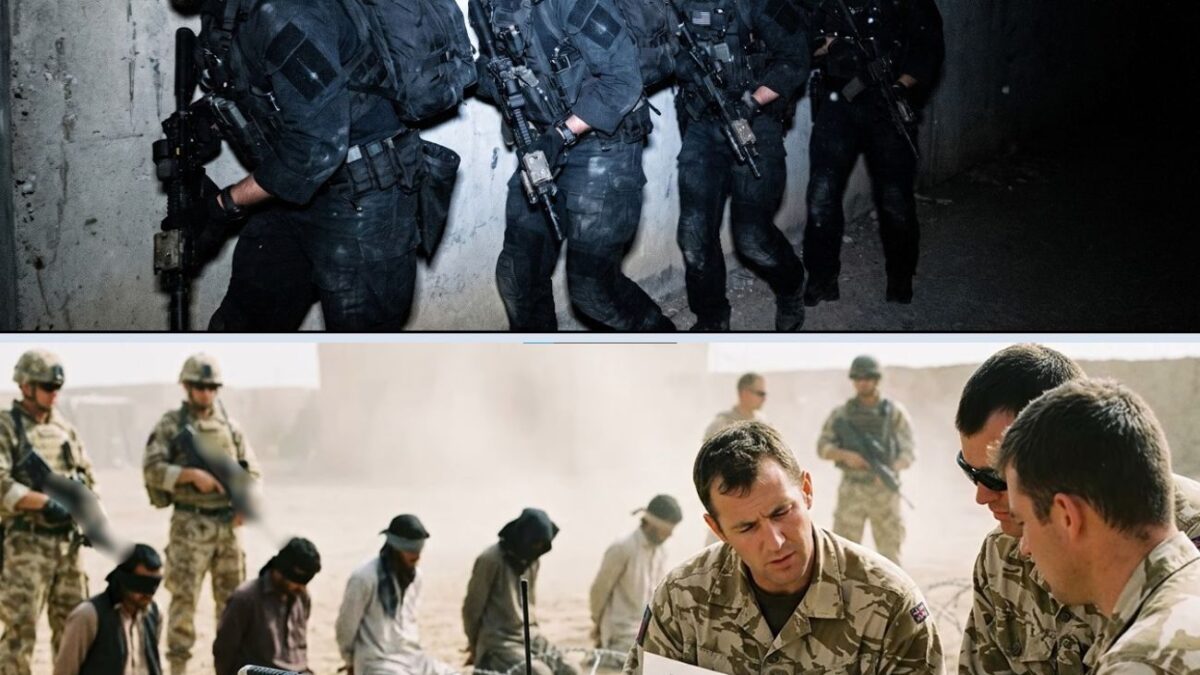
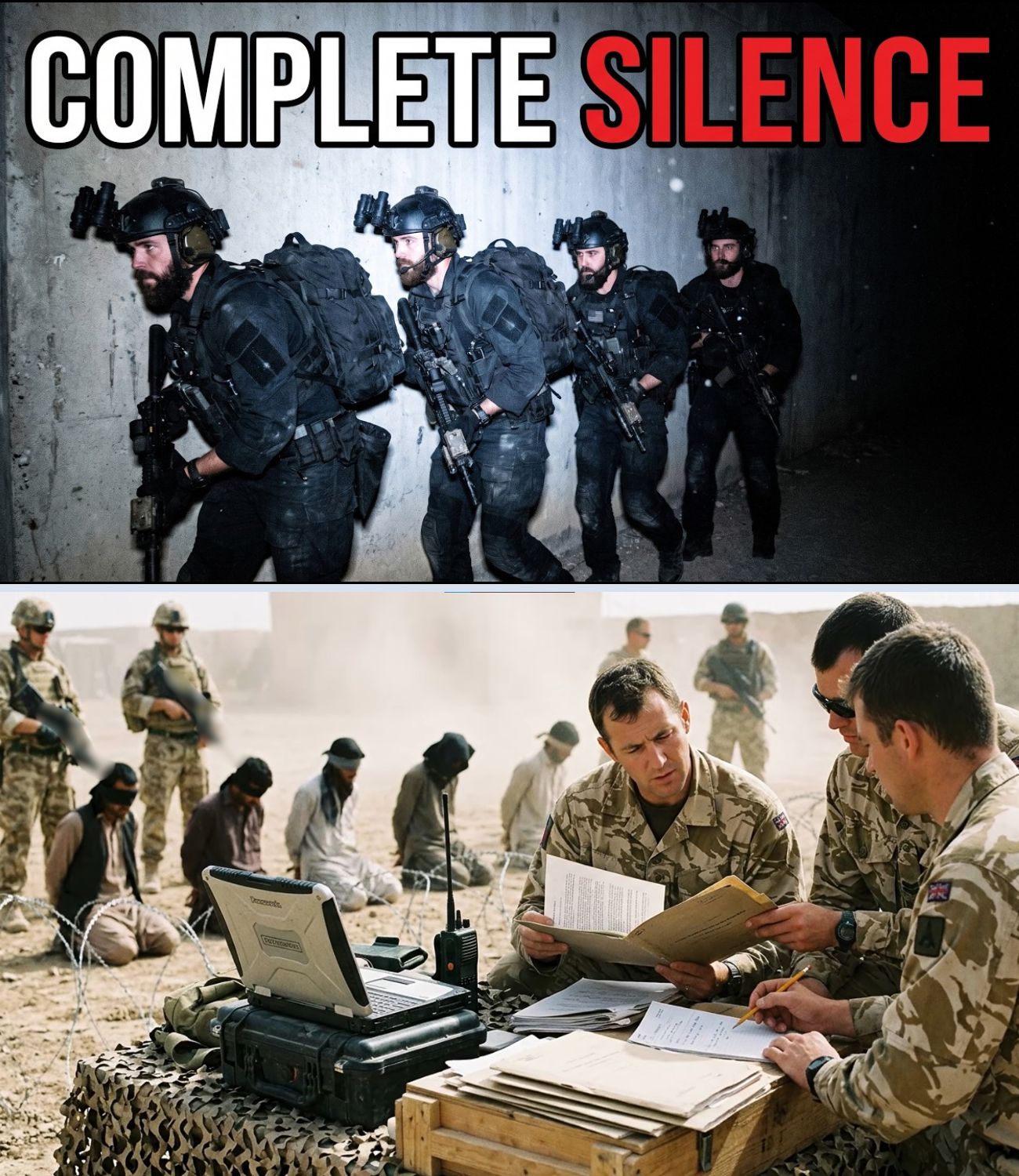
Sangin district, Helmand province, early night, August 2009. The dry bank of the canal, waist-deep reeds made brittle by the August heat, and four men lying in the mud with their weapons wrapped in cloth to remove the shine of the metal. 600 meters from here, across open terrain and a low clay wall, the structure housed 11 militants, two heavy machine guns, and a cache of improvised explosive devices, which the British brigade searched for unsuccessfully for 3 weeks.
No artillery was called in, no aircraft were circling overhead. The only sound was the movement of the water in the canal and the breathing of one of the men, deliberately slowed down, during the countdown to a signal that would never be sounded aloud and would never be needed. What the fighters inside that structure already believed before the first shot was fired about the men lying outside in the mud would later determine how the entire network of insurgents fought the rest of that war.
When coalition forces brought the survivors from the facility for questioning two days later, a pattern emerged that intelligence officers at the forward base in Sangin had heard about in fragments from detainees in three separate areas.
The militants did not describe the attack they were subjected to as an attack by air, artillery, or devastating firepower. They described silence, and then a doorway, in which people suddenly appeared who had not been there a second before. One detainee, questioned through an interpreter and recorded in an interrogation report that was later summarized for a British intelligence assessment, put it in six words that the assessment’s author noted as worth preserving verbatim:
“They don’t come with noise.”
This phrase was not official terminology. It was not a call sign, not a code word, not something the regiment itself would have chosen. It was that the fighters in that area started talking to each other the way soldiers everywhere use abbreviations for what scares them the most.
And it stuck because it was a truth that mattered operationally, not just psychologically. Conventional coalition operations in Helmand in 2009 rarely arrived quietly. They were preceded by the noise of helicopter rotors, audible for kilometers, artillery aiming shots, and a plume of dust from a column of vehicles, visible from any roof with a clear view of the horizon.
A structure threatened by a routine cleanup operation usually had warning, sometimes hours, sometimes just minutes, but there was warning. Time to disperse the fighters, hide your weapons, or simply run away. The four-man patrols of the Special Airborne Service squadrons operating in the same areas were subject to completely different laws of physics.
They would travel on foot, sometimes covering six or seven kilometers, moving so slowly that the local dogs rarely made a sound, and would arrive at the facility having already spent hours, and sometimes days, observing it from a position that no one inside would detect. This was not an accident of tactics.
It was the result of a doctrine the regiment had honed since its days in Northern Ireland and Oman, decades before Helmand, built on a simple operational premise. An enemy who cannot predict when contact will occur cannot plan his actions, and an enemy who cannot plan for contact begins to make mistakes born of sheer uncertainty. By 2009, four-man reconnaissance and assault patrols operating from Camp Bastion and forward bases throughout Helmand had earned a reputation among local insurgent networks that far exceeded that which would have emerged from the actual strength of individual units. The regiment fielded forces throughout the province at any given time that a mid-level Taliban commander, commanding approximately 60 fighters in three districts, could, on paper, outnumber many times. But paper counted for nothing to the people who saw their fortified facilities captured from within in less than 90 seconds.
The two days it took Tully’s patrol to reach the observation post were not easy, and the difficulty mattered for what came next, for it was such endurance that ultimately made silence possible. The patrol covered the last 4 km to their hideout entirely on foot at night, carrying backpacks loaded with water, ammunition, and surveillance equipment, which Ferris later estimated weighed almost 40 kg each. A burden that made speed impossible and patience the only available tactic. The temperature in Sangin that week was reaching the mid-40s Celsius by mid-afternoon, and the patrol’s hideout—a shallow hole dug in the wadi bank and covered with camouflage netting—provided shade but nothing resembling comfort. Water discipline became, as was almost always the case during such watches, a constant calculation rather than a set plan. The patrol had enough supplies for about 72 hours of static observation under normal conditions, but the heat had caused them to use up more quickly than planned by the end of the first day, so Tully had cut back on his rations a bit to avoid the risk of moving to resupply, which would have meant emerging from cover in broad daylight in full view of a passerby—a shepherd, a child, or a farmer in a nearby field, whose chance sighting could instantly ruin two days of careful positioning.
This risk was not hypothetical. On the afternoon of August 7, a boy of about ten or eleven, herding three goats along the edge of a wadi, walked within 30 meters of the patrol position—close enough for the patrol to hear him talking to the animals. He didn’t notice them. Tully’s own description of this moment, given years later at the same closed lecture where Ferris talked about counting water containers, was almost entirely procedural: freeze, control your breathing, let the moment pass. But he admitted that this was the only moment in the entire operation when the entire plan could have failed for reasons that had nothing to do with the enemy at all. Exposure of the position that day would have forced an immediate choice between canceling the mission altogether or accelerating a much riskier assault with less preparation and a day less observation. Neither option would have produced a result similar to the 91-second penetration that occurred two nights later.
The operation in Sangin on August 9 did not begin as an assault on a building. It had begun three days earlier as a routine reconnaissance mission, assigned to a four-man patrol led by a corporal known in the squadron as Tully—a nickname of obscure origin that no one on the patrol explained to newcomers—after intelligence had identified the complex of buildings as a possible weapons depot and staging point for attacks on the British forward operating base 5 miles to the south. The Tully patrol took up an observation position on the night of August 6, working from a wadi bed 900 meters northeast of the site, and spent two full days engaged solely in counting. They counted the fighters arriving and departing. They recorded traffic—only motorcycles, nothing more. They counted containers of water that were brought in but not taken out, indicating a permanent presence rather than a transit point. And by the end of the second day they had a number of fighters they were confident of to within one or two of the 11.
The task of reconnaissance changed from direct action to interception of a signal on the evening of August 8, transmitted to the patrol by their radio operator Ferris, who was renowned in the squadron for his extraordinary patience with radio communications, which was exhausting for most operators. The intercept indicated that the militants intended to transport a significant quantity of improvised explosive devices within 24–36 hours, presumably to a target that coalition intelligence had not yet identified. Waiting for a larger operation to be planned and approved with support through the usual multi-level procedures would have cost more time than this narrow intelligence window allowed. And everyone in the decision-making chain that evening understood the cost of that choice.
The decision to convert Tully’s four-man reconnaissance patrol into an assault group was made not by the general, but by the squadron major at Bastion, based on Tully’s report and the map, during a conversation that, as the final report later showed, lasted less than 15 minutes from the first call to the authorization. The 15-minute permit procedure itself was filled with quiet tension. The squadron major who authorized the strike, a Welshman with a reputation for being a man of few words, reportedly asked Tully only two clarifying questions over the radio before giving the go-ahead:
“Does the patrol have a confirmed escape route that doesn’t cross the same territory where the enemy might send reinforcements, and have these four gotten any sleep in the last 48 hours?”
Tully’s answer to the second question, as he later admitted, was not entirely honest—more like two hours of broken sleep per person than real rest—but he correctly judged that the reconnaissance window would not open if they waited for a fresh patrol to arrive, and that four tired fighters who had studied the terrain thoroughly during two days of observation would do better than four rested ones who did not know the situation.
Institutional caution existed on the other side of those 15 minutes, and it was not something abstract. A parallel US special forces unit operating 30km to the east and tasked with a similar task of clearing the complex spent four days that same week in a target approval process that required the battalion’s staff legal counsel to sign off on a collateral damage assessment. A step that was not in the same form in the British patrol’s authorization chain. Neither approach was wrong in itself. They were subject to different national legal frameworks and different levels of acceptable risk, shaped by different wars, but the difference in pace was real, and this was precisely the gap that the regimental doctrine was designed to exploit.
Tully’s patrol launched an attack on the compound less than 18 hours after the interception, which prompted the decision. The residents had left a similar target for the American detachment four days earlier, at the time of final permission. This fact reached the squad’s operations room not so much as an intelligence failure as a bitter confirmation of the same timing problem that their commander had been complaining about in his written reports for two months.
The assault itself, when it eventually took place, lasted 91 seconds from the initial penetration to the taking of control of the complex, according to Tully’s own report after the operation. The four fighters moved in two pairs from two access points identified over 48 hours of surveillance, using infiltration methods that were intentionally made as unobtrusive as possible. No explosive charge at the main gate, because Tully figured that would alert the entire compound to the patrol’s presence before the second pair took up position. Instead, they manually penetrated through a weak spot in the clay wall, which the patrol had discovered on the second day of observation and had been quietly expanding a few centimeters each night, so that by the time of the assault, all it took was a push with their shoulder to fully open the passage.
Two militants standing guard at the northern corner of the compound were neutralized before either of them could raise an alarm that would have been heard outside the walls. Of the remaining nine, three were killed during the initial clearing of the premises, four were captured, and two escaped over the back wall into a field that, as the patrol correctly assessed, they had nothing to cover.
The cache of explosives, later estimated at just over 80 kg of homemade ammonium nitrate-based material, along with components for at least a dozen detonators, was defused and documented by a British ordnance technician officer who was flown in from the Bastion the following morning. A woman named Corporal Hein, whose own account of the compound’s storage method—an explosive device in a shallow pit beneath a grain storage room, covered only by burlap and a layer of straw—later became a small part of the larger intelligence picture, for it indicated a confidence in the compound’s invisibility that bordered on negligence. This negligence, in its own way, was exactly what nine days of apparent security gave the network. A method of storage that would be reckless anywhere within reach of conventional mine clearance warning signs. But this apparently seemed acceptable to whoever controlled the complex, precisely because no helicopter noise, no artillery shelling, or trail of dust ever foretold trouble on the horizon before her arrival.
Two of the four militants captured that morning were transferred to the Bastion detention center for interrogation. And it was there, over the next 48 hours, that the first fragments of what would become a recurring pattern in the detainees’ testimonies began to emerge, long before the phrase itself took final form.
None of those 91 seconds involved artillery, air support, or reinforcements. The nearest rapid response force, a platoon-sized unit with two Mastiff armored vehicles, was 35 minutes from the scene when the patrol began its assault—a fact that Tully knew before it began and factored into his own risk calculation, rather than taking it as a guarantee of safety. It was this arithmetic: four men, no immediate support, a fortified post with almost three times as many men, and a decision to go against all odds rather than wait for more but slower reinforcements. This later became the basis of what detainees began to tell in interrogations in the weeks that followed, and what militants in the area began to tell each other as a kind of operational folklore—fuzzy and imprecise in detail, but consistent in its main claim: these foreign soldiers appeared without the characteristic features of any other coalition threat, and the absence of such features meant that the group could no longer rely on the security that had previously depended simply on the distance to the nearest known foreign base.
One of the two detainees, who were questioned separately to compare their testimonies, described the moment of the breakthrough almost exactly as the other, despite the fact that they had no opportunity to agree on a version of events in advance. Both recalled that the wall had given way as if it had already been opened—a detail that intelligence officers took as confirmation that the patrols, who had been secretly widening the breach for two nights, had remained completely unnoticed until the decisive moment. None of the detainees could say with certainty how many attackers had entered the fortification. One estimated their number at six. Another suggested that there were more than could be counted in the darkness, which the intelligence officers’ notes dryly and aptly characterized not as a reasonable estimate but as evidence of the psychological effect itself. The four attackers in the legends turned into a group, whose numbers were larger and less defined than in reality, after just two days. This figure rose not through deliberate exaggeration, but as a simple cognitive consequence of people being overwhelmed by something that gave almost no warning of its magnitude.
This belief extended far beyond Sangin. Over the next 18 months, similar descriptions appeared in detainee interrogation reports and intercepted communications in at least four other districts of Helmand province, and coalition analysts began to see the trend as a separate type of indicator. This was not evidence of the activities of any specific unit, but evidence of a psychological effect that outgrew the operations that gave rise to it.
According to local accounts, some commanders began instructing fighters to maintain security discipline in their groups throughout the night, regardless of how calm the area had been for many weeks prior. It was a high price, in terms of fatigue and exhaustion—something a less-pressed group, confident of safety simply by the distance to the nearest known foreign base, would never have afforded. Other evidence, which cannot be verified with the same certainty, suggested that some mid-level commanders became reluctant to keep explosives depots in one place for more than a night or two, breaking up stocks that had previously been conveniently kept in one location. A change that, if true, cost the network storage efficiency and coordination speed in exchange for reducing vulnerability to precisely the kind of concentrated nighttime attacks like the one that occurred at the Sangin facility.
Coalition analysts could not independently confirm every element of these reports, and an internal assessment circulated within the brigade’s intelligence unit in early 2010 cautiously characterized the pattern as consistent with several independent sources but not corroborated by any primary document. A caveat that the author of the assessment considered necessary, given that a significant part of the material was based on the testimonies of detainees, whose motives for exaggeration or understatement could never be completely ruled out.
In the neighboring district of Sangin, Musa Qala, a similar pattern emerged through a completely different channel—not through interrogation of detainees, but through an intercept in October 2009, about 2 months after the attack on the Sangin facility, in which a mid-level commander, according to a translated summary of the intercept, instructed a subordinate to change guards every 2 hours during the night, even though nothing had happened for weeks, specifically citing concerns about sudden infiltrations that had by then become common knowledge among militants moving between districts. The intercept did not name a specific unit or attribute the concern to any specific previous incident, so coalition analysts classified it as confirmatory rather than definitive. A second independent thread that confirmed the same general picture described by the detainees in Sangin, without proving a direct causal connection between the two events. This was precisely the type of evidence that regimental doctrine was never designed to produce and which could not have been produced through propaganda even if they had tried. The enemy commander, speaking candidly to his subordinate without expecting to be overheard, revealed, through only an operational instruction, how deeply the unspoken reputation had already altered the daily discipline of his units.
What was harder to deny was the operational tempo that this scheme created on the part of the coalition. Squadron rotations through Helmand since 2009 have increasingly built their targeting priorities around precisely the psychological asymmetry that the Sangin operation demonstrated: not simply killing or capturing individual militants, but undermining the network’s confidence in its own security procedures faster than the network could adapt to compensate. A senior officer briefing arriving squadron commanders in late 2009, according to a later declassified and redacted training document, described this goal in straightforward operational language: the goal was not simply to win individual clashes, but to make the enemy commander afraid to trust his own walls.
Such psychological pressure could not be measured in the same way as the number of bodies or weapons caches, and it created an inconvenient indicator for official reporting, which preferred numbers that could be counted rather than effects that could only be guessed at from the testimonies of detainees and intercepted conversations. But commanders on the ground accepted it as reality because they saw the secondary consequences, even if they couldn’t directly measure the beliefs that drove them.
The militants left their positions earlier than purely tactical logic required. Guards were deployed in a way that wasted force through redundancy, and during 2010 there were at least three recorded cases of complete evacuation of facilities simply because of rumors that foreign patrols had been seen nearby. Rumors that in each case, as the coalition later found out, were not backed by any actual patrols. This last detail weighed more than it might seem at first glance. A reputation strong enough to cause false alarms and make the network flinch over nothing has outgrown the size of the unit itself and become a kind of constant tax on the enemy’s operational tempo.
What the regiment achieved was not through one spectacular operation, but through an accumulation of quiet infiltrations of targets: each one imperceptible, but each one adding another element to the story that the fighters told each other in the absence of any official coalition communications. No one in the regiment’s command chain authorized the psychological operation surrounding this phrase. No one prepared theses for the talks. The reputation built itself, from facility to facility, through repeated evidence that people who came at night did not need to make noise to enter, and that the absence of noise did not guarantee the facility security from surveillance.
The third threat arose even further away, in the Kajaki area in the spring of 2010. And this illustrated how far the reputation had spread from its original source. A patrol there in April under the command of a completely different squadron, unrelated to Tully’s men except for a common doctrine and emblem, reported that the object, approached during a routine observation, appeared to have been hastily abandoned: the fires had gone cold but the food remained, the weapons racks were empty but the ammunition boxes were untouched. It was the handwriting, in the patrol commander’s assessment, of residents who fled in a hurry due to a sense of threat, rather than a planned relocation. No coalition unit had approached that facility during the previous week. What exactly caused the evacuation—whether it was a specific event rather than accumulated fear—has never been determined.
The patrol commander’s own note about the incident, recorded in the report without embellishment, simply stated:
“Reputation seems to be doing some of our work even before we arrive.”
A line that an intelligence officer at Bastion later called sentinel to include it unchanged in a broader assessment of the network’s decline in operational discipline across the province.
The find at Kajaki was part of a broader assessment compiled that summer by the team’s analysts. She combined the testimonies of detainees in Sangin, intercepted data in Musa Qala, the abandoned compound in Kajaki, and half a dozen other less weighty reports from across the province into one secret document. The authors called this, without much pathos, a decrease in the adversary’s reputational confidence in their positions. The paper did not claim that such an effect could be guaranteed to be reproduced on demand or scaled using any single tactic. The authors made it clear that many of the descriptions did not lend themselves to the measurement methods that the coalition’s reporting structures were geared towards. However, the final part recommended that squadron commanders continue to favor the kind of patient, covert, multi-day observation that had paid off at Sangin. The motivation for this was that the cumulative effect, while difficult to quantify, caused real damage to the network’s operational confidence in a way that regular, high-profile operations could not.
Institutional skepticism about relying on such an elusive effect existed in coalition planning circles as well, and it was quite vocal. The coalition’s senior intelligence coordinator in Kandahar reportedly opposed the inclusion of psychological impact assessments in formal discussions on target prioritization in 2010, arguing in a memo that operations should be based on proven intelligence value, not reputational dynamics that cannot be independently verified. This argument had some institutional weight. After all, verified intelligence value was precisely the metric that official reporting structures tracked, while reputational effects were not subject to such audit.
But squadron commanders on the ground, based on what they actually heard during interrogations and intercepted communications, perceived this skepticism as a case of headquarters preferring a convenient metric over an inconvenient but real one. They largely continued to consider psychological impact in their priorities, despite what it looked like in official documents. The differences were most acute at a targeting council in Kandahar in June 2010, where the coordinator from Kandahar and the squadron commander from Bastion openly clashed in a dispute.
The question was whether to prioritize the operation against the suspected compound in Nawa-i-Barakzai because of the value of the seized weapons, which was assessed as moderate, or, as the squadron commander argued, for the opportunity to increase the unpredictability that had already begun to undermine the network’s confidence in the three areas. The coordinator’s position, recorded in the minutes of the meeting more restrainedly than it actually occurred, was:
“The reputation effect is not a substitute for a sound targeting strategy in the case of post-operative review.”
The squadron commander’s recorded response was shorter:
“The commission’s questions about the reasons for the operation carry less weight than the fact that the network of complexes no longer trusts any of its walls.”
The operation was carried out as part of a wider targeting cycle in the province under the pretext of discovering a weapons cache requested by the coordinator, while the squadron commander’s true motives were not recorded in any official document. A small, almost administrative compromise, which, however, reflected in miniature exactly the type of institutional friction that the psychological influence of the regiment constantly generated even among the allies.
It was friction without an obvious villain. The coordinator’s caution about unverified metrics was entirely logical, and the squadron commander’s insistence on reputational value was equally justified by what he had actually heard on the ground. But it vividly demonstrated how awkwardly this effect fit into the coalition’s reporting culture, built on encouraging what could be counted rather than what was simply believed.
This model also had a measurable cost for the coalition side. A price that rarely entered public discussions about the campaign, but which the squadron commanders understood very deeply. Maintaining a reputation required an inconspicuous, relentless operational pace that was far more exhausting for the people who created it than for the enemy who perceived it. The four-man patrols that conducted the multi-day static surveillance that made an operation like Sangin possible were, by their nature, physically exhausting and did not tolerate any reductions. It was impossible to shorten the two-day water container count without losing the confidence that ultimately made the 91-second invasion safe.
The squadron’s rotations in Helmand in 2009 and 2010 were in cycles that left little time between missions, and at least one internal squadron memo in late 2010, later briefly mentioned in a post-mission lessons document, expressed concern about the accumulated fatigue of patrols conducting consecutive long observations with minimal recovery time. The document did not recommend slowing down. Instead, it recommended better planning of rotations to support it, which in itself was a tacit admission that the headquarters considered the psychological effect more important than any human cost of maintaining it.
Squadron leadership implemented minor changes during the next rotation. Mandatory 48-hour rest periods between extended surveillance assignments, if operational tempo permitted. Although even this adjustment was internally presented less as a measure of concern and more as a way to protect the judgments that made this reputation possible in the first place. For the reason that a tired patrol, having miscounted the enemy by even one or two people, could turn a 91-second success into something much worse.
This price was also manifested in smaller, less official aspects. Ferris, during the same closed lecture where he described the boredom of counting water containers, almost casually mentioned that by the end of a typical 6-month rotation, patrol members had stopped fully trusting their own jaded judgment in small decisions and had developed an informal habit of checking each other’s observations during long watches: one counts, the other counts independently, and only then do they compare the results. Precisely because two days without proper sleep made even simple arithmetic unreliable, and this is important when it comes to counting the enemy, which determines whether four people will dare to storm against 11, or invite a larger, slower and, by definition, less silent alternative.
The compound that Tully’s patrol struck in August 2009 was rebuilt within a year, according to a reassessment conducted by the same brigade reconnaissance team 11 months later. It was not filled with explosives on the same scale as before, and the reconstruction included what the assessment described as unusually complex peripheral changes for a complex of this size: an additional inner wall and several hidden firing positions facing inward, precisely where Tully’s patrol had breached in August. Whoever rebuilt it studied the bug in enough detail to try to fix the same vulnerability, which was itself a kind of unintended and unwelcome acknowledgement of how closely that 91-second assault was studied, discussed, and remembered by the people it was used against, long after its four executors had moved on to other areas and other tasks.
The rebuilt complex was not the only place where this lesson manifested itself in physical form. A second compound in a neighboring neighborhood, which coalition analysts assessed in mid-2010 as belonging to a loosely connected group rather than the same network, was found altered during another operation: its main entrance had been deliberately moved from the wall facing the road to an inner courtyard accessible only through a narrow, easily visible corridor. A modification that sacrificed convenience for a defensive stance, clearly designed to slow down the very kind of quick and silent infiltration that had become the network’s main fear. The intelligence officer who registered this discovery, working through the same analytical chain that had evaluated the Sangin and Musa-Kala materials months earlier, noted with professional restraint that the enemy was now building defenses around a threat profile rather than a specific unit; this was as close as the coalition could get to officially acknowledging that reputation had become completely separate from a single patrol or squadron, becoming something of an ecological hazard that the network had now designed its entire physical infrastructure to mitigate.
The Tully patrol left Helmand in the winter of 2009. Ferris left the regiment a few years later and gave a limited account of the operation in a closed lecture, focusing not so much on the assault itself as on the two days of observation that preceded it—the part that no one wants to hear about because nothing happens until the moment when everything happens. He recalled counting water canisters by flashlight through a scope for two nights—a task he described as boring at the time and, as it turned out later, the real basis for everything that followed: the counting, the choice of a breakthrough point, the timing that allowed four fighters to clear a facility with 11 militants in less than a minute and a half, without firing a single shot before the assault began.
Ferris’ lecture eventually became part of a broader training course built specifically around the psychological aspect of the Sangin operation, not just its tactical mechanics. It was taught to newly arrived scouts alongside traditional lessons in assault techniques and observation discipline. Instructors reportedly used the detainee’s six words as the closing chord of the course, precisely because they captured something that purely tactical lessons could not convey. Namely, that the goal of exhausting, inconvenient, and often monotonous reconnaissance was not simply to secure one successful assault, but to create a reputation that made each subsequent target in the province a place where the enemy commander felt less safe, regardless of whether he was actually being watched.
One of the instructors, addressing the students a few years after the operation in Sangin, according to the recollections of a cadet, explained this logic directly:
“You never fought just the 11 people in front of you. You were fighting what every other commander in the province was thinking about those 11 people before you. And this second fight, in the long run, weighed significantly more than the first.”
Tully himself did not provide any testimony, other than a brief operational report filed a few days after the operation. And a decade later—during the aforementioned closed lecture—he was noticeably reluctant to describe the mission in terms increasingly used by analysts and trainers. When asked directly whether he considered the psychological effect to be the most important legacy of the operation, Tully reportedly replied only that the patrol had been sent to find and remove a certain quantity of explosives before they could be moved, that he had done so, and that whatever else the enemy had then invented about the men who had carried it out was, in his own words:
“Their business, not ours.”
It was a characteristically unsentimental response from a man whose operational philosophy was to give the enemy no information he didn’t already have—including, it seemed, information about how much the enemy had come to fear him, and any confirmation, even years later, in a closed circle of colleagues, that this fear was the primary objective.
Corporal Hein, the ammunition maintenance officer who documented the careless storage of explosives at the site the morning after the assault, retired from service a few years later and reportedly kept only one photograph from that mission—not of the site or the materials recovered, but of a shallow pit under the granary, empty at the time of the photo, with the sacks pushed aside and the straw still strewn where it had fallen. It was said that in the rare moments when she recalled that service, she described the photo not as evidence of a successful operation, but as proof of what self-confidence looks like from the inside. A facility that had been considered safe for so long that people had never had reason to doubt it, that no one had bothered to hide 80 kg of explosives in anything more reliable than a layer of dry grass.
Tully never made any statements about what the detainees were rumored to have told each other in the months that followed. There was no need for this. The phrase itself, however uncertain its origin and however impossible it was to attribute it to any particular commander with complete certainty, carried its own evidence. The enemy does not invent compliments for people he does not fear, nor does he order his fighters to remain alert on quiet nights against a threat he considers imaginary. Somewhere in Sangin, in a rebuilt facility with an additional interior wall opposite the breach point that no longer existed in its former form, this lesson was learned far better than any official coalition report could capture. Not as doctrine, not as a classified assessment, but as six words a frightened man once said to a translator, describing the only thing that really mattered in the darkness:
“They don’t come with noise.”
Years later, when instructors conducted the Sangin scenario for new scout candidates, they completed the class the same way every time, without any changes. According to the testimony of more than one intern, they did not show a photograph of the object or read out the results of the operational report. They simply repeated the detainee’s six words once, let them hang in the room for a moment, and moved on to the next lesson. For nothing that has been produced since—no doctrinal document, no secret assessment, no training manual, no matter how carefully crafted—has ever explained this effect as fully as the words of the enemy himself have already done.
You Might Also Enjoy

“We Thought They Would Negotiate”—What Argentine Soldiers Said When The British Attacked Goose Green

“You’ll Never Finish My Ruck March, Limey” — US Sergeant Who Challenged the SAS, Then Fell Out First






