They Laughed at How Few SAS Had Turned Up. Nobody Was Laughing by First Light.
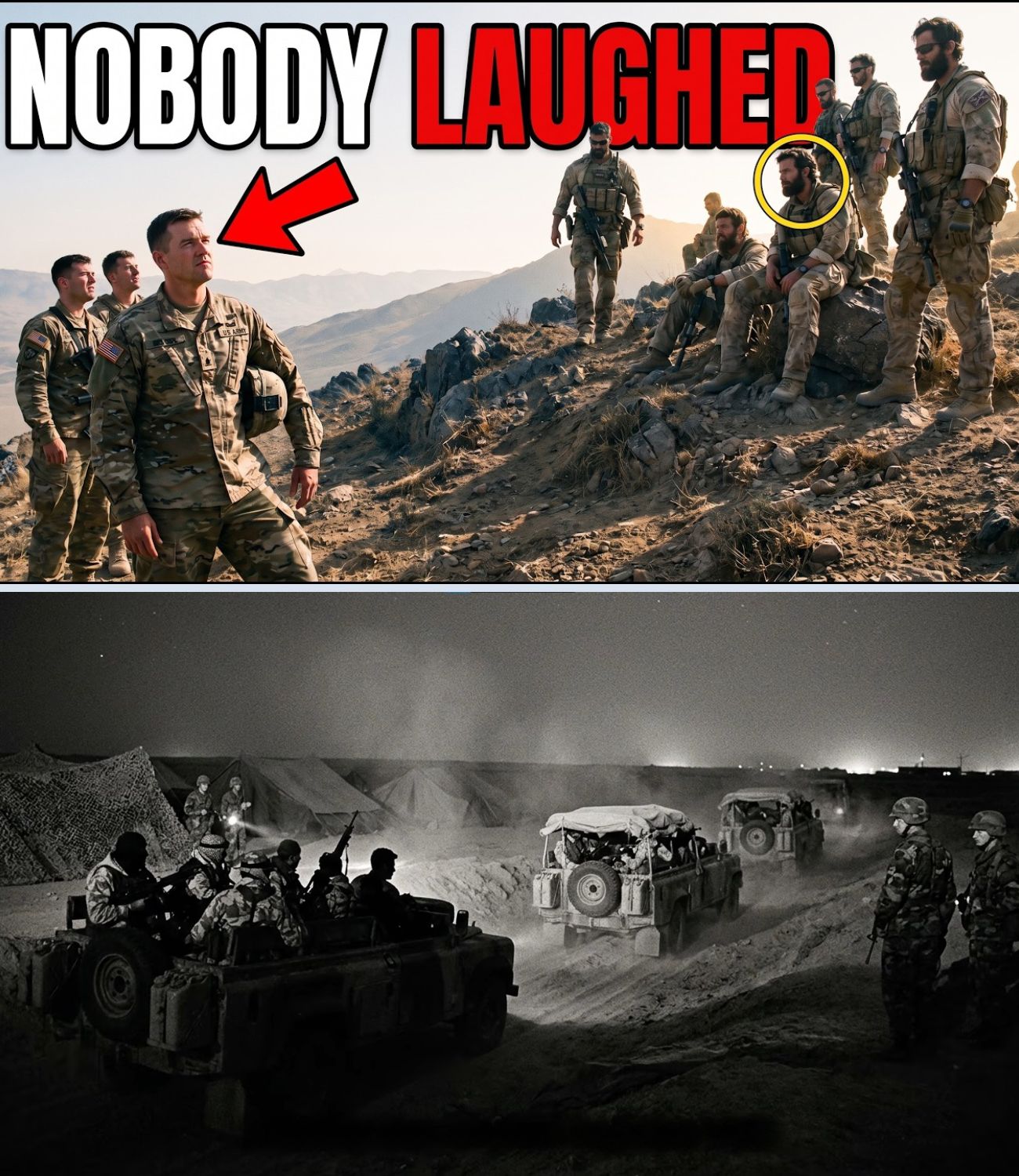
23rd of January 1991, 40 miles south of the Iraqi Highway, pilots called Scud Boulevard. Three stripped-down Land Rover 110s idled in a wadi, engines ticking as they cooled. Eight men, a .50 Browning bolted to one vehicle, twin GPMGs on the others, jerry cans lashed to every free rail. The wind was already turning, grit needling across the hard pan. And 40 miles north, a convoy was moving that nobody at the operations tent in Riyadh had yet confirmed. Somewhere ahead, under camouflage netting, a Scud transporter erector launcher was being fuelled for another night’s firing window. The patrol carried 8 days of water, spare fuel lashed to every rack, and no reinforcement for 300 metres in any direction. They had come to find that launcher before it found its next target and slipped back into the road network the pilots had nicknamed for exactly this reason, vanishing again before dawn.
They called themselves Widow 71, a composite designation for the story that follows, one of several vehicle-mounted patrols that B Squadron and D Squadron 22 Special Air Service pushed deep into Iraq’s western desert that January to hunt the mobile Scud launchers threatening Israel and Saudi Arabia. Command fell to a staff sergeant the men called Robbie, 12 years in the regiment. The kind of quiet that made junior troopers stop swearing when he was thinking something through. His signaler was a corporal known as Chalky, quiet and economical with words. The kind of soldier who fixed things before anyone noticed they were about to break. Two attached specialists rounded out the eight: a Royal Corps of Signals operator named Fenwick who carried the burst transmission set strapped across his chest like a second ribcage, and a Royal Engineer, Sergeant Cole, whose Bergen held enough plastic explosive to cut a bridge span in half if the mission ever called for it.
Robbie himself had joined the regiment out of the Parachute Regiment nearly a decade earlier and had spent enough of that decade in deserts—Oman before it, brief attachments elsewhere—that the shamal building over the horizon that afternoon read to him less as a threat than as a familiar piece of weather with its own rules. Rules he’d learned to work with rather than fight. Cole had come across from the Royal Engineers only 18 months before, chosen for the demolition role as much for a reputation of never leaving a task half-finished as for any particular technical brilliance. Fenwick, the youngest of the eight at 26, had qualified on the burst transmission set only the previous spring and treated it, by his own troop’s account, with something close to reverence, checking its battery state obsessively in a way the older hands found equal parts irritating and reassuring.
Their orders issued out of the forward mounting base at Al Jouf were blunt: locate launcher activity along the Scud belt north of the Wadi Al-Mir road network, report positions back for the strike aircraft, avoid contact wherever possible. Eight men against a mechanized army was not a fair fight, and everyone from the squadron commander down knew it. Three months earlier in the planning cells at Hereford, nobody had needed reminding what happened when a small patrol on foot was compromised in that same desert. Three men from one eight-man patrol would not survive the war, four would be captured, and only one would walk out alive across the Syrian border. The vehicle patrols existed partly because of that arithmetic: speed and firepower where the foot patrols had neither, an engine to outrun trouble that boots on gravel could not.
The launcher they were hunting was almost certainly a modified Al-Hussein variant of the Soviet-designed Scud-B, the extended-range weapon Iraq had been firing at Tel Aviv and Riyadh since the 17th of January, and every patrol in that desert understood the political weight riding on the hunt as clearly as they understood the tactical one. Israel had not yet entered the war. Coalition planners in Riyadh believed, with good reason, that enough Scuds landing on Israeli soil would eventually force an Israeli response that could fracture the Arab states inside the coalition—Egypt and Syria chief among them—over a war against a fellow Arab nation. Patriot batteries were doing what they could over Tel Aviv and Dhahran with results that would later prove far less decisive than believed at the time. The desert patrols were the other half of the answer: find the launchers before they fired or catch them fast enough after that the transporter erector launcher crews learned to fear the open road as much as the crews feared running out of fuel.
Robbie’s patrol had already spent 5 days in that country by the 23rd, inserted overland from Al Jouf in a longer column that had split into three separate patrol areas once across the border, each one working a different stretch of the Scud belt with its own resupply schedule and its own emergency rendezvous point memorized rather than written down. They had crossed the main supply route the Americans called MSR Michigan on the second night, timing the crossing to a 20-minute gap in Iraqi traffic that Fenwick had judged by ear alone, headlights counted and logged rather than guessed at. They had already had one close look at an Iraqi border post from 400 metres out on the first night, watched it for 40 minutes, and quietly moved on rather than risk a contact so early in a mission with 3 weeks still to run. None of that had made it into any story yet; it was simply the five days that had already worn the patrol down to the state Howerin would find them in.
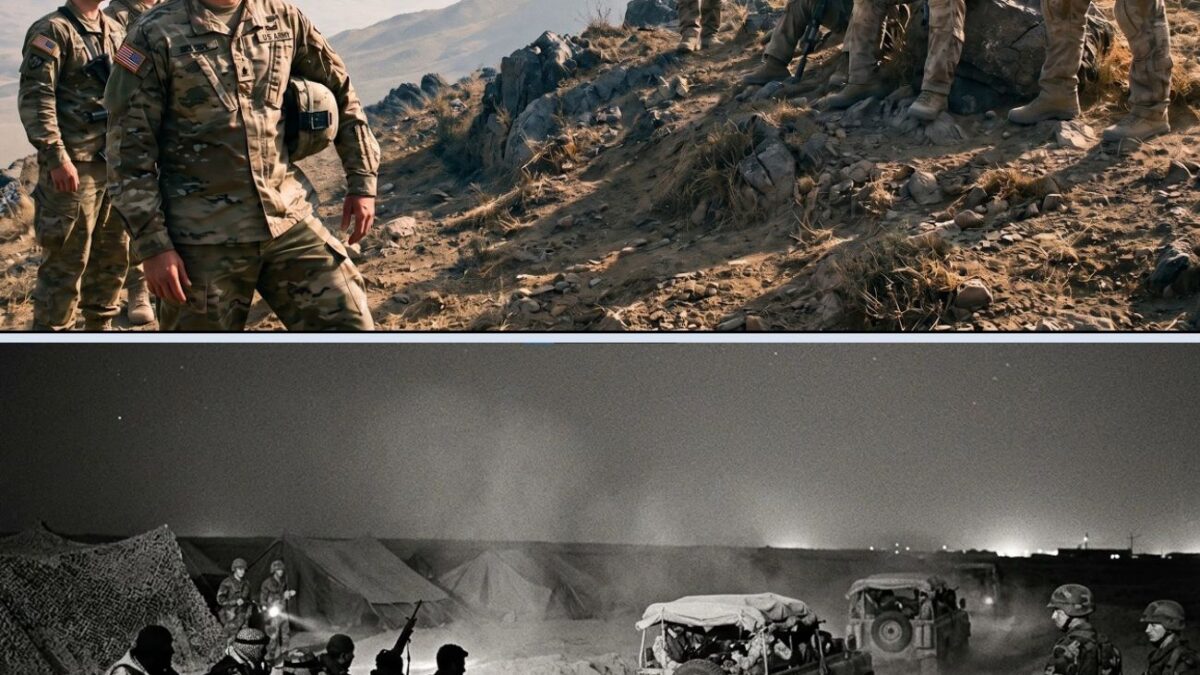
Nobody had briefed them on the American liaison detachment they would link up with two nights later because nobody could have. Nobody had warned them about the sergeant who would look at three vehicles and eight men and laugh out loud. That laugh did not survive the night. The link-up point was a shallow depression the Americans had turned into a temporary combat search and rescue staging site, part of the scattered network supporting downed pilot recovery for an air campaign then in its second week. A pair of MH-53 Pave Low helicopters sat shrouded under camouflage nets nearby, rotor blades folded, and a detachment of US Air Force special tactics personnel and Army signalers—perhaps 20 strong, with two Humvees, a canvas fuel bladder, and a satellite dish angled skyward like something waiting to be fed—had been dug in there four days already, further forward than most of the rescue network’s other nodes, and correspondingly more nervous about who might be moving toward them in the dark.
Robbie brought the Land Rovers in slow, headlights off, engine noise the only announcement of eight men arriving out of the night. A sergeant first class named Howerin walked out to meet them, a stocky, sun-baked logistics NCO who had spent four nights on that position expecting something worse than three quiet vehicles to appear on his perimeter and who had, by his own later account, half convinced himself the real danger would come as artillery rather than as visitors. He counted heads by red lens torchlight: eight. He counted vehicles: three. He looked past them into the dark for the rest of the column that surely had to be following behind, the trucks, the fuel bowsers, the platoon that any American planning cell would have sent to do a job this far north.
“That’s it? That’s the whole patrol?”
Robbie said it was. Howerin laughed, a short, genuine bark of disbelief, the laugh of a man whose own doctrine ran on companies and battalions and combined arms packages, looking at eight strangers who had driven 300 metres through hostile territory to arrive looking, in his own later phrase, like they’d come to fix the generator, not fight a war. Behind him, a young specialist manning the perimeter wire, a pair of rescue men named Denny Ostrander, barely into his 20s, grinned and said,
“The British must be running short on volunteers that week if this was what they were sending.”
A second American, a staff sergeant running the site’s radio relay, asked not unkindly where the rest of the squadron was parked, as if three vehicles were simply the advanced element of something larger still working its way up from the border. Nobody meant real malice by it; it was the reflex of men trained inside overwhelming force, sizing up eight men and three vehicles, and finding the sums smaller than anything their own field manuals would have signed off on for a mission this deep.
The Land Rovers themselves told part of the story, too, to anyone who knew what to look for. Each had been stripped of doors, roof, and windscreen to save weight and improve fields of fire, roll bars welded on in their place, and every panel that could carry a jerry can, a sand channel, or a spare wheel had been pressed into service for exactly that. It was the same basic configuration other vehicle-mounted patrols were running that winter across the Scud belt alongside smaller motorcycle-borne elements used for closer reconnaissance where even a Land Rover’s silhouette was too much to risk. None of it looked reassuring parked next to an American Humvee with its armour plate and its mounted heavy weapon. That was rather the point: a vehicle built to survive contact and a vehicle built to avoid it look almost nothing alike.
Purcell, watching the three Land Rovers being serviced that first evening, was slowly working out which one he was looking at. Robbie’s kit, laid out later that evening for Purcell’s benefit at the lieutenant’s own request, did most of the talking his silence didn’t. Each Land Rover carried stripped weight and doubled ammunition, a general-purpose machine gun forward and one on a pintle mount aft on two of the three vehicles, the third carrying the heavy Browning and a shoulder-launched Milan anti-tank system broken down across two of the vehicle’s racks in case the patrol met armour it could not simply drive away from. Personal loads ran to roughly 100 rounds of link per gunner beyond the belts already fed, four days of hard rations stretched deliberately across the eight actually planned, a medical pack sufficient for two serious casualties, and water calculated at a gallon a man per day with a two-day margin built into the total—the same 5-gallon cans Robbie had checked against the site’s own stock within 20 minutes of arriving.
Purcell did the arithmetic out loud unprompted: eight men carrying, by his own rough count, close to the firepower his own two Humvee crews mounted minus the numbers. He didn’t say anything else about it that night; he didn’t need to. Robbie didn’t argue the point. He asked where they could refill water, check the site’s desalinated stock against his own 5-gallon cans, and put his men to work servicing the vehicles: oil, tyre pressures, weapons stripped and cleaned in the failing light while there was still light to clean them by. Chalky spent 20 minutes retaping a fuel line already chafing at a bracket rather than trust it through the night ahead on a wager that it would hold. Cole restacked his demolition charges so the weight sat lower against the chassis, an adjustment of perhaps 4 inches that would matter if the ground turned soft.
None of it looked like showing off. It looked like habit, the unglamorous kind, the kind that never gets filmed. Howerin noticed it anyway, the way a man who has spent a war around the sloppy and the frightened notices, almost against his will, men who haven’t wasted a single motion. By last light, the temperature had dropped hard, the kind of desert cold that punishes anyone who spent the afternoon sweating through desert-patterned smocks under a sun that had 6 hours earlier been trying to kill them a different way. The wind that had been building since noon strengthened into a shamal, the seasonal sandstorm that had already grounded coalition strike sorties twice that week and would ground them again before dawn.
Robbie’s patrol had planned to push north again after dark, using the storm’s cover to close on the reported transporter erector launcher position along the belt they’d been assigned. Now they had to choose: move blind into a storm that could swallow a man 3 feet from his own vehicle, or sit still on a position 20-odd Americans had built that an Iraqi reconnaissance element might already have logged from the air and hope the storm did the same work of hiding them where they stood. That was the moment the night stopped being a delay and became a problem. Robbie chose to move. Sitting on someone else’s known position in weather that would blind their own sentries as thoroughly as any enemy patrol felt worse than driving into conditions his men had at least trained for.
He told the American site commander, a first lieutenant named Purcell, who could not have been much past 30, that the patrol would push out at 2100 and would not be back before dawn, if at all. Purcell offered a pair of Humvees as escort, a gesture of goodwill more than tactics. Robbie turned it down. The American vehicles ran heavier, louder on tyres that left a tread pattern Iraqi border units had learned to read from the air. Three quiet Land Rovers stood a better chance alone than three Land Rovers trailing two thin-skinned Humvees behind them. Purcell didn’t argue twice. He had already spent two hours watching the small patrol work, and something in that had changed his arithmetic, even if Howerin’s hadn’t yet caught up.
The shamal hid in full an hour after last light. Visibility fell to perhaps 30 metres. Sand riding the wind in sheets that stung any bare skin and worked into rifle actions, no matter how tightly they’d been taped against exactly this. Robbie’s driver held 11 miles an hour rather than the 15 the timeline wanted, steering on a magnetic compass bearing backed by a global positioning system set that lost its satellite lock twice in the first hour alone, each loss costing four or five minutes of dead reckoning before the signal found itself again. Chalky rode with his window cracked despite the cold, straining to hear engines over the wind because in visibility that thin, hearing would find trouble before sight ever could.
It nearly found trouble twice before it found the convoy. Once at 2140, headlights swept across the storm’s murk perhaps 200 metres to the east, a single vehicle moving fast along what had to be the hard-top road, gone again inside 10 seconds. Robbie killed his own lights and held the patrol dead still for 6 minutes before moving on in case the vehicle doubled back to investigate a shape it might have half registered through the blowing sand. It didn’t. The second scare came 20 minutes later when Cole’s Land Rover dropped a wheel into a wadi cut invisible in the murk and came within a foot of rolling. The demolition sergeant simply reversed out, checked by feel that his load hadn’t shifted against the straps in the dark, and drove on without a word wasted on it.
Fatigue and cold were doing their own quiet work on all eight men by then: cracked lips, hands too cold inside gloves to feel a trigger guard properly, the particular grinding ache of holding a weapon ready for hours against a threat that hadn’t yet shown itself. Nobody had slept more than 90 consecutive minutes in the better part of two days. Nobody mentioned it. There was, as Robbie would say years later, no useful sentence that began with how tired he was. At one point during that blind hour, Fenwick’s own vehicle began drifting rich on fuel mixture, the engine coughing twice in a way that any of the eight would have recognised even half asleep, and Cole leaned across from the following seat to strangle the choke back by hand rather than stop the column to diagnose it properly—a fix that held for the rest of the night only because Cole trusted his own hands over a diagnosis he had no time to make. Nobody spoke about it afterward; it was one more small failure absorbed and solved inside the noise of a larger one, the kind of repair that never appears in any patrol report because by the time anyone might have asked about it, it had already stopped being a problem.
The land itself was working against them as much as the enemy might have been. This stretch of the Wadi Al-Mir network ran across gravel plain broken by shallow, near-invisible wadi cuts exactly like the one that had nearly taken Cole’s vehicle, cuts that could open a foot-deep trap under a tyre with no warning at walking pace, let alone at 11 miles an hour in zero visibility. The GPS units every patrol carried that war were still a recent addition to the desert soldier’s kit, temperamental in dense weather and dependent on a satellite constellation not yet built for the density of demand three separate services were now placing on it nightly. Robbie’s driver cross-checked the set against dead reckoning every few minutes rather than trust either method alone, a discipline that cost time the timeline didn’t really have to spare and bought, in exchange, the one thing that mattered more than the timeline: certainty about where eight men actually were in a country where a wrong turn could put them on top of a position they had no way of surviving.
They found the convoy by sound at 2240—not the mobile launcher itself, but its escort, two flatbed trucks and what the patrol judged from silhouette and exhaust note to be a ZIL-131 troop carrier halted nose-to-tail on the hard-top perhaps 400 metres east, engines idling, men’s voices carrying oddly through the storm, the way sound travels when wind strips away every other layer of noise around it. Robbie killed his own engines. Eight men sat in the dark in the blowing sand and listened to a convoy they could not see and that for 11 minutes could not see them either. It was Cole who first placed the second sound underneath the first: a generator running somewhere behind the trucks, the low mechanical drone of something drawing far more current than a radio set alone would need. A launcher being prepared does not sound like a convoy at rest; it sounds like this—idling engines, low voices, and underneath them, work being done in the dark that a unit simply resting for the night would have no reason to be doing. Cole judged the generator’s note against ones he’d heard on training ranges at home, and decided before anyone asked him to, that it was drawing too much load for a simple lighting rig or a field kitchen. The pitch held too steady, too deliberate, the sound of something being kept at a fixed voltage rather than switched on and off as convenience demanded. He didn’t say “Scud” out loud; nobody needed him to. It was the kind of detail that would mean nothing to a historian reading the patrol report 6 months later and everything to eight men listening to it live in the dark from 400 metres.
Then the compromise very nearly happened. At 2251, a single figure detached from the convoy’s silhouette and began walking unhurried in the general direction of the patrol’s position, an Iraqi soldier by every likelihood simply relieving himself away from his own vehicles rather than hunting for anything. But there was no way to know that from 400 metres in blowing sand, and no way to ask. Eight men went motionless. Weapons came up without a sound, safety catches already off from the moment the convoy’s engines had first been heard. The soldier’s torch beam swept once, twice across ground perhaps 60 metres short of the nearest Land Rover, close enough that Robbie could hear the man clear his throat over the wind. One trooper on the second vehicle, lying prone against the running board with his GPMG’s bipod dug into the sand, would say afterward that the 60 metres felt closer to six; distance in a storm like that had a way of collapsing to whatever a man’s nerves decided it was. Nobody breathed audibly for the better part of 90 seconds. The figure turned back toward the convoy without ever closing the gap, and the patrol stayed frozen a further 10 minutes after his silhouette had rejoined the others in case it had been a deliberate probe rather than an accident of geography, in case a second man was about to be sent to check the ground the first had only glanced at.
If the soldier had kept walking, the patrol’s standing instruction was unambiguous and had been rehearsed on the drive down from Al Jouf until it required no discussion: no shot fired unless discovery was certain and unavoidable, and even then, fire and movement toward the vehicles rather than toward the enemy because eight men’s only real advantage over a company-strength escort was the ability to be somewhere else within 90 seconds. It was not a plan built on if the patrol wins; it was built on the harder, less comfortable truth that a contact of that kind at those odds was not a fight to win so much as a fight to survive long enough to drive away from. Every man on that vehicle understood the difference, and none of them needed it explained twice. A dog barked somewhere near the convoy’s rear vehicles a few minutes later, off and on for what felt like far longer than it likely was, and every man on the patrol went still again, waiting to hear whether a second voice would answer it with orders rather than curses. None did. The barking trailed off into the wind the way most sounds did that night, swallowed before it could resolve into anything one way or the other, and the patrol allowed itself cautiously to breathe again.
Robbie made in the minutes after the call every hour of patrol training had prepared him to make and hoped never to have to use for real: not to close in on a target they could hear but not see in a storm that would swallow their own muzzle flash before an enemy could register where it had come from. Eight men had no business trading fire with a company-strength escort in zero visibility, whatever the temptation. Instead, hold position, mark the grid by three separate compass bearings cross-checked against the dead reckoning plot, and get it onto the burst transmitter the instant the storm thinned enough for a directional aerial to hold a satellite pass. Patience over aggression, information over the kind of stand-up fight eight men against a company could not win, and had no orders to attempt. It was the same discipline Howerin had mistaken 6 hours and one bad joke earlier for insufficiency.
Fenwick worked the burst set by red lens torchlight, keying a message compressed to the bone: grid reference, estimated strength, activity indicators, time of observation. Nothing wasted. The first attempt at 2317 failed outright; storm static ate the transmission clean before it left the aerial. Robbie held the patrol in place rather than retreat blind through ground they hadn’t scouted while towing a live contact behind them in weather that made every mile a gamble. At 2334, the second attempt went through, relayed onward from a receiving station toward the targeting cell in Riyadh that fed strike aircraft their coordinates for that night’s Scud-hunting sorties. What happened to that convoy after the report went out belongs to squadrons of aircraft the patrol never saw and pilots who never knew eight men had sat frozen in a storm 400 metres from their target to put a single grid reference onto a screen. Robbie’s patrol did not stay to watch; their orders were reconnaissance, not destruction. Any strike would follow through channels they had no further part in, and lingering to observe results risked exposing a position that had by luck and by discipline in roughly equal measure gone unseen so far.
They withdrew west at first light along a route Cole had pre-planned precisely so the patrol would never have to improvise an exit under pressure, whatever the night had thrown at them. Back to the American staging site took most of the following day, delayed twice by mechanical trouble that had nothing to do with the enemy and everything to do with 300 hard miles on desert tracks: a punctured tire changed in the open under a sky that offered no cover of any kind, every man on stag with a weapon up while the wheel came off because a broken-down vehicle in daylight was as dangerous as anything the night had produced, and a radiator hose that split 20 metres short of the position and had to be patched with tape and, as Robbie put it years later, more hope than engineering. Water ran low enough by the second afternoon that the ration was cut without anyone needing to be told twice why. Twice during that daylight leg, a pair of aircraft crossed high overhead, fast enough and far enough up that the patrol could never be certain whose they were. Both times the drivers simply held course rather than scatter for cover that didn’t meaningfully exist on that ground anyway, on the calculation that a moving vehicle at that range read as nothing worth a strike pilot’s fuel.
Somewhere on that second afternoon, Fenwick’s burst set itself began drawing down its spare battery faster than the table said it should, cold and current draw conspiring against a component nobody had thought to insulate any further than doctrine already specified, and for the better part of an hour, the patrol drove without any reliable way to raise anyone at all. Fenwick solved it eventually by wrapping the battery pack against his own body under his smock, trading his own warmth for the set’s until the readout climbed back into a range he trusted. It was not a fix any manual described; it worked, which by that point in the patrol’s experience was the only test that mattered. It was dusk on the second day when the three Land Rovers came back over the same rise they had left 31 hours earlier: dust caked, one vehicle running rough on a fuel line Chalky had retaped a second time somewhere on the return leg, all eight men present, all eight unmarked, and every one of them several pounds lighter than the men who had driven out.
Word reached the squadron’s own forward operations cell at Al Jouf 2 days after that, relayed through the same targeting chain that had taken Fenwick’s burst transmission in the first place, and the squadron commander—a major the men referred to out of his hearing as “The Schoolmaster” for a habit of quoting training wing doctrine at moments nobody else thought called for it—logged the contact against the patrol’s call sign with a single line: Target grid confirmed, patrol undetected, no casualties. It was the kind of debrief entry that told a reader nothing about the 11 minutes of listening in the storm or the 90 seconds when a torch beam swept ground 60 metres short of the nearest vehicle. That omission was standard practice, not carelessness; a patrol report was built to move fast up a chain that needed grids and outcomes, not the texture of fear. The texture only came out later in the accounts men gave each other over the years in bars and at reunions, and once into a historian’s tape recorder.
Howerin was on the perimeter when they came in. He did not laugh this time. In the intervening day, his own headquarters had passed down a signal referencing a strike on Scud-associated activity in a grid consistent with exactly the sector the small patrol had driven into during the worst sandstorm of the week, a target his own unit with its two Humvees and 20 men had not been tasked to find and would not have found in that weather anyway. He walked out to meet the vehicles, and by more than one later account of the men on that position, the first thing he said to Robbie was not a question about the mission; it was an offer of coffee and a long look at the blistered hands of the trooper who’d manned the Browning through two nights of cold.
Ostrander, the young para-rescue man who’d made the crack about volunteers, didn’t repeat it; he helped unload the patrol’s empty jerry cans without being asked, and one witness to the exchange recalled him asking quietly how eight men had sat motionless in a shamal that thick 400 metres from an enemy convoy without losing either their nerve or their bearings. Nobody in the patrol had an answer that sounded like anything grander than training repeated until it stopped feeling like a choice; nobody offered more than that, and nobody needed to. Later that same evening, over the terrible coffee, the staff sergeant running the radio relay who’d asked where the rest of the squadron was parked found Robbie by the vehicles and asked a different question this time, not where the rest of the patrol was, but how a man planned a route through country like that with nothing but a compass and a set that dropped its satellite lock twice an hour. Robbie’s answer was short:
“You plan it the same way whether the set works or not, and you make sure at least one man in the vehicle could still get you home by the stars if it came to that.”
The sergeant wrote nothing down; he simply looked at the Land Rovers a while longer than he had the previous evening and didn’t ask about numbers again.
Purcell debriefed Robbie properly the following morning, notebook out, working through grid references and timings with the care of a man who intended to write the contact up accurately for his own chain of command, regardless of whose patrol had made it. Halfway through, he stopped and asked off the record whether Robbie’s patrol had ever seriously considered the two Humvees as escort that first night, given what they’d walked into. Robbie told him the honest answer: that eight quiet men in three low vehicles were already gambling more than he liked on any given night, and adding two loud ones with thinner armour would have doubled the gamble for no gain he could see. Purcell wrote nothing down for that answer; he simply nodded, the particular nod of an officer revising a number he’d carried in his head since the previous evening, and moved on to the next line of the report.
Word of the contact and of the strike that reportedly followed it moved through the small American detachment inside a day, the way any story moves through an isolated position with little else to talk about after dark. By the time a relief flight rotated fresh personnel through the site roughly a week later, the site’s informal shorthand for the British patrol had stopped being about their numbers entirely. Men who had never laid eyes on Robbie’s patrol were repeating a version of Howerin’s own line back to the newcomers, turned inside out: that this lot didn’t need more men because the ones they’d sent didn’t waste a single one they had.
The wider Scud-hunting effort that January and February involved several such patrols working the same stretch of desert, vehicle-mounted teams ranging across a triangle of highway and open ground between the Iraqi-Jordanian border and the Euphrates operating alongside the foot patrols inserted further east whose fate became far better known to the public than the vehicle-mounted patrols’ quieter, more thinly documented work. Post-war assessments credited the western patrols and the aircraft they queued with contributing to a marked fall in Scud launches against Israel and Saudi Arabia as the campaign wore on, though no single patrol and no single report was ever going to receive full credit for any one suppressed launch, any one convoy that simply turned back rather than run a gauntlet of aircraft a small patrol somewhere in the dark had called down on it. That is the nature of reconnaissance work: the proof of it is mostly an absence.
Whitehall and the Pentagon would spend years afterward arguing in the mild way institutions argue about things that already happened and cannot be redone over how many launchers the western patrols had actually accounted for against how many had simply relocated ahead of a strike that never quite caught them. The men who had been doing the driving mostly stayed out of that argument; they had not been sent to produce a number for a post-war briefing slide, they had been sent to find launchers and report them. And on the night that mattered to Robbie’s patrol, they had done exactly that in a storm bad enough to ground the aircraft that would eventually act on it, and that gap between the finding and the striking—hours sometimes rather than minutes—was itself a fact that later analyses treated as a lesson in its own right, quoted at length in post-war staff colleges without ever naming a specific patrol.
It is worth setting Robbie’s night against the other story from that same January that the public came to know far better, because the contrast is the whole point of what the vehicle patrols were built to avoid: the eight-man foot patrol compromised 60 metres to the east that month had gone in without vehicles at all, walking, relying on stealth alone in terrain that offered almost none of it, and had been discovered within days by an Iraqi patrol that stumbled onto their position by chance. Three of those men died of exposure and wounds in the retreat that followed; four were captured and held until the war’s end; one walked and occasionally ran across nearly 200 miles of desert to the Syrian border alone and survived it. It became in time one of the most written-about small-unit actions of the entire war. Robbie’s patrol and others like it working the same belt of highway with vehicles under them rather than boots alone never produced a book contract or a household name because nothing happened to them worth turning into one: they found their targets, called them in, and drove home.
Within the regiment, that was always understood as the better outcome, whatever the wider public preferred to read about. The ceasefire came at the end of February, and with it the slow business of every patrol rotating back through Al Jouf, vehicles handed over for a maintenance overhaul they badly needed, weapons cleaned one final time, and men sent for showers most of them had gone without for the better part of 6 weeks. Robbie’s own debrief with the schoolmaster ran to less than 15 minutes; there was by then little left to say that hadn’t already gone up the chain in five separate patrol reports. The major’s only remark that Robbie later thought worth repeating was that the squadron had been lucky, and that luck of that particular kind—a full run of patrols returning intact—was not something any commander should ever mistake for a method, however much the preparation underneath it had earned the outcome.
Squadron headquarters at Al Jouf ran a rough tally across the whole campaign of grids reported against Scud and Scud support activity, of aircraft queued onto targets that a patrol on the ground had first identified in the dark. The number that mattered inside the regiment was smaller and blunter than any total: how many patrols came home with the same eight men, or four, or six, that had gone out? Robbie’s patrol was one of those; it went out five times in total that war and came back five times with no one left behind and no one carried out on a stretcher, a run of luck and discipline that men who had served alongside him were still remarking on decades later, the way soldiers remark on things that could easily have gone the other way and didn’t. Each of those later missions ran from the same forward-staging areas with the same three vehicles patched a little further from the last contact than they’d been at the start.
The staff sergeant himself gave one interview years afterward to a historian assembling an oral record of the Gulf War’s vehicle-mounted patrols, and in it, he was asked inevitably about the American reception on that first night: the counted heads, the counted vehicles, the disbelieving question that had gone around the position before the patrol had even finished parking. He didn’t dramatize it when he answered; he said only that the lieutenant and the sergeant on that position had done exactly what any sensible soldier would do, looking at eight men and three vehicles with no reinforcement for 300 metres in either direction: assume the worst and hope to be proven wrong. He said the coffee when it finally came was terrible, and that he drank every drop of it anyway.
He said too that the strangest part of the whole business was how quickly a room—or in this case, a stretch of open desert with two Humvees parked in it—could turn from doubt to something close to deference without a single word of apology ever needing to be exchanged. Howerin never said sorry for the laugh, and Robbie never expected him to; soldiers on both sides of that exchange understood it for what it was: an honest first read of the arithmetic, corrected by the only evidence that ever really corrects that kind of arithmetic, which is a job done, and eight men walking back in to collect it.
The historian who eventually recorded Robbie’s account filed it alongside dozens of others from that same winter, foot patrols and vehicle patrols, both British and American, spread across a strip of desert most of the men involved could still decades on draw from memory better than they could draw the street where they’d grown up. Few of those accounts made it into any popular history of the war; the Scud-hunting campaign, as most people came to know it, was the story of the patrol that went wrong, not the several that went right. And there is a kind of quiet justice in the fact that the patrols that worked are also the ones almost nobody outside the regiment can name.
Howerin, for his part, was traced decades later to a small town in the American Midwest, and when asked whether he remembered the night he’d laughed at eight British soldiers and three battered Land Rovers, he said he remembered it exactly, and that it had taught him more about soldiering in one evening than most of a career in logistics ever had. What survives in the end is smaller than a campaign and larger than an anecdote: a staff sergeant’s plain answer to a historian’s question, a laugh that lasted less than a day, and an enamel mug carried home from a war in which eight men had been, by any ordinary measure, far too few for the job they were given, and had done it anyway, in a storm thick enough to swallow a Land Rover three feet off its own bow-wave, without losing a man, without firing a shot, and without ever needing anyone else’s numbers to make up for theirs.
You Might Also Enjoy

“We Thought They Would Negotiate”—What Argentine Soldiers Said When The British Attacked Goose Green

“You’ll Never Finish My Ruck March, Limey” — US Sergeant Who Challenged the SAS, Then Fell Out First






