“They Treated Them Like Equals” — Why Black GIs Never Forgot How British Soldiers Treated Them
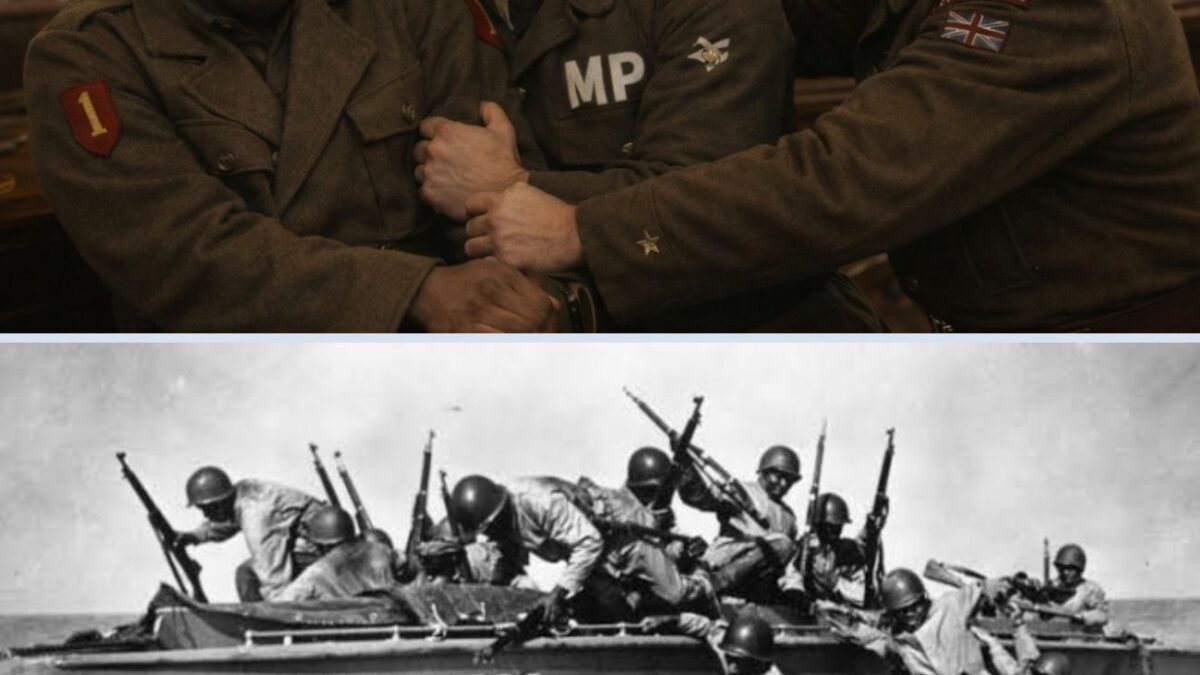
In October of 1942, a young black soldier from Mississippi stepped off a military truck in a small village in Somerset, England. He was 22 years old. He had never eaten in a restaurant. He had never sat in the front of a bus. He had never walked through the front door of any place where white people gathered. Back home, doing any of those things could get him beaten or killed. But on this cool English evening, with fog rolling across green fields and the smell of coal smoke drifting from stone chimneys, something happened that changed his life forever. He walked into a village pub and a British woman behind the bar smiled at him and asked what he would like to drink. An old farmer sitting by the fire pulled out a chair and told him to sit down. Nobody stared. Nobody told him to leave. Nobody pointed to a back door or a separate window for colored people. For the first time in his entire life, he was just a man sitting in a room with other men. That night, he wrote a letter home to his mother. He told her that he did not think these people got the memo about them. This was not supposed to happen.
By the fall of 1942, the United States was sending hundreds of thousands of soldiers across the Atlantic Ocean to England. The great buildup had begun. America and Britain were preparing for the biggest invasion in human history, the assault on Nazi-occupied Europe that would eventually become D-Day. More than one and a half million American troops would pass through Britain before that invasion came. And among them were roughly 150,000 black American servicemen.
These men had signed up or been drafted to fight for freedom and democracy against Adolf Hitler and his army of racial supremacists. But the country they served did not give them freedom or democracy at home. They came from an America where the color of your skin decided everything. Where you could eat, where you could sleep, where you could sit on a train, whether you could vote, whether you lived or died. The United States military was one of the most segregated institutions in the country. Black soldiers were separated from white soldiers in almost every way possible. They slept in different barracks. They ate in different mess halls and they were banned from most combat roles and instead assigned to dig ditches, haul supplies, build roads, and clean latrines. They were led almost entirely by white officers, many of whom came from the South, and treated them with open contempt. The Red Cross even separated donated blood by race, as if black blood and white blood were somehow different.
These men carried all of that weight with them when they crossed the ocean. They carried the memory of every insult, every beating, every lynching, every door slammed in their faces. They expected England to be the same. Why would it be any different? White people were white people and the rules were the rules. That is what they had been taught since birth. But Britain in 1942 was a different world. The country had been battered by years of German bombing. Cities lay in ruins. Food was rationed. Clothing was rationed. Fuel was rationed. The British people were tired and hungry and scared. But they were also stubborn and proud and unwilling to be told what to do, especially by someone else’s army.
Most people in these small English towns and villages had never met a black person in their lives. They had no history of Jim Crow. They had no segregated buses or colored-only water fountains. The British Empire had its own deep history of racism across the globe, but in the pubs and churches and living rooms of rural England, the rigid daily separation of black and white that defined American life simply did not exist.
The American military expected Britain to play along. Before the troops even arrived, US commanders sent messages to the British government asking them to observe American racial customs. They wanted the British people to keep their distance from black soldiers. They wanted separate pubs, separate dances, separate towns. The answer they got back was something they did not expect. The British government said no. And what happened next would shake the American military to its core, transform the lives of thousands of black soldiers, and plant seeds that would one day help tear down segregation in America itself. What happens when a segregated army lands in a country that refuses to segregate?
To understand what happened in Britain, you first have to understand what life was like for black Americans in uniform before they ever set foot on English soil. By 1943, the United States Army had about 700,000 black soldiers, a number that would grow to over one million by the end of the war. But almost none of them were allowed to fight. The military believed that black men were not smart enough, not brave enough, and not disciplined enough for combat. This was not based on evidence. It was based on racism so deep and so old that most white officers treated it as a simple fact.
Black soldiers were funneled into service and support units. They were the ones who loaded bombs onto planes but never flew them. They were the ones who drove ammunition to the front lines but were not allowed to fire it. They built bridges, dug graves, washed laundry, and cooked meals for white troops who looked right through them as if they were invisible. And the men who led them, the white officers assigned to command black units, were often the worst the army had to offer. Many were southerners who had grown up believing black people were less than human. They used slurs openly. They handed out punishments for the smallest offenses. They made sure their black soldiers understood exactly where they stood, which was at the very bottom.
Training camps in the American South were especially brutal. At Fort Bragg in North Carolina, black soldiers were attacked by white civilians and white troops with little consequence. At Camp Van Dorn in Mississippi, tensions between black soldiers and the surrounding white community grew so dangerous that violence erupted more than once. A black soldier could be arrested for not stepping off a sidewalk fast enough when a white person walked by. He could be thrown in the stockade for talking to a white woman. He could be shot for resisting. And outside the gates of these military bases, the world was even worse. Jim Crow laws controlled every part of daily life across the South. Restaurants, theaters, hotels, swimming pools, hospitals, and even cemeteries were divided by race. Lynching was not ancient history. It was current events. Between 1940 and 1945, dozens of black Americans were murdered by white mobs, and almost no one was ever punished. This was the America that black soldiers knew. This was the country they were being asked to die for.
Now picture England in that same year. Britain in 1942 looked nothing like the powerful empire it had been just a few decades earlier. German bombs had torn through London, Coventry, Liverpool, and dozens of other cities. Entire neighborhoods had been reduced to rubble. Over 40,000 British civilians had been killed in the Blitz alone. The people who survived were living on rations so tight that a single egg was a luxury. Meat, sugar, butter, cheese, and even tea were carefully measured and controlled. People wore the same patched and mended clothing for years because there was nothing new to buy, and gasoline was almost impossible to get. Every part of daily life had been stripped down to the bare minimum, and the country was holding on by sheer willpower and stubbornness.
Into this battered, exhausted nation came the Americans. And they came with everything. Mountains of food, rivers of coffee, crates of chocolate and cigarettes and chewing gum, fresh uniforms, new boots, and money to spend. British people watched with a mixture of gratitude and irritation. They were glad for the help, and they needed the help, but the wealth and confidence of the Americans rubbed many of them the wrong way. A popular British joke at the time said the problem with the Americans was that they were overpaid, oversexed, and over here.
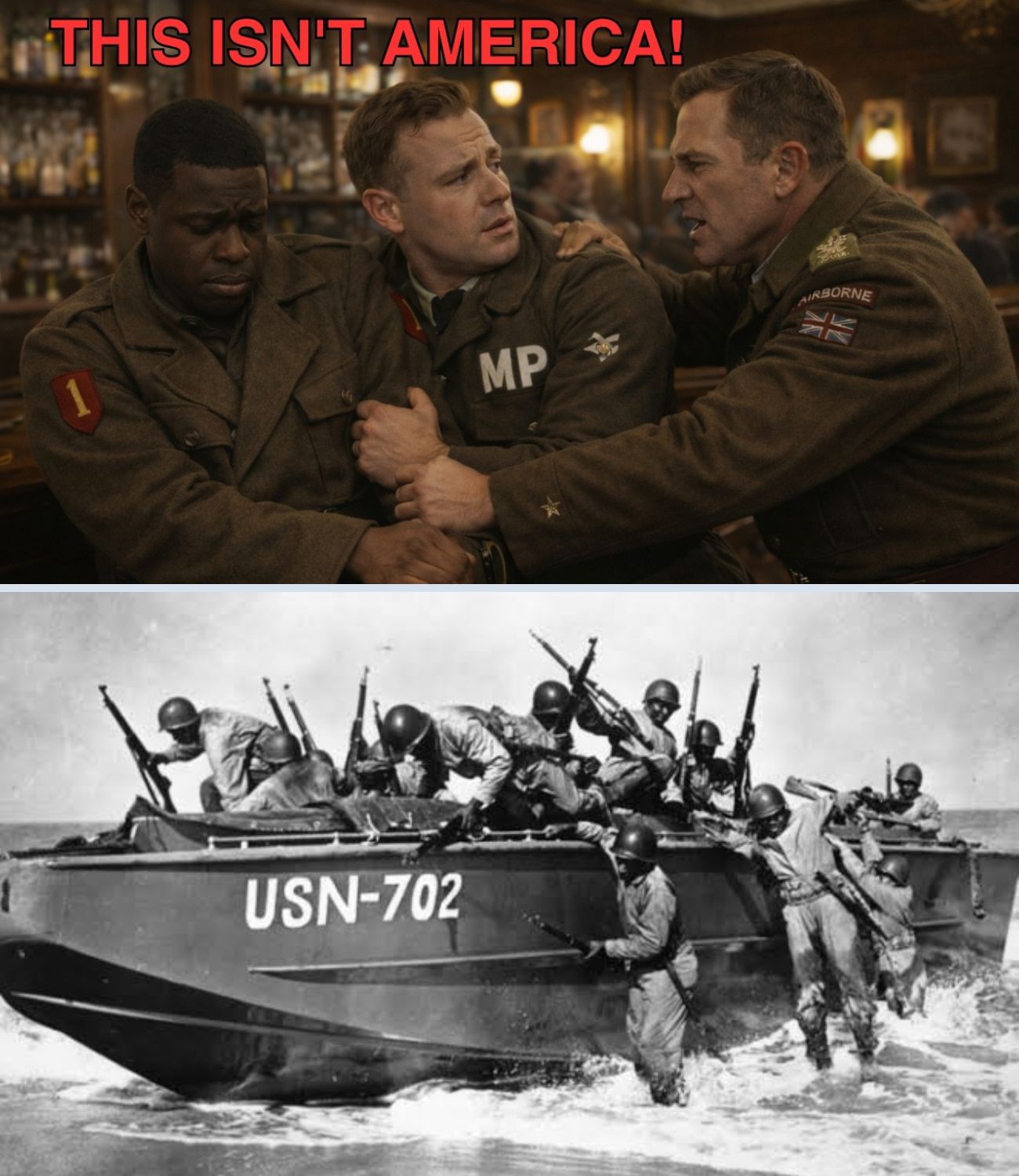
But when it came to black American soldiers, something very different happened. The British people saw men who were polite, generous, and humble. Men who shared their chocolate and chewing gum with children. Men who offered to help farmers in the fields. Men who showed up at church on Sundays and thanked everyone for the smallest kindness. And they saw how the white American military treated these men with cruelty and contempt, and it disgusted them. The British had spent three years fighting against a man who believed one race was better than all others. Now, an Allied army had arrived on their soil, practicing the very thing they were supposed to be fighting against. That contradiction was about to explode.
The collision began almost the moment black soldiers arrived across the English countryside, in villages and market towns from Somerset to Lancashire to East Anglia. A quiet revolution was taking place, and the United States military had no idea how to stop it. British people were welcoming black American soldiers into their lives in ways that nobody in the American chain of command had planned for.
In the small town of Kingsclere in Hampshire, a farmer invited a group of black GIs to Sunday dinner and sat them at his family table. In a village near Bristol, an elderly woman brought hot tea and fresh scones to a black engineering unit working in the rain and told them they were doing God’s work. In Lancashire, local women showed up at dances and chose black soldiers as partners, spinning across the floor with them, while white American GIs stood against the wall with their fists clenched and their faces red with fury.
Children ran through the streets chasing after black troops the way they chased after no one else, because these soldiers were the ones who always had chocolate in their pockets and a kind word on their lips. Pub owners poured pints for black soldiers and asked about their families back home. Church groups invited them to services and seated them in the front pews. Families across England opened their doors and said:
“Come in, sit down. You are welcome here.”
And for black men who had never been welcomed anywhere by white strangers, the effect was staggering. Many of them described it later as the first time they felt like full human beings.
The white American military establishment watched all of this with growing alarm. Senior officers had expected the British to cooperate with segregation or at least to look the other way. Instead, the British were doing the opposite. They were treating black soldiers not just as equals, but in many cases with more warmth and kindness than they showed to white American troops. This was intolerable to the white power structure of the US Army. Commanders began issuing orders to control the situation.
In some areas, they designated certain towns as off-limits to black troops on certain days and open to white troops on others. They tried to create separate pub nights, one evening for white soldiers and another for black soldiers, so the two groups would never mix in front of British civilians. They pressured British pub owners to refuse service to black GIs. Military police, most of them white and many of them from the Deep South, were sent into towns to enforce these rules with nightsticks and pistols. Some white officers even distributed pamphlets to British families, warning them not to socialize with black soldiers, claiming it would cause trouble and upset good order.
The British people did not take kindly to being told what to do in their own country. Pub owners who were told to bar black soldiers responded by putting up signs that read:
“This establishment serves all allied soldiers.”
Some went even further. When white American military police came in and demanded that black GIs leave, certain pub owners threw the white MPs out instead and told them not to come back. British women who were seen walking with black soldiers were confronted by white American GIs and told they were disgracing themselves. Many of these women told the Americans exactly where they could go.
British soldiers stationed alongside the Americans were especially offended. They had been fighting this war for three years already, watching their cities burn and their friends die. And now an Allied army was trying to import racial hatred onto their soil. Some British troops made a point of drinking with black GIs just to make their feelings clear. But the tension was building towards something dangerous.
Fights between white and black American soldiers broke out with increasing frequency in pubs, on streets, at bus stops, and outside dance halls. Fists flew and blood spilled. These were not small scuffles. They were violent clashes driven by deep racial hatred on one side and years of bottled-up anger on the other. White GIs attacked black soldiers for talking to British women. Black soldiers fought back against military police who tried to drag them out of pubs. In Leicester, a series of brawls left men hospitalized on both sides. In Bristol, fights erupted so often that parts of the city became unofficial war zones between American soldiers who were supposed to be on the same side. The British police, who had no authority over American military personnel, could do little but watch, and the American military police, who were supposed to keep order, were often the ones starting the trouble.
The atmosphere grew darker with every passing week. It was only a matter of time before the tension exploded into something far worse than a pub fight. And in June of 1943, in a small town in Lancashire that most Americans had never heard of, that is exactly what happened.
On the night of June 24th, 1943, the town of Bamber Bridge in Lancashire became the scene of something the United States Army never wanted the world to see. Bamber Bridge was a small, quiet place, the kind of town where everybody knew everybody and not much ever happened. But for months, black soldiers from the 1511th Quartermaster Truck Regiment had been stationed nearby, and they had become a part of the community. They drank in the local pubs. They played with the local children. They helped farmers bring in hay. The people of Bamber Bridge liked these men. They were polite, hardworking, and grateful for every kindness shown to them. The townspeople knew how the white American military treated them, and it made them angry. So, when trouble finally came, the people of Bamber Bridge did something remarkable. They picked a side, and it was not the side the American military expected.
It started in a pub called the Olde Hob Inn as a group of black soldiers were drinking and relaxing after a long day, when white American military police walked through the door. The MPs told the black soldiers that they were in violation of segregation rules and ordered them to leave. The pub owner refused to back the MPs up. The British civilians in the pub told the military police to leave the men alone. One account says a British woman told the MPs that the black soldiers were welcome and that the MPs were the ones who should get out. Words were exchanged. Tempers flared. The MPs left, but they did not go far. They waited outside with reinforcements, armed with guns and nightsticks, ready to confront the black soldiers when they came out.
What happened next was chaos. When the black soldiers left the pub, the MPs moved in to arrest them. A scuffle broke out. Exactly how the shooting started depends on who is telling the story. But within minutes, gunfire erupted in the streets of this small English town. Black soldiers, many of whom had been pushed to their breaking point after years of abuse, fought back. Some ran to their camp and returned with weapons. The fighting spread through the streets and back toward the base. Shots rang out in the darkness. Military vehicles raced through narrow lanes. It was a battle, but not against the Germans. It was Americans fighting Americans on British soil over the simple question of whether a black man had the right to drink a beer in a pub.
By the time it was over, one black soldier was dead and several others were wounded. Dozens of black soldiers were arrested. Almost no white MPs faced any consequences at all. The military moved quickly to cover up what had happened. Courts-martial were held behind closed doors. Black soldiers received harsh sentences. The story was kept out of most American newspapers. The army wanted Bamber Bridge forgotten, but the people of Bamber Bridge refused to forget.
In the days after the fight, the townspeople made their feelings absolutely clear. They hung signs in their windows and shop doors that read:
“Welcome to all American soldiers, both black and white.”
Some businesses went even further and posted signs that said:
“Only black soldiers were welcome until the white military police apologized.”
The town did not turn against the black GIs. It turned against the system that had tried to oppress them.
Bamber Bridge was the most dramatic example, but it was not the only one. Across Britain, the pattern repeated itself in quieter but equally powerful ways. British people simply refused to enforce American segregation. The collective weight of thousands of small acts of decency—a pint poured without hesitation, a chair offered without condition, a dance shared without shame, a door opened without fear—created something that the United States military could not control, nor could any order from a general undo what was happening in the hearts and minds of ordinary British villagers. And no punishment could undo what was happening inside the black soldiers themselves.
That was the real turning point. It was not the gunfire in Bamber Bridge, though that mattered. It was the moment, repeated thousands of times across hundreds of towns, when a black American soldier realized that the world he had been taught to accept was a lie. He had been told all his life that white people would never see him as equal. He had been told that segregation was natural, that it was just the way things were and always would be. And then he arrived in a country he had never seen before, and strangers treated him the way his own country never had—with the ordinary, unhesitating respect that every human being deserves.
That experience broke something open inside these men. It did not just show them kindness. It showed them that a different world was possible. And once a man has seen that, he can never go back to accepting the old one. The seeds of something much bigger than a wartime friendship had been planted, and they would grow for decades to come.
In the weeks and months that followed incidents like Bamber Bridge, the United States military worked hard to make sure the American public never learned the full truth of what was happening in Britain. Reports were buried. Court-martial records were sealed. Commanders wrote carefully worded summaries that blamed the violence on black soldiers who had been drinking too much or who had refused to follow lawful orders. The white military police who had started the confrontations were rarely mentioned by name and almost never punished. Black soldiers who had fought back were sentenced to years of hard labor. The message was clear: if you were black and you stood up for yourself, you would pay for it. If you were white and you pushed a black man until he broke, you would be protected. The system that had followed these men across the ocean was still in full control, or so the army believed.
But the military could not control the mail. Black soldiers wrote home to their families by the thousands. And in those letters, they described a world that no one in Mississippi or Alabama or Georgia had ever imagined. They wrote about sitting in pubs with white English farmers and drinking together like old friends. They wrote about going to church with white families and being treated like honored guests. They wrote about dancing with English girls who laughed with them and held their hands and did not care what color their skin was. They wrote about walking down village streets and having strangers smile at them and say good morning. And they wrote about the pain of knowing that none of this would be waiting for them when they went home.
These letters reached not just families but communities. They were read aloud in barbershops and church basements and living rooms across black America. The word spread: over there, things were different. Over there, a black man could be a man.
The black press in America seized on these stories with fierce energy. Many newspapers like the Pittsburgh Courier and the Chicago Defender had been running the Double V campaign since 1942, calling for victory against fascism abroad and victory against racism at home. The reports from Britain gave that campaign its most powerful ammunition yet. Here was proof, written in the soldiers’ own words, that segregation was not natural and not inevitable. Here was proof that white people in another country could treat black people with basic human respect and the world did not fall apart. Editors printed letter after letter, story after story, building a case that would echo through the decades. If Britain could do it, why couldn’t America?
Meanwhile, something quieter and more personal was unfolding in the English countryside. Bonds that had formed between black soldiers and British families grew deeper with every passing month, and women who had welcomed these men into their homes fell in love with some of them. Romances bloomed in a world that was doing everything it could to keep them apart.
The US military made it almost impossible for black soldiers to marry white British women. Paperwork was delayed, denied, or lost. Commanders refused to grant permission. Some officers told black soldiers directly that they would never approve a marriage between a black man and a white woman. And yet some couples found a way. They married quietly, often with the help of sympathetic British clergy. But for most, the war eventually tore them apart. The soldiers shipped out to fight in Europe or were sent home, and the women they loved were left behind.
And many of these women were left behind with children. Roughly 2,000 mixed-race babies were born in Britain during and just after the war—the children of black American soldiers and white British women. They were called brown babies by the press, and their lives would be shaped by the same forces of racism that had defined their fathers’ experiences. Many of their mothers faced tremendous shame and pressure from their own families and communities. Some were disowned. Some were forced to give their children up for adoption or to charitable homes. Some of these children grew up never knowing who their fathers were or why they had been left behind. They were the living proof of what had happened when two worlds collided in wartime England. And their stories, full of loss and longing and search for identity, would continue unfolding for generations. The war had created something beautiful and something painful at the same time, and the full cost of it was only beginning to be understood.
The experiences of black soldiers in Britain did not stay contained within the walls of English pubs and village homes. They rippled outward in ways that changed the war, changed the military, and eventually helped change America itself. To understand the full weight of what happened, you have to look at what these men actually did during the war. Because the truth is that the same army that treated them as less than human could not have won the war without them.
Black soldiers built the infrastructure that made the invasion of Europe possible. They laid roads and railroad tracks across the English countryside. They constructed airfields from which bombers flew to strike Nazi Germany. They loaded millions of tons of ammunition, fuel, food, and equipment onto ships and trucks and trains. When D-Day finally came on June 6th, 1944, black soldiers from the 320th Barrage Balloon Battalion were among the first Americans on the beaches of Normandy, wading through freezing water and enemy fire to launch massive balloons that protected the landing forces from German aircraft. These men had been told they were not good enough to fight. And yet there they were, under fire on the most important day of the war, doing a job that saved countless lives.
After the beaches were secured and the Allied armies began their push across France, it was black soldiers who kept them moving. There is a story about one of those men from the 320th that captures everything about what black soldiers endured and achieved on that day. His name has been lost to history, but witnesses remembered what he did. When his landing craft hit a sandbar 50 yards from shore, he jumped into chest-deep water, holding a heavy barrage balloon cable above his head. German machine-gun fire stitched the water around him. Men on either side of him went down. He kept walking. He reached the beach, drove his anchor stake into the sand with a mallet while bullets kicked up dirt around his feet, and launched his balloon into the gray sky above Normandy. Then he went back into the water to help pull wounded men to shore. He had been told his whole life that he was not brave enough to serve his country in combat. On June 6th, 1944, he proved that lie wrong before most of America had finished breakfast.
The Red Ball Express, the legendary truck convoy system that hauled supplies from the Normandy coast to the front lines, was operated by roughly 70% black drivers. These men drove day and night along roads that were often under attack, pushing their trucks through rain and mud and darkness to deliver the fuel and ammunition that generals like George Patton needed to keep advancing. Without the Red Ball Express, the Allied advance across France would have ground to a halt. Patton himself knew it, even if he never gave these men the credit they deserved.
The sheer scale of black contributions to the war effort made it harder and harder for the military to justify segregation. The evidence was piling up—and not just from Britain, but from every theater of the war—that black soldiers were just as capable, just as brave, and just as essential as white soldiers. The British experience had proven something specific and important: when black and white people shared the same spaces, the same pubs, the same streets, the same churches, disaster did not follow. British society did not collapse. Villages did not descend into chaos. And the dire predictions that white American officers had made about what would happen if the races mixed turned out to be completely wrong. The only violence that erupted came from white Americans trying to enforce segregation, not from the absence of it.
This was a powerful piece of evidence, and people inside the military and the government began to take notice. The Nazis noticed too, but for very different reasons. German propaganda units created leaflets and radio broadcasts aimed directly at black American soldiers. They asked these men why they were fighting for a country that lynched them, that denied them the right to vote, that would not let them eat in the same restaurants as white people. The leaflets told black soldiers that Germany had no quarrel with them and that their real enemy was back home. It was cruel and dishonest, coming from a regime that was carrying out the worst racial genocide in human history. But the sting of it was that some of what the Nazis said about American racism was true, and every black soldier knew it. The irony of fighting a war against a master race ideology while serving in a segregated army was not lost on anyone, least of all the men living it every day.
After the war ended in 1945, the question of what to do about military segregation could no longer be ignored. The Gillem Board, as a military review panel, examined the issue and recommended cautious steps toward greater integration. The pressure continued to build from black veterans, civil rights organizations, and the black press. Finally, on July 26th, 1948, President Harry Truman signed Executive Order 9981, officially ending segregation in the United States armed forces. It was not instant. It took years to fully implement, and resistance from within the military was fierce, but the door had been opened, and it would never be closed again.
The experiences in Britain had not been the only force pushing that door, but they had been one of the most powerful. Thousands of black men had seen with their own eyes that integration worked. They had lived it. They had felt it. And they had come home determined that what they found in England would one day be found in America, too.
Behind every statistic and every policy and every turning point in this story, there were real people whose lives were forever changed by what happened in wartime Britain. Their names deserve to be remembered because it was their experiences, not the decisions of generals or politicians, that gave this story its true power.
There was a young man named Leon Bass who grew up in Philadelphia and was drafted into the army at 18 years old. He was assigned to a quartermaster unit and sent to England, where he experienced the same shock that so many black soldiers described. White people treated him like a person. They invited him to dinner. They talked to him on the street. They did not cross to the other side when they saw him coming. For a young man who had spent his whole life navigating the invisible walls of American racism, England was like stepping onto another planet. Leon carried that experience with him through the rest of the war, including the day his unit helped liberate the Buchenwald concentration camp in Germany. Standing in that camp, looking at the skeletal survivors and the piles of dead bodies, Leon understood something that connected his own life to theirs: hatred was hatred, whether it wore a Nazi uniform or a white hood. He survived the war and went home to become a teacher and a principal in Philadelphia, spending the rest of his life educating young people about racism, injustice, and the importance of standing up for others. What he saw in Buchenwald and what he felt in England stayed with him for the rest of his life—two experiences that taught him the same lesson from opposite ends of the human soul.
There was a soldier named Cleve Hathcock from Mississippi who had never been treated with respect by a white person before he arrived in England. He was stationed near a small village where an elderly British couple invited him to tea every Sunday afternoon. They sat together in their small front room with lace curtains and a cold fire, and they talked about their lives. The couple asked about his family, his home, his dreams for after the war. No white person in Mississippi had ever asked Cleve Hathcock about his dreams. When his unit was ordered to move out and prepare for the invasion of France, the old woman pressed a small package into his hands. It was a hand-knitted scarf and a note that said:
“Come back to us safe.”
And he carried that scarf through Normandy and across France and into Germany. He survived the war and returned to Mississippi, where the first thing that happened to him was being told to move to the back of a bus. He kept that scarf for the rest of his life. It reminded him that somewhere across the ocean, an old woman had knitted that scarf for a black man from Mississippi and had not thought twice about it.
There were the women of Britain who fell in love with black soldiers and paid a heavy price for it. A young woman in Somerset, whose name was never recorded in the official histories, fell in love with a black GI from Georgia. They met at a village dance and spent every free moment together for eight months. When she became pregnant, his commanding officer denied his request to marry her. The army transferred him to another base without warning, and she never saw him again. She gave birth to a mixed-race daughter and was thrown out of her family home by her own father. She raised the child alone in a time when mixed-race children in Britain were stared at, teased, and made to feel like they did not belong anywhere. Her daughter grew up never knowing her father’s name, carrying an absence inside her that shaped everything she became.
She was not alone. There were roughly 2,000 children like her across Britain—the brown babies of the war. One of them was a boy born in 1944 in a charity home in the West Country. His mother had been told it would be best for everyone if she gave him up. He grew up in a Barnardo’s children’s home, surrounded by white faces, knowing nothing about his father except that he had been an American soldier. The other children called him names he did not understand. The staff were kind, but could not answer his questions. When he was old enough, he began writing letters to the American military, asking for any record of a black soldier who had been stationed near his mother’s village in the spring of 1943. The letters came back empty or did not come back at all. He searched for 40 years. He traveled to America twice, once to Washington and once to Mississippi, following the faintest of leads. He never found his father. He never learned his father’s name. But he kept searching until the day he died because he believed that somewhere across the ocean a man had loved his mother and would have loved him too if the world had let him.
And then there were the men who came home and refused to be quiet. Veterans like Medgar Evers, who landed on the beaches at Normandy and came back to Mississippi determined to fight for the rights that black people had been denied for centuries. Evers had seen what a world without Jim Crow looked like. He had tasted equality, and he would not swallow oppression again. He became one of the most important leaders of the early civil rights movement, organizing voter registration drives and fighting segregation across the state. In 1963, he was shot and killed in his own driveway by a white supremacist. He was 37 years old.
Amzie Moore was another veteran who came home from the war and threw himself into civil rights work in the Mississippi Delta, becoming a mentor to young activists who would go on to change the nation. These men and countless others like them had been transformed by what they experienced overseas. They had been shown that dignity was not something that had to be earned by the color of your skin; it was something that belonged to every human being, and they were willing to fight for it even if it killed them. The war had given them weapons and training, but Britain had given them something even more powerful. It had given them proof that they deserved better, and the unshakable belief that better was possible.
The story of black GIs in wartime Britain did not end when the last soldier boarded a ship home. It echoed forward through the decades, shaping lives and nations in ways that no one standing in an English pub in 1943 could have predicted. The legacy of what happened in those villages and towns and dance halls became part of something much larger than any single friendship or any single fight. It became part of the long, painful, and still unfinished journey toward equality.
In the years after the war, the small towns of England that had welcomed black soldiers began to mark what had happened. In Bamber Bridge, the community never forgot the night when their streets became a battlefield and their people stood with the men who had been wronged. A memorial was eventually placed in the town, honoring the black soldiers who had been stationed there. Local historians gathered the stories of residents who remembered those years, preserving the memories of elderly men and women who could still describe the faces of the young soldiers who had shared their pubs and their Sunday dinners.
In Somerset and Hampshire and East Anglia and dozens of other places across the country, similar efforts took shape over the years. Plaques were mounted on the walls of buildings where black troops had been quartered. Church groups organized remembrance events, and villages that had once been home to thousands of American soldiers made sure the world knew that not all of those soldiers had been treated the same, and that ordinary British people had done something about it.
The reunions began in the 1980s and continued through the 1990s and into the 2000s. Aging black veterans, now in their 60s, 70s, and 80s, crossed the Atlantic one more time and returned to the places that had changed their lives. They walked down streets they had not seen in 40 years and found that the people remembered them. In some cases, the children and grandchildren of the families who had taken them in were waiting at the door. Old men who had been young soldiers wept openly as they sat once again in the same pubs where they had first been treated as equals. British families who had kept photographs and letters for decades brought them out and shared them.
One reunion in particular became famous in the small community where it took place. A black veteran from Alabama, now 81 years old and walking with a cane, returned to a village in Somerset where he had been stationed in 1943. He had not been back in 47 years. When he stepped out of the car on the village high street, a woman in her 70s was standing on the pavement waiting for him. She was the daughter of the couple who had invited him to Sunday dinner every week for nearly a year. Her parents had both passed away decades ago, but they had talked about him until the very end. She had grown up hearing his name at the kitchen table. She walked up to him and said her mother had always kept a place set for him just in case he came back. The old soldier broke down and wept in the middle of the street. And the woman held his arm and told him he was home.
The bonds that had been formed in wartime had survived distance, time, and the death of many of the original participants. The memory had been passed down like an inheritance from parents to children to grandchildren on both sides of the ocean.
The connection between the British experience and the American civil rights movement has been studied by historians for decades, and the conclusion is clear: what happened in Britain helped change America. When the veterans who had lived as free men in England came home, they carried something the American system had never expected them to have: certainty. Not hope, not anger, not faith that things might change someday. Certainty. They had seen it with their own eyes. They had lived in a place where it already worked. And that certainty was more dangerous to Jim Crow than any protest sign or courtroom argument, because you cannot convince a man that something is impossible when he has already experienced it.
That unshakable knowledge passed from veteran to son, from church pew to meeting hall, from the barbershops of Philadelphia to the dirt roads of the Mississippi Delta, fueling a movement that would spend the next two decades tearing down everything the old world had built. The Double V campaign that had burned through the black press during the war became the foundation for the movement that would eventually tear down Jim Crow. The March on Washington, the Freedom Rides, the sit-ins, the voter registration campaigns across the South—all of these drew strength from a generation of black men who had seen the world and knew that America could be better because they had lived in a place where it already was.
The brown babies of the war carried their own legacy forward. Many of them spent lifetimes searching for their fathers and for a sense of belonging. Some wrote books, some made documentaries, some traveled to America and found families they never knew they had. Their stories added a deeply personal dimension to the larger history, reminding the world that war does not only destroy; it also creates. It creates bonds and children and memories and promises—some of which are kept, and many of which are broken. The children of those wartime romances became living bridges between two countries, walking proof of what happens when human beings reach across the lines that society draws between them.
Today, more than 80 years after those first black soldiers stepped off trucks in the English countryside, the story still resonates. It resonates because it is not really a story about war. It is a story about what happens when ordinary people choose decency over prejudice. The farmers and barmaids and shopkeepers of wartime Britain were not trying to change the world. They were just being kind. And that is perhaps the most powerful part of the whole story. It did not take a revolution to show black soldiers that they were worthy of respect. It took a cup of tea, a seat by the fire, a pint poured without hesitation, and a door that opened instead of closing. These men crossed an ocean to fight for freedom, and found it not on the battlefield, but in a country that was not even theirs. They never forgot, and neither should we.
You Might Also Enjoy

“We Thought They Would Negotiate”—What Argentine Soldiers Said When The British Attacked Goose Green

“You’ll Never Finish My Ruck March, Limey” — US Sergeant Who Challenged the SAS, Then Fell Out First






