“They Won’t Last a Week” — Why US Rangers Laughed at 30 SAS Men in Mosul.
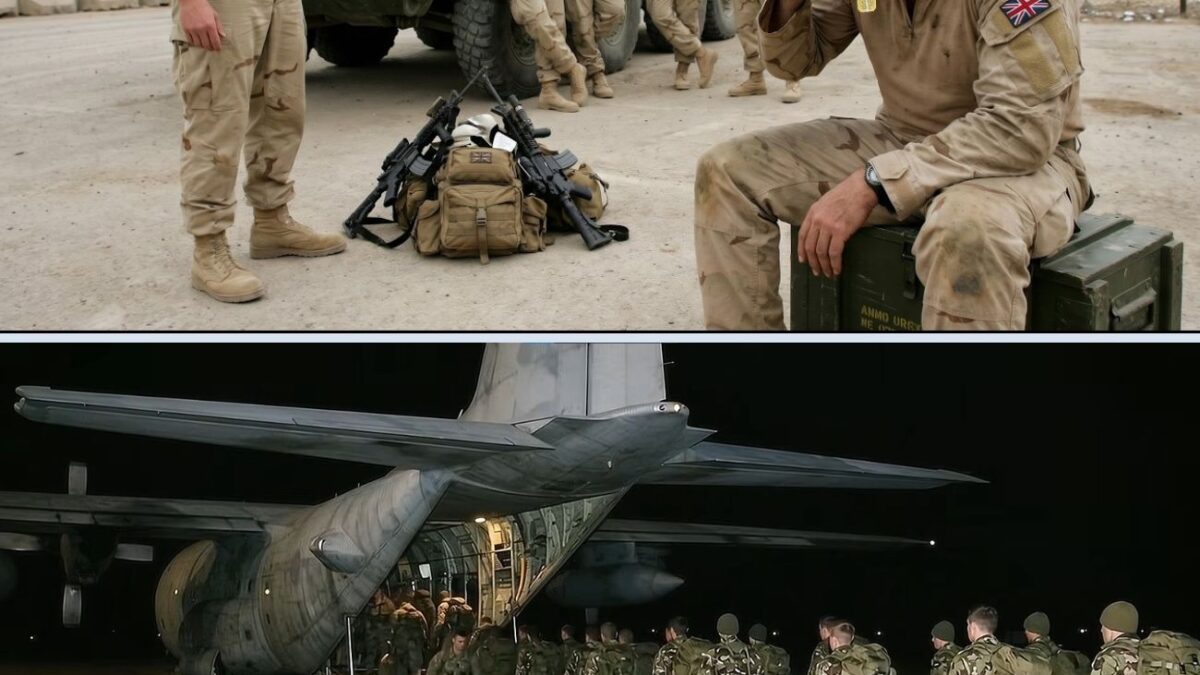
At 01:40 on Tuesday, the 2nd of November, 2004, the ramp of a C-130 came down on the apron at Mosul Airfield, and 30 men walked off it carrying their own bags. No armored trucks waited for them. No colonel waited for them. Four Land Rover 110s were chained down in the hold behind them, soft-skinned, canvas-topped, with no armor plate on any of them, and a Ranger crew chief watching from the next aircraft counted them out loud as they rolled onto the concrete. Mosul sat in the dark beyond the wire, a city of well over a million people on the Tigris, roughly 200 mi north of Baghdad. Somewhere inside it, a network was turning out car bombs and paying for them in cash.
A Ranger first sergeant stood at the edge of the apron with a coffee. He looked at the Land Rovers. He looked at the thin, quiet men beside them. Then he said the sentence that would be repeated in the Ranger hangar for the next week:
“They won’t last a week.”
Nobody on the apron disagreed with him. He had been in Mosul for 3 months. He had seen what the city did to armored vehicles. His name has never been released, and this account will call him Sergeant First Class Brandt, a stand-in for the man at the edge of the apron.
Brandt believed the 30 men would be gone in 7 days one way or another. He was wrong, but the way he was wrong is the story. The airfield they had landed on was not one base, but two. The Americans called the western half forward operating base Marez, and the eastern half, where the runway lay, Diamondback. It had been a rocky Air Force property and the 101st Airborne had been the first American unit to settle into it in 2003. By November 2004, the 101st was gone and the units living there had inherited a city that did not want them.
The 30 were British. They belonged to a saber squadron of 22 Special Air Service lent for a single job to the American joint task force that already owned the northern half of Iraq and nobody had told the Rangers what the job was. Brant had heard only that a British troop would arrive without much equipment, that it would not wear uniforms outside the wire and that it would not use the helicopters. For a Ranger, that is not a plan. It is a way of getting killed with paperwork. The senior Britain climbed down last. He was a squadron sergeant major and his name for the purposes of this account was Dunn. He was in his late 30s, broad through the shoulders and he stopped at the bottom of the ramp, looked up at the floodlights on the hangar roof and asked the nearest Ranger a question about the tea. That was all. The Rangers had expected something else. They expected an introduction, a speech, a show of confidence. They got a man who wanted to know where the hot water was.
By breakfast, the story was all over Diamondback. 30 Brits, four Land Rovers, no armor. The Rangers had a pool going on how long they would last and by mid-morning the shortest bet on the whiteboard in their operations hangar was two days. Brandt wrote the longest one himself. He put seven. To understand why a hardened Ranger first sergeant could look at 30 of the best soldiers in the British Army and laugh, you have to understand what Mosul had done to everybody else. In February 2004, the 101st Airborne Division handed northern Iraq to Task Force Olympia built around the Army’s new Stryker Brigade, the third brigade of the second infantry division under Brigadier General Carter Ham. The brigade had arrived from Fort Lewis in the winter. It owned three provinces, Ninawa, Erbil, and Dahuk, and its center of gravity was a city of narrow streets, tight neighborhoods, and five bridges across the Tigris. The Stryker was an eight-wheeled armored vehicle, close to 19 tons, loud, and fast, and heavy, and it was built to carry nine infantrymen into a fight. It had cage armor bolted around it against rocket-propelled grenades. It was the best armored troop carrier the American army owned. Mosul’s insurgents knew exactly what it could not do, which was go unnoticed. That was the problem sitting at the center of the Ranger Task Force’s work in the north. The Rangers were exceptional at the thing they were built for, a helicopter, a house, a door, a target, 15 minutes. They could put a company on a rooftop at 3:00 in the morning, and they did. But a raid is only as good as the address it is aimed at, and in the autumn of 2004, the addresses coming out of Mosul kept turning up empty. Beds still warm, tea still on the stove, a neighbor who had seen nothing. One raid in October at a house in the western part of the city had gone in by air on the word of an informant and found a family and a goat. The informant had been right about the street and wrong about the night. The man the task force wanted was not a name, he was a pattern, a facilitator, an organizer, someone who bought the cars, found the explosives, paid the drivers, and moved the money through the workshops on the west bank of the Tigris. The Americans had reduced him to a single nickname on a briefing slide, the engineer, because every vehicle bomb that came out of western Mosul seemed to have been built by someone with the same unhurried hands. They could not find him because finding him meant living in his city, and you cannot live in a city from inside an armored vehicle.
So, why send 30 Britons? Because everyone else had been asked first and everyone else had said no in the polite language that large organizations use when they mean it. The request had started in Baghdad inside the Joint Special Operations Headquarters that ran the hunt for insurgent leaders across Iraq. The British contribution to that hunt was a grouping of special forces units built around an SAS squadron working from a compound in the capital the British called the station. It was busy. It was chasing Abu Musab al-Zarqawi’s network in Baghdad and it had no men to spare. Its commanders said so. The Americans asked whether a smaller detachment could go north and for a few days the answer was still no. The Striker Brigade could not do it either. Ham soldiers held a province-sized area with a few thousand troops and every one of them was already working. Asking an infantry platoon to melt into West Mosul in plain clothes was asking for dead infantrymen and nobody above the platoon level was willing to sign the paper. The Iraqi police were the other option on paper. Mosul had 33 police stations. The police were under-trained, under-paid and as events would show within a week loyal to whoever was standing in the doorway.
That left the Rangers. The Rangers could have done it in theory. Their battalion had men who could pass in dim light for almost anything. But the Ranger battalion was a raiding force and its commander, a lieutenant colonel whose name is not on the public record, had fought for 3 months to keep it one. He did not want his rifle company sitting in a Kia minibus for 10 days watching a workshop. He wanted targets. He wanted a clock. The British offered the opposite. They offered patience which in that autumn was the one thing the American system could not manufacture. A British lieutenant colonel, the squadron’s liaison officer at the Ranger Task Force, laid it out in the one planning meeting that mattered. The British could take the West Bank for a fortnight, live in it, learn it, and give the Rangers an address they could trust. In exchange, they needed no helicopters, no escort, and no one asking them where they were. The Ranger Lieutenant Colonel looked at the proposal for a long time, then he signed it. Whether he believed in it is another matter. He gave them a hangar corner and a fortnight, and he left a company on a 30-minute standby in case they failed. The standby was an insult, and the British knew it. They said nothing. It was cheaper than arguing.
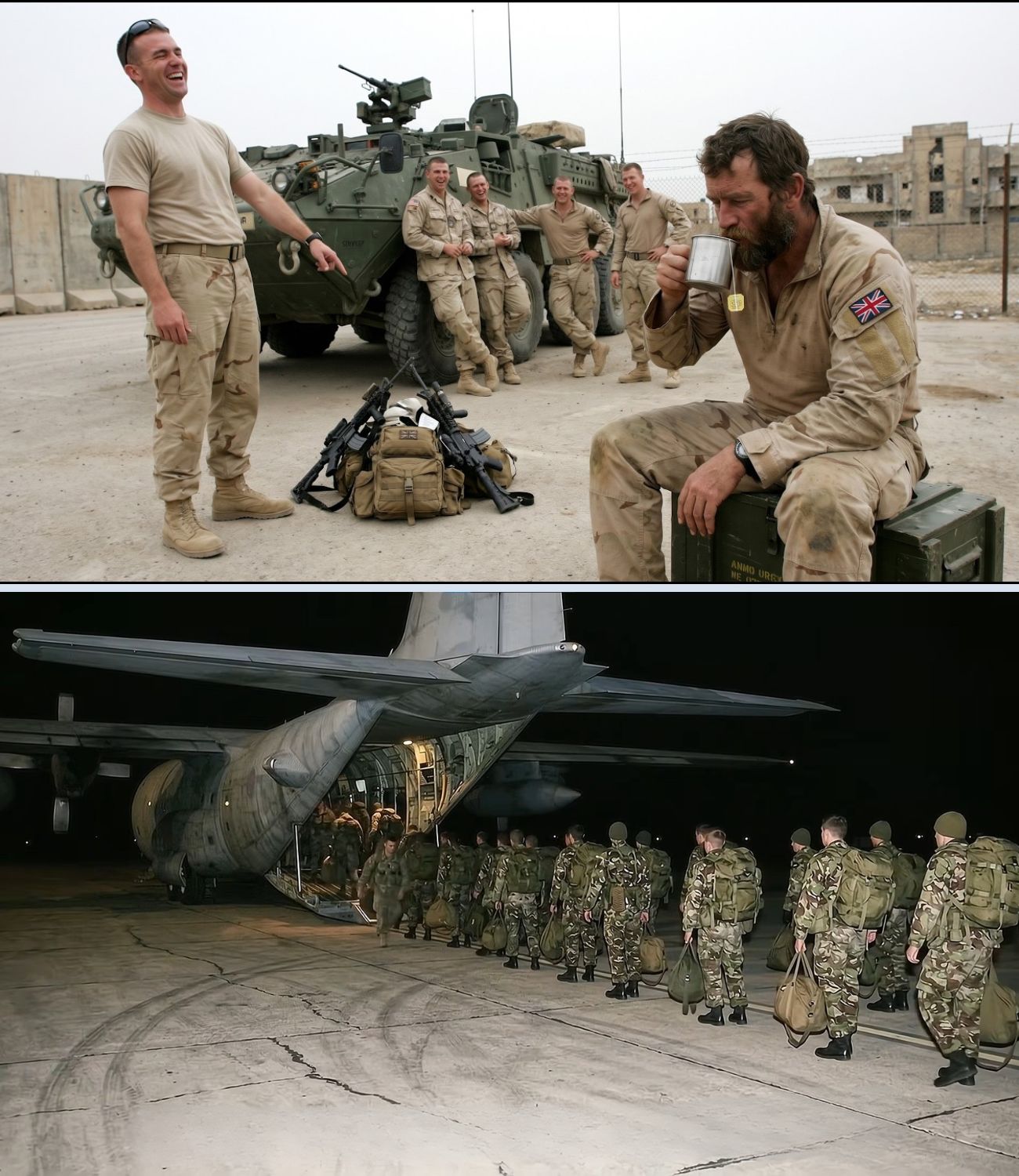
Here is who the 30 were. There were 25 men from one troop and a reinforcing section, a four-man signals detachment, and Dunn. The troop commander was a captain whose name, for the purposes of this account, was Harker, young for the job with a careful way of listening. His troop sergeant, called Mac here, was 12 years older and said very little. The medic was a man called O’Coro in this account. He had a rucksack that weighed more than anyone else’s, and when asked about it, he said that the others had only to carry their own trouble. The signal sergeant was called Pell. He had a dozen satellite handsets, three spare batteries for each, and a habit of testing every one of them twice before he slept. The detachment’s Arabic speaker, a man called Faris in this account, was a linguist with an Iraqi grandmother and the ability to say the word for radiator in three regional accents. None of them used a rank on the airfield. Four of them had been in Iraq since the invasion 18 months earlier. Two had been in Basra and Baghdad. None of them had ever been to Mosul.
That was the first thing the Rangers noticed, and the second thing they laughed about. The British had no maps of the city that the Rangers would have called maps. They had a roll of street plans bought in London, some old Iraqi military sheets, a stack of satellite photographs already four months old, and a single sheet that Dunn had drawn himself on the C-130 with a felt pen. He had drawn five bridges and one river. Then he had written beneath it the number 30. They were going to need every one of them.
The first 72 hours were not spent preparing for a fight. They were spent making 30 men look like nobody. The uniforms went into a locker. The helmets and body armor went with them. In their place, from the contractors who ran the base laundry and the motor pool, Pell and a British quartermaster sergeant gathered what a laundry boy or a day laborer might wear in the autumn. Dark trousers, cheap jackets, two pairs of sandals, a few flat caps. The beards were not shaved. Some of them had not been shaved for a month.
The vehicles were the larger problem. The Land Rovers could not go into West Mosul, and everybody knew it, including Dunn, who had brought them to see whether the Rangers would pay attention. They did. The Rangers walked around the 110s for an hour on the first morning. A Ranger mechanic ran a thumb along the flat steel where the armor should have been, and asked genuinely whether the British had forgotten it.
Dunn said no. He said the Land Rovers were for the airfield and the road to the airfield, nothing else, and that the real vehicles would come from the city.
They did. Over two days, through a local contractor who had worked for the base since the 101st days, and who was vouched for by a British intelligence officer, the detachment acquired six vehicles that were chosen because no one would look at them. A white Opel station wagon with a cracked windscreen, a Kia Besta minibus, the kind that carried workers across the bridges every dawn, a flatbed Toyota with a tarpaulin, two Chevrolet taxis that had been in the wrong color for a decade, and a sixth vehicle, a rusted Hyundai pickup that Mack drove out of the gate himself and parked beside the Rangers hangar.
Brandt stood in the door of the hangar and watched it arrive.
“That’s not a vehicle,” he told the man beside him, “that’s a confession.”
It did not fail on the first day, it failed on the third. The Hyundai died on Thursday the 4th of November, 200 m inside the first checkpoint on the road north into the city with the engine hood open and a plume of white smoke rising off the radiator. It was the worst place it could have died. The checkpoint was in a rocky police position, four men and a pickup, and a striker stood a quarter mile behind it with its crew watching the road. Mack, behind the wheel, climbed out and lifted the hood the way any Iraqi driver would have with a rag in one hand and a plastic bottle of water in the other. He poured, the engine hissed. A policeman walked over, looked at the radiator, said something that sounded like advice, and went back to his post. Behind Mack in the backseat, with his chin on his chest and a cheap cap pulled down, sat Harker. Beside him, wearing a headscarf and carrying nothing in his hands, sat the detachment’s Arabic-speaker, a man called Faris in this account, a British Army linguist with an Iraqi grandmother and the ability to say the word for radiator in three regional accents. None of them had a weapon in sight. Each of them had a pistol on the body and a carbine under the seat, and each of them had agreed that a striker 30 seconds away was not a friend.
It took 40 minutes to get the engine to turn. It took the rest of the day to decide that the Hyundai was finished. When they returned to Diamondback, Brant was waiting by the hangar door.
“Day three,” he said. “You’re ahead of my number.”
Mack said nothing. He handed him the rag.
The Hyundai’s failure cost them something besides pride. It cost them a vehicle that had been prepared for the West Bank. The remaining five were less reliable than the Hyundai, not more. The detachment now had to cover the ground with fewer wheels, which meant fewer men on the ground, which meant longer stretches in each position. That was the first constriction. It would not be the last.
On the morning of the 5th, Dunn called the whole detachment together in the hangar corner and went through what the city was asking of them. He did it without a map. He did it standing up with a mug in his hand. The West Bank was the older half of Mosul. It had been the center of commerce for the whole of northern Iraq for centuries. And in 2004, it was still crowded with workshops, spare parts stalls, tea houses, oil lamps for sale next to satellite dishes, and a street grid that had not been designed for anything wider than a donkey cart. A man in a car there was a man in a crowd. A man on foot was invisible. That was the advantage. The disadvantage was that the city was also very, very small. Everybody knew who belonged and who did not. Every shopkeeper could tell a local from a visitor by his shoes.
“So, we will not be visitors,” Dunn said.
Pell remembered the sentence long afterward. Then Dunn assigned the pairs. They went out in twos and threes in the five remaining vehicles at intervals, and they walked. They drank tea at stalls and bought cigarettes they did not smoke. One of them bought a plastic prayer mat for no reason except that a man buying a prayer mat is no one’s problem. Each carried a little over 1 and 1/2 L of water, a handset, a medical pouch the size of a fist, and a short list of landmarks to memorize because notes can be taken off a body and memory cannot. The point was not to find the engineer. The point was to find who fed him.
The first lead did not come from any of them. It came from an Iraqi. He was a retired warrant officer in the old Iraqi army, a signals man who had spent 22 years repairing field telephones. And the British called him the colonel because it amused him. The name is a convention. He lived on the East Bank, ran a small repair shop, and had come to the airfield two months earlier looking for work with the Americans. The Americans had given him a number and asked him to call again. A British intelligence officer called him again. He answered at once.
What the colonel offered was not a name, it was a habit, a particular kind of vehicle, a white Opel of a certain age had been appearing in front of three different workshops in the same street on the West Bank, always on a Saturday, always before noon. Its driver never got out. A boy ran out of each workshop, took something in a plastic bag from the passenger window, and ran back. That was all. That was why the colonel mattered. A man who had spent his life listening to broken telephones understood that a pattern is the shape of the thing you cannot see.
Dunn put two men on the street on the Saturday. The Opel came. It stopped at the first workshop, the second, and the third. Then it did something the colonel had not described. It drove through the West Bank out past the edge of the old city and into a residential street lined with low walls and date palms. It stopped outside the fourth house. The man who got out of it was not the engineer. He was a thin man in a gray jacket carrying a green folder, but he went inside the gate without knocking, and the gate was opened for him before he reached it, which meant that someone inside had been watching the street.
The detachment now had an address. That was the second thing the Rangers laughed about, at least until they heard it. The Ranger intelligence section had been working on that same district for two months and had put its best guess at a street 2 km away. The British with a minibus, a bag of cigarettes, and a retired signalman had found a house the Ranger satellites had missed. Brant did not laugh. He read the report twice, then he went to find his lieutenant colonel.
“They’re good at this,” he said.
It was the closest he came to an apology. But finding a house is not the same as being able to touch it. The house stood on a street where every adult male had a rifle in his hallway, where the nearest American patrol had not been in 6 weeks, and where any armored vehicle would be reported a 100 m out. A raid by air would bring Blackhawks and Little Birds over the roofs, and the engineer would be gone before the rotors had stopped. A raid by road meant Strykers or Humvees, and a Stryker is not a thing a man can miss. And there was a third problem, which had nothing to do with the house. The British could not simply take what they found. The detachment was operating under British rules as well as American direction, and the British rules about what happened to a captured man and where he was held were not the American rules. A British legal adviser in Baghdad on a secure line made this clear to Harker in three sentences. Nobody on the airfield could change them. The Americans did not like them. The Rangers did not like them. Nobody asked the Rangers. Every extra day of watching made the house harder to approach and the arrest harder to justify. And the clock the Ranger lieutenant colonel had given them was a fortnight.
By Sunday the 7th, after 30 hours on the street, the detachment had learned the rhythm of the street. A schoolboy at the end of it kept a tally of passing cars on the back of his hand. A woman hung the same blue sheet at the same hour. Two men on a rooftop opposite the target house, drinking tea at dusk, watched the road in both directions, and they were not as lazy as they looked. That same Sunday, the boy with a pen on his hand looked at the Kia minibus for a long time. He did not say anything. He did not need to. The Kia had been parked in the same spot on three consecutive mornings, and three mornings is a pattern, even for a child. Mack moved it before dark. Harker pulled both of his observers back and replaced them with another pair, a man Dunn called the quiet one who never spoke on the net, and an operator who had grown up in a town not unlike this one. They would not use the Kia again. That left four vehicles and the street was getting warmer.
Late that night, far to the south, American Marines and soldiers began the assault on Fallujah. Mosul did not wait for Fallujah to finish. The insurgents in the north had been watching the American assault on that city for months. Many of them had a simple plan. When the Marines went into Fallujah, the fighters in Mosul would go into the streets while the best American units were busy a long way south and the Iraqi police on the front line were told to look the other way. On Monday the 8th of November, they began. In the western half of the city, around the Yarmuk traffic circle, fighters ambushed a platoon of the 1st Battalion, 24th Infantry. The soldiers who called themselves Deuce 4. Rocket-propelled grenades hit the strikers. Machine guns raked the intersections. Kiowa Warrior helicopters came in low over the rooftops and soldiers fought for hours in the middle of a city that until that morning they had thought was largely quiet.
Pell heard it first over a Ranger radio net that he was not supposed to be listening to. He and Okoro were in the back of the Opel parked at the edge of the old city with a sack of oranges between them and a view down the long street to the Tigris. They had been there since dawn. It was not yet 9:00 in the morning. Pell took the earpiece out, looked at the oranges, and picked one up.
“That’s Yarmuk,” he said.
Okoro nodded. He had heard the first explosion with his own ears through the Opel’s cracked window and it had not been far. The street between them and the river did what a street does when a war begins. Within 3 minutes, the stalls were shuttered. Within 6, the men who had been drinking tea on the rooftop opposite the target house were gone from the roof. A van with no markings drove up the street fast and stopped at the corner. Men with scarves over their faces got out. Neither Pell nor Okoro moved. A man sitting in a parked car with a bag of oranges doing nothing looks like a man who does not want trouble. That is exactly what a city at war wants from a stranger. After 15 minutes, the van left. They stayed another 2 hours.
That evening in the hangar at Diamondback, the Ranger Lieutenant Colonel convened his company commanders and the British Liaison Officer. Task Force Olympia was heavily engaged. Ham’s Brigade was committed on both banks of the river. The Ranger’s standby company, which had been sitting on 30 minutes notice for 6 days waiting for the British to fail, had not been called. It would not be called that night either because there was nowhere safe for it to land. Brant came out of the briefing with a face the other Rangers did not want to ask about. He walked across the apron to the British corner of the hangar where Dunn was cleaning a mug at a sink and stood next to him for a long moment.
“You’re still out there?” he said.
“We are. It’s the 8th.”
“I can count.”
Brant looked at the whiteboard on the far wall where the pool still stood with the names and the numbers beside them. He walked over to it. He erased his own line. He did not write anything in its place. Not yet.
On the morning of the 9th, a full week since the ramp came down, the detachment woke to a city that sounded different. The shooting had not stopped. It had grown quieter, the way a fire does when it is reaching the structure instead of the grass. Harker’s morning conference lasted 4 minutes. They were 30 men with four vehicles and one address. The street outside the target house had changed its mind about the weather. There were new cars now. The Opel with its Saturday errands had disappeared, replaced by a long-bodied Chevrolet with tinted rear windows parked inside the gate. Two men with rifles stood at the corner, not hiding them. The handoff pattern the colonel had described, workshop to workshop, had stopped. In its place was something quicker and plainer. A man was loading boxes. There is a particular look to a house when its owner has decided to leave. The lights stay on, but the rooms go dark in order. A mattress is carried out and not brought back. A neighbor’s boy is paid to watch the street. Ferris, the linguist, had seen it in Basra the year before. He said so quietly, and Harker took the note. They had a day, perhaps two, before the house emptied, and the war was making that worse, not better.
On the afternoon of the 10th and into the night of the 11th, the Iraqi police force in Mosul came apart. It came apart quickly. There were 33 police stations in the city. In a few hours that week, insurgents overran several of them, looting weapons, body armor, and vehicles. Scores of police officers took off their uniforms and went home, and some of them went further. By the morning of the 12th, American commanders were counting how many stations they had left, not how many they had lost. The governor of Ninawa, Duraid Kashmoula, asked for coalition help. The man who had been the police chief, Brigadier General Muhammad Khairi Barhawi, was dismissed by the interim government in Baghdad within days.
The collapse took the British detachment’s cover with it. Part of that cover had been the checkpoints. A checkpoint is a place where a stranger in a Kia is waved through because the man at the post wants to go home. Overnight, the post disappeared, and the roads were run by whoever had the most rifles on the corner. The Opel had once crossed the district without anyone looking at it. Now, every car was looked at. The colonel was cut off. His shop was on the East Bank, and the bridges had become the first things that insurgents seized. Gunmen with scarves held several of the crossings. A man who wanted to get across the Tigris with a phone in his pocket and a story in his head had a good chance of losing both. The only channel from the target house to the British, the retired signalman’s quiet eye on the street, had been severed by 200 m of river. That was the third constriction.
By now, the detachment had four vehicles, no informant, no police cover, and a house about to empty. And one more problem arrived that evening. Pell had been testing the satellite handsets as he did every night, twice each. The third one failed to find a satellite. He tried a fourth. It worked, but its battery stood at a third. He tried the first again, and it too did not find the sky. He sat there with the handset in his lap and looked at the roof of the farmhouse that the detachment had been using as a forward post, a low brick house on the southern edge of the city that the contractor had rented to them. The roof had a metal tank on it, an old water cistern, rusted and square. Someone had parked a truck beside it. The tank was blocking the sky. It was a small problem. It was solved by Okoro, who went up the ladder at midnight and carried the antenna across to the far side of the roof. But it cost 40 minutes, and in those 40 minutes, the detachment was deaf.
Dunn noticed. He said nothing until the antenna was back, and then he asked Pell to describe in order the three things that had gone wrong in the last 2 days. Pell did. It took him less than a minute.
“So,” said Dunn, “we’re out of vehicles, out of friends, and out of time, and the Rangers are on the other side of a city that has just gone to war.”
“Yes, boss.”
“Good,” said Dunn.
He did not mean it was good. He meant that the sum had been added up.
The plan Dunn made on the night of the 12th of November was not clever. That was its virtue. He gathered the 30 in a back room of the forward post with the one candle that Pell allowed, and he spoke for less than 4 minutes. The house would be empty by the following night. The police could no longer be trusted to stay where they were put. If the British waited for the Rangers helicopters, the helicopters would find a house with the lights on and nobody home. If they waited for the strikers, the strikers would have to fight their way across a city to reach a street that was not on their map. So, they would go in themselves that night on foot quietly from the side of the street that nobody was watching. They would take the man in the house and whoever else was in it and the papers. Then they would get out.
There was one difficulty and Dunn named it. They had arrived with four soft vehicles and the vehicles could not carry 30 men and three prisoners through a city in revolt. They would not try. The extraction would go to the Rangers.
The room went quiet. Mac, who had not said a word all day, cleared his throat.
“They’ll love that,” he said.
“They will not,” said Dunn. “They’ll do it anyway.”
He was right about both halves. Pell sent the request to 2300. It went to a British liaison officer at the Ranger Task Force and from there to the Ranger Lieutenant Colonel. And what the Lieutenant Colonel did is the part of the story that the Rangers never repeated at the bar. He was angry. The request came from an element he had written off in a district he could not reach in the middle of a night when his own battalion had no spare lift. Two of his Black Hawks were already tasked to support the striker patrols. His little birds were over the Yarmuk Circle protecting infantry and he was being asked to pick up 30 men and three prisoners from a field in Western Mosul at 3:00 in the morning at the request of the Britons who had been laughed at for 11 days. He had every reason to say no.
He called Brandt in. He told him the request. He asked his first sergeant whether the company on standby could do it. Brant took a long time to answer. When he did, it was one sentence.
“They said they’d call if they needed us, sir. They’re calling.”
The lieutenant colonel looked at him for a moment, then he gave the order.
The British moved at 01:50 on the morning of Saturday the 13th. They did not go in vehicles. 18 men left the forward post in three groups, each by a different route, each in the dark clothes they had worn for 11 days. The other 12 stayed with the signals and the four vehicles ready to give covering fire and ready to move. Ferris went with the first group. Okoro went with the second. Harker and Mack walked at the front of the third, 200 m behind the others, with one rifle between them held in the open and one tucked beneath a coat. They walked for just under an hour. The streets were empty of cars and nearly empty of people. Somewhere to the north a striker’s engine ran and a long burst of machine gun fire came and went like a drawer being pulled out and shut.
They reached the street at 02:45. From here to the end of the story, the detail is thin on purpose. The men who did what happened next have never described it in public. The details that follow are what the record allows. A lookout at the corner, half asleep, was taken without a sound. The gate, which had been open for strangers every day that week, was opened by a boy from the house who thought that the first man he saw was a relative. The courtyard was 12 paces long. The Chevrolet with the tinted windows was parked in the middle of it with its trunk full of cardboard boxes. A stairwell, a hall, a second door. The house had six rooms and 11 people in it. Seven were women and children and they were moved into a back room unharmed by Ferris, who explained to them in Arabic and by his grandmother’s accent that nobody there was going to be hurt. Four were men. One of them, a young man in an undershirt, came out of a bedroom with a rifle in his hands. A British operator shot him once in the leg. Okoro had him on his back with a tourniquet applied before the sound of the shot had finished echoing in the courtyard.
The fourth man was in the room at the back. He was in his 50s, heavy through the jaw with the soft hands of someone who had never needed to lift anything himself. A tea glass sat on a low table beside him. In front of him were two ledgers, a mobile phone with the battery removed, a stack of dinar notes in rubber bands, and a small bundle of American dollars. He looked at the men in the doorway. He did not look surprised.
“You are late,” he said in English.
Nobody has ever established who he was beyond the nickname. The task force’s briefing slide had called him the engineer. The man in the back room looked like a man who sold tires.
The entire action inside the house took 11 minutes. Nobody on the British side was hurt. It was the walkout that mattered. By now, the street had woken. A light in the house opposite, a shape on a rooftop, a man at the end of the lane with a rifle across his chest looking toward the gate. Harker made a decision then that Mack later called the most sensible of the night. He sent the three groups back by three other routes, took the prisoners with the second, and kept the third with him in the street as a rear screen.
The field was 800 m to the west, a football pitch behind a primary school with rubbish blowing across the touchline, and a goal post with no net. At 3:22, the first Black Hawk came in without lights. The helicopters belonged to the aviation regiment that served the special operations units, and the pilots were used to landing in places that did not look like landing zones. Two MH-60s came down on the pitch, one behind the other. Little Birds orbited overhead, darker than the sky. On the lead aircraft’s ramp in full kit, with his rifle across his chest, stood Brant, who had insisted on coming.
The first British soldier across the grass was Okoro with a wounded insurgent on his shoulders. He dropped the man onto the floor of the helicopter, looked up, saw Brant, and held out a hand. Brant looked at the hand, then he took it.
“You said a week,” said Okoro. He was too tired to make it sound like a joke.
“I said they wouldn’t last a week,” Brant said. “I didn’t say anything about you.”
The Rangers loaded the prisoners and the ledgers in 40 seconds. The British followed group by group, counting heads. Mack was the last. When he came up the ramp, he counted and counted again and put a hand on Dunn’s shoulder, which Dunn did not usually allow. 30. All 30 were on the aircraft. The Black Hawk lifted off, the little birds closed in around it, and the football pitch emptied into the dark.
The ride to Diamondback took 9 minutes. Nobody spoke. Then the argument started. The Ranger Lieutenant Colonel did not come to the apron to meet them. He sent a captain with a notebook. The captain wrote down the times, the number of men, the identity of the prisoners, the weight of the papers, and asked three questions about how the British had come to be at the football pitch in the first place. Dunn answered them in the order they were asked. At the end, the captain said that his commander had wanted it noted that the extraction had been requested at short notice, that two Ranger aircraft had been diverted from tasked missions, and that the striker battalions had been told nothing in advance.
“Noted,” said Dunn. “That is the official record of the thanks. It is correct.”
It is also what happened. The Rangers did not admire the British that morning. They were irritated, and they were right to be. The British had used their helicopters, their Lieutenant Colonel’s good name, and a night’s worth of fuel to finish a job the Rangers had been unable to start. The 30 had asked for nothing for 11 days, and then asked for everything at once. But Brent was in the hangar at breakfast, and he was the only Ranger who did not complain.
The ledgers took 3 days to read. They were kept in a clerk’s hand, in Arabic, in two columns, with dates in the old calendar and amounts in dinars and dollars. And they listed workshops in western Mosul, a series of vehicles by color and year, and a rota of drivers. Some of the workshops had already been raided and found empty. Several had not. Over the next 2 weeks, the task force worked through them one by one.
On the 16th of November, 3 days after the football pitch, American and Iraqi forces began a major push to retake the police stations that had been abandoned. An estimated 1,200 American soldiers took part. The five bridges across the Tigris were closed to traffic. A captain from Task Force Olympia told reporters that troops were moving into the western part of the city to secure the stations. The offensive met very little resistance. The fighters who had held the streets for a week had mostly gone. It was not the ledgers that had done that, or the arrest, or the football pitch. What can be said is narrower. The man who knew where the cars were was sitting in a cell, and his ledgers were in the hands of people who could read them.
The formal debrief took place on the Monday the 15th in the Rangers operations hangar, with a long table, a flask of coffee, and 11 chairs. The Ranger lieutenant colonel chaired it. He had slept for 3 hours in 2 days. Beside him sat the British liaison officer, the Ranger intelligence chief, a captain from the aviation unit, and Dunn, who had been asked to bring Harker, and nobody else. It was a short meeting because there was little to argue about. The times were agreed. The count was agreed. The ledgers had been photographed, translated in rough, and passed up the line. The Ranger intelligence chief reported that three of the workshops named in them were already being watched, and a fourth had been found with its door open and its lights on. Then the lieutenant colonel asked Harker the one question he had come to ask. Why had the British not asked for help on the fifth day when the house was found?
Harker thought about it. He answered in a sentence and the sentence went into the record:
“Because on the fifth day we did not know it would still be there on the 13th.”
The room was quiet. The Ranger intelligence chief stopped writing. It was not a boast. It was an observation about what armor and helicopters cannot do. A helicopter raid on the fifth day would have found a house, a family, and a car with an empty trunk. The thing the Rangers had needed was not speed. It was 11 days of someone sitting in a Kia minibus and being bored.
The lieutenant colonel closed his folder. He said the matter of the aircraft would be dealt with separately, which it was in an exchange of correspondence between two headquarters that nobody on the apron ever saw. He thanked the British for their patience. It was not a warm sentence. It was a correct one. Nobody on the American side said they had been wrong. They did not need to. Mosul had said it for them.
On the Wednesday the 17th, the Britons began packing. Their fortnight was not over, but their job was. The Land Rovers, which had spent two weeks on the airfield under tarpaulins with the Rangers mechanics looking at them, were loaded onto the C-130 that had brought them. The six local vehicles were handed back to the contractor who found that the Kia had run for 11 days without a major fault and quietly asked whether the British would be coming again.
Dunn walked across the apron to the Ranger hangar to leave a note for the first sergeant. He did not find him there. He found only the whiteboard. It had stood on the far wall of the hangar for two weeks scored by a dozen different markers. The pool was still on it with a column of names and a column of days. Some of the numbers were two. A few were three. A cook had put four. Somebody had written 11 in capitals with a question mark and then crossed out the question mark in a different pen. The seven in Brandt’s square handwriting had been wiped off on the evening of the eighth. Nobody had written anything in its place.
Now there was something. At the bottom of the board, below the whole list, in the same square hand, in black marker, were a number and a word:
“30 back.”
Dunn read it. He stood there for about as long as it takes to read two words twice. Then he picked a marker from the tray, capped it, and put it back. He left the board as it was. When the C-130 lifted off Diamondback an hour later with 30 men in the back and four empty Land Rovers chained down in front of them, the whiteboard was still there and the word on it and the number and on the tarmac beside the hangar the rusted Hyundai with the hood still up.
You Might Also Enjoy

“We Thought They Would Negotiate”—What Argentine Soldiers Said When The British Attacked Goose Green

“You’ll Never Finish My Ruck March, Limey” — US Sergeant Who Challenged the SAS, Then Fell Out First






