“This Unit Does Not Exist” — The Secret British SAS Squadron That Runs The Missions Nobody Admits To
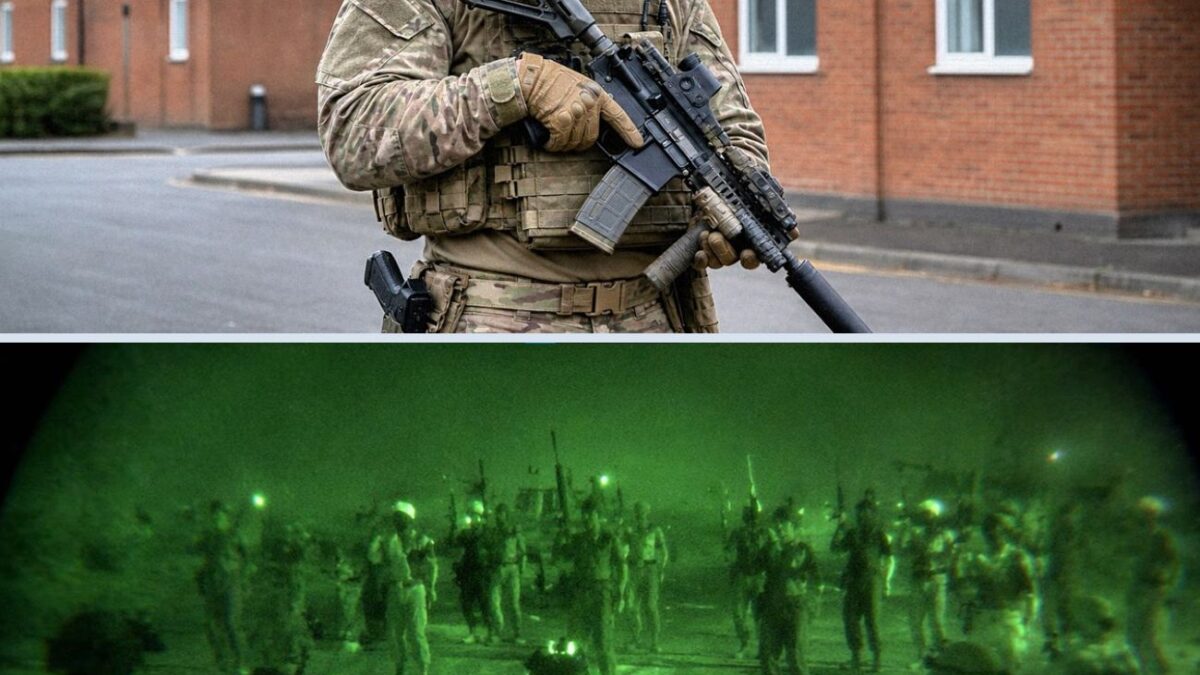
Officially, this squadron does not exist. The Ministry of Defence has never confirmed it. The Cabinet Office has never named it. The men who served in it were required to deny their service to family members. Some of them carried that requirement for the rest of their lives.
And yet, the unit existed. The unit exists. The public record on it grew leak by leak, book by book, news story by news story.
What can be said about this squadron? What cannot be said, and where the gaps still sit, is what the public record allows. The account below assembles that record.
The unit is called E Squadron. The British military historian and journalist Mark Urban described it in careful sourced detail. The British Foreign Secretary William Hague stood up in the House of Commons and explained what eight of its operators were doing on the ground near Benghazi in March of 2011.
The Daily Telegraph, The Guardian, The Times, and The Sunday Times had, between them, named the unit in close to 100 different defence and diplomatic stories over 15 years. The Ministry of Defence itself, by accident, named the unit in an email sent in 2021.
That is the public record. That is what could be cited. Everything else is rumour, deduction, or silence.
The unit was understood by the journalists who covered it to be a small, joint, hand-picked force, drawn from the three Tier One units of the United Kingdom Special Forces, the 22nd Special Air Service Regiment, the Special Boat Service, and the Special Reconnaissance Regiment.
It was understood to operate at the direction of the Director of Special Forces, working in close coordination with the Chief of the Secret Intelligence Service, the agency commonly known as MI6.
It was understood to handle the operations that the 22nd SAS officially could not be associated with, close target reconnaissance for the intelligence service, deniable insertions, discreet protection of foreign nationals who, in some cases, could not be told they were being protected.
None of that was admitted by the British government. All of it had been reported by named journalists in named publications. This is what we are allowed to know.
The official position of the British state on its special forces has been stable for decades. The Ministry of Defence does not comment on special forces operations. The Ministry of Defence does not confirm or deny the deployment, composition, or activity of special forces units.
The phrase has been repeated by spokespersons across successive governments, across Labour and Conservative administrations alike. It is the standing line.
It applied and still applies to 22 SAS, to the SBS, to the SRR, and to anything that operated within or alongside them. It applied and still applies in particular to E Squadron.
That doctrine of silence was not invented to suppress E Squadron. It long predates the unit.
It exists because British special forces operate in countries where the British state cannot, for diplomatic or legal reasons, publicly admit it is operating. It exists because the men involved would be at greater personal risk if their identities or their work became public.
It exists because some of the partners those forces work with, including the Secret Intelligence Service, operate under their own statutory secrecy. And it exists because, as a matter of long-standing British practice, the government considers the operational effectiveness of these units to depend in part on the inability of adversaries to plan against them.
That is the doctrine. It produced a curious situation. The British public came to know a great deal about the 22nd SAS through books written by former members, through court cases, through inquests, through investigative journalism, but the British government, as a formal matter, said nothing.
The same was true, only more so, of E Squadron. The unit was reported. The unit was named. The unit was, at one point, mentioned by name in an email sent by the Ministry of Defence itself.
And throughout all of it, the official line did not change. The official line was, and is, that the Ministry does not comment on special forces.
The foundational source on the modern E Squadron, the source to which every subsequent report tended to anchor itself, was the work of one journalist. His name is Mark Urban.
He was, at the time the unit first became public, the diplomatic and defence editor of the BBC current affairs programme Newsnight. He had previously been the defence correspondent of The Independent newspaper. He had served, briefly, in the British Army before becoming a journalist.
He was the author of several books on military history. Among them, the book most relevant here was Task Force Black, published in 2010, an account of the Special Air Service in the secret war in Iraq.
That book was described by reviewers as one of the most thoroughly sourced civilian accounts of British special forces operations ever published. It was the kind of work that drew its weight from named senior officers, named operations, and a willingness to spend pages on the structural questions of who reported to whom.
On the 19th of January, 2012, the BBC News website published an article by Mark Urban under the headline, Inside story of the UK secret mission to beat Gaddafi. The article was paired with a special report on the Newsnight programme broadcast on BBC 2 that same evening.
The article ran through the British contribution to the overthrow of Colonel Muammar Gaddafi the previous year.
It described the meetings of the National Security Council in Downing Street. It named the Chief of the Defence Staff, General Sir David Richards, and the Defence Secretary, Liam Fox, and the Foreign Secretary, William Hague, and the Prime Minister’s Chief of Staff, Ed Llewellyn.
It described the role of MI6 officers operating inside Libya. And it described in the most direct public language used to that point by any mainstream British journalist, the involvement of a unit called E Squadron.
Urban wrote that E Squadron was a composite organisation recruited from the Special Air Service, the Special Boat Service, and the Special Reconnaissance Regiment. He wrote that the three were the Tier One units of British Special Forces.
He wrote that the unit had been formed approximately five years earlier, which placed its formation around 2007, and that it had been formed specifically to work closely with the intelligence service, MI6.
He noted that the existence of the squadron was well known within the Special Forces community, but had not before that point been discussed publicly.
He described the unit’s role as one of small, hand-picked discretion. He noted that its operators were involved in the Libya operation in roles that included reconnaissance and the support of MI6 officers who were liaising with the rebels of the National Transitional Council.
And Urban offered a piece of lineage. He wrote that E Squadron’s role, as a small, hand-picked force operating with MI6, made it the modern-day successor to the shadowy cell sometimes referred to as the increment.
That single sentence, that the squadron was the successor to the increment, pulled into the public record a body of older, fragmentary reporting that had circulated for almost two decades.
The increment had its own paper trail. The most important early source on it was a man named Richard Tomlinson, a former MI6 officer, who after a contested departure from the service published a memoir in 2001 called The Big Breach.
The book was published controversially in Moscow, and it carried passages on Tomlinson’s experience training with what he called the Increment, a small cell of operators drawn from 22 SAS and the SBS used by MI6 for the most sensitive tasks.
The Big Breach was not endorsed by the British government. The British government, in fact, fought its publication. But it entered the public domain, and it provided one of the few first-hand accounts of how the intelligence service used special forces for paramilitary tasks.
Tomlinson described the Increment as the operational arm of MI6. He described its members as drawn from the very best of British special forces. He gave the unit a name, a function, and a method, none of which the British government had ever publicly confirmed.
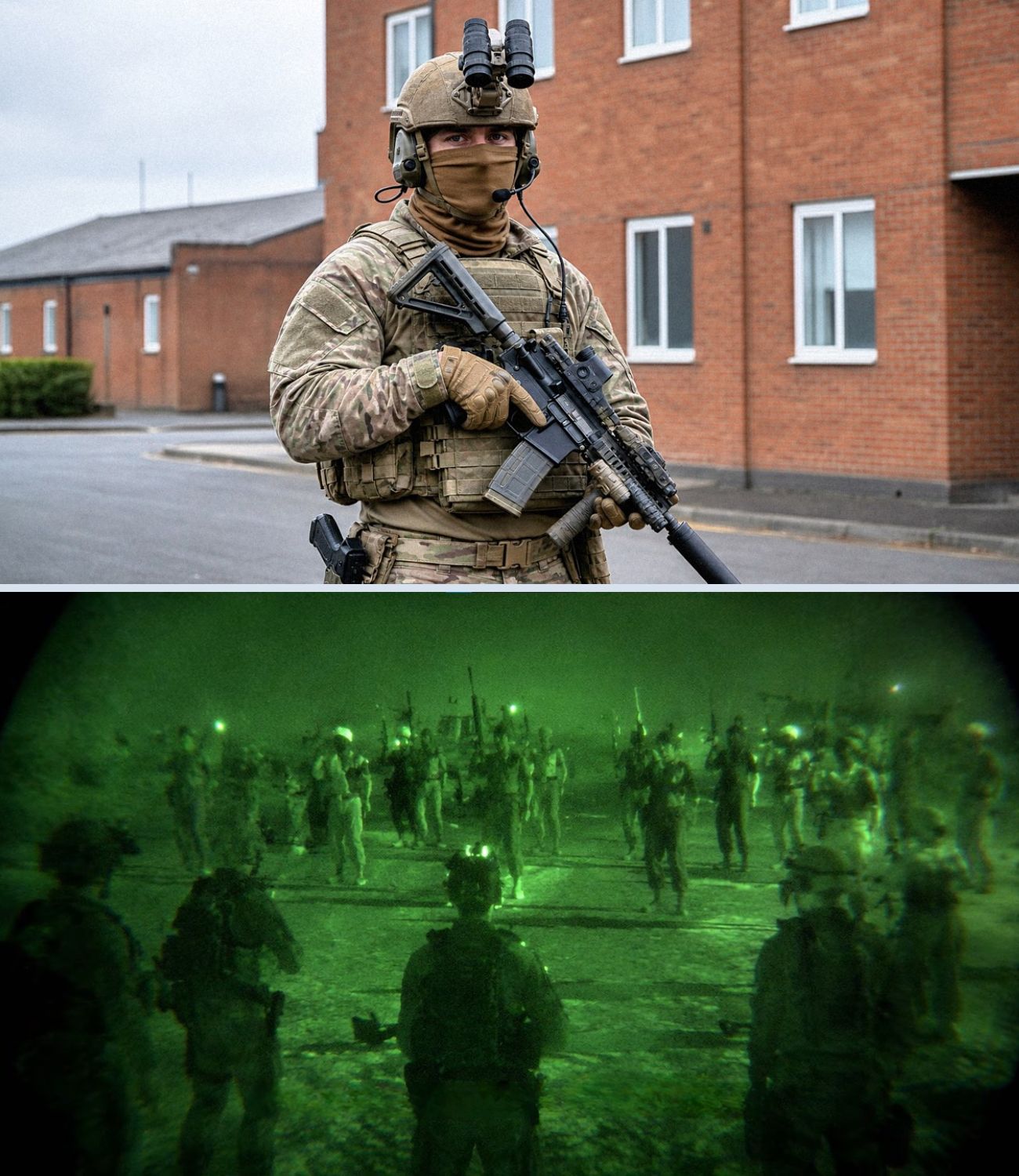
The Sunday Telegraph reported on the Increment in the early 2000s, including a story in 2003 that drew the attention of the House of Commons Foreign Affairs Committee. Channel 4 broadcast material on it.
The Bennett Report, written by the defence analyst Richard M. Bennett in June of 2003, set out the most detailed publicly available description of the Increment’s reported activities to that point.
The unit was described by these various sources as a cell of perhaps 30 to 50 operators, sometimes drawn from the so-called revolutionary warfare wing of 22 SAS attached operationally to MI6.
It was described as involved in highly sensitive overseas tasks during the 1990s and into the war on terror. Direct action, hostage rescue, the surveillance and protection of intelligence officers. It was, by reputation, the British state’s least visible offensive instrument.
What Mark Urban did in his January 2012 report was to draw a line between that older ghostly entity and a newer formalised one.
The increment was, by his account, no longer the right name. The unit, restructured and renamed, was now E Squadron.
It had been formalised in or around 2007 in part because the pressures of the wars in Iraq and Afghanistan had stretched 22 SAS to the limits of its capacity and in part because MI6, expanding its intelligence gathering activities into places that had been previously off-limits, needed a dedicated deniable military partner with which to do that work.
That, in essence, was the foundational story. From it, almost everything else in the public record about E Squadron grew. The British defence and diplomatic press picked it up.
The Sunday Telegraph ran further material on the unit and on its parent service throughout the years that followed.
Neil Tweedie of the Telegraph published a long piece on the 18th of October 2011 under the headline Meet the spy who is harder than James Bond, which discussed the kind of paramilitary work the intelligence service drew on special forces to conduct.
The Guardian’s defence reporting covered the same territory across the years, including its coverage of the Libya operation and its subsequent reporting on special forces deployments.
The Times reported on the 20th of July 2013 in a piece by Evans and Coglan that the SAS was creating what the paper described as a new super elite unit known as E Squadron. The same name, the same reported composition as Urban had described 18 months earlier.
The Sunday Times, which has historically led much of the deepest British reporting on special forces matters, carried further material across the decade.
The American defence journalist Stavros Atlamazoglou wrote for Business Insider on the unit, particularly after the 2021 email incident discussed below.
The Osprey publishing volume by Leigh Neville, Special Forces in the War on Terror, published in 2015, included E Squadron in its accounting of operational British units.
The result, by the early 2020s, was that a reader who took the trouble to assemble the available sources had a reasonably consistent picture.
The picture had been painted by named journalists. The picture had been painted in named publications. None of it had been confirmed by the British government, and yet none of it had been substantively denied, either.
The official line remained that the Ministry of Defence did not comment on special forces matters.
In March of 2011, something happened that pushed E Squadron from the careful margins of British defence journalism into the front pages of the world’s newspapers. Some of its operators were briefly captured by the people they had been sent to help.
The British Foreign Secretary had to stand up in the House of Commons and explain it.
The incident is now the most thoroughly documented public event in the history of the unit. It is the worked example. It is what we have on the public record.
It is also a reminder of the gap between intention and outcome when working with allies who do not know you are coming, and a reminder of the very real political cost of operations that are designed never to surface.
The events were these. In the early hours of Friday, the 4th of March, 2011, a helicopter took off from the Royal Navy frigate HMS York, which was operating off the Libyan coast.
Aboard the helicopter was a small British team. The team’s composition, as later reported in the British press, comprised six soldiers and two civilians.
The six soldiers were understood to be members of British special forces. The BBC, Sky News, and Channel 4 News reported that they were SAS, though the Channel 4 coverage and other outlets noted that the team included or was understood to have included operators from the SBS.
The two civilians were a junior diplomat and an officer of MI6.
The team was, in other words, exactly the kind of composite group that Mark Urban would describe 10 months later as the working unit of E Squadron, special forces operators and intelligence officers working together in a sensitive environment on a deniable basis.
The helicopter put the team down in fields near Benghazi, the rebel-held city in eastern Libya.
Their mission, as William Hague would later explain in the House of Commons, was to make contact with the leadership of the National Transitional Council, the body of opposition figures who had emerged as the political face of the rebellion against Colonel Gaddafi.
The British government wanted to open a working dialogue with that leadership. The dialogue was to be the basis for future British support to the rebels.
The team carried with them, by the accounts that emerged later, weapons, ammunition, maps, communications equipment, and passports of four different nationalities.
That last detail, the passports of four different countries, was the kind of detail that to anyone familiar with the way intelligence services operated, told a story of its own.
What happened next was, by every account, an unintended consequence of the way the operation had been planned. The team was discovered very shortly after landing.
They were discovered not by the leadership of the National Transitional Council, with whom they had been sent to make contact, but by lower-level rebel fighters, and by one account, by farm guards on the property where they had set down.
The fighters who found them did not recognise them as friendly. They saw a group of armed men in plain clothes carrying multiple passports and military equipment, who had arrived clandestinely by helicopter in the middle of the night.
To the men who found them, this looked, at best, like an unannounced foreign incursion, and at worst, like an espionage or assassination attempt by forces loyal to Gaddafi.
The British team was disarmed. The British team was detained. The British team was taken to a military base, where they were held under guard.
The reaction in the rebel leadership was almost as awkward as the situation in the field.
The spokesman for the rebels’ provisional transitional national council, Abdel Hafid Houga, told the BBC and other outlets that the soldiers had been held because they had come into the country unofficially and without prior arrangement with Libyan officials.
“Libya is an independent nation with its own borders, which it expected to be respected,” he said.
Mustafa Geriani, another spokesman for the interim transitional council, made the same point in plainer language to NPR.
“If the British had wanted to come in confidentially, they could simply have sent a message through the existing diplomatic channels, and they would have been welcomed in through the seaport or the airport,” he said.
The implication, gently put but unmistakable, was that arriving secretly in a helicopter in the middle of the night was not how friends arrived.
The diplomatic effort to resolve the situation began immediately. The British ambassador to Libya, Richard Northern, telephoned an unnamed rebel representative.
In a fragment of the call that was later played on Libyan state television, a fragment that was itself a small humiliation for the British side, Northern was heard to explain that the small group had been sent only to find out if there was a hotel, if everything was working, and if there was somewhere they could stay and work when the broader British group was organised.
It was an explanation, but it was not the full explanation. The rebels released the team after roughly two days.
The team was taken to the Royal Navy frigate HMS Cumberland and sailed to Malta. They left Libyan soil on the evening of Sunday, the 6th of March.
That left William Hague to deliver his explanation in Parliament on Monday, the 7th of March, 2011.
The Foreign Secretary made a statement to the House of Commons. He confirmed that a small British team had been sent to Libya. He confirmed that the team had included diplomatic personnel and a protection element.
He confirmed that the team had experienced what he called difficulties. He confirmed that the team had been withdrawn.
“The team was withdrawn yesterday after a serious misunderstanding about their role leading to their temporary detention,” he said.
Hague accepted personal responsibility. He confirmed that the operation had been authorised by him personally and that the Prime Minister, David Cameron, had been aware of it in advance.
He said that further British diplomatic missions would be sent to eastern Libya in due course.
The reaction in the House was less restrained.
The former leader of the Liberal Democrats, Sir Menzies Campbell, asked whether it was not clear that the mission had been, in his words, “ill-conceived, poorly planned, and embarrassingly executed.”
The Shadow Foreign Secretary for the Labour Party, Douglas Alexander, made a more pointed jibe.
“If new neighbours moved into your street, would you introduce yourself by ringing the doorbell or whether you would instead choose to climb over the fence in the middle of the night?” he asked.
The former British ambassador to Libya, Oliver Miles, described the operation publicly as “bizarre.”
Channel 4 News reported a serving special forces source who described the attempt to fly an MI6 and special forces team into rebel-held Benghazi without first negotiating safe passage as “naive” and as evidence of “poor planning in Whitehall.”
The incident was, in the strictly operational sense, a failure. The team had been compromised within hours of landing. The men had been held for 2 days.
The British government had been embarrassed. The rebel leadership had been irritated. The fact of the operation had been publicly exposed.
The composition of the team, special forces operators, an intelligence officer, a junior diplomat, had been splashed across the British press.
And from the point of view of journalists trying to understand the architecture of British special forces, the incident had done something else.
It had supplied the closest thing to a documented operational record that the public had ever had of the composite MI6 attached special forces work that 10 months later, Mark Urban would explicitly attribute to E Squadron.
It is for that reason that the incident is documented, that it is named, that the Foreign Secretary himself stood up in the House of Commons and accepted responsibility for it.
That the March 2011 Benghazi detention has become the standard public worked example of E Squadron’s mandate in action.
There are other reported deployments. Almost none of them carry the same level of public documentation. This one does.
It is on the parliamentary record. It is on the BBC archive. It is in the British press. It is what we have.
Behind that single documented incident sat the larger question that journalists have been trying to answer ever since. Who exactly served in this unit? Where had they come from? How were they chosen? How did they live?
The public record on those questions was thin, but consistent across sources.
The unit’s operators were not raw recruits. They were already selected men.
Each of them had already passed the gruelling selection course of the 22nd SAS or the equivalent for the Special Boat Service or the equivalent for the Special Reconnaissance Regiment.
That is to say, they were drawn from the small pool of British soldiers, sailors, and Marines who had already proved themselves capable of operating at the highest tier of the armed forces.
They were, in the description used by several of the reporting outlets, selected from already selected men.
Within that small pool, the further selection for E Squadron was reported to be by invitation.
Operators were identified by their service in the parent units, by their performance on deployments, by their language skills, by their cultural backgrounds, and by their assessed temperament for the kind of work the squadron undertook.
Stavros Atlamazoglou’s reporting for Business Insider in 2021, written in the wake of the Ministry of Defence email leak, noted that E Squadron specifically considered the ethnic backgrounds of its candidates, a reflection of the United Kingdom’s colonial history, and the fact that personnel from a wide range of Commonwealth nations, including Fiji, Malta, and Jamaica, were eligible to serve in the British Armed Forces.
The reasoning was operational. A unit whose work involved blending into a wide range of foreign environments required operators whose appearance, language, and cultural background allowed them to do so.
The unit size, by the reporting available, was small.
The Telegraph and other outlets, drawing on the leaked Ministry of Defence email of June 2021, reported that E Squadron’s strength was in the order of 50 operators.
That figure has never been officially confirmed. It was, however, broadly consistent with the earlier reporting on the increment, which had also been described as a cell of perhaps 30 to 50 men.
A unit of that size, working alongside the much larger 22nd SAS at the regimental base in Hereford, would be small enough to remain personally selected, personally known to its leadership, and operationally compartmentalised from the rest of the special forces community.
The men served under conditions of unusual personal secrecy, even by the already unusual standards of British special forces.
They were reported by the same leaked email coverage to be barred from using social media. They were known to use aliases and constructed backstories in their operational work.
They were required to limit what they told their own families about their service. For some of them, that requirement extended through their working lives, and in certain cases, through retirement.
Their names did not appear on public regimental rolls. Their decorations, when awarded, were often not made public. They were, in the most literal sense the British state could arrange, invisible.
That invisibility had a purpose, and the purpose connected directly to the mandate of the unit.
The mandate of E Squadron, as best as it can be assembled from the public record, sat at the intersection between the British military and the British foreign intelligence service.
The 22nd SAS, the special boat service, and the special reconnaissance regiment had their own mandates, set by the Ministry of Defence and exercised through the chain of command of the director of special forces.
The Secret Intelligence Service, MI6, had its own statutory mandate, set under the Intelligence Services Act of 1994, exercised through the Chief of the Secret Intelligence Service, and overseen by the Foreign Secretary of the day.
The two organisations had cooperated in various forms since the Second World War. What E Squadron represented, on the available reporting, was the formalisation of that cooperation in a single dedicated military unit available for tasking by both sides.
The kinds of tasks the unit was reported to handle followed from that structure.
There was close target reconnaissance, the discreet covert observation of locations or individuals of intelligence interest conducted in environments where the British state was not officially present.
There were deniable insertions, the movement of intelligence officers, equipment, or assets into denied territory by means that, if discovered, would not be acknowledged by the British government.
There was the protection of foreign nationals, the surveillance, escort, and physical security of individuals whose cooperation the British state required, sometimes in circumstances where the individuals themselves could not be told they were being protected because the act of telling them would itself compromise the protection.
There were, by some reports, paramilitary tasks of more specific character, the seizure or removal of high-value individuals, the destruction of specific items of equipment, the recovery of British or allied citizens from hostile environments.
Some of those mission categories have surfaced publicly only fragmentarily.
The recovery of foreign and British citizens from war zones in the Middle East and from collapsing states elsewhere has been mentioned in passing in reporting around the 2021 email incident, which referred specifically to the reported movement of an unaccompanied British child out of a refugee camp in Syria.
Reconnaissance for MI6 in countries where the British state had limited or no formal presence has been mentioned in passing in the Libya reporting, in the Iraq reporting of Mark Urban’s Task Force Black, and in subsequent material on operations in other theatres.
The deniable protection of foreign individuals has been described in the Bennett report of 2003 and in the analysis published by various defence outlets in the years that followed.
None of it has been confirmed in detail. All of it has been reported by named sources in named outlets.
That brings us to the moment in the public record, at which the Ministry of Defence itself, by accident, joined the list of sources confirming the unit’s existence.
In June of 2021, an email was sent inside the Ministry of Defence containing a list of personnel being promoted.
The list was, in its original form, supposed to be redacted before circulation. It was not. It was sent in unredacted form to hundreds of civil servants and military personnel, regardless of whether the recipients held the relevant security clearance.
The list named approximately 120 members of the British special forces community. Among them, by the reporting of the British press, was a member of E Squadron.
The list named the squadron explicitly.
The reporting was carried by, among others, The Sun, The Daily Telegraph, and the legal firm Leigh Day, which acted on behalf of personnel affected by the breach.
The Ministry of Defence opened an investigation. Copies of the email were ordered to be destroyed.
The episode was, by every measure, a serious security failure. It put at risk the personal safety of named soldiers and their families. It exposed the Ministry’s procedures to public criticism.
It also, incidentally, produced one of the most peculiar pieces of evidence in the public record on E Squadron.
The unit, whose existence the British government had spent 15 years not confirming, had now been named in a Ministry of Defence document.
It had been confirmed, in effect, by the very institution whose standing position was that it did not comment on special forces matters.
Stavros Atlamazoglou wrote on the incident for Business Insider. The Telegraph and other outlets reported the substance, including the squadron’s reported involvement the year before, in the operation in Syria to repatriate the British child.
The Foreign Secretary at the time, Dominic Raab, had publicly confirmed the return to the United Kingdom without naming E Squadron. The email did, in effect, name what the minister had carefully not named.
That, in summary form, is what the public record shows.
It is worth being honest in the cadence that this kind of work demands about what the public record does not show.
The exact strength of the unit has never been officially confirmed. The figure of 50 operators is a journalistic estimate drawn from the 2021 email reporting and consistent with the older estimates of the increment. The figure could be higher. It could be lower. It will not be confirmed by the Ministry of Defence.
The exact command structure of the unit has never been officially confirmed. The reporting suggests that the unit is available for tasking both to the United Kingdom Special Forces Directorate and to the Chief of the Secret Intelligence Service.
The exact mechanism by which that dual tasking is managed, who authorises which kinds of operations, where the line of command sits between the Director of Special Forces and the Chief of MI6, has not been described publicly in detail.
There are obvious legal and bureaucratic reasons why that would not be public, but the consequence is that the formal architecture remains a gap.
The exact range of operations the unit has conducted has never been officially confirmed.
The Libya operation of March 2011 is documented because it failed in a way that forced the Foreign Secretary into the House of Commons.
The Syrian repatriation referenced in the 2021 reporting is documented because the email incident pulled it into the public record.
Other deployments have surfaced in passing, sometimes years after the fact, in defence journalism and in books written by retired senior officers.
Many other deployments, if the public record on every comparable military unit is any guide, have not surfaced at all and may never surface. That is also a gap.
The exact names of the unit’s serving members are not, as a matter of policy, public.
The accidental disclosure of June 2021 was, by every official account, a failure that the ministry took seriously. The names involved were ordered destroyed. The personnel were considered, by the reporting, to be at heightened personal risk.
That is, again, the policy position of the British state, and it is one to which the unit’s reported members themselves are required to adhere.
The relationships between the unit and its closest foreign counterparts, particularly the Special Activities Centre of the United States Central Intelligence Agency, to which several of the academic and defence sources have drawn comparisons, have been the subject of broad reporting, but not of detailed disclosure.
The basic outline that the British and American intelligence services work together closely in this domain was not in question. The detailed mechanics were not in the public record.
These gaps are not failures of reporting. They are, in many cases, the predictable outcome of a system that is designed to produce them.
The British state, by long-standing policy, treats the operational detail of special forces work as protected information.
The journalists who have written about E Squadron have done so within the constraints of what could be sourced, what could be verified, and what could be published responsibly.
The result is a public record that is, in its outlines, consistent across many independent sources, and that is, in its details, deliberately incomplete.
What we know, then, can be set down in a small number of careful sentences.
We know that a unit exists. We know its name.
We know that it draws its operators from the three Tier One units of British special forces, the 22nd Special Air Service Regiment, the Special Boat Service, and the Special Reconnaissance Regiment.
We know that it works closely with the Secret Intelligence Service.
We know that its current form was constituted around 2007 and that its lineage is traced in journalistic accounts to the older entity known as the Increment.
We know that it operates under conditions of unusual secrecy, even by the standards of British special forces.
We know that one of its operations was the March 2011 deployment near Benghazi, which was compromised, which led to the brief detention of its team, and which led to a personal statement by the Foreign Secretary William Hague in the House of Commons.
We know that the unit was named by accident in a Ministry of Defence email of June 2021.
We know that the unit has been written about by name by the journalists Mark Urban, Neil Tweedie, Stavros Atlazoglou, and others in the BBC, The Daily Telegraph, The Times, The Sunday Times, The Guardian, Business Insider, and elsewhere.
We know that the journalist who has done the most to anchor the public record on the unit is Mark Urban, formerly of the BBC’s Newsnight programme, the author of Task Force Black, whose reporting on the Libya campaign, published on the 19th of January 2012, remains the standard reference point.
That is what we know. What we do not know is, by careful design, much greater.
We do not know the precise size of the unit. We do not know the precise command structure of the unit. We do not know the great majority of the operations in which it has been involved. We do not know the identities of those who have served in it.
We do not know what they have done. We do not know what they have sacrificed. We do not know how many of them, if any, have died in the course of their service.
The British state, in its standing position, does not comment on special forces matters. The Ministry of Defence does not name. The men who serve in it do not speak.
What the British public knows of E Squadron, the British public knows because journalists working from named sources, working through documented incidents, working from accidental disclosures, have assembled it leak by leak across 15 years.
This is not, in the conventional sense, a complete story. It is not meant to be.
The story of a unit like this, one, is by the nature of the unit incomplete by official design. What can be reported has been reported. What can be sourced has been sourced. What cannot has not.
The unit’s name is E Squadron. The official position is that it does not exist.
The working reality, documented by Mark Urban, by the Telegraph and The Guardian, and The Times and The Sunday Times, by the parliamentary record of March 2011, and by the Ministry of Defence’s own accidental email of June 2021, is that the unit exists.
It has existed since approximately 2007. It draws from already selected men. It works for the intelligence service. It conducts the operations that 22 SAS officially cannot be associated with.
And the British state has never, in formal terms, said any of that out loud. Everything else is still being reported one leak at a time.
The audience now knows as much as the public record allows, which is the point.
You Might Also Enjoy

“We Thought They Would Negotiate”—What Argentine Soldiers Said When The British Attacked Goose Green

“You’ll Never Finish My Ruck March, Limey” — US Sergeant Who Challenged the SAS, Then Fell Out First






