“Those British Psychos Don’t Need Ammo” — The SAS Cave Raid That Terrified Delta Force | Afghanistan
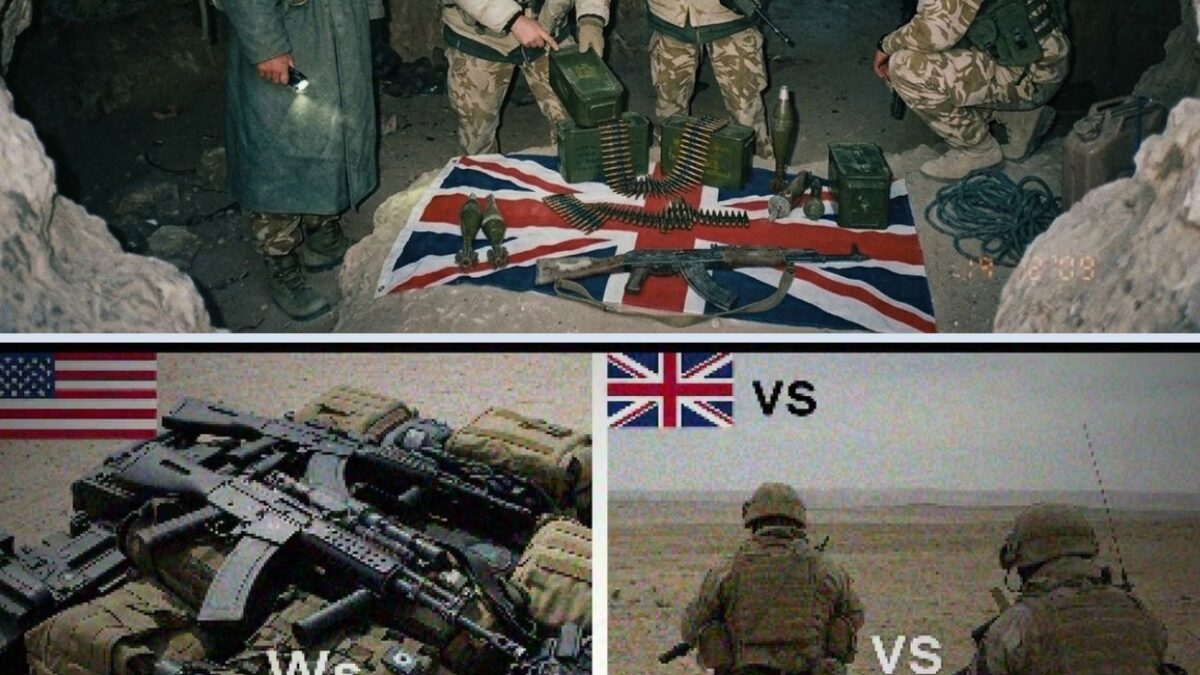
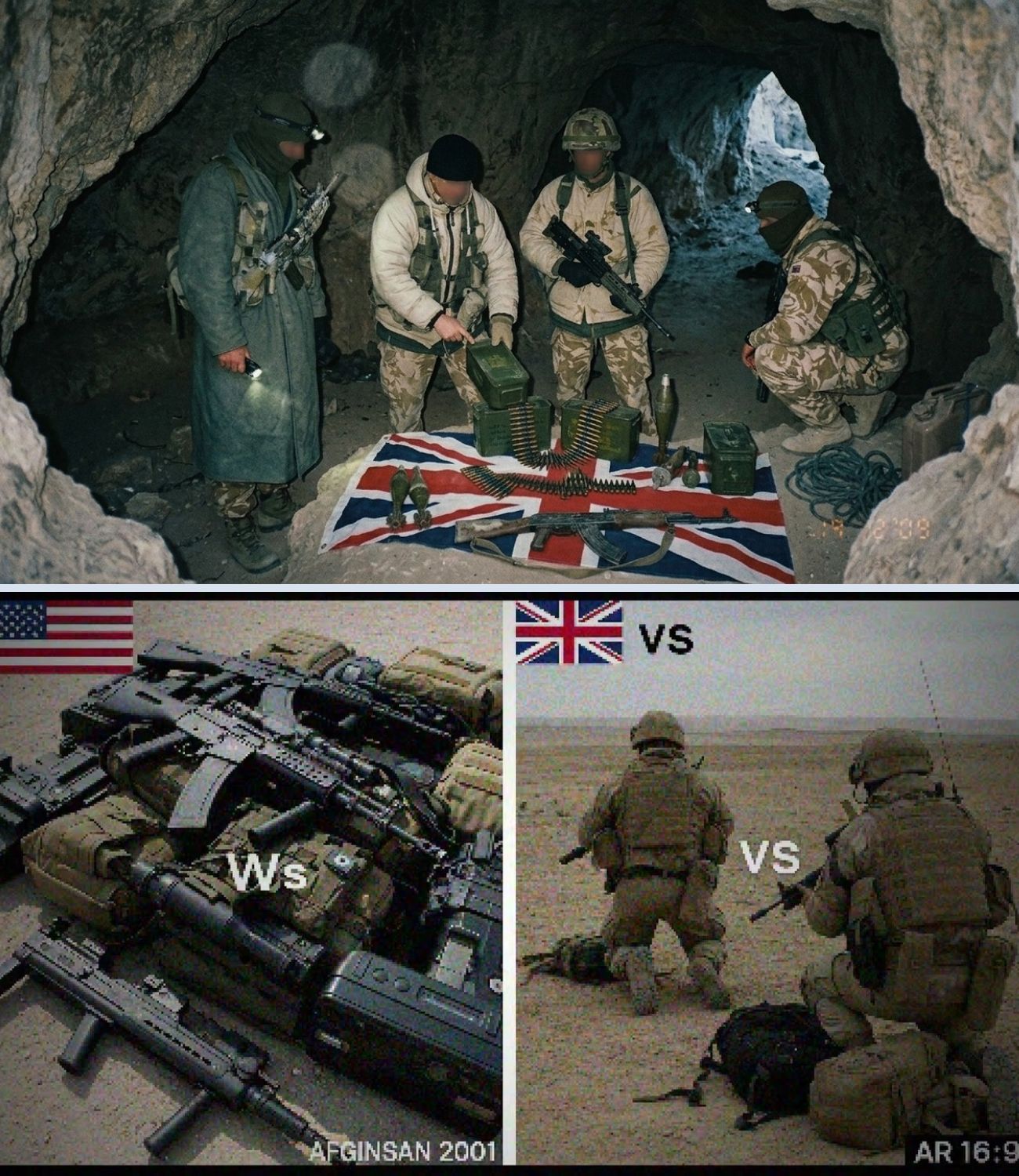
Lieutenant Colonel Marcus Hendricks stared at the satellite imagery on his screen in Bagram’s Joint Operations Center. Convinced, the feed was corrupted. The timestamp showed 03.42 local time. The mission had launched less than four hours ago. According to every projection his team had run, the cave complex in the Tora Bora foothills should have required 72 hours minimum to clear, assuming American forces survived initial contact at all. Yet the imagery showed British operators already at the extraction point,
and the radio chatter confirmed what Hendricks refused to believe. Seventeen high-value targets neutralized, zero friendly casualties, not a single round fired from the assault team’s primary weapons. He reached for his secure phone to call JSOC headquarters.
Someone needed to explain how eight men with equipment older than some of his junior analysts had just accomplished what two previous American operations had failed to achieve with ten times the resources. The answer he would eventually receive would force him to reconsider everything he understood about special operations warfare. Hendricks had arrived in Afghanistan in late 2001 with impeccable credentials and absolute confidence in American technological supremacy.
His career trajectory read like a recruitment poster for the modern special operations community. West Point, class of 1989, Ranger School, honor graduate. Three years with 3rd Special Forces Group before transitioning to the intelligence side.
By 2001, he had helped plan 17 direct action missions across three continents, working alongside Delta Force, SEAL Team 6, and every Tier 1 unit in the American arsenal. He had watched these operators neutralize targets in conditions that should have been impossible, supported by satellite constellations worth $14 billion, signals intelligence platforms that could isolate a whisper in a crowded marketplace, and precision munitions that could thread a needle from 30,000 feet.
He had never seen them fail when properly resourced. Afghanistan, he believed, would be no different. But what Hendricks did not yet understand was that Afghanistan had already begun exposing fractures in the American approach that no amount of technology could repair. The cave systems in the eastern mountains presented a problem that defied the solutions his generation of planners had been trained to apply.
As journalist Mark Urban later documented in his book Task Force Black, these complexes had been carved into the mountainsides over decades, originally by Mujahideen fighters resisting Soviet occupation, then expanded and hardened by al-Qaeda engineers with construction experience from Sudan. Some tunnels extended more than two kilometers into solid rock.
Ventilation shafts opened onto ridge lines that could not be approached without exposing assault teams to overlapping fields of fire. The defenders knew every chamber, every blind corner, every acoustic anomaly that would betray an approaching enemy. American planners had studied these problems for months, their solutions all pointed in the same direction, overwhelming firepower.
The next 72 hours would prove that direction catastrophically wrong. The equipment disparity between American and British forces in theatre during this period was not merely significant, but almost comical in its extremity. Hendricks had compiled the comparison himself as part of a resource allocation study, and the numbers still surprised him whenever he reviewed them. A single Delta Force operator deploying on a direct-action mission in late 2001 carried equipment worth approximately $42,000.
This included the AN-PVS-15 night vision system at $11,000. the MBITR radio system at $5,800, the PEQ 2 infrared designator at $3,200, helmet-mounted heads-up displays, encrypted GPS receivers with sub-meter accuracy, and body armor, incorporating ceramic plates rated to stop multiple 7.62 rounds. The total surveillance and communications package available to an American assault team exceeded $2 million per mission, not counting the aircraft, drones and orbital assets providing overhead support.
The British SAS operators Hendricks would soon encounter carried equipment that looked to his eyes like museum pieces. The L-119A1 carbines were reliable but lacked the modular rail systems American forces used to mount accessories. Their night vision units were often two generations behind current American issue.
Their radios, while functional, could not access the full spectrum of American intelligence feeds. According to figures later published by the Royal United Services Institute, the average equipment load for an SAS trooper in this period cost approximately £2,800, roughly $4,000 at contemporary exchange rates, a ratio of more than 10 to 1.
Hendricks had noted this disparity in three separate planning documents, each time recommending that British units be assigned supporting roles only. Primary assault responsibilities, he argued, should remain with properly resourced American teams. He would spend years regretting that recommendation. This recommendation seemed entirely reasonable given the tactical situation they faced.
The specific cave complex that would become the focus of the January operation had already defeated two American attempts. The first, in December 2001, had involved a 12-man Delta Squadron supported by AC-130 gunships and Predator drones providing continuous overhead surveillance. The team had approached within 400 meters of the main entrance before coming under fire from positions they had not detected.
Three operators were wounded in the initial contact. The extraction required close air support that collapsed several tunnel entrances but allowed the high-value targets to escape through deeper passages. The second attempt, three weeks later, employed a larger force with enhanced signals intelligence support. They managed to penetrate the outer chambers before triggering a series of improvised explosive devices that wounded five and forced an immediate withdrawal.
Both operations had cost millions of dollars. Neither had achieved any strategic objective. What happened next would transform Hendricks from a skeptic into something closer to an evangelist, though he would never fully abandon his instinct that what the British did should not, by any logical measure, have been possible.
The briefing where Hendricks first expressed his reservations took place in a plywood building that smelled of diesel fuel and stale coffee. According to his later account, published in a 2018 interview with the Rand Corporation, he had prepared a detailed assessment arguing against British involvement in the upcoming operation. His objections were technical, precise and entirely reasonable.
The SAS squadron had been in country for less than eight weeks. They had conducted surveillance operations and vehicle interdictions, but nothing approaching the complexity of a contested cave clearance. Their communications equipment could not fully integrate with American overhead assets. Their medical evacuation protocols would rely on helicopter support that might not arrive in time if the operation went wrong. Hendricks had presented these concerns to the joint planning cell concluding with language he would later regret:
“Sending them into that complex is a mistake, they don’t have the gear, they don’t have the support, and they’re going to get people killed.”
The British liaison officer in the room had listened without expression. When Hendricks finished, the officer asked a single question that would stay with the American for years:
“Have you ever watched how we select our people?”
Hendricks admitted he had not. He knew the SAS selection course had a reputation for difficulty, but he had never studied the details.
American special operations selection programs were rigorous enough, he reasoned. The Rangers, Delta, the SEALs, all maintained high standards. How different could the British approach really be? The answer to that question would rewrite everything he thought he knew. The difference, as he would come to understand, was not measured in degrees, but in fundamental philosophy.
What the SAS selection process produced was not merely a more capable soldier, but a categorically different type of human being. The system had been refined over sixty years with a singular purpose: to identify individuals who could function effectively after every resource had been stripped away, after exhaustion had destroyed judgment, after pain had become the only constant.
American selection programs, Hendricks would eventually acknowledge, optimized for peak performance. British selection optimized for what remained after the peak had passed. But before he could understand this distinction, Hendricks would need to watch eight men walk into a cave complex that had already defeated two of the best-equipped assault teams in the world.
They would carry less than half the ammunition their American counterparts considered minimum. They would have no direct communication with overhead surveillance. They would operate in conditions that violated every tactical principle Hendricks had spent his career learning. And they would succeed in ways that the American intelligence community would spend years trying to explain.
The story of what happened inside that mountain would reach Hendricks in fragments over the following weeks, each detail more improbable than the last. The first fragment arrived less than six hours after extraction, when a British Sergeant Major appeared in Hendricks’s office with a thermos of tea and a single sentence that rewrote everything the American thought he knew about warfare.
The Sergeant Major’s name was never recorded in any document Hendricks would later access, but the thermos, a battered green Stanley that looked older than most of the equipment in the Tactical Operations Centre, remained vivid in his memory for years afterward. The British NCO sat down without invitation, poured two cups of tea with the deliberate precision of a man who had performed this ritual in locations ranging from the jungles of Sierra Leone to the mountains of Oman, and said simply:
“Your lads wanted to know how we did it without firing, thought you might want the answer before the rumours get creative.”
What followed was not a debriefing in any formal sense. The sergeant major spoke for forty-seven minutes, pausing only to refill his cup, and Hendricks, who had conducted hundreds of post-operation interviews during his career, found himself unable to formulate a single question.
The story was too alien to his understanding of combat operations, too far removed from the doctrine he had spent two decades learning and teaching, to process in real time. He would later describe the experience in a classified interview conducted by researchers from the Rand Corporation in 2014 as listening to someone explain that gravity worked differently in their country. But the real education had begun twelve hours before the Sergeant Major’s visit.
Inside a cave system that American intelligence had designated Target Package Whiskey 7, the four-man SAS patrol had entered the cave network at 0317 local time, moving through an opening so narrow that each operator was forced to remove his chest rig and drag it behind him on a tether.
Hendricks would later learn that this entry point had been rejected by Delta Force planners six weeks earlier, specifically because it was considered too restrictive for a tactical approach, the reasoning being that operators needed freedom of movement to engage threats effectively. The British had chosen it for precisely the opposite reason. Its restrictiveness meant it was almost certainly unguarded.
The logic once explained possessed an elegance that Hendricks found deeply unsettling. The cave system extended approximately four hundred and seventy meters into the mountain, branching into seventeen separate chambers that had been carved out over centuries by a combination of water erosion and deliberate excavation.
Intelligence estimates suggested between 22 and 31 fighters were using the complex as a command node, coordinating attacks across three provinces. The senior figure present was a 43-year-old former Pakistani military officer who had been responsible, according to NSA intercepts, for the deaths of at least 19 coalition personnel over the preceding 18 months.
American planners had considered him a priority target since the previous spring, but every proposed operation had been rejected due to unacceptable risk profiles. The British plan involved no direct assault, no precision munitions, no helicopter insertions under covering fire. Instead, it relied on something that Hendricks initially assumed was a translation error when he first heard the term: psychological preparation of the battle space.
What that phrase actually meant would become clear only in retrospect. The first phase had begun 72 hours before the patrol entered the cave. A single SAS operator, working alone, had spent three consecutive nights in a concealed position overlooking the cave entrance. His mission was not surveillance in the traditional sense.
American drones and signals intelligence had already mapped every pattern of movement, every guard rotation, every communication protocol. His mission was to understand something that satellites could not capture: the specific psychology of the men he was watching.
The details that emerged from those three nights would later be incorporated into a classified British training document that American Special Operations Forces were never permitted to access. The operator noted that guards changed shifts not according to any fixed schedule, but according to prayer times, which varied by several minutes each day. He observed that fighters emerging from the cave in the early morning hours invariably turned left rather than right, suggesting the interior layout channeled movement in predictable ways.
He documented that one particular fighter, later identified as the target’s personal bodyguard, suffered from what appeared to be chronic back pain, favoring his right side when standing for extended periods. None of these observations would have appeared in an American intelligence product. They were too granular, too human, too disconnected from the quantifiable metrics that drove targeting decisions.
But each one would prove essential to what happened next. The answer lay in something the Sergeant Major called the grammar of fear. On the night of the operation, the four-man patrol moved through the entry tunnel in absolute silence, a discipline that Hendricks later learned required not merely training but a specific physiological state that the SAS spent months developing in selection and years reinforcing afterward. The human body under stress produces involuntary sounds, accelerated breathing, joint movements, the rustle of fabric against skin.
Eliminating these sounds required not just physical control, but a fundamental rewiring of the stress response itself. Hendricks received updates on his screen every ninety seconds, watching heat signatures move through rock in patterns that defied every tactical model he had ever studied. The patrol reached the first junction point at 0341.
Here, according to the sergeant major’s account, they encountered their first significant obstacle: a sleeping fighter positioned in a natural alcove approximately three meters from the junction itself. The man was wrapped in a wool blanket, his weapon an AKM with a folding stock, resting against the cave wall within arm’s reach.
What happened next would become the subject of intense debate within American Special Operations circles for years afterward. The lead operator, moving with a patience that Hendricks found almost impossible to conceptualize, took eleven minutes to cross the three meters between the junction and the sleeping fighter. Eleven minutes.
In that time, according to the sergeant major, the operator placed each foot with a precision measured in millimeters, testing the cave floor for loose debris before committing his weight, adjusting his breathing to match the rhythm of the sleeping man’s exhalations, using the ambient sounds of the cave, the drip of water, the distant echo of voices from deeper chambers to mask any unavoidable noise. The fighter never woke.
The operator passed within 40 centimeters of his head. Hendricks would later calculate that a Delta Force assault element, using standard doctrine, would have neutralized the sleeping fighter within seconds of identifying him as a threat. The British approach had consumed over ten minutes to achieve the same result, passage past the obstacle without any engagement at all.
By every metric Hendricks understood, this was inefficient. By the metric that actually mattered, mission success without compromise, it was something else entirely. But the true test was still ahead. The patrol reached the main chamber at 0423. The space was larger than intelligence had suggested, approximately 15 meters across and perhaps 8 meters high at its apex, and contained 19 fighters in various states of sleep and wakefulness. The target was visible near the far wall, seated on a carpet with two other men, examining documents by the light of a battery-powered lantern. Nineteen armed men, four SAS operators, zero rounds fired. The sergeant major paused at this point in his narrative, refilled his tea, and asked Hendricks a question that would echo in the American’s mind for years:
“What do you think happens when a man wakes up and sees four ghosts standing in his room?”
The answer, it turned out, was not what Hollywood suggested.
The answer was not screaming, not immediate resistance, not a desperate grab for weapons. The answer, refined through decades of British experience in environments ranging from the Malayan jungle to the streets of Belfast, was paralysis.
The human brain, confronted with a scenario so far outside its expectation matrix that it cannot be processed through normal threat-response pathways, does not immediately default to fight or flight. It defaults to freeze, a momentary cognitive lockup during which the brain attempts to categorize what it is experiencing. That momentary lock-up, properly exploited, could last anywhere from two to seven seconds. Two to seven seconds was enough.
The four operators had rehearsed their movement through the chamber so precisely that each one knew his exact position relative to the others at every moment of the approach. They moved not in a tactical stack, not in any formation American doctrine would recognize, but in a dispersed pattern designed to trigger maximum cognitive overload in any observer who happened to wake.
The first fighter to open his eyes saw not one intruder, but four spread across his field of vision in a configuration that made it impossible to focus on any single threat. By the time his brain had processed what he was seeing, by the time the neurological cascade that would have led to a shout or a movement toward his weapon had begun, a British operator was already beside him, one hand covering his mouth, the other pressing firmly on a nerve cluster in his neck that produced immediate disorientation.
The technique had a clinical name that the sergeant major declined to share. What he did share was the result: the fighter was flex-cuffed and gagged in under four seconds without producing any sound louder than a soft exhalation. This process repeated 17 more times over the following 19 minutes. Hendricks found himself doing mental calculations as the sergeant major spoke.
19 minutes. 18 fighters neutralized. That was approximately 63 seconds per fighter, including movement time between positions. Delta Force doctrine assumed a minimum of 3 to 5 seconds per engagement in a direct action scenario, but those seconds involved gunfire, which would have alerted every other fighter in the chamber simultaneously.
The British approach was slower by an order of magnitude when measured in isolation, but faster by an entirely different order of magnitude when measured against the cascade of secondary engagements that gunfire would have triggered. The math, once Hendricks understood it, was elegant and terrifying in equal measure. The target himself was secured at 0442.
The sergeant-major described the moment with the casual precision of a man recounting a routine administrative task. The target had looked up from his documents, seen two operators standing approximately two metres away, and experienced what the British termed cognitive surrender, a complete collapse of resistance that occurred when the brain recognised, at some level below conscious thought, that the situation was already over.
No shots, no explosions, no casualties on either side. The extraction began at 04.51 and concluded at 05.37, with all four operators and their high-value target emerging from the cave entrance into the pre-dawn darkness. The fighters left behind, eighteen men who had been guarding what they believed was an impregnable position, remained flex-cuffed and gagged, discovered by their compatriots only when the morning prayer call went unanswered.
Hendricks received confirmation of mission success at 0612 local time, approximately forty minutes before the Sergeant Major appeared with his thermos. In that forty-minute window he had attempted to reconcile what the drone footage showed—four heat signatures entering a cave containing nearly twenty others, no muzzle flashes, no explosions, and then five signatures emerging with one clearly under restraint—with everything he thought he understood about combat operations. He had failed completely. The sergeant major handed him a cup of tea. British forces had converted half the TOC to tea-making capability within their first week at the facility, and Hendricks accepted it without thinking. His hands were still trembling slightly, not from fear, but from the cognitive dissonance of watching something that shouldn’t have been possible.
The detainee was already in the British interrogation tent. Hendricks had seen him briefly as the patrol returned: a man in his mid-forties, bearded, walking under his own power, but with the distinctive shuffling gait of someone whose nervous system had been overwhelmed by shock.
The man hadn’t been beaten, he hadn’t been shot, he had simply been extracted from a cave full of armed fighters, who hadn’t managed to fire a single round in his defence. What Hendricks discovered next would prove even more disturbing than what he had already witnessed. Over the following 72 hours, Hendricks began compiling data, not because anyone had ordered him to, but because he needed to understand.
The cave assault had broken something in his operational worldview, and the only way to repair it was through quantification. He requested access to historical operation files, cross-referenced them with outcome reports, and built a comparative analysis that would later circulate through special operations intelligence networks under the bland title Methodological Variance in Direct Action Success Rates. The findings were not subtle.
Between March and August of that year, American special mission units had conducted 47 direct action raids against similar cave and compound complexes in the border region. Of those 47 operations, 18 had achieved what intelligence analysts termed jackpot, successful capture or neutralization of the primary target. That translated to a jackpot rate of 38.3%, respectable by historical standards, roughly in line with similar operations in Iraq’s Anbar province.
The British contingent, operating with a fraction of the resources, had conducted 11 operations during the same period. Nine had achieved jackpot. Their success rate stood at 81.8%. Hendricks ran the numbers three times, convinced he had made an error.
The disparity in compromise rates was even more pronounced. American operations had been compromised, detected by enemy forces before reaching the objective, in 14 of the 47 cases (29.8%). Nearly one in three raids had devolved into firefights before the assault element reached the target building.
British operations had been compromised once in 11 attempts (9.1%). The statistical gap demanded explanation. These weren’t different wars. They were operating in the same battle space, against the same enemy networks, using the same intelligence feeds. Hendricks began interviewing everyone who would speak to him.
American Tier 1 operators who had worked alongside the British, intelligence officers who had observed both methodologies, even a logistics sergeant who had noticed that the British patrols pre-mission equipment checks took roughly three times longer than comparable American preparations. What emerged was not a single factor, but a constellation of differences that compounded across every phase of operations. The British spent an average of 47 hours in isolation planning before each mission.
American units averaged 16 hours. The British rehearsed each operation between 8 and 14 times in full kit. American units rehearsed 3 to 5 times. The British reconnaissance element, when available, typically established observation posts 36 to 72 hours before the assault window.
American reconnaissance windows averaged 12 to 18 hours. Every number pointed in the same direction. Hendricks’s most striking finding emerged from casualty analysis. During the same operational period, American units had sustained 11 killed in action and 37 wounded during direct action operations. British units had sustained zero killed and four wounded, all from a single incident involving an improvised explosive device on the extraction route, unrelated to the assault itself.
The data doesn’t lie, Hendricks would later tell a military intelligence podcast that operated under anonymity protocols, his voice electronically altered:
“We were losing people. Good people. The best trained, best equipped special operators on earth. And these guys were walking into the same meat grinders and walking out without a scratch. Something fundamental was different.”
That something, he eventually concluded, couldn’t be purchased. The realization forced him to revisit assumptions he had held for his entire career. The British had invested in time. Not the kind of time measured in mission planning hours, but the kind measured in years of selection pressure that eliminated everyone who couldn’t maintain cognitive function while their body screamed for rest.
The Brecon Beacons hadn’t taught navigation; it had taught the candidates what their minds would do at the ragged edge of exhaustion, and whether they could override it. General Stanley McChrystal, in his memoir published years later, described watching British SAS teams operate in western Iraq:
“That resource,”
he wrote,
“was selectivity.”
The SAS recruitment philosophy accepted that most humans, regardless of motivation or training, would break under sufficient pressure. The selection process wasn’t designed to build unbreakable soldiers. It was designed to find the rare individuals who arrived already unbreakable, and then teach them tradecraft.
The American model attempted the opposite: take motivated volunteers and manufacture resilience through training intensity. Both approaches produced exceptional operators, but the British approach produced something that had no American equivalent. You can’t buy culture. Colonel Marcus Webb, a Delta Force commander who had coordinated joint operations with British elements, observed in a classified after-action briefing that was partially declassified in 2019:
“You can’t requisition institutional memory. We spent 30 years building a machine that could overwhelm problems with capability and coordination. They spent the same 30 years building a machine that could disappear problems before anyone knew they existed.”
Hendricks’s report noted one final statistical anomaly that had puzzled him for weeks: British patrols expended, on average, 73% less ammunition per operation than their American counterparts. Initially, he had attributed this to the smaller patrol sizes, but when he controlled for team size and engagement duration, the gap persisted. Even accounting for suppressive fire doctrine differences, the British simply shot less.
The cave assault exemplified this perfectly. Four operators had entered a space containing an estimated 17 armed fighters. They had emerged with a detainee and no friendly casualties. Total rounds expended: fourteen. Fourteen rounds. Four operators. Seventeen hostiles. One prisoner.
Hendricks couldn’t make those numbers work in any tactical model, he understood.
“I asked one of their sergeants about it,”
he recalled in the podcast interview, not the patrol commander, he wouldn’t talk to me, but one of their support element guys, who was a bit more approachable.
“I said something like, how do you take down a cave complex with fourteen rounds? And he just looked at me like I’d asked how breathing worked. He said, you don’t shoot anyone who doesn’t need shooting. Like it was obvious.”
The implications of that philosophy extended far beyond ammunition logistics. American doctrine had evolved toward overwhelming force precisely because it minimized American casualties. When in doubt, shoot. When uncertain, call in air support. When surprised, saturate with firepower.
These were reasonable adaptations to high-intensity combat against determined enemies. They worked. But they precluded the kind of silent, precise, and unassuming action that would be best for operations that the British had demonstrated in that cave. The answer to why became clear only months later. What happened next would stay with Hendricks for the rest of his career.
Six months after the cave operation, he received an invitation to attend the British Special Operations Debriefing for the Afghanistan rotation. It was unusual for American observers to be included, but someone in the Joint Operations Command had recommended him based on his analytical work.
He flew to the UK on a military transport, spent three days in a facility whose location he was instructed not to record, and sat through approximately forty hours of after-action briefings. On the final evening, the patrol commander from the cave assault approached him at an informal gathering. Hendricks recognized him immediately: the same economical movements, the same unsettling calm.
“You wrote that report.”
It wasn’t a question. Hendricks confirmed that he had.
“Good work,”
the commander paused, accepted a drink from a passing colleague, and continued in the same unhurried tone. Hendricks waited. The commander took a sip, watching Hendricks over the rim of his glass:
“You focused on the gear, on the numbers, on the tactical metrics. But you missed the only part that actually matters.”
Hendricks asked what that was.
“We don’t manage risk,”
the commander added.
“We absorb it.”
Hendricks would remember that conversation every time he reviewed an operation that had gone wrong, every time a breach element had fired early, every time a surprise contact had spiraled into a firefight that achieved the tactical objective but lost the strategic target, every time someone had chosen faster instead of cleaner.
“That’s when I finally understood,”
he admitted in the podcast years later.
“We were trying to eliminate variables. They were learning to live inside them.”
The British, he noted, simply didn’t operate that way. Their tempo was glacial by American standards. A target package that American units would action within 72 hours of intelligence confirmation might sit on a British commander’s desk for two weeks, while the assault team constructed detailed mock-ups, rehearsed contingency scenarios, and established long-duration observation positions.
The Americans would have hit three targets in the time the British took to hit one. But the British hit would succeed. The difference Hendricks eventually understood wasn’t tactical. It was institutional. The final entry in Hendricks’s classified report contained no statistics.
It was a single paragraph, written after his return from the UK, summarizing what he believed to be the fundamental lesson of the comparative analysis:
“The American military builds systems that require perfection to succeed. The British build soldiers who can succeed when everything goes wrong.”
The report was read by approximately 200 senior officers. It changed nothing. American special operations continued to optimize for volume. British special operations continued to optimize for precision.
Both approaches continued to achieve their different kinds of success. But Hendricks never forgot the cave, never forgot watching four heat signatures walk into a hornet’s nest and emerge without disturbing a single bee. Never forgot the sergeant major’s cheerful assessment that the mission had been “a bit of a stroll,” and the operator who had taken to his bed for the first time in twelve days.
Years later, when a civilian interviewer asked him to summarise what he’d learned from his time coordinating with British Special Forces, Hendricks thought for a long moment before answering:
“I went into that assignment believing that superior technology and resources would always produce superior outcomes,”
he said finally.
“I left understanding that the most dangerous weapon in any battle space isn’t the one with the best specifications. It’s the one held by someone who has already decided they cannot fail.”
He paused, and the interviewer sensed there was more:
“I warned people,”
Hendricks continued, his voice quieter now,
“when I got back, I told everyone who would listen. I said, don’t get comfortable. Don’t assume we’re the best just because we’re the most expensive. I told them what I’d seen. The silence, the patience, the willingness to do things the hard way because hard was more certain.”
The interviewer asked if anyone had listened. Hendricks’s laugh was short and without humour:
“That’s the thing about warnings,”
he said.
“They only work if people believe the threat is real. And who’s going to believe that four guys with knives are more dangerous than four hundred million dollars worth of assault helicopters and precision munitions?”
He finished his drink and set down the glass with a finality that suggested the interview was over.
“Those British psychos in that cave taught me something I still haven’t figured out how to explain to anyone who wasn’t there. You can buy all the gear in the world. You can write all the doctrine you like. But at three in the morning, in the dark, when the balloon goes up and your comms are down, what you’ve got left is you. Your training, your selection, your willingness to bleed for the mission.”
And if you is someone who ran 40 miles alone through frozen Welsh mountains just to prove you wouldn’t quit, then you is a problem that money can’t solve. The cave outside Asadabad remains occupied to this day. Different fighters, same mountains, same indifference to whoever claims to control them. The trail that the four-man British patrol used to approach the cave has likely eroded beyond recognition, replaced by goat tracks and seasonal runoff channels.
But somewhere in a classified British archive, there exists a 23-page after-action report describing an operation that lasted 9 hours and 47 minutes, involved four personnel, expended 14 rounds of ammunition and achieved its objective without a single friendly casualty. The final line of that report, according to someone who claims to have read it, contains seven words that Hendricks said explained everything he had witnessed and everything he had failed to understand before that night in Bagram:
Selection standards maintained. No further action required.
You Might Also Enjoy

“We Thought They Would Negotiate”—What Argentine Soldiers Said When The British Attacked Goose Green

“You’ll Never Finish My Ruck March, Limey” — US Sergeant Who Challenged the SAS, Then Fell Out First






