“TYLER TOOK THE HOUSE!” Rob Lowe CONFIRMS Tyler Perry SOLD Meghan & Harry’s $16.7M Montecito Mansion
The House of Cards Collapses: Inside the Secret Liquidation of Harry and Meghan’s Montecito Fortress and the Ultimate Royal Freeze-Out
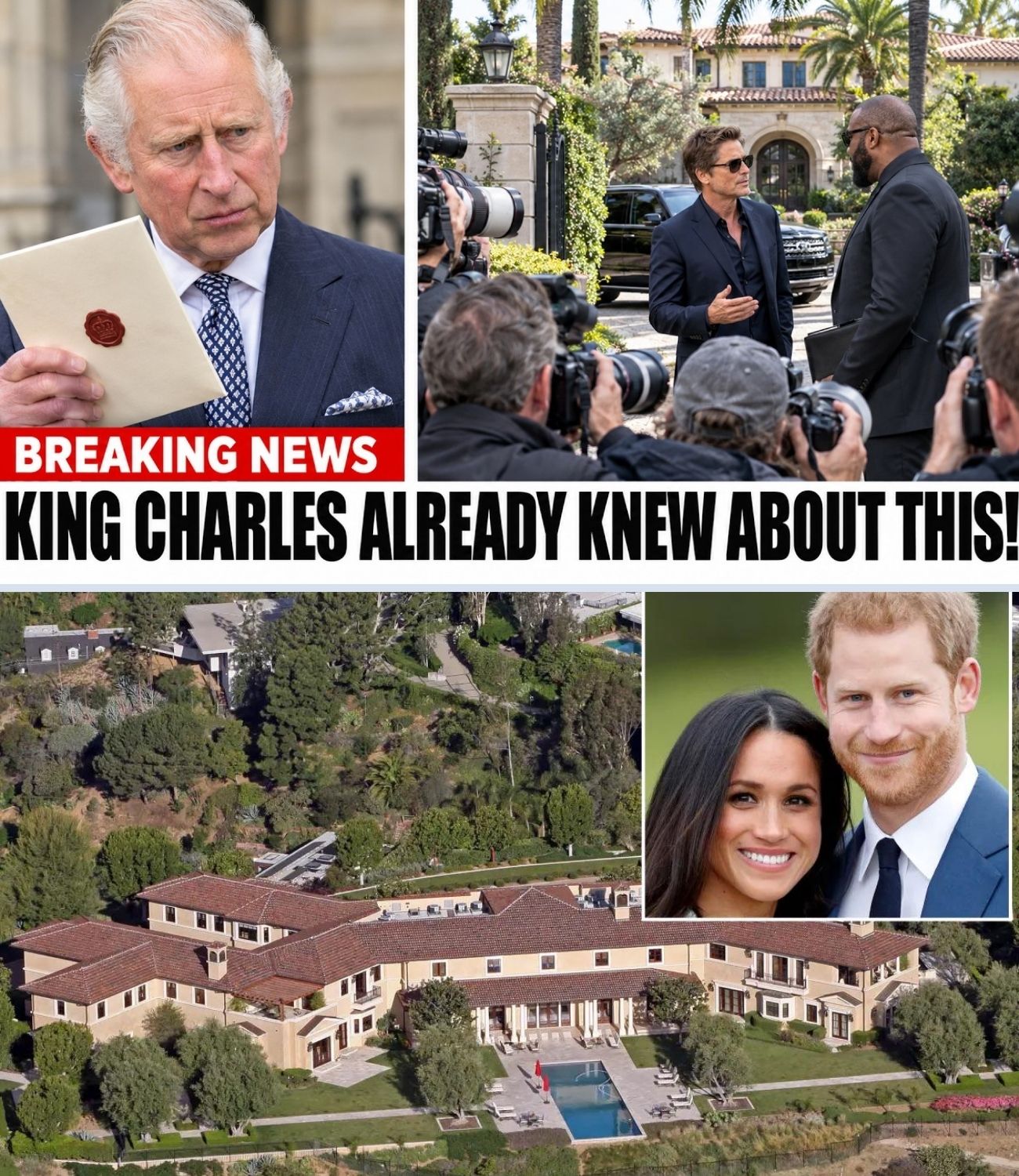
For over four years, the narrative presented to the global public was one of triumphant liberation. We were invited to gaze upon a sun-drenched Mediterranean villa in Santa Barbara County, a sprawling $16.7 million sanctuary where an exiled prince and his duchess supposedly built a self-made empire of streaming deals, high-profile advocacy, and glamorous independence. It was framed as the ultimate modern fairy-tale: a brave escape from the suffocating traditions of Windsor, culminating in a Hollywood-adjacent dynasty of unmatched wealth and cultural influence.
Today, that glossy facade has shattered into a thousand jagged pieces. Behind the gated driveways and manicured eucalyptus trees of Montecito, a very different reality has taken hold. Long-distance moving vans are backing down private lanes, domestic staff are clutching sudden two-week termination notices, and the very fortress that was paraded before television cameras as the symbol of royal emancipation is being quietly liquidated on the open market.
Worse still, the man holding the pen on the real estate listing is not Prince Harry. It is Tyler Perry—the billionaire benefactor who was once cast as their loyal saviour, but who has now been forced to call in the debt. Simultaneously, across the Atlantic, the ancient machinery of the British monarchy has bolted its doors from the inside, leaving the Sussexes stranded between two continents with an astronomical cost-of-living crisis of their own making.
This is the untold story of how a multi-million-dollar global strategy unravelled in less than a week, exposing the brutal mathematics of trying to live like royalty without the British Empire footing the bill.
The Montecito Mirage: Who Really Owned the House?
To understand how the ground gave way beneath the Duke and Duchess of Sussex, one must first dismantle the foundational myth of their American existence. Ever since their dramatic relocation in the spring of 2020, the public was led to believe that through sheer commercial talent and lucrative corporate partnerships with Netflix and Spotify, Harry and Meghan had purchased their magnificent Santa Barbara estate with their own hard-earned capital.
That narrative was an elaborate illusion. According to legal sources and property filings uncovered by forensic investigators, the property was never truly held in Prince Harry or Meghan Markle’s name. The corporate structures, primary financial guarantees, and legal deeds of trust that sat beneath the Montecito compound remained tethered directly to Tyler Perry.
When Perry originally offered his Beverly Hills estate to the couple in 2020, it was viewed as a generous gesture of hospitality to a vulnerable young family. However, Perry’s financial involvement went far beyond a temporary roof over their heads. He built the entire financial foundation that allowed the Montecito transaction to close. When commercial revenues began to dry up—when Spotify terminated their partnership after a single series and Netflix tightened the screws on deliverable content—the staggering carrying costs did not vanish.
Property taxes on a multi-million-dollar California compound, 24-hour armed security details, legal retainers, and an army of household staff required an obscene monthly cash flow. For four consecutive years, whenever those invoices threatened to overwhelm them, the expenses were quietly shunted onto Perry’s ledger. The Sussexes were permitted to live inside the intoxicating myth of ownership, filming documentaries and giving magazine interviews from mahogany desks they did not own, while treating the billionaire’s wealth as an endless corporate safety net.
The breaking point arrived the moment King Charles III delivered his final, unyielding verdict from London. When royal financial support was permanently severed, Perry ordered an exhaustive forensic audit of his exposure. What he discovered was alarming: four consecutive years of emergency withdrawals, unpaid carrying costs, and a mounting ledger of frivolous expenditures justified as security necessities. When Harry attempted to deploy a familiar emotional script—pleading for an emergency bridge loan and invoking the memory of Princess Diana to soften the blow—Perry froze. He instructed his attorneys to place the estate on the market immediately, setting a fire-sale valuation designed to wipe out accumulated liens and get him off the hook once and for all.
The Neighbourly Revolt: Life Behind the Gates
While the financial machinery in California was seizing up, the social reality within the exclusive enclave of Montecito had curdled into open hostility. Most outsiders remember 2020 as the year the couple fled across the Atlantic in search of peaceful privacy. Yet, the quiet billionaires, retired tech executives, and old-money residents of the 9,000-person community experienced a very different arrival.
Montecito operates on an unwritten gentleman’s agreement: you leave your ego at the gate, you do not flaunt armed guards, and you respect the collective tranquillity of the neighbourhood. Instead, residents found their quiet lanes treated like an outdoor soundstage. Production trucks idled before dawn, security drones hovered over eucalyptus trees invading private backyards, and everyday errands were staged like military extractions. Long-time neighbours were forced to watch private guards with semi-automatic weapons visibly holstered at local village petrol stations—a theatrical display of manufactured danger rather than genuine protection.
Interpersonal friction soon escalated into outright alienation. When an elderly female resident walked up to their security gate bearing a handwritten welcome note and a bottle of fine local wine from the Santa Barbara Valley, she expected a polite acknowledgement. The very next morning, she found the envelope and the unopened bottle dumped on her doorstep facing the lane—returned as if human warmth were a breach of protocol.
While high-profile figures like Oprah Winfrey enjoyed open access, ordinary locals were treated with disdain. Incidents at local establishments—such as Meghan reportedly objecting furiously to a short waiting list at a village restaurant and storming out—cemented a reputation for royal entitlement that wore thin very quickly. By the time the moving vans arrived, the neighbourhood did not throw a street party; they simply exhaled with profound relief, regaining the quiet mornings they had lost six years prior.
The Iron Gates of Windsor: Charles and William’s Steel Trap
Confronted with the collapse of their American sanctuary, Prince Harry made a fatal assumption. Believing that King Charles’s cancer treatments and Prince William’s heavy operational burdens had left the royal family emotionally depleted, Harry boarded a flight to London. He operated under the conviction that physical proximity and a heartfelt appeal would force the palace doors open, secure fresh cash transfers, and perhaps restore his taxpayer-funded security detail.
He walked straight into an institutional steel trap. Long before his plane touched the tarmac, senior royal courtiers and private solicitors had intercepted the financial reality unfolding in Santa Barbara. They knew the mansion was underwater, their streaming contracts were stalling, and Harry’s mission was a desperate financial extraction.
The response from the Crown was masterclass in cold, unyielding diplomacy. King Charles gave strict instructions to his private secretaries: no telephone call from Harry would be put through, no text message forwarded, and no email delivered to the royal inbox. When Harry’s representatives requested an urgent audience at Highgrove or Balmoral, the replies were chillingly brief—His Majesty’s diary was completely full, and no unscheduled meetings could be accommodated.
Prince William took an even harder line, making it clear to aides that he would refuse any private conversation or family mediation. William understood that any private moment spent with Harry instantly became commercial inventory—packaged, transcribed, and leaked to friendly American media outlets to fund their next luxury venture. By cutting off all communication, the palace stripped Harry of his only remaining weapon: royal access. Left standing outside the perimeter fence, Harry was revealed not as an insider exposing an institution, but as an unemployed private citizen with an estranged family and an astronomical security bill.
The British Backlash: Tatler, Pubs, and School Runs
Back in the United Kingdom, attempting to project an image of effortless British re-entry met with a wall of absolute chilling indifference. When Meghan stepped out into the rural luxury of the Cotswolds alongside high-profile companions like Ellen DeGeneres, attempting to frame her relocation as a noble maternal choice, the British social establishment delivered a masterclass in silent rejection.
The snub was surgical. Tatler magazine, the undisputed social bible of the British aristocracy for over three centuries, unveiled a special edition dedicated entirely to the Cotswolds. While publicists had briefed that Meghan was positioning herself as the queen of this elite landscape, the cover featured respected British actress Hayley Atwell. Across dozens of glossy pages detailing the region’s most influential estates and dinner parties, the Duke and Duchess of Sussex were not mentioned a single time.
Everyday social realities proved equally harsh. During a visit to the Three Horseshoes, a historic local pub in Oxfordshire, members of the staff reportedly looked directly at Meghan’s table and quietly declined to serve them. There was no angry shouting match, no political argument—just the ancient, devastating English punishment of absolute non-cooperation from locals who remembered every barb hurled from California chat shows.
Meanwhile, their attempts to integrate their children into elite local academic institutions collapsed under the weight of excessive demands. Demands for private motorcade convoys, dedicated parking privileges, and aggressive security details clogged narrow rural lanes and disrupted other parents. When the Sussexes complained about traditional Oxfordshire traffic, local amusement was swift, leading to the children being abruptly pulled from the school as the reality of ordinary life in rural Britain refused to bow to royal theatrics.
Commercial Exhaustion: Advent Calendars and Stalled Games
Compounding these personal and geographical crises was the complete evaporation of commercial viability. In a desperate bid for immediate cash flow amid a severe British cost-of-living crisis, Meghan launched a limited-edition luxury holiday advent calendar in collaboration with Compartés Chocolates, priced at a staggering $148 (rising to nearly $200 with shipping).
The product featured an Italian-style illustration of her sun-drenched Montecito villa complete with palm trees and chickens—a tone-deaf display of California wealth marketed to ordinary British families struggling with winter heating bills. Compounding the misstep, public memories remained fresh of an earlier promotional mishap where television personality Serena Williams accidentally revealed the chocolates arriving smashed and broken in the post.
On the institutional front, plans to rescue the Invictus Games in Birmingham via a multi-million-dollar global sponsorship from Amazon collapsed overnight. Major corporate entities refused to back an initiative tied to a discredited prince whose own sovereign father declined to take his calls. The promised corporate cheques never arrived, sealing the fate of their commercial pipeline.
The Portuguese Escape Hatch and the Final Reckoning
With the United States becoming financially untenable and the United Kingdom slamming its doors shut, real estate inquiries on the southwestern coast of Portugal—specifically in Melides and Comporta—revealed the Sussexes’ next desperate European escape hatch. Far from an ambitious continental expansion, the Portuguese property search represented a frantic retreat for a couple who had officially run out of ground between their two native countries.
As the moving vans cleared out the Montecito estate, stripping away the security cameras, unbolting the surveillance equipment from the eucalyptus trees, and letting the skies above the Santa Barbara compound fall silent for the first time in six years, the true cost of their strategy became glaringly apparent.
Prince Harry and Meghan Markle had built an empire on the premise that a thousand-year-old institution, a national public, and private billionaire benefactors were inexhaustible, consequence-free credit lines. They believed the trauma of 1997 could serve as an immortal currency that never devalues. But in the world of high finance and sovereign governance, emotional blackmail has an expiration date.
Today, the pieces sit clearly on the board. Prince William and Princess Catherine represent enduring stability through quiet duty and steadfast service. Prince Harry remains stranded between two continents—viewed with exhaustion in Britain and quietly sidelined by a Hollywood elite fatigued by perpetual drama.
The cameras have been switched off, the moving trucks have departed, and the real owners have reclaimed their keys. Tyler Perry closed the sale, King Charles locked the gate, and the prince who once had everything learned the ultimate, unforgiving lesson of what happens when you treat family and benefactors like a credit card that never expires.
You Might Also Enjoy

“We Thought They Would Negotiate”—What Argentine Soldiers Said When The British Attacked Goose Green

“You’ll Never Finish My Ruck March, Limey” — US Sergeant Who Challenged the SAS, Then Fell Out First






