UK Billionaire EVICTS Harry And Meghan! Prince William SEVERS All Ties COMPLETELY!
The Quiet Sanctuary of Ruander Manor
Deep in the undulating folds of the Cotswolds, where ancient limestone villages bleed into emerald pasturelands and privacy is guarded with the fierce jealousy of an old-money aristocracy, Ruander Manor stands as a masterclass in sequestered wealth. Spanning over 700 acres, the estate boasts manicured deer parks, shimmering private lakes, and centuries-old tree avenues designed to swallow sound and keep the outside world at a permanent distance. For thirty years, its owner managed a feat rarer than a billion-dollar bank account: he stayed completely out of the tabloid prints. No staged photo calls, no glossy magazine spreads, and no public posturing.
Ian Wace, the co-founder and chief risk officer of Marshall Wace—one of the planet’s most formidable hedge fund empires—does not live his life in public view. Valued well in excess of £1.2 billion, Wace built his fortune on cold, clinical risk assessment. He knows how to spot a failing asset, how to evaluate exposure, and how to exit a toxic position before the market catches wind of the rot.
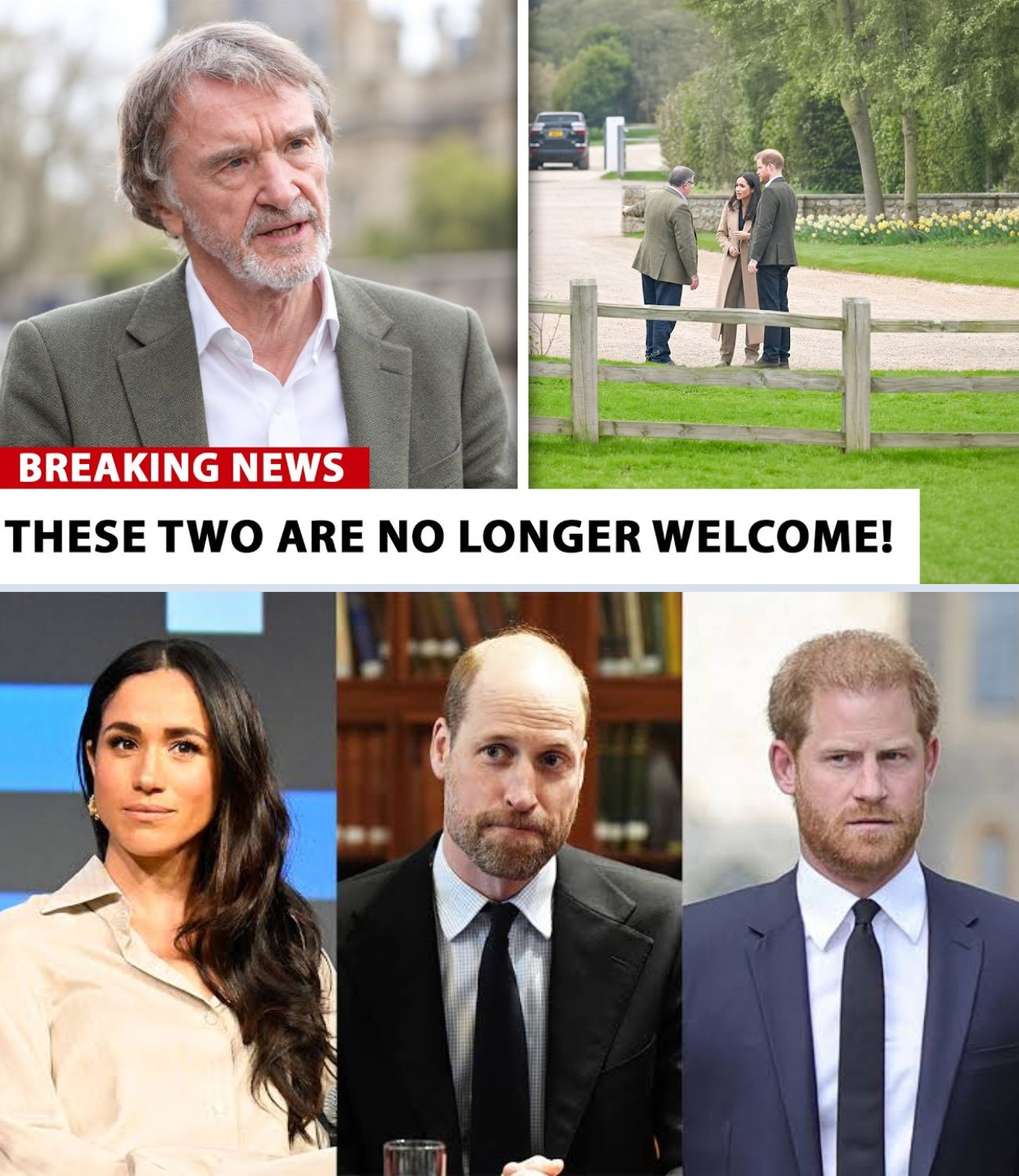
Yet, despite a lifetime spent hedging against volatility, Wace committed a fatal miscalculation. He opened the gates of his private sanctuary to Prince Harry and Meghan Markle.
What began as a quiet, sympathetic gesture rooted in aristocratic code and personal empathy deteriorated into a masterclass in boundary violation. By the time Wace’s intermediaries quietly informed the Duke and Duchess of Sussex that their cottage was required back by the end of the month, the billionaire had realized a chilling truth: he hadn’t been acting as a gracious host; he had been played.
Borrowed Loyalty and a Shared Tragedy
To understand how the Sussexes secured lodgings at Ruander Manor in the first place, one must discard the notion that Ian Wace was a starstruck fan eager to bask in royal stardust. Wace moved in high-level circles where royal titles carry little currency compared to discretion and character. According to well-placed palace insiders, Wace did not open his doors because he harboured a deep affection for Harry and Meghan. He did it almost entirely out of deference to Prince William.
When Prince Harry initially approached the financier, he didn’t simply ask for a favour; he deployed heavy emotional leverage. Harry leaned heavily on a decades-old friendship between Wace and his older brother, framing the arrangement as a vital stepping stone toward healing a fractured royal family. To disarm the hardened financier further, Harry reportedly touched upon a deeply personal chord: the shared trauma of sudden, catastrophic loss.
In 1994, Wace experienced an unspeakable tragedy when his first wife and two of their young children were killed in a horrific car crash in England. Three years later, in 1997, the world watched as a young Prince Harry walked behind his mother’s coffin in London, having lost Princess Diana to a high-speed vehicular accident in Paris.
By invoking that shared vortex of grief, Harry framed his return to British soil not as a commercial exercise, but as a wounded son seeking refuge and attempting to protect William from further scandal. Out of respect for the future king and moved by a tragic commonality, Wace reluctantly agreed. He dispatched his private Falcon jet, opened his Scottish island of Tanera Mòr for a summer family holiday, and handed over a comfortable, secluded cottage on the Cotswolds estate.
It was an act of supreme generosity. It was also an invitation that preceded a wave of internal panic among those who knew Wace best.
The Supermodel’s Warning
Long before the moving vans unloaded boxes in the Cotswolds, warning signs flashed across elite British social circles. Saffron Aldridge, the celebrated 1990s supermodel and former face of Ralph Lauren who shared a long history with Wace, had previously hosted Harry and Meghan. Those familiar with her account noted that she emerged from the experience shaken, describing Meghan as an absolute nightmare of a house guest—entitled, relentlessly demanding, and entirely dismissive of domestic staff.
Aldridge reportedly warned Wace directly that inviting the Duchess into his home would court disaster. She cautioned him that no amount of English hospitality or polite deference would ever satisfy someone who viewed every courtesy not as a gift, but as an owed tribute.
Wace, believing he was acting in the broader interest of supporting William’s fragile familial ecosystem, brushed the warnings aside. He assumed basic aristocratic etiquette would prevail.
It was a decision that aged with astonishing speed.
The moment Harry slipped away from the estate for a series of solo public engagements in London and Birmingham, the atmosphere at Ruander Manor shifted dramatically. The quiet sanctuary was swiftly treated like a complimentary boutique hotel. Uninvited guests began arriving through the private gates: a close confidant, an infant child, and Marcus Anderson—the influential Soho House executive instrumental in engineering the couple’s early romance.
Suddenly, Wace’s domestic staff found themselves fielding erratic demands, managing unvetted visitors who roamed the grounds at will, and watching strangers frequenting the nearby Soho Farmhouse while billing their presence to the estate’s ecosystem. For a man whose entire adult existence was anchored in dignity, quiet order, and strict privacy, having his family home transformed into a revolving production hub for uninvited houseguests was an intolerable strain. Yet, for weeks, Wace swallowed his growing fury, convinced he was enduring it for William’s sake.
Then came the morning of the Instagram post.
The 34-Second Catastrophe
If elite British society operates on one unyielding commandment, it is the absolute sanctity of discretion. You may possess all the money and titles in the world, but if you cannot keep a secret—or a location—secure, you are finished.
On a quiet September morning, a 34-second video clip appeared on social media, cheerily captioned with the words, “Morning walks.” Filmed within the lush confines of Ruander Manor, the footage swept across the screen displaying children darting through morning mist, sweeping deer parks, ornamental lakes, ancient tree-lined avenues, and the unmistakable historic roofline of the manor itself.
Within sixty minutes of the upload, internet sleuths, digital investigators, and tabloid reporters cross-referenced public satellite topography with the video’s background architecture. The exact geographical coordinates of the billionaire’s private refuge were plastered across digital forums worldwide. Days later, a second video dropped from inside the private kitchen, showcasing a glittering £20,000 professional cooker to promote a commercial lifestyle brand.
For the British establishment, the hypocrisy was staggering beyond belief. For years, Prince Harry had waged aggressive legal battles through the High Courts in London, insisting that he and his family required taxpayer-funded armed police protection because their lives were in mortal peril from stalkers and extremists. Yet, here was his wife gleefully broadcasting the precise GPS coordinates of an undisclosed private estate to millions of strangers for the sake of digital engagement and commercial branding.
You cannot scream that you are fleeing lethal threats while simultaneously turning your safehouse into an open-air film set. It was not a security lapse; it was a content strategy. And for Ian Wace, it was the final straw.
The Final Verdict from Kensington Palace
Even as the coordinates circulated online, Wace held his tongue. He remained hopeful that the situation was salvageable, clinging to the belief that the bridge to Prince William was still standing.
Then, the Daily Mirror published a front-page splash by Russell Meyers, the royal editor widely recognised for his unshakeable ties to William’s innermost circle. The report delivered an unvarnished, brutal reality: Prince William harboured zero intention of ever engaging with Harry again. There were no secret back-channels, no quiet reconciliation talks, and no hidden olive branches. Friends close to the future king made it unequivocally clear that, as far as William was concerned, Harry was entirely dead to him.
The impact of that headline inside Ruander Manor was instantaneous.
The foundational premise upon which Harry had talked his way into Wace’s estate had completely evaporated. Harry had sold the billionaire on the narrative that he was a vital participant in preserving a sacred brotherhood. With William’s camp formally declaring the relationship dead, it became blindingly obvious that Harry had been trading on a ghost. He was never a bridge to family healing; he was an opportunistic operator using his brother’s name to secure luxury accommodation and private aviation.
Wace wasn’t helping heal a royal rift; he was enabling a grift.
The financier acted with the swift, unemotional precision that defined his professional career. There were no public rows, no undignified shouting matches, and no leaked tabloid counter-briefings. Instead, a cold, clinical message was relayed through intermediaries: the Cotswolds cottage was required back by the end of the month. As a parting surgical strike, Wace reportedly advised Harry to ask his wife about her kitchen filming exploits.
It was a masterclass in quiet contempt. Wace didn’t list a hundred minor grievances; he pointed directly to the exact second trust had been irrevocably pulverized.
The Scramble for Spin
When the eviction notice landed, the Sussex public relations machinery went into immediate, frantic overdrive. Friendly media outlets were swiftly fed stories claiming that the couple had “voluntarily decided” to leave the estate because they were actively house-hunting for a permanent nine-bedroom country pile valued at £10 million.
Nobody in London’s high-society circles bought the narrative for a single second. When a self-made billionaire quietly shows you the door, you do not suddenly announce to the world that you are in the market for a sprawling rural manor. It was an exercise in pure face-saving. The very fact that they felt compelled to spin a quiet ejection into a voluntary lifestyle upgrade laid bare just how deeply embarrassing the eviction actually was.
Behind closed doors, Wace maintained his silence with the press, but in Mayfair boardrooms, exclusive private members’ clubs, and elite country house dinners, he began speaking candidly. He outlined the boundary breaches, the logistical nightmares inflicted on his household staff, the brazen commercial exploitation of his kitchen, and the bitter realization of Harry’s emotional manipulation. He made it explicitly clear to anyone who mattered that his hospitality had never been extended to Harry on his own merits—it was a tribute to William. And the moment William shut the door, the circus had to go.
The Shrinking Circle of Benefactors
The fallout from the Ruander Manor eviction highlights a much broader, structural vulnerability in the Sussex post-royal project. This was not an isolated incident. When Harry and Meghan first fled the United Kingdom, billionaire media mogul Tyler Perry handed them the keys to his sprawling Beverly Hills mansion alongside private security details. That relationship has since cooled into icy distance. Saffron Aldridge opened her world once and vowed never to repeat the mistake. Now, Ian Wace has locked his gates.
The roster of global elites willing to lend their private assets to the couple is contracting at an alarming rate. This reluctance is not born of petty malice; it stems from a consistent pattern where generosity is treated as an entitlement and privacy is sacrificed on the altar of content creation.
What makes the Wace fallout uniquely damaging is that the financier possessed the institutional weight to fight back. Unlike a nervous Hollywood studio executive terrified of negative publicity, Wace is an institutional pillar of the British establishment with deep ties to major media networks and financial houses. By drawing a hard line, he sent an unmistakable signal to every wealthy elite across the United Kingdom: if you open your doors to these people, you stand entirely alone.
The logistics of their grand return to Britain thus collapsed under the weight of their own contradictions. If they were genuinely preparing to purchase a £10 million country estate, why were they squatting in a hedge fund tycoon’s guest cottage? Why not purchase the property first? The timeline defied basic logic, revealing that the entire narrative was merely a defensive smokescreen designed to mask a humiliating dismissal.
Trading a Kingdom for a Kitchen Video
Standing back to survey the wreckage, the eviction from Ruander Manor transcends local gossip; it marks a definitive turning point. It is the moment the British upper classes collectively determined that the Sussexes represent an unacceptable social liability.
For Harry, the personal cost is immeasurable. He had one last remaining individual in Britain possessing the stature, discretion, and indirect emotional tie to potentially bridge the chasm to his brother. He possessed a golden opportunity to quietly reintegrate into a respectable British life. Instead, Harry traded that sacred lifeline for 34 seconds of vertical video on a social media feed.
The contrast with Prince William could not be starker. While Harry was filming deer parks and luxury kitchen cookers to fuel his commercial ambitions, William was methodically consolidating his constitutional authority. The future king did not need to shout, posture, or leak. He simply maintained absolute consistency, ensuring that the institution remained anchored in duty rather than drama. That steadfastness gave Wace the moral permission he needed to cut ties permanently.
The phone calls from Montecito now ring to voicemail. The private jets are grounded, and the country gates are bolted from the inside. Ian Wace has reclaimed his hard-earned silence, William has secured his royal perimeter, and Prince Harry is left to confront the sobering mathematics of his choices. In a world where discretion is the sole currency that truly buys entry into the room, trading trust for a viral moment isn’t just a tactical error—it is a permanent exit.
You Might Also Enjoy

“We Thought They Would Negotiate”—What Argentine Soldiers Said When The British Attacked Goose Green

“You’ll Never Finish My Ruck March, Limey” — US Sergeant Who Challenged the SAS, Then Fell Out First






