US Command Called the SAS a Sideshow in the Gulf War. They Ended Up Saving the Whole Campaign.
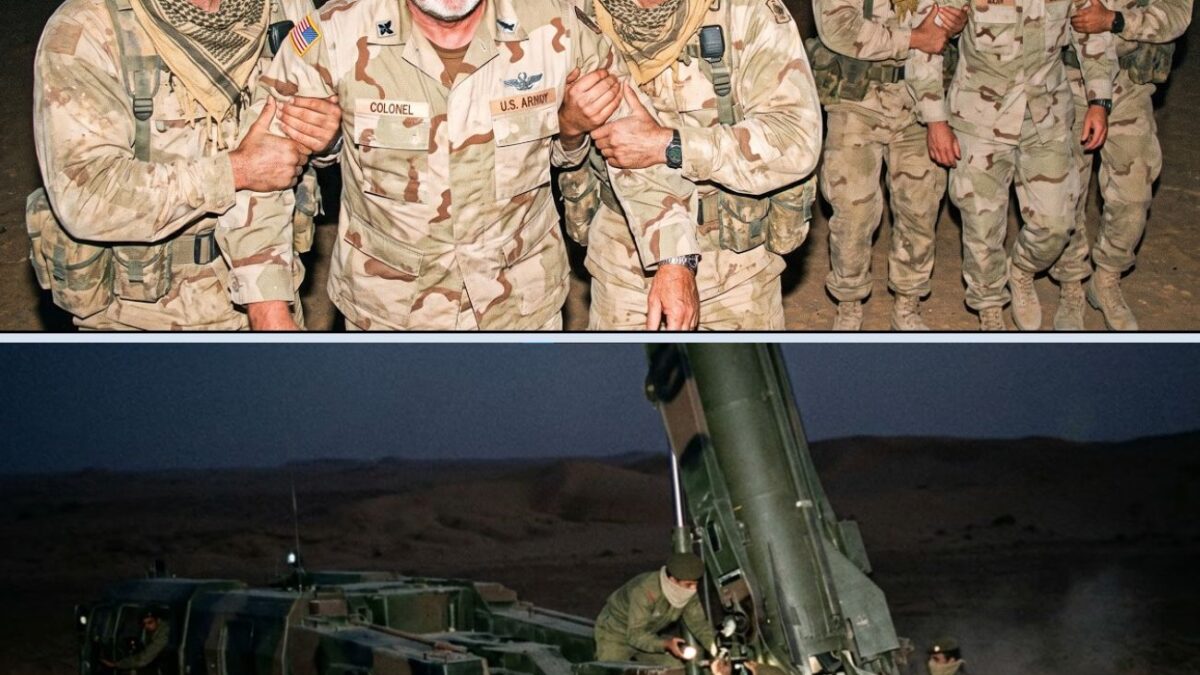
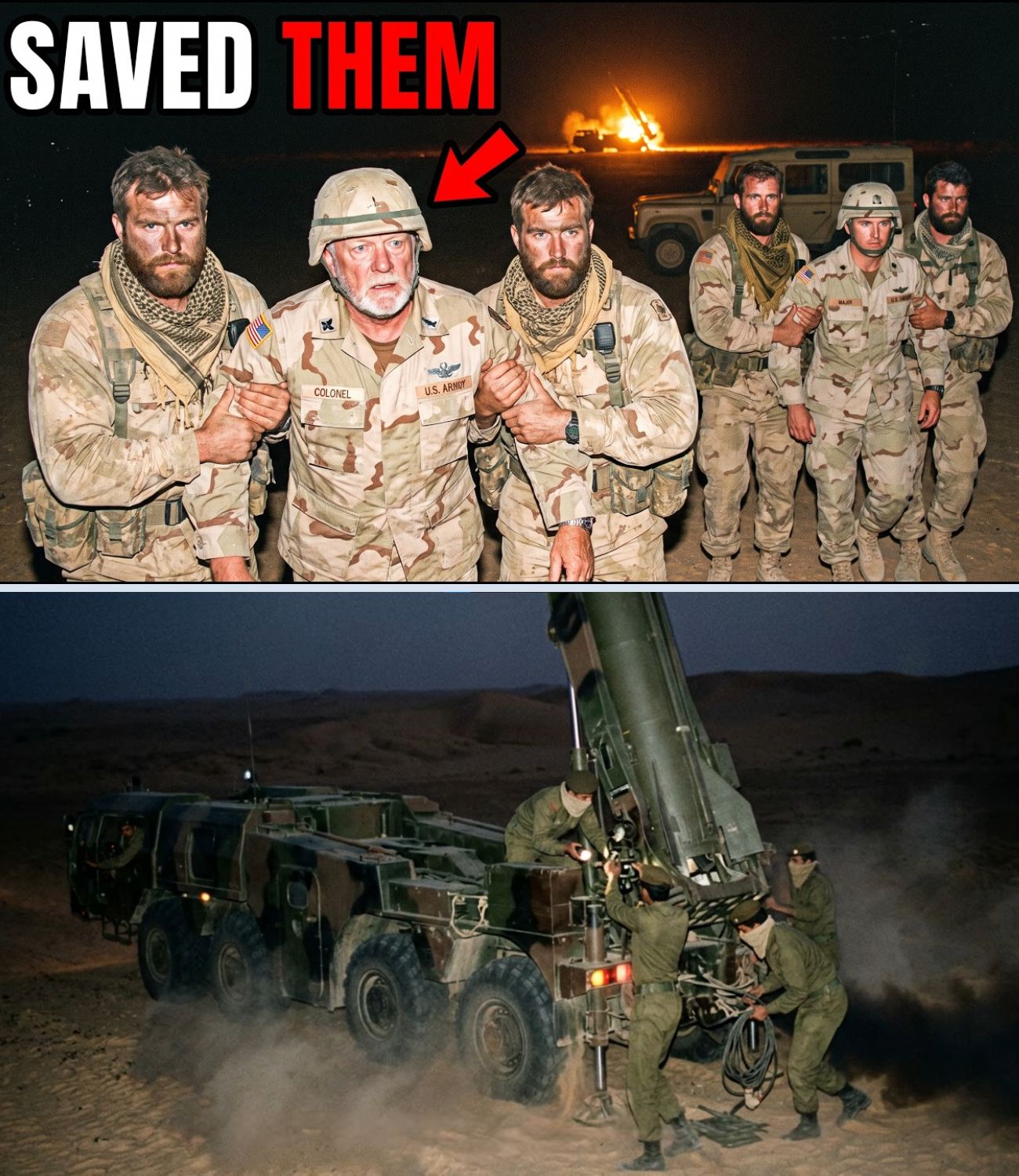
22 January 1991, the open gravel plane west of the road coalition pilots had already nicknamed Scud Boulevard, the stretch of Iraq’s main supply route running along the 32nd parallel toward the Jordanian border. Four long wheelbase Land Rovers sit spread wide in a shallow depression. Engines cut.
A Milan anti-tank missile tube resting across one bonnet and a PRC 319 radio set humming faintly on encrypted watch. A major lies flat behind a pair of binoculars, counting the axles on a convoy crawling along the road 800 meters out. Two of those vehicles carry a shape his briefing photographs taught him to recognize instantly. An Al Hussein missile upright on its transporter erector launcher. Engine idling. Crew waiting tensely on a firing order that could arrive at any minute now.
By the third week of the air campaign against Iraq, the war that Washington had planned so carefully around precision air strikes, stealth aircraft, and an overwhelming coalition air order of battle had developed one problem nobody’s targeting cell had fully managed to solve. A Scud missile crew could raise a transporter erector launcher, fire, and be moving again inside minutes, far faster than any strike aircraft could be retasked to hit them. Iraq’s Al Hussein missiles, themselves modified Scuds with extended range and reduced accuracy, could not meaningfully threaten coalition military targets with any real precision, but they could reach Tel Aviv, and General Norman Schwarzkopf’s entire campaign plan rested on one fragile, carefully guarded assumption, that every single Scud fired against Israel put directly and immediately at risk that Israel would not retaliate and thereby unravel the Arab members of his own carefully built coalition, Egypt and Syria chief among them, who could not politically survive being seen fighting alongside an Israeli air force over Iraqi skies.
The man who ran the fighting column that January night for the purposes of this account was Major Simon Ashcom, commanding one of two vehicle-mounted squadrons the British Special Air Service had pushed deep into Iraq’s western desert in the campaign’s opening days under the overall direction of Lieutenant General Sir Peter de la Billière, the senior British officer in theater. When de la Billière first proposed committing the regiment to a dedicated Scud-hunting role, several officers on Schwarzkopf’s own staff in Riyadh reportedly treated the idea with open skepticism, one planner allegedly dismissing it in a briefing, according to an account that circulated among British officers afterward, as a sideshow, better suited to newspaper headlines than to a war that American air power and armor were going to win regardless. Schwarzkopf himself, by several later accounts, needed real persuading before he authorized the deployment at all.
The argument that finally moved Schwarzkopf, according to officers present at the time, was made in person by de la Billière himself, who reportedly told the American general bluntly, that air power alone had already had three weeks to solve the Scud problem and had not solved it, and that ground reconnaissance able to watch the road directly day and night for weeks at a stretch could deliver the kind of precise timely targeting information no satellite pass or high-altitude sortie ever would. Schwarzkopf, by several later accounts, gave his approval less out of conviction than out of the absence of a better alternative, a fact some of his own staff resented for months afterward, treating the regiment’s deployment as an unwelcome admission that the coalition’s own preferred instruments had come up short.
Ashcom’s column left its forward mounting base in Saudi Arabia on the night of 17 January, four vehicles and 16 men, crossing the border wire under a moon the operation staff had specifically waited for before authorizing the insertion. Under Ashcom rode a troop sergeant who had served with the regiment since the Falklands years, a signaler carrying the PRC 319 set and its cipher pads in a waterproof case strapped across his chest, a medic whose kit had been repacked twice in the final days before departure to shave every unnecessary gram, and a fitter responsible for keeping four aging Land Rovers running across terrain never designed for wheeled vehicles at all.
Each vehicle carried close to half a ton of fuel, ammunition, and water beyond its own weight, a load calculated against a planned patrol endurance of three weeks without resupply since no forward base existed within the column’s reach, and any resupply drop risked revealing the patrol’s position to the very Scud crews it was hunting. The insertion itself had been rehearsed for nearly two weeks beforehand on a stretch of Saudi desert chosen for its rough resemblance to the ground the patrol expected to cross, drills run at night with headlights taped down to slits and drivers trained to hold position in a loose diamond formation without radio chatter of any kind. Ashcom insisted on running the full loaded weight during rehearsals rather than training light and loading heavy only on the night itself, a decision that cost the squadron two cracked leaf springs during training, but meant in his own later account that nobody was surprised by how the vehicles actually handled once they were carrying everything the mission required.
The first hard problem arrived within 30 hours. The second vehicle’s radiator, holed by a stone thrown up from the gravel plane, began losing coolant at a rate the patrol’s fitter calculated would leave it unusable within a day unless repaired, and no spare radiator existed anywhere within a thousand miles. The fitter, working by starlight with his hands cupped around the leak to muffle the hiss of escaping steam, tried a standard field patch first, a length of self-amalgamating tape wound tight over the puncture, and watched it fail within the hour under engine heat. His second attempt, improvised on the spot rather than from any manual, and drawn from nothing more than a hunch about how the grounds might behave once wetted, was a seal made from a tin of instant coffee mixed into the header tank, the fine grounds catching in the crack and swelling just enough to slow the leak to a weep rather than a stream. It was the kind of fix nobody had briefed him on, and nobody would have approved in advance, and it held long enough to keep the vehicle running for the rest of the patrol.
The route itself deteriorated almost immediately after the border crossing. The desert floor here was seamed with wadis deep enough to swallow a Land Rover’s axle, and Ashcom’s navigator working by compass and odometer with almost no usable terrain features to fix a position against twice had to backtrack the whole column rather than risk committing four vehicles to a crossing that might strand them in full view of the road they were meant to be watching unseen. On the second occasion, the lead vehicle’s front wheels had already dropped into soft sand at the wadi’s lip before the driver felt the ground give way beneath him, and it took every man in the patrol working with sand mats and a hand winch in near total silence less than two kilometers from the road to haul the vehicle back onto firm ground before first light exposed the whole operation to anyone glancing out from a passing convoy.
Fixing position at all in ground this featureless depended on a kind of patient cross-referencing that left little room for error. The navigator carried a Megellan satellite positioning receiver, one of the earliest handheld units the regiment had fielded, but its fixes took minutes to resolve and drained batteries the patrol could not easily replace, so Ashcom rationed its use to twice daily, filling the gaps with dead reckoning refined against whatever faint high ground or wadi junction the map actually showed. A single confident error of even a few hundred meters compounded over days could have placed the whole patrol on the wrong side of a ridge from which the road and the Scud crews using it would never have been visible at all.
Surveillance pressure came from the road itself. Iraqi military traffic along the supply route ran constantly, and twice in the first four days, a slow-moving convoy passed close enough that Ashcom ordered every vehicle’s engine killed and every man flat, waiting out each passage in silence that sometimes ran past an hour, aware that a single engine noise carrying across still, cold desert air at night could undo three careful weeks of positioning in a matter of seconds. During the second of these passages, a supply truck in the convoy slowed almost to a stop directly opposite the patrol’s position, its engine idling for nearly two minutes before grinding back into gear and moving on, an interval the troop sergeant later described as the longest two minutes he could remember from either of his two previous operational tours, precisely because nothing in it required him to do anything at all except stay motionless and wait.
Weather turned against the patrol on day six. A sandstorm rolling in from the west reduced visibility to arm’s length, grounding every coalition aircraft in the sector and more immediately burying two of the patrol’s vehicles up to their axles in drifted sand within a single afternoon. The troop sergeant, digging alongside the others with an entrenching tool that kept clogging in the fine wind-driven sand, later described the storm as the one stretch of the whole three weeks where he genuinely lost track of which direction the road lay, the noise and the blowing grit erasing every landmark he had used to keep his bearings. Digging the vehicles clear cost the patrol nearly five hours of exposed, noisy labor that would ordinarily have been unthinkable so close to a major road, a risk Ashcom accepted because the alternative, abandoning two vehicles, was worse. When the storm finally broke, the silence that followed felt, by the sergeant’s own account, almost more unsettling than the wind had been, as though the desert itself were listening for the noise their digging had made.
Water discipline became the next constraint. Each man was rationed to roughly five liters a day against daytime temperatures that even in January could climb uncomfortably inside a stationary sunbaked vehicle, and by day nine, the patrol’s water state had fallen further than planned, partly because two jerrycans had split their seams under the jolting cross-country movement. The medic began quietly tracking each man’s urine color and grip strength at the evening halt, a rough but reasonably reliable field method for catching early dehydration before it affected judgment, and flagged the fitter who had spent the most hours working in direct sun repairing the coffee-sealed radiator as the man most at risk. Ashcom adjusted the ration informally in the fitter’s favor for two days without making any announcement of it, a small quiet redistribution nobody else in the patrol ever mentioned afterward, though several of them plainly noticed at the time. A signaler’s log entry from that stretch reads in full as a single flat line:
"Water tight. Request resupply if window allows."
The window did not allow for another four days, and the patrol spent those four days rationing conversation as carefully as water since talking dried a man’s throat faster than silence did. Local presence complicated matters further. On day 11, a small group of Bedouin herders moving flocks along a route that happened to cross within sight of the patrol’s harbor position came close enough that Ashcom judged compromise a real possibility. One account among the patrol’s own recollections describing the herders’ apparent awareness of the vehicles, without any confrontation ever developing, the two parties simply passing at a weary distance that left neither side certain what the other had actually seen. The patrol’s rules of engagement gave Ashcom no good options if the herders had chosen to raise an alarm rather than simply move on, as detaining civilians risked turning a reconnaissance mission into an incident with its own political consequences, while doing nothing risked the entire patrol’s exposure within hours. Ashcom chose to do nothing, judging the herders more likely, in his own later assessment, to want no part of whatever they had glimpsed than to seek out an Iraqi army checkpoint to report it, and moved the patrol’s position that same night rather than trust to luck a second time, regardless of how the encounter had actually gone.
Overload had by then become its own slow danger. The coffee-sealed radiator vehicle, carrying more than its fair share of the patrol’s remaining fuel after a redistribution meant to balance out a cracked chassis mount on another vehicle, began overheating on any sustained climb, forcing the column to route around otherwise passable high ground and adding hours to movements that were already running behind the patrol’s own planning timeline. The fitter proposed more than once simply abandoning some of the ammunition reserve to lighten that vehicle’s load, and each time Ashcom declined, reasoning that a patrol which had already used its Milan launcher once and might need to again could not afford to arrive at that moment undersupplied, even at the cost of a slower, hotter-running vehicle for the remainder of the mission.
The mission’s political weight, though nobody in the patrol could see any of it directly from a gravel depression in the western desert, was building on a timetable of its own back in Riyadh, Washington, and Tel Aviv. Since the first missiles had fallen on Israeli cities on the 18th of January, American diplomats had been working almost around the clock to keep Israel from launching retaliatory strikes that would, in Schwarzkopf’s own repeated assessment to his staff, hand Saddam Hussein exactly the propaganda victory he could not otherwise win on the battlefield, an Arab-Israeli war fought inside a coalition assembled specifically to avoid one. American Patriot missile batteries rushed to Israel in the war’s opening week provided a visible, if imperfect, defense meant to buy just enough political room for Israeli restraint to hold, and every Scud that got through, regardless of the damage it actually caused, chipped away at that room a little further.
By day 13, the patrol had confirmed what aerial reconnaissance alone had failed to establish with any reliability, that those transporter erector launchers were moving along a predictable, if irregular, pattern between fixed hide sites near the road and rapid deployment points from which a missile could be raised and fired within 20 minutes. Ashcom’s signaler began relaying these sightings back to the regional command cell as fast as the patrol’s radio schedule allowed, each report converting a static intelligence picture into something a strike aircraft could actually act on if it arrived quickly enough.
Compromised movement became the pattern of the campaign’s middle days. Twice the patrol had to abandon a planned observation position because Iraqi ground patrols swept closer than any contingency plan had accounted for, and once on day 15, a technical vehicle mounting a heavy machine gun stopped less than 400 meters from the patrol’s position for what felt to the watching soldiers like an unbearably long 15 minutes before moving on, never having seen the four Land Rovers dug in and netted against the gravel behind it. The signaler lying beside the radio set with his hand resting on the volume dial in case a burst transmission chose the worst possible moment to arrive later said the 15 minutes felt considerably longer than the storm that had buried the vehicles a week earlier because a sandstorm was at least indifferent to them while the vehicle idling nearby was for all they knew actively looking.
Not every SAS patrol committed to the Scud-hunting effort that January fared as well. Several eight-man teams inserted on foot without vehicles to carry equipment, fuel, or a fast way out found themselves badly exposed once discovered, unable to outrun pursuit across open desert the way a wheeled column could. One such foot patrol, widely reported afterward in accounts that emerged only in the years following the war, was compromised within days of insertion and suffered severe losses and captures before what remained of it could reach safety, a contrast that the regiment’s own leadership studied closely once the fighting ended. The lesson drawn was blunt: reconnaissance value meant little if the patrol gathering it had no realistic way to break contact once seen. Ashcom’s own column, however many other dangers it carried, at least never faced that particular arithmetic, since four Land Rovers with fuel in reserve could put distance between themselves and trouble in a way 16 men on foot never could.
Time compression sharpened everything after the 18th of January when Iraq launched a wave of missiles. Israeli officials under enormous domestic pressure held off launching their own strikes only after direct and urgent diplomatic pressure from Washington and after the arrival of American Patriot missile batteries meant to reassure a public that had never expected to sit passively under missile fire. From that point forward, every Scud launcher Ashcom’s patrol located and helped destroy carried weight far beyond its narrow tactical value because each one represented one fewer missile that might be the launch that finally broke Israeli restraint. The political restriction this created was blunt and unambiguous: coalition planners in Riyadh made clear that Arab members of the coalition, Egypt and Syria in particular, could not be seen fighting a war that also somehow drew Israel into direct combat over Iraq, a political reality that turned what had begun as a peripheral nuisance mission into one of the most strategically important tasks in the entire campaign.
Whether or not Schwarzkopf’s own staff had believed that when de la Billière first proposed it, that restriction reached down to Ashcom’s own patrol in a very literal sense. Every report his signaler sent back that referenced a probable or confirmed launcher location carried alongside the grid reference an implicit note about exactly how much political weight now rode on information that a month earlier would have been treated as routine order of battle detail. Ashcom himself later said he had understood the stakes clearly enough without anyone spelling them out since the briefings before insertion had made plain in language unusually direct for a pre-mission briefing that the patrol’s reporting might matter as much to keeping the coalition together as to the war’s military outcome, a framing that stayed with him by his own account through every one of the 31 nights that followed.
Engagement came on the night of the 24th of January when Ashcom’s column identified a launch preparation underway at a site roughly six kilometers from the road, close enough to strike directly rather than simply report and wait. Ashcom weighed the Milan missile’s limited range and his own patrol’s exposed position against the near certainty that the launcher once fired would be gone before any aircraft could be retasked to the location, a calculation his signaler had already run twice over the radio net that evening, requesting an air asset be diverted and being told both times that the nearest available aircraft was at least 25 minutes out. 25 minutes against a launcher crew Ashcom estimated needed perhaps 10 to finish their sequence and fire was not a margin he was willing to trust. He chose to engage directly, closing two vehicles to within effective range under cover of a low ridge, while the other two held back with the general-purpose machine guns trained on the road in case the noise drew in reinforcements from either direction.
The Milan gunner, a corporal who had fired the weapon only twice before in live conditions, later described sighting the missile on the transporter erector launcher’s cab through a thermal sight that kept fogging faintly in the cold night air, wiping the eyepiece once with his sleeve before the final lay-on. The missile struck the cab directly, disabling the vehicle before its own missile could be raised to firing angle, the launcher itself left canted and unusable in the wreckage of its transporter. Escort troops nearby responded within minutes, tracer arcing wide and low across open ground that gave Ashcom’s two forward vehicles no cover beyond speed itself, and the patrol broke contact at once, running eight kilometers cross-country in the dark before slowing to check headcount: all 16 men present and only one vehicle carrying a fresh bullet scar along its rear quarter panel.
Extraction after that engagement narrowed the patrol’s options further than at any earlier point in the mission. Fuel reserves already thin after the earlier detours around high ground left barely enough margin to reach the resupply point the operation staff had tentatively marked for day 20, and Ashcom made the call to press directly for it rather than risk a longer, safer route that his own fuel gauges told him the patrol likely could not survive. The eight kilometers of hard cross-country running immediately after the engagement had cost more fuel than any of the patrol’s planning figures allowed for, and by the following dawn, the fitter’s own rough calculation done by dipping a stick into each tank rather than trusting gauges that had proven unreliable earlier in the mission suggested the column had perhaps 90 kilometers of range left between four vehicles against a resupply point still more than 70 kilometers distant across ground nobody in the patrol had yet crossed.
The resupply, when it arrived by helicopter under cover of darkness two nights later, delivered fuel, water, and a fresh radiator that finally retired the coffee-sealed one from active service, along with a single handwritten note from the operations officer that read simply:
"Keep going. It's working."
The helicopter crew working a landing zone marked by nothing more than four dimmed infrared strobes in open desert spent under four minutes on the ground before lifting away again, aware that any longer exposure risked drawing attention from the very road the patrol had spent three weeks avoiding. Ashcom’s own report on the resupply noted with the same flat understatement that ran through most of the patrol’s paperwork that the note had been appreciated by the men more than either the fuel or the water, though he was careful to add in the same dry line that the fuel and water had in fact been rather more urgently needed and that morale, however welcome, had never once kept an engine running, a small dry joke buried in an otherwise entirely humorless official document.
By the time the ground war began on the 24th of February, the pattern Ashcom’s patrol and others like it had established—aggressive self-directed vehicle patrols working the Scud Boulevard corridor and its western equivalents, reporting and in some cases directly engaging targets faster than any centralized targeting cell could otherwise reach them—had measurably reduced the tempo and accuracy of Iraqi missile launches against Israel. In the war’s final weeks, Israeli restraint held for the whole of the conflict, tested repeatedly and never quite broken. No Israeli aircraft ever flew a combat mission against Iraq. The coalition Schwarzkopf had built, Egyptian and Syrian forces included, remained intact through the 100-hour ground campaign that ended with a ceasefire on the 28th of February, 1991.
In the final week before the ground offensive, Ashcom’s column was tasked to remain in place and continue reporting rather than withdraw, a decision that stretched the patrol’s endurance well past its original three-week planning figure and forced a second resupply. This one delivered by a low-flying fixed-wing aircraft that dropped bundles by parachute onto a marked strip of open ground rather than risk a second helicopter landing so close to the ground campaign’s opening moves. The parachute bundles landed within 200 meters of their intended drop point, close enough that the whole patrol recovered everything within 20 minutes of first light, though one single bundle’s parachute caught in a gust and dragged its contents nearly half a kilometer before the fitter ran it down on foot, cursing the wind in terms his own after-action report declined to repeat, arriving back at the vehicles out of breath and by the sergeant’s own account, oddly pleased with himself regardless of the wind.
Ashcom’s column ultimately remained forward of the border for 31 days rather than the 21 originally planned, tracking and reporting on Scud activity through the final days of the air campaign and into the opening hours of the 100-hour ground war that began on the 24th of February, 10 days longer than any man in the patrol had packed rations, spare parts, or patience for at the outset. By the time coalition ground forces swept north and west in the campaign’s closing phase, the patrol’s own role had shifted from direct engagement to reporting on Iraqi troop movements retreating ahead of the advance, a quieter task that nonetheless kept the same 16 men awake and watching until the ceasefire took effect on the 28th of February, 1991, at which point Ashcom finally radioed a request that needed no hedging or careful phrasing at all:
"Permission to come home."
A request that was granted within the hour, faster than almost any answer his signaler had received in the previous month. The debrief that followed in the weeks after the ceasefire carried a different tone from the skepticism of December. Officers who had dismissed the SAS deployment as a sideshow found themselves reviewing after-action reports that credited vehicle-mounted patrols with a substantial share of the confirmed and probable Scud launcher destructions in the western sector, a tally that however imprecisely measured given the fog inherent in any missile-hunting campaign plainly exceeded what conventional air power alone had achieved against the same target set earlier in the war. One American liaison officer present at a joint debrief held at a headquarters in Riyadh reportedly told a British counterpart afterward in an exchange recalled rather than transcribed that he’d spent January assuming the SAS were along for decoration and spent February writing reports that said otherwise.
The debrief itself ran across two long sessions, the first devoted largely to the mechanics of what the patrols had actually seen and reported—launch sites, movement patterns, the rough intervals between a convoy’s arrival at a hide site and a missile reaching firing readiness, all of it fed directly into a revised targeting model that coalition air planners adopted for the war’s final weeks. The second session, shorter and considerably more guarded in its language, addressed the question of why the regiment’s contribution had been so nearly dismissed at the outset, and it was here that the flat procedural tone of military minutes did the most work to paper over what several officers in the room later admitted in private had been a genuine and uncomfortable reassessment of how a large coalition staff had underestimated a small unglamorous reconnaissance capability simply because it did not look on paper like the kind of overwhelming force the rest of the campaign had been built around.
Nobody present by every account of the session that survives offered a formal apology and nobody expected one. What changed instead, quietly and without any single memorandum marking the shift, was how quickly future requests from small reconnaissance elements were taken seriously at that same headquarters for the remainder of the war. Schwarzkopf’s own later comments on the SAS contribution, delivered well after the war in public remarks and in his own memoir, moved considerably further than his December skepticism, acknowledging that the regiment’s western desert operations had materially reduced the Scud threat during the period when that threat carried the greatest political danger to his coalition, it was by the standards of large coalition commanders discussing a much smaller ally’s contribution close to unqualified praise delivered without the grudging edge that had characterized the earlier internal debate over whether the mission was worth mounting at all.
de la Billière, for his part, was notably more measured in how he discussed the episode afterward, declining in most interviews to dwell on the earlier skepticism at all, preferring instead to describe the mission in the same plain procedural terms the patrols themselves had used in their own reports, a habit colleagues attributed to a career spent deliberately avoiding the kind of self-congratulation that tended to invite scrutiny a good result did not actually need. When pressed by one interviewer some years later on whether he felt vindicated by Schwarzkopf’s eventual praise, he reportedly answered that vindication was not really the point, that the men in those four vehicles had simply done the job asked of them under conditions nobody envied and that whatever anyone in Riyadh had said about the mission in December mattered rather less than what those 16 men had actually accomplished by February, it was, colleagues noted, a characteristically understated answer from a commander who had considerable political capital defending a mission others had dismissed before it ever had a chance to prove itself on the ground.
The tally itself, when finally compiled in the months after the ceasefire, remained deliberately imprecise, since confirming a Scud launcher destroyed rather than merely disabled or abandoned was rarely possible without ground inspection that the fast pace of the ground war did not always allow. Analysts working through patrol reports, aircraft gun camera footage, and later ground surveys settled on a range of estimates rather than a single confident figure, acknowledging in their own summary that the true count would likely never be established beyond reasonable doubt and cautioning explicitly against any later retelling that rounded that uncertainty away in favor of a cleaner, more dramatic number. What the analysts agreed on more firmly was the shift in tempo: Iraqi missile launches against Israel, which had run at a rate of several a week through most of January, fell markedly through February, a decline the same analysts attributed, at least in substantial part, to the pressure the Western Desert Patrols placed on launch crews, who could no longer move, hide, and fire without a real and growing risk of being watched, reported, or engaged before they finished.
The regiment’s own leadership drew a quieter lesson from the same campaign: vehicle-mounted patrols capable of both reconnaissance and direct action had outperformed the eight-man foot patrols inserted earlier in the campaign, several of which had run into compromise, exposure, and in one widely reported case, capture, and severe hardship after a patrol was discovered on foot with no vehicle to extract it quickly from hostile ground. Instructors teaching later courses used the contrast deliberately, presenting the foot patrols’ losses alongside Ashcom’s column’s survival and effectiveness as a case study in how mobility itself, quite apart from any individual soldier’s skill or courage, could be the single factor separating a mission that succeeded from one that did not. The regiment’s vehicle-mounted doctrine, refined considerably in the years that followed, traced a direct line back to the lessons of that January and February, and officers who taught the course in the following decade routinely opened with the same blunt framing: a patrol that can see the enemy but cannot outrun him has only half a plan, and half a plan in open desert usually ends the same way.
The distinction mattered enough that it shaped equipment decisions long after the war ended, influencing the regiment’s later investment in faster, better-armed vehicles purpose-built for exactly the kind of deep desert reconnaissance and direct action role Ashcom’s column had improvised with aging Land Rovers, a tin of instant coffee, and 16 men’s collective willingness to keep moving the harbor position one more time rather than trust to luck. Serving officers who studied the campaign years afterward, working from declassified reports rather than memory, generally agreed that the vehicles themselves, unglamorous and long overdue for replacement even in 1991, had mattered nearly as much to the final outcome as the men driving them through those 31 days. Ashcom himself in the sparse comments he later allowed to be attributed to him in service publications credited the outcome mostly to unglamorous discipline: water rationing to the last mouthful, radios kept on schedule even when nothing seemed to be happening, and a decision repeated dozens of times across three weeks to move the harbor position one more time rather than trust that the last hiding place would hold for one more day.
None of it in his telling amounted to heroism in any dramatic sense. It amounted to 16 men doing the same careful checks every single day until the mission that had begun as a sideshow in a Riyadh briefing room quietly became one of the reasons the coalition held together at all. Asked once late in his career what he would want a younger officer to take from the whole 31 days, Ashcom reportedly gave an answer that avoided any mention of the Milan engagement, the sandstorm, or the near miss with the Bedouin herders, focusing instead on something smaller: the discipline of checking the radio schedule at the same minute every single day, regardless of how uneventful the previous 24 hours had been, because the one day it mattered would look until it happened exactly like every other day that hadn’t. It was not the kind of lesson that made for a dramatic anecdote, and Ashcom, by every account of him that survives, would not have wanted it to be one, having spent 31 days proving that the least dramatic habits were usually the ones that mattered most.
The tin of instant coffee that sealed a cracked radiator for three weeks of desert running never made it into any official report. It survived instead as one of those details soldiers passed to each other rather than to historians, a small, almost embarrassing fact that nonetheless kept four vehicles moving through a campaign whose outcome, in the political calculus that mattered most that January, may have turned on exactly this kind of improvised, unglamorous persistence rather than on anything that looked from a distance like decisive victory. The empty tin itself did not survive the mission, discarded somewhere in the western Iraqi desert once the fresh radiator finally arrived by helicopter and made it unnecessary, one more piece of unremarkable litter left behind in ground that within weeks would be crossed by advancing coalition armor with no idea what had been hunted, watched, and quietly destroyed there in the dark weeks before by men whose names never appeared in a single one of the news bulletins that followed.
What remains of the story is not the tin, but the fact it stood for: that a war built around overwhelming force had for three critical weeks depended on 16 men, four aging vehicles, and a fix nobody had ever written into a manual, holding a line no map would ever show, watched by no one but themselves until the ceasefire finally let them stop watching.
You Might Also Enjoy

“We Thought They Would Negotiate”—What Argentine Soldiers Said When The British Attacked Goose Green

“You’ll Never Finish My Ruck March, Limey” — US Sergeant Who Challenged the SAS, Then Fell Out First






