Walking Through Balmoral — Queen Elizabeth’s Last Home, Room by Room
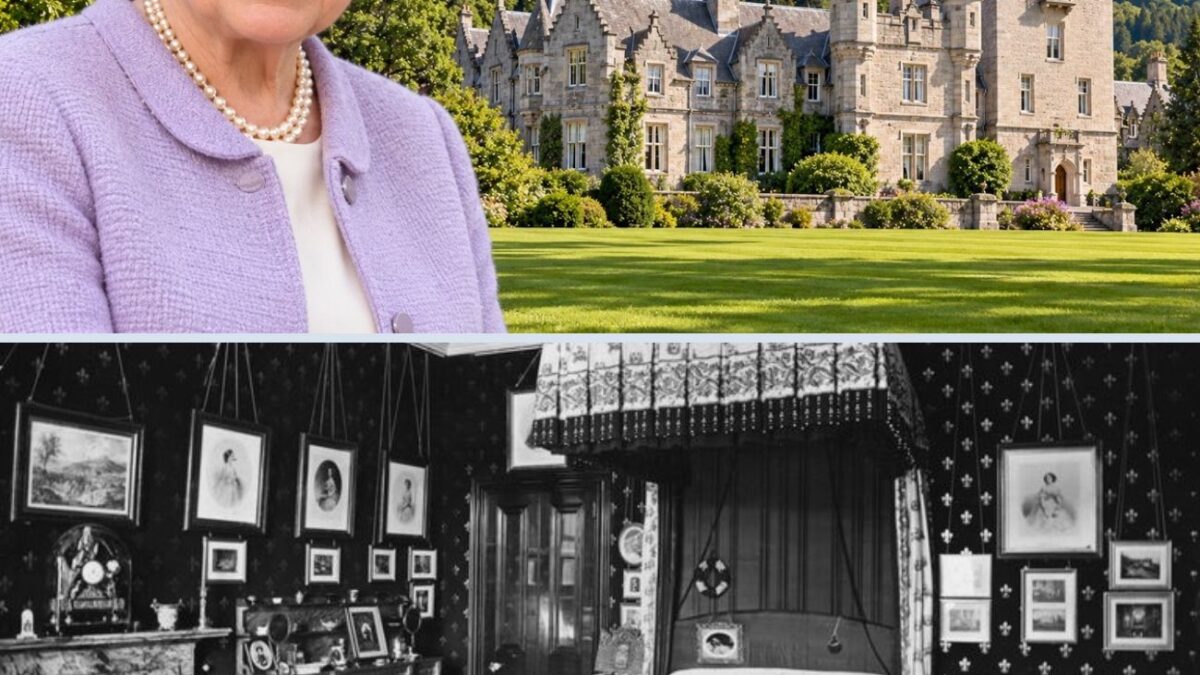
On the 6th of September, 2022, a 96-year-old woman received a new Prime Minister in a drawing room in Scotland. For 70 years, she had done that at Buckingham Palace, every single time. 14 Prime Ministers, starting with Winston Churchill. But that week, she could not make the journey to London. So, for the first time in her entire reign, the appointment happened here instead, in a granite house in Aberdeenshire. Two days later, she died in this building. Today, we are walking through Balmoral. The drive, the granite, the castle that was demolished to make room for this one, the flat-pack iron ballroom that arrived by order, the room where her coffin lay for 3 days, and the rooms that no member of the public had seen in nearly 170 years until 2024.
One honest thing before we go in. Her private rooms have never been photographed or published, and I am not going to describe her bedroom to you. What I can give you is a Category A listed building whose architecture, construction dates, and architect are a matter of public record. A castle that has recently opened parts of its interior for the first time since it was finished, and a set of events in September 2022 that are documented to the day. Where the sources disagree, and on this building they occasionally do, I will tell you. Let us go up the drive. The first stop, the approach.
You are in Aberdeenshire, in the valley of the River Dee, between the villages of Ballater and Braemar. The estate runs to roughly 50,000 acres. Some sources put it at just under 54,000. Either way, it is a piece of Scotland larger than many British cities. And the first thing to understand about Balmoral is the thing almost nobody knows. It is not a royal residence in the way Buckingham Palace is. Buckingham Palace and Windsor Castle belong to the Crown. They come with the job. Balmoral does not.
Balmoral is private property, bought with private money, and it now belongs personally to King Charles III. So, when Queen Elizabeth II came here every August, she was not moving between official residences. She was going to her family’s house. And the journey itself is part of why this place meant what it did. Balmoral is roughly 400 miles from London. In the 19th century, that was a serious expedition by rail and carriage. Even now, it is most of a day. Her Balmoral season traditionally ran from August to October. So, for two or three months of every year of her adult life, the British monarch was as far from Westminster as it is possible to be and still be in Britain.
That distance was the product. You cannot be dropped in on at Balmoral. Nobody is passing by. A government minister who wants a word has to commit a day of his life to getting there, and a day to getting back, which means he mostly does not bother. Which means for eight weeks a year, she was left alone. Every family needs one house that is hard to reach. This one is 50,000 acres of hard to reach. It was bought in 1852 for 32,000 pounds. In today’s money, that is somewhere around 3.9 million. And a small note on honesty. The records are not entirely consistent about who sold it, with different accounts naming different sellers. So, I am going to give you the year and the price and leave the paperwork alone.
The second stop. The granite. Stand back and look at it, because this is a very specific building, and it was designed by a committee of two.
The architect was William Smith, who was the city architect of Aberdeen from 1852, and Prince Albert amended his designs. That is the recorded history. A professional Scottish architect drew it, and the Queen’s German husband went through the drawings and changed them. Construction began in the middle of 1853. Queen Victoria laid the foundation stone herself on the 28th of September that year. The royal apartments were ready by the autumn of 1855, and the house was finished in 1856. It is built of granite and roofed in slate, and the style is Scots Baronial Revival. That means turrets, crow-stepped gables, and a great tower that the records put at about 100 ft.
And here is why that style matters more than it sounds. Scots Baronial was not an ancient tradition that Albert inherited. It was a 19th-century revival, a deliberate romantic reconstruction of what a Scottish castle was supposed to look like. Albert was not restoring Scotland. He was building his idea of it. That instinct ran right through the house. He and Victoria filled it with tartan on the carpets, the curtains, and the upholstery to an extent that visitors have remarked on ever since. There is even a word for the whole phenomenon, Balmorality, meaning the Victorian romantic idea of the Highlands that these two people more or less invented from this address.
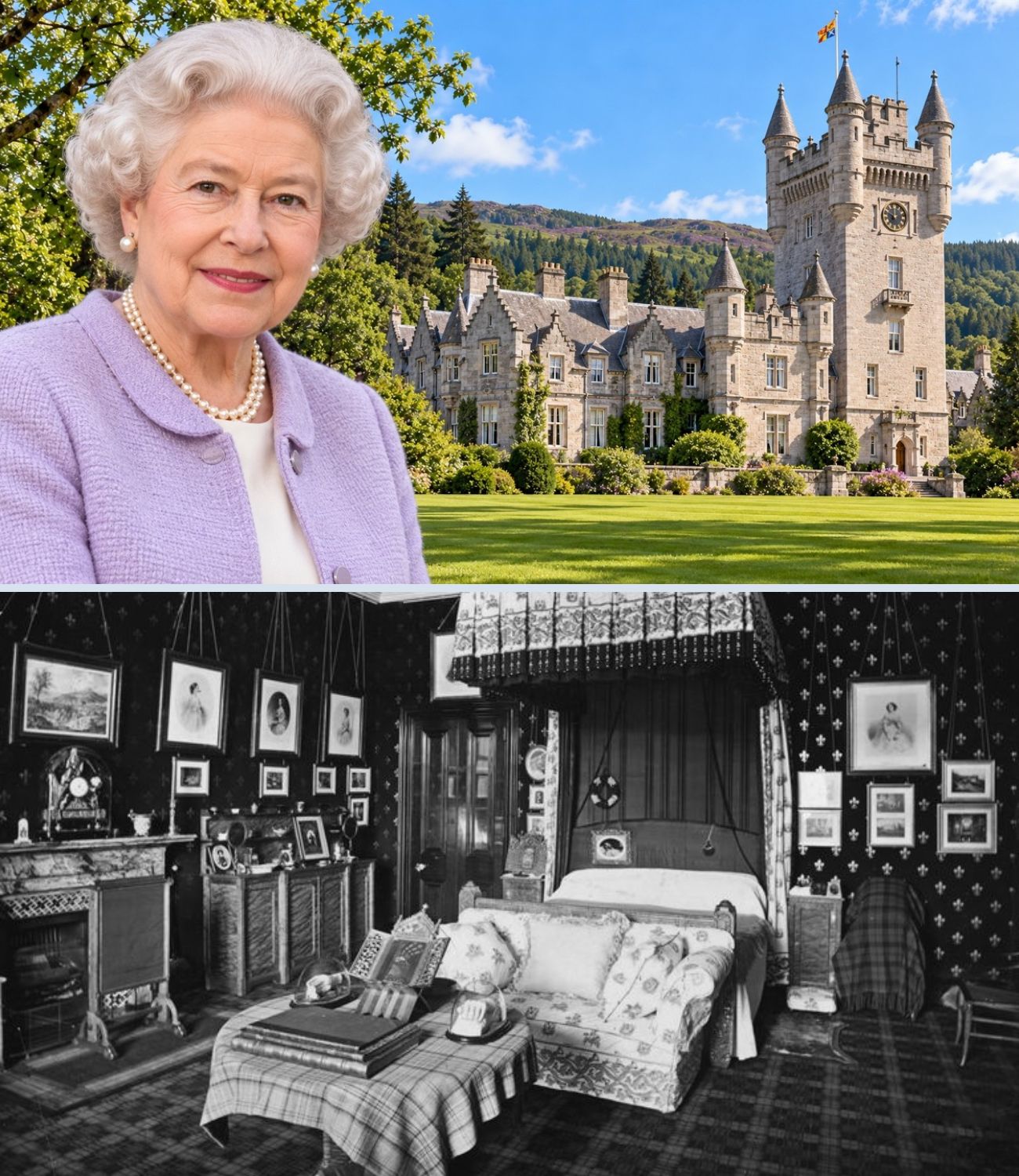
And Albert did not stop at buying tartan. He designed one. The Balmoral tartan was created by him in 1853, the year the foundation stone went down. Gray, with threads of red and black running through it, and the gray is meant to read as Aberdeenshire granite. It is a set designed to match a building. Here is the part that matters. That tartan is restricted. It is not a pattern you can buy and wear. Its use is reserved for the royal family and for the sovereign’s piper, and it has stayed that way for over 170 years.
So, a German prince invented a Scottish clan pattern for a family that had no Highland clan, named it after a house he had just commissioned, and then made it private property. If you want to understand the 19th century in one object, it is that cloth, which makes the photograph from the 6th of September, 2022, land differently, and we will come back to it. Because in that photograph, she is wearing a tartan skirt. The building is category A listed, which is the highest level of protection in Scotland. And there is one more thing about this house and the woman who built it that I need to put here, because it changes how the rest of the walk feels.
Prince Albert died in December 1861, 5 years after this house was finished. He was 42. Victoria was 32 years a widow after that. She wore black for the rest of her life. She withdrew from public view for years, and she was criticized savagely for it. And the place she went again and again for four decades was this house. The one he had drawn. She put up monuments to him on these hills. For the second half of her reign, Balmoral was not a holiday house. It was where she went to be near him.
And two things came out of those decades here that are worth knowing, because they tell you what this house did to her. The first is that she published her own diaries. In 1868, a reigning queen of the United Kingdom brought out a book called Leaves from the Journal of Our Life in the Highlands. And in 1884, she published a second volume. These are her own private entries about days at Balmoral. Walks, weather, picnics, the people on the estate, Albert. A monarch handing the public her diary is an extraordinary act, and it is the opposite of everything her great-great-granddaughter would later do. And she did it because this place made her want to.
The second is John Brown. Brown was a Highland servant on this estate who became Victoria’s personal attendant, and after Albert’s death, he became the person closest to her for over 20 years. He spoke to her bluntly in a way nobody else dared. The court resented him. The press gossiped about them relentlessly, and some people called her Mrs. Brown behind her back. When he died in 1883, she was devastated. That relationship could only have happened here. In London, she was surrounded by courtiers and protocol. At Balmoral, she was on a hillside with the man who held her pony.
Now, hold that, and look at the other end of this story. Prince Philip died in April 2021. Queen Elizabeth II died at Balmoral 17 months later. Two queens, the same house, 160 years apart. Both of them widowed, and both of them, at the end, in the building that Albert drew. Nobody designed that, but once you see it, you cannot walk through these rooms without it.
The third stop, the castle that is not here. Walk around the grounds and you will not find it, and that is the point. There was already a Balmoral when Victoria and Albert arrived. A smaller castle stood on this estate, and they lived in it for several years while the new one went up beside it. When the new house was finished in 1856, the old castle was demolished. I keep coming back to that. They did not keep it as a dower house. They did not convert it into staff accommodation. They pulled it down so that the only Balmoral would be theirs. So, the building you are standing in front of is not an inherited ancestral seat. It is a purpose-built Victorian house designed by its owners on the site of the thing it replaced. And every single royal association it has was created from scratch after 1856.
The fourth stop, the ballroom that arrived in a crate. This is my favorite fact about Balmoral, and I have never heard anybody say it out loud. While the new castle was being built, Victoria and Albert needed somewhere to dine and to dance. So, Albert ordered one. He bought a prefabricated iron building from a company called E.T. Bellhouse and Company, and it was put up on the estate and used as a temporary ballroom and dining room from 1851 until 1856. A flat-pack ballroom ordered from a catalog, delivered in pieces, bolted together in a field in Aberdeenshire, and used by the Queen of the United Kingdom for 5 years while she waited for her house. It tells you something true about the Victorians that nothing else does. We think of them as all mahogany and ceremony. They were, in fact, the most relentlessly practical people in history, and the Prince Consort solved his ballroom problem the way you would solve a shed problem.
The fifth stop, the real ballroom. Inside the finished castle is the ballroom, and until 2024, it was the only room in the entire building that the public was ever allowed to see. Think about that for a moment. The gardens and grounds have been open since 1931, generally from April to the end of July. People have walked those lawns for nearly a century. And of the whole castle, they were shown one room. And it is a genuinely strange room to be the one they chose. A ballroom is the least private space in any grand house. It is the room designed for strangers. Of course, it is the one you can show people.
That room has two lives, and they could not be further apart. The first is the Ghillies ball. Every year during the Balmoral season, the family held a dance in this room for the people who work the estate. The gamekeepers, the Ghillies who manage the river and the stalking, the gardeners, the household staff. Real dancing, a band, and the royal family on the floor with the people who look after their land. Those evenings are part of the documented rhythm of Balmoral life, and they happened in here.
And the second life of this room is this. When she died, Queen Elizabeth II’s coffin lay in the ballroom at Balmoral for 3 days. The same floor. The dance for the gamekeepers, and then the lying at rest. I do not think there is another room in Britain that holds those two things.
The sixth stop, the rooms nobody saw. In 2024, something happened at Balmoral that had not happened since the house was completed in 1856.
They let people in. For 1 month over the summer, limited numbers of visitors were able to go inside and see several of the rooms the royal family actually used. Guided, in small groups, at a price, and only for a few weeks. But for the first time in 168 years, the interior of Balmoral was open. Now, I want to be careful here, because this is exactly where a video like this could start inventing things. I can tell you that it happened, and that it was the first time. I am not going to tell you the color of the sofas in rooms I have not seen photographed. And the family’s private apartments were not part of what opened. But think about what that opening means in the sequence of events. She died in September 2022. Within 2 years, her son had opened the inside of her favorite house to paying visitors for the first time in its history. You can read that as commercial. You can read it as generous. I think it is simply what happens to a house when the person who guarded it stops being there.
The seventh stop, the hill, the river, and the barbecue. Out of the castle, because Balmoral is not really about the building. 50,000 acres of hill, forest, river, and more. The Dee runs through it, and the fishing on that water is some of the most famous in Scotland. There is deer stalking on the high ground. There are working farms and a working forestry operation. This is not parkland laid out for a view. It is a Highland estate that has to pay for itself. And it genuinely does work. There is commercial timber coming off these hills. There are Highland cattle, and there are ponies. And the ponies are not decoration either, because a stalking pony is still the only practical way to bring a deer off ground that no vehicle can reach.
There are gamekeepers and gillies and foresters and farm staff. And a good number of them live on the estate in houses that belong to it, which means Balmoral is not just a residence. It is a small village with an employer. That is the part of this place that explains the gillies ball we are about to come to. And it is the part that explains why the roads were lined when she left. These were not fans. A lot of the people standing on the verge between Ballater and Aberdeen that day worked for her, or their parents had.
One more thing about the land, because it is easy to miss. Queen Elizabeth II came here every single year of her life. She was a child here in the 1930s, when she was not going to be queen at all, and nobody thought she would be. She was here as a young married woman. She was here as a monarch for 70 years, and she was here at the end. Of all the buildings she ever occupied, this is the only one that was in her life before the job was, and the only one still in her life after the job was finished with her.
And it is where this family was, by every account, most like other people. Prince Philip’s barbecues at Balmoral are one of the most repeated stories in royal writing, and the shape of it is consistent across many accounts. He cooked outdoors. He was particular about it. He designed and had built his own barbecue trailers, and the Queen reportedly did the washing up afterwards. I will flag that as a very well-established story, rather than something I can trace to a document, because that is what it is. But, it is reported so consistently by so many separate people who were there, that the picture it paints is almost certainly true in substance. A monarch and her husband on a hillside with a trailer and a grill and no staff within sight. That is the version of this family that Balmoral produced. Nowhere else did.
The eighth stop. The drawing room, the 6th of September. Now, we come to it.
On the 6th of September, 2022, Liz Truss traveled to Balmoral to be appointed Prime Minister of the United Kingdom. That had never happened before in Elizabeth’s reign. Every one of her Prime Ministers, from Churchill onward, had been appointed in London. The reason it happened here was her mobility. She was not well enough to travel, so the constitution came to Scotland instead. There is a photograph from that meeting that went around the world. She is standing in a cardigan and a tartan skirt, with her handbag over her arm, smiling with her hand extended, and her hand is bruised. That photograph is the last official image of Queen Elizabeth II. Two days later, she was gone.
And I want to say something about that photograph because I think a great many of you remember seeing it and feeling something you could not quite name. Look at what she is wearing, a gray cardigan and a tartan skirt. Not a state dress, not jewels. The clothes of a woman at home in Scotland in September. She is standing unaided in front of a fireplace with her handbag on her arm as it had been in every photograph of her for 70 years. She was 96 and she was two days from death and she got up and stood and put her hand out because the job required a handshake and she was not going to be photographed sitting down. That is not a woman performing strength. That is simply what she did every day of her working life, done one last time in her own sitting room in a cardigan.
I find the detail of the location almost unbearably apt. The one time in 70 years that the machinery of British government had to come to her rather than the other way around, it came to the house that was not part of the job, the private one, the one her great-great-grandmother built with her own money and her husband’s drawings.
The ninth stop, the 8th of September. She died at Balmoral on the 8th of September 2022 at 96 years old after receiving medical care at the house. She was the first monarch ever to die at Balmoral. Her daughter, Princess Anne, was there. Anne later wrote about the privilege of having been with her mother in her final hours. The news reached the country in stages that afternoon. The family traveled north. The BBC changed its schedules and outside the gates of a private estate in Aberdeenshire, people began to arrive and stand there with flowers. 400 miles from London.
The 10th stop. The 11th of September. Her coffin lay in the ballroom for 3 days. On the 11th of September, it left Balmoral by road for the Palace of Holyrood House in Edinburgh. And the route went through Ballater and Aberdeen and Dundee. And people lined the roads of rural Scotland in numbers nobody had planned for. Farmers stopped their tractors in the fields and stood beside them as it passed. And that was the last time Queen Elizabeth II left Balmoral.
So, what do I take from walking through it? A Victorian house bought in 1852 for 32,000 pounds, drawn by an Aberdeen architect and redrawn by a German prince, built out of granite on the site of the castle they knocked down to make room for it. A ballroom that arrived in a crate. Another ballroom that held a dance for the gamekeepers every year and then held her coffin. 50,000 acres of hill where a monarch stood over a barbecue trailer. And a drawing room where for the first and only time in 70 years, a prime minister had to come to her.
Here is what strikes me most and it is the reason this house is different from every other building on this list. She had Buckingham Palace, which has 775 rooms. She had Windsor Castle, which is the oldest and largest inhabited castle in the world. She had Sandringham and Holyrood House and the whole machinery of the British state at her disposal. And when it came to the end, she was in the one house that nobody gave her. The private one. The family one. The one you have to drive 400 miles north to reach in a valley in Aberdeenshire with the river running past it. She spent every August of her life getting there as fast as she could and then she stayed.
No sponsorships, no brand deals, just the record and what it actually shows. Of all the royal houses we have walked through now, which one would you actually choose to live in? Because I keep finding that it is never the palaces. And if there is a house you want through next, say so. Your answers decide what gets made.
You Might Also Enjoy

“We Thought They Would Negotiate”—What Argentine Soldiers Said When The British Attacked Goose Green

“You’ll Never Finish My Ruck March, Limey” — US Sergeant Who Challenged the SAS, Then Fell Out First






