Wallis Simpson’s Marriage Was Much Nastier Than You Thought
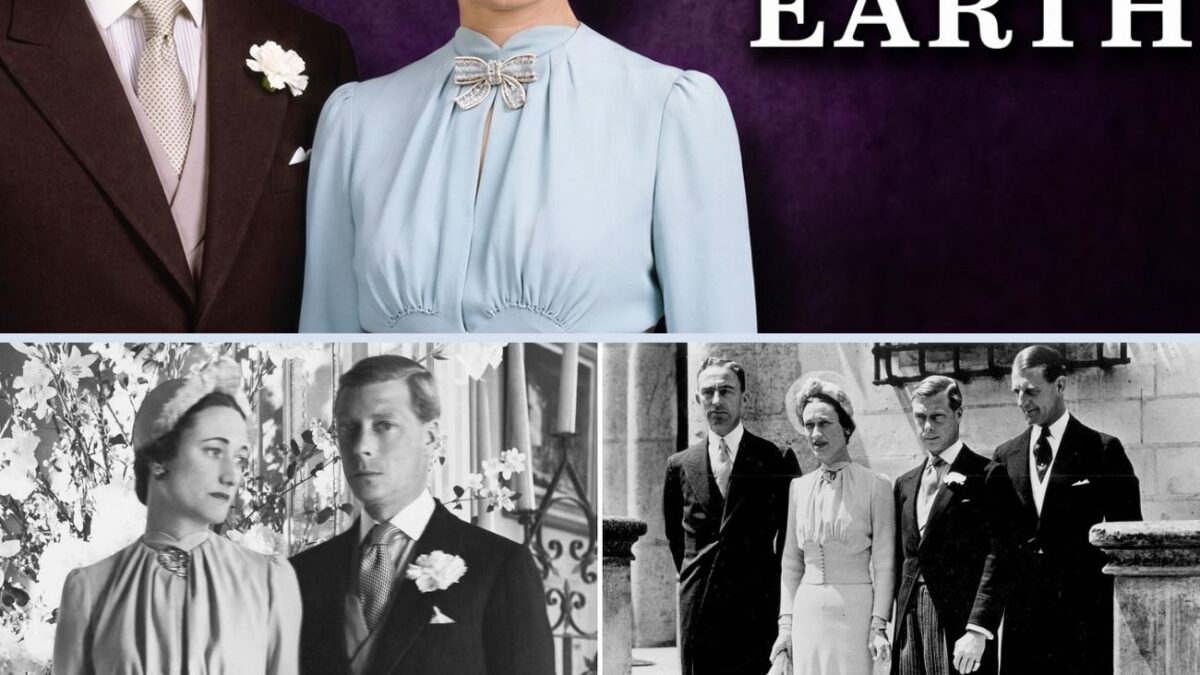
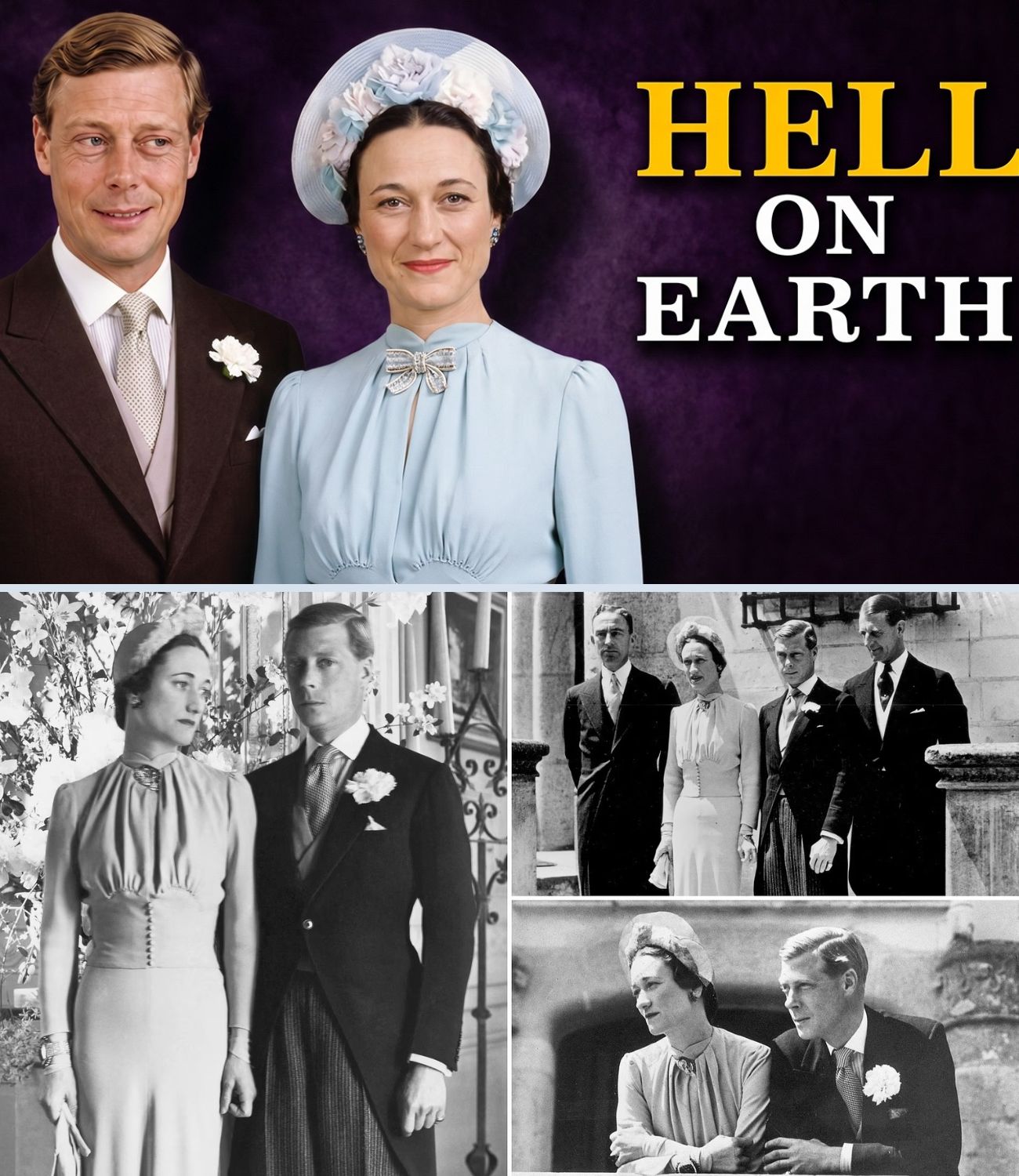
You’ve seen the photograph. June 3rd, 1937, a French chateau. The abdicated king and the American he gave up an empire for. The greatest love story of the century. No one from his family came. The date was his dead father’s birthday. Months earlier, the bride had written to him that “together they would only create disaster.”
While he signed away the throne, she was on a bad telephone line from Cannes begging him to stop. The woman blamed for it all would end up owning nothing of her own story. It began at a hunting lodge in Leicestershire, 1931. Start with the wedding because everything about it was a message. The Church of England would not marry them. So they got a country vicar from Darlington named Robert Anderson Jardine who volunteered, defied his bishop, and destroyed his own career doing it.
The venue belonged to Charles Bedaux, an industrialist the couple barely knew, a man who would later be arrested by the Americans on suspicion of trading with the enemy and die in custody in Miami in 1944. The wedding was hosted, in other words, by a stranger with a checkbook, officiated by a clergyman in open rebellion on a date chosen to sting.
Because June 3rd was George V’s birthday. The father who had told his private secretary he hoped nothing would come between his second son and the throne. The father who had been dead barely 18 months. Not one royal came. Not his mother, not his brothers, not a cousin. His brother, the new king, sent no representative.
What George VI did send, a week before the wedding, was a legal document, letters patent confirming that the Duke of Windsor would keep the style of royal highness and that his wife would not. Not her, not any children they might have. His household staff were instructed to bow to him and not to her in their own house.
He fought that decision for 35 years. He raised it with prime ministers. He raised it with lawyers. He was still raising it in some form when he was dying. Look at the photograph again and you can see the shape of the next three decades in it. A man who has just lost everything and hasn’t yet processed the bill.
A woman who is now legally attached to him and legally beneath him in front of a photographer smiling. She was 40. She had spent her entire adult life engineering her way out of exactly this kind of trap. Bessie Wallis Warfield was born in June 1896 in a Pennsylvania resort hotel and her father was dead before her first birthday. Tuberculosis.
He left a wife with no money and a baby and the two of them fell straight into the care of the Baltimore Warfields who had money and opinions in roughly equal measure. Her uncle, Solomon Davies Warfield, was a bank president and railroad man, a bachelor and the reason Wallis had a roof and a school.
That is the fact that explains more of her life than the abdication does. Everything she had, she had because a relative chose to pay for it that month. Her mother took in boarders. Her mother later ran a dining room for paying guests. Her tuition at Oldfields, the expensive girls school outside Baltimore, was Uncle Sol’s decision renewed at his pleasure.
Her debut, her dresses, her respectability, his. She learned early what a lot of women in that world learned early. Charm was a form of income. Be useful at a table. Be funny. Remember everyone’s name. Never be the person nobody wants seated next to them. Then in 1927, Uncle Sol died.
He left an estate worth several million dollars. He left the bulk of it to establish a home for indigent gentlewomen. Wallis got a share of a trust and a lesson. Affection and money were not the same thing, and the second one was the one that kept you alive. She was 31 and about to be divorced. Her first husband was a naval aviator named Earl Winfield Spencer Jr.
She married him in Baltimore in November 1916, in uniform and flags fashion. And by most credible accounts, it went bad fast. He drank. There are accounts of him locking her in a bathroom for hours. She left him, went back, left again, and spent a stretch in China in the mid-1920s while the marriage disintegrated.
You have probably heard something about China, the so-called China dossier, a secret government file supposedly detailing Wallis’s activities in Shanghai brothels, allegedly circulated in 1935 to poison the palace against her. It’s the single most repeated piece of dirt attached to her name, and no one has ever produced it.
No copy exists in any archive. The story surfaces secondhand decades later from people who claim to have heard of it rather than read it. Treat it the way historians treat it, as evidence of what her enemies were willing to say, not evidence of what she did. The truth about her China years is more useful anyway.
She was a naval wife with no money, separated in her late 20s, learning how to live off invitations. That is a skill, and she got very good at it. Divorce from Spencer came in 1927. In July 1928, she married Ernest Aldrich Simpson, an American-born shipbroker in the family firm, Harvard-educated, formerly of the Coldstream Guards, quiet, bookish, financially steady.
She wrote to her aunt Bessie about him in terms that were not remotely romantic. He was kind. She was 32. That was the arithmetic. Keep Ernest in mind. Everyone else has spent 90 years forgetting him, which is exactly what was arranged. The Simpsons set up in a flat in Bryanston Court in London, and Wallis began the work that would define her.
She built a social life, good food, sharp conversation, a hostess who could carry a room. And in January 1931, through Lady Furness, Thelma, the Prince of Wales’s mistress and an American herself, Wallis and Ernest were invited to Borough Court, a hunting lodge near Melton Mowbray.
She met the Prince of Wales there. She had a heavy cold. By her own later account, she was not impressed, and he was not overwhelmed. This is where the myth wants a thunderclap, and there wasn’t one. What there was instead was a slow social ascent that took 3 years and included her husband at every step. The invitations came to Mr. and Mrs. Simpson. Ernest went to the parties. Ernest went on the weekends. The Prince came to dinner at Bryanston Court, and Ernest was at the table. Whatever this was, it began as a couple’s project, two ambitious Americans getting inside the most exclusive circle in England.
Then, in early 1934, Thelma Furness sailed to New York and asked Wallis to look after the prince while she was gone. She looked after him. By the time Thelma came back, the position was filled. What happened next is the part people underestimate. The Prince of Wales did not take a mistress in the way his father’s generation understood the arrangement, discreet, contained, socially invisible. He attached himself to Wallis with an intensity that alarmed everyone around him.
Courtiers noticed. His staff noticed. His private secretary’s papers and the surviving letters both describe a man who could not be left alone with his own evenings. He gave her jewelry that cost more than his officials thought defensible. He rearranged his schedule around her. His letters to her, published decades later, are written in a private baby language.
The two of them collapsed into a single pronoun. Read them and the standard story inverts. This is not a seductress running an operation on a king. This is a man in a state of dependence and a woman who has discovered that the most powerful bachelor in the empire cannot function without her, which is thrilling and lucrative. And, if you are legally married to somebody else, a problem that grows.
By 1935, the problem had a name and a face, and he was sitting in the flat being humiliated in slow motion. Ernest’s position was impossible. He was a working shipbroker in the middle of a depression. His firm was struggling and his wife was being escorted around Europe by the heir to the throne. He knew. Of course he knew.
And at some point in 1935, Ernest went to York House to see the prince, taking with him his closest friend, Bernard Rickatson-Hatt, the editor-in-chief of Reuters as a witness. Ricketson Hatt’s account given years later to Walter Monckton and preserved in Monckton’s papers at Balliol College is the version historians work from. Handle it carefully. It’s a recollection recorded long after the fact by a man with his own entanglements. But what it describes is this:
“What are the prince’s intentions? Does the prince intend to marry Wallis?”
Ernest came away understanding that he was expected to stand aside in exchange for an assurance that she would be taken care of.
Ricketson Hatt matters for another reason and it’s the one nobody puts on the documentaries. He ran the wire service that fed news to the world. During and after the crisis, he was on the evidence of Reuters’ own archive, taking money from the Windsors and shaping how the story went out. The love story wasn’t only lived. From very early on, parts of it were bought.
George V died in January 1936 and the man who had been the most popular prince in the world became King Edward VIII, Emperor of India, Defender of the Faith. He held the job for 326 days and never had a coronation. Almost immediately, the machinery around him began to record its concerns in writing.
His private secretaries found state papers coming back late, ring marked from glasses, occasionally not coming back at all. There were security worries about who else was in the room when boxes were opened. His father had predicted, according to more than one court memoir, that the boy would ruin himself within a year of the accession.
That prediction gets quoted so often now that it sounds invented. It wasn’t. It was recorded by people who heard it before there was anything to be right about. And through the spring of that year, the King’s household was quietly rearranged around one woman. Wallace appeared on the court circular at official dinners, her name printed in the newspaper with her husband’s name beside it, which was the fig leaf.
She was at Fort Belvedere, the King’s private house in Windsor Great Park, most weekends. Ernest by then was mostly not. Then came the summer and the cruise, and the moment the story stopped being containable. In August 1936, the King chartered a yacht called the Nahlin and took a party down the Dalmatian coast. Photographers followed.
What they got was a king in shorts and sometimes less with an American woman beside him who was plainly not incidental. Crowds in Yugoslavia shouted for her by name. The pictures ran in America, in France, in Germany, everywhere. Time magazine covered it. Cartoons ran. In Britain, nothing. The press barons, Beaverbrook, Rothermere, the men who owned the country’s attention, had agreed among themselves to keep it out.
British newspapers arrived in Britain with the offending American pages physically cut out. There were people in London ordering foreign papers just to find out what everyone abroad already knew about their own monarch. That silence is the single most important fact of the whole affair, and it gets treated as background.
It meant the British public went from knowing nothing to knowing everything in the space of about a week in December. It meant Wallace never had a chance to be introduced to the country gradually as a person before she arrived in its consciousness as a scandal. And it meant that when the story broke, the press that had been sitting on it for months had a great deal of pent-up energy to spend.
While that silence held, she went to court. On October the 27th, 1936, at the Assizes in Ipswich, a market town in Suffolk chosen because the London lists were full and because Suffolk was quiet, Wallis Simpson was granted a decree nisi on grounds of her husband’s adultery. The evidence was a hotel in Bray, a signed register, a chambermaid, and a woman who was not named in open court.
It was collusion, and everyone in the room knew it. English divorce law at the time required a guilty party and forbade the two spouses from arranging the outcome between them. If they did, and it was discovered, the divorce could be thrown out. So, Ernest, the injured party in every human sense, agreed to play the adulterer.
He wrote to his mother in New York, who was upset that her son had been cast as the villain, and explained that this was simply how these things were done in England, especially where the royal family was concerned, since the king could not be named in court. Those letters survive. They are the clearest surviving proof that the whole proceeding was staged.
Here is the part that makes it worse. The woman at the hotel in Bray was real. Her name was Mary Kirk Raffray, and she was Wallis’s oldest friend, a Baltimore girl who had been at school with her, who had known her through the Spencer years, who had stayed at Bryanston Court as a house guest. In 1937, Mary Kirk Raffray married Ernest Simpson.
So, the tidy version Wallis discards a dull husband and ascends, is not what happened. What happened is that two friendships and two marriages were traded across each other in the same 18 months, and Wallace, according to her surviving letters, took the loss of Mary far harder than anyone expected. She wrote to Ernest afterward with something close to grief.
She was not a woman being liberated, she was a woman losing the two people who had known her longest and gaining a king who could not be alone in a room. The divorce was only a decree nisi. That distinction matters more than anything else in this story. Under the law, 6 months had to pass before the decree was made absolute. In that window, an official called the King’s Proctor could investigate, and if he found collusion, cancel the whole thing.
And a private citizen, a solicitor’s clerk from Ilford named Francis Stephenson, of all people, actually did file notice questioning it. Which meant that from late October 1936 through the following spring, Wallis Simpson was legally still married to Ernest Simpson and might remain so. Now, hold both facts at once. In December 1936, Edward the VIII gave up the throne of the British Empire in order to marry a woman he was not yet legally able to marry. That is not romance.
That is a man detonating his own life on a maybe. The crisis broke into the open on December 3rd. A bishop had made a mild public remark about the King’s religious duties. The provincial press took it as license, and within 48 hours, the whole thing was on every front page in Britain. Wallace left the country that same week, driven south to Cannes to stay with American friends, Herman and Katherine Rogers, at their villa above the town.
What she did from there has been buried under 70 years of assumption. She telephoned him constantly on a bad line and told him not to abdicate. On December 6th, she wrote to him directly asking him not to do it, warning that if he went, the world would say she could have prevented it and didn’t. She had already written to him earlier in plainer language that “together they would only create disaster,” that she couldn’t make him happy and didn’t believe he could make her happy either.
On December 7th, she issued a public statement through the press saying that “she was willing, if it would solve the problem, to withdraw from the situation entirely.” And behind that statement, according to cabinet papers and the files of Sir Horace Wilson at the National Archives, her own solicitor raised the possibility of a financial settlement, a payment to make her go away.
The government considered it. It came to nothing. The government was also, at that exact moment, listening to her. On December 5th, the Home Secretary authorized the interception of telephone calls between Fort Belvedere and Buckingham Palace on one side and the continent on the other. The order survives.
Ministers of the Crown were tapping the King’s calls to his mistress to make sure he actually left. She could not make him stay on the throne. He would not let her go. There is credible testimony from more than one direction that he told her he would kill himself if she left him, that this threat was made repeatedly, and that people around him took it seriously enough to record it.
Whether he meant it is unknowable. What matters is that she believed it was possible, and that after her public offer to withdraw was refused, there was no version of walking away that didn’t come with a body attached to it. He signed the instrument of abdication on December 10th, broadcast to the nation on the 11th, and left the country that night.
Then they were separated for 6 months waiting for her decree to be made absolute. And it is in those 6 months that the newly discovered letters do their damage. He was in Austria, she was in the South of France, and she was writing to Ernest. The letter surfaced in 2011 when the biographer Anna Sebba was handed a packet of them by a source who had insisted there was nothing to tell.
They were still in their postmarked envelopes. In them, Wallis tells Ernest that “she misses him, that she worries about him, that he is good and sweet, that she sends her dearest love,” writing this while the entire world was congratulating or condemning her for the greatest romance of the century. In one, she describes saying farewell to him as something she can only cry through.
Ernest wrote back that “he believed she had done everything in her power to stop the catastrophe.” They are two people consoling each other about a disaster they both watched happen and neither could stop. Sebba’s larger conclusion, that Ernest was the real love of Wallis’s life, goes further than the papers strictly proves, and other historians have said so.
What the letters do establish beyond argument is the thing that kills the myth. She did not want this. She wanted the position, the access, the jewels, and the excitement, and she wanted to keep her marriage. She expected the affair to run its course the way royal affairs always had. It did not because the man involved was not built like his ancestors.
The decree was made absolute in the spring. In June, they married at the Château de Candé in front of the hired vicar and the borrowed château, and nobody from his family. And she became Her Grace the Duchess of Windsor. Grace, not Highness. The distinction his brother had put in writing weeks before.
4 months after the wedding, they went to Germany. In October 1937, the Duke and Duchess of Windsor toured factories and housing projects and were received at the Berghof by Hitler. He believed he was doing something statesmanlike. What he actually did was hand the British government a permanent reason never to let him home again.
The German trip finished him politically, but the thing that poisoned the marriage day-to-day was money. And it started before the wedding. In the hours around the abdication, Edward negotiated with his brother about what he would live on. He told the family, in effect, that he was nearly broke, valuing his assets at something like 90,000 pounds and pleading for an income.
His brother, in a room at Fort Belvedere with lawyers present, agreed to 25,000 a year. Then George VI found out what his brother actually had. The Duchy of Cornwall had been paying Edward for 25 years and he had banked most of it. The figure historians settle on, working from the royal archives, is around a million pounds. He had lied about his own fortune to his brother in writing days after handing him a throne he never wanted.
The new king reduced the offer, made it personal rather than permanent, and tied it to a condition. The Duke would not return to Britain without an invitation. The final arrangement in 1938 involved the crown buying out his interest in Sandringham and Balmoral, which were private property, not state property, and which he refused to release until he was paid.
He had abdicated in December in a swirl of language about the woman he loved. By February, he was haggling over house valuations with the brother whose life he had wrecked. The dishonesty had a cost, and Wallace paid a large share of it. For the rest of their lives, the money was contingent, reviewed, resented, and always coming from people who despised her.
When George VI died in 1952, the Duke went to the funeral and used the trip to find out whether his allowance would continue. It did not. His niece, the new queen, ended it. He wrote to Wallace about the royal women in language you would not use about strangers, calling it hell to be even that much dependent on them.
That letter is worth sitting with because it tells you what the marriage had become by then. A shared grievance, run out of a rented house in France with two people bound together mostly by the fact that neither had anywhere else to be. The war gave them one last chance at usefulness, and Britain refused it.
In 1940, with the couple loose in Europe and the Germans openly speculating about what might be done with a former king, Churchill shipped them to the Bahamas. The Duke was made governor. It was a colonial posting of no strategic weight whatsoever, and he understood exactly what it was. He called it, in private correspondence, “a form of exile,” and he wasn’t wrong.
They spent 5 years in Nassau because the alternative was leaving them somewhere they could be reached. Wallace, to be fair to her, worked. She ran Red Cross clinics. She raised money. She visited the poor districts of a colony with a race problem she made no particular effort to fix.
She also complained about the heat, the isolation, and the company. And she said so to friends in letters that read like a woman doing time. When it ended in 1945, they moved to Paris and stopped pretending there was a job coming. Watch what she does next because this is where the passive victim reading of Wallis Simpson falls apart.
She acquired territory. In 1952, they bought a converted mill outside Paris, the Moulin de la Tuilerie, and she rebuilt it. The first property in her entire life that was actually hers to arrange. In 1953, they took the house in the Bois de Boulogne from the city of Paris on a nominal rent, and she turned it into the best table in Europe.
She dressed it, staffed it, ran it, and controlled who came through the door. Magazines photographed her rooms. She landed on best-dressed lists year after year. The girl whose school fees had depended on an uncle’s mood built an environment where she decided everything, down to the seating. The Duke, meanwhile, had no function at all. He gardened. He did needlepoint.
He waited for her. And then, in 1950, she did something that everybody in their world saw, and almost nobody says plainly. Jimmy Donahue was a Woolworth heir, 35, openly and famously gay, rich beyond arithmetic, and very funny. For 4 years, he was inseparable from the Windsors. The three of them were photographed constantly, nightclubs in New York, crossings on the Queen Mary, Palm Beach, Paris.
His family money paid for a great deal of it. The columnists wrote about it. Society wrote about it. The Duke of Windsor spent 4 years being publicly attended by his wife’s much younger companion. Whether Wallis and Donahue were physically involved is unproven and probably unprovable. The most detailed claims come from a book built on unnamed servants and interested survivors, published in 2001 when everyone was dead, and it should be treated with the suspicion it earned.
What is documented is the spectacle. It was public. It was sustained. It humiliated him where he was most visible, and he tolerated it for 4 years because he could not risk the alternative. It ended around 1954, reportedly after Donahue did something at a dinner table that even the Duke would not absolve.
And the accounts of that night come from people repeating it afterward, rather than from anything contemporaneous. The pattern underneath is what counts. The man who had cost her a marriage, a country, a reputation, and her oldest friendship now depended on her so completely that she could parade a rival through his life, and he would keep paying the bill.
That is the reversal the myth cannot survive. He gave up an empire and spent the next 35 years as the less powerful person in the room. So, they sold the only asset they had left. In 1951, the Duke published A King’s Story, ghost written by an American journalist named Charles Murphy, and it made him roughly a million pounds, more in a year than the Crown had ever given him.
5 years later, Wallis published The Heart Has Its Reasons, also ghost written, also by Murphy after an earlier writer walked away. In 1970, they sat for a television interview and performed the marriage one more time for the cameras. Every version of the great love story that the public now carries around came from books the couple were paid to authorize about themselves.
The romance was a product line. It had a ghostwriter on retainer. He died in Paris in May 1972. The Queen had visited him 10 days earlier in the house in the Bois de Boulogne, and Wallace received her. It was the closest thing to reconciliation the family ever managed, and it lasted about half an hour. His body was flown home, and he was buried at Frogmore, and Wallace stayed at Buckingham Palace for the funeral, her first and only night there, at 75, as a widow.
Then she went back to Paris and disappeared. The last decade of her life belongs to a French lawyer named Maitre Suzanne Blum, who took control of the Duchess’s affairs as her health and mind failed. Old friends were turned away at the door. Telephone calls did not reach her. Possessions were sold.
When the writer Caroline Blackwood was assigned in 1980 to report on the Duchess, she never got past Blum, who threatened to sue anyone suggesting her client was less than well, and who, at one point, issued a statement to the press announcing a recovery. Blackwood’s account of it, The Last of the Duchess, could not be published until Blum was dead in 1994.
Blum’s own assistant, Michael Block, edited and published the Windsor’s private letters, the correspondence that shaped how the romance is understood, under her authority. Read that sequence carefully. The letters that convinced the world it was a love story were released by the office of the woman who had sealed Wallace away from everyone who could have described what the marriage was actually like.
She died in 1986 and was buried beside him at Frogmore, as Wallace, Duchess of Windsor. The following year, her jewelry was auctioned in Geneva. 11 years after that, the contents of their houses were sold in New York. The furniture, the papers, the photographs, the wedding presents from people who hadn’t come.
Strangers bought her life in lots. Now, go back to the photograph. You know now that the church wouldn’t have them, that the family boycotted them, that the date was chosen to wound a dead man, that the host would die accused of treason, that the bride had begged him not to do it, and had been writing tender letters to the husband she just destroyed.
And that a week before the shutter clicked, his brother had put it in writing that she would never be entitled to the same courtesy as her own husband’s servants. It still looks like a love story. That’s the achievement. That’s what the memoirs and the ghostwriters and the paid-for wire copy were for. What it actually was is harder and more interesting, an alliance between two people who could not separate without confessing that the price had been paid for nothing.
She had learned at 15 that security came from whoever was currently willing to pay, and she never once forgot it. He was the last payer, and she stayed. She spent her whole life making sure she’d never again be dependent on someone else’s decision about her. She died in a shuttered house in Paris, unable to speak.
Her letters, her jewels, and her legend all in the hands of a lawyer she had hired.
You Might Also Enjoy

“We Thought They Would Negotiate”—What Argentine Soldiers Said When The British Attacked Goose Green

“You’ll Never Finish My Ruck March, Limey” — US Sergeant Who Challenged the SAS, Then Fell Out First






